Roasted Chicken Noodle Soup with Dill and Black Pepper
Chicken noodle soup often disappoints for one of two reasons: the broth tastes thin, or the chicken turns dry while the vegetables finish cooking. This version changes the timing. Bone-in chicken thighs roast on a sheet pan while onion, carrots, and celery soften in the soup pot. The browned pan juices then join the broth, and the roasted meat goes in only after the noodles are nearly tender.
Fresh dill and plenty of black pepper give the finished bowl a clear herbal warmth without hiding the chicken. The noodles cook in the seasoned broth, but a simple portion-before-pasta option protects any soup intended for another day. That means the first bowl has noodles infused with broth, while stored portions avoid becoming thick and swollen overnight.
Gather the roasting pan and soup pot before chopping so both parts of the recipe can move at the same pace.
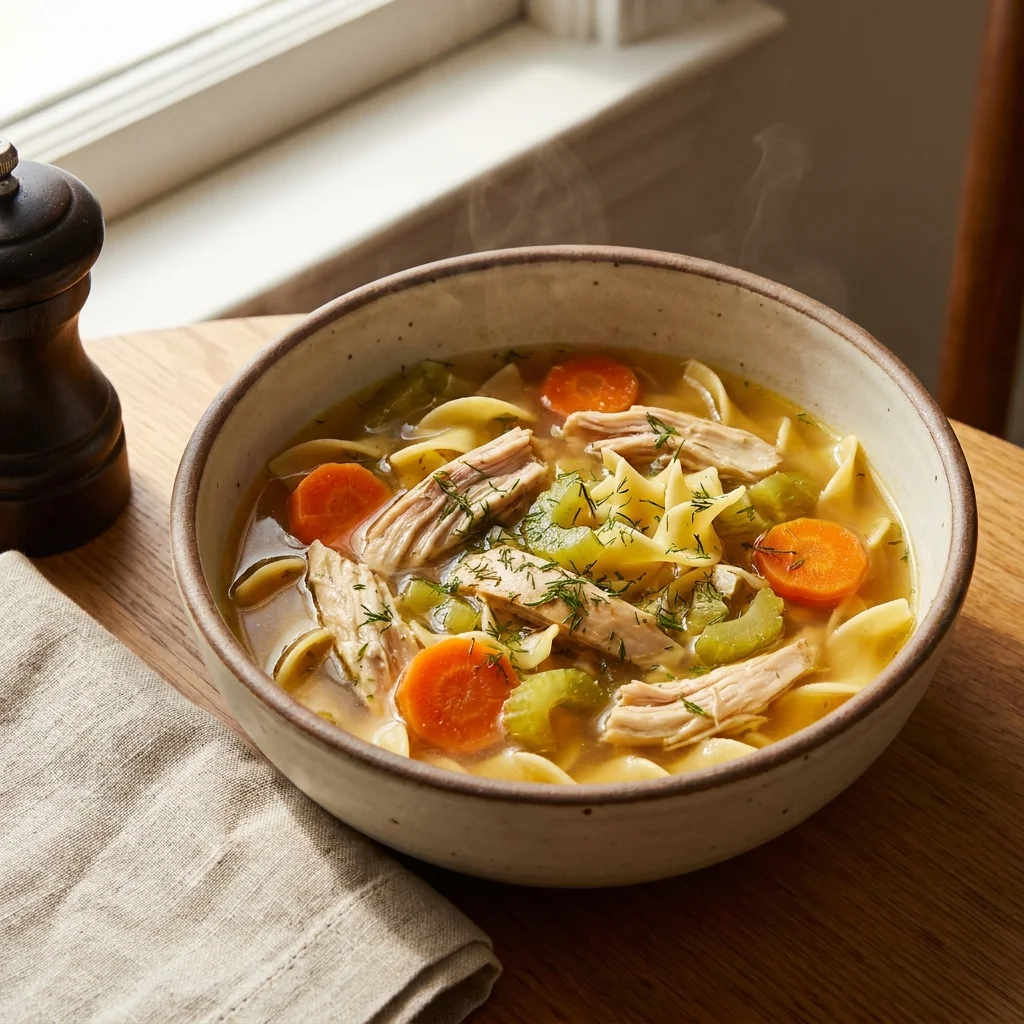
Table of Contents
Why This Chicken Noodle Soup Uses Roasted Chicken
- Roasting develops browned flavor before the chicken reaches the broth.
- Bone-in thighs stay moist and release savory juices that would otherwise remain on the pan.
- Vegetables soften gently while the oven handles the meat, so the total time stays practical.
- Adding chicken near the end prevents the shredded pieces from becoming stringy.
- The noodle plan adapts to immediate serving, refrigerated lunches, or freezer portions.
Chicken Noodle Soup Snapshot
Prep time: 20 minutes
Cook time: 45 minutes
Total time: 65 minutes
Servings: 8
Difficulty: Easy
Calories: Approximately 335 per serving
Key ingredient: Certified bone-in chicken thighs
Best for: A substantial soup supper and planned lunches
Chicken Noodle Soup Nutrition
- Calories per serving: Approximately 335
- Protein: 29 grams
- Carbohydrates: 30 grams
- Fat: 11 grams
- Fiber: 3 grams
- Sugar: 5 grams
- Sodium: 610 milligrams
- Serving size: About 2 cups
- Servings per recipe: 8
Chicken supplies most of the protein in chicken noodle soup, while egg noodles provide most of the carbohydrate. Broth sodium varies widely, so taste before adding the final salt.
Nutrition values are approximate and calculated per serving using standard ingredient amounts. Values may vary based on brands used and portion sizes.
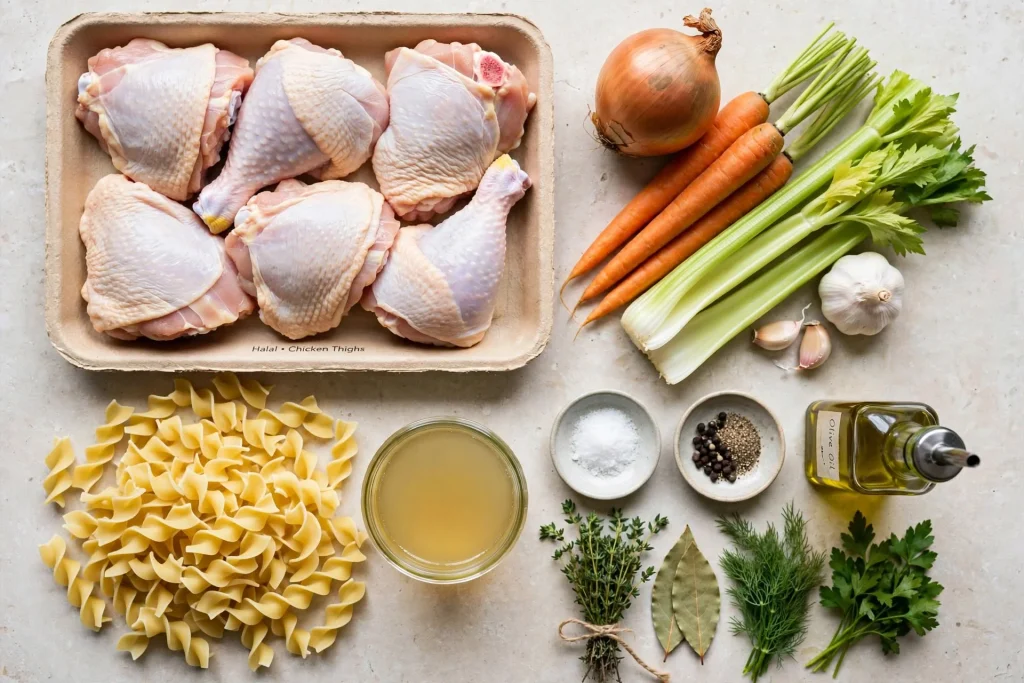
Ingredients for Chicken Noodle Soup
- Certified bone-in, skin-on chicken thighs, 900 grams or about 2 pounds: Bones and browned skin enrich the broth. Check boneless thighs earlier.
- Olive oil, 2 tablespoons, divided: Use it for roasting and softening vegetables. Neutral certified oil also works.
- Fine salt, 1 and one-half teaspoons, divided: Reduce it when using salty broth.
- Ground black pepper, 1 teaspoon, divided: It seasons both the chicken and broth.
- Dried thyme, 1 teaspoon: Substitute 1 tablespoon fresh thyme leaves.
- Yellow onion, 1 large or 200 grams, diced: Cleaned leek is an equal-weight substitute.
- Carrots, 4 medium or 320 grams, cut into half-inch coins: Thick coins retain their shape.
- Celery, 4 stalks or 200 grams, sliced: Fennel bulb can replace it by weight.
- Garlic, 4 cloves, finely chopped: Add it after the firm vegetables so it does not scorch.
- Certified low-sodium chicken broth, 8 cups or 1.9 liters: Verify the chicken source and flavorings. Homemade chicken broth works equally well in chicken noodle soup.
- Water, 2 cups or 475 milliliters: Water leaves room for the roasted juices without making the finished soup too salty.
- Bay leaves, 2: Remove them before serving.
- Wide egg noodles, 170 grams or 6 ounces: Verify processing aids and flavorings. Another medium-width noodle works with adjusted package timing.
- Fresh dill, 3 tablespoons, chopped: Add it off heat. Parsley can replace it.
- Fresh parsley, 2 tablespoons, chopped: It brightens the finished broth.
Chicken Noodle Soup Equipment
- Rimmed sheet pan: Its raised edge holds the roasting juices.
- Large soup pot: Use a 6-quart pot so noodles have room to move.
- Instant-read thermometer: Check a thigh without touching bone.
- Tongs: Move hot chicken safely and grip the skin when removing it.
- Grooved cutting board: It catches juices while the chicken rests.
- Fine-edged spatula: Use it to release browned pan liquid.
Chicken Noodle Soup Preparation
- Heat the oven to 425°F or 220°C and line the sheet pan with foil or parchment.
- Pat the chicken dry. Measure the seasonings, dice the onion, slice the carrots and celery, and chop the garlic.
- Keep the broth near the stove, but leave the noodles sealed until the liquid reaches a steady simmer.
- Set aside containers before cooking if part of the noodle-free soup base will be refrigerated or frozen.
How to Make Chicken Noodle Soup
- Season the chicken.
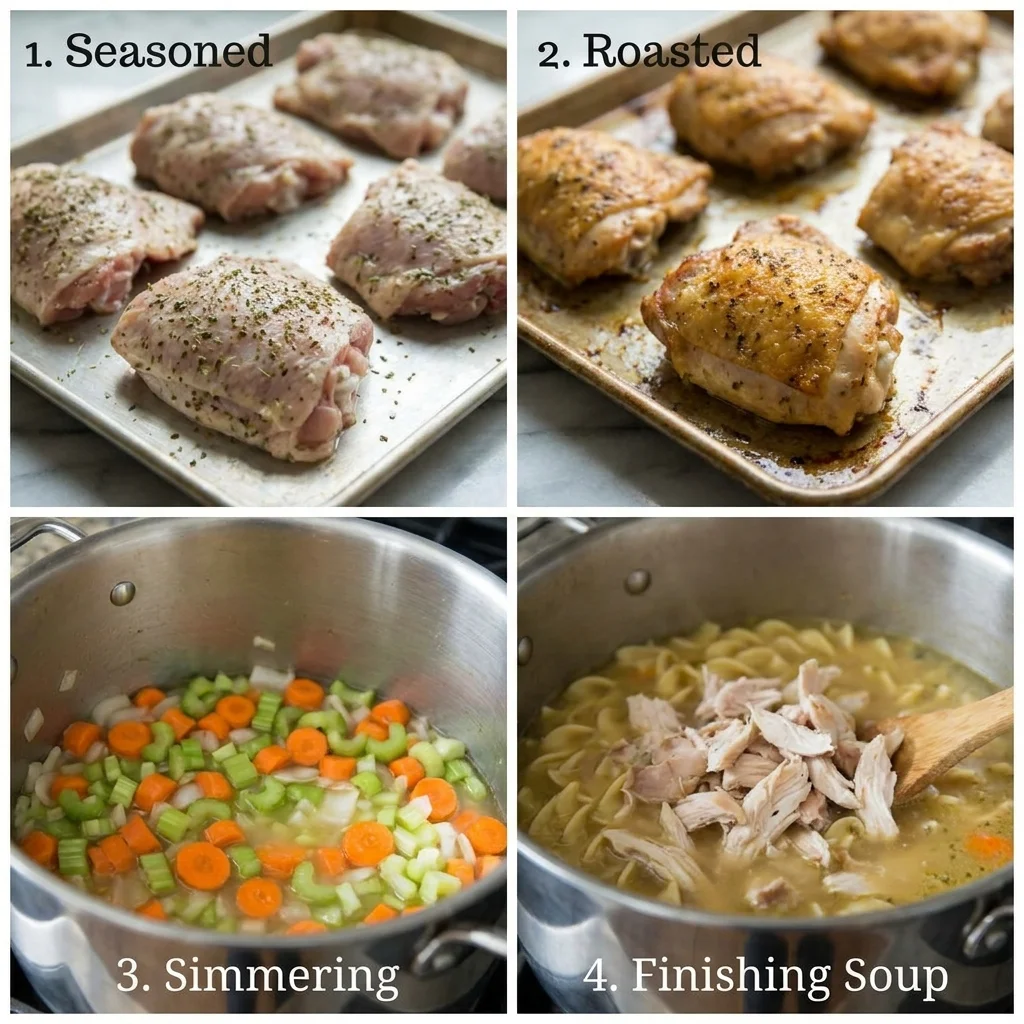
Place the thighs skin-side up on the pan. Rub with 1 tablespoon oil, one-half teaspoon salt, one-half teaspoon pepper, and one-half teaspoon thyme.
- Roast until safely cooked.
Roast for 25 to 35 minutes. The thickest part must reach at least 165°F or 74°C, and the skin should have browned patches. Rest the chicken for 10 minutes.
Thighs often become easier to shred between 175°F and 185°F, but 165°F is the safe minimum. Judge the batch with a thermometer rather than the color of the juices.
- Build the vegetable base.
While the chicken roasts, heat the remaining tablespoon of oil in the soup pot over medium heat. Add onion, carrots, celery, and one-half teaspoon salt. Cook for 8 to 10 minutes, stirring every few minutes, until the onion looks translucent and the carrot edges begin to soften.
- Season the broth.
Add garlic, the remaining thyme, and one-quarter teaspoon pepper. Stir for 30 seconds, then pour in the broth and water and add the bay leaves. Bring to a gentle boil, reduce to a steady simmer, and cook for 12 minutes.
Avoid a hard boil. Vigorous movement breaks softened vegetables and makes the broth look cloudier.
Save the Roasting Juices
After the chicken rests, tilt the sheet pan and spoon the clear golden juices into the soup pot. Leave any scorched black spots behind. If the juices have set on the pan, loosen them with one-quarter cup of hot broth and scrape gently before returning that liquid to the pot.
- Prepare the chicken.
Remove and discard the skin and bones. Pull the meat into small spoon-sized pieces, keeping the strands thick enough to remain juicy.
- Cook the noodles.
Remove the bay leaves. Bring the broth to a lively simmer, add the egg noodles, and cook for one minute less than the package’s lower time estimate. Stir twice so the noodles separate.
For planned leftovers, transfer the amount of noodle-free soup base you want to store before adding pasta. Cook only the noodles needed for today in the remaining broth.
- Finish without overcooking the chicken.
Return the shredded meat and any cutting-board juices to the pot. Simmer for 2 minutes, then turn off the heat. Fold in dill and parsley, rest for 5 minutes, and adjust the remaining salt and pepper after tasting the broth.
Expert Tips for Chicken Noodle Soup
- Dry the chicken before seasoning so surface moisture does not block browning.
- Cut vegetables to similar thicknesses; uneven pieces become either firm or fragile in the same pot.
- Use low-sodium broth because roasting juices concentrate seasoning as they reduce.
- Keep the simmer controlled to preserve distinct vegetables and a cleaner broth.
- For a make-ahead meal, prepare the noodle-free base two days early and add noodles while reheating.
- Refrigerate cooked soup within two hours and use it within three to four days.
- Let the herbs wilt in residual heat so their aroma stays noticeable at the table.
Chicken Noodle Soup Mistakes and Fixes
The broth tastes flat
Cause: The broth may need salt, or the vegetables may be undercooked.
Prevention: Cook the vegetables for the full 8 to 10 minutes and season in stages.
Fix: Add salt by the one-eighth teaspoon. Dill and pepper add definition without more sodium.
The noodles become swollen
Cause: Pasta keeps absorbing liquid during cooling and storage.
Prevention: Portion off the soup intended for later before the noodles enter the pot.
Fix: Add fresh hot broth to restore the ratio and serve promptly.
The chicken is dry
Cause: Small thighs roasted too long, or shredded meat simmered too early.
Prevention: Check the temperature early and return the chicken only for the final 2 minutes.
Fix: Cut dry meat smaller and moisten it with hot broth.
The broth looks greasy
Cause: Too much rendered skin fat entered the chicken noodle soup.
Prevention: Spoon in the clear juices and leave thick surface fat behind.
Fix: Let the pot stand off heat for 3 minutes, then skim the floating fat with a wide spoon.
The vegetables fall apart
Cause: A hard boil or thin slices damaged the vegetables.
Prevention: Use half-inch carrot coins and maintain a steady simmer.
Fix: Stop stirring and lower the heat. Serve gently so the remaining pieces stay intact.
The soup is too salty
Cause: Salty broth and concentrated pan juices exceeded the seasoning plan.
Prevention: Use low-sodium broth and reserve the final salt until tasting.
Fix: Add unsalted broth or hot water one-quarter cup at a time. Increase noodles or vegetables only if they can cook without overcooking the existing ingredients.
Portion Before Adding Noodles
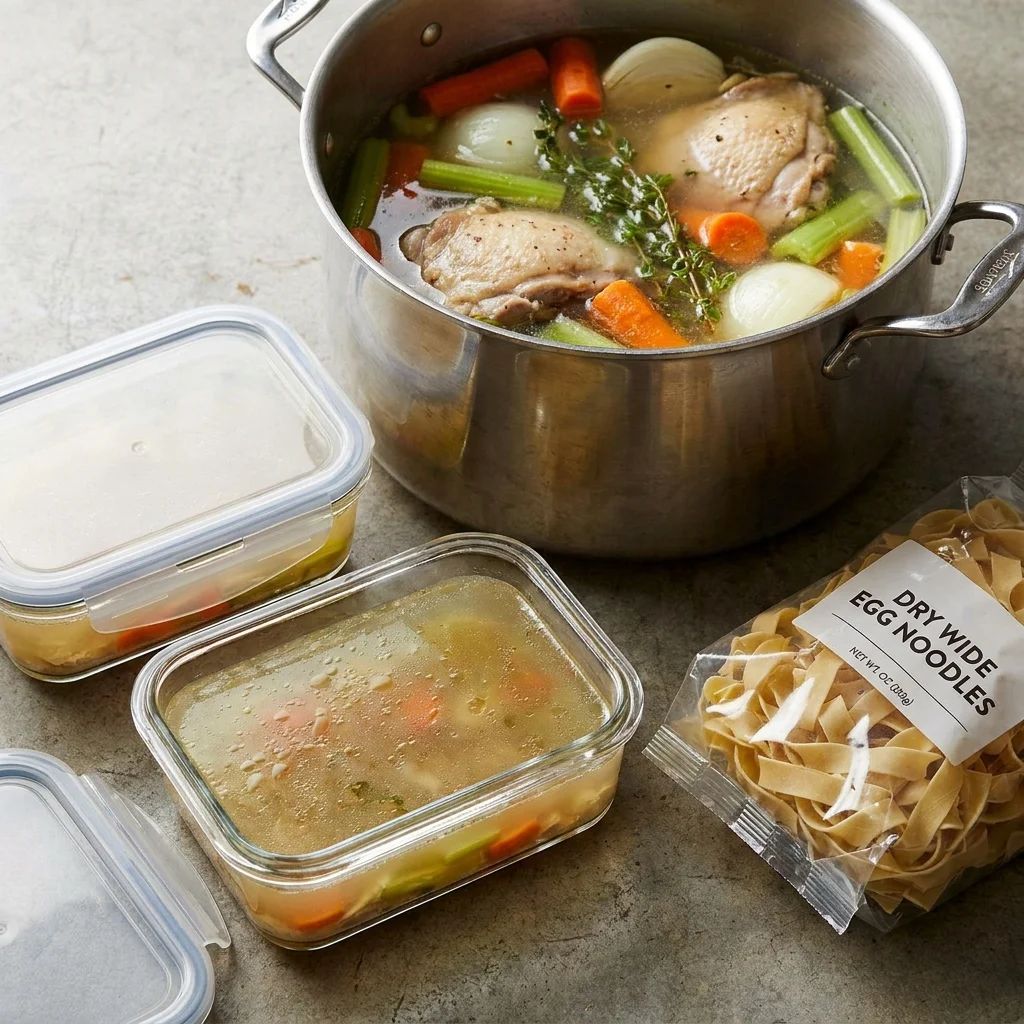
If you expect leftovers, move the required amount of soup base into shallow containers before cooking the pasta. Cool and refrigerate those portions promptly. When reheating, bring one portion to a simmer, add an appropriate amount of dry noodles, and cook according to their package time.
Chicken Noodle Soup Storage
Room temperature: Refrigerate the soup within two hours, or within one hour when the room or outdoor temperature is above 90°F or 32°C.
Refrigerator: Store cooled soup in shallow airtight containers for three to four days. Keep noodle-free base separate when possible.
Freezer: Freeze the chicken, vegetables, and broth without noodles for up to three months. Leave expansion space in the container.
Reheating: Heat soup in a saucepan to 165°F or 74°C. Add dry noodles to noodle-free portions during reheating, allowing the full package cooking time.
Make-ahead notes: Roast the chicken and prepare the soup base up to two days ahead. Refrigerate them together without noodles, then finish with pasta and herbs when serving.
Chicken Noodle Soup Variations
Spicy Black Pepper:
Add one-half teaspoon black pepper and a pinch of certified crushed red pepper with the garlic. Moderate heat keeps chicken noodle soup balanced.
Mild Herb:
Reduce black pepper to one-quarter teaspoon and replace dill with parsley. This keeps the aromatic finish gentle without changing the method.
Gluten-Free:
Use a certified gluten-free noodle and verified broth. Cook the noodles separately because some varieties release enough starch to cloud and thicken the pot.
Chicken Breast:
Replace thighs with 900 grams bone-in chicken breasts. Begin checking at 20 minutes and remove them at 165°F or 74°C to protect the lean meat.
Dairy-Free:
The base recipe contains no dairy when the noodles are dairy-free. Check egg noodle labels or choose a suitable dairy-free pasta if milk cross-contact matters.
What to Serve with Chicken Noodle Soup
Soft dinner rolls:
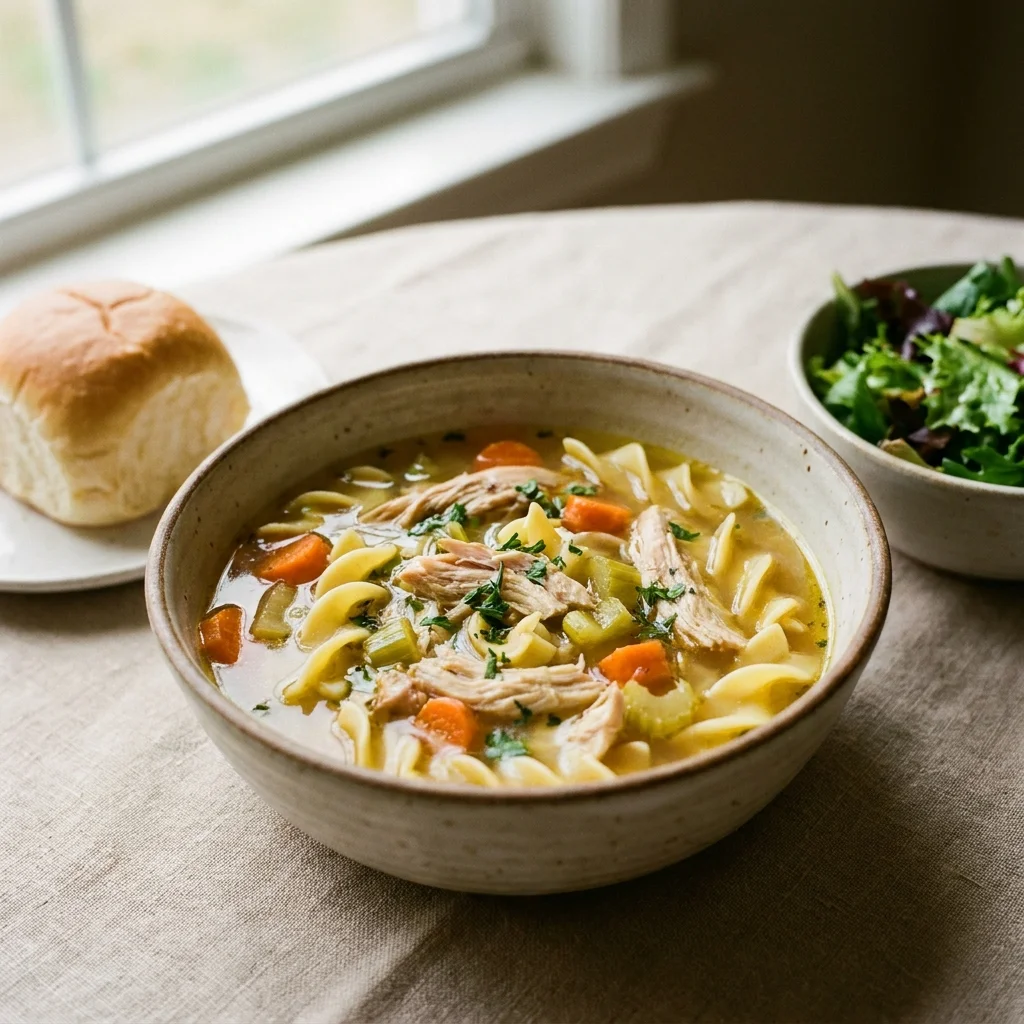
Their tender crumb absorbs broth without competing with dill and black pepper.
Simple green salad:
Crisp lettuce and cucumber give a cool contrast to the warm, soft soup components.
Roasted broccoli:
Deeply browned edges echo the roasted chicken while adding a firmer vegetable texture.
Apple and cabbage slaw:
A lightly dressed slaw adds crunch and a mild sweet note beside the savory bowl.
Plain yogurt with cucumber:
A small chilled side cools a peppery variation. Choose certified yogurt without gelatin.
Chicken Noodle Soup FAQs
Can I replace chicken thighs with chicken breasts?
Yes, bone-in chicken breasts can replace the thighs by weight. Start checking them after 20 minutes because lean breast meat dries out sooner. Remove the chicken when the thickest part reaches 165°F or 74°C, rest it for 10 minutes, and shred it into thick pieces. Add the meat during the final 2 minutes, just as directed for thighs, rather than simmering it for the full broth time.
Why does homemade chicken noodle soup sometimes taste bland?
Chicken noodle soup usually needs better seasoning balance rather than one large addition of salt. Soften the vegetables fully, use the browned roasting juices, and taste after the chicken returns. Add salt in measured amounts, then use dill and black pepper to sharpen the aroma. A salty packaged broth can still taste flat when its vegetable and herb flavors have not developed.
How do I prevent noodles from becoming mushy in leftovers?
Remove the portions intended for storage before noodles enter the soup. Refrigerate or freeze that chicken-and-vegetable base, then cook fresh noodles in each portion during reheating. If the entire pot will be served immediately, cook the pasta directly in the broth for one minute less than the package’s lower estimate. The 5-minute rest finishes the texture properly without prolonged boiling.
Can I prepare or freeze the soup ahead?
Yes, prepare the roasted chicken and noodle-free soup base up to two days ahead and keep them refrigerated together. For longer storage, freeze the base in airtight containers for up to three months, leaving room for expansion. Thaw overnight in the refrigerator or reheat safely from frozen in a saucepan. Add dry noodles and fresh herbs only during the final reheating so their texture and aroma remain distinct.
How can I tell when the roasted chicken is ready?
Insert an instant-read thermometer into the thickest part without touching the bone. The chicken is safe when it reaches at least 165°F or 74°C. Bone-in thighs often shred more easily at a somewhat higher temperature, but avoid relying on juice color or roasting time alone. Pan material, thigh size, and oven accuracy all affect timing, so begin checking at 25 minutes and continue in short intervals.
A Better Way to Plan the Pot
Decide how much soup will be eaten before opening the noodle package. That single choice protects tomorrow’s broth more effectively than trying to rescue fully swollen pasta. Chicken noodle soup also reheats more evenly when it is divided into shallow portions promptly rather than cooled in one deep stockpot.
At the table, offer dill and black pepper separately so each bowl can be adjusted without changing the whole batch.
If you loved this recipe, save it to your soup recipes Pinterest board so you can find it easily later!
Roasted Chicken Noodle Soup with Dill and Black Pepper
Ingredients
Equipment
Method
- Preheat the oven to 425°F (220°C) and line a rimmed sheet pan. Place chicken thighs skin-side up, coat with 1 tablespoon oil, ½ teaspoon salt, ½ teaspoon pepper, and ½ teaspoon thyme. Roast for 25–35 minutes, until the thickest part reaches 165°F (74°C). Rest for 10 minutes.
- While the chicken roasts, heat the remaining tablespoon of oil in a large pot over medium heat. Cook onion, carrots, celery, and ½ teaspoon salt for 8–10 minutes, until the onion is translucent and carrot edges begin to soften.
- Stir in garlic, remaining thyme, and ¼ teaspoon pepper for 30 seconds. Add broth, water, and bay leaves. Bring to a gentle boil, reduce to a steady simmer, and cook for 12 minutes.
- Spoon the clear roasting juices from the sheet pan into the pot, leaving thick fat and scorched spots behind. Remove and discard chicken skin and bones, then pull the meat into spoon-sized pieces.
- Remove bay leaves. If saving portions for later, transfer the desired amount of soup base to containers now, before adding noodles. Bring the remaining soup to a lively simmer, add noodles, and cook for 1 minute less than the package’s lower time estimate, stirring twice.
- Return shredded chicken and any cutting-board juices to the pot. Simmer for 2 minutes, then turn off the heat. Fold in dill and parsley, rest for 5 minutes, and adjust salt and pepper to taste.
Notes
- Leftover noodles: Portion off soup base before adding pasta, then cook fresh noodles in each serving during reheating to prevent swollen, broth-soaked noodles.
- Make-ahead: Prepare the roasted chicken and soup base up to 2 days ahead. Refrigerate without noodles. Add pasta and fresh herbs only when serving.
- Storage: Refrigerate covered for 3–4 days. Freeze noodle-free base for up to 3 months. Reheat to 165°F (74°C).