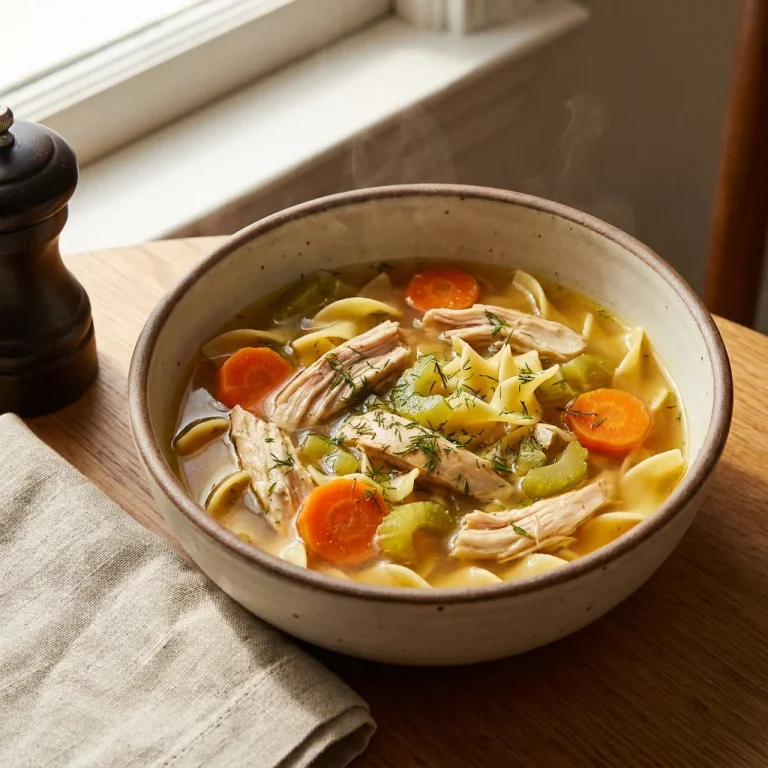
Beef Stew with Caramelized Onion and Lemon Parsley Finish
Beef stew depends on two kinds of patience. The first develops a dark crust on the beef without crowding the pan. The second keeps the liquid at a quiet simmer until firm cubes turn spoon-tender. Rushing either stage leaves flavor or tenderness behind.
This version builds its broth with deeply softened onions, tomato paste, smoked paprika, thyme, and coriander. Potatoes, carrots, and parsnips cook during the final stretch, when the beef has already begun to relax. Fresh parsley, lemon zest, and a measured spoonful of lemon juice brighten the finished pot without making it taste citrusy.
Every meat product, broth, seasoning blend, and packaged ingredient should be certified or verified as suitable. The recipe contains no wine, beer, pork, or alcohol-based cooking ingredient. Beef broth varies widely, so choose one with a clear ingredient list and no hidden flavoring concerns.
The result is a substantial beef stew with a glossy, spoon-coating broth rather than a flour-heavy gravy. It can be made a day ahead, and the flavor becomes more integrated after an overnight rest.
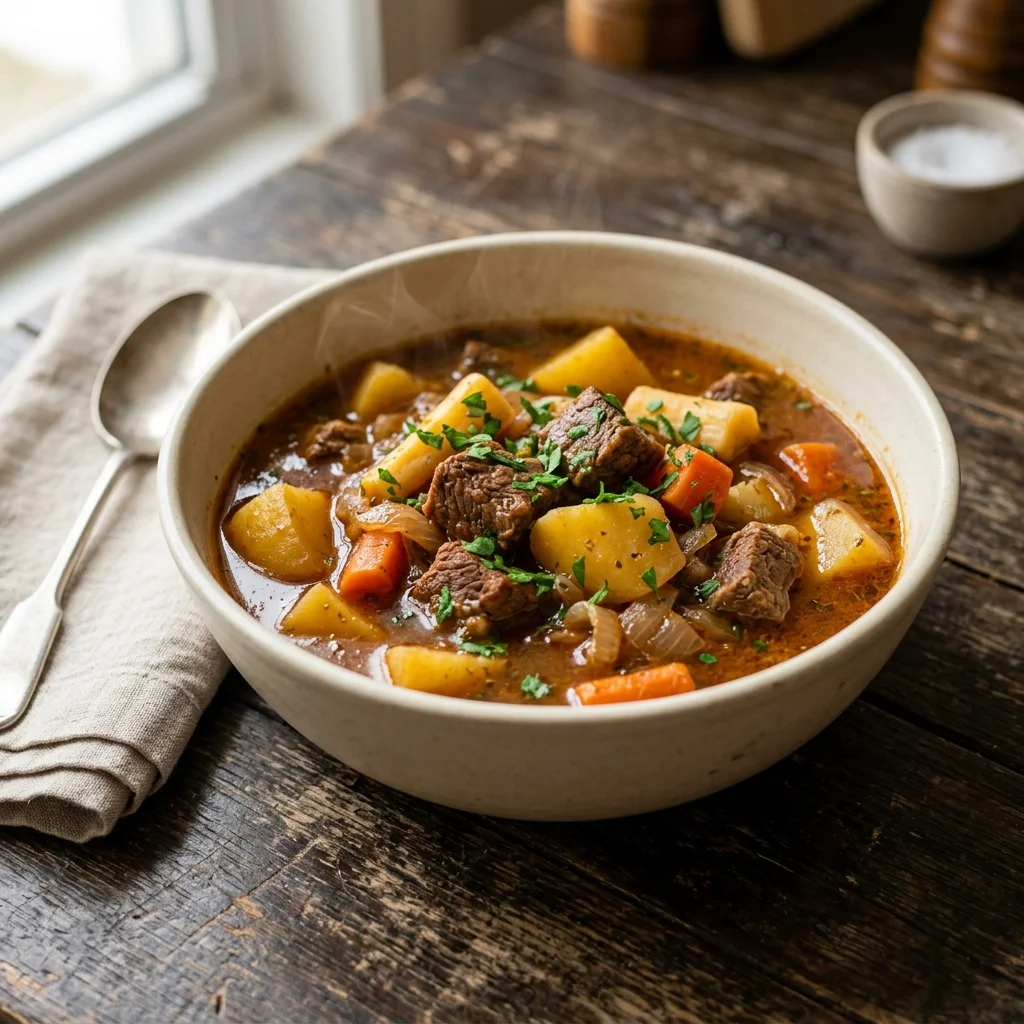
Table of Contents
Why This Beef Stew Method Works
- Chuck has enough connective tissue to become tender during a long, gentle simmer.
- Browning in small batches creates concentrated roasted flavor without steaming the beef.
- Slowly cooked onions dissolve partly into the liquid, giving the broth natural body.
- Root vegetables enter later, so they keep their shape while the meat finishes cooking.
- Lemon and parsley are added after the heat is turned off, preserving their fresh aroma.
Beef Stew at a Glance
- Prep time: 30 minutes
- Cook time: 2 hours 20 minutes to 2 hours 45 minutes
- Total time: 2 hours 50 minutes to 3 hours 15 minutes
- Servings: 8
- Difficulty: Moderate
- Estimated calories: 470 per serving
- Key ingredient: Certified beef chuck
Best for: Cold-weather dinners, weekend cooking, and make-ahead meals
Beef Stew Nutrition Information
- Calories per serving: Approximately 470
- Protein: Approximately 38 grams
- Carbohydrates: Approximately 39 grams
- Fat: Approximately 20 grams
- Fiber: Approximately 6 grams
- Sugar: Approximately 8 grams
- Sodium: Approximately 720 milligrams
- Serving size: One-eighth of the prepared stew
- Servings per recipe: 8
Beef supplies most of the protein and fat. Potatoes, carrots, parsnips, and onions account for most of the carbohydrates and fiber. Sodium will change with the broth and the amount of salt retained after cooking.
Nutrition values are estimates based on standard ingredients. Actual values vary by brand, trimming, evaporation, and portion size.
Ingredients for Beef Stew
For the beef and broth
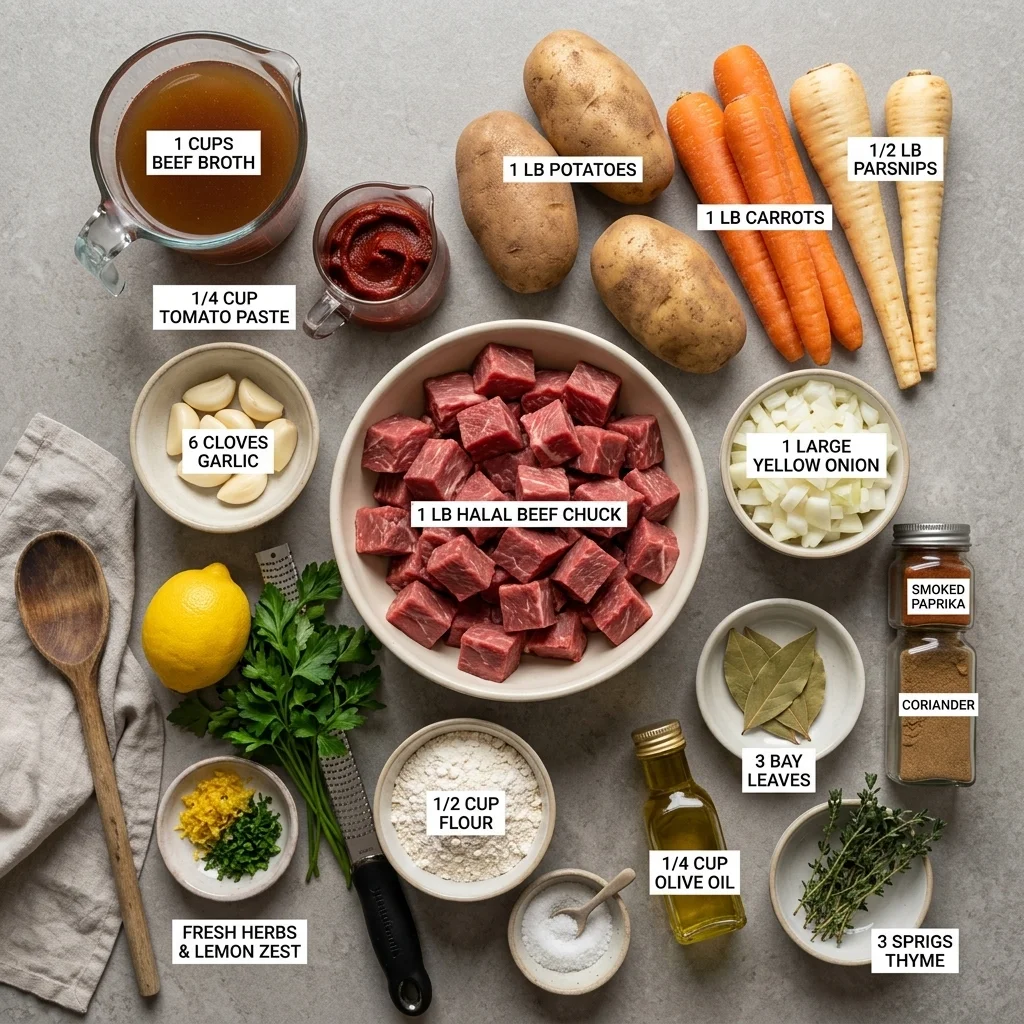
- 1 kilogram certified beef chuck, trimmed and cut into 4-centimeter cubes
- 2 teaspoons fine salt, divided
- Three-quarters teaspoon ground black pepper, divided
- 3 tablespoons all-purpose flour
- 3 tablespoons olive oil, divided
- 2 medium yellow onions, about 300 grams, thinly sliced
- 4 garlic cloves, finely chopped
- 2 tablespoons tomato paste
- 1 teaspoon smoked paprika
- 1 teaspoon dried thyme
- Half a teaspoon ground coriander
- 2 bay leaves
- 6 cups low-sodium certified beef broth, 1.4 liters
- Beef chuck has connective tissue that softens during moist cooking. Brisket or boneless short rib can work, although their cooking times differ. Avoid very lean steak cuts because they can dry out.
Flour helps browning and gives the broth a light sheen. For a gluten-free version, use the starch method below.
Smoked paprika adds a quiet smoky note. Check spices and broth for suitability.
For the vegetables and finish
- 500 grams Yukon Gold or other waxy potatoes, cut into 4-centimeter pieces
- 350 grams carrots, peeled and cut into thick diagonal pieces
- 250 grams parsnips, peeled and cut into thick diagonal pieces
- 3 tablespoons finely chopped flat-leaf parsley
- 1 teaspoon finely grated lemon zest
- 1 tablespoon fresh lemon juice, plus more only after tasting
Waxy potatoes hold together reliably. Parsnips add earthy sweetness; use another 200 grams of carrots if needed.
The restrained lemon finish sharpens the broth without making it taste citrusy.
Equipment for Beef Stew
- A 5- to 6-liter heavy pot or Dutch oven for even heat.
- A wide plate or tray for the seasoned beef.
- Kitchen tongs for turning the beef.
- A wooden spoon for loosening the browned layer.
- A sharp chef’s knife for uniform pieces.
Prepare Before Cooking
Trim hard exterior fat but leave thin marbling. Cut uniform cubes and dry every surface; moisture slows browning.
Slice the onions, chop the garlic, and cut the vegetables before heating the pot. Keep the vegetables separate and measure the broth and seasonings.
How to Make Beef Stew
- Season the dried beef with 1 and a half teaspoons salt and half a teaspoon pepper. Sprinkle over the flour and toss until each cube has a thin, dry coating. Shake off loose flour.
- Heat the pot over medium-high heat for 2 minutes. Add 1 tablespoon oil. Arrange one-third of the beef in a single layer with space between the pieces.
- Brown the first batch for 7 to 9 minutes, turning only when a side releases easily. Transfer it to a plate and repeat with the remaining beef, adding another tablespoon of oil when the pot looks dry. Chef’s Note: Dark brown patches are useful; black flour or smoking oil means the heat is too high.
- Reduce the heat to medium. Add the final tablespoon of oil and the onions. Cook for 10 to 12 minutes, stirring regularly, until soft and amber at the edges. Add 2 tablespoons broth if the browned layer begins to burn.
- Add the garlic and cook for 30 seconds. Stir in the tomato paste, smoked paprika, thyme, and coriander. Cook for 60 to 90 seconds, moving the mixture constantly, until the paste darkens by one shade.
- Pour in about 1 cup broth. Scrape the base thoroughly, bringing the browned residue into the liquid. Add the remaining broth, bay leaves, browned beef, and any juices from the plate.
- Bring the pot just to a simmer, then reduce the heat to low. Partly cover, leaving a narrow gap for steam. Cook for 75 minutes. The surface should show an occasional lazy bubble rather than an active boil. Chef’s Note: A hard boil contracts the meat fibers and evaporates the broth before the connective tissue has time to soften.
- Test one cube. It should be beginning to yield but still feel firm in the center. Stir in the potatoes, carrots, and parsnips. Return to a gentle simmer.
- Partly cover and cook for 35 to 50 minutes. Stir once or twice with a broad motion so the potatoes do not break. Begin checking at 35 minutes.
- Remove the lid when the beef is fork-tender and the potatoes can be pierced without crumbling. If the broth seems thin, simmer uncovered for 8 to 12 minutes. Chef’s Note: Judge thickness after a spoonful cools for 1 minute; very hot broth always appears thinner.
- Remove the bay leaves. Turn off the heat and stir in the parsley, lemon zest, and lemon juice. Taste, then add the remaining salt and pepper only as needed. Rest for 10 minutes before serving.
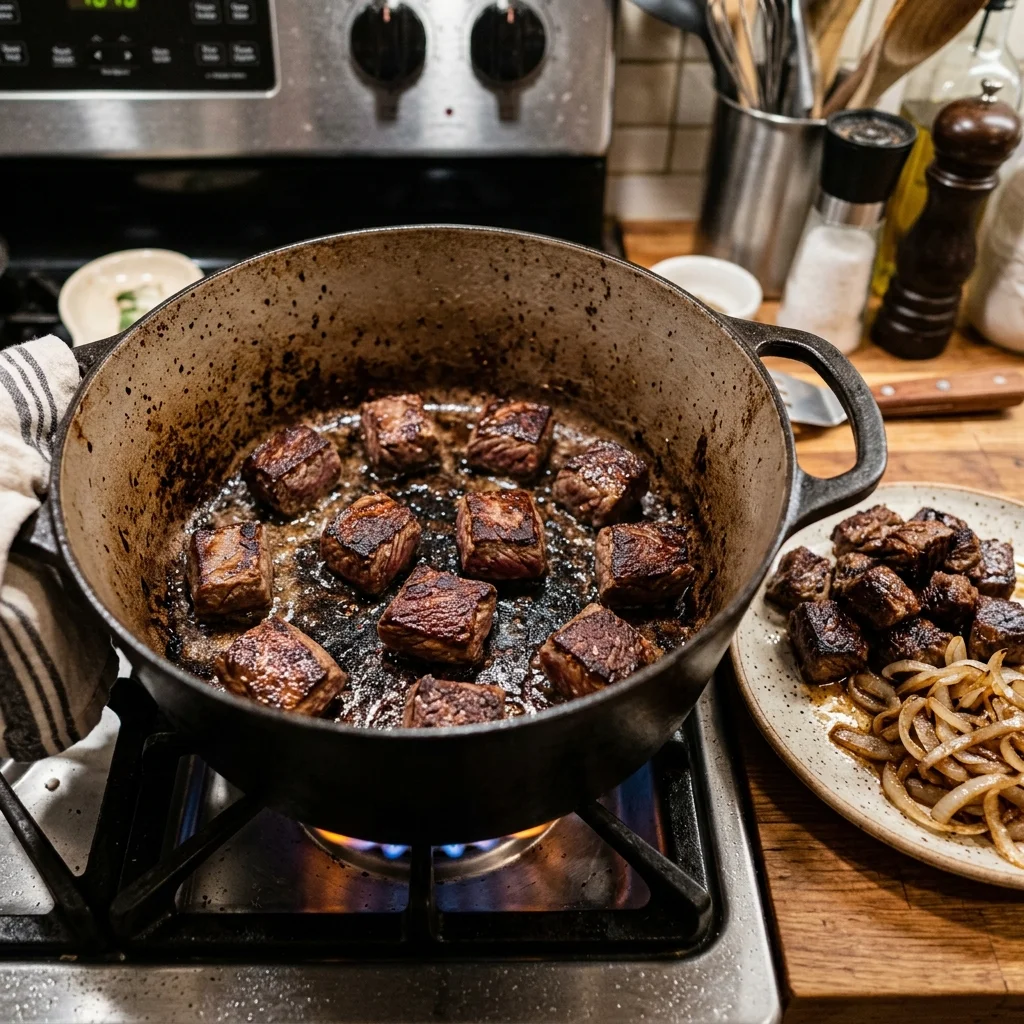
Beef Stew Browning Note
A crowded pot traps steam around the meat. If the cubes release liquid faster than it can evaporate, stop adding beef and let the pan recover its heat. Three deliberate batches take longer at the stove but give the broth a deeper roasted character.
Expert Tips for Better Texture and Flavor
- Match the cube size. Pieces near 4 centimeters finish at roughly the same time.
- Meat that clings to the base has not formed a complete crust. Wait another minute before turning.
- Keep the simmer calm. If the lowest setting bubbles actively, open the lid farther or use a smaller burner.
- Add tender vegetables such as peas only during the final 5 minutes.
- Season in stages because the broth becomes saltier as it reduces.
- Rest for 10 minutes before judging thickness or skimming excess surface fat.
Beef Stew Problems and Practical Fixes
- The beef is still tough. It probably needs more gentle cooking. Follow tenderness rather than a rigid finish time. Add hot broth if needed, cover, and simmer for another 15 minutes before testing.
- The meat is dry and stringy. A lean cut, small cubes, or boiling may be responsible. Use marbled chuck and a quiet simmer. Stop cooking once the vegetables are tender; more heat will not restore moisture.
- The broth is watery. Leave a narrow lid gap during cooking. To fix it, simmer uncovered for 8 to 12 minutes or mash two potato pieces into the broth.
- The bottom tastes scorched. Flour or tomato paste likely blackened. Deglaze when the paste darkens. Do not scrape a burned layer; transfer the unburned stew to a clean pot.
- The vegetables are falling apart. Use larger pieces, add them after 75 minutes, and stir gently. Remove intact pieces while the beef finishes, then return them for 5 minutes.
- The broth tastes flat. Add salt in small pinches after mixing in the parsley and lemon. A little acidity may help more than extra spice.
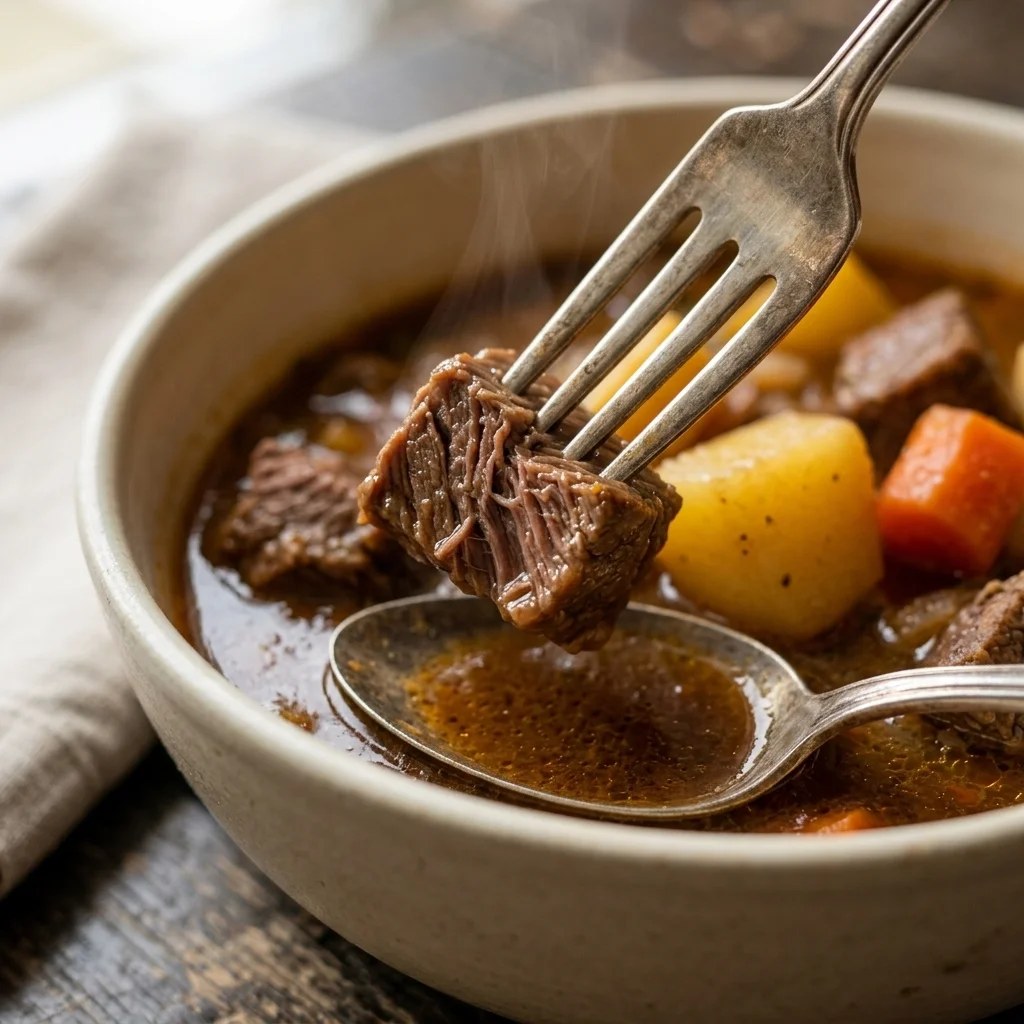
Beef Stew Make-Ahead Note
Cool the pot safely, cover, and refrigerate. The next day, lift away any firm excess fat, then reheat slowly. Add the parsley and lemon after reheating if you want their aroma to remain especially bright.
Storage and Reheating
- Room temperature: Refrigerate leftovers within 2 hours. If the surrounding temperature is above 90 degrees Fahrenheit, or 32 degrees Celsius, refrigerate within 1 hour.
- Refrigerator: Divide the stew among shallow covered containers and keep at 40 degrees Fahrenheit, or 4 degrees Celsius, or below for 3 to 4 days.
- Freezer: Cool completely and freeze in meal-size airtight containers for up to 3 months for the strongest quality. Potatoes may become slightly grainy after thawing. Leave some empty space because the liquid expands.
- Reheating: Thaw frozen portions in the refrigerator. Reheat on the stove over medium-low heat, stirring occasionally, until the center reaches 165 degrees Fahrenheit, or 74 degrees Celsius. Add a small splash of broth if the liquid has thickened.
- Make-ahead timing: Prepare the entire beef stew up to 2 days before serving. Hold back the parsley, lemon zest, and juice, then add them after the final reheat.
Beef Stew Variations
- Spicy version: Add half a teaspoon crushed red pepper with the paprika and finish bowls with fresh chili.
- Mild version: Replace the smoked paprika with sweet paprika and omit the coriander.
- Gluten-free version: Omit the flour. Stir together 1 tablespoon cornstarch and 2 tablespoons cold water, add at the end, and simmer for 2 minutes. Check packaged ingredients for cross-contact.
- Slow-cooker version: Brown the floured beef and cook the onions, garlic, tomato paste, and spices on the stove. Transfer them to a 6-liter slow cooker with 5 cups broth and the bay leaves. Cook on low for 6 hours, add the vegetables, then cook 2 to 3 hours longer until tender.
- Vegetarian version: Replace the beef with 450 grams quartered mushrooms and 2 drained cans brown lentils. Brown the mushrooms, use suitable vegetable broth, and simmer for 25 minutes before adding the vegetables. This becomes a mushroom-lentil stew with its own shorter timing rather than a direct meat substitute.
What to Serve with Beef Stew
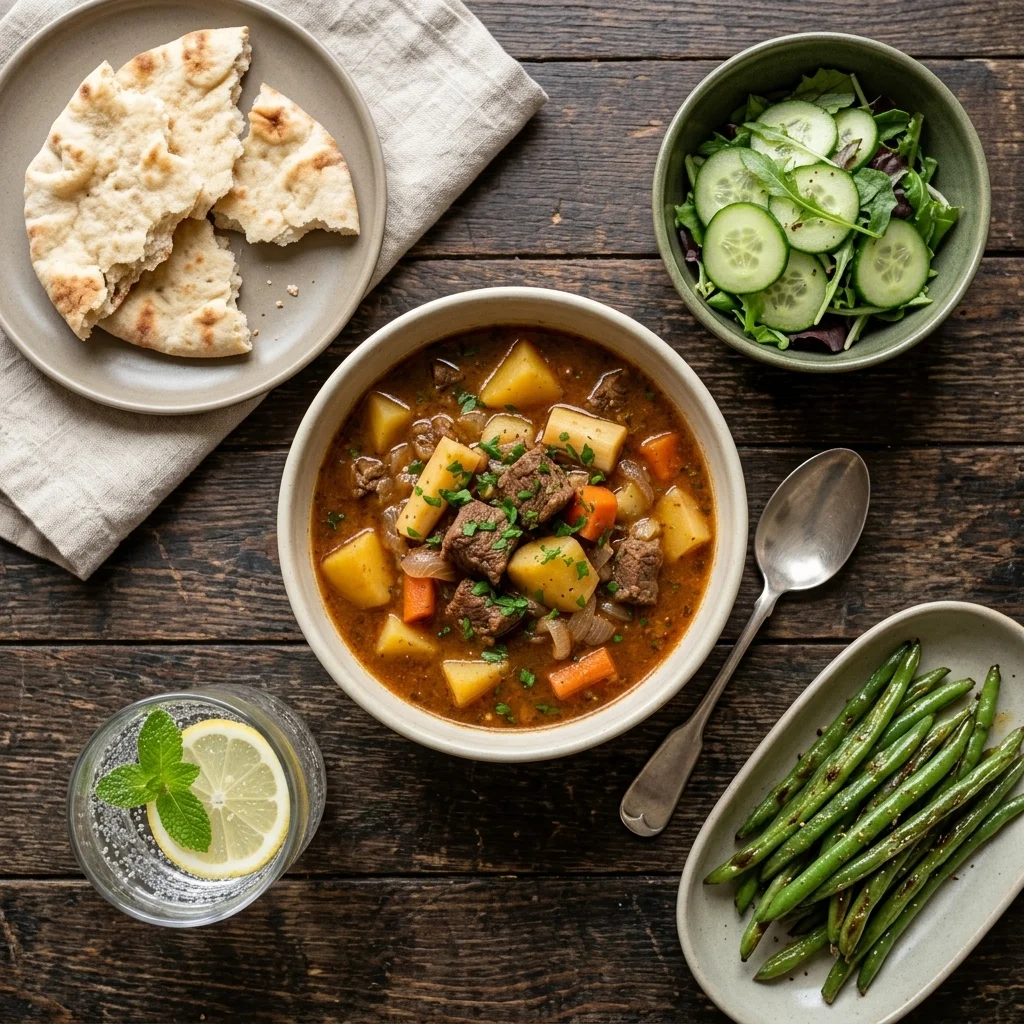
- Warm homemade flatbread reaches the broth left beneath the vegetables without adding another strongly seasoned element.
- A simple green salad with cucumber and lemon gives the plate a cool, crisp contrast.
- Roasted green beans bring browned edges and a lighter vegetable side.
- Plain rice stretches the meal for a crowd and absorbs the broth.
- Sparkling water with lemon and mint refreshes the palate and keeps the meal alcohol-free.
Frequently Asked Questions About Beef Stew
Can beef stew be made ahead?
Yes. Cook it fully, cool it promptly in shallow containers, and refrigerate for up to 3 to 4 days. For the cleanest fresh flavor, reserve the parsley, lemon zest, and juice until reheating. Warm the stew slowly and stir from the bottom so the dense vegetables heat evenly. The refrigerated broth may look firm because gelatin and fat set when cold; it will loosen as the pot warms.
Why is my beef still tough after two hours?
Chuck becomes tender when its connective tissue has had enough time at a gentle simmer. Cube size, the animal, and the actual temperature of the pot can shift that point. Toughness often means the meat needs another 15 to 30 minutes, not higher heat. Keep enough liquid in the pot, partly cover it, and test the same-size cube again. If the beef is dry and fibrous, the cut may have been too lean or boiled too hard.
What can replace beef chuck?
Brisket, boneless short rib, or a labeled stewing cut with visible marbling can replace chuck. Trim only thick exterior fat and keep the cubes close to 4 centimeters. Each cut softens on its own schedule, so use the clock as a guide and fork tenderness as the final test. Lean sirloin or round can cook into edible stew, but they offer less margin before the meat becomes dry.
How do I know when beef stew is done?
Insert a fork into a large beef cube and twist gently. The fork should enter without force, and the meat should begin to separate while still holding its shape. A knife should pass through the potatoes and carrots without a hard center. The broth should lightly coat a spoon after cooling for a minute. If the vegetables are ready first, lift them out temporarily and keep simmering the beef.
How can I thicken beef stew without making it gluey?
Begin by simmering uncovered for 8 to 12 minutes, which concentrates flavor as well as texture. You can also mash two cooked potato pieces into the liquid. For a faster result, stir together 1 tablespoon cornstarch and 2 tablespoons cold water, add it gradually, and simmer for 2 minutes. Avoid adding dry flour directly to the pot because it forms pale lumps and can leave a raw taste.
A Pot Worth Waiting For
Good beef stew is less about complicated ingredients than control at each stage. Dry meat develops a stronger crust. Amber onions deepen the broth. A low simmer gives chuck time to soften, and late-added vegetables remain distinct instead of dissolving into the pot.
Taste only after the parsley and lemon have joined the broth. That final adjustment reveals whether the stew needs salt, acidity, or simply a few minutes of rest. Serve it warm with flatbread or a crisp salad, then cool any leftovers promptly.
The method is flexible where it should be: cooking time follows the beef, and broth thickness follows your preference. Its core remains consistent, producing tender meat, intact vegetables, and a savory broth with a clean finish.
Beef Stew with Root Vegetables and Lemon-Herb Finish
Ingredients
Equipment
Method
- Pat beef dry, season with 1½ teaspoons salt and ½ teaspoon pepper, then toss with flour until each cube has a thin, dry coating. Shake off the excess.
- Heat the pot over medium-high heat. Working in three batches with 1 tablespoon oil per batch, brown the beef for 7–9 minutes per batch, turning only when a side releases cleanly. Transfer each batch to a plate.
- Reduce heat to medium, add the remaining oil and onions, and cook for 10–12 minutes until soft and amber. Add garlic for 30 seconds, then stir in tomato paste, smoked paprika, thyme, and coriander for 60–90 seconds until the paste darkens by one shade.
- Pour in 1 cup broth and scrape the bottom of the pot thoroughly. Add remaining broth, bay leaves, browned beef, and any plate juices. Bring just to a simmer, then reduce heat to low, partly cover, and cook for 75 minutes with only an occasional lazy bubble at the surface.
- Stir in potatoes, carrots, and parsnips. Return to a gentle simmer, partly cover, and cook for 35–50 minutes, stirring gently once or twice, until the beef is fork-tender and vegetables can be pierced without crumbling. If the broth seems thin, simmer uncovered for 8–12 minutes.
- Remove bay leaves, turn off the heat, and stir in parsley, lemon zest, and lemon juice. Adjust salt and pepper to taste. Rest for 10 minutes before serving.
Notes
- Make-ahead: Cook up to 2 days ahead and refrigerate. Add parsley, lemon zest, and juice after reheating for the brightest finish. Reheat slowly to 165°F (74°C).
- Storage: Refrigerate in shallow covered containers for 3–4 days. Freeze the cooled stew (without parsley and lemon) for up to 3 months; potatoes may become slightly grainy after thawing.
- Tough beef fix: If the beef is still firm after 75 minutes, add hot broth if needed, cover, and simmer for another 15 minutes before testing. Follow tenderness, not the clock.