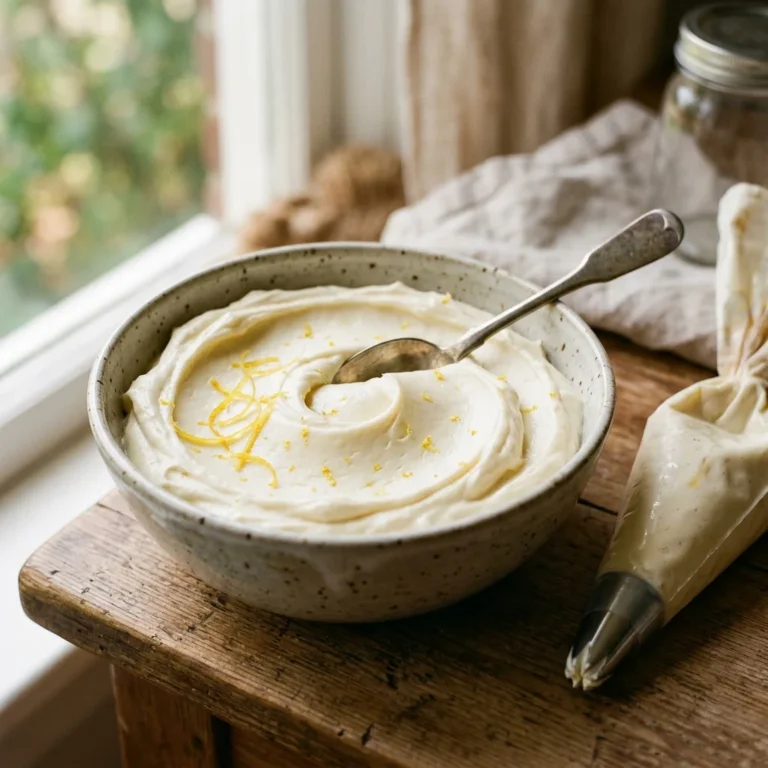
Meatloaf with Mushrooms and Pomegranate Tomato Glaze
Meatloaf often fails at the point where moisture and structure meet. Too little liquid produces a tight, dry slice. Too much loose moisture leaves the loaf fragile or surrounded by liquid. This version manages both problems before the beef enters the bowl.
Finely chopped mushrooms and onion cook until their water has evaporated and their edges begin to brown. Fresh bread absorbs milk separately, creating a soft binder that distributes moisture through the meat. The cooled vegetables, eggs, herbs, and seasoning join that mixture before the beef is folded in, reducing the amount of handling the ground meat receives.
Instead of ketchup, the surface gets a pomegranate-tomato glaze with honey and smoked paprika. Its tart fruit flavor balances the beef and develops dark, glossy edges in the oven. The loaf bakes free-form on a rimmed sheet, allowing rendered fat to move away from the sides.
Use certified beef and verify the milk, bread, pomegranate molasses, spices, and packaged substitutions. The recipe contains no pork, bacon, alcohol, cooking wine, or uncertain animal shortening.
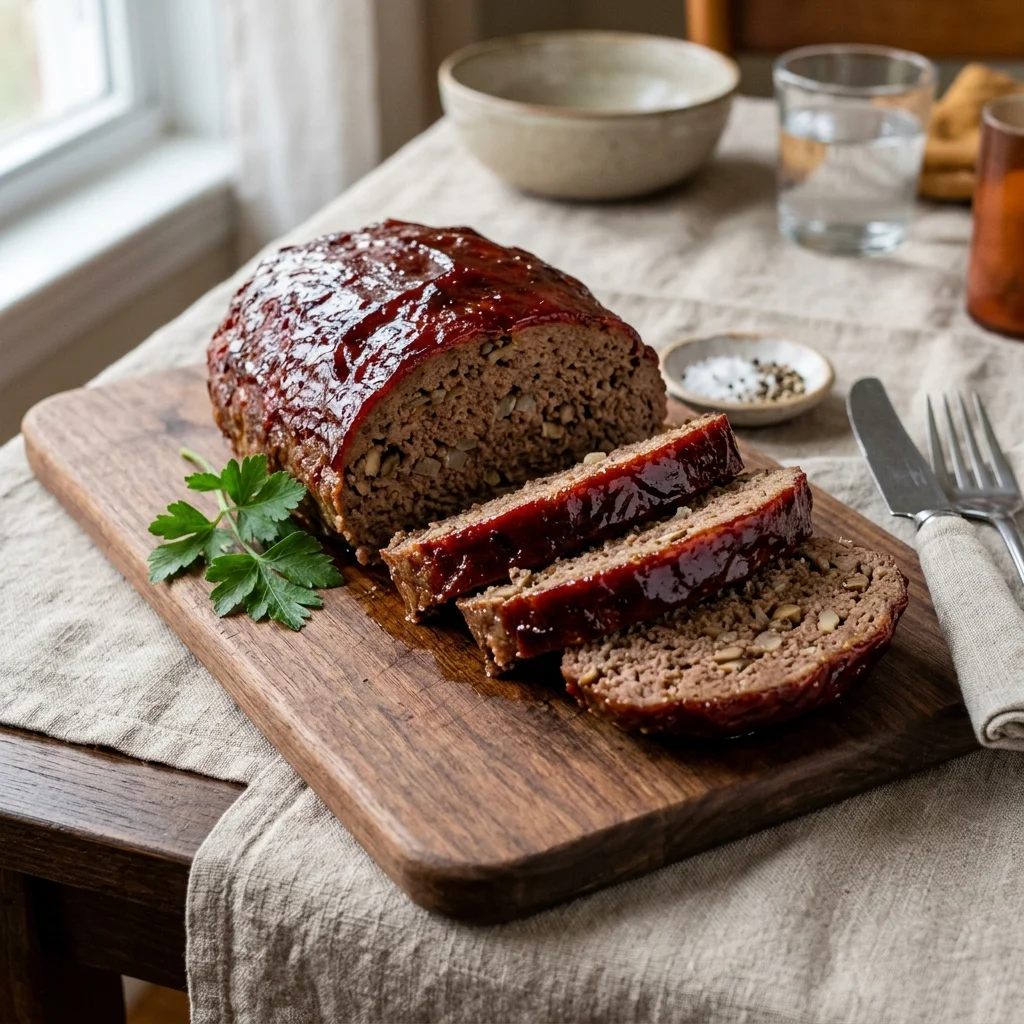
Table of Contents
Why This Meatloaf Slices Cleanly
- Cooked mushrooms add savory moisture without releasing raw water inside the loaf.
- Milk-soaked bread distributes liquid more evenly than dry crumbs scattered into meat.
- Eggs support the loaf while it cooks and cools.
- Gentle folding limits the dense texture caused by prolonged mixing.
- A 15-minute rest lets the hot juices settle before the first slice is cut.
Meatloaf at a Glance
- Prep time: 30 minutes
- Vegetable cooling time: 15 minutes
- Bake time: 55 to 65 minutes
- Resting time: 15 minutes
- Total time: Approximately 1 hour 55 minutes
- Servings: 8
- Difficulty: Moderate
- Estimated calories: 445 per serving
- Key ingredient: Certified ground beef with 15 percent fat
- Best for: Family dinners, make-ahead meals, sandwiches, and freezer portions
Meatloaf Nutrition Information
- Calories per serving: Approximately 445
- Protein: Approximately 32 grams
- Carbohydrates: Approximately 20 grams
- Fat: Approximately 26 grams
- Fiber: Approximately 2 grams
- Sugar: Approximately 9 grams
- Sodium: Approximately 690 milligrams
- Serving size: One-eighth of the prepared loaf
- Servings per recipe: 8
Beef supplies most of the protein and fat. Bread, milk, vegetables, and glaze contribute the carbohydrates. Sodium varies with the bread, beef, tomato paste, and pomegranate molasses.
Nutrition values are estimates based on standard ingredients. Actual values vary with brands, beef fat percentage, drainage, and serving size.
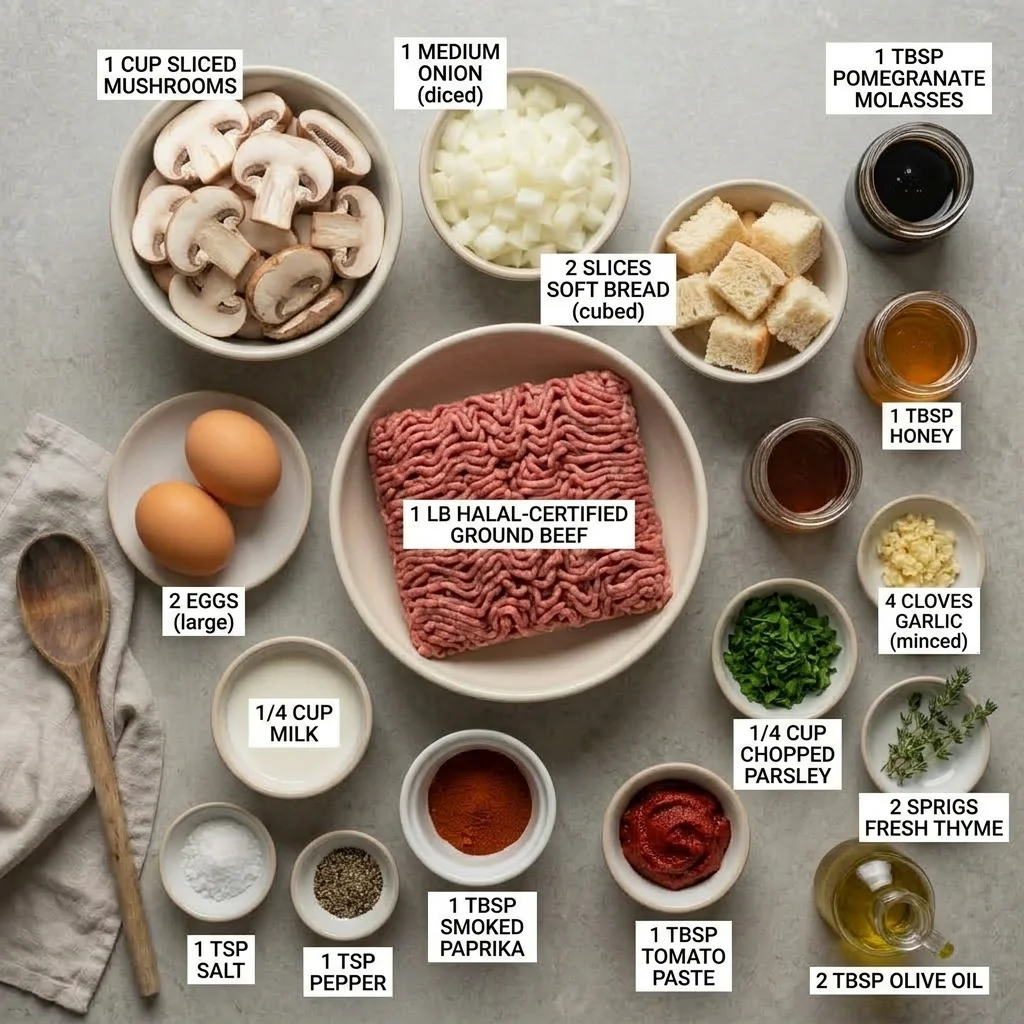
Ingredients for Meatloaf
For the mushroom-onion base
- 2 tablespoons olive oil
- 200 grams cremini or button mushrooms, very finely chopped
- 1 medium yellow onion, about 200 grams, finely diced
- 3 garlic cloves, finely chopped
- 1 tablespoon tomato paste
Chop mushrooms finely without making a wet paste. Cook until the skillet looks dry and brown residue appears. Add 1 teaspoon oil if they stick too early.
For the beef mixture
- 90 grams soft white or whole-wheat bread, torn into small pieces
- Half a cup whole milk, 120 milliliters
- 2 large eggs
- 1 kilogram certified ground beef, preferably 85 percent lean
- 1 and three-quarter teaspoons fine salt
- Three-quarters teaspoon ground black pepper
- 1 teaspoon dried thyme
- 1 teaspoon smoked paprika
- 3 tablespoons finely chopped flat-leaf parsley
Soft suitable sandwich bread absorbs milk quickly. Avoid strongly flavored bread, hard seeds, and questionable dough conditioners.
Beef containing about 15 percent fat stays tender without creating a deep pool. Leaner beef needs adjustment.
For the pomegranate-tomato glaze
- One-quarter cup tomato paste, 60 grams
- 2 tablespoons pomegranate molasses, 30 milliliters
- 1 tablespoon honey
- 2 tablespoons water
- Half a teaspoon smoked paprika
- One-quarter teaspoon fine salt
Choose pomegranate molasses made from concentrated juice without wine or alcohol-based flavoring. Honey balances its tartness.
Equipment for Meatloaf
- A large skillet for the mushrooms and onion.
- A rimmed sheet pan to contain rendered fat.
- Parchment paper to prevent sticking.
- A large mixing bowl for gentle folding.
- An instant-read thermometer for doneness.
Prepare the Pan and Mixtures
Preheat the oven to 375°F (190°C). Line a rimmed sheet pan with parchment. Clear enough refrigerator space for the cooked vegetables to cool briefly on a wide plate.
Chop the mushrooms, onion, garlic, and parsley before beginning at the stove. Tear the bread into pieces smaller than a grape. Whisk every glaze ingredient in a small bowl until no streaks of tomato paste remain.
How to Make Meatloaf
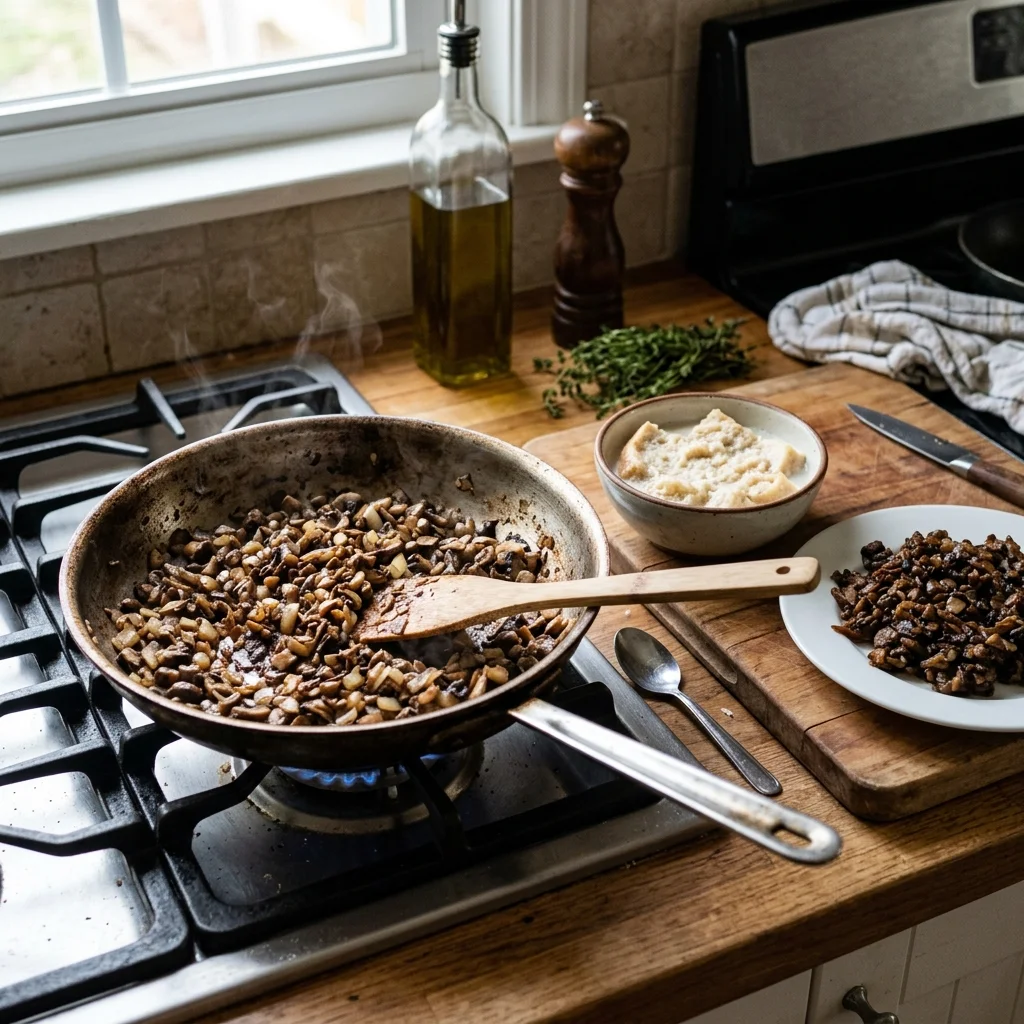
- Heat the olive oil in a wide skillet over medium-high. Add the mushrooms in a broad layer and cook for 6 to 8 minutes, stirring occasionally, until their liquid evaporates.
- Add the onion. Reduce the heat to medium and cook for 7 to 9 minutes, until soft with golden edges. Add the garlic and 1 tablespoon tomato paste, then stir for 60 seconds. Transfer the mixture to a wide plate and cool for 15 minutes. Chef’s Note: Warm vegetables can soften the beef fat and make the mixture harder to shape.
- Place the torn bread and milk in the mixing bowl. Press the bread into the milk and let it stand for 5 minutes. Mash with a fork until no dry center remains.
- Add the eggs, salt, pepper, thyme, smoked paprika, parsley, and cooled mushroom mixture. Whisk gently until the eggs are evenly distributed.
- Add the ground beef in several loose pieces. Fold with clean, damp hands just until the seasoning mixture disappears into the meat, about 45 to 60 seconds. Chef’s Note: Stop when the color looks even; kneading until sticky creates a tighter slice.
- Spoon the mixture into the prepared pan.Shape it into a loaf about 25 centimeters long, 14 centimeters wide, and 6 centimeters high. Smooth deep cracks without pressing hard. A consistent thickness helps the center and ends finish together.
- Bake for 35 minutes. Remove the pan and spoon away any large pool of rendered fat without tipping the loaf.
- Stir the glaze and spread about two-thirds over the top and sides. Return the loaf to the oven for 15 minutes.
- Apply the remaining glaze. Bake for another 5 to 15 minutes, until the center reaches 160 degrees Fahrenheit, or 71 degrees Celsius. Chef’s Note: Insert the thermometer from the side toward the center so the reading comes from the thickest area.
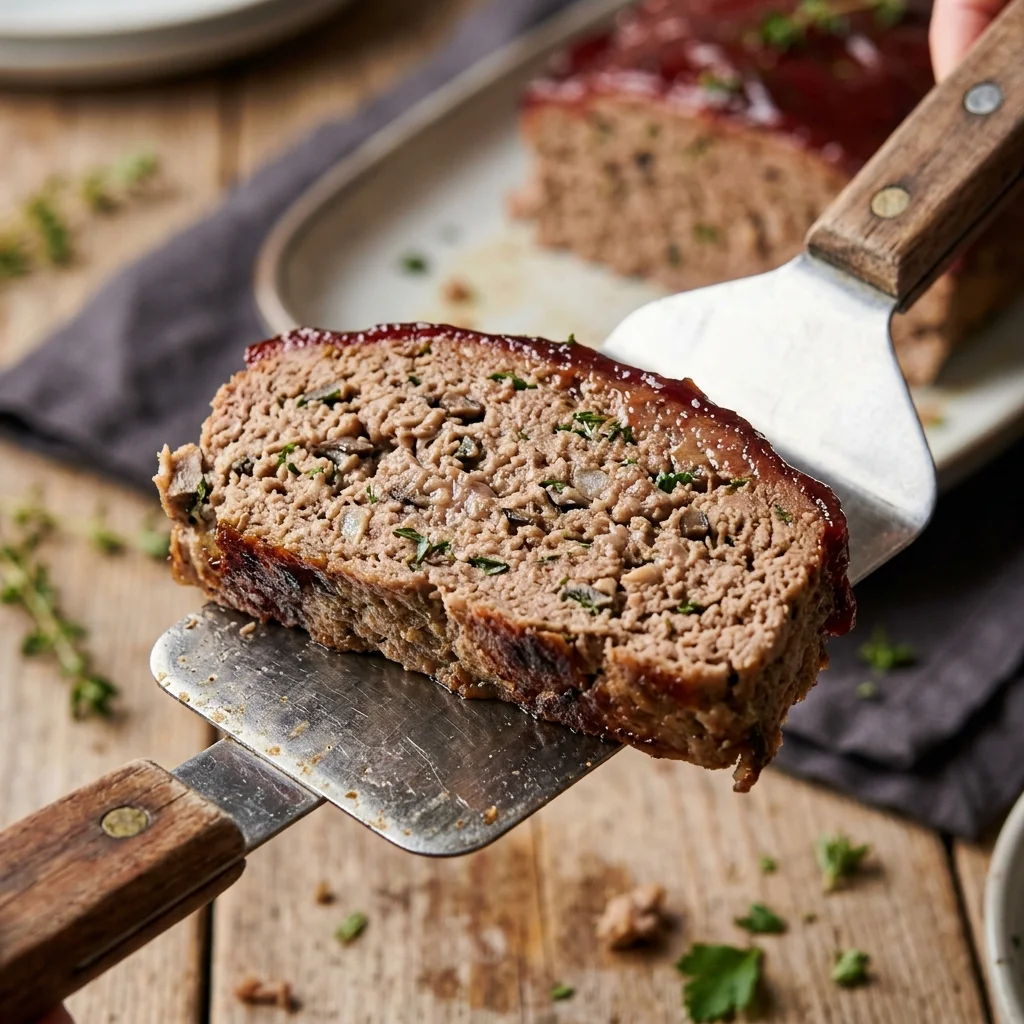
- Transfer the meatloaf with its parchment to a board or leave it on the pan. Rest for 15 minutes before slicing into eight portions. Serve with any juices that collect during the rest.
Meatloaf Shaping Note
Rounded ends and a level top cook more evenly than a tall center with tapered tips. Keep the loaf compact enough to hold together, but do not press out every air pocket. A light film of water on your hands prevents sticking while you smooth the surface.
Expert Tips for Tender, Neat Slices
- Cook the vegetables completely. Hidden mushroom moisture becomes loose liquid inside the loaf and weakens its structure.
- Cool the vegetable base. Ground beef should remain cool until baking so its fat melts in the oven instead of during mixing.
- Hydrate the bread before adding meat. A smooth bread-and-milk mixture distributes without requiring extra kneading.
- Use damp hands. The mixture releases more easily, and you are less likely to squeeze it while shaping.
- Follow temperature rather than color. Ground beef can remain pink after it is safe or brown before the center is ready.
- Respect the rest. Cutting immediately sends hot liquid across the board and makes even a well-bound loaf appear crumbly.
Meatloaf Problems and Practical Fixes
The loaf falls apart. The bread may not have hydrated, the vegetables may have held water, or the loaf may have been cut too soon. Mash the soaked bread thoroughly and cook the mushrooms dry. Rest the finished loaf for 15 minutes. For loose leftovers, chill before slicing and reheat intact portions.
The texture is dense. Extended mixing develops a springy, compact structure. Combine the seasonings with the bread and eggs before adding beef, then fold only until even. A dense finished loaf cannot be loosened, but thinner slices served with warm sauce will be easier to eat.
The meat is dry. Extra-lean beef, a narrow loaf, or baking beyond the target temperature may be responsible. Use beef with about 15 percent fat and check early with a thermometer. For the current meal, warm the slices gently with broth or extra glaze rather than baking them again uncovered.
The pan contains too much grease. Very fatty beef or a deep loaf pan can hold rendered fat against the meat. Use the specified beef and a free-form shape on a rimmed sheet. Spoon away a large pool before glazing. Leave a small amount alone so the surface does not dry.
The loaf cracks deeply. It may have been shaped too tall, packed unevenly, or baked after the mixture warmed. Form an even loaf and smooth only the major seams. Small cracks are harmless and give the glaze places to settle; repair only gaps that threaten to split a portion away.
The glaze darkens before the center is done. A sweet glaze applied too early can brown faster than the beef cooks. Wait through the first 35 minutes and apply it in two layers. Shield the top loosely with foil if it has enough color while the center finishes.
Meatloaf Make-Ahead Note
Cook the mushroom-onion base and mix the glaze up to 2 days ahead. For the best texture and safest handling, combine the raw beef mixture, shape it, and bake it on the day it will be served.
Storage and Reheating
Room temperature: Refrigerate within 2 hours. If the surrounding temperature is above 90 degrees Fahrenheit, or 32 degrees Celsius, refrigerate within 1 hour.
Refrigerator: Store whole or sliced portions in shallow covered containers at 40 degrees Fahrenheit, or 4 degrees Celsius, or below for 3 to 4 days.
Freezer: Wrap individual cooled slices and freeze them in an airtight container for up to 3 months for the strongest quality. Separate slices with parchment so only the needed portions can be removed.
Reheating: Thaw in the refrigerator. Cover slices and warm at 325 degrees Fahrenheit, or 165 degrees Celsius, with 1 tablespoon broth until the center reaches 165 degrees Fahrenheit, or 74 degrees Celsius. Uncover briefly if the glaze needs drying.
Make-ahead timing: Bake the full loaf up to 2 days ahead, cool it promptly, and refrigerate unsliced when possible. Reheat covered, then add a small amount of fresh glaze only if you prepared and refrigerated it separately.
Meatloaf Variations
Spicy version: Add half a teaspoon crushed red pepper to the mushroom mixture and a pinch of cayenne to the glaze.
Mild version: Replace smoked paprika with sweet paprika and omit black pepper from the glaze. Keep the pomegranate molasses for balanced acidity.
Gluten-free version: Replace the bread with 75 grams certified gluten-free sandwich bread. Verify the tomato paste, spices, pomegranate molasses, and every packaged ingredient for cross-contact.
Dairy-free version: Replace the milk with the same amount of low-sodium certified beef broth. The flavor will be more savory and the interior slightly firmer.
Turkey version: Use 1 kilogram ground turkey containing dark meat. Add 1 tablespoon olive oil to the mixture and cook the center to 165 degrees Fahrenheit, or 74 degrees Celsius.
Vegetarian version: Combine cooked brown lentils, browned mushrooms, oats, eggs, and the same herbs in a recipe developed specifically for a lentil loaf. Do not exchange lentils for beef by volume in this formula because the moisture and binding needs differ.
What to Serve with Meatloaf
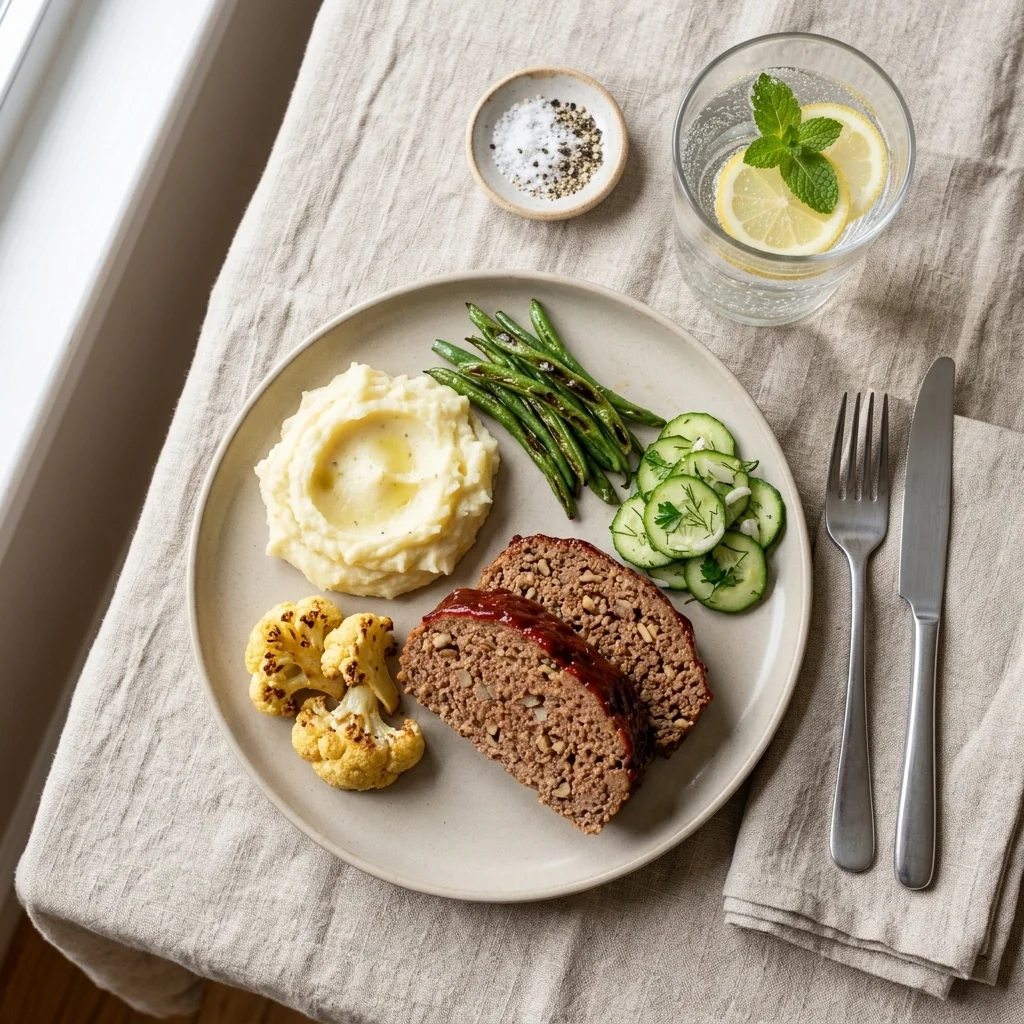
- Creamy mashed potatoes catch the glaze and keep the plate familiar without adding another strong seasoning.
- Roasted green beans bring browned edges and a lighter vegetable texture.
- A cucumber herb salad gives the meal cool acidity and fresh crunch.
- Roasted cauliflower or parsnips suit the pomegranate glaze without repeating the mushroom base.
- Sparkling water with lemon or unsweetened iced tea provides an alcohol-free drink option.
Frequently Asked Questions About Meatloaf
Why does meatloaf fall apart when sliced?
The mixture may contain unabsorbed liquid, too little binder, or vegetables that were still wet. Cutting before the proteins and juices settle can also break a properly cooked loaf. Soak and mash the bread, cook the mushroom mixture until dry, include both eggs, and rest the loaf for 15 minutes. If leftovers crumble, chill them fully before cutting because cold slices are easier to handle.
What internal temperature should meatloaf reach?
An all-beef loaf should reach 160 degrees Fahrenheit, or 71 degrees Celsius, at its thickest point. Insert an instant-read thermometer from the side toward the center to avoid measuring only the hot surface. Do not rely on pink or brown color alone when deciding. If using ground turkey or chicken, the center must reach 165 degrees Fahrenheit, or 74 degrees Celsius.
Can meatloaf be prepared in advance?
The safest practical approach is to cook the mushrooms and onion and prepare the glaze ahead, then refrigerate them separately for up to 2 days. Mix the beef, shape the loaf, and bake on serving day. A fully baked loaf can also be refrigerated for 3 to 4 days. Reheat it covered so the cut surfaces do not lose moisture.
Does meatloaf need to be baked in a loaf pan?
No. A free-form loaf on a rimmed sheet exposes more surface to oven heat and prevents rendered fat from surrounding the sides. Shape it evenly so thin ends do not overcook before the center is safe. A loaf pan creates straighter sides, but it may hold more fat and produce a softer exterior. Both methods still require a reliable thermometer.
What can replace pomegranate molasses in the glaze?
Mix 1 tablespoon date syrup with 1 tablespoon fresh lemon juice, then use that mixture in place of the 2 tablespoons pomegranate molasses. The flavor will be less tart and more caramel-like, so taste the glaze before adding all the honey. A simple tomato-and-honey glaze also works, but it will lack the bright fruit acidity that distinguishes this version overall.
A Loaf Designed for the Slice
Good meatloaf begins before the beef is mixed. Browning the mushrooms removes water while concentrating flavor, and soaking the bread gives that moisture a place to stay during baking. Gentle folding preserves a tender texture, while an even free-form shape gives the heat a predictable path to the center.
Let temperature decide when the loaf leaves the oven and let time decide when it is ready to cut. Those two checks protect both safety and structure more reliably than surface color.
The pomegranate-tomato glaze gives each slice a tart, glossy edge without hiding the mushroom and herb seasoning inside. Serve the loaf warm, cool leftovers promptly, and save thick chilled slices for reheating or sandwiches.
Meatloaf with Mushrooms and Pomegranate Tomato Glaze
Ingredients
Equipment
Method
- Heat the oven to 375°F (190°C). Line a rimmed sheet pan with parchment. Whisk all glaze ingredients together until smooth and set aside.
- Heat olive oil in a wide skillet over medium-high. Cook the mushrooms for 6–8 minutes until their liquid evaporates. Add the onion, reduce heat to medium, and cook for 7–9 minutes. Stir in the garlic and tomato paste for 60 seconds. Transfer to a plate and cool for 15 minutes.
- Combine the torn bread and milk in a large bowl. Let stand 5 minutes, then mash with a fork until no dry center remains. Add the eggs, salt, pepper, thyme, paprika, parsley, and cooled mushroom mixture, and whisk gently to combine.
- Add the beef in loose pieces. Fold with damp hands for 45–60 seconds, stopping as soon as the mixture looks even.
- Shape on the prepared pan into a loaf about 25 cm long, 14 cm wide, and 6 cm high. Bake for 35 minutes. Spoon away any large pool of rendered fat, then spread two-thirds of the glaze over the top and sides. Bake for 15 minutes.
- Apply the remaining glaze. Bake 5–15 minutes more until the center reaches 160°F (71°C). Rest for 15 minutes before slicing into 8 portions.
Notes
- Cook mushroom moisture away completely and let the vegetable base cool before mixing. Warm or wet vegetables weaken the loaf’s structure.
- Fold the beef gently and stop as soon as the mixture is even. Over-mixing creates a dense, tight slice.
- Store refrigerated in covered containers for 3–4 days, or freeze individual cooled slices for up to 3 months.