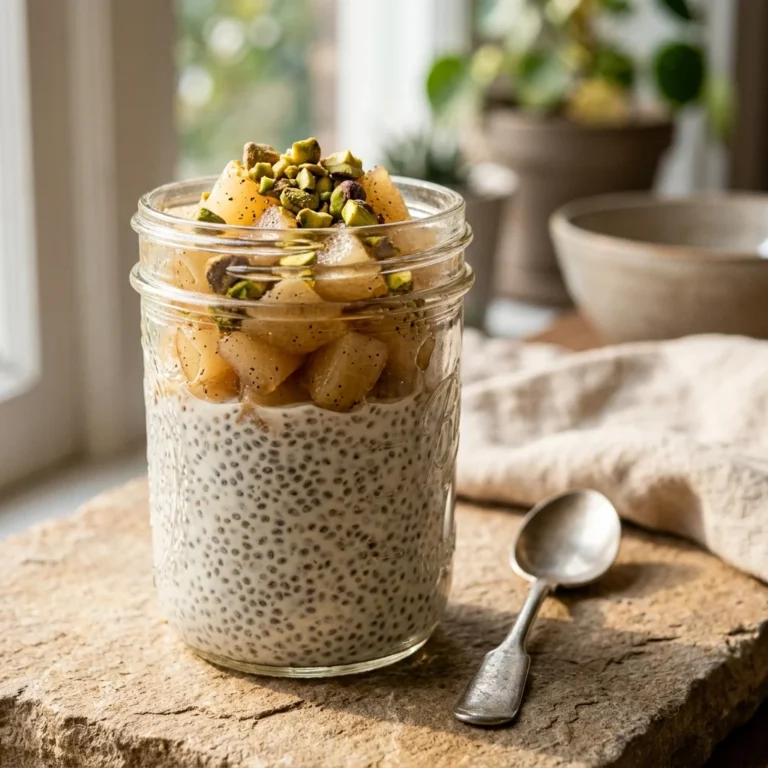
Cream Cheese Frosting with Milk Powder and Lemon Zest
Cream cheese frosting can be tangy and smooth, yet it loosens quickly when ingredients are warm or mixing runs long. This version controls both risks. Cool butter is blended with sifted confectioners’ sugar before cold block cream cheese enters the bowl. Milk powder adds dairy flavor and body without forcing more sweetness into the mixture.
Fresh lemon zest brings aroma with almost no liquid. Alcohol-free vanilla rounds out the flavor. The finished frosting spreads across a sheet cake, holds soft cupcake ridges, and stays creamy rather than dense. Clear temperature cues make the method dependable after loose or lumpy results.
Milk powder also gives the finished bowl a milky depth that confectioners’ sugar cannot provide on its own.
The result supports simple decorating while keeping a soft, creamy bite.
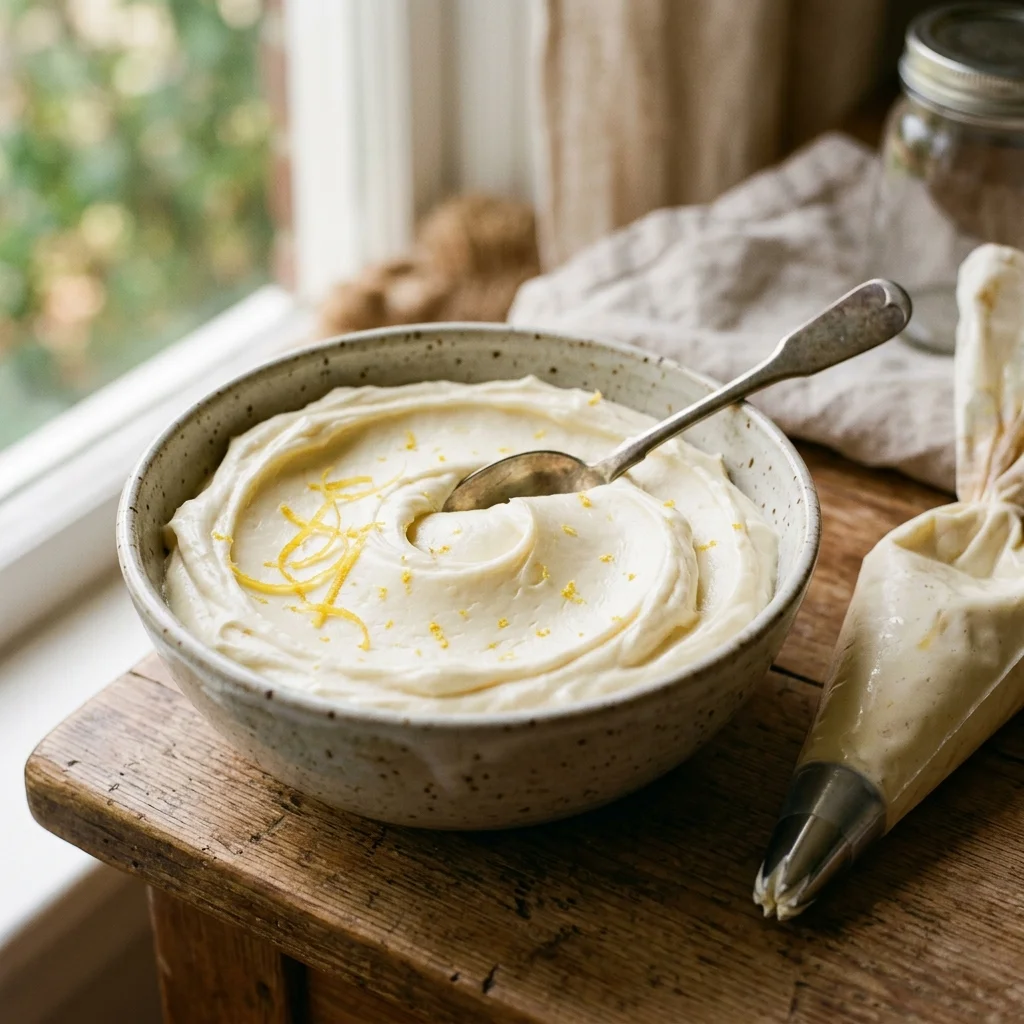
Table of Contents
Why This Method Works
- Milk powder gives cream cheese frosting body without depending on excessive confectioners’ sugar.
- Building the butter and sugar base first limits the cream cheese mixing time.
- Lemon zest brightens the dairy flavor without adding much moisture.
- The consistency suits carrot cake layers and softly defined cupcake swirls.
- Visible cues reveal when to mix, chill, or stop.
Recipe Snapshot
- Prep time: 15 minutes
- Cook time: 0 minutes
- Chilling time: 20 to 30 minutes, if needed for piping
- Total time: 35 to 45 minutes
- Yield: About 3 cups
- Suggested portions: 16 portions of about 3 tablespoons each
- Difficulty: Easy
- Calories: Approximately 195 per serving
- Key ingredient: Full-fat block cream cheese
- Best for: Cakes, cupcakes, and sweet rolls
- Best texture: Silky, tangy, and firm enough to hold a soft peak when cool
Approximate Nutrition
- Calories per serving: Approximately 195
- Protein: 2 grams
- Carbohydrates: 31 grams
- Fat: 8 grams
- Fiber: 0 grams
- Sugar: 30 grams
- Sodium: 95 milligrams
- Serving size: About 3 tablespoons
- Servings per recipe: 16
Most of the carbohydrate comes from confectioners’ sugar, while butter and cream cheese supply most of the fat. This frosting is a concentrated dessert topping, so a measured portion helps keep the sweetness and richness in balance.
Nutritional values represent an estimate per portion calculated from typical ingredient quantities. Exact figures vary according to specific product choices and final portioning.
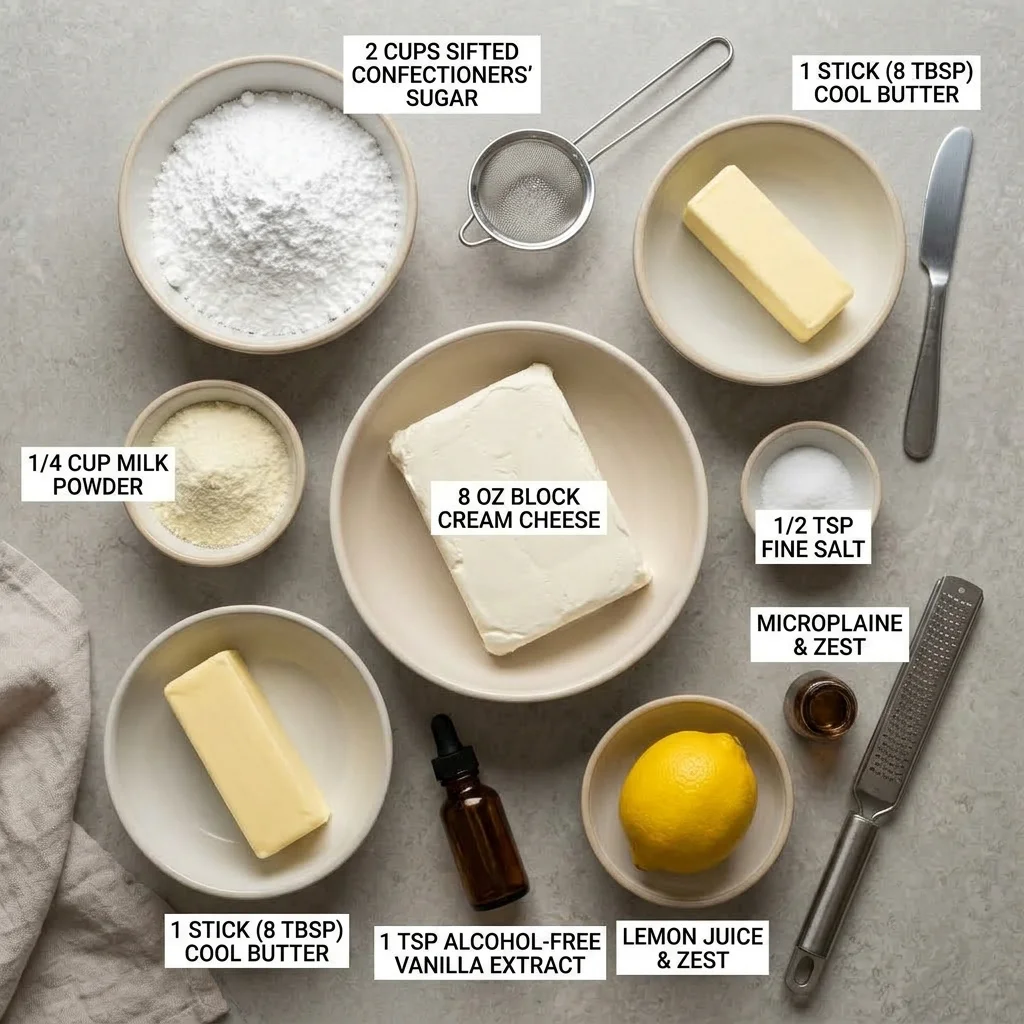
Ingredients for Cream Cheese Frosting
Unsalted butter, 115 grams or one-half cup
Let it soften until it yields to steady finger pressure but feels cool, about 65°F or 18°C. Shiny butter is too warm. If using salted butter, omit the separate salt.
Confectioners’ sugar, 360 grams or 3 cups, measured after sifting
This sugar sweetens and thickens. Weigh it and sift out hard pellets.
Skim milk powder, 20 grams or about one-quarter cup
Milk powder adds dairy flavor and absorbs moisture. Buttermilk powder can replace it for sharper tang.
Fine salt, one-quarter teaspoon
Salt clears away a flat sugary edge. Reduce it if another ingredient is salted.
Finely grated lemon zest, 1 teaspoon
Grate only the yellow outer layer because the white pith is bitter. Orange zest is a suitable substitute.
Alcohol-free vanilla paste, 1 teaspoon
Check certification. Vanilla bean powder also works. Many regular extracts contain alcohol, so verify the label.
Full-fat block cream cheese, 225 grams or 8 ounces, cold
Choose a firm full-fat block because tub and low-fat products make softer cream cheese frosting. Refrigerate it until needed.
Equipment
- Digital scale or dry measuring cups: A scale gives the most repeatable sugar and dairy ratio.
- Fine sieve: Sift the sugar and milk powder directly over a clean sheet of paper for easy transfer.
- Fine grater: Use light pressure so only yellow zest comes away from the lemon.
- Medium mixing bowl: Choose a deep bowl to keep powdered sugar from escaping at low speed.
- Flexible spatula: A thin edge reaches unmixed butter at the bottom curve of the bowl.
- Hand mixer or stand mixer with paddle: Standard beaters also work, but keep the speed restrained to limit heat.
Preparation Before Mixing
- Soften the butter until it is cool and pliable.
- Sift the sugar and milk powder together, then grate the lemon zest.
- Cut the cold cheese into eight pieces and refrigerate them while starting the base.
- Above 75°F or 24°C, chill and dry the bowl before mixing.
How to Make It
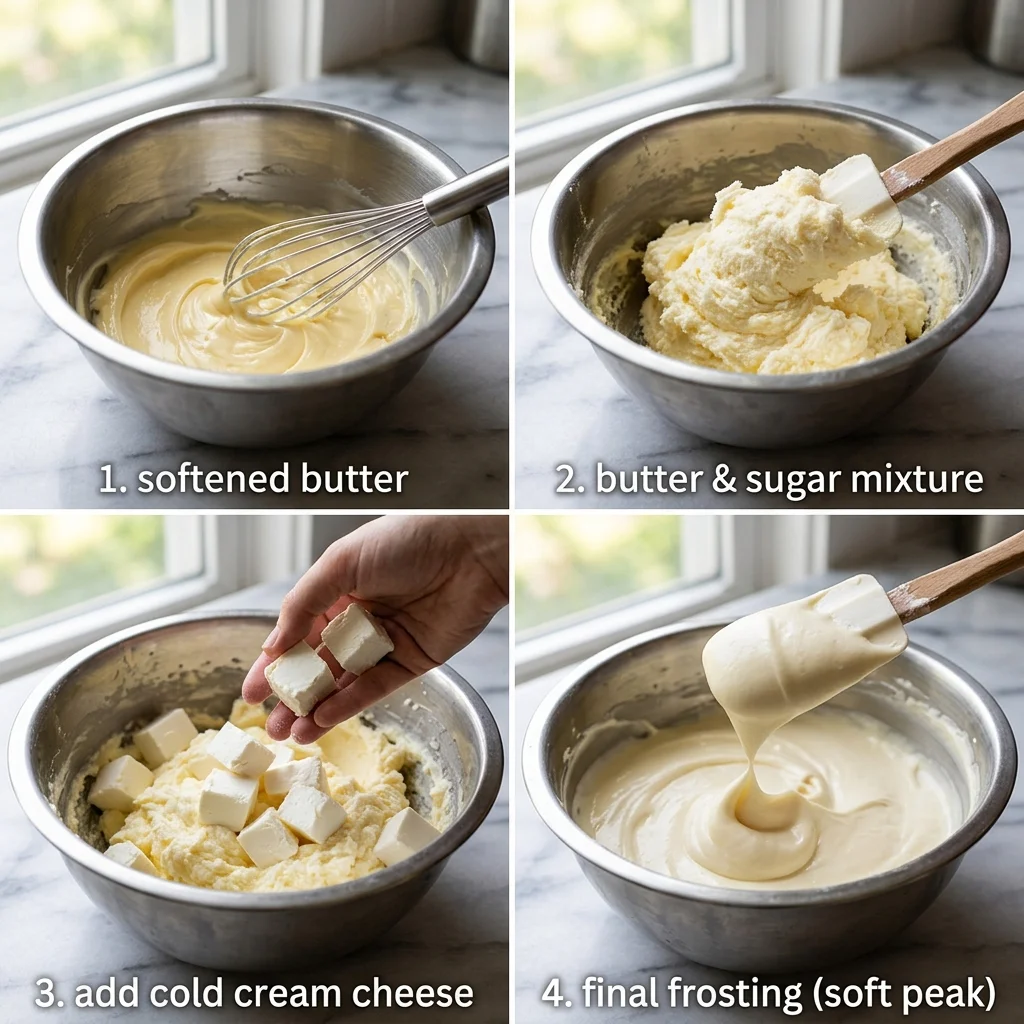
- Smooth the cool butter.Beat the butter on low to medium-low for 60 to 90 seconds. Stop when it is creamy with no firm pieces. It should not look pale, whipped, or glossy.Chef’s Note: A clean beater track with a slight mound signals the right temperature. If an oily film coats the bowl, chill it for 10 minutes.
- Build the sugar base gradually.Add the sugar mixture in thirds. Mix each addition on low for 20 seconds and scrape the bowl. When no dry pockets remain, mix on medium-low for 45 to 60 seconds. The base should look thick.
- Add the flavorings.Add salt, zest, and alcohol-free vanilla. Mix on low for 15 seconds, scrape the bottom, and fold twice.Chef’s Note: Yellow flecks should remain visible. Skip lemon juice because extra liquid makes a warm batch harder to control.
- Add the cold cream cheese last.With the mixer on low, add the cold cheese one piece at a time. Wait only until each piece disappears. Scrape after the last one, then mix 20 to 30 seconds until the cream cheese frosting looks satiny.
- Check the consistency.Lift the beater. Cream cheese frosting should form a soft point with a bent tip. A spatula channel should remain visible for several seconds.Chef’s Note: Stop as soon as the texture becomes smooth. Continued beating breaks down the cream cheese and warms the fat, which can turn a promising batch loose.
- Chill only when the job requires it.Use it immediately for relaxed swirls in a cool room. For piping, chill the covered bowl 20 to 30 minutes, then fold three or four times. Avoid rewhipping.
Cream Cheese Frosting Temperature Note
The ingredients have different temperature jobs. Butter must be flexible enough to accept sugar, while cold cream cheese retains structure during its short mixing time. If either looks greasy, refrigerate it before proceeding.
Expert Tips for a Clean, Stable Finish
- Weigh the ingredients. Excess sugar changes sweetness and mouthfeel.
- Keep standard beaters or a paddle at restrained speed to limit heat and bubbles.
- Sift both powders so lumps do not demand extra mixing.
- Keep the cheese cold until the final stage.
- Pipe one test rosette on a cool plate. Chill the bowl if its ridges relax after two minutes.
- Prepare the frosting up to two days ahead and fold it gently after a short room-temperature rest.
- Refrigerate cream cheese frosting in an airtight container and use it within three to four days.
Troubleshooting Cream Cheese Frosting
Cream Cheese Frosting Is Runny
Cause: Spreadable, low-fat, or warm cheese and long mixing all soften the batch.
Prevention: Use a cold full-fat block, low speed, and short mixing.
Fix: Chill for 20 minutes and fold. If still loose, add one tablespoon of sifted milk powder. Large amounts of sugar may add sweetness without repairing overheated fat.
The mixture has small lumps
Cause: Firm butter, unsifted sugar, or hard butter pieces in the base.
Prevention: Smooth the cool butter and sift both powders.
Fix: Rest the bowl five minutes, then press lumps against its side. Mix on low for 10 seconds only if needed.
The texture feels grainy
Cause: Coarse sugar clumps or insufficient initial mixing can leave a sandy sensation.
Prevention: Use confectioners’ sugar rather than granulated sugar and sift it with the milk powder.
Fix: Rest cream cheese frosting for five minutes, then fold slowly. High speed usually adds heat before solving graininess.
The flavor is too sweet
Cause: Extra confectioners’ sugar may have been added in an attempt to stiffen a soft batch.
Prevention: Follow the weighed amount and use milk powder plus chilling for extra body.
Fix: Add a pinch of salt and one-quarter teaspoon more zest. Avoid juice unless a softer finish is acceptable.
Cream Cheese Frosting Is Too Stiff
Cause: The mixture may be very cold, or the sugar may have been packed heavily into cups.
Prevention: Weigh the sugar and use the frosting once it is cool but workable.
Fix: Rest the covered bowl five to ten minutes and fold. If needed, work in one teaspoon of cold heavy cream.
The mixture looks split or curdled
Cause: A large temperature gap, warm fat, or prolonged mixing can disturb the emulsion.
Prevention: Begin with cool, pliable butter and add small pieces of cold cheese briefly.
Fix: Stop mixing, chill 15 minutes, and fold slowly. Press small curds against the bowl. Use the result for rustic spreading if it no longer pipes cleanly.
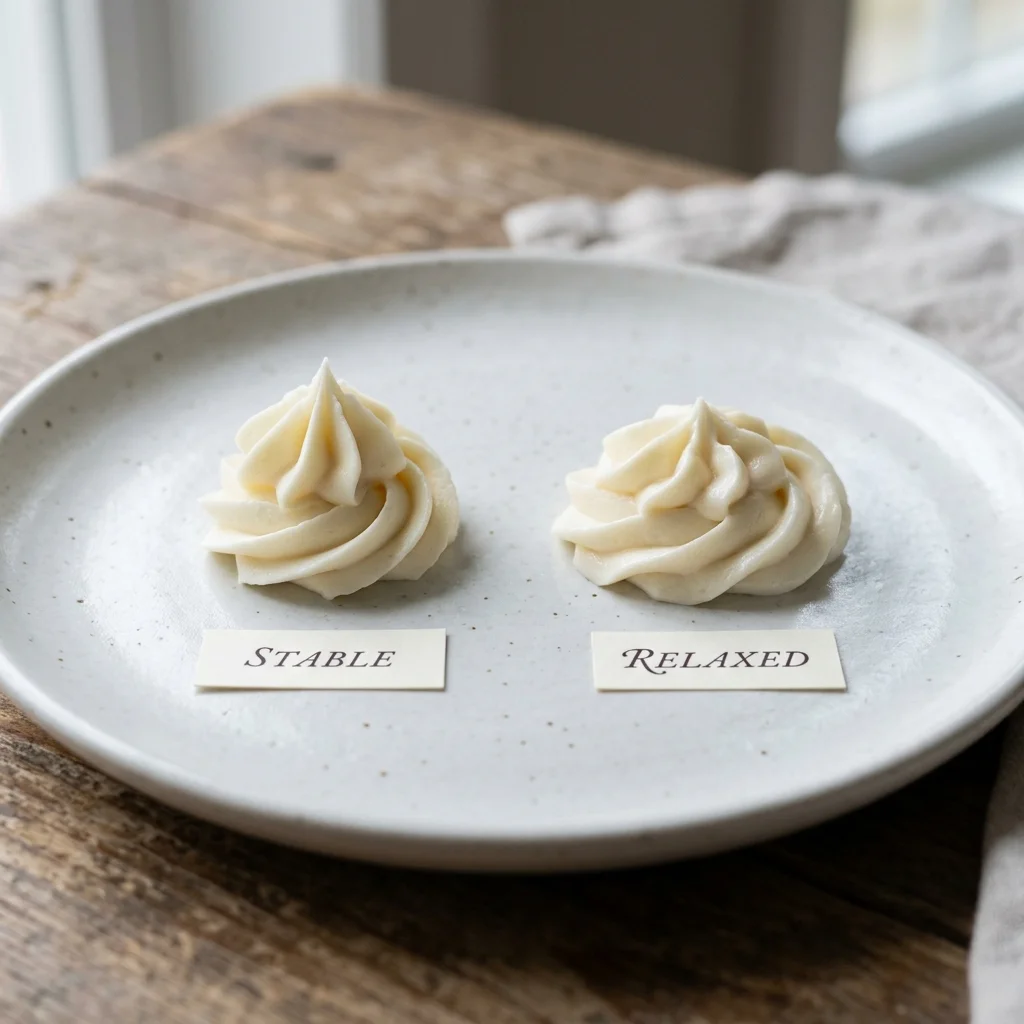
Cream Cheese Frosting Make-Ahead Note
Prepare cream cheese frosting up to two days ahead. Press food-safe wrap onto its surface in an airtight container and refrigerate. Before use, rest it 10 to 15 minutes and fold gently. High-speed rebeating can loosen the preserved texture.
Storage and Food Safety
Room temperature: Keep cream cheese frosting or a frosted dessert out for no longer than two hours, or one hour above 90°F or 32°C.
Refrigerator: Store it in an airtight container in the main section of the refrigerator for three to four days. Cover decorated cakes and keep them away from strong odors.
Freezer: Freeze it airtight for up to one month, then thaw overnight in the refrigerator. Use a less-smooth batch for spreading or filling.
Reheating: Do not heat this frosting. Let it rest at room temperature for 10 to 15 minutes, then fold slowly to restore a spreadable texture.
Make-ahead notes: Prepare it up to two days before decorating. Keep it covered and refrigerated, then soften briefly without rewhipping.
Discard the frosting after extended warm exposure or if it develops mold or an unusual odor.
Cream Cheese Frosting Flavor Variations
Chocolate: Replace 30 grams of sugar with 25 grams of sifted natural cocoa. Add it with the dry ingredients for a deeper flavor that is still vegetarian.
Orange and Cardamom: Replace the lemon zest with 1 teaspoon orange zest. Add a tiny pinch of cardamom for a gently spiced version rather than forcing heat into a frosting where it does not fit.
Mild Vanilla: Omit the citrus zest and use the alcohol-free vanilla alone. This simpler flavor is useful for children or anyone who dislikes citrus.
Gluten-Free Vegetarian: The base recipe fits both patterns, but verify sugar, milk powder, vanilla, cream cheese, and topping labels if cross-contact or processing aids matter.
Dairy-free: Use firm plant-based blocks and a suitable plant milk powder. Brands behave differently, so expect softer results and test a small batch.
Ways to Serve Cream Cheese Frosting
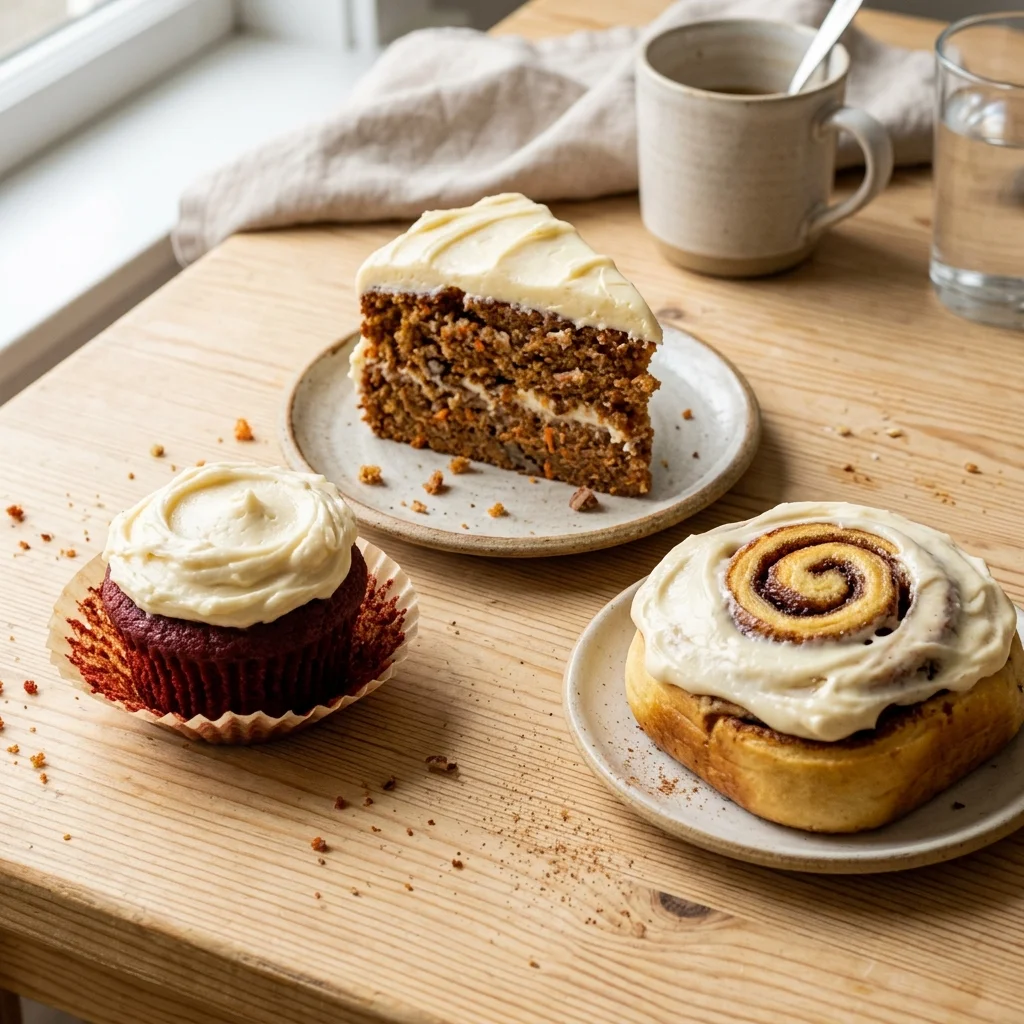
- Spread generous swoops over a spiced layer cake and finish with finely chopped toasted walnuts or a light dusting of cinnamon.
- Pipe modest spirals on red velvet cupcakes, leaving a slim border so the red crumb remains visible.
- Spoon it over cooled yeasted breakfast buns when you want a defined white topping rather than a glaze that sinks into every coil.
- Layer it between banana cake rounds with a thin scattering of toasted coconut for contrast.
- Use a narrow ribbon on pumpkin loaf slices and add fresh orange zest just before serving.
Frequently Asked Questions
Why does cream cheese frosting become runny?
Cream cheese contains water, and mixing weakens its firm gel structure. Spreadable or low-fat products generally bring more moisture, while warm ingredients and prolonged beating make the fats softer. Start with full-fat block cream cheese straight from the refrigerator, prepare the butter and sugar base first, and add the cheese only at the end. If the batch loosens, chill it before deciding whether it needs one tablespoon of milk powder.
Can I use cream cheese from a tub?
Tub cream cheese is designed to spread easily, so it usually makes a softer frosting. If it is the only type available, choose full-fat plain cream cheese and strain it in a fine cloth in the refrigerator for several hours. Even then, the result may suit spreading better than tall piping. Reduce expectations for sharp decorative ridges and keep the finished dessert well chilled. Do not use a flavored savory spread.
Does a dessert with cream cheese frosting need refrigeration?
Yes. Cream cheese is perishable, so cover the frosting or finished dessert and refrigerate it. As a cautious food-safety limit, keep it out for no longer than two hours at ordinary room temperature, and only one hour in very hot conditions above 90°F or 32°C. Return leftovers to the refrigerator promptly. For serving, take the dessert out shortly beforehand so the frosting softens without sitting warm for an extended period.
Can I make the frosting ahead or freeze it?
You can make it up to two days ahead and refrigerate it in an airtight container with wrap touching the surface. Before decorating, let it soften briefly and fold it rather than whipping it again. Freezing for up to one month is possible, but the thawed texture may be less polished. Thaw it overnight in the refrigerator and use it for a filling or a casually frosted cake if it no longer holds crisp piping lines.
How do I know when cream cheese frosting is mixed enough?
Stop mixing as soon as the color and texture look uniform and satiny. When you lift the beater, the frosting should form a soft point that bends at its tip, and a spatula channel should remain visible for several seconds. After the final cream cheese piece disappears, this usually takes only 20 to 30 more seconds on low. Continued beating adds heat and can turn a smooth batch loose.
A Calm Finish for Cakes and Cupcakes
Before decorating a whole cake, pipe one rosette onto a cool plate and leave it for two minutes. If the ridge relaxes, chill the bowl instead of adding more sugar. This test protects the balanced sweetness and shows how the topping will behave on the dessert. Keep the cake refrigerated, then allow a brief softening period before serving so cream cheese frosting feels creamy rather than firm.
The same small test helps when you loosen the topping slightly for cinnamon rolls.
If you loved this recipe, save it to your dessert recipes Pinterest board so you can find it easily later!
Cream Cheese Frosting with Milk Powder and Lemon Zest
Ingredients
Equipment
Method
- Beat the cool butter on low to medium-low for 60–90 seconds until creamy with no firm pieces. It should not look pale, whipped, or glossy.
- Add the sifted sugar and milk powder mixture in thirds. Mix each addition on low for 20 seconds, scraping the bowl between each. Once combined, mix on medium-low for 45–60 seconds until the base looks thick.
- Add the salt, lemon zest, and vanilla. Mix on low for 15 seconds, then scrape and fold twice.
- With the mixer on low, add the cold cream cheese one piece at a time, waiting until each piece disappears before adding the next. Scrape the bowl after the last piece, then mix 20–30 seconds until the frosting looks satiny.
- Check consistency: lift the beater — the frosting should form a soft point with a bent tip, and a spatula channel should hold for several seconds. Stop mixing as soon as the texture is smooth.
- Use immediately for spreading, or chill the covered bowl for 20–30 minutes before piping. Fold gently after chilling — do not rewhip.
Notes
- Store in an airtight container in the refrigerator for up to 3–4 days, or freeze for up to 1 month. Thaw overnight in the refrigerator and fold gently before use.
- Make up to 2 days ahead. Press wrap onto the surface, refrigerate, then rest 10–15 minutes and fold before decorating.
- If the frosting loosens, chill for 20 minutes and fold. If still soft, stir in 1 tablespoon sifted milk powder.