Easy Sausage Balls Ready in 40 Minutes
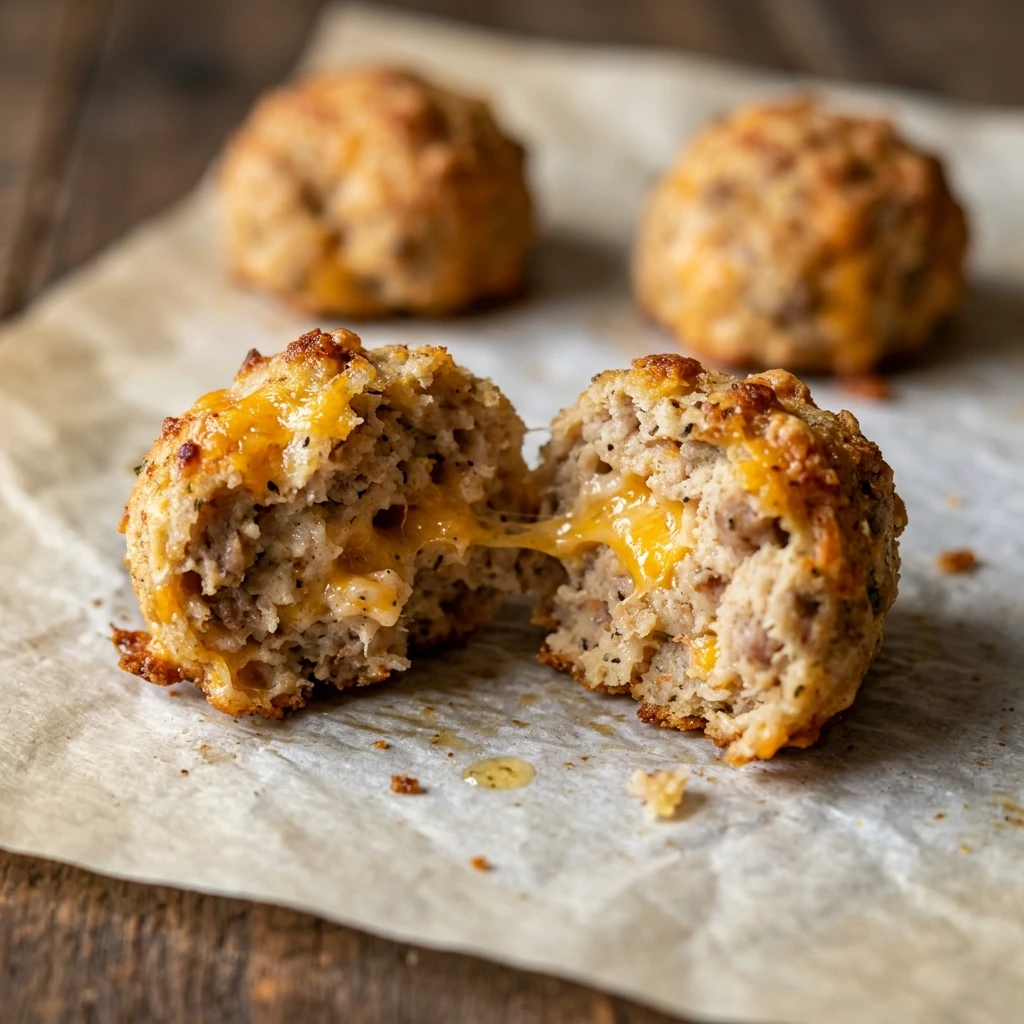
Sausage balls are the first thing to vanish from any snack table I set out. They are crisp at the edges, soft and cheesy in the middle, and ready in 40 minutes with six ingredients. This version uses beef breakfast sausage, sharp cheddar, and Original Bisquick, so the flavor stays savory and the texture stays tender instead of greasy.
I tested these sausage balls seven times over three weeks. The first batch spread flat. The second came out dry. By batch five I had the sausage, Bisquick, and cheddar ratio right, and my daughter ate four off the pan before the sixth tray had even cooled.
Below you get exact amounts, the oven temperature, a doneness check you can both see and measure, and fixes for the problems that ruin most trays of sausage balls. Make them for game day, a brunch table, or a Tuesday night when everyone wants something warm.

Table of Contents
Why You Will Love These Sausage Balls
- Ready in 40 minutes from bowl to plate, so they work on a busy weeknight or when guests show up early.
- The edges turn crisp and golden while the middle stays soft and full of melted cheddar.
- You use one bowl and two pans, which keeps cleanup short.
- Kids eat them without a single complaint, which is rare at my table.
- A double batch freezes well, so your game day snacks are done by Friday.
Recipe Snapshot
- Prep Time: 15 minutes
- Cook Time: 20 minutes
- Total Time: 40 minutes (includes a 5 minute rest)
- Servings: 12 (3 balls each)
- Difficulty: Easy
- Calories per serving: About 320
- Key Ingredient: Freshly shredded sharp cheddar
- Best For: Game days, brunch tables, and weeknight snacks
Nutrition Information
- Calories per Serving: About 320
- Protein: 15 g
- Carbs: 15 g
- Fat: 22 g
- Fiber: 1 g
- Sugar: 1 g
- Sodium: 685 mg
- Serving Size: About 3 balls
- Servings per Recipe: 12
Each serving gives you about 15 grams of protein from the beef and cheddar, with only 15 grams of carbs. Fat is the main calorie source, so pair these sausage balls with fruit or raw vegetables to round out a plate. Sodium runs high because sausage, cheese, and baking mix all carry salt.
Nutrition values are approximate and calculated per serving using standard ingredient amounts. Values may vary based on brands used and portion sizes.
Ingredients for Sausage Balls
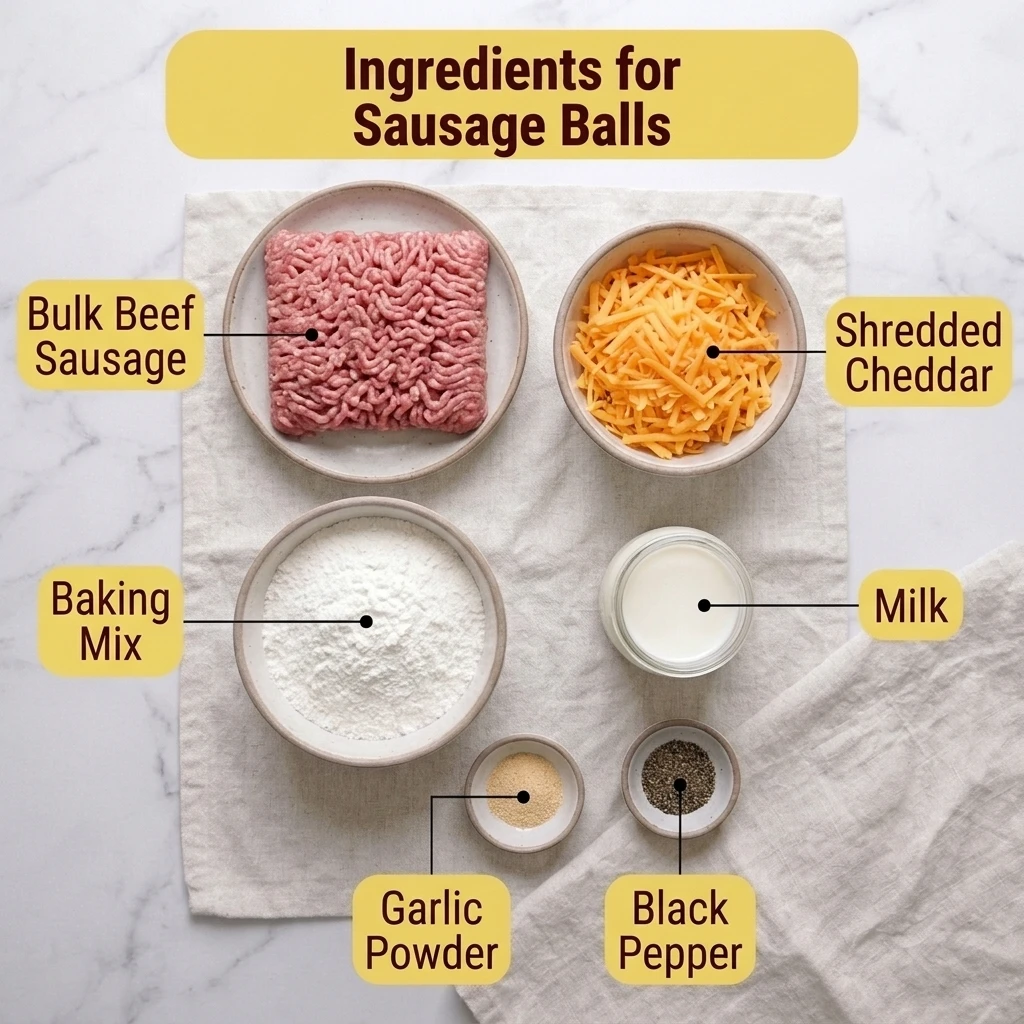
- 1 pound bulk beef breakfast sausage, raw (not links)
- 3 cups freshly shredded sharp cheddar cheese (12 ounces)
- 2 cups Original Bisquick mix, spooned and leveled
- 1/4 cup whole milk
- 1/2 teaspoon garlic powder
- 1/4 teaspoon black pepper
Sausage: Buy raw bulk sausage made only from beef, and read the label to confirm no other meat is listed. The fat in the sausage is the only liquid fat in this dough, so it carries both flavor and moisture. Regular fat content bakes up juicy, while lean sausage dries out fast. Ground turkey sausage works too, as long as you bake it to 165°F.
Cheddar: Shred a block yourself on the coarse holes of a box grater. I use Cabot Extra Sharp because its tang holds up against the sausage. Pepper jack or Colby jack can replace it cup for cup.
Bisquick: Spoon the mix into the cup and level it with a knife. Scooping packs in extra flour and leads to dry sausage balls. Out of Bisquick? Whisk 2 cups all-purpose flour with 1 tablespoon baking powder, 1 teaspoon salt, and 2 tablespoons melted butter. Any milk you have works in place of whole milk.
Pro Tip: Pull the sausage from the fridge right before you mix. Cold sausage keeps the fat from smearing into the Bisquick, and that smear is what turns dough greasy.
Equipment Needed
- Large mixing bowl (4 quart): gives you room to mix by hand without flour flying out.
- Two rimmed baking sheets (18×13 inch): the rims catch grease before it reaches your oven floor.
- Parchment paper: foil makes the bottoms stick, so skip it.
- Medium cookie scoop (1 1/2 tablespoons): keeps all 36 balls the same size so they finish together.
- Instant-read thermometer: it is the only reliable way to confirm 160°F.
- Box grater: the coarse side makes shreds that blend evenly into the dough.
Preparation
- Heat the oven to 375°F and set racks in the upper and lower thirds.
- Line two 18×13-inch rimmed baking sheets with parchment paper.
- Shred 12 ounces of cheddar and measure out 3 cups.
- Measure the Bisquick, milk, garlic powder, and pepper into small bowls so everything is ready.
- Leave the sausage in the fridge until you start mixing, and set a paper towel lined plate nearby.
Step-by-Step Instructions
- Whisk the Bisquick, garlic powder, and pepper in the large bowl. Add the cheddar and toss until every shred looks dusty white. Chef’s Note: Coating the cheese first keeps it from clumping into greasy pockets.
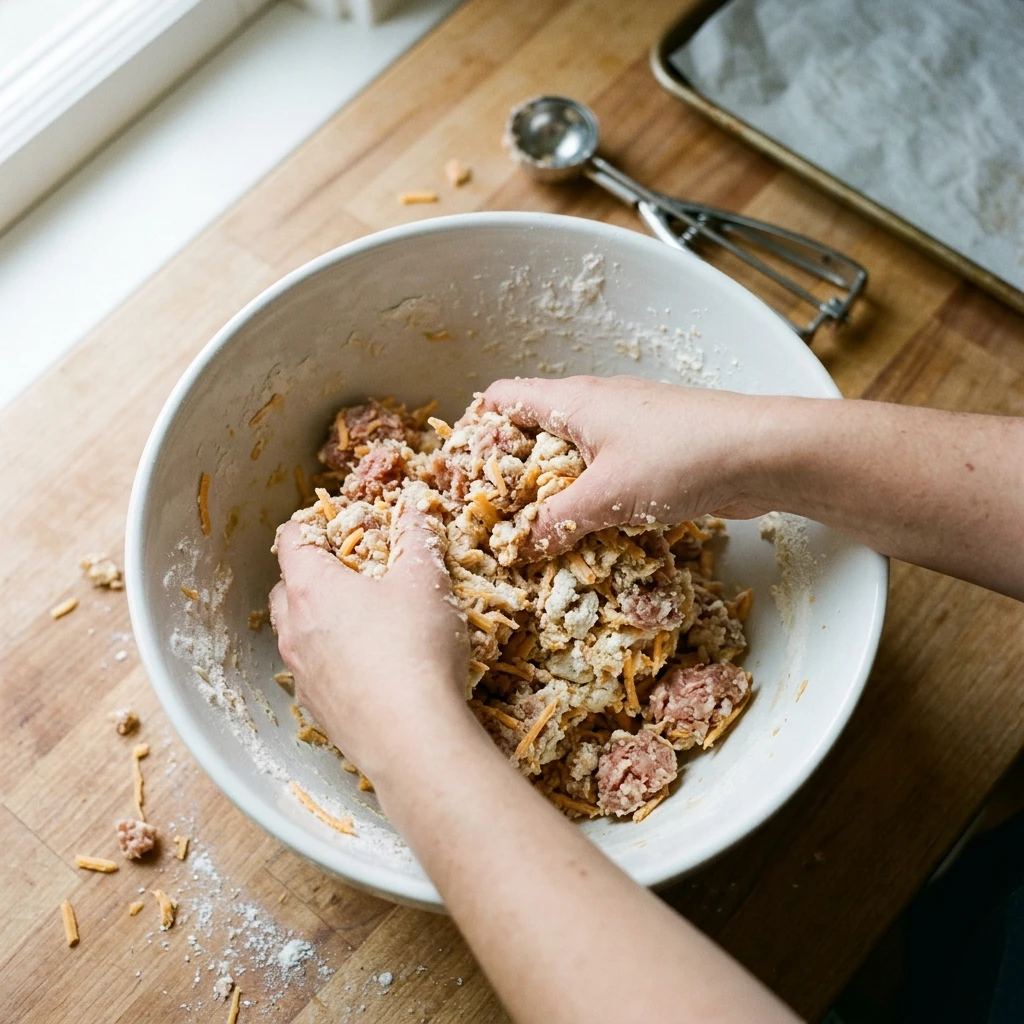
- Add the sausage and milk. Mix with your hands for 2 to 3 minutes, until no dry flour remains and the dough holds together when squeezed. Chef’s Note: If it crumbles, add more milk, 1 tablespoon at a time, up to 2 tablespoons.
- Scoop level portions with the cookie scoop and roll each one between your palms. Set them 1 inch apart on the pans, 18 per sheet, until you have 36 smooth sausage balls with no cracks. Chef’s Note: Squeeze each ball firmly as you roll so it stays together in the oven.
- Bake the sausage balls at 375°F for 18 to 22 minutes, swapping the pans top to bottom at the 10 minute mark. They are ready when the tops are deep golden brown and the edges look crisp, with a little grease pooling on the parchment. Rotate each pan front to back too if your oven browns unevenly.
- Slide an instant-read thermometer into the center of one ball. It should read 160°F, and the inside should look cooked through with no pink. Test a ball from the middle of each pan, since the edges bake faster.
- Rest the pans on a rack for 5 minutes, then move the balls to the paper towel lined plate. They firm up as they cool slightly and should feel springy when pressed. Serve them warm, while the cheddar is soft and the outside is still crisp.
Expert Tips and Tricks
- I once mixed everything in a stand mixer on medium for five minutes. The fat smeared, and my sausage balls baked up greasy and dense. Hand mixing for 2 to 3 minutes gives a much better crumb.
- Shred the cheddar up to 2 days ahead and keep it in a zip bag in the fridge. On baking day, you only have the mixing left.
- Let baked sausage balls cool for 20 minutes before you close the container lid. Trapped steam turns the crust soggy, but dry balls keep for 4 days.
- If the bowl feels warm after mixing, chill the dough for 15 minutes. Cold dough holds its round shape better in the oven.
- Break the sausage into small pieces over the Bisquick mixture before you start squeezing. It mixes in faster, and you will not overwork the dough.
- Use the scoop for portioning and only reroll the uneven ones. Shaping the whole batch takes me about 5 minutes.
Common Mistakes and Troubleshooting
Dry, crumbly balls: Too much Bisquick or uneven mixing leaves flour pockets. Spoon and level the mix, and keep working the dough until no powder remains. If it already crumbles, mix in milk 1 tablespoon at a time.
Flat, spread out balls: Warm dough or oversized scoops let the fat melt before the Bisquick sets. Keep the sausage cold and chill the dough for 15 minutes. For the next batch, add 2 tablespoons more Bisquick.
Greasy bottoms: Very fatty sausage or crowded pans leave grease behind. Pick regular fat sausage and leave 1 inch between balls. Blot the finished balls on paper towels to remove the surface grease.
Hard, dark balls: Baking past 22 minutes dries out the cheddar and crumb. Check at 18 minutes and pull the pans once the tops turn golden. Rescue a dry ball with 20 seconds in the microwave under a damp towel.
Raw centers: Oversized or uneven balls cook at different speeds. Use the scoop for even sizes and confirm 160°F at the center. Return underdone balls to the oven for 3 to 4 minutes.
Storage Instructions
- Room Temperature: Up to 2 hours on a party table (1 hour if the room is above 90°F). A slow cooker on the warm setting keeps them hot.
- Refrigerator: 3 to 4 days in an airtight glass container, with parchment between layers.
- Freezer: Up to 3 months. Freeze baked balls on a tray for 1 hour, then move them to a freezer-safe zip bag and press out the air.
- Reheating: Warm refrigerated balls on a baking sheet at 350°F for 10 to 12 minutes, or 15 to 18 minutes from frozen, until they reach 165°F in the center.
- Make-Ahead Notes: Mix and roll the dough up to 24 hours ahead, cover the tray tightly, and bake straight from the fridge, adding 2 minutes.
Make-Ahead Shortcut: Freeze unbaked balls on a tray for 1 hour, bag them, and keep them up to 2 months. Bake from frozen at 375°F for 24 to 28 minutes, until the centers read 160°F.
I always freeze leftovers in small bags of 6, not one big bag. I can grab a school day snack in minutes and I never defrost more than we will eat.
Variations and Substitutions
- Spicy: Add 1/2 teaspoon cayenne and 2 tablespoons finely diced pickled jalapeños, drained well. Use hot beef sausage if you want more heat.
- Mild and kid-friendly: Swap in mild cheddar, use mild sausage, and leave out the black pepper. Kids tend to like the softer cheese flavor.
- Vegetarian: Replace the sausage with 1 pound thawed plant-based sausage crumbles and chill the dough for 15 minutes. Bake 15 to 18 minutes, until deep golden.
- Gluten-free: Use Bisquick Gluten Free in the same amount. The dough is a little softer, so chill it for 15 minutes before rolling.
- Turkey: Use ground turkey sausage and bake until the center reaches 165°F. Add 1 tablespoon olive oil if the dough looks dry.
What to Serve With Sausage Balls
- Dips: Spinach Artichoke Dip adds a sweet, tangy contrast to the salty cheddar.
- Sauce: Warm marinara turns the balls into pizza style bites.
- Brunch: Pair them with fresh fruit salad and scrambled eggs for an easy morning spread.
- Dinner: Dunk them into creamy tomato soup for a quick weeknight meal.
- Drink: Sparkling apple juice over ice keeps things festive without alcohol.

Frequently Asked Questions
why are my sausage balls so dry
Too much Bisquick is the usual cause, followed by overbaking and lean sausage. Dry flour pockets also make the balls taste chalky. Measure the mix by spooning and leveling, and pull the pans at 18 minutes if your oven runs hot. When I tested this recipe, one extra half cup of Bisquick turned a juicy batch into a crumbly one. Regular fat sausage keeps the dough tender.
can you make sausage balls ahead of time for a party
Yes, and it makes party day easier. Bake the sausage balls about 30 minutes before guests arrive, then hold them in a slow cooker on warm or in a 200°F oven. Keep them out no longer than 2 hours. For a bigger crowd, double the recipe and bake in rounds, since crowded pans turn greasy. Set out toothpicks and two dips so guests can graze.
what can I use instead of Bisquick for sausage balls
Use the homemade mix from the ingredient notes: 2 cups all-purpose flour, 1 tablespoon baking powder, 1 teaspoon salt, and 2 tablespoons melted butter. The texture comes out slightly less tender but still holds together well. Another option is a store-bought biscuit mix, which behaves almost the same, though the salt level changes by brand, so taste your sausage first. Gluten Free Bisquick also works cup for cup.
how do you know when sausage balls are done
Check the center with a thermometer, which should read 160°F for beef sausage. Visually, look for deep golden tops, crisp edges, and a firm, springy feel when pressed. Cut one open to confirm there is no pink. Most trays of sausage balls finish between 18 and 22 minutes, but ovens vary, so start checking early. A ball that feels soft in the middle needs 2 to 3 more minutes.
why do my sausage balls fall apart, is it the pre-shredded cheese
It can be. Bagged shreds carry a coating that keeps them loose but dries the dough, so a block of cheddar shredded at home binds better. Other causes are dry flour pockets, loose rolling, and dough that got too warm. Squeeze each ball firmly, and chill the dough for 15 minutes if it feels soft. Letting the mixed dough rest 5 minutes also gives the flour time to absorb the milk.
Final Thoughts on Sausage Balls
The best batch is the one you can pull together without thinking, and this recipe gets there after a few rounds. Keep the sausage cold, mix by hand, and trust your thermometer instead of the clock. Those three habits matter more than any fancy add-in. Once you know how the dough should look and feel, you can adjust the cheese, the heat level, or the size without losing the texture.
I now keep a bag of baked, frozen balls for the nights my son comes home from practice starving. If you loved this recipe, save it to your party appetizer Pinterest board so you can find it easily later!
Easy Sausage Balls Ready in 40 Minutes
Ingredients
Equipment
Method
- Heat the oven to 375°F with racks in the upper and lower thirds. Line two 18×13-inch rimmed baking sheets with parchment paper.
- Whisk the Bisquick, garlic powder, and pepper in a large bowl. Add the cheddar and toss until every shred looks dusty white.
- Add the sausage and milk. Mix by hand for 2 to 3 minutes, until no dry flour remains and the dough holds together when squeezed.
- Scoop level portions and roll each between your palms. Place 1 inch apart, 18 per pan, until you have 36 smooth balls with no cracks.
- Bake at 375°F for 18 to 22 minutes, swapping the pans at the 10 minute mark, until the tops are deep golden brown and the edges look crisp.
- Insert a thermometer into the center of a ball. It should read 160°F with no pink inside.
- Rest the pans on a rack for 5 minutes, then move the balls to a paper towel lined plate. They should feel springy when pressed.
Notes
If the dough crumbles, add milk 1 tablespoon at a time, up to 2 tablespoons.
Storage: Refrigerate 3 to 4 days in an airtight container, or freeze baked balls up to 3 months.