Easy Homemade Ramen Ready in 50 Minutes
Great ramen at home comes down to three parts kept separate: a savory broth, a seasoning base in the bottom of the bowl, and noodles cooked in their own pot. Most home attempts mash all three together and end up with salty, cloudy soup. This version keeps them apart, and it goes from the first slice of ginger to the first slurp in 50 minutes.
I wrote this ramen recipe after a school night when my daughter asked for a bowl like the one from her favorite noodle shop, and all I had was chicken thighs, half a carton of broth, and a jar of miso. I tested it nine times over four weeks, changing one thing per round: simmer time, miso amount, egg timing. By round six the broth tasted like it had cooked all afternoon.
You get savory chicken broth, tender shredded chicken, jammy eggs, and chewy noodles, all from a regular grocery store.
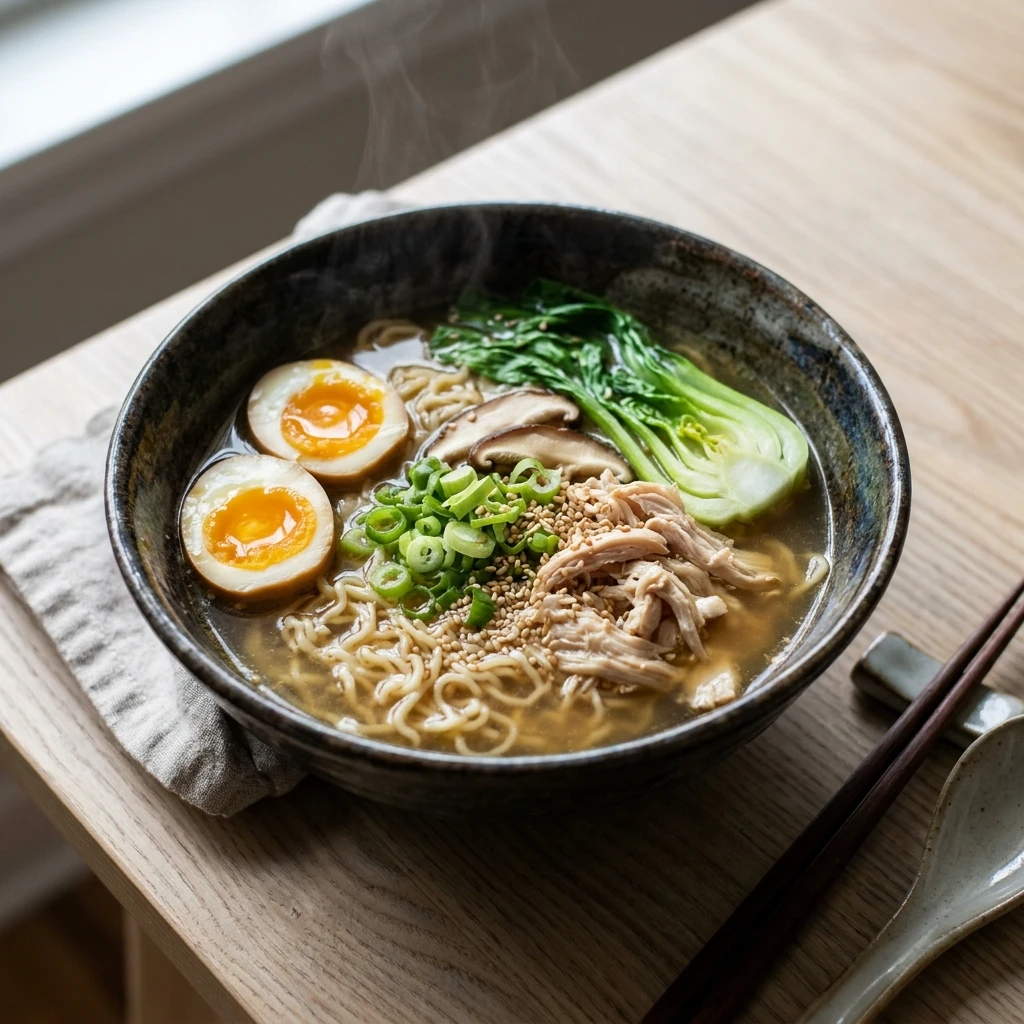
Table of Contents
Why You Will Love This Ramen Recipe
- Ready in 50 minutes, with only 15 of them at the cutting board.
- The broth tastes slow-simmered but needs just 20 minutes on the stove.
- Chicken thighs stay juicy, so every bite is tender instead of dry.
- Each bowl holds 46 grams of protein, enough to keep kids and adults full until the next meal.
- Leftover broth and chicken keep in the fridge, so a lunch bowl comes together in about 10 minutes.
Ramen Recipe Snapshot
- Prep Time: 15 minutes
- Cook Time: 35 minutes
- Total Time: 50 minutes
- Servings: 4 large bowls
- Difficulty: Medium
- Calories per Serving: About 670
- Key Ingredient or Tool: Chicken thighs and an instant-read thermometer
- Best For: Cold weeknights and make-ahead lunches
Nutrition Information
- Calories per Serving: About 670
- Protein: 46 g
- Carbs: 74 g
- Fat: 21 g
- Fiber: 5 g
- Sugar: 4 g
- Sodium: 1,190 mg
- Serving Size: About 1 large bowl
- Servings per Recipe: 4
Protein stands out at 46 grams per bowl, mostly from the chicken thighs, eggs, and noodles, so the meal needs no side. Sodium is 1,190 mg, just over half of the 2,300 mg daily limit in the Dietary Guidelines for Americans, which is why low-sodium broth and soy sauce matter here.
Nutrition values are approximate and calculated per serving using standard ingredient amounts. Values may vary based on brands used and portion sizes.
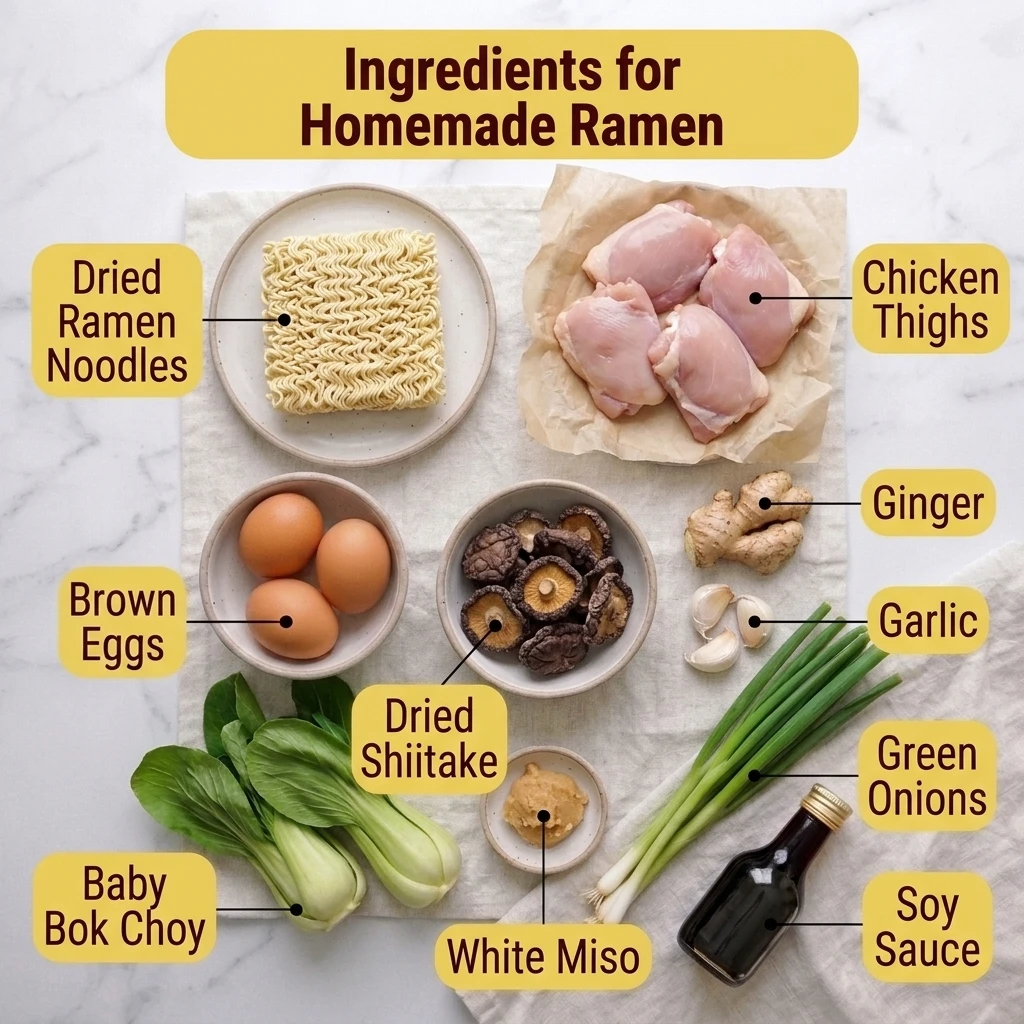
Ingredients
For the Broth
- 1 tablespoon avocado oil
- 4 garlic cloves, smashed
- 1 piece fresh ginger (2 inches), sliced into thin coins
- 4 green onions, whites cut into 2 inch pieces and greens sliced thin for garnish
- 4 dried shiitake mushrooms (about 1/2 ounce)
- 8 cups low-sodium chicken broth (2 quarts)
- 1 pound boneless, skinless chicken thighs (4 thighs)
For the Seasoning Base (Tare)
- 3 tablespoons Kikkoman Less Sodium Soy Sauce (check the label for added alcohol)
- 1 1/2 tablespoons white miso paste
- 2 teaspoons toasted sesame oil
- 2 teaspoons rice vinegar
- 1 teaspoon granulated sugar
For the Bowls
- 12 ounces dried ramen noodles (or 1 pound fresh)
- 4 large eggs, cold from the fridge
- 2 heads baby bok choy, halved lengthwise
- 1 tablespoon toasted sesame seeds
Why These Ingredients Matter
Soy sauce brings salt and color, while white miso adds the round, savory depth that makes the broth taste cooked for hours. I use Kikkoman Less Sodium and read every bottle’s label, because some soy sauces and miso pastes list alcohol.
Chicken thighs add the fat and collagen that give the broth body, though breasts work if you cut the simmer to 15 minutes. Sliced fresh cremini (4 ounces) can replace the dried shiitake, and apple cider vinegar can replace the rice vinegar.
Choose plain noodles with a short ingredient list. With instant noodle blocks, discard the flavor packet.
Equipment Needed
- 5 quart soup pot with lid: Keep the lid slightly ajar so the simmer stays gentle.
- 4 quart saucepan: Boil the eggs first, then refill it with fresh water for the noodles.
- Fine mesh strainer: Press the aromatics lightly with a spoon to squeeze out extra flavor.
- Instant-read thermometer: Chicken thighs are safe at 165°F, and checking beats guessing.
- Four deep 24 ounce bowls: Rinse them with hot tap water first so the broth stays hot.
Preparation
- Pat the chicken thighs dry and trim any large pieces of fat.
- Smash the garlic, slice the ginger, cut the green onion whites, and slice the greens for later.
- Rinse the bok choy, spreading the leaves to wash out grit near the base.
- Fill a large bowl with ice water for the eggs, and keep the eggs refrigerated until the water boils.
- Measure the tare ingredients into a small bowl, and set out four serving bowls.
Step-by-Step Instructions
- Heat the avocado oil in the 5 quart pot over medium heat, then stir in the garlic, ginger, and green onion whites for 2 minutes. Chef’s Note: Lower the heat if the garlic browns, because pale gold edges taste sweet while dark ones turn bitter.
- Pour in the broth, then add the mushrooms and chicken. Bring it to a gentle simmer over medium heat, about 6 minutes, until tiny bubbles rise around the edge.
- Reduce the heat to low, set the lid slightly ajar, and simmer for 20 minutes. Chef’s Note: A hard boil makes thighs rubbery and broth cloudy. The thickest thigh should read 165°F, with firm, pale meat and clear juices.
- Boil 2 quarts of water in the saucepan, lower in the cold eggs, and set a timer for 7 minutes. The water should keep a lively bubble around each egg.
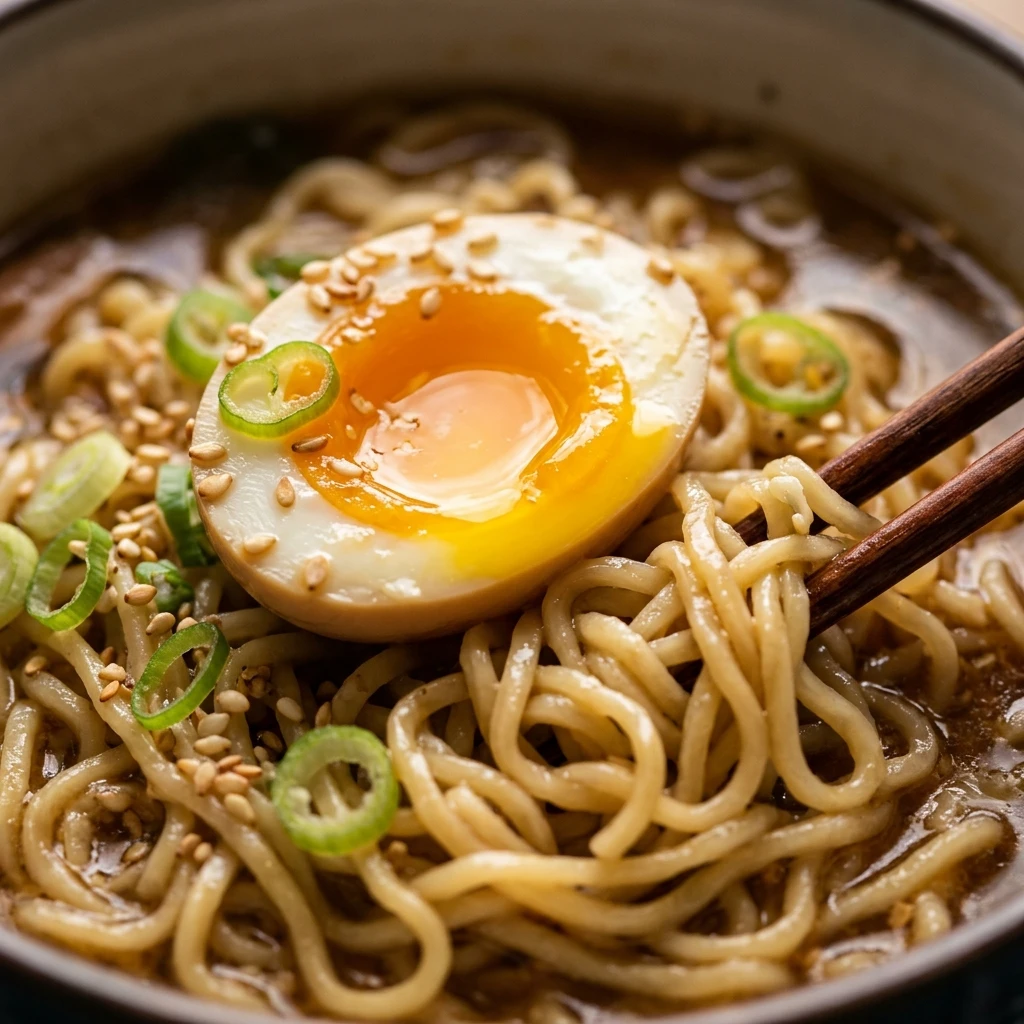
- Move the eggs to the ice water for 5 minutes, then peel and halve them. The whites should look set, with a glossy, jammy orange yolk.
- Whisk the soy sauce, miso, sesame oil, vinegar, and sugar until smooth, then divide it among the four bowls, about 1 1/2 tablespoons each. The mixture should look glossy with no miso lumps.
- Move the chicken to a cutting board and shred it with two forks. The meat should pull apart easily, with no pink at the center.
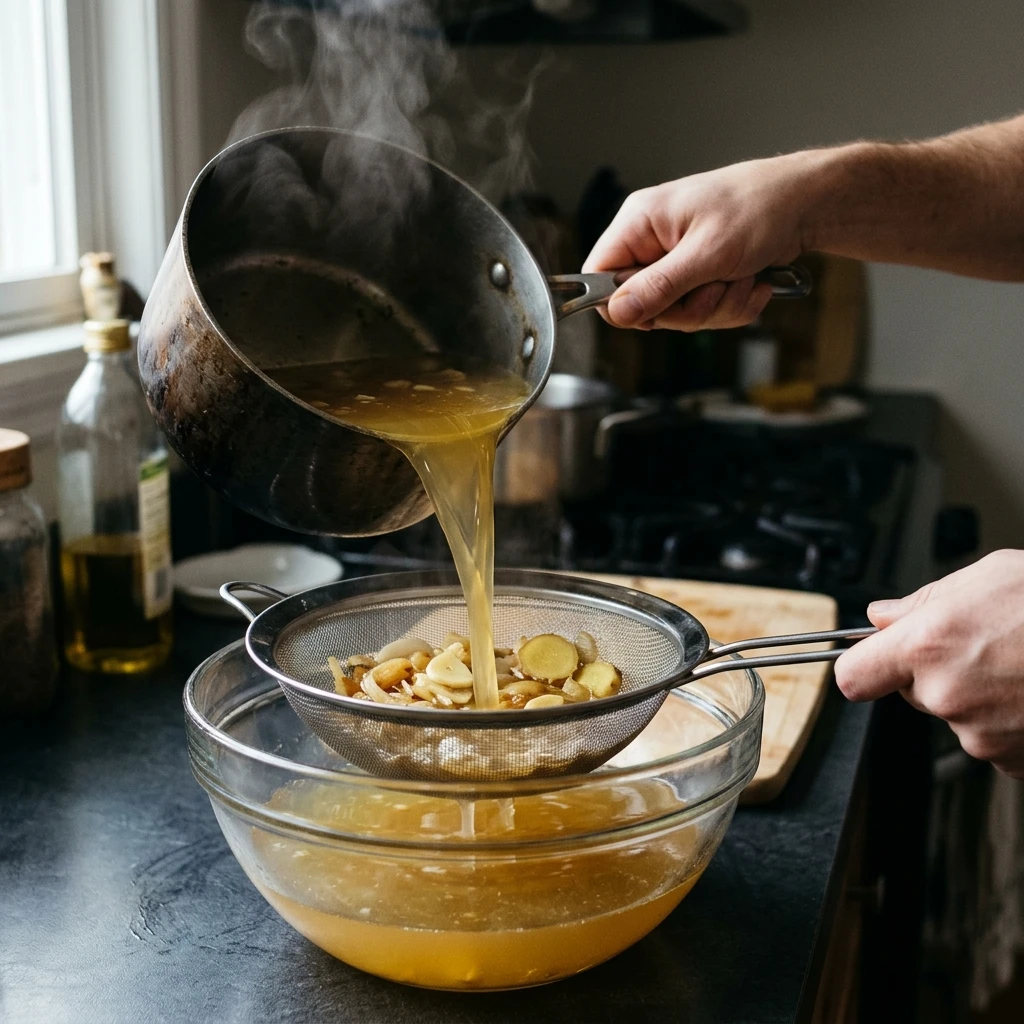
- Pour the broth through the strainer into a large heatproof bowl, then return it to the pot over low heat. Chef’s Note: Trim the woody shiitake stems and slice the caps thin. The broth should look clear and golden.
- Refill the saucepan with fresh water, boil it, and cook the noodles for 3 to 4 minutes, adding the bok choy for the last minute, then drain well. Chef’s Note: Pull the noodles 30 seconds early, since they keep softening in broth. They should look glossy with a slight chew, and the bok choy bright green.
- Ladle about 1 3/4 cups of hot broth into each bowl and stir until the tare dissolves, then add the noodles, chicken, bok choy, mushrooms, eggs, green onion greens, and sesame seeds. Chef’s Note: Serve within 5 minutes, while the yolks still glow orange.
Pro Tip: Taste the strained broth on its own before it goes into the bowls. It should taste mild, even slightly underseasoned, because the tare in each bowl brings the salt.
Expert Tips and Tricks
- My worst test batch used a full tablespoon of miso per bowl, because I assumed more meant better. The broth turned muddy and far too salty, so stick to the measured tare.
- Boil and peel the eggs up to 2 days ahead, and refrigerate them in a covered container.
- Store leftover broth in a lidded glass jar for up to 4 days, and skim the set fat only when you reheat.
- Stir the noodles for the first 30 seconds in fully boiling water so they do not clump.
- Shred the chicken while it is warm. It pulls into long strands, while cold chicken tears into crumbs.
- Start the eggs the moment the broth reaches a simmer, then boil the noodle water while the chicken rests, so every burner stays busy.
Common Mistakes and Troubleshooting
Cloudy, greasy broth. A hard boil whips fat into the liquid and toughens the chicken. Keep the bubbles tiny next time. To fix it now, strain the broth and skim the top.
Bowls that taste too salty. Salt added to the pot concentrates as the broth reduces, so season in the bowl. To rescue a salty bowl, stir in 1/4 cup hot water.
Chalky, gray yolks. Eggs left in boiling water past 8 minutes keep cooking after removal. Use a timer and the ice bath. To rescue them, mash the yolks into a spoonful of broth.
Mushy noodles. Overcooked noodles turn gummy in hot broth. Pull them 30 seconds early and eat right away. If they went soft, add extra bok choy and sesame seeds for contrast.
Storage Instructions
Room Temperature: Not recommended. Leave ramen out no longer than 2 hours, or 1 hour above 90°F.
Refrigerator: Keep the broth, chicken, noodles, and toppings in separate airtight glass containers. Broth and chicken last 4 days, noodles 3 days, and soft-boiled eggs in their shells 2 days.
Freezer: Freeze broth and shredded chicken in freezer-safe containers for up to 3 months, leaving 1 inch of space. Noodles and eggs do not freeze well.
Reheating: Simmer the broth and chicken for 5 to 7 minutes until a thermometer reads 165°F. Dip cold noodles in boiling water for 30 seconds.
Make-Ahead Notes: Make the broth up to 3 days ahead and the tare up to 5 days ahead. Cook the noodles fresh.
On Sundays I freeze two bags of broth with chicken and boil fresh noodles and eggs on the night I need them. A Tuesday bowl then tastes like Saturday’s.
Storage Trick: Freeze the broth in 2 cup portions in zip bags laid flat on a baking sheet. The bags stack like books and thaw in a bowl of warm water in about 15 minutes.
Variations and Substitutions
Spicy Ramen: Stir 1 teaspoon of chili garlic sauce into each tare before adding broth. Add red pepper flakes on top if you want slow-building heat.
Mild and Kid-Friendly: Skip the mushrooms, cook the eggs for 10 minutes, and snip the noodles with kitchen scissors. For something even gentler, try my chicken noodle soup.
Vegetarian: Use vegetable broth and swap the chicken for 14 ounces of pressed, pan-seared tofu. Double the shiitake mushrooms for savory depth.
Gluten-Free: Use gluten-free tamari with no alcohol on the label and brown rice ramen noodles. Rinse the cooked noodles briefly to remove extra starch.
What to Serve With This Ramen
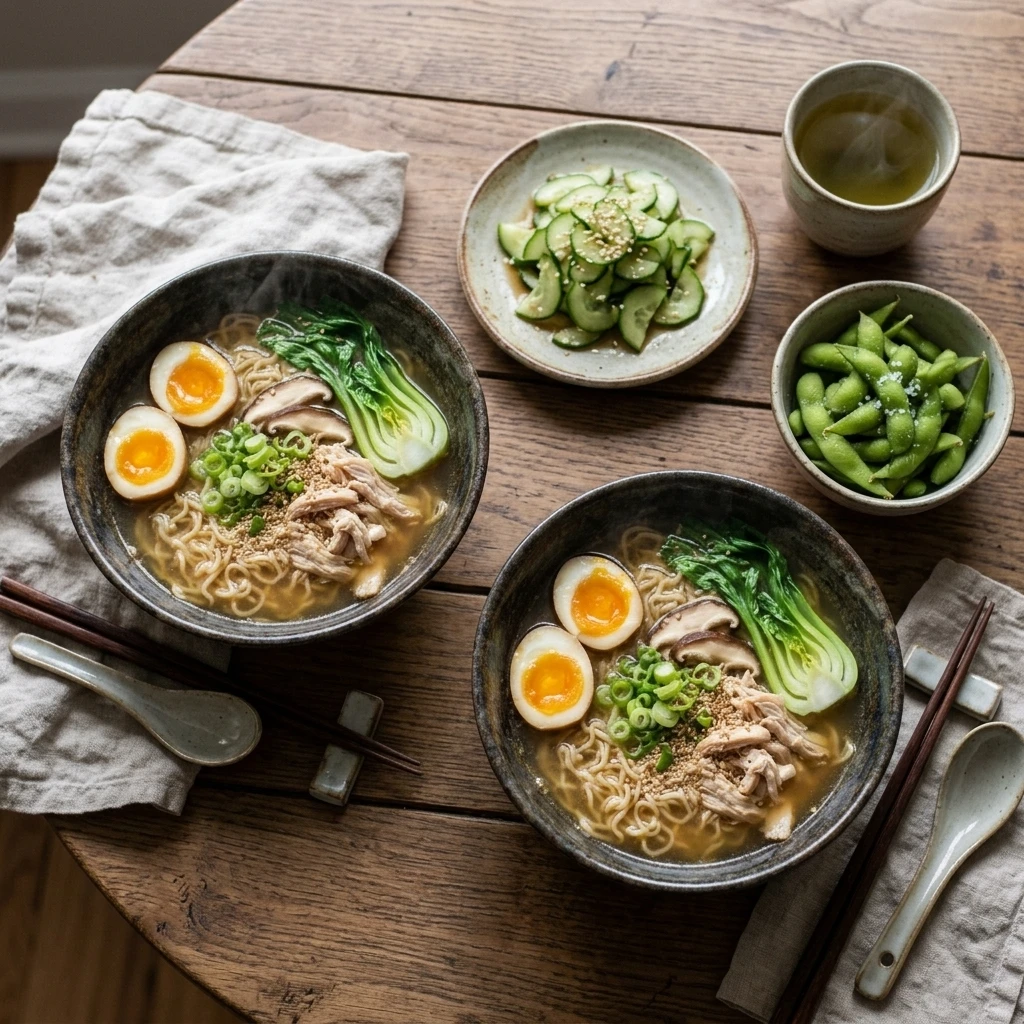
Crisp cucumber salad: A cold, tangy side cuts through the rich broth, which is why my cucumber salad works so well here.
Steamed edamame: Toss warm pods with flaky salt for a quick, protein-rich starter.
Fried rice: For hungry teenagers, a small scoop of fried rice on the side turns the bowl into a bigger meal.
Hot green tea: Its light, grassy flavor resets your palate between slurps.
Frequently Asked Questions
Can you freeze ramen broth?
Yes, ramen broth freezes well for up to 3 months. Cool it completely, then pour 2 cup portions into freezer bags or containers, leaving 1 inch of space for expansion. Freeze the broth without noodles, eggs, or bok choy, since those turn soft or rubbery after thawing. Label each bag with the date. Thaw overnight in the fridge, then reheat until it reaches 165°F.
Why is my homemade ramen broth bland?
Bland broth usually means the seasoning is missing, not the cooking. This broth tastes mild by design, because the tare in the bowl supplies the salt and savory depth. Whisk the soy sauce and miso mixture into the bottom of each bowl before adding broth. If it still tastes flat, add 1 teaspoon of rice vinegar or a few drops of sesame oil to each bowl.
What can I use instead of miso in ramen?
Replace the 1 1/2 tablespoons of miso with 1 tablespoon of soy sauce and 1 tablespoon of smooth tahini. The mix will not taste identical, but it brings salt and a rich, nutty body. Cut the sugar to 1/2 teaspoon, and taste a spoonful of the bowl before adding anything else. If you have neither, use an extra tablespoon of soy sauce.
How long do you boil an egg for ramen?
Boil large eggs for 7 minutes for a jammy yolk with set whites, then move them to ice water for 5 minutes. Peel them under cool running water so the shells slip off. Stop at 6 minutes for a runnier yolk, or go 10 minutes for a fully set one. These times start when you lower cold eggs into water that is already boiling.
Do you cook ramen noodles in the broth or separately?
Cook ramen noodles separately in a pot of plain boiling water. Noodles release starch as they cook, and that starch turns a carefully made broth cloudy and thick. Drain them well, then add them to the bowl just before eating. A separate pot also gives you control over the texture, which is hard when noodles sit in simmering broth. Fresh noodles follow the same rule.
Final Thoughts on Homemade Ramen
Once you can build a bowl in layers, every ramen night gets easier. Swap the chicken for sliced steak, add corn and a pat of butter, or stir in chili garlic sauce, and the same broth and tare carry the change. Keep a bag of broth in the freezer and you are always about 10 minutes from dinner. Change one thing at a time, and you will learn what your family likes.
My daughter now asks for her bowl with extra bok choy and two eggs, and she sets the table without being asked. If you loved this recipe, save it to your easy dinner Pinterest board so you can find it easily later!
Easy Homemade Ramen Ready in 50 Minutes
Ingredients
Equipment
Method
- Heat the avocado oil in the 5 quart pot over medium heat. Stir in the garlic, ginger, and green onion whites for 2 minutes, until pale gold and sweet smelling. Lower the heat if the garlic browns.
- Pour in the broth, then add the mushrooms and chicken. Bring to a gentle simmer over medium heat, about 6 minutes, until tiny bubbles rise around the edge.
- Reduce the heat to low, set the lid slightly ajar, and simmer for 20 minutes, until the thickest thigh reads 165°F and the meat looks firm and pale with clear juices. A hard boil makes the thighs rubbery and the broth cloudy.
- Boil 2 quarts of water in the saucepan, lower in the cold eggs, and cook for 7 minutes, until the water keeps a lively bubble around each egg.
- Move the eggs to ice water for 5 minutes, then peel and halve them, until the whites look set and the yolks look jammy and orange.
- Whisk the soy sauce, miso, sesame oil, rice vinegar, and sugar until smooth and glossy with no lumps. Divide it among four bowls, about 1 1/2 tablespoons each.
- Move the chicken to a cutting board and shred it with two forks, until it pulls apart easily with no pink at the center.
- Pour the broth through the strainer into a large heatproof bowl, then return it to the pot over low heat. Trim the woody shiitake stems and slice the caps thin, until the broth looks clear and golden.
- Refill the saucepan with fresh water and boil it. Cook the noodles for 3 to 4 minutes (the package time minus 30 seconds), adding the bok choy for the last minute, then drain well, until the noodles look glossy with a slight chew and the bok choy turns bright green.
- Ladle about 1 3/4 cups of hot broth into each bowl and stir until the tare dissolves. Add the noodles, chicken, bok choy, mushrooms, eggs, green onion greens, and sesame seeds. Serve within 5 minutes, while the yolks still glow orange.
Notes
Taste the strained broth on its own. It should taste mild, because the tare in each bowl brings the salt.
Soft-boiled yolks are not fully cooked. For young children, older adults, or anyone pregnant, boil the eggs for 10 minutes.