
Easy Miso Soup Ready in 30 Minutes
Most homemade miso soup goes wrong in one of two ways: the broth is plain water, or the miso hit a rolling boil. This miso soup avoids both. You steep a quick dashi from kombu and bonito flakes, then whisk the miso in off a hard simmer, so the bowl tastes savory, round, and faintly smoky instead of just salty.
I tested this miso soup eleven times over five weeks. The early pots were flat, and one turned bitter because I let the kombu boil. By batch seven I had the timing locked: 10 minutes for the kombu, 2 minutes for the bonito, and 1 minute of warming after the miso goes in. I changed one detail per test, and every pot used 3 tablespoons of white miso for 4 cups of water.
The whole pot takes 30 minutes and needs one saucepan, a strainer, and a whisk. You get a clear, golden broth with soft tofu and green onions on top.
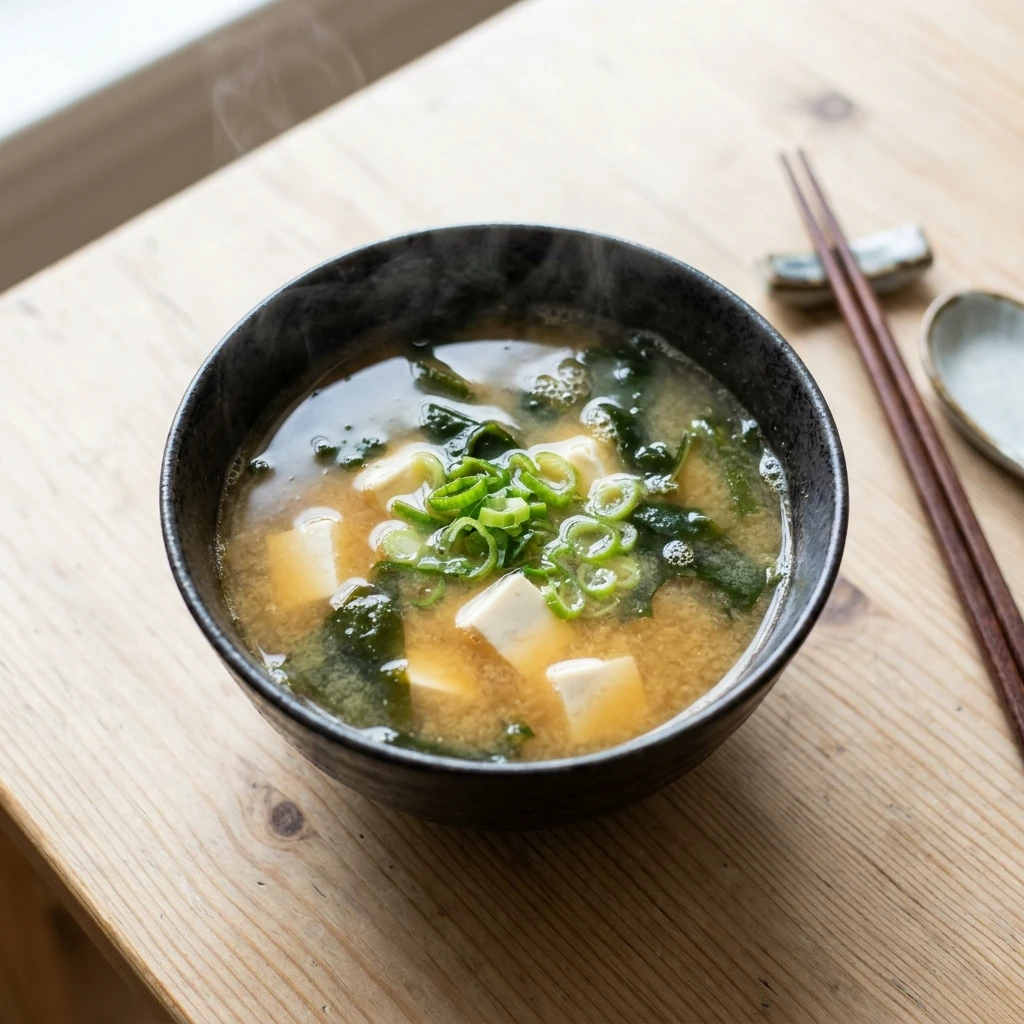
Table of Contents
Why You Will Love This Miso Soup
- Ready in 30 minutes, and only 10 of those are hands-on.
- The broth tastes clean and savory because the dashi is made fresh, not from powder.
- A bowl has about 62 calories, which leaves room for rice, fish, or a full dinner.
- My daughter asked for a second bowl three nights in a row, and she usually pushes green food aside.
- Leftover dashi keeps for 3 days, so the next pot takes about 10 minutes.
Recipe Snapshot
- Prep Time: 10 minutes
- Cook Time: 20 minutes
- Total Time: 30 minutes
- Servings: 4
- Difficulty: Easy
- Calories per Serving: About 62
- Key Ingredient or Tool: White miso paste
- Best For: A weeknight starter or a light lunch
Nutrition Information
- Calories per Serving: About 62
- Protein: 6 g
- Carbs: 5 g
- Fat: 3 g
- Fiber: 1 g
- Sugar: 1 g
- Sodium: 568 mg
- Serving Size: About 1 cup
- Servings per Recipe: 4
Most of the protein comes from the tofu and the miso. Sodium is the number to watch, since nearly all of it comes from the miso. Use less miso if you eat a lower sodium diet.
Nutrition values are approximate and calculated per serving using standard ingredient amounts. Values may vary based on brands used and portion sizes.
Miso Soup Ingredients and Smart Swaps
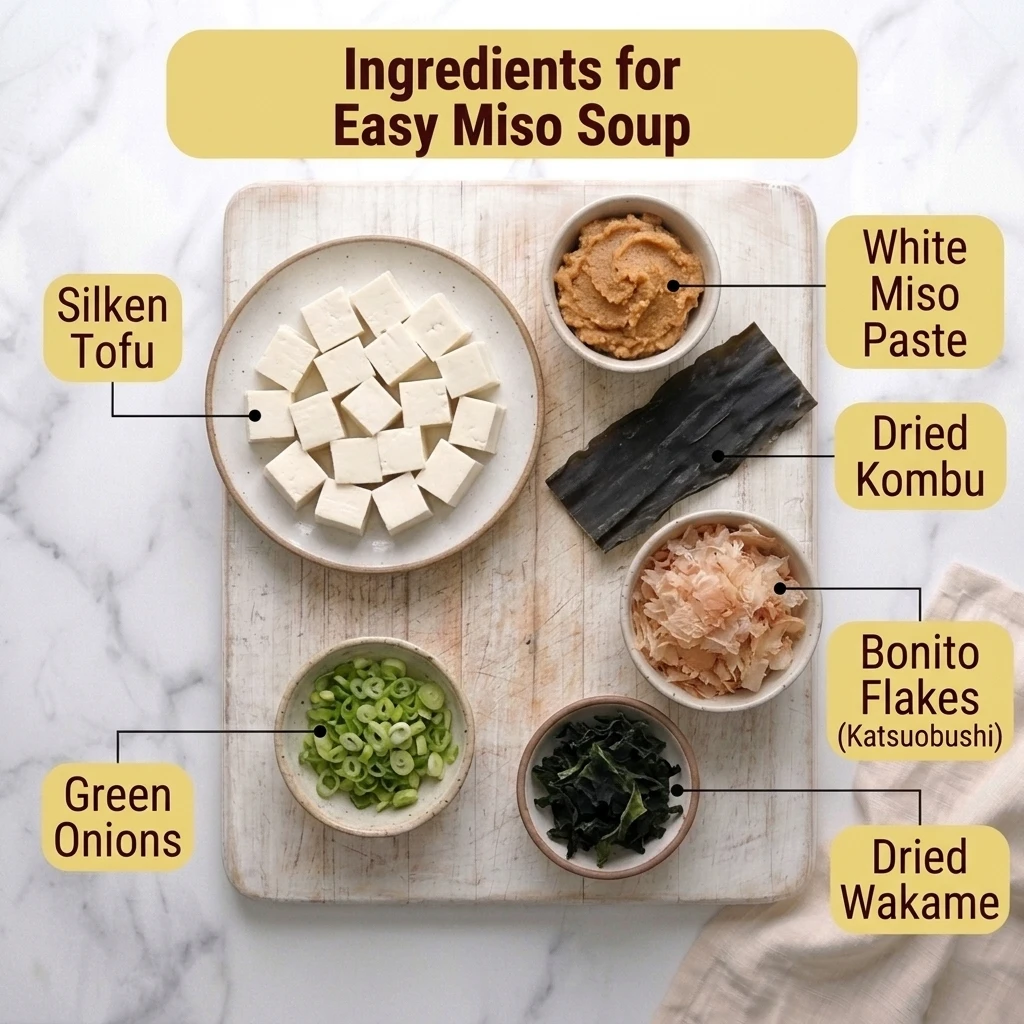
For the Dashi
- 4 cups cold filtered water
- 1 piece kombu, about 4 by 4 inches (10 g)
- 1/2 ounce (15 g) bonito flakes, a big loose handful
For the Soup
- 3 tablespoons white miso paste (about 50 g), from a tub with no alcohol on the ingredient list
- 7 ounces (200 g) silken tofu, cut into 1/2-inch cubes
- 2 tablespoons dried cut wakame (it swells to about 1/2 cup)
- 2 green onions, thinly sliced
Three ingredients decide how this miso soup turns out. White miso gives a mild, slightly sweet bowl, while red miso is saltier and sharper, so use about a third less of it. Kombu brings the deep savory base, and it turns the broth slimy if it boils. Silken tofu melts on the tongue but breaks apart if you stir hard. I use Mori-Nu silken tofu because its shelf-stable box holds the cube shape best.
Swaps: yellow miso for white, firm tofu for silken, and baby spinach for wakame (add it for the last minute).
Equipment Needed
- 2 to 3 quart saucepan: Wide enough for the kombu to lie flat.
- Fine mesh strainer: Line it with a paper towel for a crystal clear broth.
- Small whisk or fork: A fork handles white miso fine, but a whisk is faster.
- Ladle: It doubles as a measure for the 1/2 cup of dashi that loosens the miso.
- Two heatproof bowls, one small and one large: The small one holds the miso, the large one catches the dashi.
Preparation Before You Start
- Wipe the kombu with a barely damp paper towel, and skip the rinse, since the pale powder carries flavor.
- Soak the wakame in 1 cup of cool water for 5 minutes, then drain it and press out extra water.
- Cut the tofu into 1/2-inch cubes and leave them on a plate.
- Slice the green onions and set them aside.
- Spoon the miso into the small bowl and set the strainer over the large bowl.
- No preheating is needed. Keep the burner at medium heat.
Step-by-Step Instructions
- Pour the cold water into the saucepan, add the kombu, and heat over medium for 8 to 10 minutes. Stop when tiny bubbles cling to the edge and the kombu looks soft and ruffled. Chef’s Note: Never let kombu sit in boiling water, which makes the broth slimy and bitter.
- Remove the kombu with tongs and raise the heat until the water just starts to simmer, about 2 minutes. Stir in the bonito flakes and turn off the burner once they sink, about 30 seconds.
- Let the flakes steep for 2 minutes, then pour the broth through the strainer into the large bowl without pressing the flakes. The dashi should look pale gold and clear, with a smoky, sea-air smell. Chef’s Note: Pressing the flakes squeezes out bitter, fishy flavor and clouds the broth.
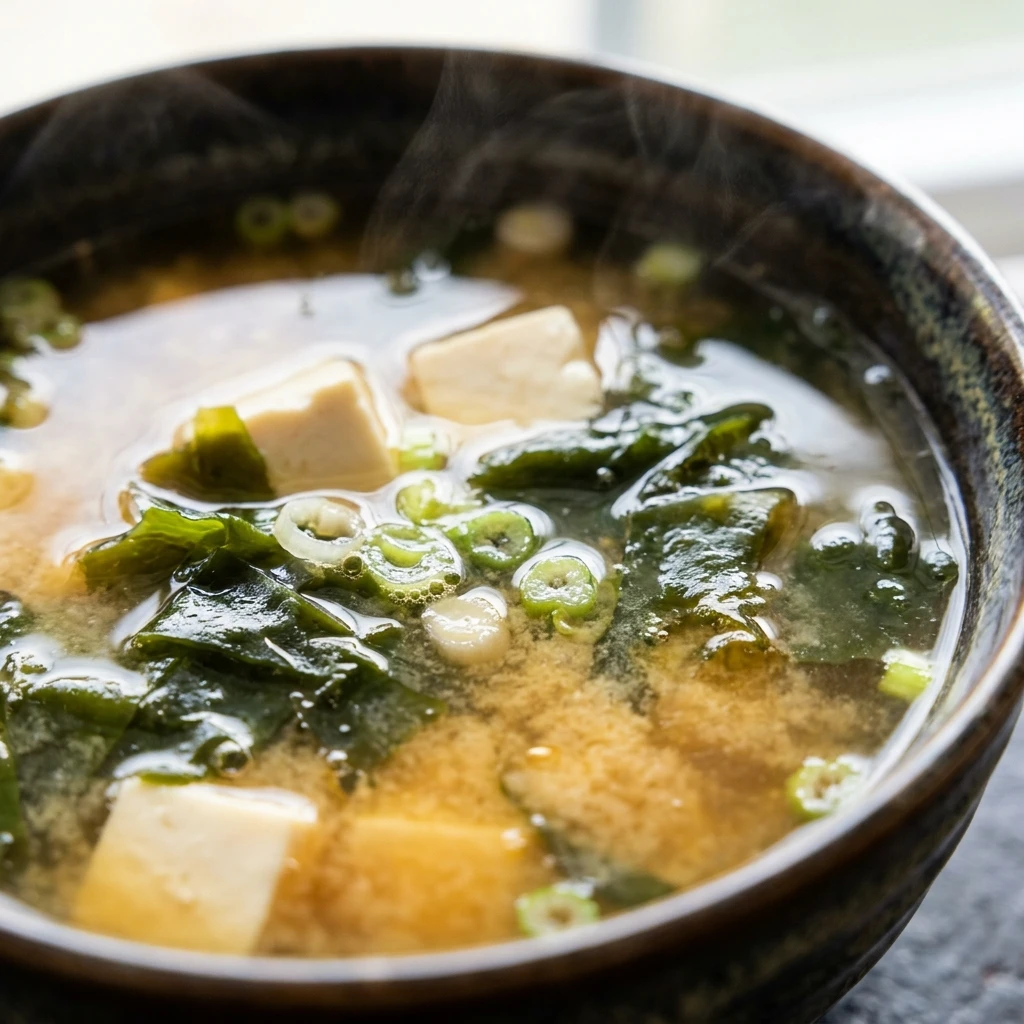
- Pour the dashi back into the saucepan, set it over medium low heat, and add the tofu and drained wakame. Warm everything for 3 minutes, until the tofu steams and the wakame turns glossy and dark green.
- Ladle 1/2 cup of the hot dashi into the bowl with the miso and whisk until the paste dissolves. You want a smooth, cloudy liquid with no lumps. Chef’s Note: Loosening the miso in a little broth first prevents floating clumps that never fully dissolve.
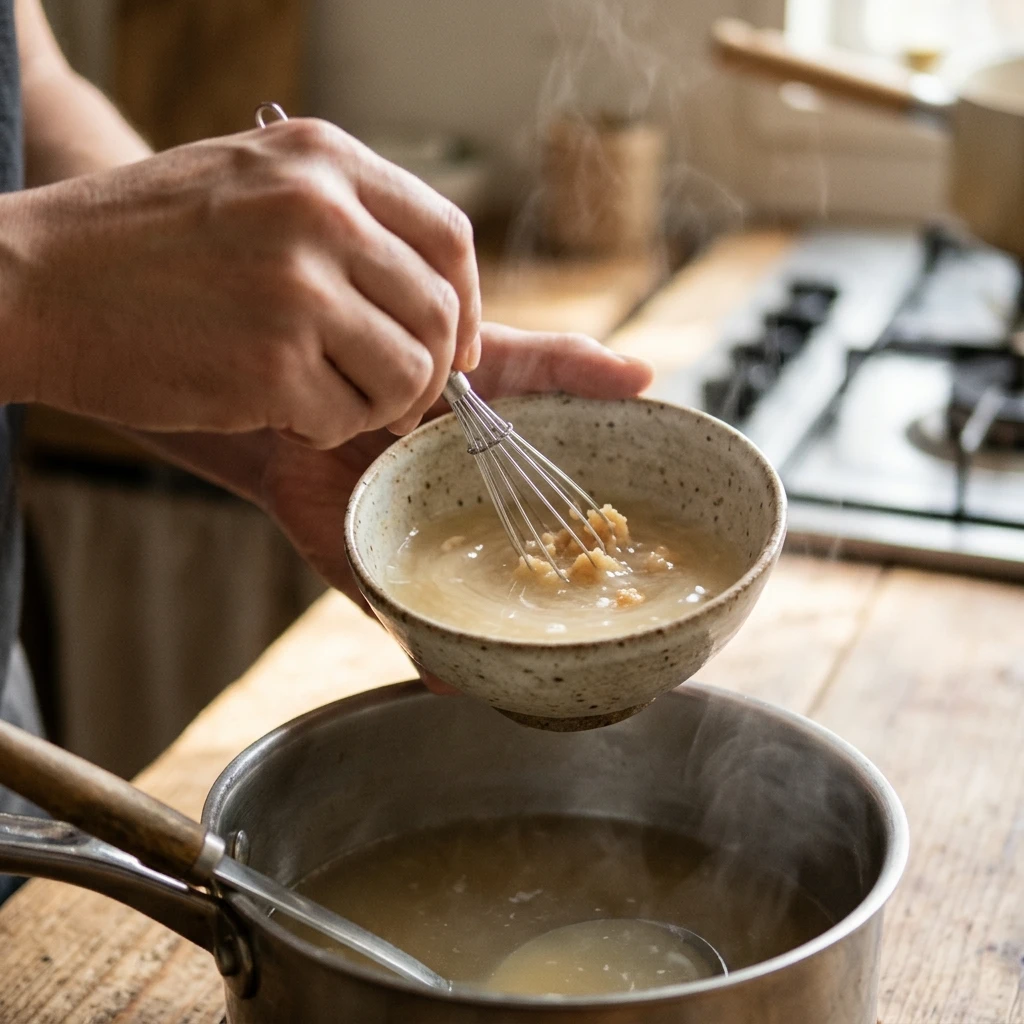
- Turn the heat to its lowest setting and stir the miso mixture into the pan. Warm the soup for 1 minute, just until thin wisps of steam rise and no bubbles break the surface. Chef’s Note: Taste now, and whisk in 1 more teaspoon of miso if the broth tastes thin.
- Ladle the soup into four bowls, giving each a few tofu cubes, and scatter the green onions on top. Serve right away while steam is still rising. Chef’s Note: Green onions go in last so they keep their sharp bite and bright green color.
Pro Tip: Save the used kombu and bonito. Simmer them in 2 cups of water for 10 minutes to make a lighter second dashi for cooking rice or thinning a salty pot.
Expert Tips and Tricks for Better Miso Soup
- I once whisked miso into a pot that was still bubbling hard, and the soup tasted flat and a little sour. Now I drop to low heat before the miso goes near the pan.
- Make the dashi up to 3 days ahead and keep it in a sealed jar in the refrigerator. On the night, warm it and start at the tofu step.
- Freeze plain dashi in ice cube trays, then move the cubes to a freezer bag. They keep for 2 months, and 4 standard cubes equal about 1/2 cup.
- Taste the finished bowl, not the broth, because the tofu and wakame mellow the salt.
- Slice green onions for the week and store them in a paper towel lined container. They stay crisp for about 3 days.
Common Mistakes and Troubleshooting
Boiling the soup after the miso goes in. Heat past a simmer drives off the aroma and leaves the broth flat and bitter. Keep the burner on low. If it already boiled, whisk in 1 teaspoon of fresh miso off the heat to bring back flavor.
Soup that tastes too salty. Miso brands vary in salt, and red miso runs stronger than white. Start with 3 tablespoons and taste. To fix a salty pot, add 1/2 cup of hot water or second dashi.
Cloudy, bitter dashi. Boiling the kombu or pressing the bonito flakes causes it. Heat gently and strain without squeezing. A bitter pot improves with 1/2 cup of hot water and a little more miso.
Tofu falling apart. Silken tofu breaks when it is stirred hard or cut too small. Cut 1/2-inch cubes and slide them in with a spoon. If some crumble, stop stirring, because the pieces still taste fine.
Floating miso clumps. Paste dropped straight into the pan leaves lumps that never dissolve. Loosen it in a bowl with hot dashi first. If lumps appear, press them through the strainer with a spoon.
Storage Instructions
- Room Temperature: Leave the soup out for no more than 2 hours, or 1 hour above 90°F.
- Refrigerator: Cool the soup for 20 minutes, then store it in an airtight glass container for up to 3 days.
- Freezer: Freeze plain dashi in a freezer-safe zip bag for up to 2 months. Skip freezing the finished soup, because the tofu turns spongy.
- Reheating: Warm the soup over medium low heat for 4 to 5 minutes until it reaches 165°F, stopping before bubbles break the surface. Add a splash of water if it tastes salty.
- Make-Ahead Notes: Make the dashi 3 days ahead and cube the tofu 1 day ahead. Add the miso and green onions only at serving time.
I keep leftover soup in a 1 pint jar and reheat one bowl at a time, because warming the whole pot twice dulls the miso. A jar of dashi covers three weeknight bowls.
Storage Trick: Press plastic wrap flat against the miso in its tub before closing the lid. It keeps the top from darkening, so the tub stays fresh for months in the refrigerator.
Variations and Substitutions
- Spicy: Stir 1/2 teaspoon of chili garlic sauce into the finished pot, or top each bowl with a pinch of red pepper flakes. Start small, because the heat builds as it sits.
- Mild and Kid-Friendly: Cut the miso to 2 tablespoons, skip the green onions, and add 1/2 cup of frozen corn with the tofu. The sweet corn wins over young kids.
- Vegetarian: Soak the kombu and 4 dried shiitake mushrooms in the water for 30 minutes, then warm it gently for 10 minutes. Remove both and skip the bonito.
- Gluten-Free: Most white miso is made from rice and soybeans, so the soup can be gluten-free as written. Check the label for barley miso and added flavorings in the bonito.
What to Serve With This Miso Soup
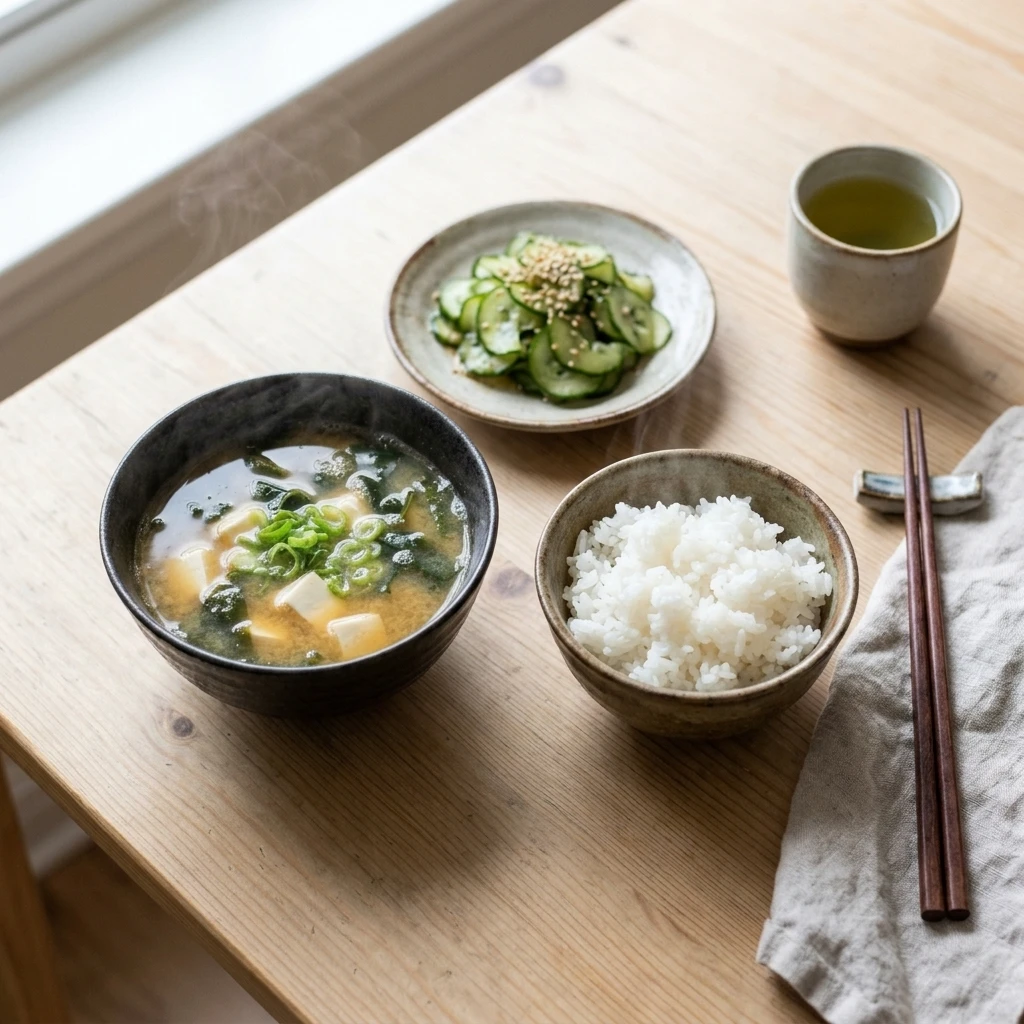
- Teriyaki chicken: The sweet glaze balances the salty broth, and teriyaki chicken over rice with a bowl of soup makes a full dinner.
- Cucumber salad: A cold, tangy cucumber salad adds crunch next to the soft tofu.
- Fried rice: A small plate of fried rice turns a light starter into a hearty meal.
- Steamed short-grain rice: Plain rice with a soft boiled egg soaks up the broth left in the bottom of the bowl.
- Hot green tea: A cup of unsweetened green tea keeps the meal light and clears your palate between sips.
Frequently Asked Questions About Miso Soup
Can you make miso soup ahead of time?
Yes, but make the dashi ahead and add the miso at the end. Dashi keeps for 3 days in a sealed jar in the refrigerator. Warm it, add the tofu and wakame, then whisk in the miso off a simmer. If you store finished miso soup, eat it within 3 days and reheat it to 165°F without boiling. The wakame softens a bit more each day.
Why does my miso soup taste bland?
A bland pot almost always means weak broth or too little miso. Steep the kombu for the full 8 to 10 minutes and use a full 1/2 ounce of bonito flakes, since plain water gives no savory base. Brands also differ, and some carry much less salt per tablespoon. Taste the finished miso soup, whisk in 1 more teaspoon of miso, and taste again after 30 seconds.
What can I use instead of dashi for miso soup?
Instant dashi granules are the easiest swap. Stir 2 teaspoons into 4 cups of hot water and drop the miso to 2 tablespoons, because granules usually contain salt. For a vegetarian pot, soak a 4-inch piece of kombu and 4 dried shiitake mushrooms in the water for 30 minutes. Plain water works in a pinch, but the soup tastes thin.
Can you boil miso soup?
You can, but you should not. Boiling after the miso goes in dulls the aroma and leaves the broth flat and a little bitter. Boil only the dashi if you like, then drop to low heat before adding the miso. The doneness cue is thin wisps of steam with no bubbles breaking the surface, and one minute is enough for a full pot of miso soup.
What is the difference between white miso and red miso for soup?
White miso ferments for a shorter time, so it tastes mild and slightly sweet. Red miso ferments longer and tastes saltier, deeper, and sharper. I use white for this miso soup because it keeps the broth light and kid-friendly. Yellow miso sits in the middle. If you only have red, cut the amount to 2 tablespoons and taste before adding more.
Final Thoughts on Miso Soup
The best bowl of miso soup is the quiet one: clear dashi, one gentle minute of heat, and a miso you actually like the taste of. Buy two small tubs, one white and one red, and run the same recipe with each. After two pots you will know your own preference better than any recipe can tell you.
I keep a jar of dashi in my refrigerator door on school nights, because a bowl next to rice and a fried egg is dinner in 8 minutes.
If you loved this recipe, save it to your easy soup Pinterest board so you can find it easily later!
Easy Miso Soup Ready in 30 Minutes
Ingredients
Equipment
Method
- Add the water and kombu to the saucepan and heat over medium for 8 to 10 minutes, until tiny bubbles cling to the edge and the kombu looks soft and ruffled.
- Remove the kombu with tongs. Raise the heat until the water just starts to simmer, about 2 minutes. Stir in the bonito flakes and turn off the burner once they sink, about 30 seconds.
- Steep the flakes for 2 minutes. Pour the broth through the strainer set over the large bowl, without pressing the flakes, until the dashi looks pale gold and clear.
- Pour the dashi back into the saucepan over medium low heat. Add the tofu and wakame and warm for 3 minutes, until the tofu steams and the wakame turns glossy and dark green.
- Ladle 1/2 cup of hot dashi into the bowl with the miso and whisk until it dissolves into a smooth, cloudy liquid with no lumps.
- Turn the heat to its lowest setting and stir the miso mixture into the pan. Warm for 1 minute, until thin wisps of steam rise and no bubbles break the surface. Taste and whisk in 1 more teaspoon of miso if the broth tastes thin.
- Ladle into four bowls with a few tofu cubes in each, scatter the green onions on top, and serve right away while steam is rising.
Notes
Use about a third less red miso than white, and taste before adding more.
Storage: Refrigerate the finished soup in an airtight glass container for up to 3 days. Freeze plain dashi for up to 2 months, but do not freeze the finished soup.