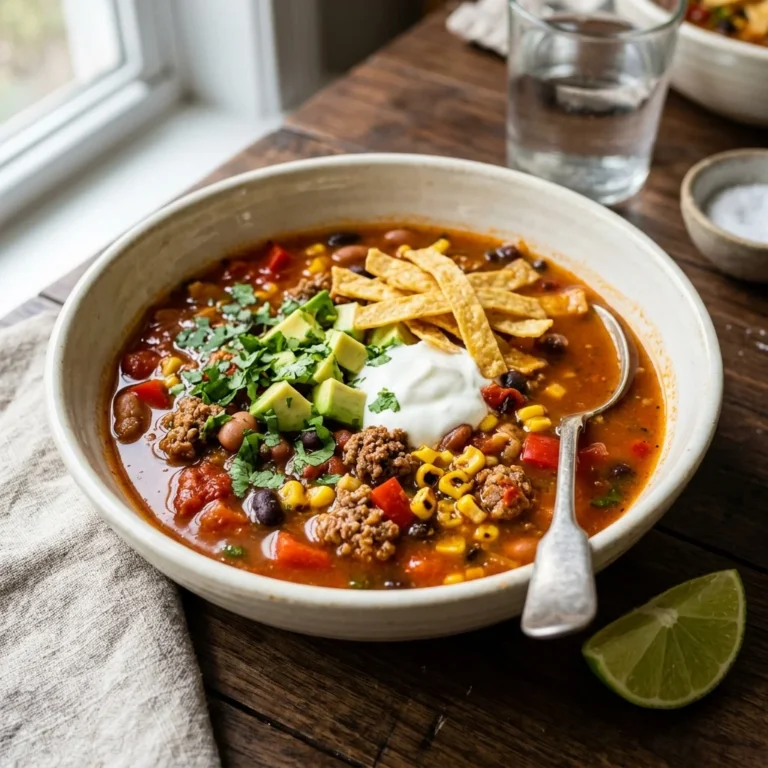
Lasagna Soup with Rich Tomato Broth and Creamy Ricotta
Lasagna soup gives you the deep tomato flavor, seasoned beef, tender pasta, and creamy cheese of baked lasagna without building a stack of layers. The broth stays loose enough to eat with a spoon, while broken lasagna noodles make every bowl feel substantial.
This version uses certified ground beef and broth, with no alcohol or questionable meat ingredients. The noodles cook in a separate pot, then go into each bowl before serving. That small change matters if you plan to save leftovers because pasta continues to absorb liquid as it sits. Store the noodles and soup base apart, and tomorrow’s serving will still look like soup.
The ricotta mixture also stays separate. A spoonful on top creates creamy streaks without making the entire pot heavy. You can adjust or omit it in individual bowls.
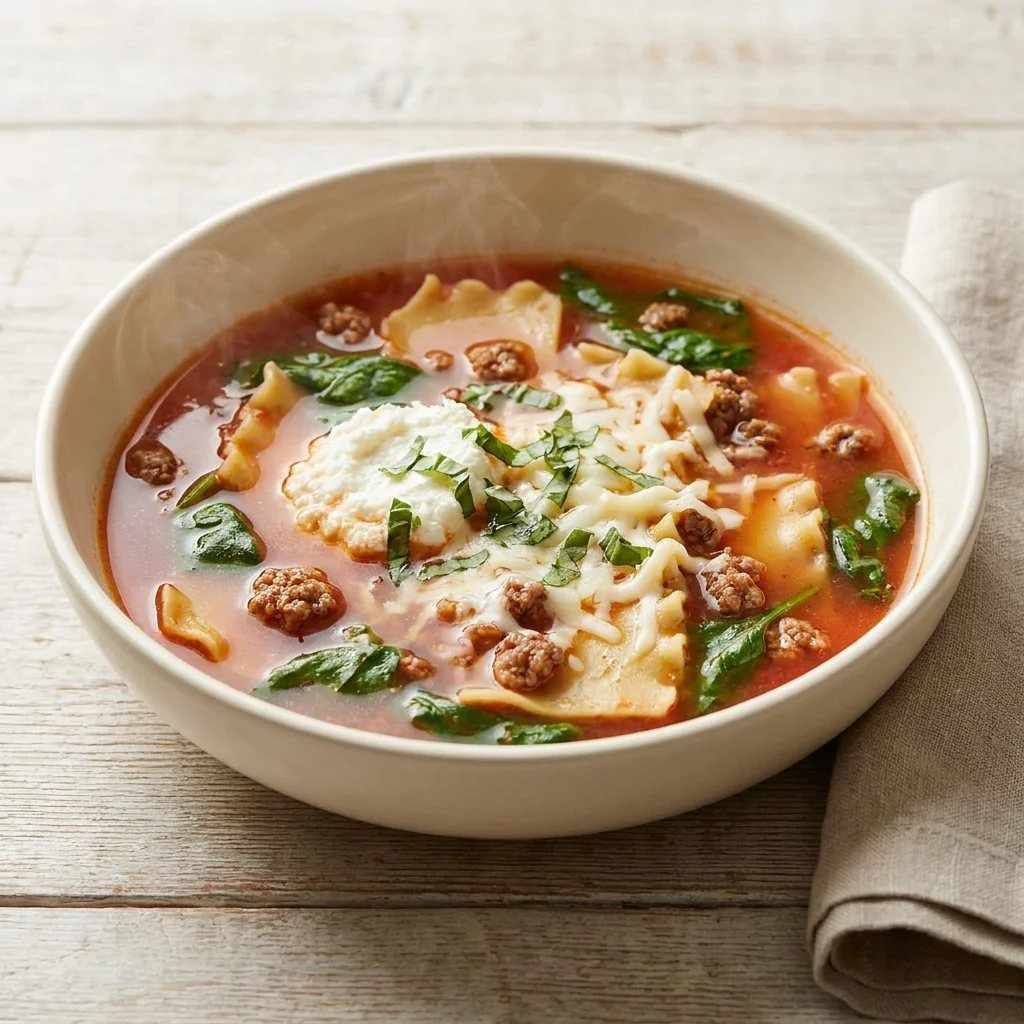
Table of Contents
Why This Lasagna Soup Method Works
- The ground beef browns before the liquid is added, giving the broth a savory base instead of a boiled-meat texture.
- Tomato paste cooks directly against the hot pot, which removes its raw edge and develops a deeper tomato taste.
- Crushed tomatoes provide body, while certified beef broth keeps the consistency spoonable rather than turning it into pasta sauce.
- Separately cooked noodles hold their shape better during storage and let you control how much pasta goes into each serving.
- Ricotta, mozzarella, and suitable hard cheese are combined as a topping, so the cheese stays creamy and does not settle on the bottom of the pot.
Lasagna Soup at a Glance
- Prep time: 20 minutes
- Cook time: 35 minutes
- Total time: 55 minutes
- Servings: 6
- Difficulty: Easy
- Estimated calories: 485 per serving
- Key ingredient: Certified lean ground beef
- Best for: A filling soup dinner with planned leftovers
Lasagna Soup Nutrition Information
- Calories per serving: Approximately 485
- Protein: Approximately 32 grams
- Carbohydrates: Approximately 45 grams
- Fat: Approximately 21 grams
- Fiber: Approximately 5 grams
- Sugar: Approximately 9 grams
- Sodium: Approximately 750 milligrams
- Serving size: One-sixth of the soup, noodles, and cheese topping
- Servings per recipe: 6
The beef and cheese supply most of the protein. Pasta contributes most of the carbohydrate, while the vegetables add fiber. Sodium varies with the broth, tomatoes, cheese, and added salt, so check labels before seasoning.
Nutrition values are approximate and calculated per serving using standard ingredient amounts. Values may vary based on brands used and portion sizes.
Lasagna Soup Ingredients
For the soup base
- 1 tablespoon olive oil
- 500 grams certified lean ground beef
- 1 medium yellow onion, about 160 grams, finely diced
- 1 medium carrot, about 80 grams, finely diced
- 4 garlic cloves, minced
- 2 tablespoons tomato paste
- 1 teaspoon dried oregano
- 1 teaspoon dried basil
- Half a teaspoon dried thyme
- Half a teaspoon crushed red pepper flakes, optional
- 800 grams crushed tomatoes
- 6 cups low-sodium, certified beef broth
- 1 teaspoon fine salt, divided and adjusted to taste
- Half a teaspoon ground black pepper
- 2 packed cups baby spinach, about 60 grams
For the noodles
- 225 grams dry lasagna noodles, broken into spoon-sized pieces
- Water for boiling
- 1 teaspoon salt for the pasta water
For the ricotta topping
- 250 grams whole-milk ricotta
- 1 cup shredded mozzarella, about 110 grams, made with suitable enzymes
- One-third cup finely grated certified Parmesan-style cheese, about 30 grams
- 2 tablespoons chopped fresh parsley or basil
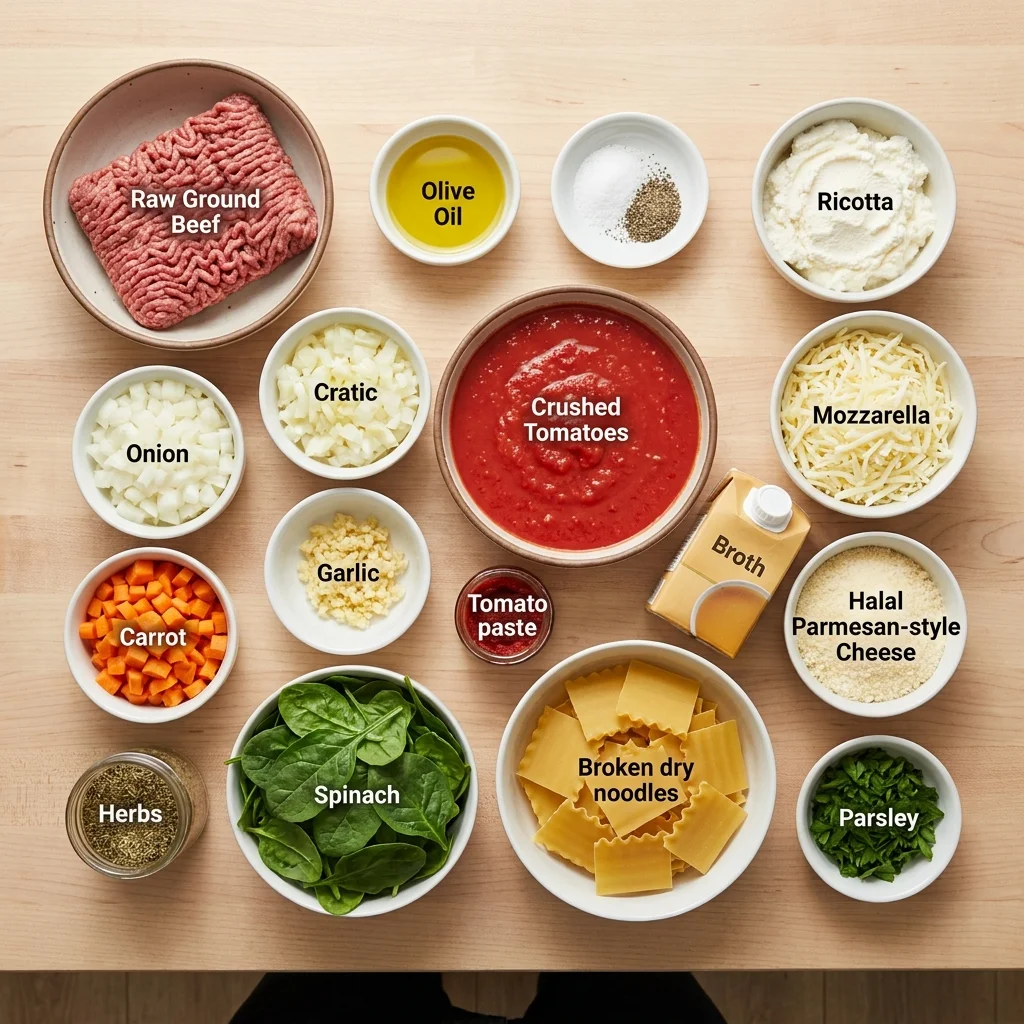
Why the Main Ingredients Matter
- Lean ground beef gives lasagna soup a rich base without leaving a thick layer of fat. Ground chicken or turkey can replace it in the same amount, although the broth will taste lighter. Use certified meat.
- Crushed tomatoes create a smoother broth than diced tomatoes. For visible pieces, replace half with the same weight of diced tomatoes. Choose tomatoes without alcohol-based flavorings.
- Beef broth supports the meat. Certified chicken broth or suitable vegetable broth gives a lighter result. Start with low-sodium broth because cheese adds salt later.
- Lasagna sheets give the bowl its familiar character, but another sturdy pasta also works. Follow its package timing because thicknesses vary.
- The cheese topping contrasts with the tomato broth. Confirm that the enzymes and rennet meet your requirements, or choose reliably certified cheese.
Equipment for Lasagna Soup
- A 5- to 6-quart heavy pot gives the beef enough surface area to brown and leaves space for the broth to simmer without splashing.
- A medium saucepan lets you cook the pasta while the soup base simmers, reducing the total time.
- A wooden spoon or sturdy spatula helps break the ground beef into small pieces that fit comfortably on a soup spoon.
- A fine grater turns the hard cheese into light shreds that blend smoothly into the ricotta.
- Shallow storage containers help the soup cool more quickly than one deep container and keep saved portions easy to reheat.
Lasagna Soup Preparation
- Dice the onion and carrot evenly so they soften into the lasagna soup. Mince the garlic, measure the herbs, and open the tomatoes before heating the pot.
- Break each lasagna sheet into pieces about 2 inches wide. Tiny fragments soften quickly, while long strips are awkward to eat with a spoon.
- Mix the ricotta, mozzarella, Parmesan-style cheese, and parsley. Cover and refrigerate until serving so the topping stays cool and creamy.
- Set a colander in the sink for the pasta. No oven preheating, baking dish, or pan greasing is needed for this recipe.
How to Make Lasagna Soup
- Heat the olive oil in the large pot over medium-high heat for about 30 seconds. Add the ground beef and spread it across the surface.
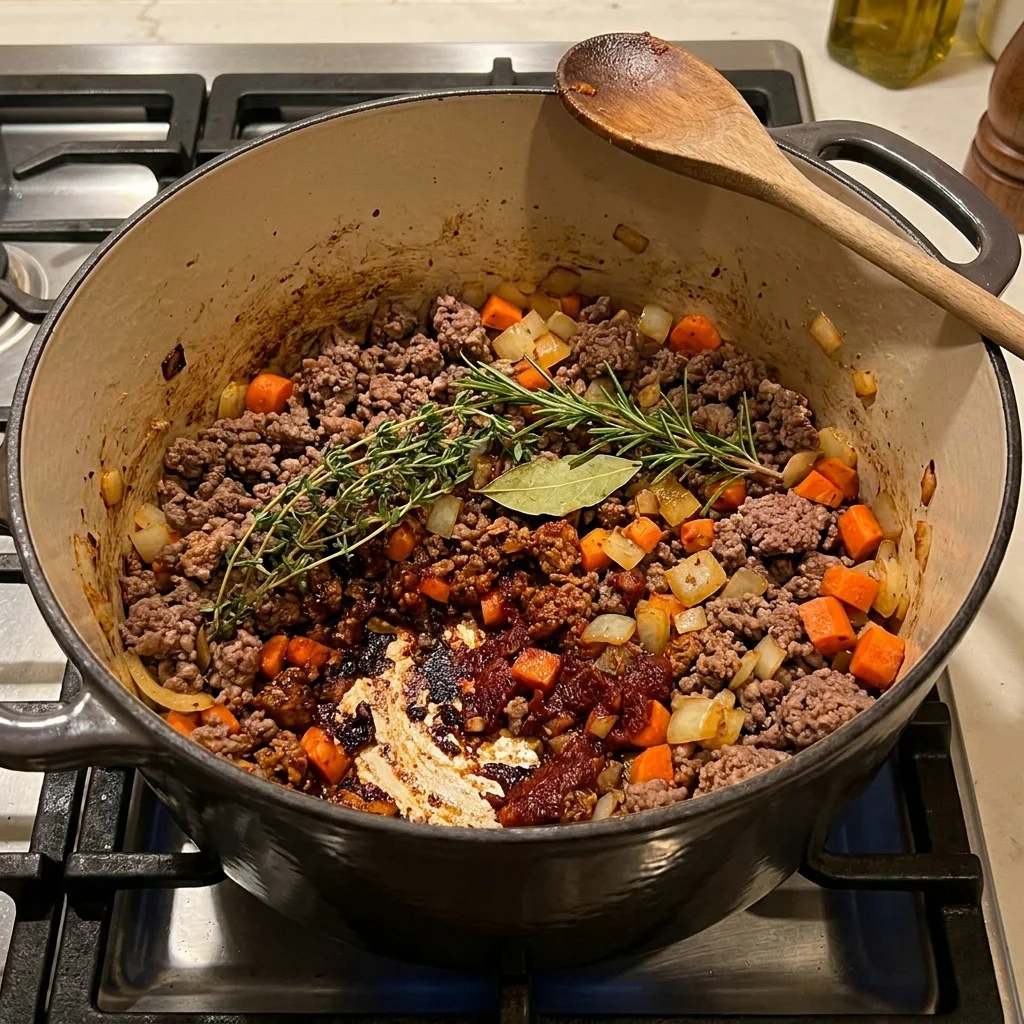
- Cook the beef for 6 to 8 minutes, breaking it into small pieces. Let some pieces remain against the hot surface long enough to brown before stirring. Chef’s Note: If the meat releases a large amount of fat, carefully spoon off the excess and leave about 1 tablespoon in the pot.
- Add the diced onion and carrot. Cook over medium heat for 5 to 6 minutes, stirring occasionally, until the onion turns translucent and the carrot begins to soften.
- Stir in the garlic, tomato paste, oregano, basil, thyme, and optional red pepper flakes. Cook for 60 to 90 seconds, stirring across the bottom, until the paste darkens slightly and the garlic smells fragrant. Chef’s Note: Do not let the garlic turn dark brown because it can make the broth taste bitter.
- Pour in about 1 cup of the broth and scrape the bottom of the pot to loosen the browned bits. Add the remaining broth, crushed tomatoes, half a teaspoon of salt, and black pepper.
- Bring the soup to a gentle boil over medium-high heat. Reduce the heat to medium-low and simmer uncovered for 18 to 20 minutes, stirring every few minutes. The carrot should be tender, and the broth should look slightly thicker but still pour easily from a ladle.
- While the soup simmers, bring a saucepan of water to a boil and add 1 teaspoon salt. Drop in the broken lasagna noodles and cook according to the package directions until al dente, usually 9 to 12 minutes. Chef’s Note: Stir once during the first minute so overlapping pieces do not stick together.
- Drain the pasta well. Do not rinse it unless the package specifically instructs you to do so. Spread the pieces loosely in the colander rather than pressing them into a compact pile.
- Stir the spinach into the soup and cook for 1 to 2 minutes. It is ready when the leaves have wilted but still look green.
- Taste the broth after the spinach wilts. Add the remaining salt only if needed, remembering that the cheese topping will add more seasoning.
- Divide the cooked noodles among six bowls. Ladle the hot beef and tomato soup over the noodles, then add a spoonful of the ricotta mixture to each serving.
Kitchen Tip
Cook only the amount of pasta you expect to serve immediately if you are planning several days of leftovers. The remaining soup base can stay separate, and a fresh portion of noodles takes only a few minutes to prepare later.
Expert Tips for Lasagna Soup
- Brown in batches if your pot is narrow. Crowded meat steams in its released moisture, so divide the beef into two batches when the pot surface cannot hold it in a loose layer.
- Keep the simmer gentle after adding the tomatoes. A hard boil can reduce the broth too quickly and send tomato splashes over the stove.
- Taste one spoonful with the cheese topping before adjusting the pot because it changes both saltiness and perceived acidity.
- Prepare the lasagna soup base and cheese topping up to 1 day ahead. Cook the noodles before serving, then reheat the base to 165 degrees Fahrenheit, or 74 degrees Celsius.
- Store the pasta in a separate covered container for up to 3 to 4 days. Tossing it with oil is unnecessary and can stop the broth from clinging to the noodle surface.
- If the tomatoes taste sharply acidic, simmer for another 5 minutes before changing the seasoning. Extra cooking can round the flavor without sugar.
Lasagna Soup Problems and How to Fix Them
The noodles turned soft.
This usually happens when pasta remains in the hot broth or is cooked past al dente. Keep it separate and begin checking before the package’s longest cooking time. If the current batch is already soft, serve it promptly rather than simmering it again.
The soup became too thick.
Noodles may have absorbed part of the broth, or the pot may have simmered too vigorously. Add warm certified broth in half-cup portions until the consistency loosens, then taste before adding salt.
The tomato flavor tastes flat.
Tomato paste may not have cooked long enough, or the broth may need salt. Next time, let the paste darken slightly against the pot. For the current batch, simmer for 5 minutes, taste, and add salt in small pinches if needed.
The cheese topping feels grainy.
Pre-shredded cheese and very low-fat ricotta can create a rougher texture. Use freshly grated,suitable cheese and whole-milk ricotta. If the mixture is already dry, stir in 1 or 2 teaspoons of warm broth just before serving.
The beef has little color.
Moisture or crowding prevented browning. Use medium-high heat and leave the meat undisturbed for short periods. The soup is still usable, but a longer uncovered simmer can concentrate its flavor.
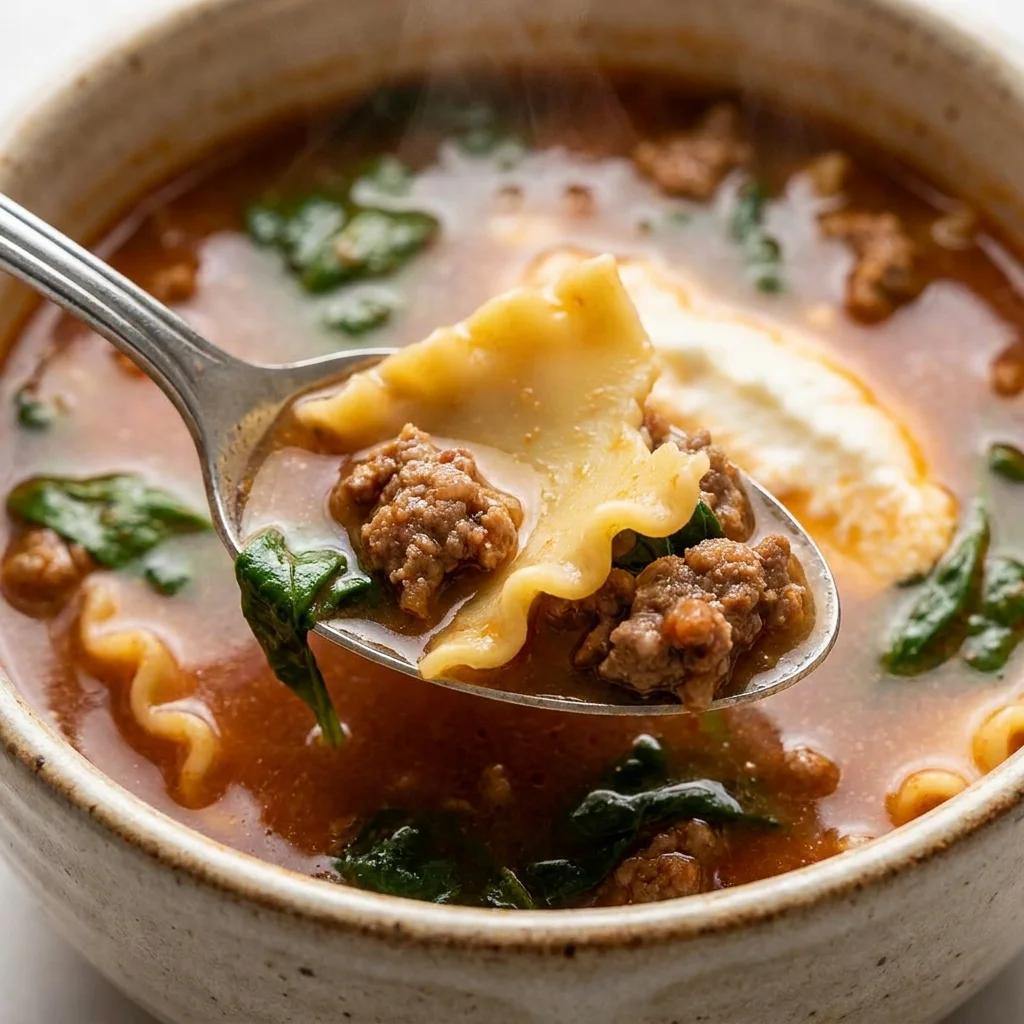
Lasagna Soup Storage and Reheating
Room temperature: Refrigerate the soup within 2 hours of cooking, or within 1 hour when the surrounding temperature is above 90 degrees Fahrenheit, or 32 degrees Celsius.
Refrigerator: Store the soup base, cooked noodles, and cheese topping in separate covered containers at 40 degrees Fahrenheit, or 4 degrees Celsius, or below. Use within 3 to 4 days.
Freezer: Freeze the cooled soup base without the noodles, spinach, or cheese topping for up to 3 months for best quality. Leave expansion space in the container. Thaw overnight in the refrigerator, reheat, then add fresh spinach and separately cooked pasta.
Reheating: Warm the soup base in a saucepan over medium heat, stirring occasionally, until it reaches 165 degrees Fahrenheit, or 74 degrees Celsius. Add only the noodles needed for that serving during the last minute, or place them in the bowl and pour the hot soup over them.
Make-ahead notes: The soup base and cheese topping can be prepared 1 day ahead. Keep them refrigerated separately. Cook the pasta shortly before the meal for the most reliable texture.
Divide a large batch into shallow containers instead of refrigerating it in the cooking pot. Smaller portions cool faster and allow you to reheat only what you plan to eat.
Lasagna Soup Variations
Spicy lasagna soup: Increase the crushed red pepper to 1 teaspoon and add sliced fresh chili at the table. Keep the ricotta topping mild so it can soften the heat in each spoonful.
Mild version: Leave out the red pepper and reduce the black pepper to one-quarter teaspoon. Use a smooth crushed tomato product and cut the pasta into smaller pieces that are easy to manage with a spoon.
Vegetarian version: Replace the beef with 450 grams of finely chopped mushrooms and one drained 400-gram can of brown lentils. Brown the mushrooms until their moisture evaporates, then continue with the onion and use suitable vegetable broth.
Gluten-free version: Choose certified gluten-free lasagna sheets or another sturdy gluten-free pasta. Cook it separately according to the package and verify that the broth, tomato paste, dried herbs, and cheeses are also gluten-free.
Dairy-free version: Leave off the cheese mixture or use verified dairy-free alternatives that meet your requirements. A spoonful of unsweetened blended white beans can add a creamy contrast without imitating cheese.
What to Serve with Lasagna Soup
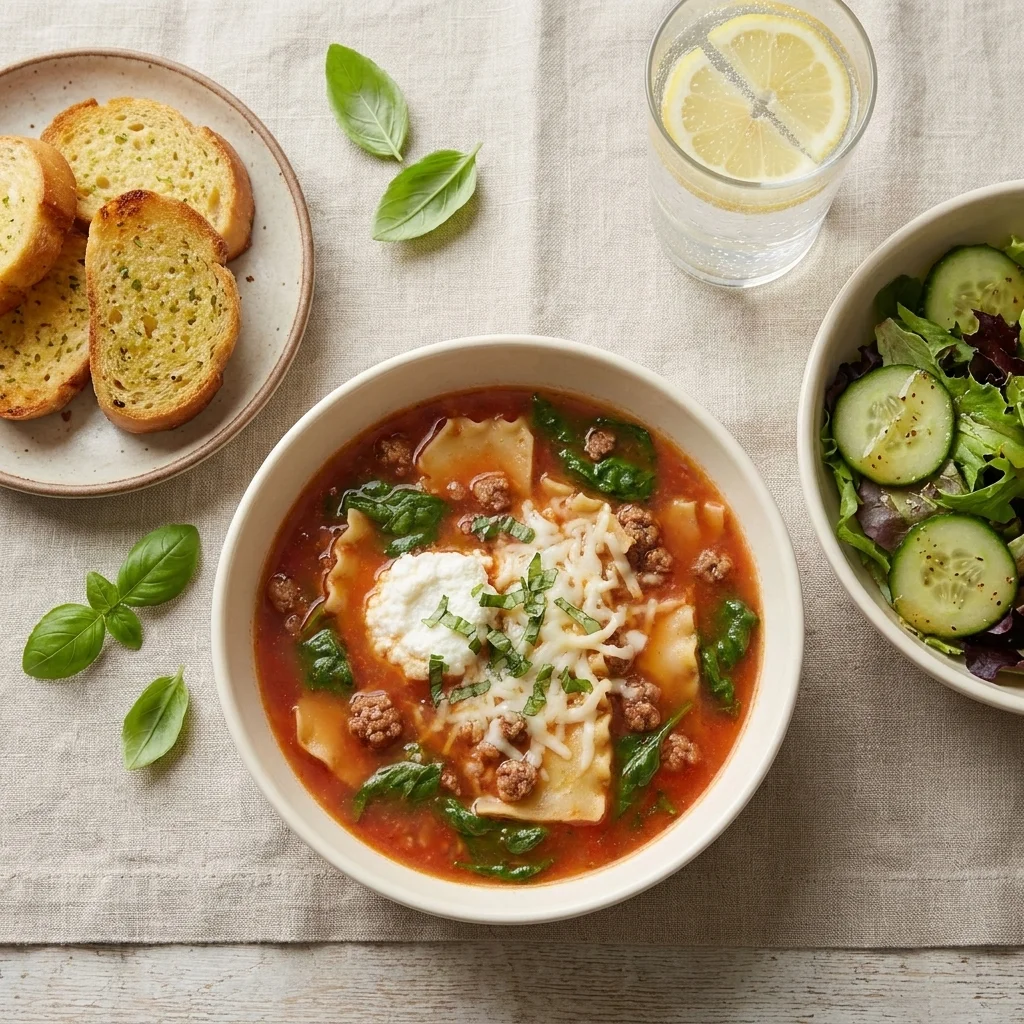
- Homemade garlic bread gives you a crisp edge for dipping into the tomato broth. Use olive oil or certified butter and avoid cheese unless its enzymes meet your requirements.
- A simple green salad with cucumber and lemon dressing adds a cool, crisp element beside the warm soup. Keep the dressing light so it does not compete with the tomato and herbs.
- Roasted zucchini or bell peppers reinforce the vegetable flavors already in the pot. Their browned edges add contrast to the softer noodles and ricotta.
- Fresh basil, parsley, or a small spoonful of extra ricotta makes a useful garnish. Put the options on the table so each person can finish a bowl differently.
- Sparkling water with lemon offers a clean, unsweetened drink pairing. Its acidity suits the tomato broth without adding another heavy flavor.
Lasagna Soup Frequently Asked Questions
Can I cook the lasagna noodles directly in the soup?
Yes, but the noodles will release starch into the broth and continue absorbing liquid after cooking. Add about 2 extra cups of broth, simmer the broken noodles until al dente, and serve the soup promptly. For planned leftovers, cooking and storing the pasta separately gives you more control. Add noodles only to the bowls being served, then refrigerate the remaining soup base without pasta.
Can I make lasagna soup with leftover cooked beef?
Yes. Use about 400 grams of cooked, certified ground beef and add it after the onion and carrot have softened. Heat the meat with the tomato paste and herbs before pouring in the broth. Remember that the refrigerator storage clock begins when the beef was originally cooked. The completed soup does not give older meat another 3 to 4 days of safe storage.
Why did my ricotta disappear into the broth?
Ricotta disperses when it is stirred into the entire pot or added while the soup is boiling hard. Keep the mixture chilled and spoon it onto each filled bowl. Let it sit for a few seconds, then drag the spoon through it once or twice. You will get creamy streaks while preserving the tomato broth instead of turning the whole pot pale and uniformly creamy.
How can I freeze lasagna soup without ruining the texture?
Freeze only the beef and tomato base for the most consistent result. Pasta often softens after freezing in liquid, ricotta can become grainy, and spinach may lose its fresh color. Cool the base promptly, pack it in freezer-safe portions, and use it within about 3 months for quality. After thawing, reheat to 165 degrees Fahrenheit, then add fresh pasta, spinach, and cheese topping.
Can I replace ricotta with cottage cheese?
Yes. Use small-curd cottage cheese in the same amount, preferably drained for 15 to 20 minutes so the topping is not watery. Blend it briefly if you want a smoother texture, then mix it with the mozzarella, certified Parmesan-style cheese, and herbs. The flavor will be slightly tangier and the curds more noticeable, but it still provides a cool, creamy contrast.
A Practical Way to Finish the Meal
Build each bowl according to the appetite at the table. More noodles make the soup feel closer to lasagna, while fewer noodles leave room for extra tomato broth and vegetables. Keeping the components separate also makes it easier to pack lunch or freeze part of the batch without sacrificing texture.
Before serving, taste one spoonful with a little ricotta mixture because that is how the finished dish will actually be eaten. Adjust the broth only after you know how the cheese changes it. This final check prevents an over-salted bowl and keeps the tomato flavor clear.
Lasagna soup works best when the broth, pasta, and topping meet at serving time. Save it to your comforting soup Pinterest board so you can find it easily later.
Lasagna Soup with Rich Tomato Broth and Creamy Ricotta
Ingredients
Equipment
Method
- Heat oil in a large pot over medium-high heat. Add ground beef and cook for 6–8 minutes, breaking into pieces, until browned. Spoon off excess fat, leaving about 1 tablespoon.
- Add onion and carrot and cook for 5–6 minutes until softened. Stir in garlic, tomato paste, oregano, basil, thyme, and red pepper flakes. Cook for 60–90 seconds until the paste darkens slightly.
- Pour in 1 cup of broth and scrape the bottom of the pot. Add remaining broth, crushed tomatoes, ½ teaspoon salt, and black pepper. Bring to a gentle boil, then reduce to medium-low and simmer uncovered for 18–20 minutes.
- While the soup simmers, boil lasagna noodles in salted water until al dente (9–12 minutes). Drain and spread loosely in a colander.
- Stir spinach into the soup and cook for 1–2 minutes until wilted. Taste and add remaining salt only if needed.
- Divide noodles among 6 bowls, ladle the hot soup over them, and top each with a spoonful of the ricotta mixture.
Notes
- Leftovers: Store soup base, noodles, and ricotta topping in separate covered containers in the refrigerator for up to 3–4 days. Cook fresh noodles when reheating for best texture.
- Freezer: Freeze the soup base only (no noodles, spinach, or cheese) for up to 3 months. Add fresh spinach, pasta, and topping after reheating to 165°F (74°C).
- Make-ahead: Prepare the soup base and ricotta topping up to 1 day ahead. Cook the noodles just before serving.