Breakfast Casserole with Chicken Sausage and Roasted Potatoes
Breakfast casserole can be hearty without hiding under a heavy layer of cheese. This version places browned chicken sausage, roasted potato cubes, peppers, and spinach inside a tender egg base. Each slice holds together, with crisp potato edges and pockets of melted cheddar.
The method handles moisture before assembly. Potatoes roast on a sheet pan, sausage browns in a skillet, and vegetables cook until their released liquid evaporates. This prevents the eggs from sitting in a watery layer.
Use certified chicken sausage and confirm that the cheese enzymes, seasonings, and sausage casing meet your requirements. No pork or alcohol-based flavoring is needed.
Assemble the casserole the night before or bake it immediately. Resting after baking helps the portions stay neat.
The result suits a relaxed brunch, but it also cools into useful portions for weekday mornings. Because the potatoes and sausage are already cooked, saved slices need gentle reheating rather than another full bake.
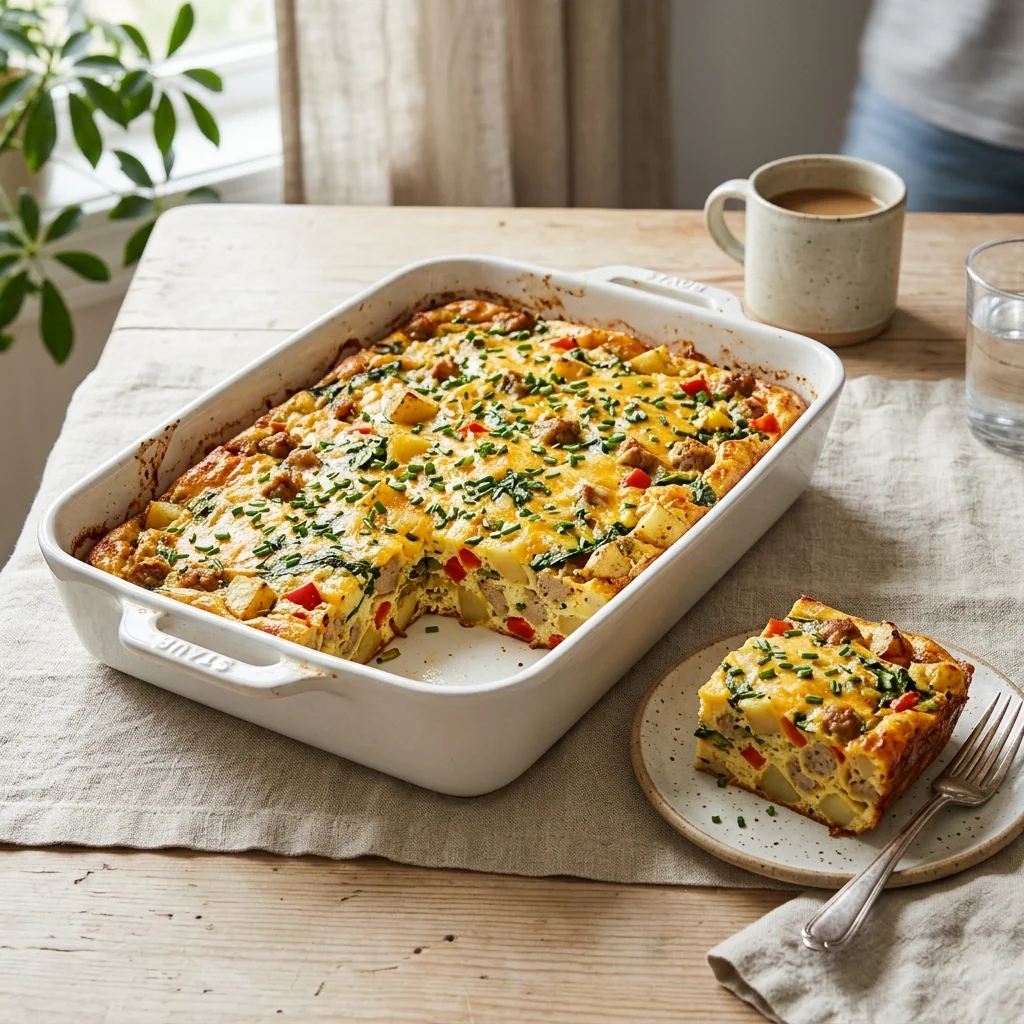
Table of Contents
Why This Breakfast Casserole Holds Together
- Roasted potato cubes form a sturdy base and bring browned edges that raw potatoes cannot develop inside an egg mixture.
- Chicken sausage adds savory seasoning while keeping the meat choice clearly when you select a certified product.
- Pre-cooked peppers and spinach release their water in the skillet instead of inside the casserole.
- Ten eggs and 1 cup of milk create enough custard to bind the fillings without flooding the baking dish.
- A 10-minute rest gives the hot egg structure time to settle, making the casserole easier to cut and serve.
Breakfast Casserole at a Glance
- Prep time: 25 minutes
- Cook time: 55 minutes
- Resting time: 10 minutes
- Total time: 1 hour 30 minutes
- Servings: 8
- Difficulty: Easy
- Estimated calories: 420 per serving
- Key ingredient: Roasted Yukon Gold potatoes
Best for: Weekend breakfast, brunch, or prepared morning portions
Breakfast Casserole Nutrition Information
- Calories per serving: Approximately 420
- Protein: Approximately 27 grams
- Carbohydrates: Approximately 28 grams
- Fat: Approximately 23 grams
- Fiber: Approximately 3 grams
- Sugar: Approximately 5 grams
- Sodium: Approximately 720 milligrams
- Serving size: One-eighth of the casserole
- Servings per recipe: 8
Eggs, sausage, and cheddar provide most of the protein. Potatoes supply the main carbohydrate. Sodium depends heavily on the sausage and cheese, so compare labels before adding salt.
Nutrition values are approximate and calculated per serving using standard ingredient amounts. Values may vary based on brands used and portion sizes.
Breakfast Casserole Ingredients
For the roasted potatoes
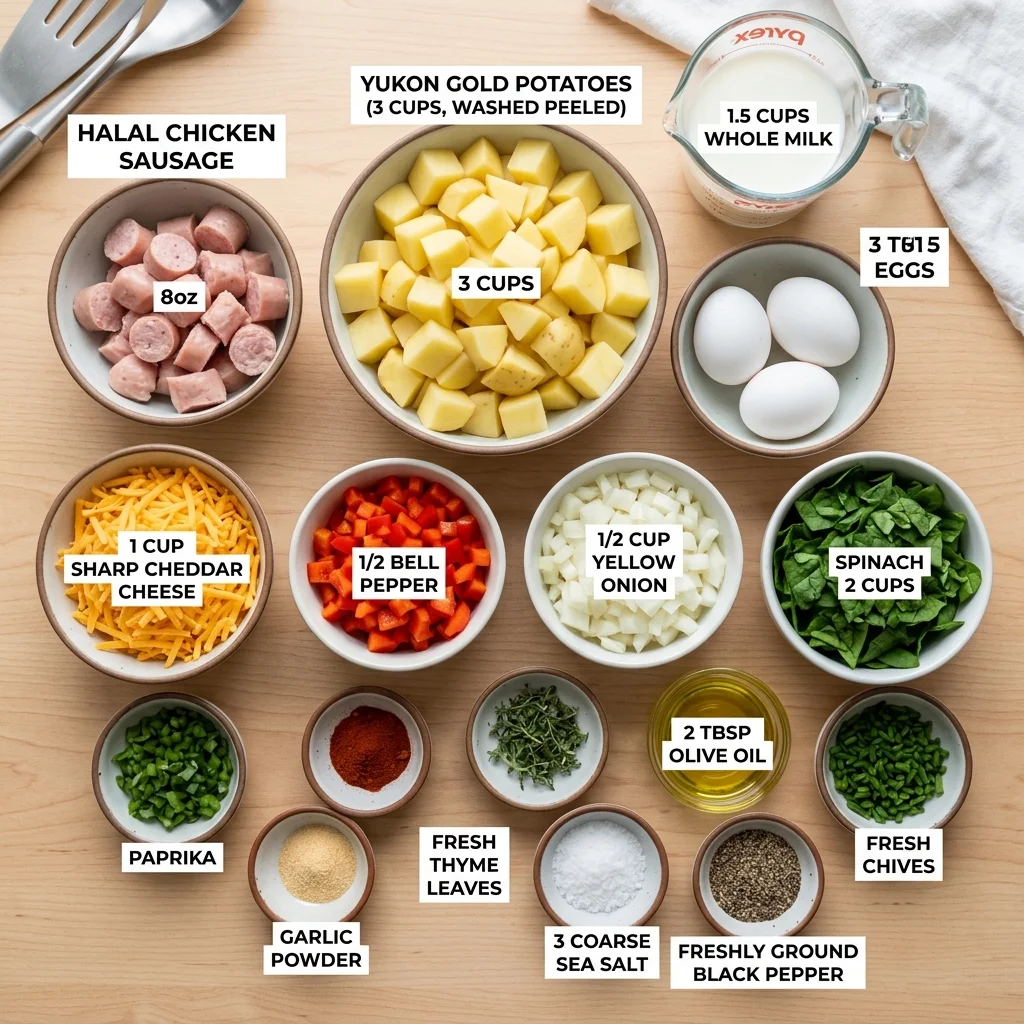
- 680 grams Yukon Gold potatoes, cut into half-inch cubes
- 1 tablespoon olive oil
- One-quarter teaspoon fine salt
- One-quarter teaspoon ground black pepper
- Yukon Gold potatoes hold their shape and develop creamy centers. Russets work in the same weight but may break more easily. Sweet potato may need several extra minutes.
For the sausage and vegetables
- 1 tablespoon olive oil
- 450 grams raw certified chicken breakfast sausage, casings removed if present
- 1 medium yellow onion, about 150 grams, finely diced
- 1 red bell pepper, about 150 grams, diced
- 2 packed cups baby spinach, about 60 grams
- Chicken sausage should reach 165 degrees Fahrenheit, or 74 degrees Celsius, during skillet cooking. Certified ground turkey or chicken can replace it; add one-half teaspoon each dried sage and paprika to plain meat.
- Cook the onion and pepper until surface moisture is gone. For frozen spinach, thaw and squeeze it dry, then use about 85 grams.
For the egg mixture
- 10 large eggs
- 1 cup whole milk, 240 milliliters
- 1 teaspoon garlic powder
- 1 teaspoon sweet paprika
- Half a teaspoon dried thyme
- Half a teaspoon fine salt
- One-quarter teaspoon ground black pepper
- 1 and a half cups shredded cheddar, about 170 grams, made with suitable enzymes
- 2 tablespoons chopped fresh chives or parsley
- Whole milk keeps the eggs tender without the richness of cream. Two-percent milk works in the same quantity. Do not add extra liquid because the egg-to-liquid balance controls the set.
- Choose reliably certified cheddar or cheese made with suitable microbial enzymes. Mild cheddar keeps the sausage noticeable; sharp cheddar tastes stronger.
Equipment for Breakfast Casserole
- A 9 by 13-inch baking dish helps the egg layer bake evenly. A smaller, deeper dish needs more time.
- A rimmed sheet pan holds the potatoes in one layer so they brown instead of steam.
- A 12-inch skillet provides room for sausage and vegetables.
- An instant-read thermometer checks the sausage and casserole center without relying on color.
Preparation Before Assembly
- Cut the potatoes into even half-inch cubes so they roast at the same pace.
- Dice the onion and pepper before handling sausage. Remove any casing according to its package and keep raw meat away from ready-to-eat ingredients.
- Shred the cheese and measure the milk and seasonings. Grease the dish with olive oil or certified butter.
How to Make Breakfast Casserole
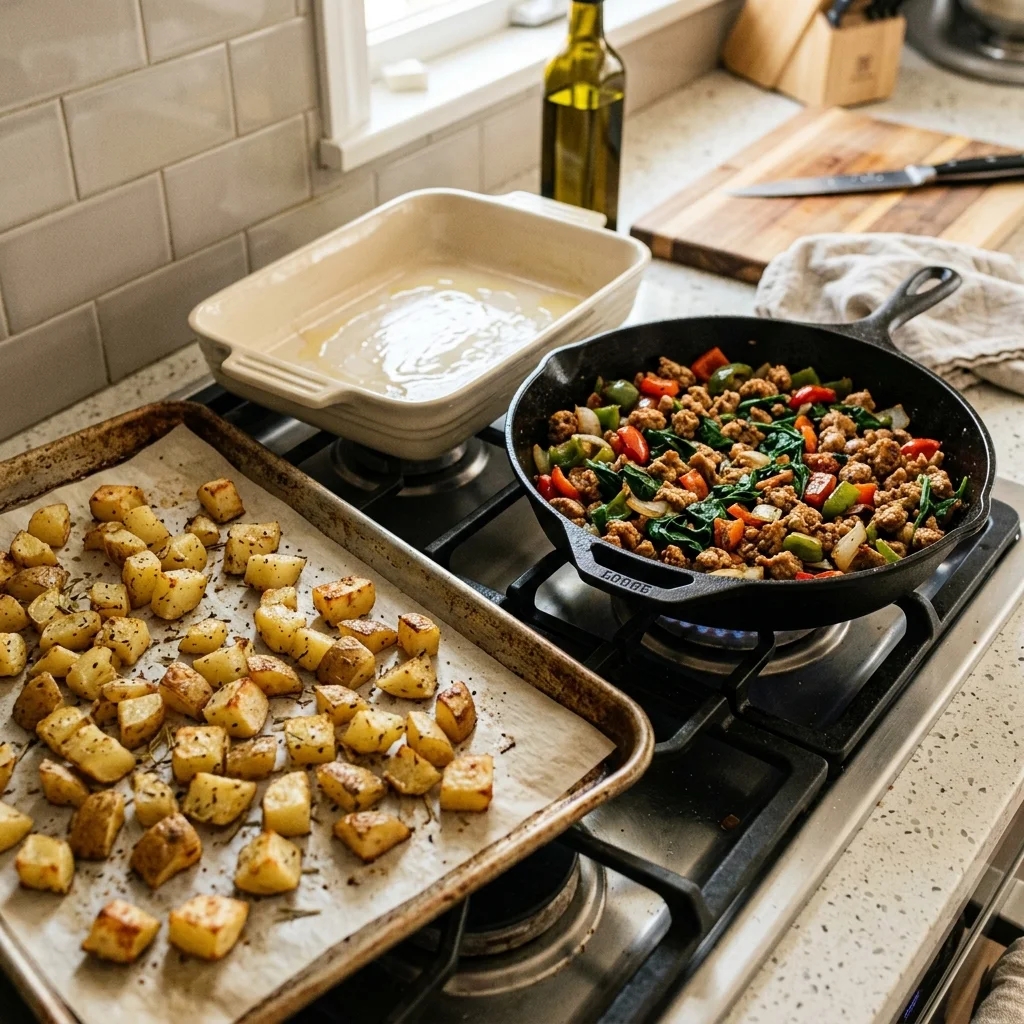
- Heat the oven to 425 degrees Fahrenheit, or 220 degrees Celsius. Line the sheet pan with parchment paper or coat it lightly with oil.
- Toss the potatoes with 1 tablespoon olive oil, one-quarter teaspoon salt, and one-quarter teaspoon pepper. Spread them in one layer with space between the pieces.
- Roast the potatoes for 18 to 22 minutes, turning once after 12 minutes. They are ready when the cut edges show light browning and a fork enters with slight resistance. Chef’s Note: Do not roast them until fully soft because they will cook again in the casserole.
- While the potatoes roast, heat the remaining tablespoon of oil in the skillet over medium-high heat. Add the chicken sausage and cook for 7 to 9 minutes, breaking it into small pieces, until no pink remains and the largest pieces reach 165 degrees Fahrenheit, or 74 degrees Celsius.
- Transfer the sausage to a clean plate with a slotted spoon. Leave about 1 tablespoon of cooking fat in the skillet and discard excess fat safely.
- Add the onion and bell pepper to the skillet. Cook over medium heat for 5 to 7 minutes, stirring occasionally, until the onion looks translucent and no puddle of vegetable liquid remains. Chef’s Note: If liquid collects, keep cooking before adding the spinach.
- Add the spinach and cook for 1 to 2 minutes. Remove the skillet from the heat when the leaves are wilted and the bottom looks dry.
- Reduce the oven temperature to 375 degrees Fahrenheit, or 190 degrees Celsius. Give the oven about 5 minutes to adjust while you assemble the dish.
- Spread the roasted potatoes across the greased baking dish. Add the sausage and cooked vegetables, then sprinkle 1 cup of cheddar evenly over the filling.
- Whisk the eggs, milk, garlic powder, paprika, thyme, half a teaspoon salt, and one-quarter teaspoon pepper for 45 to 60 seconds. Stop when the yolks and whites are fully blended without a thick cap of foam. Chef’s Note: Excess foam can make the top bake unevenly.
- Pour the egg mixture slowly over the fillings. Press any exposed spinach beneath the surface, then scatter the remaining half cup of cheddar over the top.
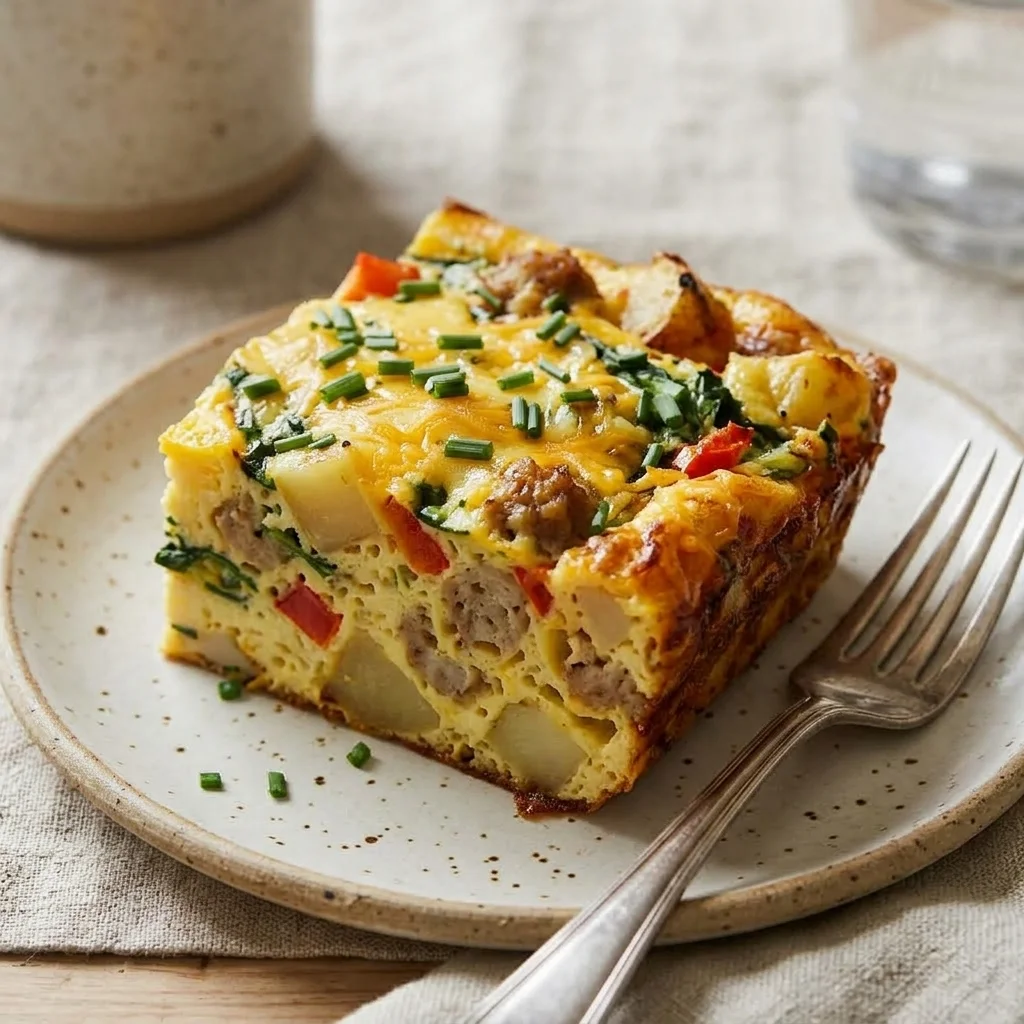
- Bake uncovered for 32 to 38 minutes. Check several spots near the center with a thermometer; the casserole is ready when they reach 160 degrees Fahrenheit, or 71 degrees Celsius, and the center no longer ripples when the dish moves gently.
- Rest the casserole on a heat-safe surface for 10 minutes. Add the chopped chives, then cut it into eight portions.
Breakfast Casserole Kitchen Tip
If the potatoes and vegetable filling are still steaming heavily, let them cool for 5 to 10 minutes before adding the eggs. Very hot fillings can begin setting the custard unevenly before the dish reaches the oven.
Expert Tips for Breakfast Casserole
- Keep potato cubes small and consistent. Large pieces delay the center and extend the egg baking time.
- Cook watery vegetables before assembly. Mushrooms, zucchini, and frozen spinach need thorough draining.
- Season in layers. Salt on the potatoes and a measured amount in the eggs create an even result.
- For overnight preparation, cool the fillings, assemble, cover, and refrigerate for no more than 24 hours. Let a glass dish stand for about 20 minutes while the oven heats, following its manufacturer’s guidance.
- For weekday portions, cool and cut the casserole before refrigerating. Individual pieces reheat more evenly than the whole dish.
- Check the center in several places because dense filling and oven hot spots affect heating.
Breakfast Casserole Problems and Fixes
- The center is watery. Vegetables may have released moisture, or the eggs may be under temperature. Cook vegetables until dry and verify 160 degrees Fahrenheit in several central spots. If needed, bake 5 minutes longer and check again.
- The eggs feel rubbery. Excess heat tightens the egg proteins. Use a thermometer instead of waiting for deep browning. Serve a dry portion with tomato salsa or plain yogurt rather than heating it longer.
- The potatoes are hard. The cubes were too large or under-roasted. Use half-inch pieces and pre-roast them. Cover the current dish and bake in 5-minute intervals, knowing the eggs may firm further.
- The bottom looks greasy. Remove excess sausage fat after browning and transfer meat with a slotted spoon. Blot visible surface grease without pressing the casserole.
- The slices fall apart. The dish may be too hot or overfilled. Rest it for 10 minutes. If still loose, serve it with a spoon and use fewer add-ins next time.
Breakfast Casserole Make-Ahead Tip
Cool the cooked potatoes, sausage, and vegetables before overnight assembly. Warm filling creates condensation under the cover, and that trapped water can settle into the eggs during baking.
Breakfast Casserole Storage and Reheating
Room temperature: Refrigerate within 2 hours of baking, or within 1 hour if the surrounding temperature is above 90 degrees Fahrenheit, or 32 degrees Celsius.
Refrigerator: Store covered at 40 degrees Fahrenheit, or 4 degrees Celsius, or below for 3 to 4 days. Place parchment between stacked portions so they separate cleanly.
Freezer: Wrap cooled individual portions and place them in a freezer-safe container for up to 2 months for best texture. Thaw overnight in the refrigerator. Potatoes may become slightly softer after freezing.
Reheating: Cover one portion and heat in a 325-degree Fahrenheit, or 165-degree Celsius, oven for 12 to 18 minutes, or microwave in short intervals. Reheated leftovers should reach 165 degrees Fahrenheit, or 74 degrees Celsius.
Make-ahead notes: Assemble and refrigerate for up to 24 hours before baking. Do not place a very cold glass baking dish directly into a hot oven; follow the manufacturer’s thermal-shock guidance.
Breakfast Casserole Variations
Spicy version: Add one finely diced jalapeño with the bell pepper and increase paprika to 2 teaspoons. Serve extra chili at the table so the heat can be adjusted by portion.
Mild version: Leave out the black pepper and use a mild certified chicken sausage. Replace the red pepper with an orange or yellow pepper for gentle sweetness.
Vegetarian version: Omit the sausage and add 225 grams sliced mushrooms. Brown the mushrooms until their released water evaporates, then add one drained 400-gram can of chickpeas for more substance.
Gluten-free version: The core ingredients are naturally free from gluten, but verify the sausage, cheese, spices, and processing labels. Cross-contact can occur in seasoned meats and shredded cheese.
Dairy-free version: Use unsweetened dairy-free milk and omit the cheddar or replace it with a verified suitable dairy-free product. Expect a slightly softer flavor, but keep the same egg and liquid quantities.
What to Serve with Breakfast Casserole
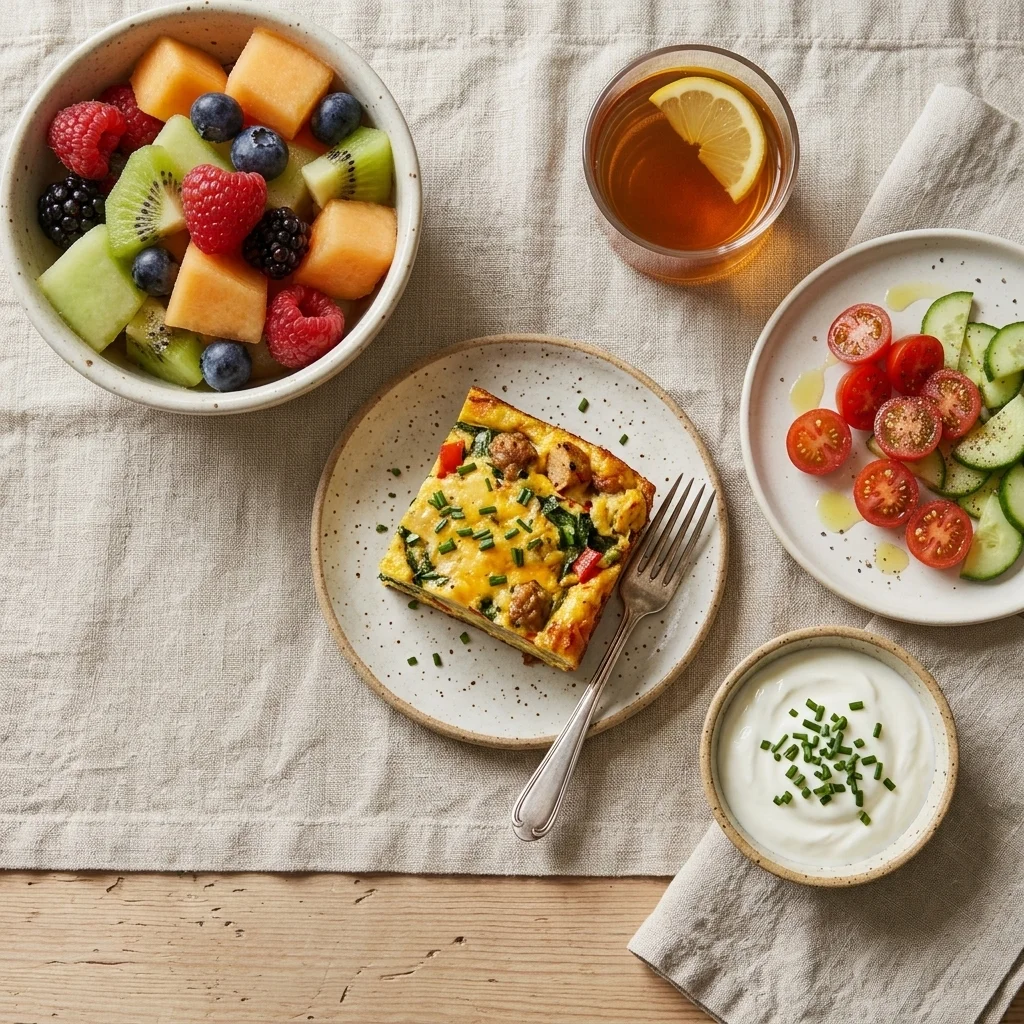
- Fresh fruit salad contrasts with the warm eggs and potatoes. Prepare it near serving time so juice does not collect on the plate.
- Tomato and cucumber salad adds acidity and crunch. Use a simple lemon and olive oil dressing.
- Homemade breakfast bread suits a larger brunch. Serve thin slices because the casserole already contains potatoes.
- Plain chive yogurt makes a cool sauce for the sausage and potatoes. Serve it separately.
- Unsweetened tea or coffee balances the savory plate. Infused water is a caffeine-free option.
Breakfast Casserole Frequently Asked Questions
Can I assemble breakfast casserole the night before?
Yes, assemble it up to 24 hours before baking, provided the potatoes, sausage, and vegetables are fully cooked and cooled first. Cover the dish and refrigerate at 40 degrees Fahrenheit, or 4 degrees Celsius, or below. If you use glass bakeware, let it stand out of the refrigerator for about 20 minutes while the oven heats, and follow the manufacturer’s instructions for temperature changes.
Why is my breakfast casserole watery even when the eggs look cooked?
Vegetables or frozen potatoes may have released water faster than it could evaporate. Spinach, mushrooms, zucchini, and thawed hash browns need to be cooked or squeezed dry before assembly. The center may also be undercooked even when the edges look firm. Check several central spots for 160 degrees Fahrenheit, or 71 degrees Celsius, then rest the dish for 10 minutes before cutting.
Can I use frozen hash browns instead of fresh potatoes?
Yes, replace the fresh potatoes with about 680 grams of frozen diced or shredded hash browns. Thaw them completely, squeeze or pat away surface moisture, then brown them on a sheet pan or in a skillet before assembly. Check the package for seasoning, animal-derived flavorings, and shared-equipment statements that matter to your diet. Skipping the drying step can leave water beneath the eggs.
How do I know the egg casserole is finished without overbaking it?
Use an instant-read thermometer in several places near the center. The egg mixture should reach 160 degrees Fahrenheit, or 71 degrees Celsius, and the middle should not slosh when you move the dish gently. A knife can appear clean before the coldest pocket reaches temperature, especially around dense fillings. Remove the casserole once it reaches the target, then rest it for 10 minutes as carryover heat settles the structure.
Can I double the recipe for a large brunch?
Yes, but use two 9 by 13-inch dishes rather than one deeper container. Equal depth keeps the baking time close to the original and helps both centers heat evenly. Rotate the dishes between oven racks after about 20 minutes if your oven cooks unevenly. Check each casserole in several spots for 160 degrees Fahrenheit. Do not assume both dishes finish at exactly the same time.
A Calm Finish for a Busy Morning
Cut the casserole only after it has rested, then move portions with a thin spatula that can reach beneath the potato layer. For a buffet, keep the remaining dish warm and covered, and return extra portions to refrigeration within the safe time limit rather than leaving them out through the morning.
The useful part of breakfast casserole is not just its size. The dish turns several separate breakfast items into portions you can serve without managing multiple pans at the table. Cook the watery ingredients first, measure the milk, and rely on temperature rather than guesswork. Those choices give you tender eggs, cooked potatoes, and slices that hold their shape.
Save this breakfast casserole to your make-ahead breakfast Pinterest board so you can find it easily later.
Breakfast Casserole with Chicken Sausage and Roasted Potatoes
Ingredients
Equipment
Method
- Preheat the oven to 425°F (220°C). Grease a 9×13-inch baking dish and prepare a rimmed sheet pan.
- Toss potatoes with 1 tablespoon oil, salt, and pepper. Spread in one layer and roast for 18–22 minutes, turning once at 12 minutes, until lightly browned with slight resistance inside.
- Brown chicken sausage in the remaining tablespoon of oil over medium-high heat for 7–9 minutes, until no pink remains and the largest pieces reach 165°F (74°C). Transfer with a slotted spoon. Cook onion and pepper in the same skillet for 5–7 minutes until softened and dry, then add spinach for 1–2 minutes until wilted.
- Reduce oven to 375°F (190°C). Layer potatoes, sausage, and vegetables in the baking dish, then sprinkle 1 cup of cheddar over the top.
- Whisk eggs, milk, garlic powder, paprika, thyme, salt, and pepper for 45–60 seconds. Pour over the filling, press any exposed spinach under the surface, and top with the remaining ½ cup cheddar.
- Bake uncovered for 32–38 minutes, until the center reaches 160°F (71°C) and no longer ripples. Rest for 10 minutes, add chives, and cut into 8 portions.
Notes
- Make-ahead: Assemble up to 24 hours ahead. Cool fillings completely before refrigerating, and let a glass dish stand 20 minutes before placing in the oven.
- Storage: Refrigerate covered for 3–4 days. Freeze individual portions for up to 2 months. Reheat to 165°F (74°C).
- Watery center fix: Cook vegetables until all released liquid has evaporated before assembly. Verify doneness with a thermometer in several central spots.