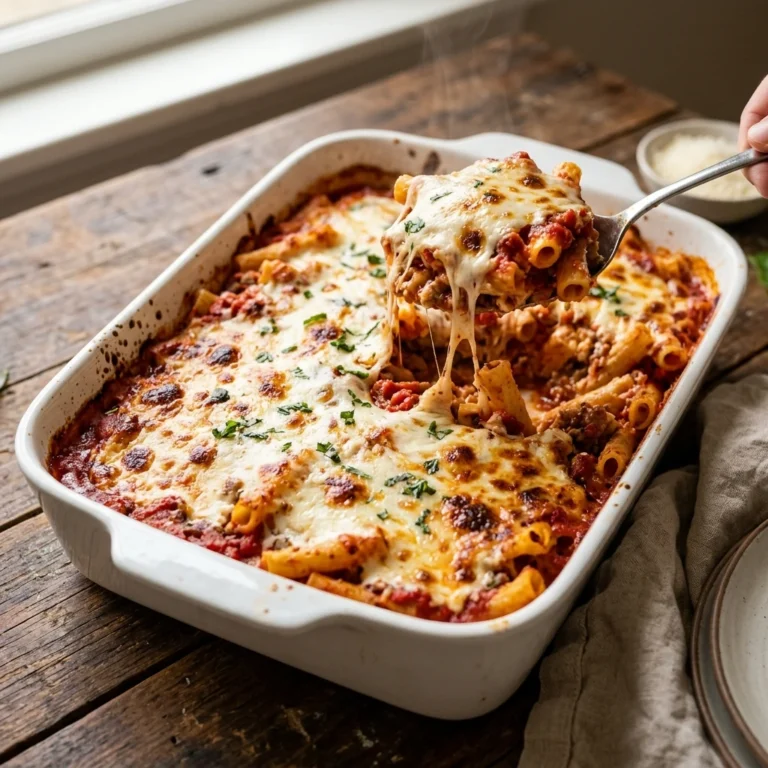
Overnight French Toast Casserole With a Crunchy Cinnamon Streusel
A good french toast casserole should taste like the center of a French toast slice in every bite: custardy, lightly eggy, warm with cinnamon, and never soggy. Most versions I tried were dry at the corners or wet on the bottom. I wanted one pan that bakes evenly from edge to edge. This version uses French bread cubes, a custard with a little extra egg, and a brown sugar streusel that goes on halfway through baking so it stays crunchy. You build it the night before. In the morning, the oven does the work while you make coffee.
I tested this overnight french toast casserole seven times over three weeks, changing one thing each round: the bread, the soak time, the custard ratio, and when the streusel goes on. Version four was the first one I served to guests. Version seven is the recipe below, and it needs about 20 minutes of real effort.
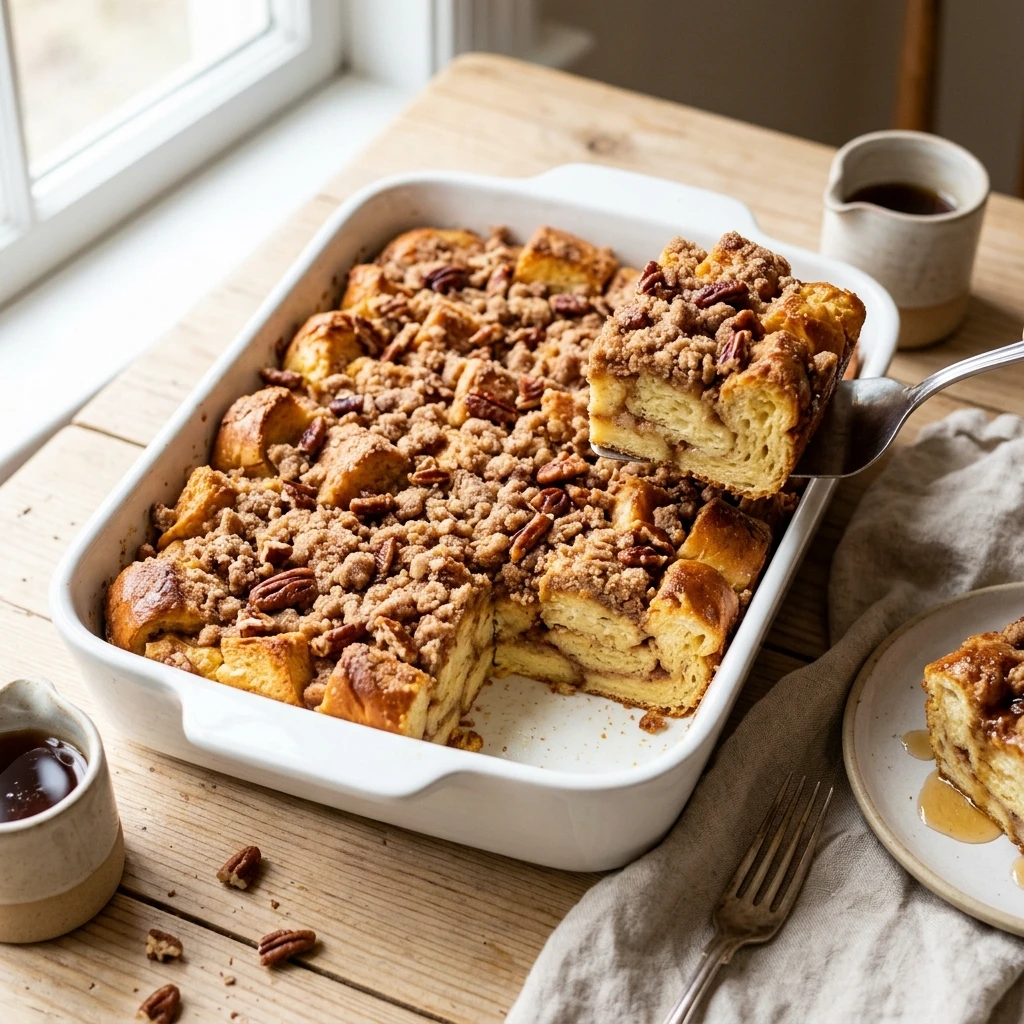
Table of Contents
Why You Will Love This French Toast Casserole
- You do 20 minutes of work the night before, then bake without whisking, flipping, or standing over a skillet.
- The center sets custardy while the edges turn golden and a little chewy, so every square has texture.
- Adding the streusel late keeps the top crisp instead of damp.
- One pan feeds eight people, so nobody eats cold slices while the next batch fries.
- My daughter asked for the leftovers three school mornings in a row, and she ate them cold from the fridge.
Recipe Snapshot
- Prep Time: 20 minutes
- Cook Time: 55 to 60 minutes
- Total Time: About 9 hours 30 minutes, including 8 hours of chilling
- Servings: 8
- Difficulty: Easy
- Calories per serving: About 607
- Key Ingredient or Tool: Day-old French bread
- Best For: Weekend brunch, birthday mornings, and overnight guests
Nutrition Information
- Calories per Serving: About 607
- Protein: 16 g
- Carbs: 67 g
- Fat: 31 g
- Fiber: 3 g
- Sugar: 33 g
- Sodium: 669 mg
- Serving Size: About 1 piece, one eighth of the pan
- Servings per Recipe: 8
Eggs and bread supply most of the protein in each square of french toast casserole. Butter, cream, and pecans carry most of the fat, and the brown sugar drives the sugar count. Syrup is not included in these numbers.
Nutrition values are approximate and calculated per serving using standard ingredient amounts. Values may vary based on brands used and portion sizes.
Ingredients
For the Casserole
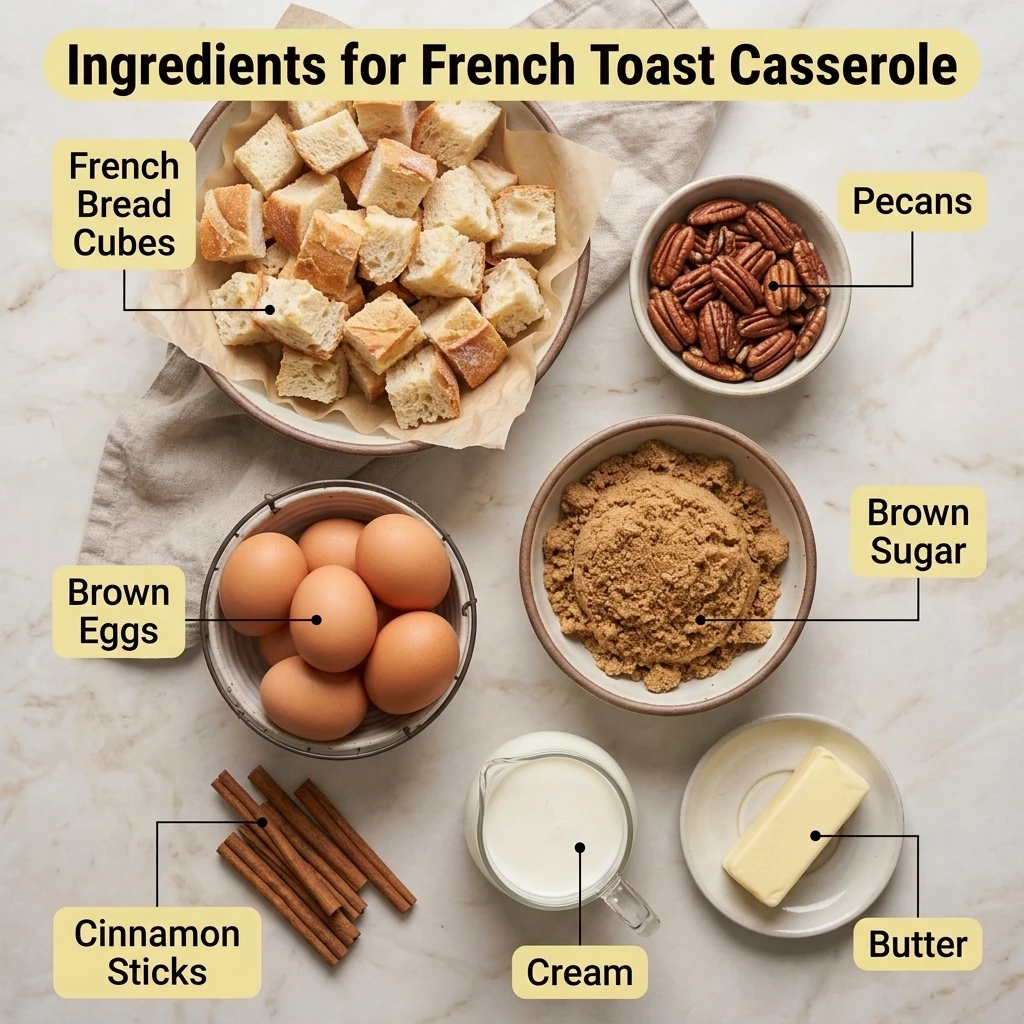
- 1 loaf (16 ounces) day-old French bread, cut into 1-inch cubes, about 10 cups (substitute: brioche or Italian bread)
- 8 large eggs
- 1 3/4 cups whole milk (substitute: 2 percent milk)
- 3/4 cup heavy cream (substitute: half-and-half)
- 1/2 cup packed light brown sugar
- 1 tablespoon alcohol-free vanilla extract
- 1 1/2 teaspoons ground cinnamon
- 1/4 teaspoon ground nutmeg
- 1/2 teaspoon fine salt
- 1 tablespoon unsalted butter, softened, for the dish
- Warm maple syrup, for serving
For the Streusel
- 1/2 cup King Arthur all-purpose flour
- 1/2 cup packed light brown sugar
- 1 teaspoon ground cinnamon
- 1/4 teaspoon fine salt
- 6 tablespoons cold unsalted butter, cubed
- 1/2 cup chopped pecans (substitute: walnuts, or skip for a nut-free pan)
Three ingredients decide how this french toast casserole turns out. Bread comes first: dry, sturdy cubes drink up custard and hold their shape, while soft sandwich bread melts into paste.
Brioche works but adds fat and calories beyond the numbers above.
Next is the egg to dairy ratio: 8 eggs with 2 1/2 cups of milk and cream sets firm enough to slice and stays tender. Last is the vanilla. Standard extract contains alcohol, so I use an alcohol-free version, and it tastes the same once baked.
Pro Tip: Squeeze one cube before you start. If it springs back like a sponge, dry the cubes on a baking sheet at 300°F for 10 more minutes.
Equipment Needed
- 9×13-inch baking dish: Glass or ceramic heats gently, so the center sets before the edges dry.
- Large bowl and whisk: A wide bowl lets you beat the eggs without splashing.
- Instant-read thermometer: It is the only reliable way to confirm 160°F in the center.
- Serrated bread knife: It cuts crusty loaves into even cubes without crushing them.
- Aluminum foil: Tent it loosely so it does not stick to the puffed custard.
Preparation
- Cut the loaf into 1-inch cubes to make about 10 cups. If the bread is fresh, dry the cubes on a baking sheet at 300°F for 12 to 15 minutes and cool them completely.
- Grease the 9×13-inch dish with 1 tablespoon of softened butter, corners included.
- Measure the custard and streusel ingredients into separate bowls, and keep the streusel butter in the refrigerator until needed.
- Leave the oven off tonight. On baking morning, set a rack in the center and preheat to 350°F.
Step-by-Step Instructions
- Spread the cubes in an even layer in the buttered dish. They should fill the dish and sit slightly mounded in the center.
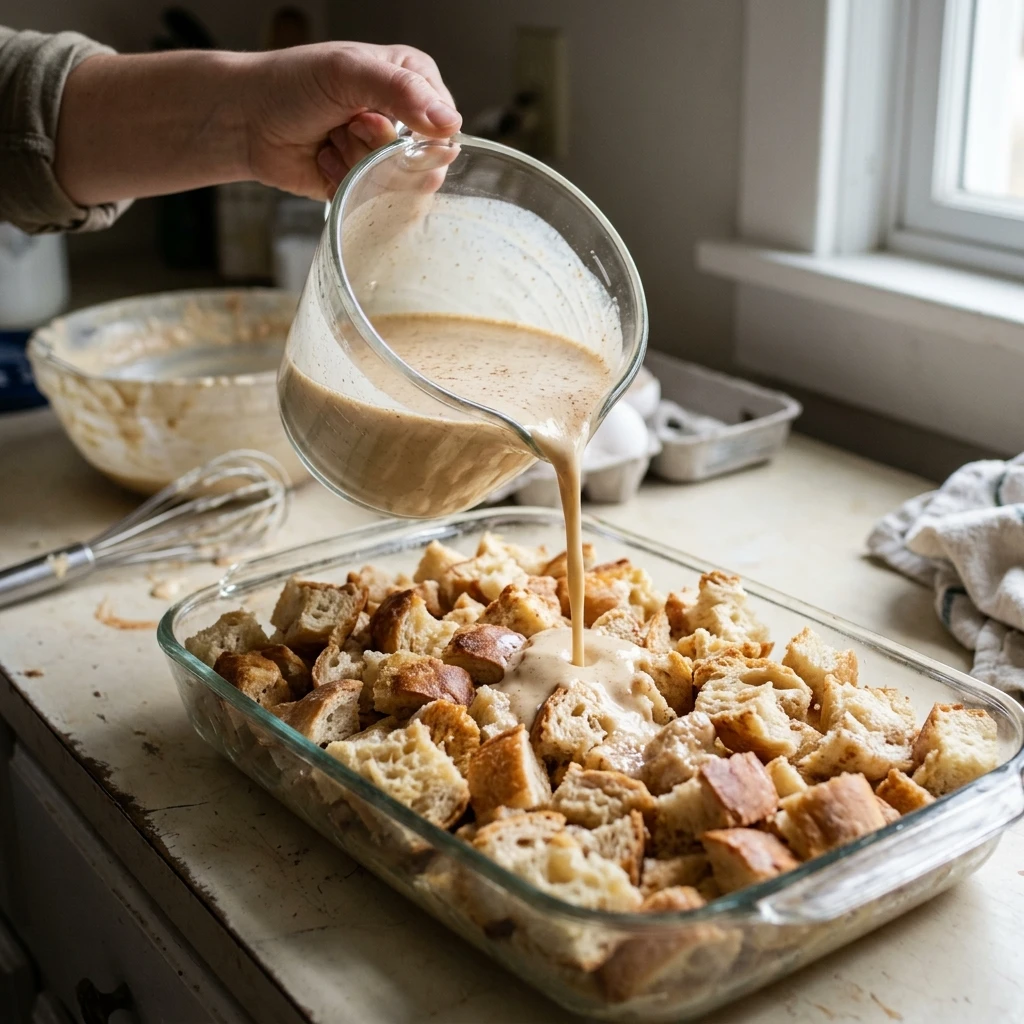
- Whisk the eggs, milk, cream, 1/2 cup brown sugar, vanilla, 1 1/2 teaspoons cinnamon, nutmeg, and 1/2 teaspoon salt for 1 minute. Chef’s Note: Whisk until no white streaks remain, since loose egg white bakes into rubbery strands. The custard should look smooth, pale tan, and slightly frothy.
- Pour the custard slowly over the bread and press the cubes down with a spatula. Every cube should look wet, with liquid reaching about halfway up the dish.
- Cover tightly with plastic wrap and refrigerate 8 to 12 hours. Chef’s Note: Four hours is the shortest soak I trust, because less left the bottom soupy. By morning, the bread should have absorbed nearly all the custard.
- Stir 1/2 cup flour, 1/2 cup brown sugar, 1 teaspoon cinnamon, and 1/4 teaspoon salt, then rub in the cold butter with your fingertips for 2 minutes and fold in the pecans. Chef’s Note: Warm butter turns the topping greasy, so keep the bowl chilled until baking. The mixture should look like damp, chunky sand with pea-size pieces.
- Cover the dish loosely with foil and bake at 350°F for 30 minutes. The edges should puff slightly while the center still looks soft.
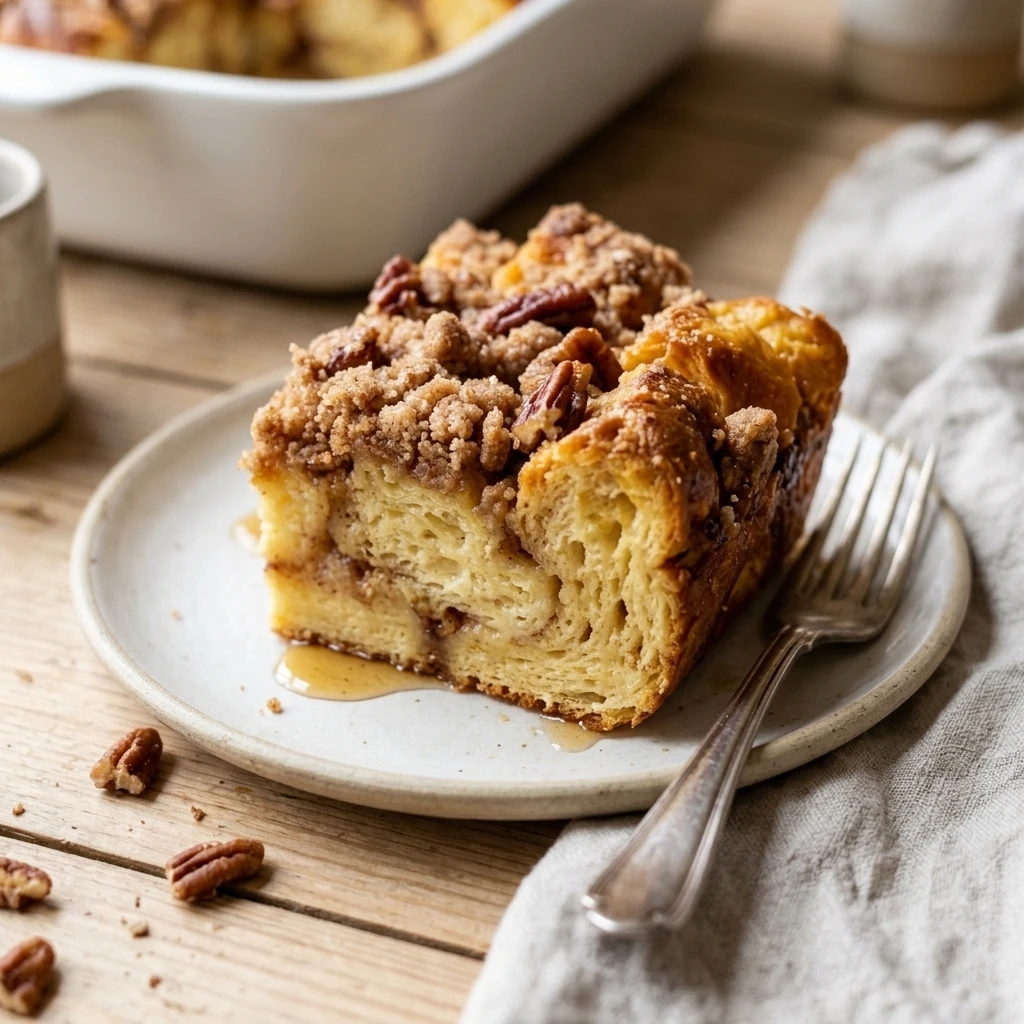
- Remove the foil, scatter on the streusel, and bake 25 to 30 minutes more. Chef’s Note: A french toast casserole is done when the center reads 160°F, the USDA temperature for egg dishes. The top should be deep golden with dry, crisp streusel.
- Rest the dish on a rack for 10 minutes. The edges should pull away from the sides and the custard should firm enough to slice.
- Cut into 8 squares and serve with warm maple syrup. Each square should hold clean edges with a soft, glossy center.
Make-Ahead Shortcut: Mix the streusel flour, brown sugar, cinnamon, and salt in a jar while you cube the bread. In the morning, just cut in the cold butter.
Expert Tips and Tricks
- I once skipped the drying step and used fresh sandwich bread, and the bottom turned into a dense paste. Day-old French bread fixed it on the next try.
- Cube and dry the bread up to 2 days ahead and keep it in a zip bag at room temperature.
- Use whole milk and heavy cream. Skim milk makes a thin custard that weeps liquid in the pan.
- Cut the loaf lengthwise into 1-inch strips, then slice across the strips. Three quick passes make even cubes in under 3 minutes.
- Cool leftover french toast casserole for 30 minutes at most, then refrigerate within 2 hours of baking.
Common Mistakes and Troubleshooting
Soggy bottom. Fresh bread or a short soak leaves custard pooled under dry cubes. Use day-old bread and chill 8 hours. If it happens, cover with foil and bake 10 more minutes until the center reads 160°F.
Dry, hard cubes on top. Cubes sticking out of the custard bake into croutons. Press them down before chilling. To fix it, drizzle 2 tablespoons of warm milk over dry spots and tent with foil for 5 minutes.
Scrambled texture. A hot oven turns the custard in a french toast casserole into small curds. Check your oven with a thermometer and bake at 350°F. You cannot undo it, but warm syrup covers it well.
Runny center. Cold dishes straight from the fridge need the full 55 to 60 minutes. Bake until the thermometer reads 160°F. If it falls short, re-cover and bake 10 more minutes.
Greasy streusel. Butter that started warm melts out instead of crisping. Keep it cold from fridge to bowl. If the mix looks oily, chill it for 15 minutes before scattering.
Storage Instructions
- Room Temperature: Up to 2 hours after baking, or 1 hour above 90°F, covered loosely with foil.
- Refrigerator: Store french toast casserole up to 4 days in an airtight glass container, in a single layer, after cooling it for 30 minutes.
- Freezer: Up to 2 months. Freeze cut squares on a parchment-lined tray for 1 hour, then wrap each in parchment and seal in a freezer-safe zip bag.
- Reheating: Heat covered squares at 325°F for 15 to 20 minutes until they reach 165°F, adding a spoonful of warm milk if dry.
- Make-Ahead Notes: Assemble the unbaked pan up to 12 hours ahead. Keep the streusel in a covered container in the refrigerator for up to 3 days and add it after the foil comes off.
I always freeze single squares so I can pull out exactly what I need. On a weekday morning, they go from freezer to plate in about 20 minutes.
Variations and Substitutions
Spicy Chai: Add 1/2 teaspoon ground ginger and a pinch of cayenne to the custard for a warm, gently peppery pan.
Kid-Friendly: Skip the nutmeg and swap the pecans for mini chocolate chips, which also makes the pan nut-free.
Gluten-Free: Use a sturdy gluten-free loaf and a cup-for-cup gluten-free flour blend in the streusel. Soak for the full 8 hours, since gluten-free bread absorbs slowly.
Vegetarian and Dairy-Free: This french toast casserole is already vegetarian. For a dairy-free pan, use full-fat coconut milk and almond milk for the liquid and plant butter in the streusel.
Apple Cinnamon: Fold 2 cups of diced apple, sautéed in 1 tablespoon of butter for 5 minutes, between the bread cubes. Bake an extra 5 minutes.
What to Serve With This
A savory partner: Set a pan of savory breakfast casserole beside your french toast casserole so guests can build a plate that is half sweet and half savory.
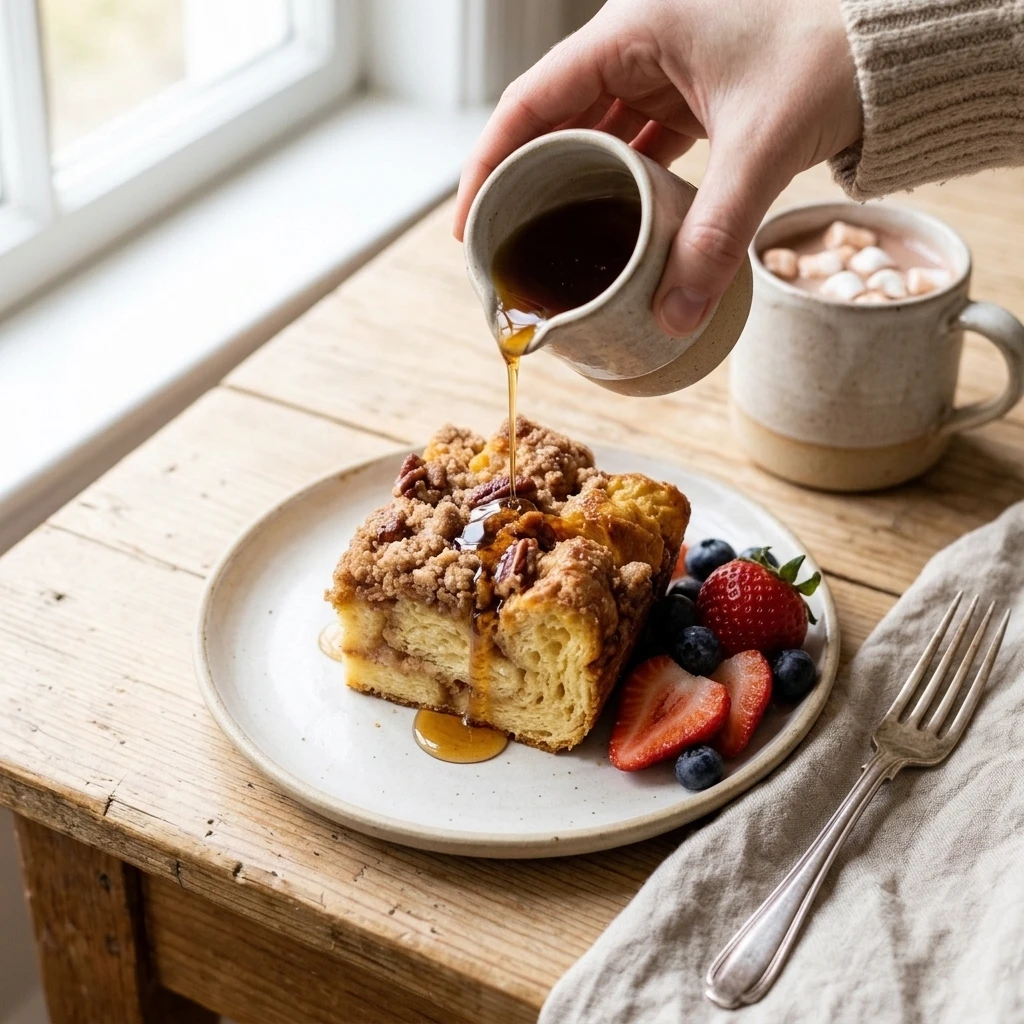
Fresh berries: Sliced strawberries or blueberries add tartness that cuts through the brown sugar.
Greek yogurt with granola: A spoonful of plain yogurt topped with homemade granola adds cool creaminess and extra crunch.
Warm maple syrup: Heat it for 30 seconds in the microwave so it soaks into the custard instead of sitting on top.
Hot chocolate: Pour mugs of easy hot chocolate with real chocolate for a cozy winter breakfast.
Frequently Asked Questions
Why does my french toast casserole taste too eggy?
Too much egg for the amount of bread, or an underbaked center, causes that flat egg taste. This french toast casserole uses 8 eggs for 16 ounces of bread, which balances well. Confirm the center reaches 160°F, and keep the cinnamon, nutmeg, and salt in the custard, because they mellow the egg flavor. Resting the pan for 10 minutes also helps the custard finish setting.
How far ahead can you make french toast casserole?
Assemble the unbaked pan up to 12 hours ahead and keep it covered in the refrigerator. Past that, the bread starts to break down and turn mushy. If you need more lead time, bake the pan fully, cool it, and freeze cut squares for up to 2 months. Keep the streusel separate in a covered container for up to 3 days, and add it after the foil comes off.
Can I use sandwich bread for french toast casserole?
Yes, but dry it first and shorten the soak. Cube the slices and bake them at 300°F for 12 to 15 minutes, stirring once, until they feel like croutons. Then chill the pan for 4 to 6 hours instead of overnight. Thin sandwich bread soaks up custard quickly, so a long soak turns it to paste and the squares lose their structure.
How do you know when french toast casserole is done?
Check the center of a french toast casserole with an instant-read thermometer for 160°F, which is the USDA temperature for egg dishes. The top should be deep golden, and a knife in the center should come out with no liquid egg. If it falls short, re-cover the dish with foil and bake 5 to 10 minutes more, then test the center again.
Can I bake french toast casserole without an overnight soak?
Not well. Four hours in the refrigerator is my minimum, and 8 hours is better. In my tests, a 1 hour soak left the bottom soupy while the top cubes stayed dry. If you are short on time, make the pan the evening before and let it chill while you have dinner, then bake it the next morning for the best texture.
Final Thoughts Before You Bake
Treat the thermometer and the soak time as your two fixed points. Everything else in this recipe forgives you. Swap the nuts, change the bread, or add fruit, and the pan still comes out custardy under a crisp top.
Set a phone timer for the 30 minute mark, because pulling the foil is the one step people forget.
The Saturday before my son’s soccer game, I pulled this french toast casserole out of the oven, and the pan was empty before I finished my coffee. If you loved this recipe, save it to your breakfast Pinterest board so you can find it easily later!
Overnight French Toast Casserole With a Crunchy Cinnamon Streusel
Ingredients
Equipment
Method
- Grease a 9×13-inch dish with the softened butter. Spread the bread cubes in an even layer until the dish looks full and slightly mounded.
- Whisk the eggs, milk, cream, 1/2 cup brown sugar, vanilla, 1 1/2 teaspoons cinnamon, nutmeg, and 1/2 teaspoon salt for 1 minute, until smooth, pale tan, and slightly frothy with no white streaks.
- Pour the custard slowly over the bread and press the cubes down with a spatula until every cube looks wet and liquid reaches about halfway up the dish.
- Cover tightly with plastic wrap and refrigerate 8 to 12 hours, until the bread has absorbed nearly all the custard.
- Stir 1/2 cup flour, 1/2 cup brown sugar, 1 teaspoon cinnamon, and 1/4 teaspoon salt. Rub in the cold butter for 2 minutes until the mixture looks like damp, chunky sand with pea-size pieces, then fold in the pecans and chill.
- Set a rack in the center and preheat the oven to 350°F. Cover the dish loosely with foil and bake 30 minutes, until the edges puff slightly and the center still looks soft.
- Remove the foil, scatter the streusel evenly over the top, and bake 25 to 30 minutes more, until the top is deep golden and the center reads 160°F on an instant-read thermometer.
- Rest on a rack for 10 minutes, until the edges pull away from the dish and the custard firms enough to slice.
- Cut into 8 squares and serve with warm maple syrup.
Notes
Add the streusel only after the foil comes off so it stays crisp.
Storage: refrigerate up to 4 days in an airtight container, or freeze cut squares up to 2 months.