Roasted Salmon Poke Bowl with Ginger-Lime Sesame Sauce
A poke bowl can lose its appeal when warm rice wilts the vegetables, watery cucumber thins the sauce, or salmon cooks into dry flakes. This version gives each component its own job. Short-grain rice rests until warm rather than steaming hot, cucumber is dried after slicing, and salmon cubes roast quickly under high heat. The result keeps the contrast between tender fish, seasoned rice, crisp vegetables, and creamy avocado.
The ginger-lime sesame sauce contains no mirin, sake, or alcohol-based flavoring. Part of it is reserved before the remaining sauce touches raw salmon, creating a safe finishing drizzle without mixing a second dressing. Shelled edamame adds another firm texture, while radish and green onion keep every forkful fresh.
This is a home-style cooked interpretation designed for readers who prefer roasted fish. It does not claim to reproduce a traditional raw-fish preparation.
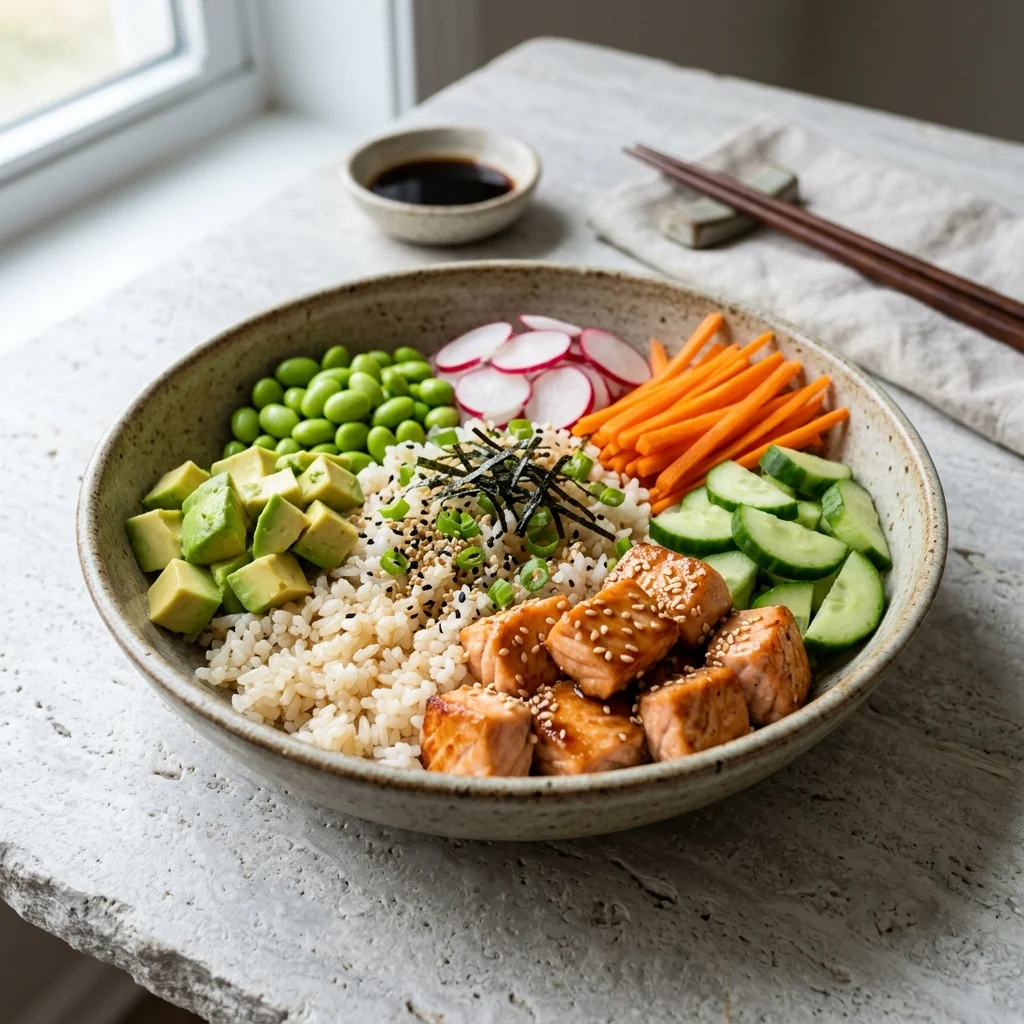
Table of Contents
Why This Poke Bowl Uses Roasted Salmon
- Roasting removes uncertainty about serving raw fish while retaining a tender center.
- Cubed salmon cooks quickly and distributes evenly across four bowls.
- Reserved sauce seasons the finished food without contacting raw seafood.
- Warm rice and cool toppings create contrast without wilting the cucumber or avocado.
- Separate components make substitutions and advance preparation straightforward.
Poke Bowl Snapshot
- Prep time: 25 minutes
- Cook time: 25 minutes
- Resting time: 10 minutes
- Total time: 60 minutes
- Servings: 4
- Difficulty: Easy
- Calories: Approximately 690 per serving
- Key ingredient: Skinless salmon fillet
- Best for: A colorful lunch or composed dinner bowl
Poke Bowl Nutrition
- Calories per serving: Approximately 690
- Protein: 41 grams
- Carbohydrates: 75 grams
- Fat: 27 grams
- Fiber: 9 grams
- Sugar: 10 grams
- Sodium: 890 milligrams
- Serving size: One assembled bowl
- Servings per recipe: 4
Salmon provides most of the protein and fat, while rice supplies the largest share of carbohydrate. Avocado, edamame, and the vegetables add fiber, but sodium depends heavily on the soy sauce or tamari brand.
Nutritional calculations offer an approximate estimate per serving based on generic measurements. Final counts naturally fluctuate depending on specific product brands and individual portioning.
Ingredients for a Cooked Salmon Poke Bowl
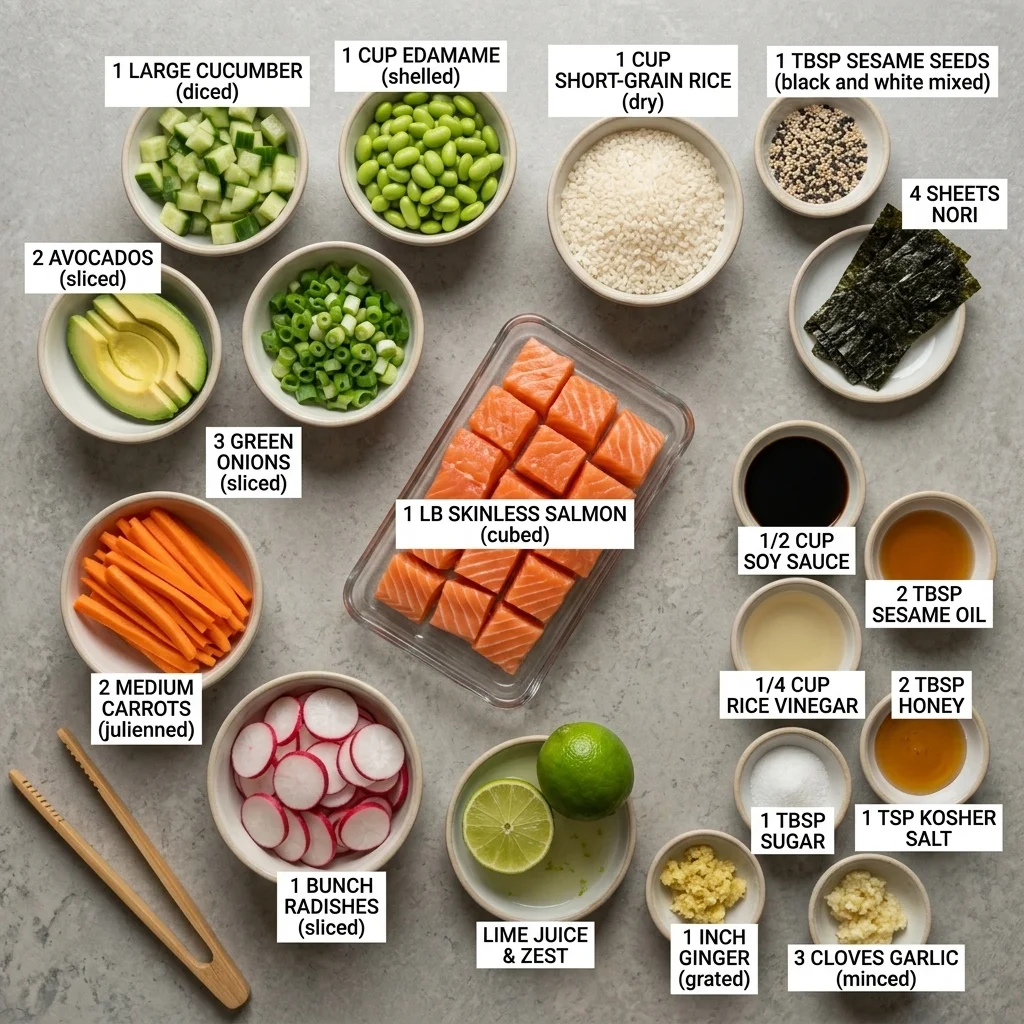
- Short-grain white rice, 250 grams or 1 and one-quarter cups: Its sticky texture supports toppings. Medium-grain rice also works.
- Use the same rinsing and covered-rest method described in how to cook sushi rice.
- Water, 360 milliliters or 1 and one-half cups: Follow the package if its ratio differs.
- Certified alcohol-free rice vinegar, 1 and one-half tablespoons: Lime juice is a sharper substitute.
- Granulated sugar, 2 teaspoons: Honey can replace it in the warm seasoning mixture.
- Fine salt, three-quarters teaspoon, divided: Use one-quarter teaspoon in the rice and the rest on the salmon.
- Skinless salmon fillet, 600 grams, cut into 1-inch cubes: Thawed frozen salmon works when drained and dried.
- Certified low-sodium soy sauce or gluten-free tamari, 3 tablespoons: Check for alcohol-based flavorings.
- Toasted sesame oil, 1 tablespoon: Use 2 teaspoons for lighter sesame flavor.
- Fresh lime juice, 2 tablespoons: It adds acidity without mirin or sake.
- Honey, 2 teaspoons: Maple syrup can replace it.
- Fresh ginger, 2 teaspoons finely grated: Substitute one-half teaspoon ground ginger.
- Garlic, 1 small clove finely grated: This amount keeps the sauce balanced.
- Shelled edamame, 150 grams or 1 cup, cooked and cooled: Green peas are a soy-free substitute.
- English cucumber, 250 grams, cut into half-moons: Persian cucumbers also work.
- Carrots, 2 medium or 140 grams, cut into matchsticks: Shredded cabbage can replace them.
- Radishes, 4, thinly sliced: Red bell pepper is a milder substitute.
- Avocado, 1 large, diced: Ripe mango creates a sweeter alternative.
- Green onions, 4, thinly sliced: Separate pale and green parts for arranging.
- Sesame seeds, 2 tablespoons, toasted: Use white, black, or mixed seeds.
- Nori, 1 sheet cut into strips, optional: Choose a plain suitable product.
Poke Bowl Equipment
- Fine-mesh sieve: Rinse rice until the draining water becomes much clearer.
- Medium saucepan with lid: A close-fitting lid limits steam loss while the rice cooks.
- Rimmed sheet pan: Its edge contains juices and salmon cubes.
- Instant-read thermometer: Check a center cube without relying on color.
- Microplane or fine grater: It smooths ginger and garlic into the sauce.
- Four wide bowls: Broad surfaces keep toppings distinct.
Poke Bowl Preparation
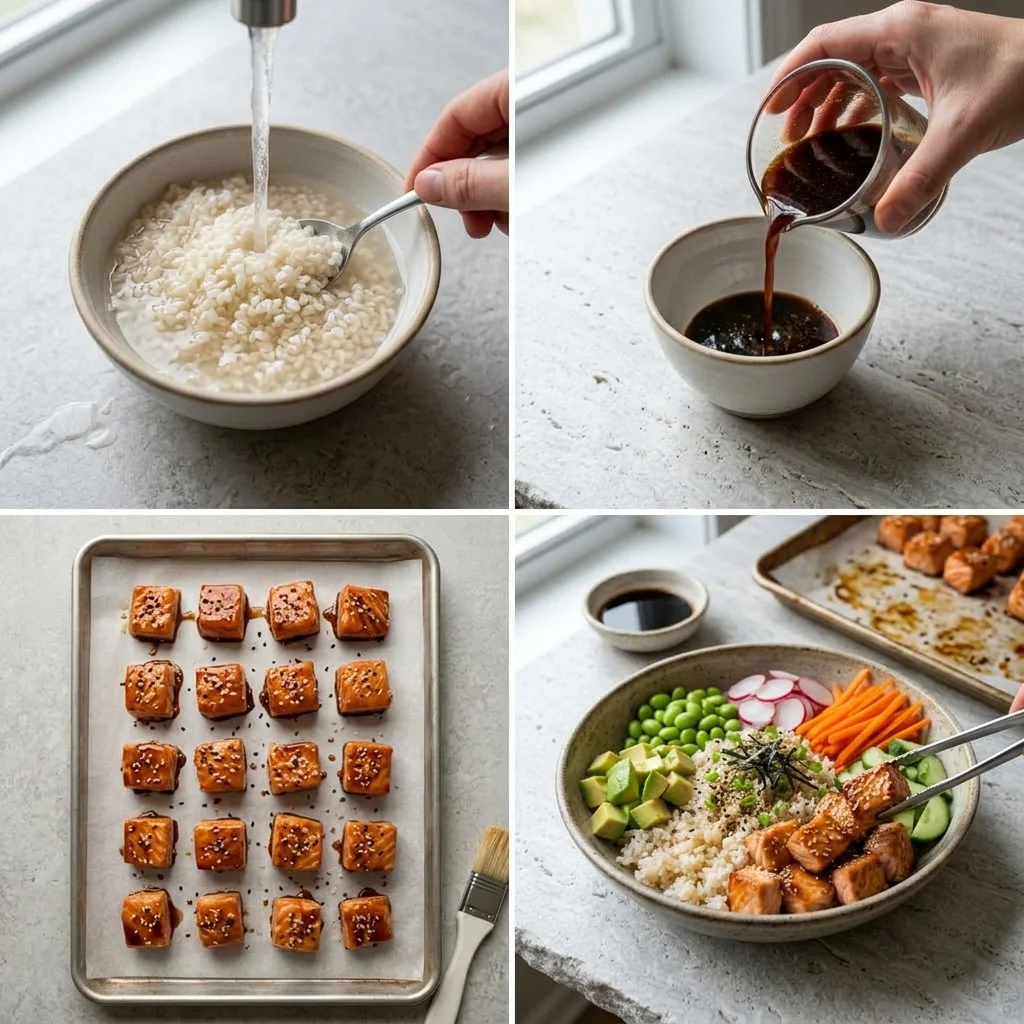
- Rinse the rice in the sieve under cool water, moving the grains gently, then drain for 5 minutes.
- Heat the oven to 425°F or 220°C and line a rimmed pan with parchment.
- Cook and cool the edamame according to its package. Slice the cucumber, carrots, radishes, and green onions.
- Pat the cucumber and salmon separately with clean towels. Use different surfaces and utensils for raw fish and ready-to-eat vegetables.
- Cut the avocado only when the rice and salmon are ready for assembly.
How to Make a Roasted Salmon Poke Bowl
- Cook the rice.Combine drained rice and water in the saucepan. Bring the liquid to a gentle simmer over medium heat, then cover with a tight-fitting lid and reduce to low. Let it cook undisturbed for 15 minutes, then remove the pan from heat and allow a 10-minute covered rest so the steam can finish softening the grains.Chef’s Note: Do not lift the lid during cooking or resting. Escaping steam changes the water available to soften the grains.
- Season and cool the rice.Whisk the rice vinegar, sugar, and one-quarter teaspoon salt together until the dry granules fully dissolve.Fold the mixture through the warm rice with a cutting motion rather than pressing. Spread the rice across a wide plate for 10 minutes so it becomes warm, not cold or steaming.
- Mix the ginger-lime sauce.Whisk soy sauce, sesame oil, lime juice, honey, ginger, and garlic in a clean bowl. Transfer three tablespoons of dressing into a small container and keep it covered for drizzling over the assembled food.
Reserve the Finishing Sauce First
Move the serving portion of sauce before raw salmon enters the work area. Use a clean spoon and cover the reserved cup. Sauce that has touched uncooked fish must be cooked thoroughly or discarded, and it should never return to the serving cup.
- Coat the salmon.Place the salmon cubes in a separate bowl and add the unreserved sauce. Fold gently until each piece has a light coating, then arrange the cubes in one layer on the lined pan.
- Roast the salmon.Roast for 8 to 12 minutes, depending on cube size. Check a thick center piece for 145°F or 63°C; the flesh should look opaque and separate easily with gentle pressure.Chef’s Note: Begin checking at 8 minutes. Small cubes can move from tender to dry in only a few additional minutes.
- Prepare the cool toppings.While the salmon roasts, arrange edamame, dried cucumber, carrots, radishes, green onions, sesame seeds, and nori near the bowls. Dice the avocado last.
- Assemble the bowls.Divide warm rice among four bowls and place salmon on one side. Arrange the vegetables and avocado in separate groups, then spoon the reserved sauce over the fish and rice.Chef’s Note: Start with 1 teaspoon of finishing sauce per bowl. Add more after tasting because sodium levels vary among soy sauces.
- Finish and serve.Scatter sesame seeds, green onion, and optional nori over the poke bowl. Serve while the salmon and rice are warm and the vegetables remain cool.
Protect the Poke Bowl Temperature Contrast
Steaming rice softens cucumber and darkens avocado. Give the rice its full 10-minute uncovered rest, then place cool toppings beside rather than under it. This short pause preserves texture and makes the bowl easier to arrange.
Expert Tips for a Balanced Poke Bowl
- Cut salmon into even cubes so every piece reaches a safe temperature at roughly the same time.
- Dry cucumber well; surface water dilutes the dressing at the bottom of the bowl.
- Fold rice seasoning with a light hand to avoid crushing the tender grains.
- Taste the soy sauce before adding extra salt because brands vary significantly.
- For advance preparation, cook the rice and salmon up to one day ahead and refrigerate them separately.
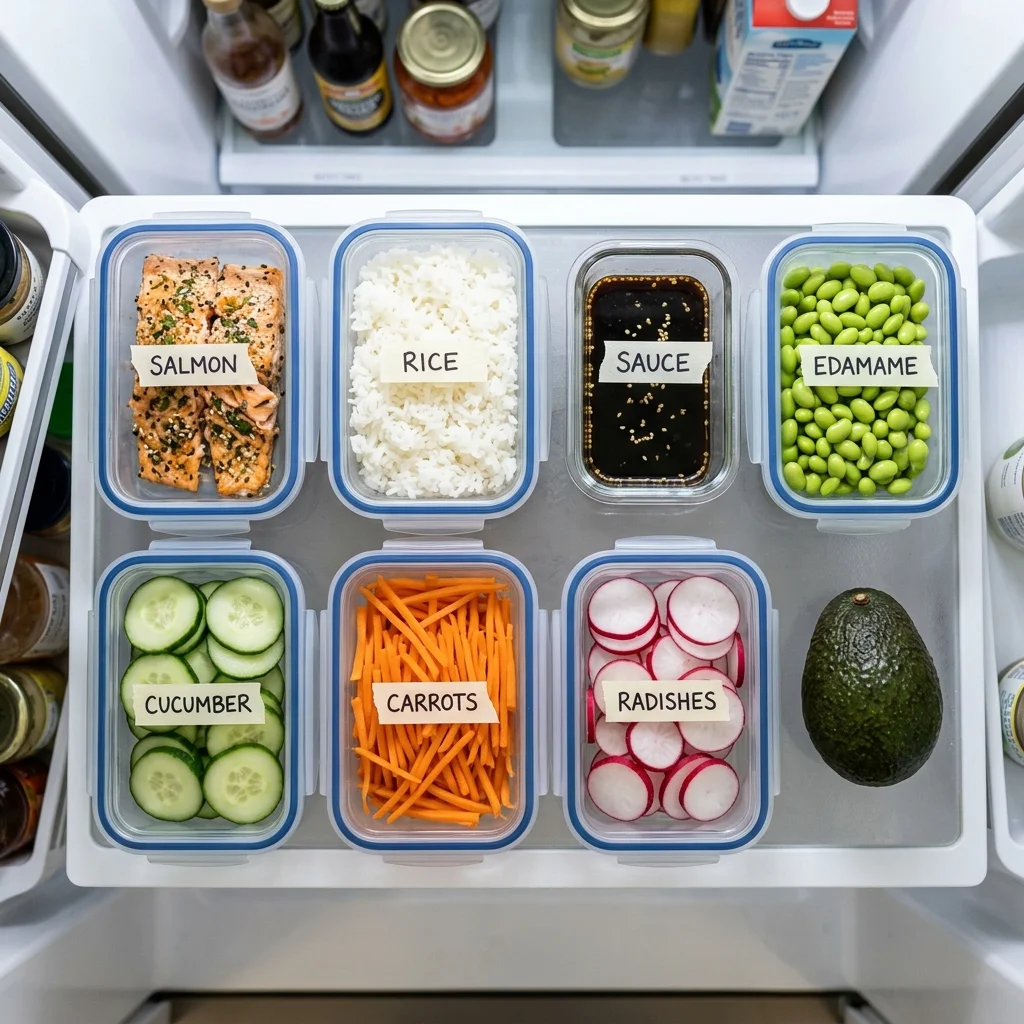
- Store sauce, vegetables, avocado, rice, and salmon in separate containers for the best texture.
- Toast sesame seeds briefly in a dry pan if their aroma seems faint, then cool them before use.
Poke Bowl Mistakes and Fixes
The salmon releases a puddle
Cause: The fish was wet, crowded, or heavily coated.
Prevention: Dry the cubes and arrange them with space in one layer.
Fix: Move salmon to a clean plate and discard watery pan liquid.
The salmon is dry
Cause: Uneven cubes or late checking overcooked smaller pieces.
Prevention: Cut 1-inch cubes and check at 8 minutes.
Fix: Flake dry pieces and moisten them with reserved sauce.
The rice is gummy
Cause: The grains were overworked, given excess water, or pressed while seasoning.
Prevention: Drain rinsed rice, use the package ratio when it differs, and fold with a cutting motion.
Fix: Spread the rice thinly and let steam escape. Do not add more liquid.
Water collects in the bowl
Cause: Cucumber was not dried or frozen edamame was still icy.
Prevention: Drain and pat both ingredients before assembly.
Fix: Lift the toppings out, drain the liquid, and return them beside the rice.
The sauce tastes too salty
Cause: Regular soy sauce or excessive finishing sauce raised the salt level.
Prevention: Begin with 1 teaspoon per bowl and taste.
Fix: Add more unseasoned rice, cucumber, or avocado. Do not dilute the assembled bowl with water.
The avocado turns brown
Cause: It was cut too early and exposed to air.
Prevention: Dice avocado immediately before serving.
Fix: Remove only the dark surface if the fruit is otherwise fresh, then place the remaining avocado in the bowl.
Poke Bowl Storage
Room temperature: Refrigerate salmon, rice, edamame, and cut vegetables within two hours, or within one hour above 90°F or 32°C.
Refrigerator: Store cooked salmon and rice in separate shallow airtight containers for up to three days. Keep sauce and vegetables separate, and use cut avocado the same day.
Freezer: Freeze cooked salmon and rice in separate airtight portions for up to two months. Do not freeze cucumber, radish, avocado, or the assembled bowl.
Reheating: Reheat salmon and rice separately to 165°F or 74°C for leftovers, then add chilled vegetables and fresh avocado. Do not repeatedly warm and cool the components.
Make-ahead notes: Prepare sauce and sliced sturdy vegetables one day ahead. Cook salmon and rice up to one day ahead, then assemble only the portions being served.
Poke Bowl Variations
Spicy Sesame: Stir 1 teaspoon certified sriracha into the reserved sauce. Add more only after tasting so heat does not overpower the salmon.
Mild Honey: Omit garlic, reduce ginger by half, and add 1 extra teaspoon honey. This keeps the sauce gentle while preserving its sweet-salty balance.
Gluten-Free: Use certified gluten-free tamari and verify every packaged topping. Plain nori, edamame, and sesame seeds are suitable only when cross-contact labeling meets your needs.
Vegetarian Tofu: Replace salmon with 500 grams pressed extra-firm tofu cut into cubes. Roast until the edges are golden, about 22 to 28 minutes, turning once.
Dairy-Free: The base recipe contains no dairy. Check sauces and flavored nori for hidden milk ingredients if an allergy or strict avoidance requires it.
What to Serve with a Poke Bowl
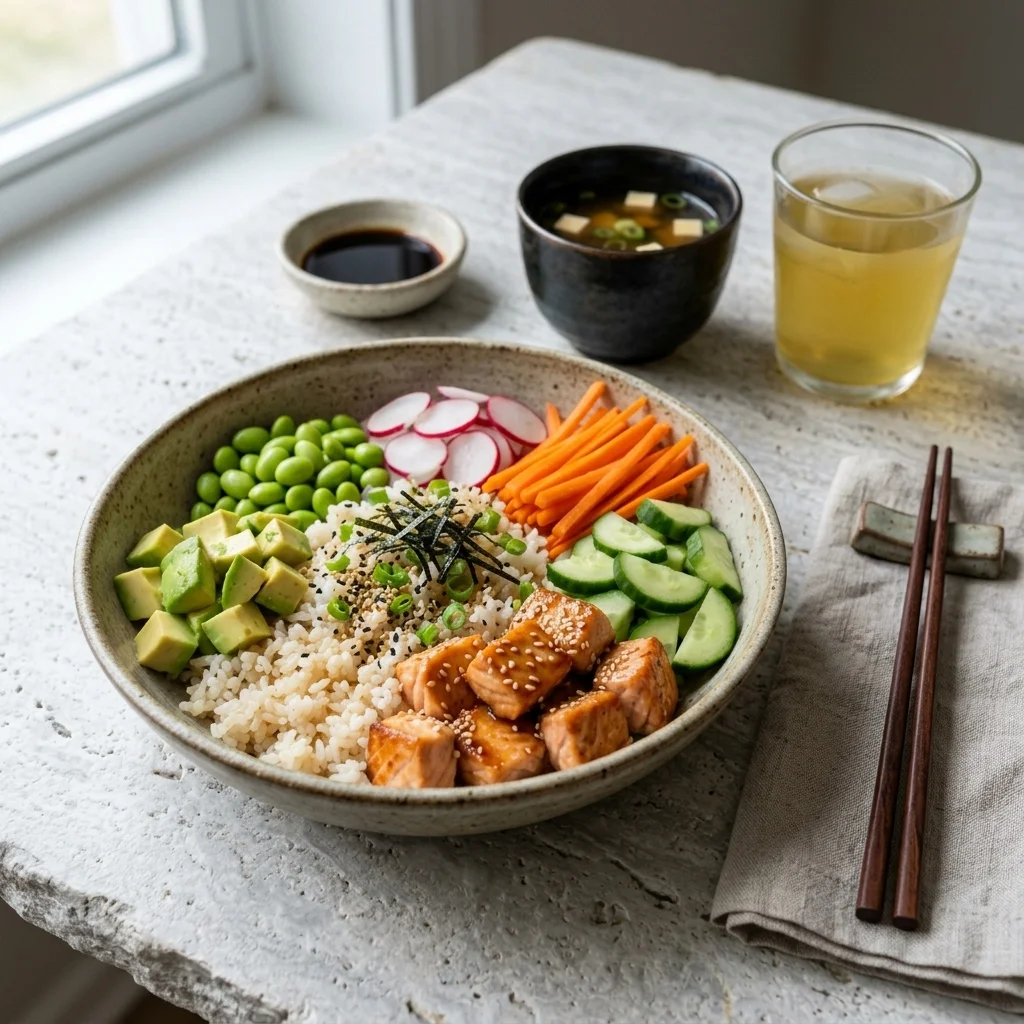
- Miso soup: A small cup adds warmth without adding another heavy starch. Verify that the miso and stock contain no alcohol-based seasoning.
- Cucumber salad: A lightly dressed side extends the crisp element when serving a larger group.
- Fresh pineapple spears: Their acidity and sweetness contrast with sesame and soy without adding more sauce.
- Steamed snap peas: Serve them plain or with a squeeze of lime for another green vegetable.
- Chilled green tea: Unsweetened tea clears the salty-sesame finish between bites.
Poke Bowl FAQs
Is this still a poke bowl if the salmon is cooked?
This is best described as a cooked, home-style poke bowl interpretation rather than a traditional raw-fish preparation. The label remains transparent. It keeps the familiar composed-bowl format, rice, seafood, crisp toppings, and soy-sesame seasoning while roasting the salmon to 145°F or 63°C. That choice suits readers who avoid raw fish. Labeling it clearly helps readers understand the adaptation before they begin cooking.
Can I make this recipe with frozen salmon?
Yes, frozen salmon works after safe thawing. Thaw it overnight in the refrigerator, keep it covered, and place it on a tray that can catch liquid. Pat the fish very dry before cubing so it roasts instead of steaming. Do not thaw salmon on the counter. If the fillet smells sour, rancid, strongly fishy, or like ammonia after thawing, discard it rather than seasoning over the odor.
How do I know when the salmon is cooked?
Check the center of several thick cubes with an instant-read thermometer. Repeat the reading in another piece. Finfish should reach 145°F or 63°C, and the flesh should appear opaque and separate easily with gentle pressure. Begin checking at 8 minutes because ovens and cube sizes differ. Color alone is unreliable, especially with naturally deep-colored salmon, so temperature is the clearest cue for safe doneness.
Can I prepare the poke bowl ahead?
Yes, but store the parts separately and assemble only what you plan to eat. Sauce, carrots, radishes, cucumber, and cooked edamame can be prepared one day ahead. Refrigerate rice and cooked salmon in shallow containers and use them within three days. Cut avocado shortly before serving. Reheat rice and salmon separately for a warm bowl, then add the chilled toppings after reheating.
What sauce can I use without mirin or sake?
Use the ginger-lime sesame sauce in this recipe: certified soy sauce or tamari, toasted sesame oil, lime juice, honey, ginger, and garlic. It supplies salt, acidity, sweetness, and aroma without mirin, sake, or alcohol-based flavoring. Always inspect packaged sauce labels because formulas vary. Reserve the finishing portion before the remaining sauce touches raw salmon so the serving drizzle stays separate and safe.
Build the Bowl at the Right Moment
The best time to assemble a poke bowl is when the rice has stopped steaming but still feels warm. At that point, roasted salmon remains tender, cucumber stays crisp, and avocado keeps its shape. Keep each component separate until then rather than letting the sauce pool around the vegetables.
Set out extra sesame seeds, lime, and green onion for individual adjustment instead of heavily seasoning all four servings.
If you loved this recipe, save it to your healthy bowl recipes Pinterest board so you can find it easily later!
Roasted Salmon Poke Bowl with Ginger-Lime Sesame Sauce
Ingredients
Equipment
Method
- Rinse the rice until the water runs clear, then drain for 5 minutes. Combine with water in a saucepan, bring to a gentle boil, cover, reduce heat to low, and cook for 15 minutes. Remove from heat and rest, covered, for 10 minutes. Do not lift the lid during cooking or resting.
- Stir rice vinegar, sugar, and ¼ teaspoon salt until dissolved. Fold through the warm rice with a cutting motion, then spread across a wide plate for 10 minutes until warm but not steaming.
- Heat the oven to 425°F (220°C) and line a rimmed sheet pan with parchment. Whisk all sauce ingredients together. Transfer 3 tablespoons to a separate covered cup and set aside as the finishing sauce.
- Pat the salmon cubes dry and season with the remaining ½ teaspoon salt. Add to the remaining sauce, fold gently to coat, and arrange in a single layer on the prepared pan. Roast for 8–12 minutes until the center of a thick cube reaches 145°F (63°C) and the flesh is opaque. Start checking at 8 minutes.
- While the salmon roasts, arrange edamame, cucumber, carrots, radishes, and green onions near the bowls. Dice the avocado just before assembly.
- Divide warm rice among four bowls. Place salmon on one side, then arrange the vegetables and avocado in separate groups. Spoon the reserved finishing sauce over the fish and rice, then scatter sesame seeds, green onion, and optional nori on top. Serve immediately.
Notes
- Store rice, salmon, sauce, and vegetables in separate airtight containers in the refrigerator for up to 3 days. Cut avocado the day it is served.
- Make ahead: Sauce and sliced sturdy vegetables can be prepared one day ahead. Cook rice and salmon up to one day ahead and assemble only portions being served.
- Reheat salmon and rice separately to 165°F (74°C) before adding chilled toppings and fresh avocado.