Deviled Eggs with a Smooth Mustard Filling
Deviled eggs need a filling that holds a small mound but gives way easily when you take a bite. Too much mayonnaise makes it slump; large bits of yolk leave a sandy texture even when the mixture looks creamy. Breaking up the yolks thoroughly before adding the wet ingredients gives you more control over both problems.
These deviled eggs use six large eggs, yellow mustard, a measured splash of vinegar, and a little paprika. Chives finish the tops with a fresh onion note. The filling stays familiar and savory, with enough mustard to cut through the richness without covering up the egg.
You can spoon the mixture into the whites or use a bag with a wide opening. Neither method needs a tall decorative swirl: a modest mound is easier to lift, transport, and eat. Plan time for the eggs to cool before peeling and for the filled halves to chill before serving, rather than treating those steps as optional pauses.
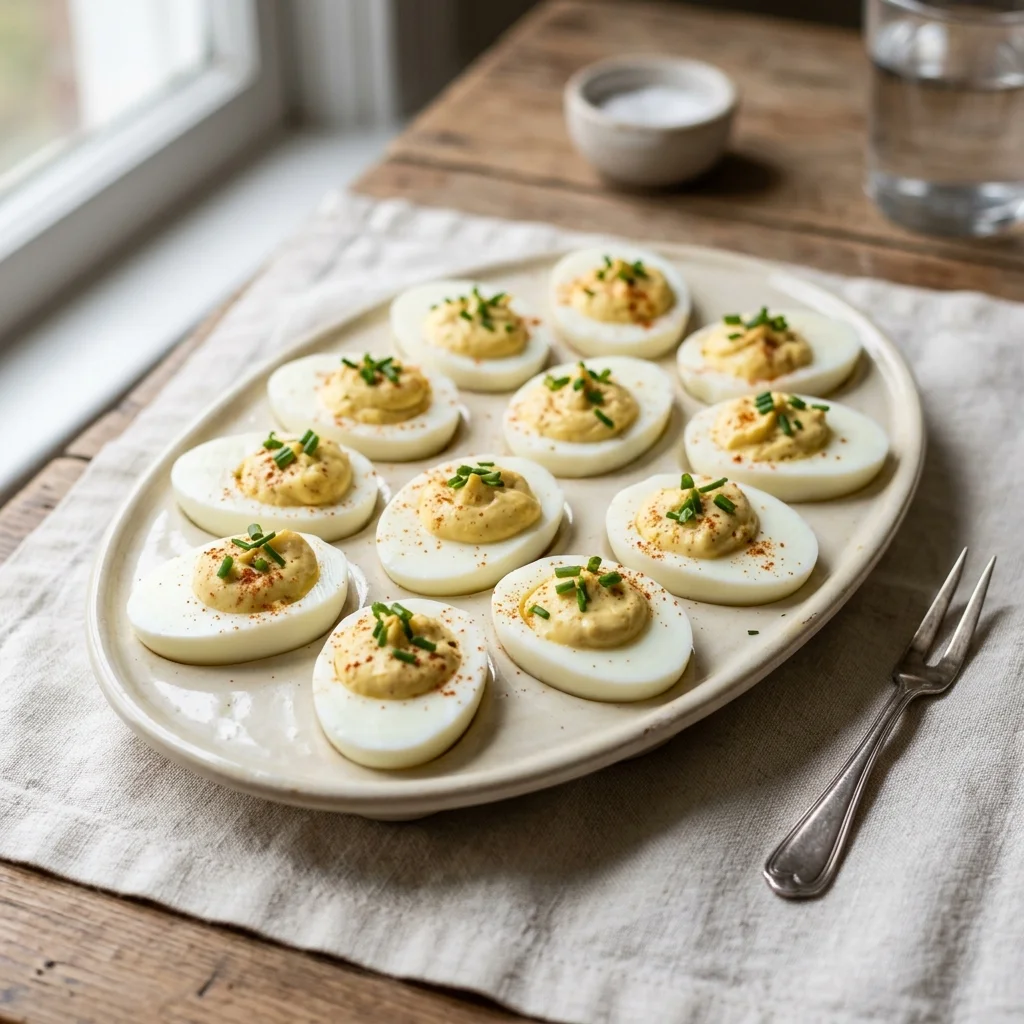
Table of Contents
Why These Deviled Eggs Keep Their Shape
- Finely broken yolks blend smoothly without requiring extra liquid to hide lumps.
- A measured mayonnaise portion keeps the filling rich but firm enough to sit in the whites.
- Yellow mustard adds tang without introducing coarse seeds into the mixture.
- Chives stay on top, where their fresh flavor and green color remain distinct.
- Twelve halves make it easy to divide the batch between immediate serving and a refrigerated refill.
Quick Deviled Eggs Snapshot
- Prep time: About 15 minutes
- Cook time: About 20 minutes, including heating water and a 12-minute covered rest
- Cooling time: At least 10 minutes in ice water
- Final chilling time: 20 minutes
- Total time: Allow about 65 minutes
- Servings: 6, with 2 halves per serving
- Yield: 12 filled halves
- Difficulty: Easy
- Calories: Approximately 140 per serving
- Key ingredient: Fully set egg yolks
- Best for: Appetizer plates, brunch, and cold lunch spreads
Deviled Eggs Nutrition Information
- Calories per serving: Approximately 140
- Protein: 6 grams
- Carbs: 1 gram
- Fat: 12 grams
- Fiber: 0 grams
- Sugar: 0 grams, rounded
- Sodium: Approximately 230 milligrams
- Serving size: 2 filled egg halves
- Servings per recipe: 6
Each serving contains one whole egg, which supplies most of the protein. Mayonnaise adds much of the extra fat, so changing its type affects the estimates more than changing the herb garnish.
Estimated nutrition values are calculated per serving with standard ingredient amounts. Results may differ based on the brands used and the size of each portion.
Ingredients for Deviled Eggs
Eggs and filling
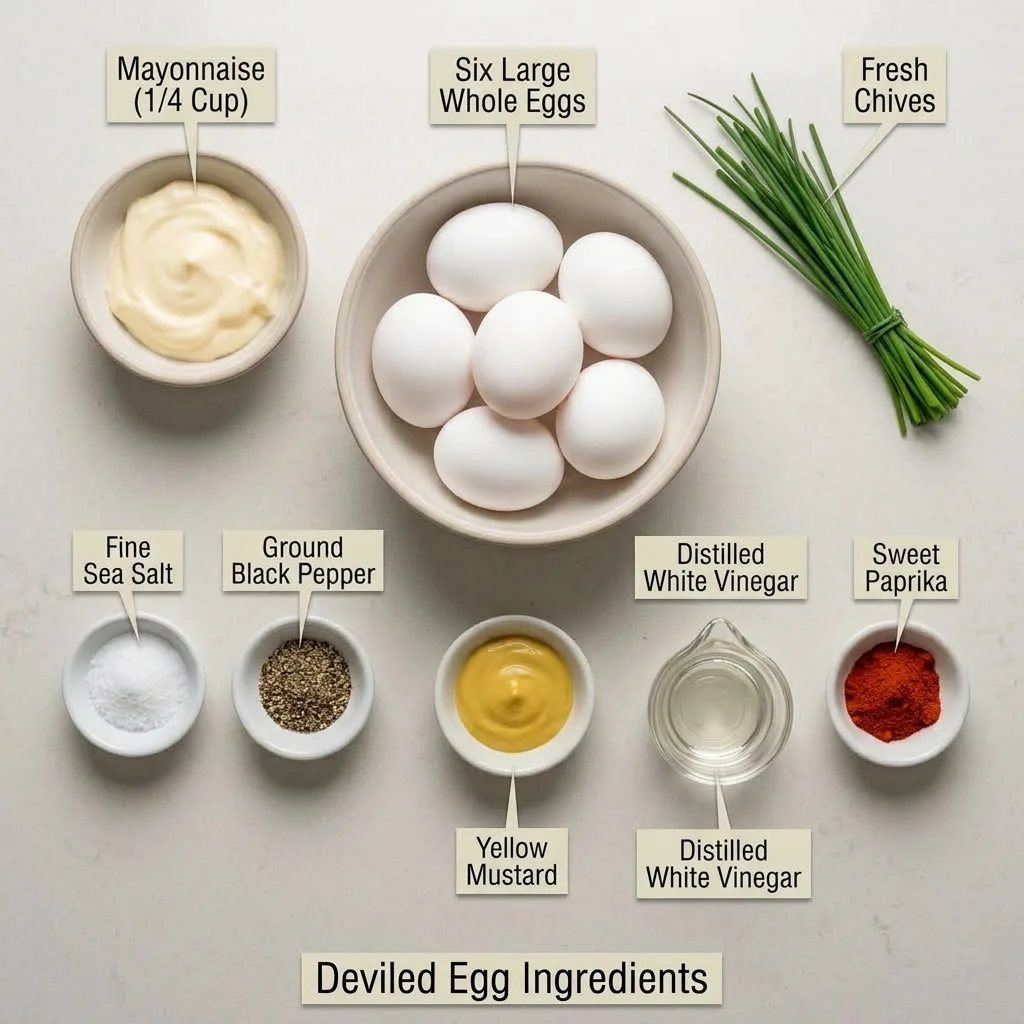
- 6 large eggs: Use refrigerated eggs with intact shells. Medium or extra-large eggs need different timing, so keep the size consistent.
- One-quarter cup full-fat mayonnaise, about 55 grams: Commercial mayonnaise gives a predictable texture. Thick plain Greek yogurt is an alternative with a tangier result.
- 2 teaspoons prepared yellow mustard: Smooth mustard blends without flecks. Choose another smooth mustard without alcohol-based ingredients if substituting.
- 1 teaspoon distilled white vinegar: Brightens the filling without much added water. Lemon juice can replace it by the same measure.
- One-eighth teaspoon fine salt: A modest starting amount because mustard and mayonnaise are already seasoned.
- One-eighth teaspoon ground black pepper: Adds gentle warmth. White pepper produces fewer visible flecks.
Finishing the tops
- One-quarter teaspoon sweet paprika: Dust lightly across all twelve halves. Smoked paprika changes the aroma without changing the method.
- 1 tablespoon finely snipped chives: Add just before serving. Finely sliced scallion greens or chopped parsley also work.
- Water and ice: Use enough cold cooking water to cover the eggs by 1 inch and enough ice water to surround them during cooling.
If you are building a larger platter, browse [INTERNAL LINK: easy cold appetizers] for foods with different textures instead of adding more toppings to every egg.
Equipment Needed
- A saucepan with a fitted lid: Choose one wide enough to hold six eggs in a single layer.
- A bowl for ice water: Leave room for the eggs without spilling when they are lowered in.
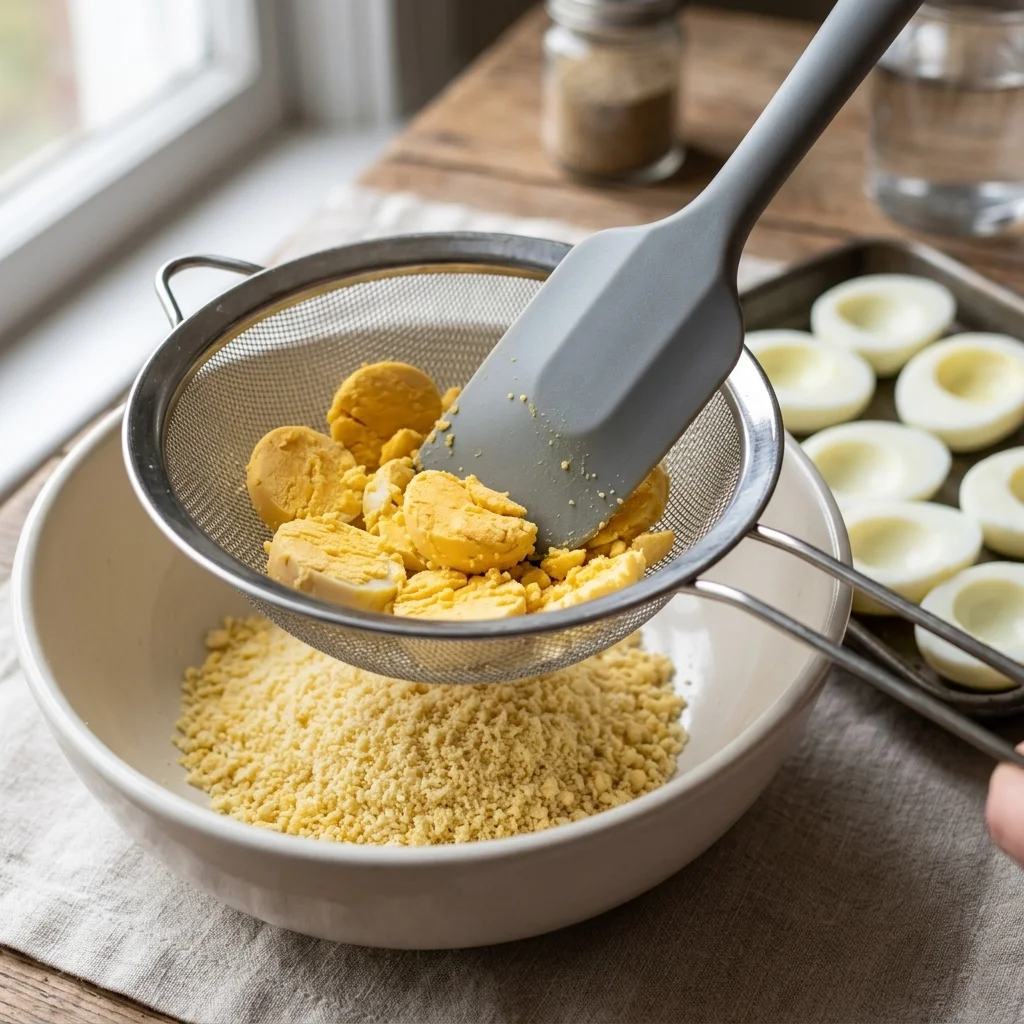
- A fine-mesh sieve: Press cooled yolks through it for a finer filling; a fork also works with careful mashing.
- A flexible spatula: Scrape the filling from the bowl so the final halves receive their share.
- A piping bag or food-storage bag: A wide cut corner passes smooth filling easily; two teaspoons are an alternative.
- A covered egg tray: Keeps filled halves upright without the lid touching their tops.
Prepare the Deviled Eggs Ingredients
- Check the raw eggs for cracks and select six intact large eggs.
- Set the saucepan and its lid beside the stove.
- Prepare a bowl of ice and cold water while the cooking water heats.
- Measure mayonnaise, mustard, vinegar, salt, and pepper separately.
- Wash and dry the chives before snipping them finely.
How to Make Deviled Eggs
- Heat the eggs. Arrange them in one layer, cover with cold water by 1 inch, and heat uncovered just until the water reaches a boil.
- Finish with retained heat. Move the pan off the burner, cover, and leave for 12 minutes for large eggs. Chef’s Note: Start this timer when the pan leaves the heat, not when the water first begins warming.
- Cool completely. Transfer the eggs to ice water for at least 10 minutes, adding ice if it melts before they cool.
- Peel gently. Crack the cooled shells all over and work underneath the membrane, using a little cold running water if needed. Chef’s Note: Pull away small shell sections instead of tearing off large pieces of white.
- Separate the halves. Dry the peeled eggs, slice lengthwise, and lift the fully firm yolks into a bowl. Arrange the twelve whites cut-side up.
- Break up the yolks. Press them through a fine-mesh sieve or mash with a fork until no large pieces remain. Chef’s Note: Do this before adding mayonnaise so stubborn yolk bits are easy to see.
- Mix the filling. Stir in mayonnaise, mustard, vinegar, salt, and pepper until smooth; a spoonful should hold a soft mound rather than pour.
- Fill evenly. Spoon or pipe a small amount into every white first, then divide the remaining filling among them.
- Chill and garnish. Cover without touching the tops and refrigerate for 20 minutes, then add paprika and chives just before serving.
Check texture before adding liquid: A lumpy filling needs finer mashing, not automatically more mayonnaise or vinegar. Thin only a smooth mixture that is too stiff to spoon.
Expert Tips for Deviled Eggs
- Dry the egg whites before filling them. Water left in the cavities can loosen the mixture where it touches the surface.
- Use a plain, wide piping opening for the first batch. Small decorative tips make even tiny yolk bits more noticeable.
- Give all twelve halves a base portion before making any tall mounds. This prevents generous early servings from leaving the last whites empty.
- Prepare whites and filling up to 24 hours ahead and refrigerate separately. Add the garnish after assembly so the chives look fresh.
- Keep the finished tray covered at 40°F or below and use within 2 days for this recipe. Record the earlier cooking date when starting with prepared eggs.
- Taste the filling with a small piece of egg white. The unseasoned white softens the impact of salt and mustard.
I used large eggs and initially left the cooked whites wet before filling them, and the moisture at the bottom of a few cavities was enough to loosen those portions by the time they came out of the 20-minute chill.
Deviled Eggs Problems and Fixes
- The filling runs flat. Excess vinegar, watery substitutes, or warm ingredients can loosen it. Measure liquids and cool eggs fully; chill a loose filling, then mash in an extra fully cooked yolk if needed.
- The mixture feels grainy. Large dry yolk particles did not break down. Sieve or mash before mixing; press the finished filling against the bowl with a spatula to reduce remaining lumps.
- The whites tear during peeling. Shell membrane may cling tightly to the cooked white. Cool thoroughly and peel patiently; use a badly torn egg in egg salad instead of forcing it onto the platter.
- The yolks have a gray-green edge. Excess heat or slow cooling can cause discoloration. Use the timed rest and ice bath; the ring itself is harmless, though the yolk may be drier.
- The halves slide around. Wet whites and a flat slippery plate offer little support. Dry the eggs and use a fitted tray; a tiny flat trim from the rounded underside can steady an intact half.
Storing and Transporting Deviled Eggs
- Room temperature: Keep total unrefrigerated time within 2 hours, or 1 hour above 90°F.
- Refrigerator: Store covered at 40°F or below for up to 2 days after filling, without exceeding 1 week from cooking the eggs.
- Freezer: Not recommended; thawed hard-cooked whites become unpleasantly firm and watery.
- Reheating: Not needed for this cold appetizer. Keep chilled until serving.
- Make-ahead: Cook the eggs up to 2 days before assembly, or refrigerate separated whites and filling for up to 24 hours before filling.
- Transport: Secure the covered tray in a cooler with enough ice packs to keep it cold.
Refresh the tray in small portions: Leave spare eggs refrigerated and replenish the serving plate as needed. If displaying them longer, use an ice-supported setup that actually keeps the eggs at 40°F or below.
Coordinate the rest of the menu with [INTERNAL LINK: make ahead brunch recipes] so assembly does not compete with every other task.
Deviled Eggs Variations
- Spicy: Mix one-eighth teaspoon cayenne into the filling. Taste before adding more rather than thinning it with a large pour of hot sauce.
- Milder mustard: Reduce yellow mustard to 1 teaspoon and omit black pepper. Keep the paprika garnish for color.
- Yogurt filling: Replace mayonnaise with one-quarter cup thick plain Greek yogurt. Begin with one-half teaspoon vinegar because yogurt brings its own tang.
- Dill and pickle: Add 1 tablespoon finely minced, thoroughly drained dill pickle. Use a spoon or wide bag opening so the pieces do not block a tip.
- Smoky paprika: Replace sweet paprika with the same amount of smoked paprika. Keep it as a light surface dusting rather than mixing enough to turn the entire filling red.
These deviled eggs are vegetarian and dairy-free when made with dairy-free mayonnaise. For gluten-free needs, check mayonnaise, mustard, seasonings, and any pickles; the yogurt variation adds dairy.
What to Serve with Deviled Eggs
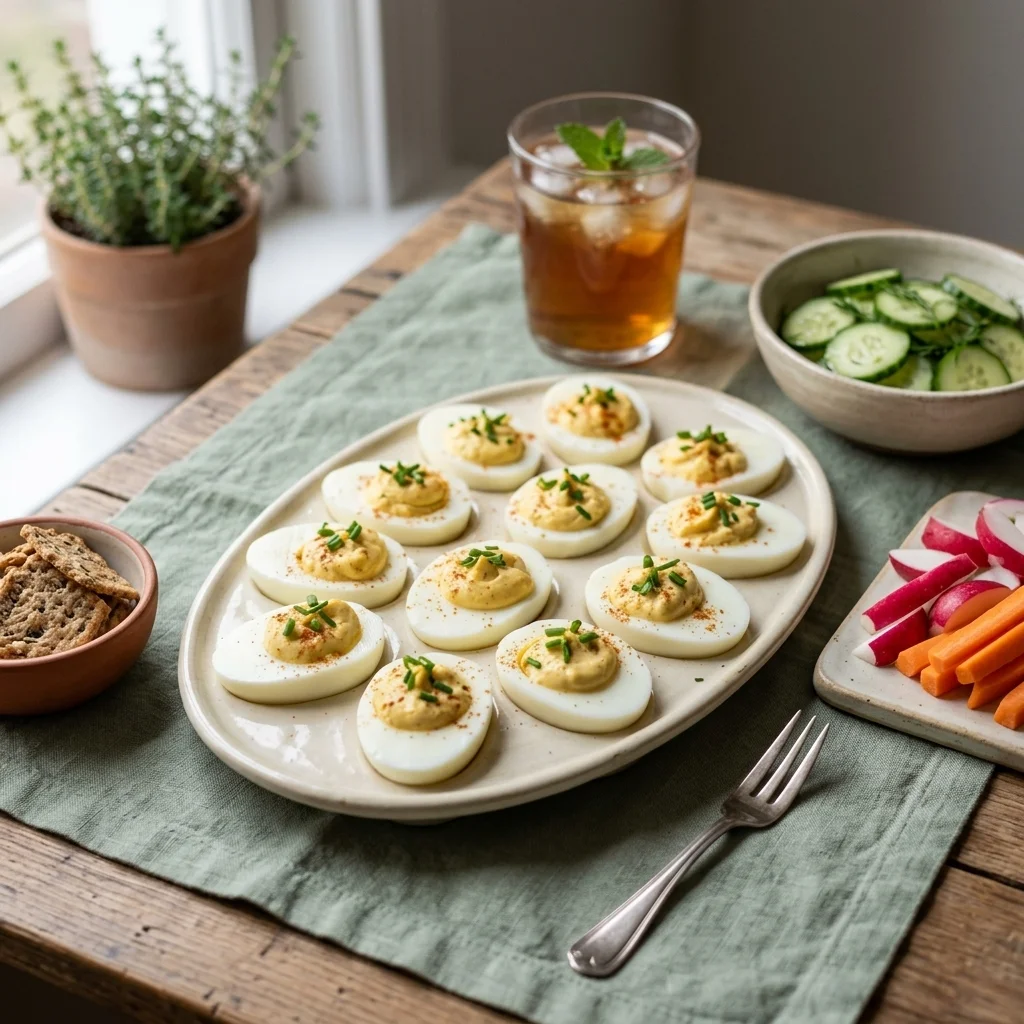
- Crisp cucumber salad: Its fresh crunch contrasts with the soft egg filling. Choose a tangy version from [INTERNAL LINK: fresh vegetable salads].
- Roasted potatoes: Warm wedges make two filled halves part of a more substantial brunch plate.
- Whole-grain crackers: Keep them dry in a separate bowl, especially if using spare filling as a spread.
- Radishes and carrots: Raw vegetable sticks offer a clean, crunchy bite between richer appetizers.
- Unsweetened iced tea: A simple drink leaves the mustard and chives noticeable without another heavy flavor.
Deviled Eggs FAQs
Can I make deviled eggs the day before?
Yes, refrigerate the whites and filling separately in covered containers, then assemble the next day. A sealed food-storage bag keeps the filling ready to squeeze once you snip the corner. Dry any moisture from the white cavities before filling, and add paprika and chives last. Already assembled eggs can also be covered and chilled, but the garnish looks fresher when added shortly before serving. Keep everything at 40°F or below.
Can I replace mayonnaise with Greek yogurt?
Yes, use thick plain Greek yogurt by the same volume, starting with half the vinegar. The filling will taste tangier and less rich, and different yogurt brands may produce different thicknesses. Avoid thin pouring yogurt, which adds too much moisture. Mix, chill briefly, and check the texture before adding any more liquid. This substitution adds dairy, so it changes the allergen information even though the eggs themselves remain the same.
Why is the filling loose after refrigeration?
Refrigeration cannot remove liquid that was mixed in, so excess vinegar, wet pickle pieces, or thin yogurt can leave the filling loose even when cold. Check the cause before adding another ingredient. A finely mashed extra hard-cooked yolk can absorb some moisture without introducing an unrelated flavor, but it changes the batch quantity. If the mixture remains too soft to mound, use it as a chilled egg spread instead.
How do I know the yolks are cooked enough?
The whites and yolks must be fully firm, with no glossy, jammy center when an egg is cut. The 12-minute covered rest is a starting method for large eggs, not a universal timer for every size, pan, or altitude. If a yolk is still soft, finish cooking the eggs before using them for this filling. A runny yolk will not become firm just because mayonnaise is added or the mixture is chilled.
Do deviled eggs need a piping bag?
No, two teaspoons work well: use one to scoop the filling and the other to slide it into the white. A food-storage bag with a wide corner cut off gives a smoother mound without a special tip. Begin by dividing a small amount among all twelve halves, then return with the extra. This portioning approach matters more than the tool because it prevents the final few eggs from being underfilled.
Give Every Half Its Share Before Garnishing
The easiest way to finish a neat platter is to make a second pass. Fill each cavity first, check what remains in the bowl, and then add a little height where it is needed. Scrape the spatula along the bowl sides so the last portion is as smooth as the first.
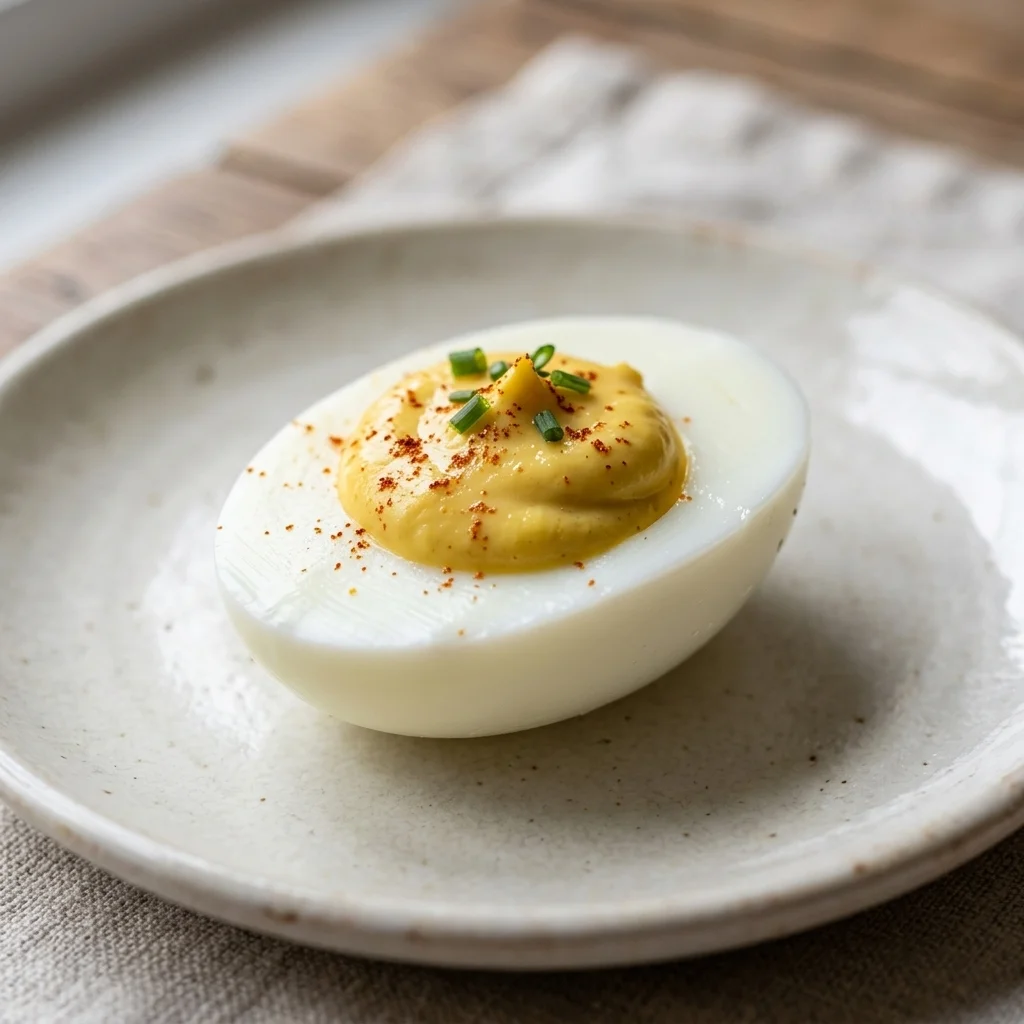
Once the deviled eggs are chilled, add a light dusting of paprika and a few chive pieces rather than covering the filling completely. You want people to see the shape and lift a half without losing its topping. Keep a small reserve cold if the meal will last, and bring it out as the first plate empties.
If you loved this recipe, save it to your appetizer recipes Pinterest board so you can find it easily later!
Deviled Eggs with a Smooth Mustard Filling
Ingredients
Equipment
Method
- Arrange the eggs in a single layer in a saucepan. Cover with cold water by 1 inch and heat uncovered until the water just reaches a boil.
- Move the pan off the burner, cover, and leave undisturbed for 12 minutes. Meanwhile, prepare a bowl of ice water.
- Transfer the eggs to the ice water and cool for at least 10 minutes. Crack the shells all over, peel gently under cold running water, and dry the peeled eggs thoroughly.
- Slice each egg lengthwise and lift the yolks into a bowl. Arrange the 12 white halves cut-side up on a tray. Press the yolks through a fine-mesh sieve or mash with a fork until no large pieces remain.
- Stir in the mayonnaise, mustard, vinegar, salt, and pepper until smooth. The filling should hold a soft mound. Spoon or pipe a small amount into every white first, then divide the remaining filling evenly among all 12 halves.
- Cover without touching the tops and refrigerate for 20 minutes. Just before serving, dust lightly with paprika and scatter chives over each half.
Notes
- Make ahead: Refrigerate the peeled whites and filling in separate covered containers for up to 1 day. Dry the white cavities before filling. Add paprika and chives only after the final chill, just before serving.
- Store filled eggs covered at 40°F or below for up to 2 days. Do not leave them out longer than 2 hours at room temperature.
- If the filling is lumpy, mash the yolks more finely rather than adding extra liquid. Thin only a smooth mixture that is too stiff to spoon, using a few drops of vinegar at a time.