Crispy Orange Chicken Recipe Ready in 50 Minutes
Crunch that survives the sauce is the whole point of orange chicken, and most home versions lose it within two minutes. This orange chicken recipe keeps it. Boneless chicken thighs get a thin cornstarch and flour crust, a shallow fry at 350°F, and a sauce made from real oranges that goes on at the very last second.
I tested this orange chicken recipe nine times over four weeks, because my first three batches came out soft, pale, or gluey. The fixes were small: a five-minute rest for the coating, fresh zest, and tossing the sauce with the chicken off the heat. Now it goes from cutting board to table in 50 minutes, and it tastes like oranges instead of candy.
Everything happens on the stovetop with one frying pot and one saucepan, so cleanup stays small. Below you will find the exact measurements, the reason behind each step, and the fixes for every problem I ran into.
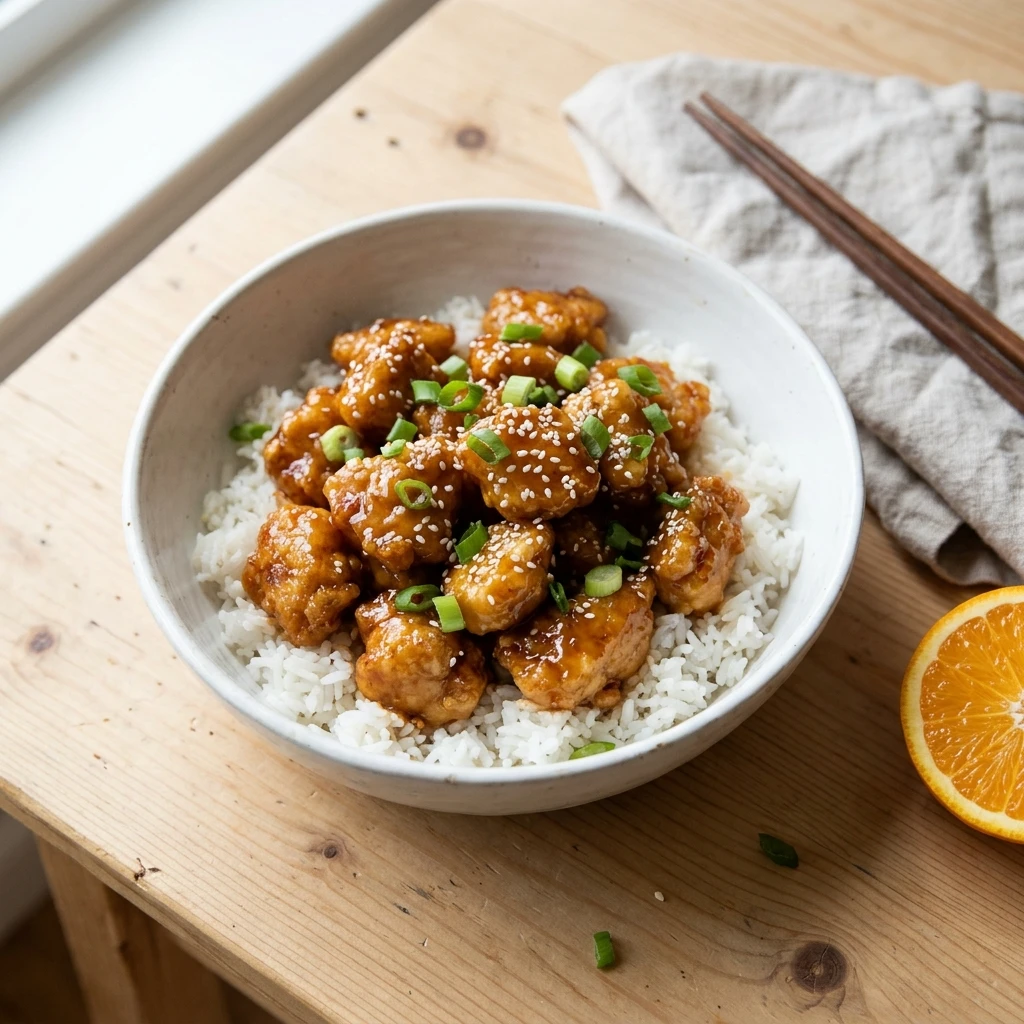
Table of Contents
Why You Will Love This Orange Chicken Recipe
- Dinner takes 50 minutes from first cut to first bite, using ingredients from a regular grocery run.
- The crust stays crunchy for about 10 minutes after saucing.
- Fresh juice and ginger carry the flavor, so four servings need only 1/3 cup of brown sugar.
- Thighs forgive a minute of overcooking. Breasts do not.
- Leftovers reheat in a 400°F oven, and the sauce keeps separately in the fridge.
- My nephew picks almost everything out of his food. He cleaned his plate and asked for more.
Recipe Snapshot
- Prep Time: 20 minutes
- Cook Time: 30 minutes
- Total Time: 50 minutes
- Servings: 4
- Difficulty: Medium
- Calories per Serving: About 570
- Key Tool: 5-quart Dutch oven
- Best For: Weeknight dinners and takeout cravings
Nutrition Information
- Calories per Serving: About 570
- Protein: 38 g
- Carbs: 49 g
- Fat: 24 g
- Fiber: 1 g
- Sugar: 22 g
- Sodium: 1,068 mg
- Serving Size: About 1 1/4 cups
- Servings per Recipe: 4
Most of the 38 grams of protein comes from the thighs, so one serving over rice makes a filling dinner. Soy sauce supplies most of the sodium, and reduced-sodium soy sauce lowers it.
Nutrition values are approximate and calculated per serving using standard ingredient amounts. Values may vary based on brands used and portion sizes.
Ingredients
For the Chicken
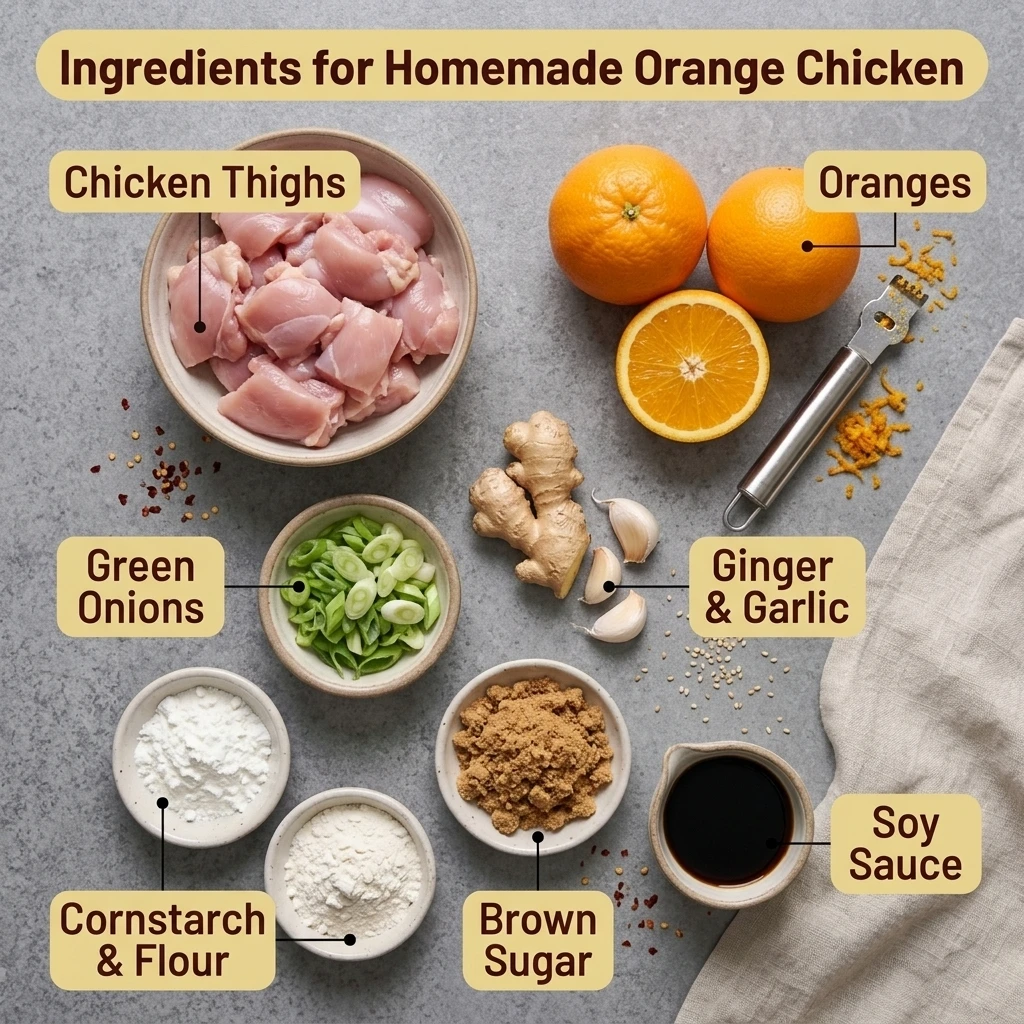
- 1 1/2 pounds boneless, skinless chicken thighs
- 1 large egg
- 1 tablespoon soy sauce
- 1/4 teaspoon black pepper
- 1/2 cup cornstarch
- 1/4 cup all-purpose flour
- 3 cups canola, peanut, or vegetable oil
For the Orange Sauce
- 2/3 cup fresh orange juice (from 2 large navel oranges), plus 2 tablespoons for loosening
- 1 tablespoon orange zest, plus 1 teaspoon for finishing
- 3 tablespoons soy sauce
- 3 tablespoons rice vinegar
- 1/3 cup packed light brown sugar
- 3 garlic cloves, minced
- 1 tablespoon freshly grated ginger
- 1/2 teaspoon red pepper flakes
- 1 teaspoon toasted sesame oil
- 1 tablespoon neutral oil
- 1 tablespoon cornstarch mixed with 2 tablespoons cold water
For Serving
- 2 green onions, thinly sliced
- 1 teaspoon sesame seeds
- 4 cups cooked jasmine rice
Thighs matter most, because they stay juicy through frying while breasts dry out. Fresh orange juice and orange zest give the sauce its bright edge, and carton juice works only if it is not from concentrate. Cornstarch keeps the crust light.
Swaps: breasts for thighs, tamari for soy sauce, apple cider vinegar for rice vinegar, white sugar for brown. I use Kikkoman soy sauce because its saltiness stays steady between bottles.
Equipment Needed
- 5-quart Dutch oven: Heavy walls hold oil temperature steady between batches.
- Instant-read thermometer: It reads the 350°F oil and the 165°F chicken.
- Wire rack over a rimmed sheet pan: Air reaches the bottoms, while paper towels steam them soft.
- 3-quart saucepan: Tall sides keep bubbling sauce off your stovetop.
- Microplane zester: It removes only the orange layer and leaves the bitter pith.
Preparation
Pro Tip: Freeze the thighs for 15 minutes before cutting. Firm meat slices into clean 1-inch pieces instead of slipping and tearing.
- Heat the oven to 200°F and slide in a wire rack set over a rimmed sheet pan. It keeps finished batches warm and dry.
- Trim the thighs, cut them into 1-inch pieces, and pat them dry with paper towels. Wet chicken makes the coating slide off.
- Zest both oranges, then juice them. Mince the garlic, grate the ginger, and slice the green onions.
- Whisk the cornstarch and flour in a small bowl. Combine the orange sauce ingredients in a medium bowl, and stir the slurry in a cup.
- Pour the frying oil into the Dutch oven, with the burner off.
Step-by-Step Instructions
- Whisk the egg, 1 tablespoon soy sauce, and pepper in a large bowl, then toss in the chicken for 30 seconds. Every piece should look evenly glossy.
- Add the cornstarch and flour, toss for 1 minute, then rest the pieces for 5 minutes. The coating should look pale and slightly damp, clinging tightly when you lift a piece.
- Heat 1 tablespoon neutral oil in the saucepan over medium heat and cook the garlic and ginger for 30 seconds. Chef’s Note: Browned garlic makes the sauce bitter, so keep the heat at medium. The garlic should look pale gold, never brown.
- Pour in the juice, zest, soy sauce, vinegar, brown sugar, pepper flakes, and sesame oil, then simmer for 3 minutes, stirring. The sugar should dissolve completely.
- Whisk in the slurry and simmer for 1 to 2 minutes, stirring constantly. Remove the pan once the sauce coats a spoon and a finger drawn through it leaves a clear line.
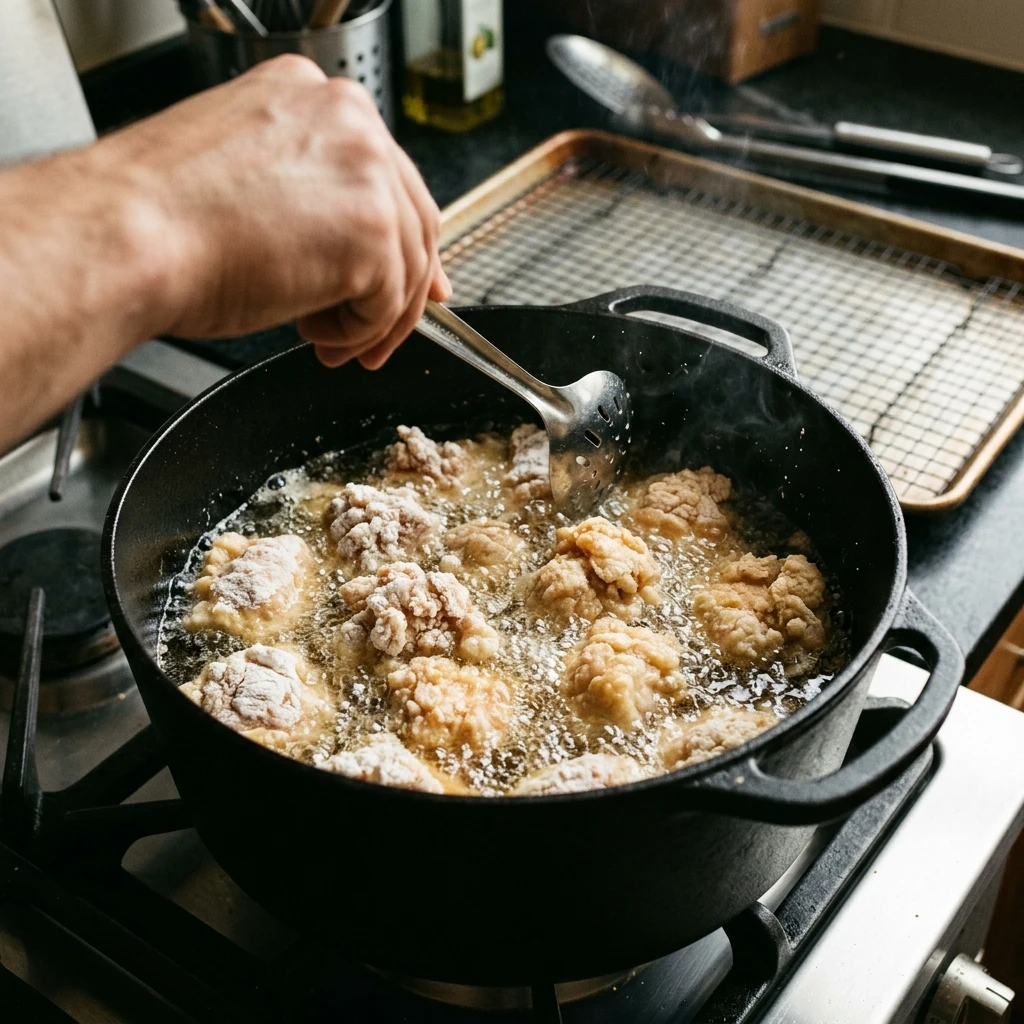
- Heat the frying oil over medium-high heat to 350°F, about 5 minutes. Chef’s Note: With no thermometer, a pinch of coating should sizzle steadily without spitting. The oil should shimmer with faint ripples.
- Fry one third of the chicken, adding pieces one at a time, for 5 to 6 minutes, flipping once halfway. Chef’s Note: Keep the oil between 325°F and 350°F by adjusting the burner between batches. The pieces should look deep golden brown and read 165°F inside.
- Move the pieces to the oven rack with a slotted spoon, wait 1 minute for the oil to return to 350°F, and fry the remaining two batches. Finished pieces should look dry and crackly.
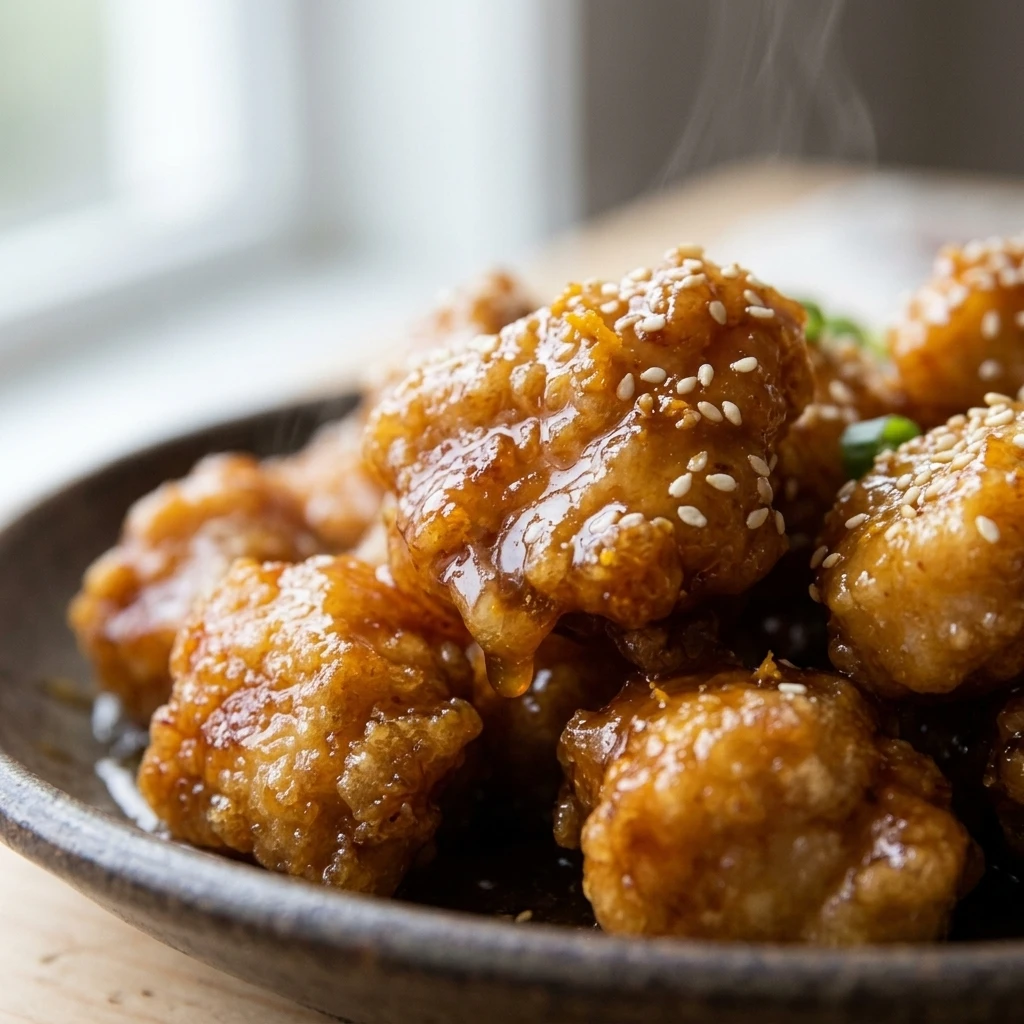
- Rewarm the sauce over low heat for 1 minute, adding the extra 2 tablespoons of juice if it has tightened. Off the heat, toss in all the chicken for 30 seconds and top with green onions and sesame seeds. Every piece should wear a glossy amber coat.
Pro Tip: Sprinkle the reserved 1 teaspoon of zest over the plated chicken instead of stirring it into the sauce. Heat dulls citrus oils, so zest added at the end smells brighter.
Expert Tips and Tricks
- Lower each piece into the oil toward the far edge of the pot, away from you, to avoid splashes.
- Cut every piece to 1 inch. Mixed sizes finish at different times.
- My worst test batch came from dumping all the chicken into the oil at once. The temperature fell below 300°F, and the coating soaked up oil and slid off in sheets.
- Cut the chicken up to 24 hours ahead and keep it covered in the fridge. Coat it only right before cooking, since cornstarch turns gummy on wet meat.
- Start the rice before the orange chicken. Covered jasmine rice stays hot for 15 minutes, so everything reaches the table together.
- Write the cooking date on tape on the container lid. Leftovers last 3 to 4 days, and the label ends the guessing.
Common Mistakes and Troubleshooting
Soggy crust. Cool oil, a crowded pot, or early saucing lets steam soften the coating. Fry three batches and sauce at the last second. To rescue it, re-crisp the pieces on a rack at 400°F for 5 minutes.
Coating slides off. Wet chicken or a long soy marinade loosens the starch. Pat the pieces dry, use only 1 tablespoon of soy, and leave each piece alone for its first 2 minutes in the oil.
Thin sauce. Cornstarch has to reach a simmer to thicken. Whisk 1 teaspoon cornstarch into 2 teaspoons cold water, stir it in, and simmer 1 minute.
Gluey sauce. Boiling too long tightens it. Pull the pan as soon as it coats a spoon, and stir in orange juice 1 tablespoon at a time if it has already set.
Bitter sauce. Zesting into the white pith or browning the garlic causes it. Remove only the orange layer, and if the sauce already tastes bitter, stir in 1 teaspoon brown sugar.
Storage Instructions
Room Temperature: Leave orange chicken out for no more than 2 hours, or 1 hour above 90°F.
Refrigerator: Keep leftovers in an airtight glass container for 3 to 4 days, with the sauce in a separate jar so the crust stays crisp.
Freezer: Freeze plain fried chicken, without sauce, for up to 3 months. Freeze it on a tray for 1 hour, then bag it in a freezer-safe zip bag with the air pressed out.
Reheating: Heat chicken on a rack at 400°F for 6 to 8 minutes, or 10 to 12 minutes from frozen, until it reaches 165°F. Warm the sauce with 1 tablespoon of orange juice, then toss.
Make-Ahead Notes: Cook the sauce up to 3 days ahead. Cold sauce sets like jam, so warm it with 2 tablespoons of orange juice.
I freeze single portions on a tray first. They never clump, so I can pull out just two or three pieces for lunch.
Variations and Substitutions
- Spicy: Raise the pepper flakes to 1 teaspoon and whisk 1 tablespoon sambal oelek into the sauce. Taste before thickening.
- Mild or Kid-Friendly: Leave out the pepper flakes and cut the ginger to 1 teaspoon. The orange flavor stays, and the sauce tastes gentler.
- Vegetarian: Swap the chicken for 14 ounces of extra-firm tofu, pressed for 15 minutes and cubed. Fry it 3 to 4 minutes per side until golden.
- Gluten-Free: Use tamari for soy sauce, and replace the flour with 1/4 cup more cornstarch. Check that the rice vinegar label says gluten-free.
- Air Fryer: Spray the coated pieces with oil and cook at 400°F for 10 to 12 minutes, shaking halfway, until they read 165°F. The crust turns out softer.
What to Serve With This
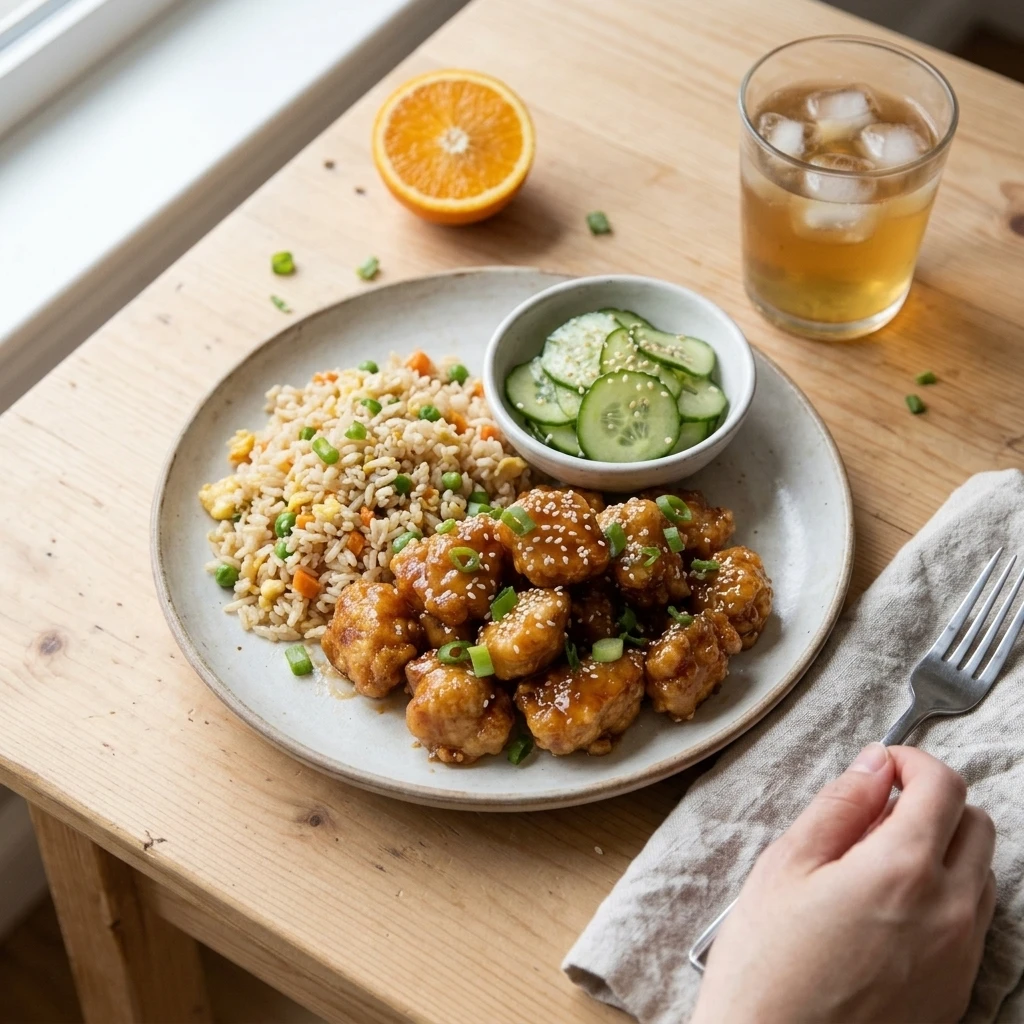
- Steamed jasmine rice: Plain grains soak up the extra sauce and balance the sweetness.
- Fried rice: Pair orange chicken with fried rice when you want a heartier plate and have day-old rice to use up.
- Cucumber salad: A cold, tangy cucumber salad resets your palate between sticky bites.
- Beef and broccoli: For a two-dish takeout night, add beef and broccoli with tender steak and let everyone mix and match.
- Iced jasmine tea: Unsweetened tea cuts through the sugar and keeps the whole meal alcohol free.
Frequently Asked Questions
Can you make orange chicken ahead of time?
Yes, but keep the parts separate. Fry the chicken and cook the sauce up to 3 days ahead, then store them in different containers in the fridge. Reheat the chicken on a rack at 400°F for 6 to 8 minutes, warm the sauce with 2 tablespoons of orange juice, and toss right before serving. I do this for weekend lunch prep, and the crust comes back close to fresh.
Why is my homemade orange chicken soggy?
Soggy orange chicken usually comes from oil that is too cool, too many pieces in the pot, or sauce added too early. Keep the oil between 325°F and 350°F, fry in three batches, and toss the chicken with sauce off the heat right before serving. Pieces that have already softened can be re-crisped on a wire rack at 400°F for 5 minutes.
Can I use chicken breast instead of thighs for orange chicken?
Yes. Cut the breasts into 1-inch pieces and fry them for 4 to 5 minutes instead of 5 to 6, until they reach 165°F in the center. Breast meat dries out faster, so pull it the second it hits temperature. Thighs are more forgiving, which is why this version uses them, but breasts give you a leaner plate with a similar crunch.
How do you know when orange chicken is done?
Look for a deep golden brown crust that sounds slightly crackly when tapped with a spoon, then confirm with a thermometer reading of 165°F in the thickest piece. A pale yellow coating means the chicken needs another minute, even if the inside is cooked. Cut open one piece from the first batch, and the meat should look opaque and juicy with no pink.
Why doesn’t my homemade orange chicken taste like takeout?
Takeout-style orange chicken usually tastes sweeter and heavier because the sauce leans on sugar. This orange chicken recipe leans on fresh orange juice and orange zest, so it tastes brighter and a little tangier. If you miss the sweetness, add 1 tablespoon more brown sugar to the sauce. If you want more punch, stir extra zest in at the end, right before you serve it.
Final Thoughts on Homemade Orange Chicken
This orange chicken recipe works because the crust and the sauce never share a pan until the last 30 seconds. Keep them apart, and the crunch lasts through dinner. Leftover sauce earns its place too, and a spoonful over steamed broccoli turns a side dish into a meal.
On busy weeks I fry the chicken on Sunday, freeze it, and make fresh sauce on the night. At my house this has replaced most Friday night takeout orders, and the kids now ask for it by name.
If you loved this recipe, save it to your chicken dinner Pinterest board so you can find it easily later!
Crispy Orange Chicken Recipe Ready in 50 Minutes
Ingredients
Equipment
Method
- Heat the oven to 200°F and slide in a wire rack set over a rimmed sheet pan.
- Freeze the thighs for 15 minutes, then trim them, cut them into 1-inch pieces, and pat them dry with paper towels.
- Zest both oranges, then juice them. Mince the garlic, grate the ginger, and slice the green onions.
- Whisk the cornstarch and flour in a small bowl. Combine the orange sauce ingredients in a medium bowl, and stir the slurry in a cup. Pour the frying oil into the Dutch oven with the burner off.
- Whisk the egg, 1 tablespoon soy sauce, and pepper in a large bowl, then toss in the chicken for 30 seconds, until every piece looks evenly glossy.
- Add the cornstarch and flour, toss for 1 minute, then rest the pieces for 5 minutes, until the coating looks pale and slightly damp and clings when you lift a piece.
- Heat 1 tablespoon neutral oil in the saucepan over medium heat and cook the garlic and ginger for 30 seconds, until pale gold, never brown.
- Pour in the juice, zest, soy sauce, vinegar, brown sugar, pepper flakes, and sesame oil. Simmer for 3 minutes, stirring, until the sugar dissolves completely.
- Whisk in the slurry and simmer for 1 to 2 minutes, stirring constantly, until the sauce coats a spoon and a finger drawn through it leaves a clear line. Remove the pan from the heat.
- Heat the frying oil over medium-high heat to 350°F, about 5 minutes, until it shimmers with faint ripples.
- Fry one third of the chicken, adding pieces one at a time, for 5 to 6 minutes, flipping once halfway, until deep golden brown and 165°F inside. Keep the oil between 325°F and 350°F.
- Move the pieces to the oven rack with a slotted spoon, wait 1 minute for the oil to return to 350°F, and fry the remaining two batches until the pieces look dry and crackly.
- Rewarm the sauce over low heat for 1 minute, adding the extra 2 tablespoons of juice if it has tightened. Off the heat, toss in all the chicken for 30 seconds, until every piece wears a glossy amber coat.
- Top with the green onions and sesame seeds, and sprinkle the reserved 1 teaspoon of zest over the plated chicken.
Notes
Chicken breasts work. Cut 1-inch pieces and fry them 4 to 5 minutes, until 165°F in the center.
Nutrition does not include rice and was calculated with regular soy sauce. Reduced-sodium soy sauce lowers the sodium.