The Best Cheesecake You Will Ever Make
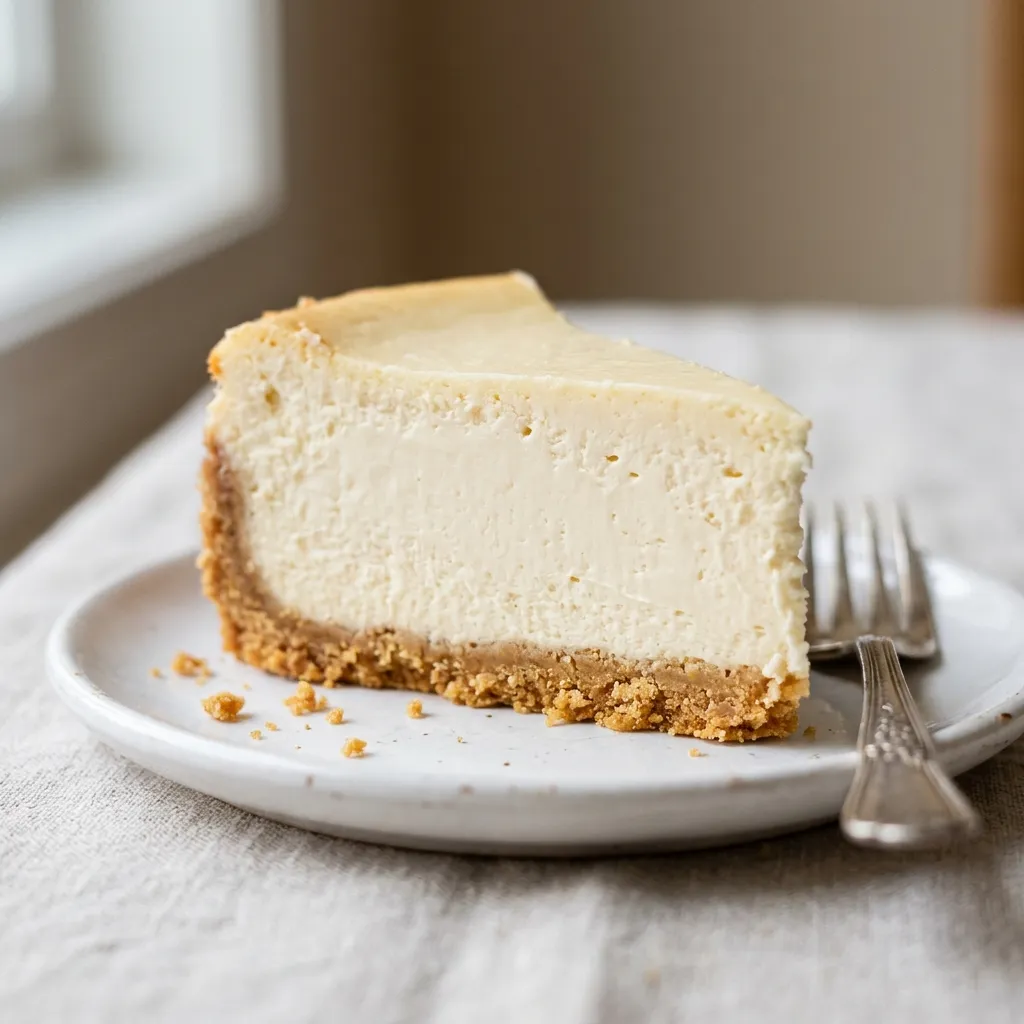
Most homemade cheesecake fails in one of three ways: a cracked top, a grainy filling, or a soggy crust. This version avoids all three. You get a buttery graham base, a dense and silky center, and a smooth top that slices into clean wedges.
I tested this recipe seven times over three weeks. The first two cracked down the middle. The third turned grainy because I used cream cheese straight from the fridge. By the seventh, the filling baked evenly at 325°F with a pan of hot water on the rack below, and the center stayed silky.
You do not need a leaky water bath or special tools. You need a 9-inch springform pan, four blocks of full-fat cream cheese, and patience during the chill time. A full cup of sour cream keeps the center creamy instead of pasty, and a slow cool-down inside the turned-off oven protects the top. Bake it a day ahead.
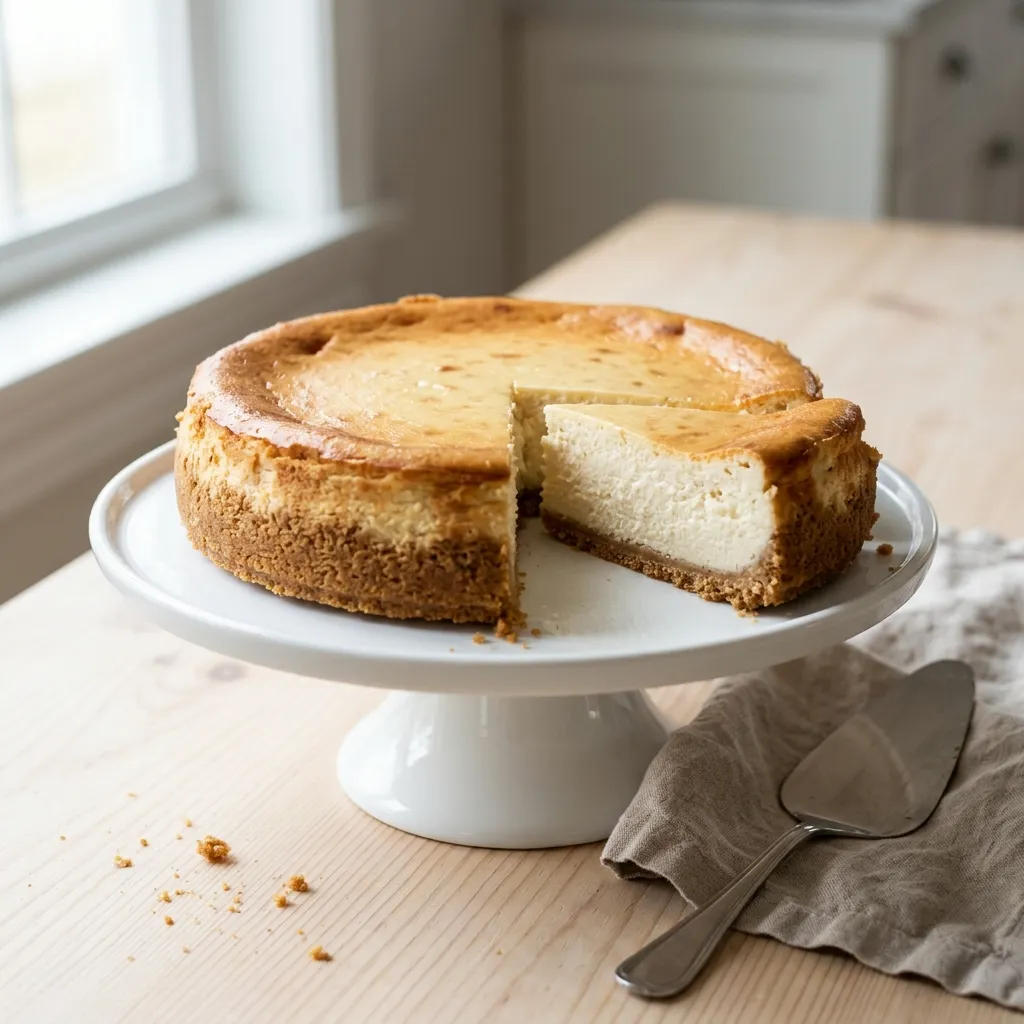
Table of Contents
Why You Will Love This Cheesecake
- The center stays dense and creamy, never pasty, thanks to the sour cream.
- A pan of hot water on the lower rack replaces the leaky water bath.
- It tastes better on day two, so you can bake it the night before a party.
- The pre-baked crust stays crisp, and the cheesecake cuts into 12 neat wedges.
- Everything except the cream cheese is a pantry basic.
- My daughter asked for a slice at breakfast three days in a row.
Recipe Snapshot
- Prep Time: 25 minutes
- Cook Time: 1 hour 25 minutes
- Resting and Chilling Time: 8 hours
- Total Time: 9 hours 50 minutes
- Servings: 12 slices
- Difficulty: Medium
- Calories per Serving: About 497
- Key Tool: 9-inch springform pan
- Best For: Birthdays, holidays, and make-ahead desserts
Nutrition Information
Calories per Serving: About 497
Protein: 8 g
Carbs: 33 g
Fat: 38 g
Fiber: 0 g
Sugar: 25 g
Sodium: 412 mg
Serving Size: About 1 slice (1/12 of the cake)
Servings per Recipe: 12
Most of the calories come from fat, mainly the cream cheese and butter, which gives the filling its dense, smooth bite. Each slice also carries about 8 g of protein from the cream cheese, sour cream, and eggs.
Nutrition values are approximate and calculated per serving using standard ingredient amounts. Values may vary based on brands used and portion sizes.
Ingredients
For the Crust
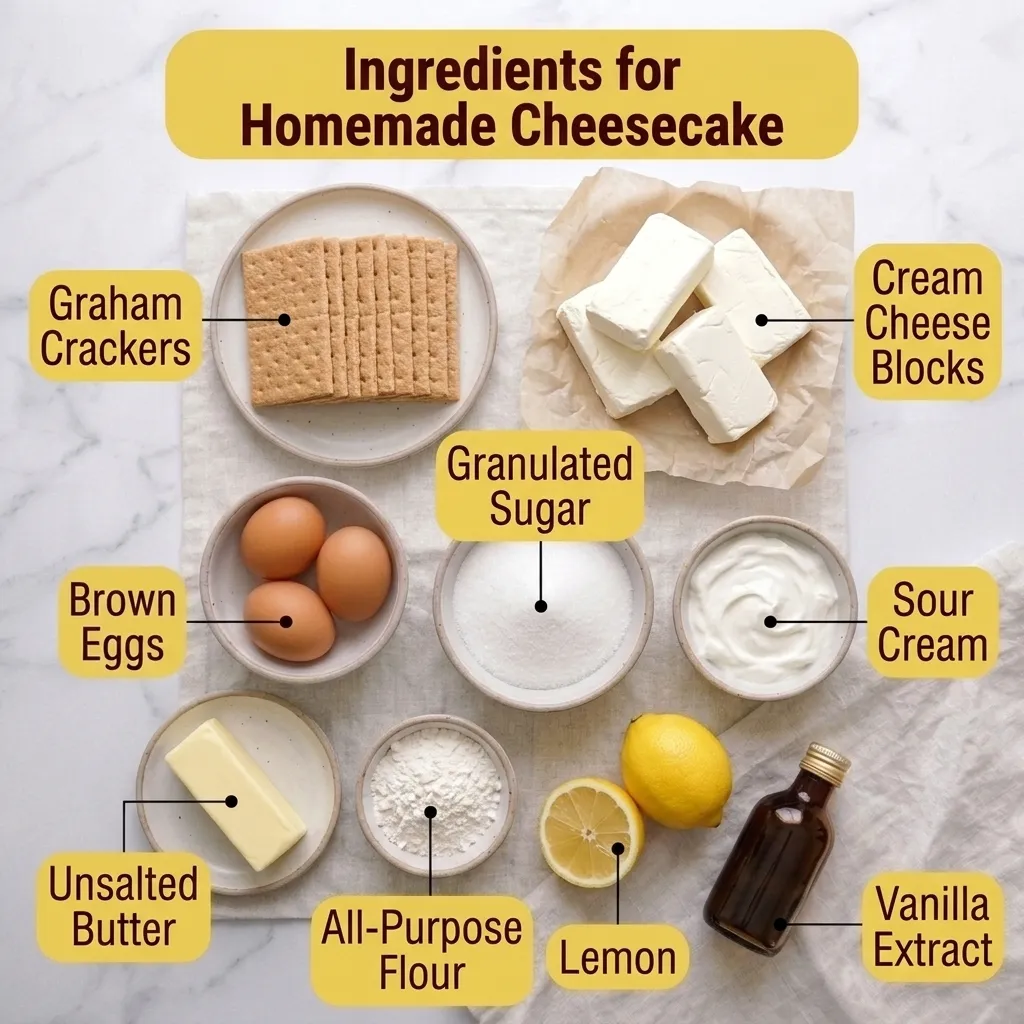
- 1 1/2 cups graham cracker crumbs (about 9 full sheets)
- 2 tablespoons granulated sugar
- 6 tablespoons unsalted butter, melted
- 1 teaspoon unsalted butter, softened, for greasing the pan
For the Filling
- 32 ounces full-fat cream cheese (four 8-ounce blocks, room temperature)
- 1 cup granulated sugar
- 1 cup full-fat sour cream, room temperature
- 4 large eggs, room temperature
- 2 tablespoons all-purpose flour
- 1 tablespoon fresh lemon juice
- 2 teaspoons alcohol-free vanilla extract
- 1/4 teaspoon fine salt
For the Oven Pan
- 4 cups very hot water
Three ingredients decide the result. Full-fat cream cheese blocks come first, and I use Philadelphia because spreadable tubs hold extra air and water, which makes the filling soft. Room temperature matters just as much, since cold blocks leave white lumps. Sour cream is the third, because its fat and acid keep the center silky.
For swaps, use plain full-fat Greek yogurt for the sour cream, vanilla wafer or digestive biscuit crumbs for the graham crackers, and 1 tablespoon cornstarch for the flour. Bottled lemon juice works too. Skip low-fat cream cheese, which releases water as it bakes. The eggs have no good substitute.
Equipment Needed
- 9-inch springform pan, 3 inches tall: Check that the latch closes tight so nothing leaks.
- Stand mixer or hand mixer: Use the paddle on low speed to keep air out.
- 9×13-inch metal baking pan: Set it on the rack first, then pour in the hot water.
- Instant-read thermometer: About 150°F in the center means the filling is set.
- Rubber spatula: Scrape the bowl after every addition, since unmixed cream cheese hides there.
Preparation
- Set the cream cheese, sour cream, and eggs on the counter for 1 hour.
- Set one oven rack in the center and one on the lowest level, then preheat to 325°F.
- Grease the bottom and sides of the springform pan with the softened butter.
- Crush the graham crackers into fine crumbs in a zip bag with a rolling pin. Measure every ingredient before you begin.
- Heat 4 cups of water in a kettle until steaming hot.
Pro Tip: To soften cream cheese fast, unwrap the blocks, cut each into 8 cubes, and spread them on a plate. They turn soft in about 30 minutes.
Step-by-Step Instructions
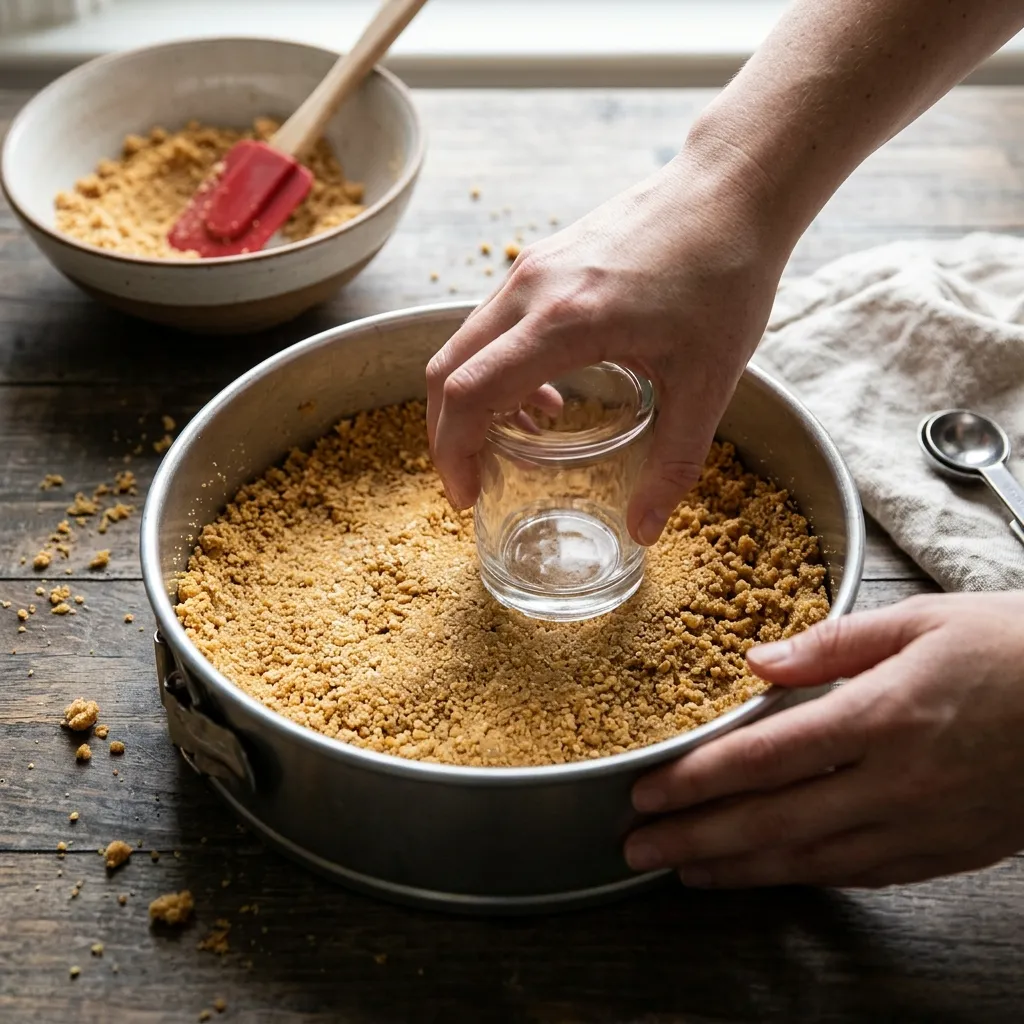
- Stir the graham crumbs, 2 tablespoons sugar, and melted butter until the mixture looks like wet sand. Press it into the bottom and 1 inch up the sides of the pan with a flat glass, until the surface is level and tightly packed.
- Bake the crust at 325°F for 10 minutes. Chef’s Note: a quick pre-bake keeps the base crisp under the wet filling. Pull it out when the edges look slightly darker and smell toasty, then cool it.
- Beat the cream cheese on low speed with the paddle for 2 minutes, scraping the bowl twice. Chef’s Note: lumps never blend out once the eggs go in, so scrape the paddle too. Add the sugar, flour, and salt and mix for 1 minute, until the mixture looks smooth and glossy.
- Add the sour cream, lemon juice, and vanilla and mix on low until no white streaks remain. Add the eggs one at a time, mixing about 15 seconds after each, until the batter looks creamy and falls from the spatula in a thick ribbon.
- Pour the batter over the cooled crust and smooth the top with a spatula. Tap the pan on the counter 3 times, until the large bubbles rise and pop.
- Place the pan on the center rack, set the empty 9×13 pan on the lowest rack, and pour in the 4 cups of hot water. Chef’s Note: keep the oven door shut for the first 60 minutes, because cool air makes the top sink. Bake at 325°F for 65 to 75 minutes, until the edges look set and the center 3 inches still jiggle like gelatin.
- Turn off the oven and leave the cake inside with the door closed for 1 hour, until the jiggle shrinks to a small spot in the middle. Run a thin knife around the inside edge of the pan to loosen the crust.
- Move the pan to a wire rack and cool for 1 hour, until the sides feel barely warm. Cover loosely and refrigerate for at least 6 hours, until the center feels firm when you press it gently.
- Release the latch and lift off the ring. Chef’s Note: slice with a long knife dipped in hot water and wiped dry between cuts. Each cut should leave a smooth, shiny edge.
Expert Tips and Tricks
- On test number two I pulled the cheesecake the moment the center stopped moving, and it cracked within 20 minutes. Now I stop while 3 inches still wobble, because it keeps setting as it rests.
- Bake it up to 2 days ahead. The flavor deepens overnight.
- Cover leftover slices and keep them in the refrigerator for up to 4 days.
- Check doneness with a thermometer: about 150°F in the center means the filling is ready to rest.
- Use full-fat everything. Low-fat dairy gives off water and the filling turns rubbery.
- Crush the crackers in a zip bag while the oven preheats, and the crust is ready in 5 minutes.
Common Mistakes and Troubleshooting
Cracked top. It comes from overbaking, overmixing, or fast cooling. Pull the cheesecake while the center still wobbles and cool it in the oven. If a crack appears anyway, cover it with whipped cream or fruit.
Lumpy filling. Cold cream cheese leaves white specks that never melt. Soften the blocks for a full hour. If the batter is already lumpy, press it through a fine sieve before pouring.
Soggy crust. Steam or leaked water softens the base. Pre-bake the crust and keep the oven water in its own pan. A soft crust will not crisp again, so press it firmly next time.
Sunken center. The cake puffs high, then drops. Overmixed batter or a hot oven causes it, so keep the mixer low and the oven at 325°F. Fill a mild dip with whipped cream.
Runny middle. Underbaking leaves the center soupy. Chill the cake a full 12 hours before judging it. If it is still loose, spoon it into cups and serve it as a cheesecake pudding.
Storage Instructions
Room Temperature: Not recommended for storage. Leave it out for no more than 2 hours, or 1 hour if the room is above 90°F.
Refrigerator: Keep it up to 4 days in an airtight glass container, or in the pan under tight plastic wrap. Chill it uncovered for the first hour so no condensation drips on top.
Freezer: Freeze it up to 2 months. Chill it fully first, freeze whole or sliced pieces on a parchment-lined tray for 1 hour, then wrap in plastic wrap and foil and seal in a freezer-safe zip bag.
Reheating: Cheesecake is served cold, so there is nothing to reheat. Thaw frozen slices in the refrigerator for 4 to 6 hours, and a whole cake overnight.
Make-Ahead Notes: Bake and chill the cheesecake up to 2 days ahead. Add toppings only on serving day.
I freeze single slices on a tray before bagging them. They never clump, and I can grab one slice without thawing the whole cake.
Variations and Substitutions
- Spiced Cinnamon (spicy): Beat 1 1/2 teaspoons cinnamon and 1/4 teaspoon cayenne into the filling. You get a gentle warmth at the end of each bite.
- Mini Cheesecakes (kid-friendly): Spoon 1 tablespoon of crumb mixture into 24 lined muffin cups and fill with batter. Bake at 325°F for 20 to 25 minutes, until the edges are set, then chill for 2 hours.
- Vegetarian: The base recipe is already vegetarian. For dairy-free, use vegan cream cheese and plant-based sour cream, and expect a softer set and a longer chill.
- Gluten-Free: Use gluten-free graham crackers or gingersnaps for the crust, and swap the flour for 1 tablespoon cornstarch. Check each label for wheat.
- Lemon: Add the zest of 1 lemon and use 2 tablespoons juice for a tangier slice.
What to Serve With This
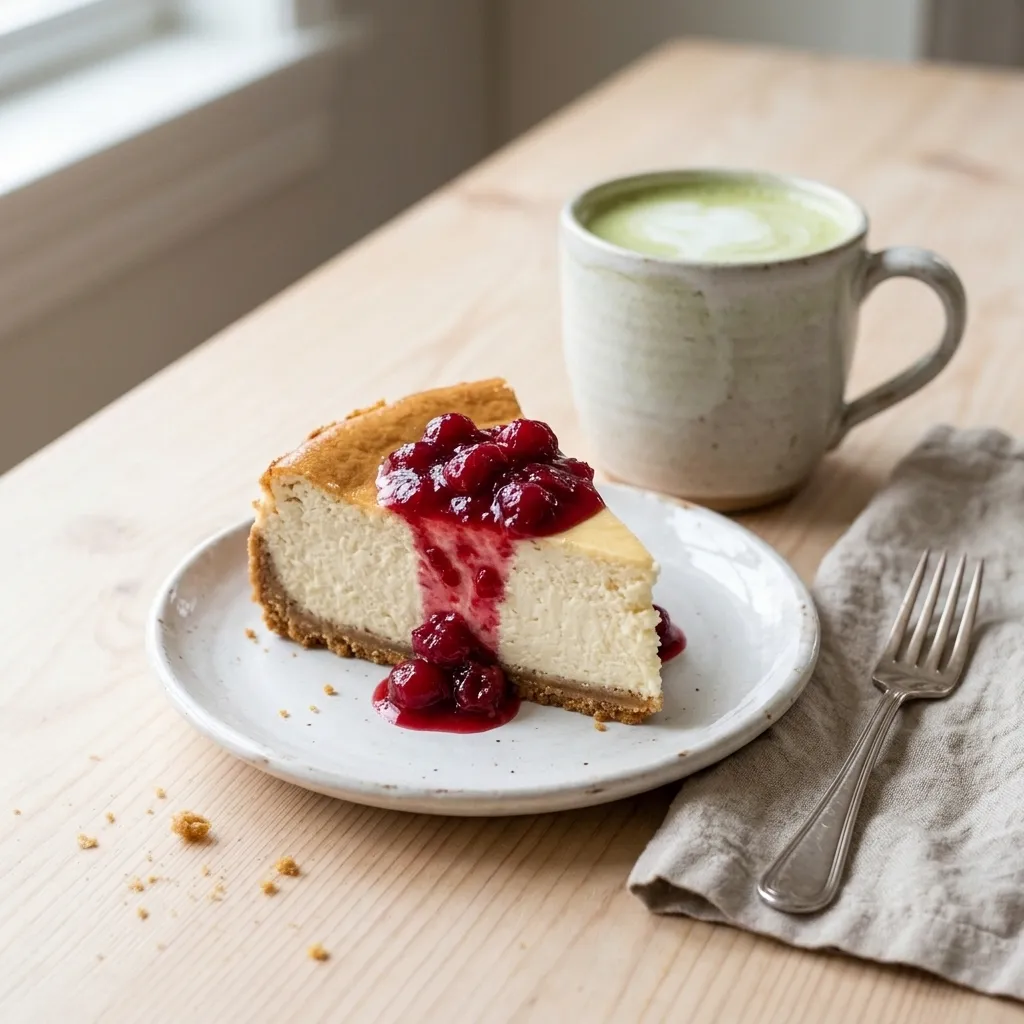
- Cranberry sauce: Spoon tart cranberry sauce over a slice, since tart fruit cuts through the rich filling.
- Chocolate covered strawberries: Set a few chocolate covered strawberries on the plate for a pretty finish.
- Whipped cream: Whip 1 cup of cold heavy cream with 1 tablespoon sugar to soft peaks.
- Matcha latte: A matcha latte brings a grassy bitterness that balances the sweetness.
Serving Trick: Take the cake out of the refrigerator 20 minutes before slicing. The filling softens slightly and tastes creamier.
Frequently Asked Questions
Why did my cheesecake crack?
Most cracks come from overbaking, overmixing, or cooling too fast. Overbaked filling dries out and splits as it shrinks. Too much mixing whips in air that rises and collapses. Pull this cheesecake when the center 3 inches still jiggle, mix on low speed, and let it cool inside the turned-off oven for 1 hour. If a crack still shows up, cover it with whipped cream or fruit.
How do you know when cheesecake is done?
Look for set edges and a center, about 3 inches wide, that jiggles like gelatin when you nudge the pan. An instant-read thermometer in the center should read about 150°F. It will not look fully firm, and that is correct, because it keeps setting during the oven rest and the chill. In my kitchen this takes 65 to 75 minutes at 325°F.
Can I use Greek yogurt instead of sour cream in cheesecake?
Yes. Use the same 1 cup of plain, full-fat Greek yogurt in your cheesecake. The filling turns out slightly tangier and a bit denser, and it still slices cleanly. Skip nonfat yogurt, since it holds extra water and can leave the center loose. Stir the yogurt until smooth, and let it come to room temperature with the eggs and cream cheese.
Can you freeze cheesecake?
Yes, and it freezes well. Chill the cake fully, then freeze it whole or sliced on a tray for 1 hour. Wrap it tightly in plastic wrap and foil, then place it in a freezer bag. Keep it up to 2 months for the best flavor. Thaw it in the refrigerator overnight, never on the counter. The texture may feel slightly softer than a fresh cheesecake.
Do you really need a water bath for cheesecake?
Not a full one. A water bath bakes the filling gently and keeps the oven humid, which helps prevent cracks. I get the same steam by setting a pan of hot water on the lowest rack, and the crust never gets wet. If you skip water entirely, expect a drier top and a higher chance of cracking, so keep the oven at 325°F and watch the jiggle.
Final Thoughts on Cheesecake
A good cheesecake rewards planning more than skill. Soften the cream cheese, mix on low, pull the pan while the center still wobbles, and give it a full night in the fridge. Those four habits matter more than any fancy trick.
I baked this for my brother’s birthday on a Saturday, and the platter was empty before the candles were put away. My neighbor texted the next morning asking for the recipe. If you want to dress it up, a spoonful of fruit on each slice is all it needs.
If you loved this recipe, save it to your dessert Pinterest board so you can find it easily later!
The Best Cheesecake You Will Ever Make
Ingredients
Equipment
Method
- Set one oven rack in the center and one on the lowest level, then preheat to 325°F. Grease the springform pan with the softened butter.
- Stir the graham crumbs, 2 tablespoons sugar, and melted butter until the mixture looks like wet sand. Press it into the bottom and 1 inch up the sides with a flat glass, until level and tightly packed.
- Bake the crust at 325°F for 10 minutes, until the edges look slightly darker and smell toasty. Cool it.
- Beat the cream cheese on low speed with the paddle for 2 minutes, scraping the bowl and paddle twice. Add the sugar, flour, and salt and mix for 1 minute, until smooth and glossy.
- Add the sour cream, lemon juice, and vanilla and mix on low until no white streaks remain. Add the eggs one at a time, mixing about 15 seconds after each, until the batter falls from the spatula in a thick ribbon.
- Pour the batter over the cooled crust and smooth the top. Tap the pan on the counter 3 times, until the large bubbles pop.
- Place the pan on the center rack, set the empty 9×13 pan on the lowest rack, and pour in the 4 cups hot water. Bake at 325°F for 65 to 75 minutes without opening the door for the first 60 minutes, until the edges look set and the center 3 inches still jiggle like gelatin.
- Turn off the oven and leave the cake inside, door closed, for 1 hour, until the jiggle shrinks to a small spot. Run a thin knife around the inside edge of the pan.
- Cool on a wire rack for 1 hour, until the sides feel barely warm. Cover loosely and refrigerate at least 6 hours, until the center feels firm to a gentle press.
- Release the latch and lift off the ring. Slice with a long knife dipped in hot water and wiped dry between cuts, until each cut leaves a smooth, shiny edge.
Notes
Use full-fat block cream cheese at room temperature for a smooth filling.
About 150°F in the center means the filling is set.