Ingredients
Equipment
Method
- Warm the olive oil in the Dutch oven over medium heat for 1 minute, until it shimmers. Add the onion, carrots, and celery. Cook for 8 minutes, stirring every minute or two, until the onion turns translucent and the carrots look glossy. Keep the heat at medium so the vegetables soften without browning.
- Stir in the garlic, tomato paste, and thyme. Cook for 2 minutes, stirring constantly, until the paste darkens from bright red to brick red and the pot smells sweet and toasty. Scrape the bottom as you stir.
- Add the cabbage in two big handfuls, stirring after each one. Cook for 5 minutes, until the pile wilts to about half its height and the edges of the leaves turn glossy.
- Pour in the broth, water, and diced tomatoes with their juices, then drop in the bay leaf. Turn the heat to high and bring to a boil, about 6 minutes, until large bubbles break across the whole surface.
- Lower the heat to medium-low and stir in the beans. Simmer, partly covered, for 15 to 18 minutes at a gentle simmer around 200°F, with small bubbles at the edges, until a piece of cabbage tears easily against the side of the pot but still holds its shape.
- Turn off the heat, remove the bay leaf, and stir in the lemon juice. Season with kosher salt and pepper a pinch at a time, tasting after each, until the broth looks deep red-orange and tastes bright and savory.
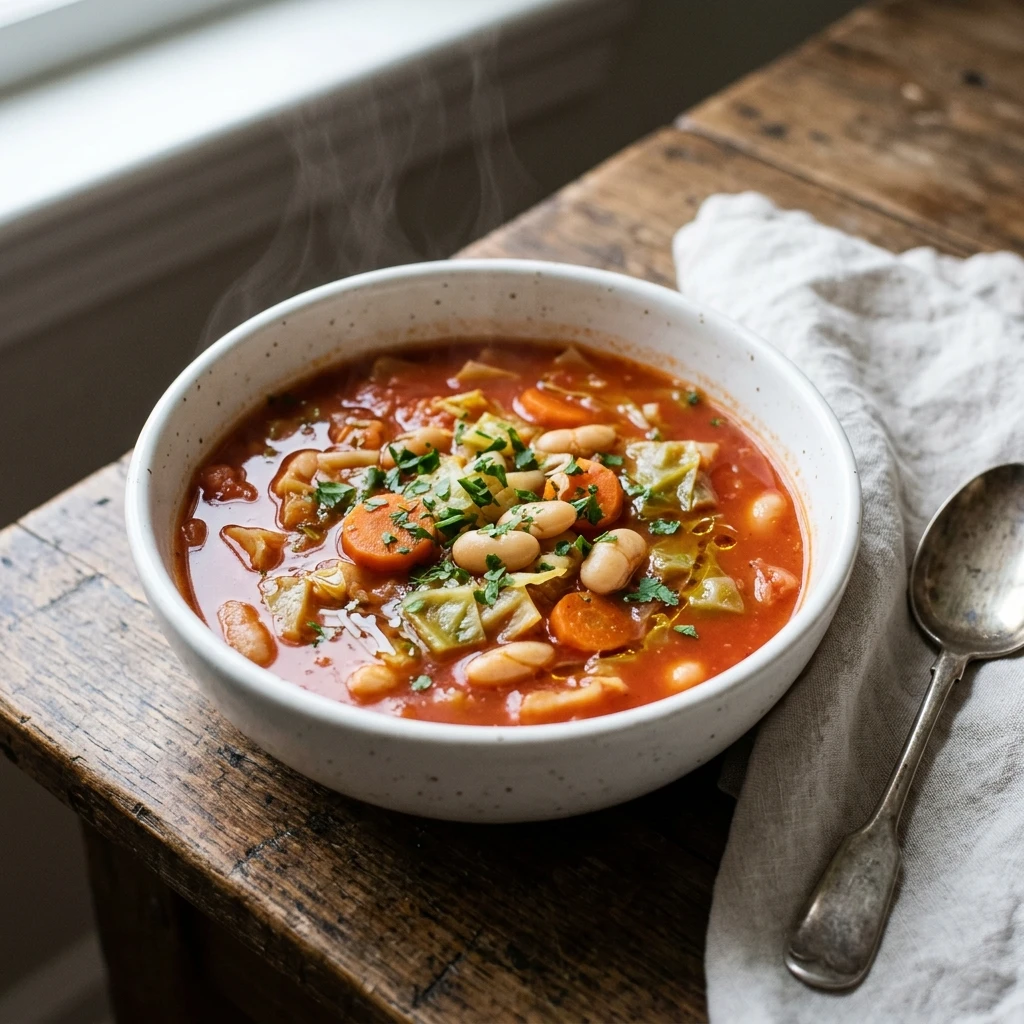
- Ladle into bowls and top with parsley. If you can wait, let the pot stand 5 minutes first, until the steam thins and the broth thickens slightly.
Notes
Salt at the end. Regular broth and canned beans already carry sodium, and low-sodium broth lowers the total.
Savoy cabbage works too. It cooks about 3 minutes faster, so start checking at 12 minutes.
Storage: refrigerate up to 4 days, freeze up to 3 months.