Ingredients
Equipment
Method
- Bring the water to a boil over high heat, 8 to 10 minutes, until large bubbles break across the whole surface and keep going when you stir.
- Lower the eggs in one at a time with the slotted spoon, letting each touch the bottom before you let go. The eggs should sit in one layer under about 1 inch of water.
- Turn the heat to medium-high and start a timer for 11 minutes. Keep a lively simmer with small, steady bubbles rising from the bottom, not a hard boil.
- When the timer rings, lift the eggs out and slide them straight into the ice bath. The ice should start to melt around the eggs.
- Leave the eggs in the ice bath for 10 minutes, adding a handful of ice if it melts completely, until the shells feel cool in your palm.
- Tap each egg firmly on the counter, then roll it under your palm until the shell is covered in fine cracks.
- Peel from the wide end under a thin stream of cool running water until the white looks smooth and glossy with no pits.
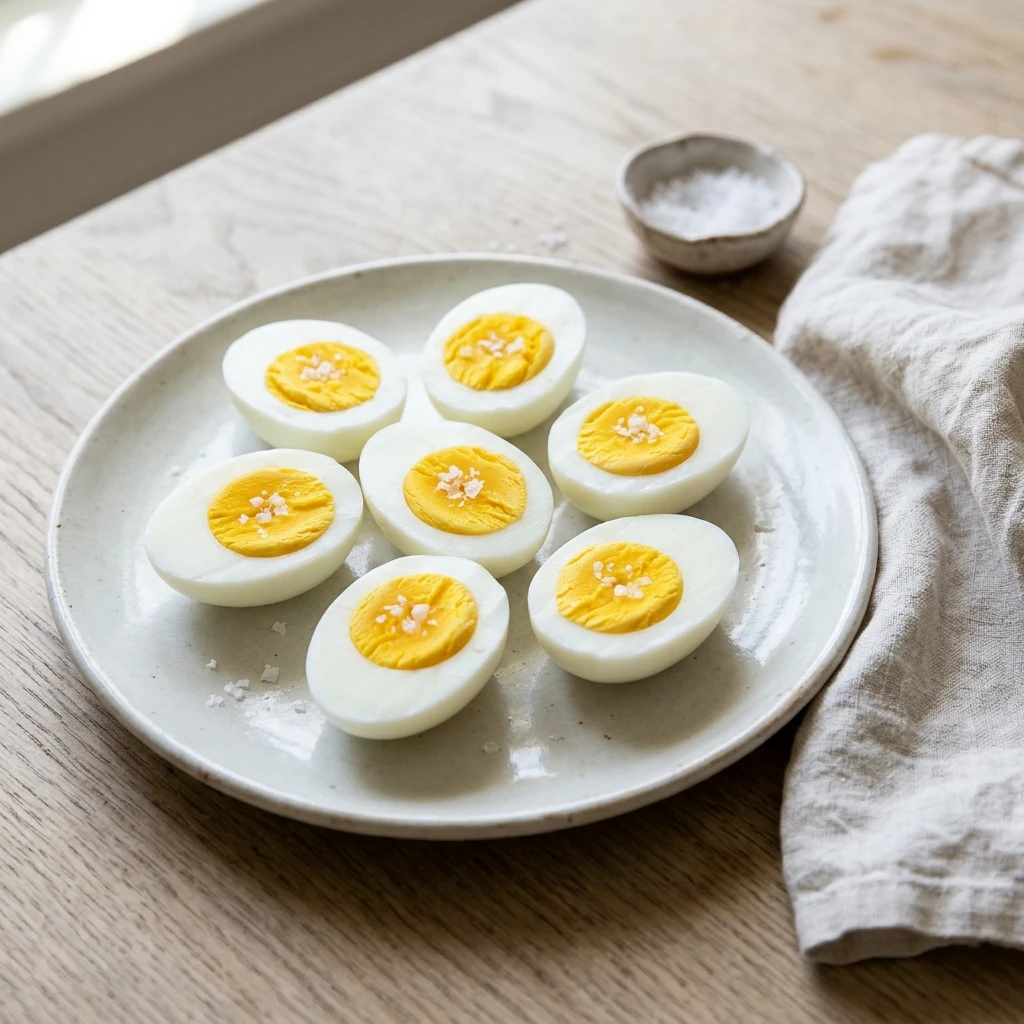
- Cut one egg in half to test the batch. The yolk should be bright yellow and fully set from edge to center. Add 1 minute next time if the center looks wet, and take off 1 minute if you see a green ring.
Notes
Medium eggs need 10 minutes and extra large eggs need 12. For a jammy yolk, cook large eggs for 7 minutes.
Eggs that sat in the refrigerator for 7 to 10 days peel more cleanly than very fresh eggs.
Storage: Refrigerator, unpeeled, up to 7 days at 40°F or below. Freezer, not recommended because the whites turn tough and watery.
Eggs that sat in the refrigerator for 7 to 10 days peel more cleanly than very fresh eggs.
Storage: Refrigerator, unpeeled, up to 7 days at 40°F or below. Freezer, not recommended because the whites turn tough and watery.