Matcha Latte with Soft Foam and a Clear Tea Flavor
A matcha latte can look creamy on top and still hide dry green specks underneath. The useful work happens before the milk goes in: sift the powder, whisk it with a small measured amount of water, and check the bottom of the bowl for clumps. Foam alone does not tell you the tea is evenly mixed.
This matcha latte starts with one teaspoon of pure matcha, three-quarters of a cup of milk, and a little maple syrup. The result is a modest mug with a clear tea flavor, gentle sweetness, and a soft layer of milk foam. You can adjust your next matcha latte without guessing which ingredient changed the balance.
There is no need to buy an espresso machine or attempt decorative latte art. Use a small sieve and whisk for the tea, and a handheld frother if you want the milk to have a lighter texture.Start with the hot method below, then use the iced variation when you want a cold drink with the same measured base.
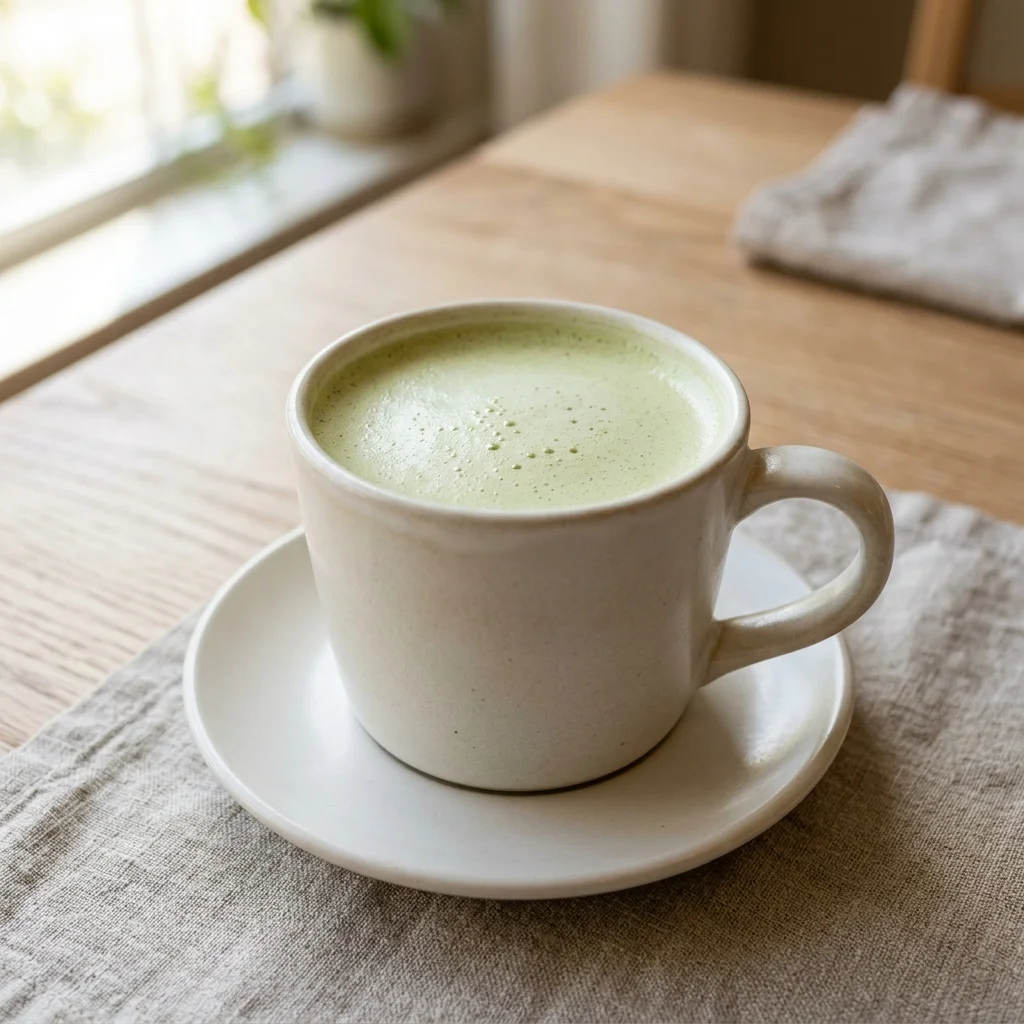
Table of Contents
Why This Matcha Latte Starts with Water
- A small water portion makes dry pockets easier to spot before milk turns the drink opaque.
- Pure matcha lets you control sweetness instead of relying on a presweetened drink mix.
- Measuring the milk keeps the tea noticeable without needing a larger powder dose.
- Maple syrup blends readily and avoids undissolved sugar at the bottom of the mug.
- The same ingredients work hot or iced, with a simple change to the milk and serving glass.
Quick Matcha Latte Snapshot
- Prep time: 4 minutes
- Cook time: About 3 minutes for heating
- Total time: About 7 minutes
- Servings: 1
- Difficulty: Easy
- Calories: Approximately 135
- Key ingredient: Pure unsweetened matcha powder
- Best for: A morning drink or a short afternoon break
Nutrition Information
- Calories per serving: Approximately 135
- Protein: 6 grams
- Carbs: 19 grams
- Fat: 4 grams
- Fiber: About 1 gram
- Sugar: 18 grams
- Sodium: Approximately 90 milligrams
- Serving size: Entire recipe, about 1 cup before foam
- Servings per recipe: 1
These estimates use 2 percent dairy milk and both teaspoons of maple syrup. The milk supplies most of the protein, while the sugar total includes naturally occurring milk sugar and added syrup.
Estimated nutrition values are calculated per serving using standard ingredient amounts. The exact numbers may differ depending on the brands used and serving sizes.
Ingredients for a Matcha Latte
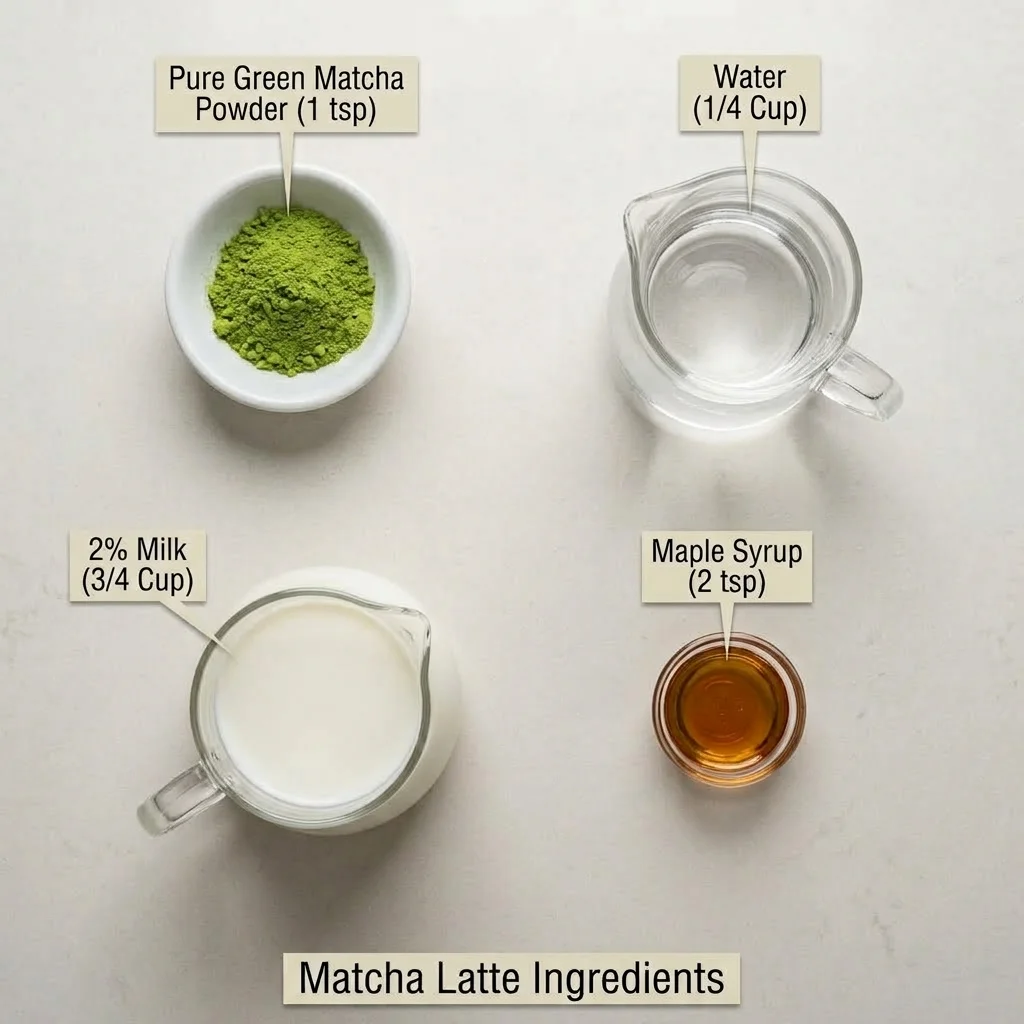
- 1 level teaspoon pure matcha powder, about 2 grams: Choose unsweetened green tea powder intended for drinking. Weighing is more consistent than packing a spoon; ordinary tea leaves cannot replace it in this method.
- One-quarter cup water, 60 milliliters: Heat to 175°F, about 80°C. Use fresh drinking water without a strong taste.
- Three-quarters cup 2 percent milk, 180 milliliters: Whole milk gives a richer drink. Unsweetened soy milk or oat milk can replace it measure for measure, though flavor and foam will differ.
- 2 teaspoons pure maple syrup, 10 milliliters: This provides light sweetness. Substitute the same amount of honey, or omit sweetener if you prefer the tea’s natural bitterness.
Read the ingredient list before measuring. A product labeled as a latte blend may already contain sugar or milk powder, so its recommended scoop is not interchangeable with two grams of pure tea. For another breakfast pairing, try [INTERNAL LINK: overnight oats].
Equipment Needed
- Fine-mesh sieve: Choose one small enough to rest over the mixing bowl without spilling powder around its rim.
- Wide whisking bowl: Leave space for short whisk movements; a narrow mug makes dry corners harder to reach.
- Bamboo whisk or small handheld frother: Use light contact with the bowl, and keep an electric frother submerged to limit splashes.
- Kitchen thermometer: Measure water and milk separately. A temperature-controlled kettle handles the water but cannot check the saucepan.
- Small saucepan or microwave-safe pitcher: A pouring lip helps direct milk into the mug; leave room above the milk for foam.
Preparation Before Heating
- Measure the powder, water, milk, and syrup into separate containers. Keep the matcha spoon completely dry.
- Set a clean 10- to 12-ounce mug beside your bowl. The extra space allows for foam without changing the drink’s actual yield.
- Ready your whisk according to its care instructions. Briefly wet bamboo tines with warm water, then discard that water before measuring the recipe liquid.
- Arrange the thermometer and pouring vessel within reach. No oven preheating, greasing, or pan seasoning is needed.
How to Make a Matcha Latte
- Sift the matcha into the bowl. Gently push small lumps through the mesh with the back of a dry spoon. Chef’s Note: Sifting is easier before moisture turns those lumps into sticky pockets.
- Heat the measured water to 175°F. Check with a thermometer, or use a kettle with temperature control. If it overshoots, let it cool to the target before pouring.
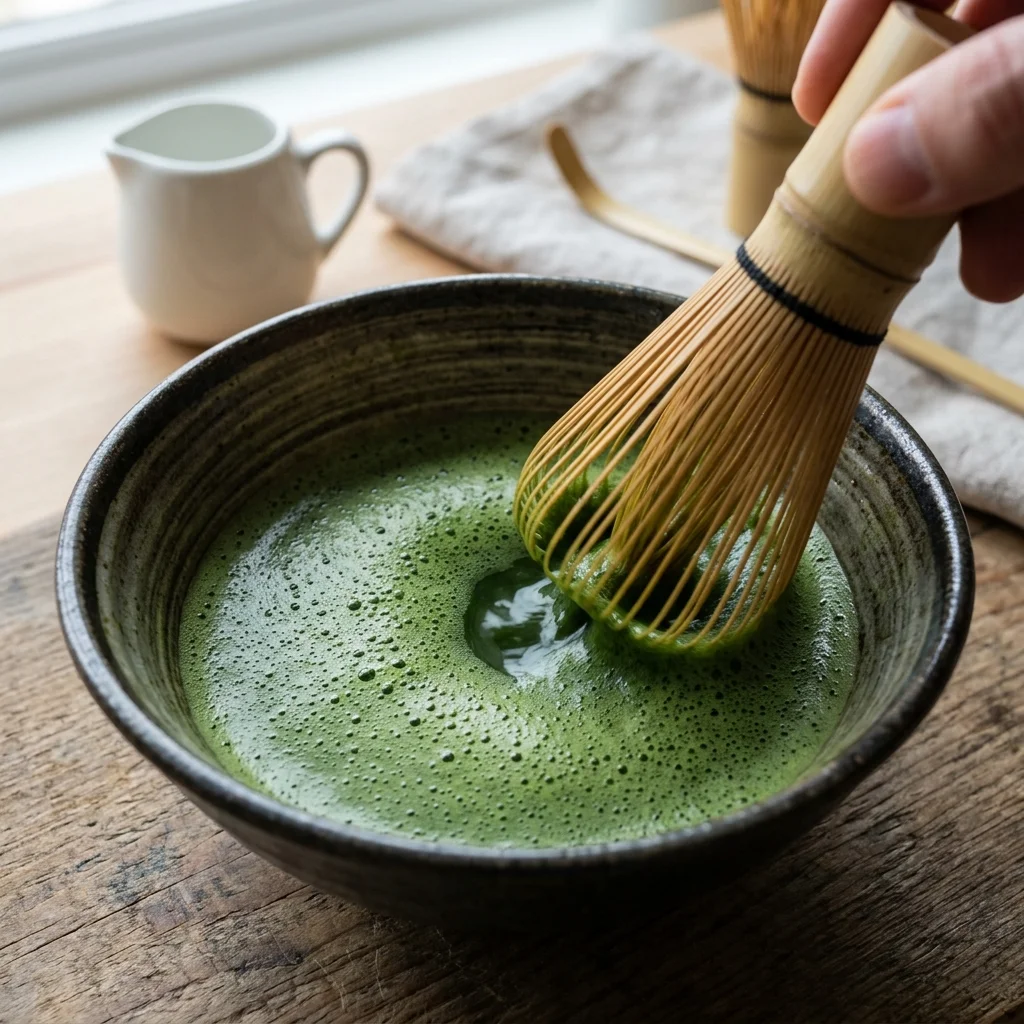
- Whisk the water into the powder for 20 to 30 seconds. Use quick back-and-forth strokes until no dry islands or large green specks remain. Chef’s Note: A little foam is welcome, but checking for lumps matters more than building a tall froth.
- Stir the maple syrup into the tea. Sweep the bottom of the bowl so the syrup does not remain in one thick streak.
- Warm the milk over medium-low heat for about 2 to 3 minutes. Stir and remove it at 140 to 150°F, before boiling. Chef’s Note: Heat varies with the pan and stove, so temperature takes priority over the clock.
- Froth the milk for 10 to 20 seconds, if desired. Keep the whisk head just below the surface, producing a shallow layer of fine bubbles instead of a pitcher full of stiff foam.
- Combine the tea and milk in the mug. Pour in the tea first, add the milk, and stir gently before spooning any remaining foam over the top.
Check the concentrated tea before adding milk. If you can see dry specks, work on those now; adding more foam later will not remove them.
Expert Tips for Your Matcha Latte
- Change one measurement at a time. If the drink feels too milky, try half a cup of milk next time while keeping the other amounts steady.
- Measure tomorrow’s powder ahead. Keep one portion sealed in a small, dry container overnight, then sift and whisk it fresh.
- Reserve finished drinks for short storage. Refrigerate promptly and use within 24 hours for this recipe’s best flavor; fresh foam will not survive unchanged.
- Keep the powder away from steam. Close its package before heating the water, and follow the supplier’s storage directions.
- Taste before increasing sweetness. A sharply bitter matcha latte may need a different powder or a gentler brewing temperature rather than more syrup.
- Clean the whisk promptly. Dried tea collects between the tines and makes the next rinse harder; follow the tool’s cleaning directions.
One early cup I skipped the sifting step and went straight to whisking, and the dry pockets that formed at the bottom of the bowl were still there when the milk went in, which is when they became impossible to fix without straining the finished drink.
Common Matcha Latte Problems and Fixes
- Dry green flecks: Unsifted powder or weak whisking leaves lumps. Sift first next time; for this cup, press visible lumps against the bowl before adding milk, then whisk again.
- A weak tea flavor: Extra milk or an overflowing scoop of ice can dilute the drink. Measure both; if already mixed, sip it as a milder drink and reduce milk in the next batch instead of adding dry powder.
- Large, disappearing bubbles: A frother held above the liquid pulls in excessive air. Lower the head next time; swirl the pitcher gently now and spoon off the coarsest foam.
- Scorched milk: High heat or a neglected saucepan burns milk at the base. Warm it slowly while stirring; replace milk that smells burned because sweetener will not remove that flavor.
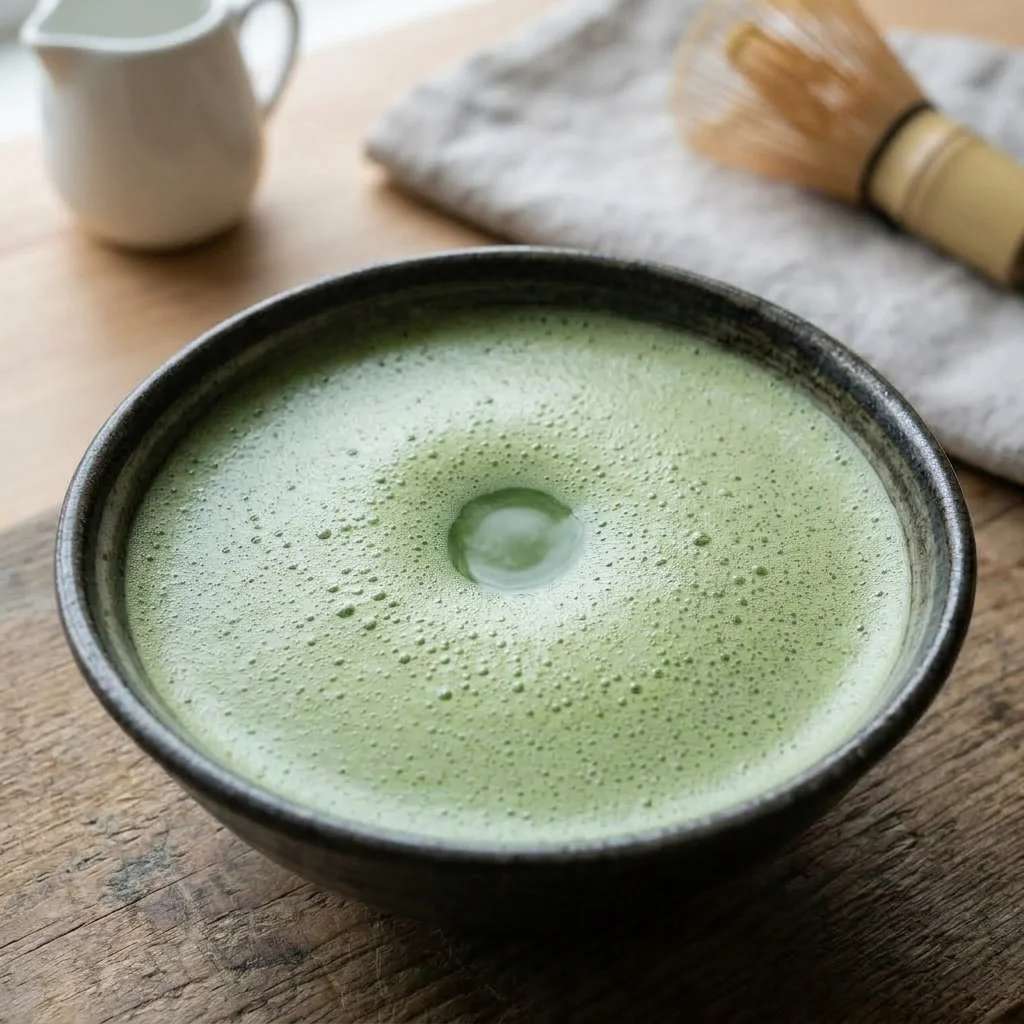
- Sediment after sitting: Fine tea particles settle over time. Whisk thoroughly and drink soon after mixing; a gentle stir brings normal sediment back through the liquid.
Storing a Matcha Latte
- Room temperature: Do not leave the milk drink out for more than 2 hours total, or 1 hour above 90°F.
- Refrigerator: Cover and refrigerate promptly at 40°F or below. Use within 24 hours as a conservative quality window, and follow any earlier milk use-by guidance.
- Freezer: Freezing is not recommended for this small batch. Milk can separate, foam collapses, and thawing adds work without preserving the fresh texture.
- Reheating: Not recommended for this recipe. Serve properly refrigerated leftovers cold and stirred; heat fresh milk for a new hot cup.
- Make-ahead notes: Portion dry powder the night before, but combine the liquids near serving time. Keep milk refrigerated until heating.
Normal settling does not prove a drink has spoiled, and a normal smell does not prove a poorly stored drink is safe. Discard it if the room-temperature limit was exceeded.
Milk determines the storage rules even when tea makes the drink look different. A covered travel cup still needs refrigeration or another reliable way to keep it cold.
Five Ways to Change the Drink
- Iced matcha latte: Prepare the tea and syrup as directed, then pour over 1 cup of ice and the cold milk in a 16-ounce glass. Skip milk heating and frothing; stir and drink before the ice heavily dilutes it.
- Dairy-free: Replace dairy milk with the same amount of unsweetened soy milk. The maple-sweetened drink is then vegan as well as vegetarian; check all packaged ingredients for your needs.
- Milder tea flavor: Use half a teaspoon of matcha, about 1 gram, with the original liquid amounts. This lowers the tea intensity but does not make it caffeine-free or turn it into a children’s drink.
- Ginger warmth: Whisk one-sixteenth teaspoon ground ginger into the tea for a gently spicy version. Start small because ginger can quickly cover the grassy aroma.
- Gluten-free oat version: Choose oat milk specifically labeled gluten-free and confirm the powder and syrup contain no added gluten ingredients. The base dairy version also uses ingredients naturally free of gluten.
Use [INTERNAL LINK: homemade iced drinks] for more cold options when planning a breakfast spread.
What to Serve with a Matcha Latte
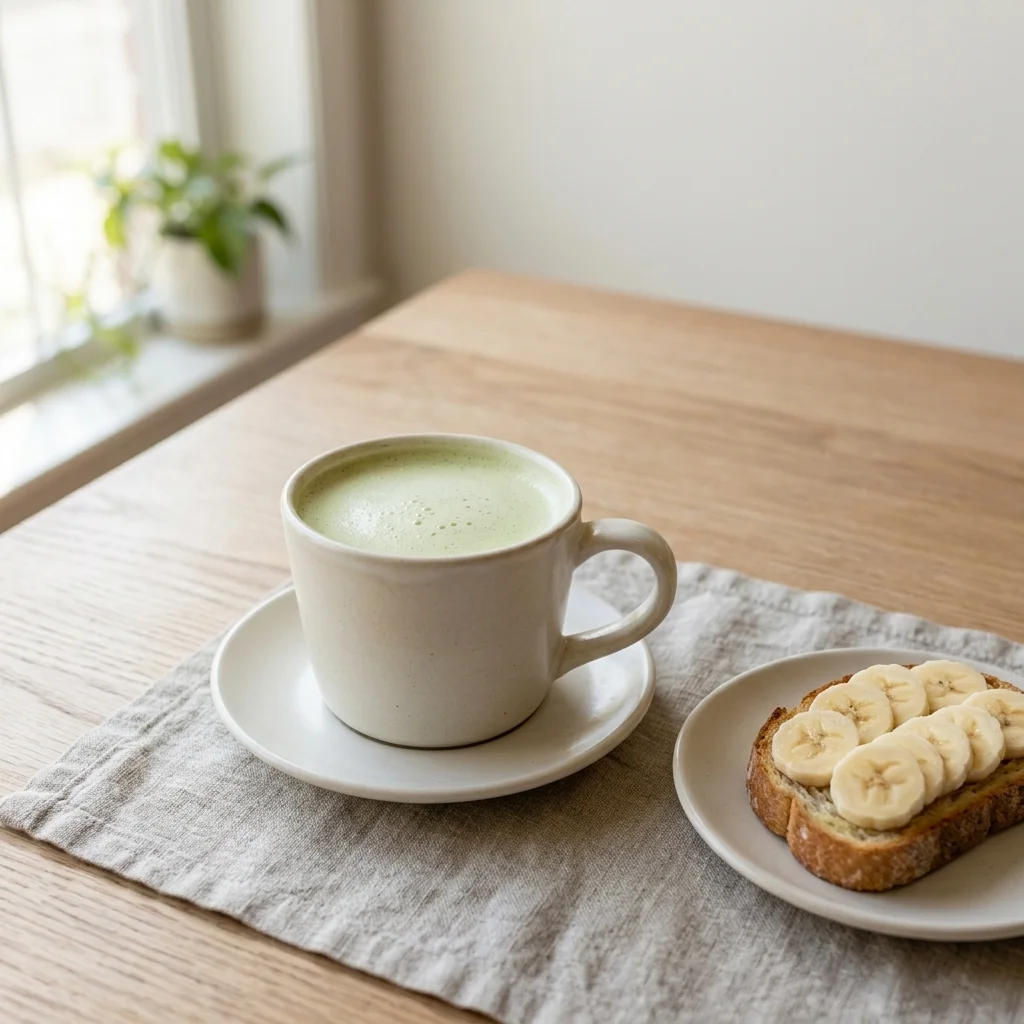
- Banana toast: Sliced banana on toast supplies sweetness without needing extra syrup in your mug.
- Plain yogurt with berries: The tart fruit contrasts with the creamy drink. Serve in a separate bowl rather than blending acidic berries into warm milk.
- Scrambled eggs and toast: A savory plate keeps breakfast from depending on sweet foods alone. Make the drink as the eggs finish.
- Simple butter cookies: A lightly flavored cookie leaves the tea noticeable. Avoid strong mint or heavy spice if you want to compare matcha powders.
- Apple slices with almond butter: Crisp fruit and a nutty spread give you something substantial to nibble. Find more combinations in [INTERNAL LINK: easy breakfast snacks].
Matcha Latte FAQs
Does this contain coffee or caffeine?
This matcha latte contains caffeine from the tea, but no coffee. A matcha latte uses tea instead of espresso. Caffeine amounts vary with the powder and serving weight, so use the package information when available instead of assuming every teaspoon contains the same amount. If you want a caffeine-free drink, choose a different base; simply adding more milk does not remove caffeine already in the mug.
Can I use sweetened matcha powder instead?
You can use a sweetened blend, but it needs its own package directions rather than a teaspoon-for-teaspoon swap. Sugar or milk powder may make up much of the mixture, leaving less actual tea in each spoonful. Skip the maple syrup initially, follow the blend’s suggested liquid ratio, and adjust after tasting. For the measurements in this matcha latte recipe, buy a powder whose ingredient list identifies matcha without added sweeteners or creamers.
Why is there grit even after lots of frothing?
Froth can form while dry clumps remain underneath, especially when a powered whisk stays close to the surface. Inspect the bowl before milk goes in and separate visible lumps with a spoon, then whisk with the head lower in the liquid. Very fine sediment is different: matcha is powdered leaf suspended in your drink, so it will not disappear like sugar. More time whipping the surface will not turn those particles into a clear solution.
When is the milk ready if it is not boiling?
The milk is ready at 140 to 150°F, before bubbles rise into a boil. A thermometer gives a more dependable answer than steam, which changes with room conditions and can be hard to see. Start checking early because a small portion warms quickly in a wide pan. If you use a microwave instead, heat in short bursts and stir before measuring so the reading reflects the whole portion rather than one hot spot.
Can I pack it in a bottle for the next morning?
Yes, prepare it the night before, refrigerate promptly in a clean covered bottle, and drink it within the 24-hour storage window. Skip frothing, which contributes little after a night in the refrigerator. Stir or gently shake the cold drink before serving, and transport it with an ice pack if refrigeration is unavailable. Do not shake hot liquid in a sealed bottle; pressure and splashing can cause burns when the lid opens.
Keep a Note of the Cup You Prefer
Record useful adjustments so you can repeat them. Write down the powder weight, milk choice, and syrup amount after a cup you enjoy, rather than describing it only as stronger or creamier. A different carton of milk can change sweetness and texture even when the rest stays fixed.
When comparing powders, make smaller separate drinks using the same ratio, and taste them at similar temperatures. That gives you a clearer comparison than changing the milk, sweetener, and tea together. Your preferred matcha latte does not need the deepest color or the tallest foam; it needs a balance you want to drink again.
If you loved this recipe, save it to your homemade drinks Pinterest board so you can find it easily later!
Matcha Latte with Soft Foam and a Clear Tea Flavor
Ingredients
Equipment
Method
- Sift the matcha powder through a fine-mesh sieve into a wide bowl, pressing small lumps through the mesh with the back of a dry spoon.
- Heat the measured water to 175°F (80°C). Pour it over the sifted matcha and whisk vigorously with a bamboo whisk or handheld frother for 20 to 30 seconds, until no dry specks or lumps remain at the bottom of the bowl.
- Stir in the maple syrup, sweeping the bottom of the bowl to fully incorporate it. Check again for any dry green pockets before proceeding.
- Warm the milk in a small saucepan over medium-low heat for 2 to 3 minutes, stirring, until it reaches 140 to 150°F (60 to 65°C). Remove from heat before it boils.
- Froth the warm milk for 10 to 20 seconds with a handheld frother just below the surface to create a shallow layer of fine bubbles.
- Pour the matcha tea into a 10 to 12 oz mug first, then add the warmed milk. Stir gently and spoon any remaining foam on top. Serve immediately.
Notes
- For an iced matcha latte: prepare the tea and syrup as directed, then pour over 1 cup of ice and cold milk in a 16-oz glass. Skip the heating and frothing steps.
- Store any leftover prepared drink covered in the refrigerator for up to 24 hours. Stir before drinking as the powder naturally settles. Do not leave a milk-based drink at room temperature beyond 2 hours.
- Use pure unsweetened matcha powder only — not a presweetened latte blend. A blend’s scoop is not interchangeable with 1 teaspoon of pure matcha, and the syrup amount will need adjustment.