Easy Butter Chicken with Creamy Tomato Sauce
Butter chicken should taste rich and rounded, not like chicken dropped into sweet tomato soup. This version builds the sauce in layers: yogurt-spiced chicken gets browned first, tomato cooks down until its raw edge disappears, and cream goes in only after the pan is calm. The result is a smooth orange-red sauce with gentle heat, warm garam masala, ginger, garlic, and the earthy finish of dried fenugreek.
You can marinate the chicken for 30 minutes when dinner needs to move, or refrigerate it for up to 24 hours for deeper seasoning. Everything cooks on the stovetop, and passata keeps the sauce smooth without a blender.
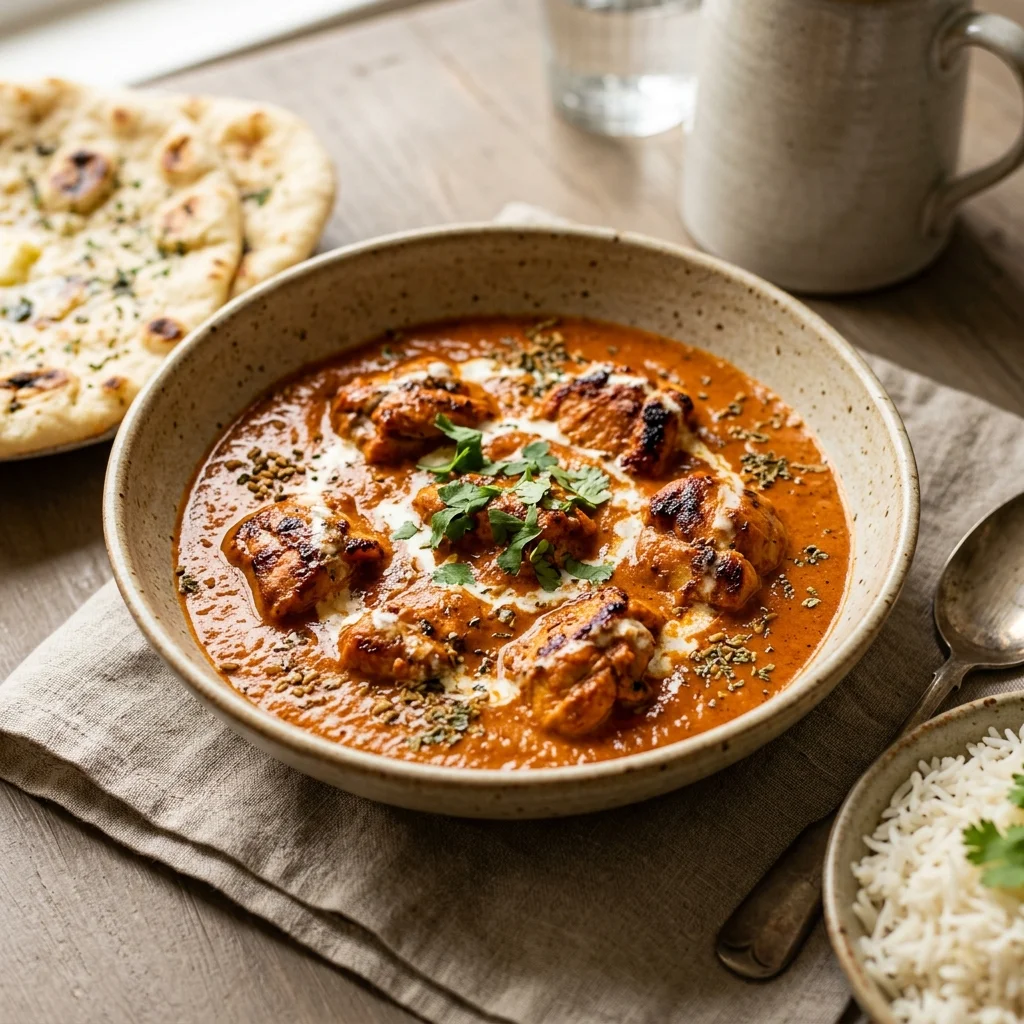
Table of Contents
Why You Will Love This Butter Chicken
- Chicken thighs stay juicy while a hot skillet gives the edges browned spots.
- This butter chicken uses passata for a smooth sauce without a blender or sieve, so the stovetop method stays simple.
- Reducing the tomato before adding dairy keeps the sauce balanced instead of thin or sharply acidic.
- Kasuri methi adds the savory, slightly bitter aroma many home versions are missing.
- The sauce reheats well for an easy rice or naan lunch the next day.
Quick Recipe Snapshot
- Prep Time: 20 minutes
- Marinating Time: 30 minutes
- Cook Time: 30 minutes
- Total Time: 1 hour 20 minutes
- Servings: 6
- Difficulty: Medium
- Calories: About 370 per serving
- Key Ingredient: Kasuri methi (dried fenugreek leaves)
- Best For: Family dinners and make-ahead meals
Nutrition Information
- Calories per Serving: About 370
- Protein: About 23 g
- Carbs: About 10 g
- Fat: About 27 g
- Fiber: About 2 g
- Sugar: About 6 g
- Sodium: About 720 mg
- Serving Size: About 1 cup
- Servings per Recipe: 6
Most of the protein comes from the chicken, while butter, yogurt, and cream provide much of the fat. Sodium varies with the tomato product, butter, and salt, so taste the finished butter chicken before seasoning again.
Nutrition values are approximate and calculated per serving using standard ingredient amounts. Values may vary based on brands used and portion sizes.
Ingredients You Will Need
For the Chicken Marinade
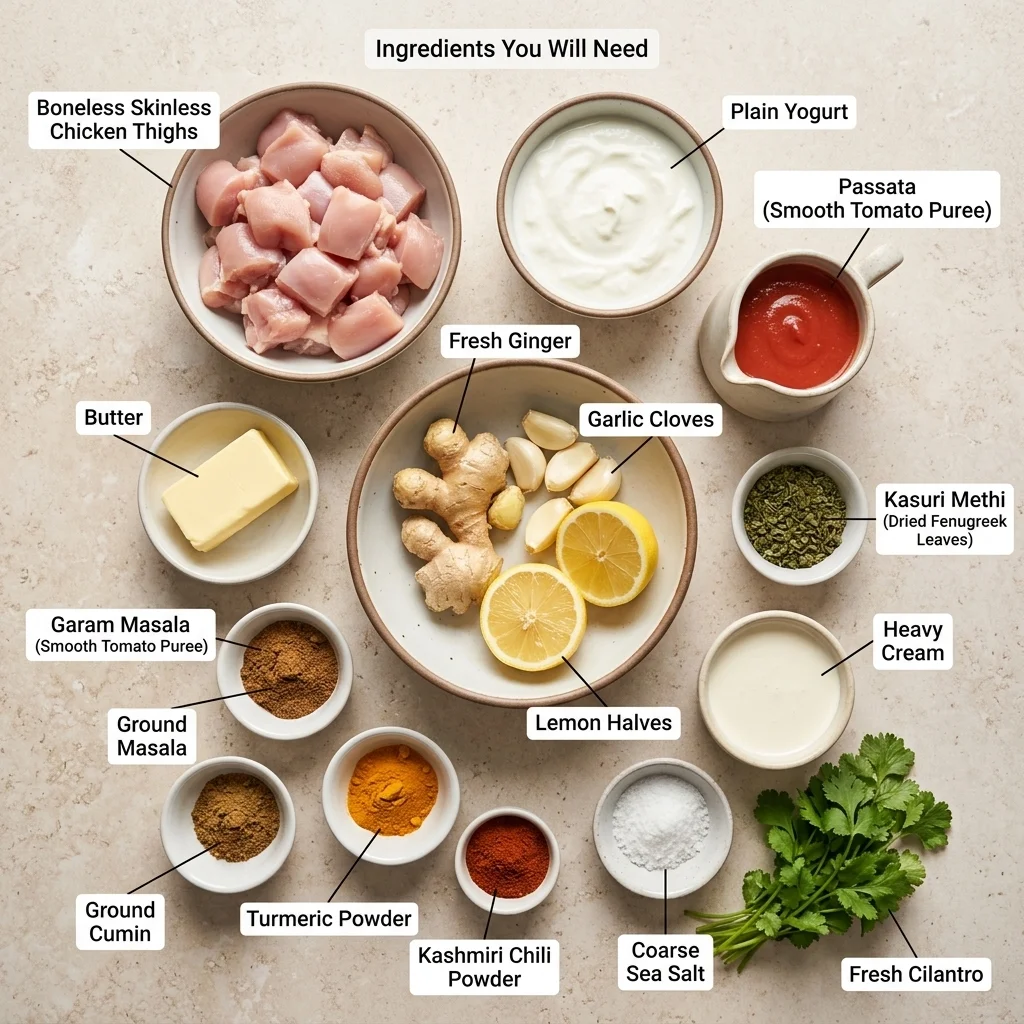
- 1 1/2 pounds (680 g) boneless, skinless chicken thighs: Chop into 1 1/2-inch pieces. Thighs keep this butter chicken tender through searing and simmering. Chicken breast can substitute, but start checking it earlier.
- 1/2 cup (120 g) plain whole-milk yogurt: Full-fat Greek yogurt also works; loosen very thick yogurt with 1 tablespoon water.
- 1 tablespoon lemon juice: Lime juice can replace it.
- 1 tablespoon grated ginger and 3 grated garlic cloves: Prepared ginger-garlic paste is a faster substitute.
- 1 1/2 teaspoons garam masala, 1 teaspoon cumin, 1/2 teaspoon turmeric, 1/2 teaspoon Kashmiri chili powder, and 3/4 teaspoon fine salt: Sweet paprika can replace the chili powder for less heat.
For the Sauce
- 1 tablespoon neutral oil: Avocado, canola, or sunflower oil works.
- 4 tablespoons (57 g) unsalted butter, divided: Salted butter can substitute if you reduce added salt.
- 1 tablespoon grated ginger and 3 grated garlic cloves: Add them after lowering the skillet heat.
- 1 3/4 cups (425 g) tomato passata: Mutti Tomato Puree is consistently smooth, which gives the butter chicken sauce a silky body without blending. Any plain passata can replace it.
- 1 tablespoon tomato paste: It deepens tomato flavor and helps thicken the sauce.
- 1 teaspoon garam masala, 1/2 teaspoon cumin, and 1/2 teaspoon Kashmiri chili powder: Keep these measured before cooking.
- 1 teaspoon kasuri methi: Crush the dried fenugreek leaves between your palms before adding.
- 1 teaspoon sugar: Start with 1/2 teaspoon if your passata tastes naturally sweet.
- 1/2 cup (120 ml) heavy cream: Coconut cream works for a dairy-free variation but changes the flavor.
- 1/2 cup (120 ml) water, 1/2 teaspoon fine salt, and 2 tablespoons chopped cilantro: Add extra water only if the finished sauce is too thick.
Equipment Needed
- 12-inch heavy skillet: A wide pan gives the chicken room to brown instead of steam. That browning keeps butter chicken from tasting like plain poached chicken in sauce.
- Instant-read thermometer: Check the thickest chicken pieces for 165°F. Insert the probe through the side of a larger piece so the tip reaches the center.
- Microplane or fine grater: It helps ginger and garlic disappear into the sauce.
- Silicone spatula: Use it to scrape browned bits into the tomato base.
- Medium mixing bowl: It should be large enough to coat the chicken evenly.
Preparation
- Slice the chicken into uniform 1 1/2-inch pieces.
- Measure the spices, tomato paste, passata, cream, and water before heating the skillet.
- Crush the kasuri methi between your palms and keep it near the stove.
- Heat the skillet only after the chicken has finished marinating.
How to Make Butter Chicken
- Marinate the chicken. Mix yogurt, lemon, ginger, garlic, garam masala, cumin, turmeric, chili powder, and salt. Coat the chicken, cover, and refrigerate for 30 minutes or up to 24 hours. Chef’s Note: Keep the bowl refrigerated while it marinates.
- Sear the first batch. Heat the oil with 1 tablespoon butter over medium-high heat. Shake off excess marinade and sear half the chicken for 2 to 3 minutes per side; transfer to a clean plate. Browning gives butter chicken a deeper savory base. Chef’s Note: The chicken will finish cooking in the sauce.
- Sear the remaining chicken. Repeat with the second batch. Keep the heat high enough for browning but lower it if the yogurt coating starts turning black.
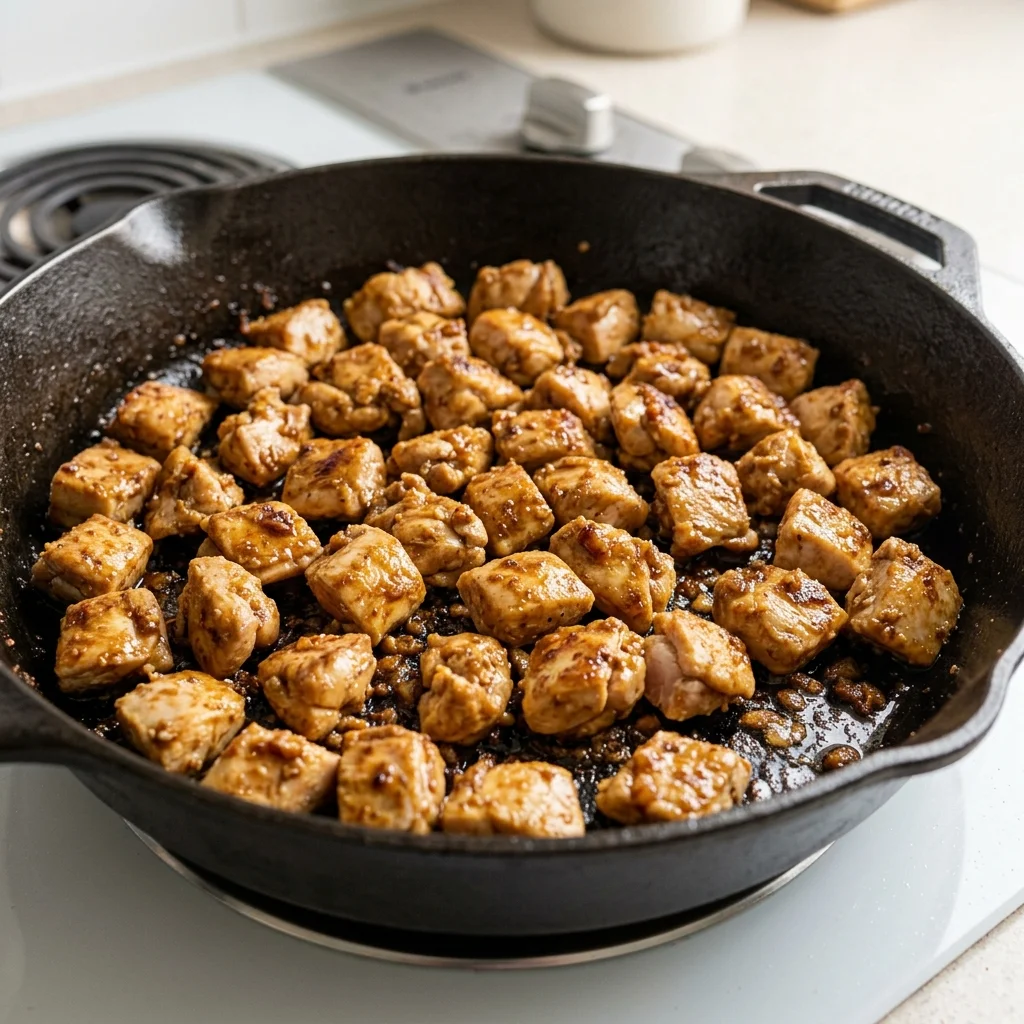
- Build the base. Reduce the heat to medium, then add 2 tablespoons of butter. Stir in ginger and garlic for 30 to 45 seconds, then cook the tomato paste for 1 minute.
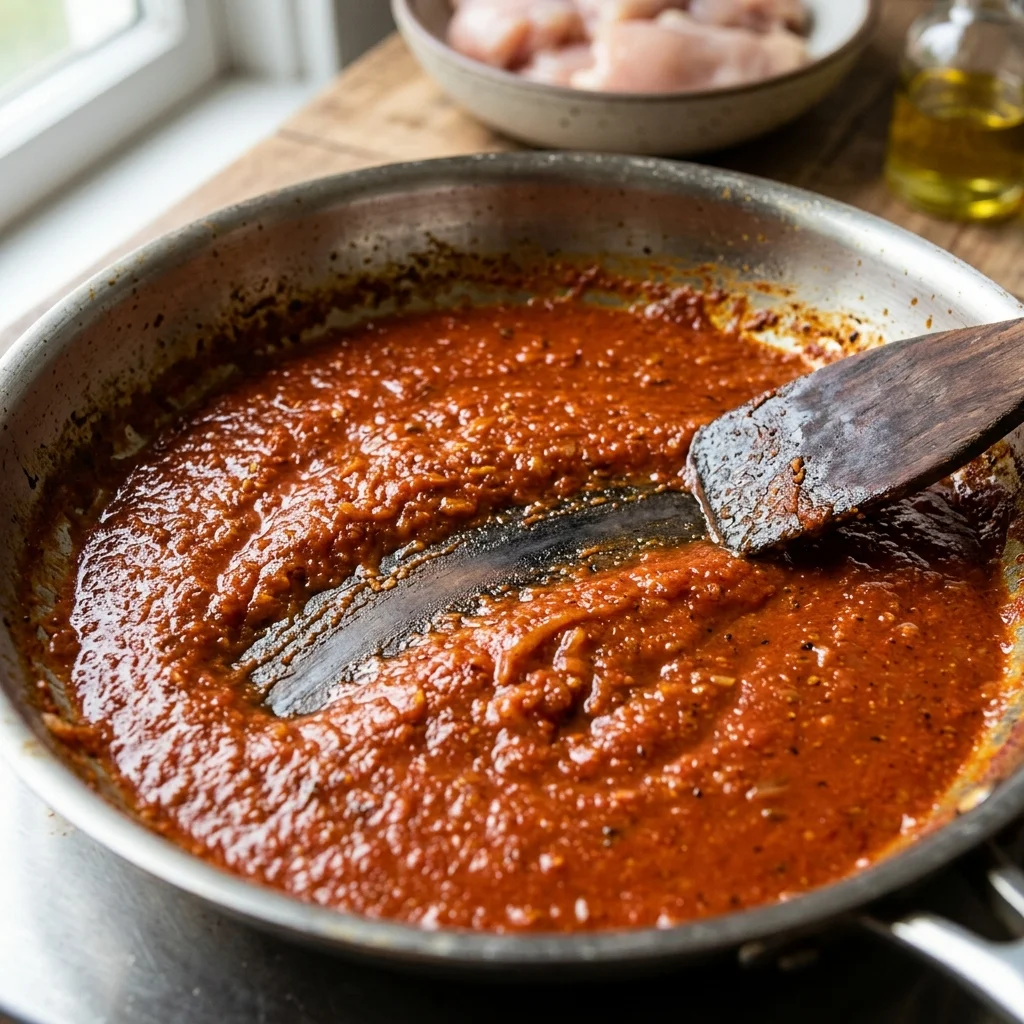
- Reduce the tomato sauce. Add passata, garam masala, cumin, chili powder, sugar, and 1/2 teaspoon salt. Cook at a simmer, uncovered, for 8 to 10 minutes,stirring often, until darker and thick enough for a spatula to leave a brief trail. This step gives butter chicken a rounded tomato flavor instead of a raw one.
- Finish the chicken. Stir in 1/2 cup water and return the chicken with its juices. Simmer gently for 5 to 7 minutes until the thickest pieces reach 165°F. Chef’s Note: Avoid a hard boil, which can tighten the chicken and reduce the sauce too fast.
- Add the creamy finish. Lower the heat and stir in cream, kasuri methi, and the remaining 1 tablespoon butter. Warm for 2 minutes without boiling, then taste for salt and loosen with 1 to 3 tablespoons water if needed.
If the sauce still tastes sharply tomato-forward after 8 minutes, keep simmering the tomato base before adding the chicken. Extra cream can soften acidity, but it cannot replace proper reduction.
Expert Tips for the Best Butter Chicken
- Brown in batches: Crowding releases moisture and keeps the yogurt coating pale.
- Reduce before enriching: Tomato should lose its raw, watery taste before the cream and finishing butter go in. The sauce should look slightly darker and thicker around the edges of the skillet.
- Add kasuri methi late: Crushing the leaves releases aroma, and a short final simmer keeps its character distinct in butter chicken instead of burying it under the tomato.
- Make the base ahead: Cook the sauce through the reduction stage and refrigerate it for up to 2 days. Cool it in a shallow container before covering and chilling.
- Save prep time: Use prepared ginger-garlic paste with no added sweetener when fresh grating is inconvenient.
Common Mistakes and Troubleshooting
- Too acidic: Simmer the tomato base longer. If it is already thick, add 1 to 2 tablespoons water first, then reduce gently.
- Too sweet: Add a pinch of salt, 1/2 teaspoon lemon juice, and extra kasuri methi instead of more cream.
- Pale chicken: The skillet was crowded or too cool. Sear smaller batches and wait for visible browning before turning.
- Oily sauce: High heat after adding cream can separate the fat. This is the testing mistake described above; lower the heat and whisk in warm water 1 tablespoon at a time.
- Flat flavor: Check salt first, then kasuri methi. More garam masala will not replace the dried fenugreek aroma.
Storage Instructions
Room Temperature: Do not leave cooked butter chicken out for more than 2 hours, or more than 1 hour above 90°F.
Refrigerator: Cool promptly and refrigerate in a shallow airtight container for 3 to 4 days.
Freezer: Freeze cooled portions in airtight containers for up to 3 months for best texture.
Reheating: Reheat gently, stirring often, until the chicken and sauce reach 165°F. Add 1 to 2 tablespoons water if thickened.
Make-Ahead Notes: Make the tomato base 2 days ahead, or marinate the chicken for up to 24 hours before cooking.
Reheat only the amount you plan to eat. Gentle heat plus a small splash of water keeps the sauce smoother than repeatedly heating the full batch.
Variations and Substitutions
- Spicier: Use 1 teaspoon Kashmiri chili powder in the sauce and add a chopped green chili with the aromatics.
- Mild: Replace Kashmiri chili powder with sweet paprika and reduce the sauce garam masala to 3/4 teaspoon.
- Paneer: Replace the chicken with 18 ounces paneer. Brown lightly and simmer in the finished sauce for 2 to 3 minutes.
- Gluten-free: The core butter chicken recipe uses no flour. Check packaged spice blends and prepared pastes if strict avoidance is required.
- Dairy-free: Use plain plant-based yogurt, neutral oil instead of butter, and full-fat coconut cream.
What to Serve With Butter Chicken
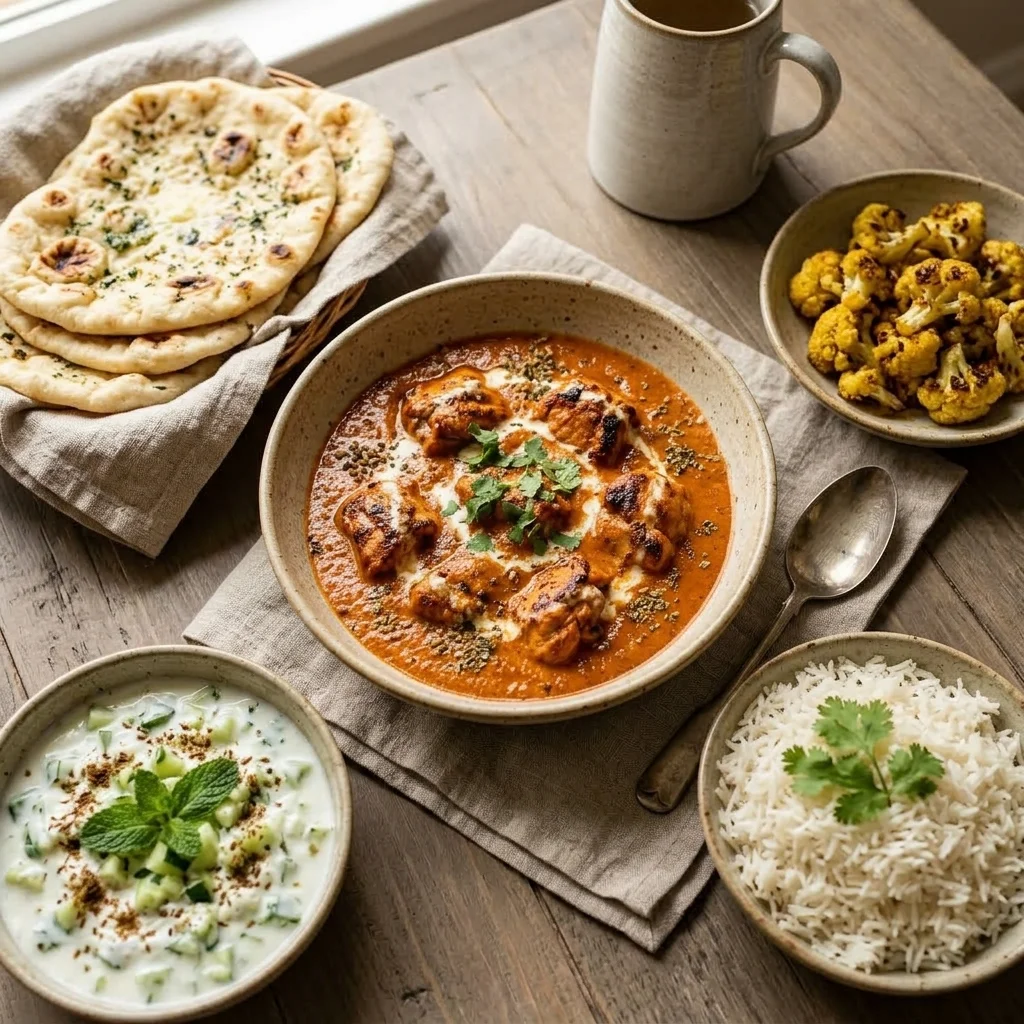
- Basmati rice: Long grains absorb the sauce without competing with the spices.
- Warm naan: Soft bread is useful for scooping up thick butter chicken sauce. Heat it just before serving so it stays flexible instead of drying at the table.
- Cucumber yogurt salad: Cucumber, yogurt, mint, and salt add a cool contrast.
- Roasted cauliflower: Browned edges add texture beside the creamy sauce. Roast it until deeply browned so the vegetable brings contrast instead of tasting steamed.
- Lemon-cilantro rice: Citrus and herbs make the plate feel lighter.
Frequently Asked Questions
Can I make butter chicken ahead of time?
Yes. Cook the tomato base up to 2 days ahead, refrigerate it in a covered container, then reheat before adding cooked chicken and cream. Fully cooked butter chicken also keeps for 3 to 4 days in the refrigerator. Reheat over medium-low heat and add a spoonful of water if the sauce has tightened. Heat leftovers to 165°F before serving.
Why does my butter chicken taste too much like tomato?
The tomato base usually needs more reduction or better seasoning balance. Simmer passata and tomato paste uncovered until the sauce darkens and thickens enough to leave a brief trail when you drag a spatula through the pan. Then add water, chicken, cream, butter, and kasuri methi in stages. Too much sugar can cover acidity but leave the butter chicken sweeter than intended.
What can I use instead of heavy cream?
Full-fat coconut cream is the simplest dairy-free substitute for butter chicken, though it adds a coconut note. Full-fat Greek yogurt can also work for a tangier sauce, but temper it with a spoonful of warm sauce and stir it in over very low heat. Do not boil the sauce after adding yogurt because strong heat makes separation more likely. Heavy cream gives the closest result to this recipe.
How do I know when the chicken is fully cooked?
Use an instant-read thermometer and check the thickest piece for 165°F. Browning or cutting one piece open can give clues, but temperature is more reliable. In this recipe, the chicken is intentionally only partly cooked during the first sear, then finishes during the 5 to 7 minute simmer in the sauce. Start checking early so the thighs stay juicy.
Why does homemade butter chicken not taste like restaurant butter chicken?
Home versions often miss strong browning, enough tomato reduction, or kasuri methi at the finish. Restaurant equipment and ingredient ratios vary, but you can get closer by cooking chicken in batches, letting the tomato lose its raw edge, and adding dried fenugreek near the end. Taste for salt before assuming the sauce needs more spice, because under-seasoning can make every other flavor seem muted.
Conclusion
The most useful thing to watch in butter chicken is the sauce before the cream goes in. When the tomato base looks darker and thicker, the butter, cream, fenugreek, and browned chicken come together without tasting like separate layers. Keep the heat gentle at the end and use a thermometer instead of stretching the simmer.
If you loved this recipe, save it to your Indian-inspired dinner Pinterest board so you can find it easily later!
Easy Butter Chicken with Creamy Tomato Sauce
Ingredients
Equipment
Method
- Combine yogurt, lemon juice, ginger, garlic, garam masala, cumin, turmeric, chili powder, and salt in a bowl. Coat the chicken, cover, and refrigerate for at least 30 minutes or up to 24 hours.
- Heat oil and 1 tablespoon butter in a 12-inch skillet over medium-high. Sear the chicken in batches for 3 to 4 minutes per side until browned. Transfer to a plate — the chicken does not need to be fully cooked yet.
- Lower the heat to medium. Add 2 tablespoons butter, then stir in ginger and garlic for 30 to 45 seconds. Add tomato paste and cook for 1 minute.
- Add passata, garam masala, cumin, chili powder, sugar, and salt. Simmer uncovered for 8 to 10 minutes, stirring often, until the sauce darkens and a spatula leaves a brief trail.
- Stir in the water and return the chicken with its juices. Simmer gently for 5 to 7 minutes until the thickest pieces reach 165°F.
- Lower the heat and stir in the cream, crushed kasuri methi, and remaining 1 tablespoon butter. Warm for 2 minutes without boiling. Taste for salt and loosen with 1 to 3 tablespoons water if needed. Garnish with cilantro.
Notes
- Storage: Refrigerate in an airtight container for 3 to 4 days, or freeze for up to 3 months. Reheat gently with a splash of water until the chicken reaches 165°F.
- Make-ahead: The tomato base can be made up to 2 days ahead. The chicken can marinate for up to 24 hours.
- Cream substitute: Full-fat coconut cream works for a dairy-free version but will add a slight coconut flavor.