How to Make Lasagna That Slices Cleanly Every Time
A good lasagna holds its shape on the plate and still tastes soft and saucy in the middle. Most pans miss one of those two goals. They slump into soup, or they dry out around the edges.
I started testing this lasagna because my first three attempts all pooled liquid at the bottom of the dish. Over nine tests in five weeks, I changed one thing at a time: sauce thickness, noodle brand, foil timing, and resting time. The version below uses a thick beef sauce that simmers for 30 minutes, a ricotta filling set with an egg, and mozzarella you shred yourself.
It cuts into clean squares, feeds 12 people, and needs one Dutch oven, one pot, and one baking dish. You can also build it a day ahead and bake it when the table is ready. Read the Chef’s Notes in the steps. Each one fixes a problem I ran into.
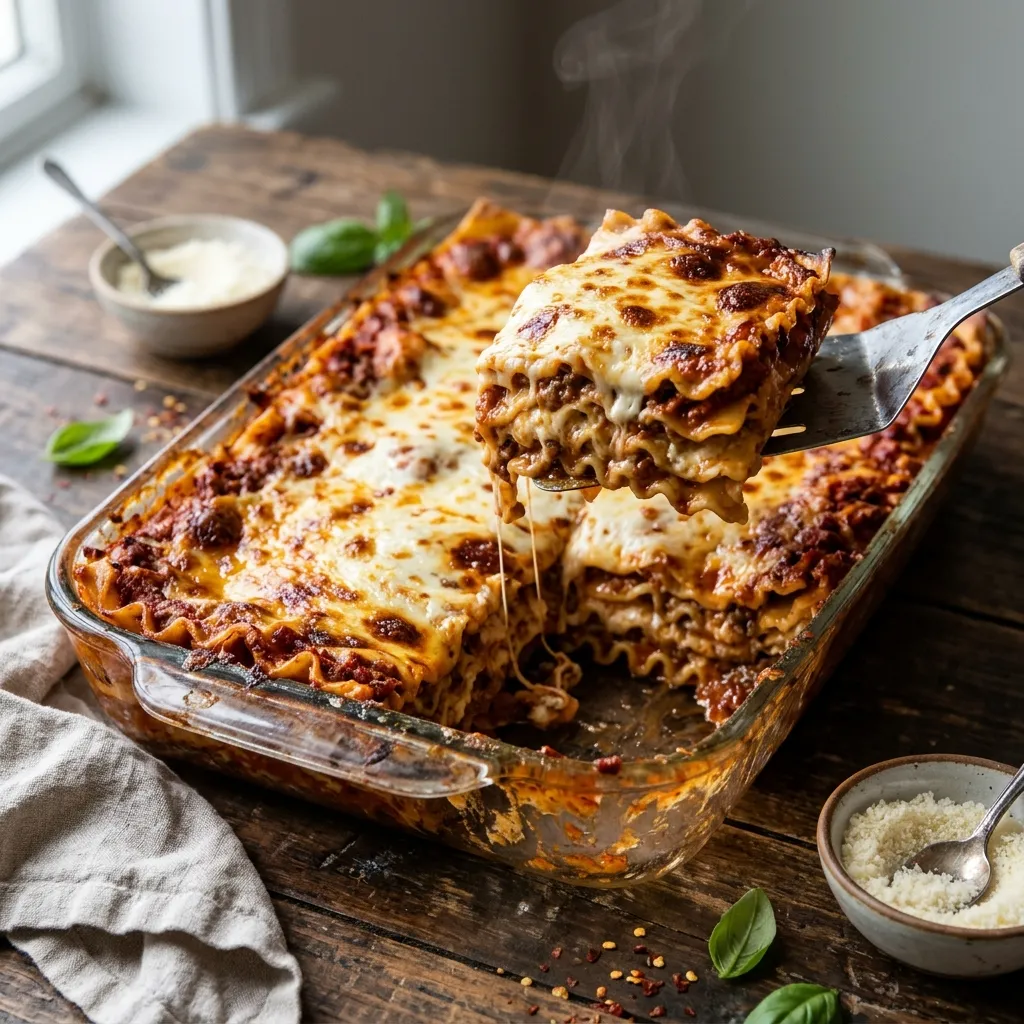
Table of Contents
Why You Will Love This Lasagna
- It slices into tidy squares after a 20 minute rest, so every layer stays put on the plate.
- The sauce simmers for only 30 minutes and ends up thick enough to keep the pan from turning watery.
- Assemble the pan up to 24 hours ahead and bake it when guests arrive.
- The seasoning is mild, so kids eat it without negotiating over each bite.
- One 9×13-inch pan serves 12, and the leftovers taste even better on day two.
Recipe Snapshot
- Prep Time: 45 minutes
- Cook Time: 1 hour 45 minutes
- Resting Time: 20 minutes
- Total Time: 2 hours 50 minutes
- Servings: 12
- Difficulty: Medium
- Calories per Serving: About 465
- Key Tool: 9×13-inch baking dish, 2 inches deep
- Best For: Family dinners, birthday gatherings, and freezer meals
Nutrition Information
- Calories per Serving: About 465
- Protein: 31 g
- Carbs: 29 g
- Fat: 25 g
- Fiber: 3 g
- Sugar: 7 g
- Sodium: 875 mg
- Serving Size: About 1 piece (1/12 of the pan)
- Servings per Recipe: 12
One square of this lasagna delivers about 31 grams of protein, mostly from the beef and cheeses. Carbs stay under 30 grams, but sodium runs high.
Nutrition values are approximate and calculated per serving using standard ingredient amounts. Values may vary based on brands used and portion sizes.
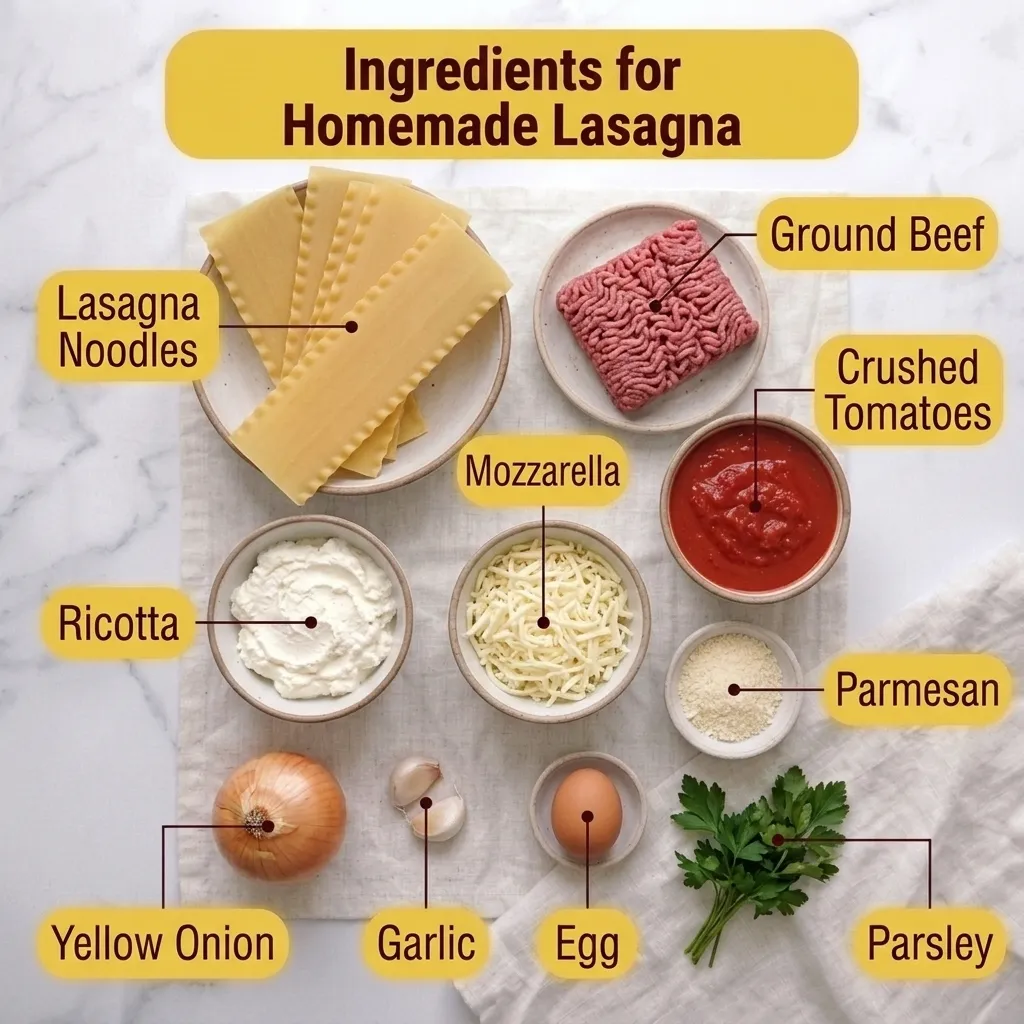
Ingredients for Classic Beef Lasagna
For the Meat Sauce
- 1 tablespoon olive oil
- 1 medium yellow onion, finely diced (about 1 cup)
- 4 garlic cloves, minced
- 1 1/2 pounds ground beef, 85 percent lean
- 2 tablespoons tomato paste
- 1 can (28 ounces) crushed tomatoes
- 1 can (15 ounces) tomato sauce
- 1/2 cup water
- 2 teaspoons dried oregano
- 1 teaspoon dried basil
- 1 teaspoon granulated sugar
- 1 1/2 teaspoons Diamond Crystal kosher salt
- 1/2 teaspoon black pepper
For the Ricotta Filling
- 15 ounces whole milk ricotta, such as Galbani
- 1 large egg
- 1/2 cup freshly grated Parmesan cheese
- 1/4 cup chopped fresh parsley
- 1/2 teaspoon Diamond Crystal kosher salt
- 1/4 teaspoon black pepper
For Assembly
- 12 lasagna noodles (about 10 ounces)
- 1 tablespoon kosher salt for the pasta water
- 4 cups shredded low-moisture whole milk mozzarella (16 ounces)
- 1/4 cup freshly grated Parmesan cheese for the top
- Nonstick cooking spray for the foil
Three ingredients decide the result. Whole milk ricotta bakes creamy instead of grainy. The egg binds that layer so it slices cleanly. Low-moisture mozzarella melts without flooding the pan.
Swaps that work: ground turkey for the beef (add 1 tablespoon olive oil), drained cottage cheese for the ricotta, and Pecorino Romano for the Parmesan (halve the filling salt).
Pro Tip: Shred the mozzarella from a 16 ounce block. Bagged shreds carry a starch coating that stops them from melting into one smooth blanket.
Equipment Needed
- 9×13-inch baking dish, at least 2 inches deep: set it on a rimmed baking sheet to catch drips.
- Dutch oven or 12-inch deep skillet: the wide base reduces sauce faster.
- Large stockpot: 6 quarts of water keeps noodles from sticking.
- Box grater: shreds a cold mozzarella block in about 3 minutes.
- Instant-read thermometer: color cannot confirm 165°F in the center.
Preparation
- Set a rack in the center and preheat the oven to 375°F.
- Place the 9×13-inch dish on a rimmed baking sheet. Skip greasing, since the first layer is sauce.
- Dice the onion, mince the garlic, chop the parsley, and shred the mozzarella.
- Measure the other ingredients and spray a second baking sheet for the noodles.
- Add 1 tablespoon salt to 6 quarts of water in the stockpot and cover it until step 5.
Step-by-Step Instructions
- Warm the oil in a Dutch oven over medium heat. Cook the onion for 5 minutes, until soft. Stir in the garlic for 30 seconds, until fragrant.
- Raise the heat to medium-high and add the beef. Break it into crumbles and cook for 8 to 10 minutes, until no pink remains and the pan looks dry. Chef’s Note: Spoon off all but 1 tablespoon of fat, because extra grease floats to the top.
- Stir in the tomato paste and cook for 2 minutes, until brick red. Add the crushed tomatoes, tomato sauce, water, oregano, basil, sugar, 1 1/2 teaspoons salt, and the pepper.
- Bring to a simmer, then reduce the heat to low. Cook uncovered for 30 minutes, stirring every 10, until a spoon dragged across the bottom leaves a trail that holds for 2 seconds. Chef’s Note: Err on the thick side, since the noodles and cheese release liquid.
- While the sauce simmers, boil the noodles in the salted water for 8 minutes, 1 to 2 minutes under the box time. Drain and lay them flat on the sprayed sheet, until bendy but firm in the center.
- Stir the ricotta, egg, 1/2 cup Parmesan, parsley, 1/2 teaspoon salt, and 1/4 teaspoon pepper until smooth with flecks of green. Chef’s Note: The egg sets the ricotta into a sliceable layer.
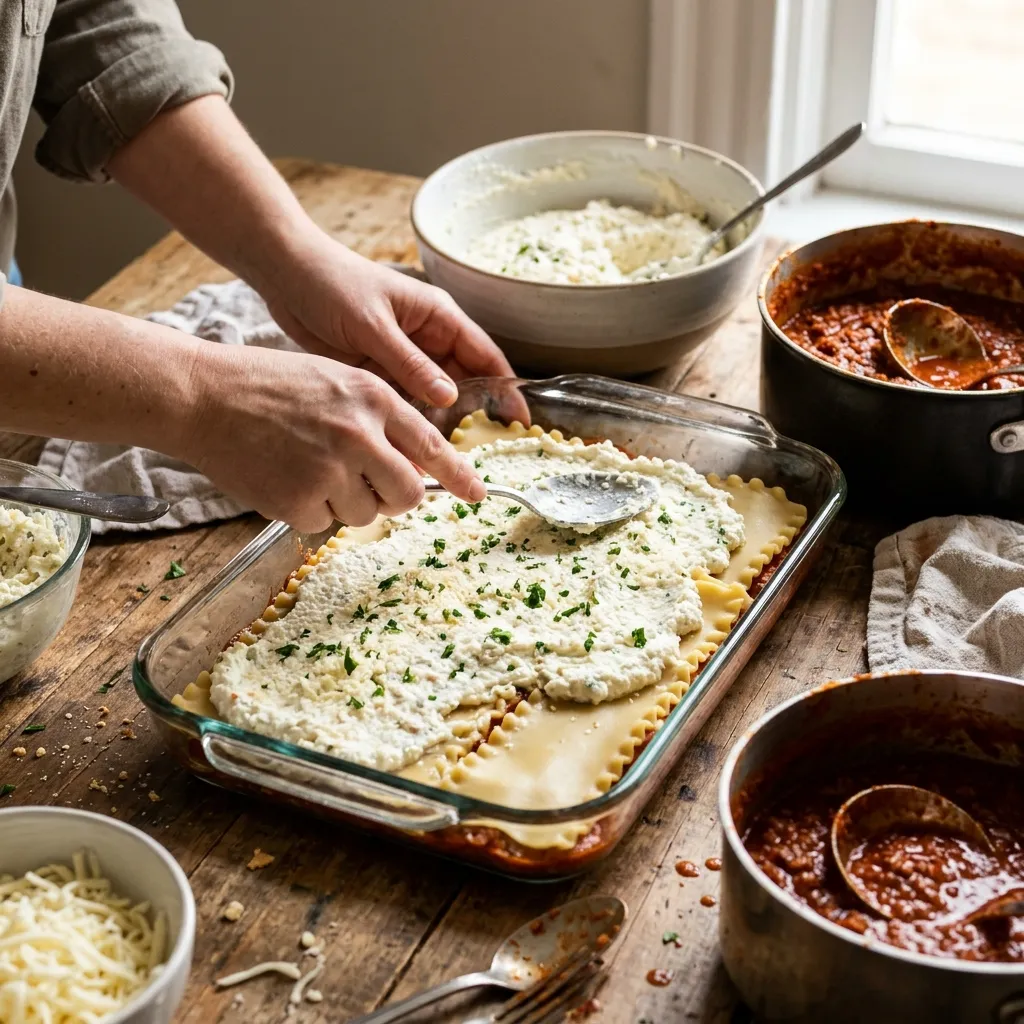
- Spread 3/4 cup sauce over the bottom of the dish. Lay 3 noodles lengthwise, spread a third of the ricotta mixture (about 1 cup) on top, then add 1 1/4 cups sauce and 1 cup mozzarella, until no noodle shows.
- Repeat that layer twice more: noodles, ricotta, 1 1/4 cups sauce, and 1 cup mozzarella. Stop when the dish sits 1/2 inch below the rim.
- Add the last 3 noodles, the remaining sauce (about 1 1/2 cups), 1 cup mozzarella, and 1/4 cup Parmesan. Spread the cheese edge to edge, until no sauce shows.
- Cover tightly with foil sprayed on the underside and bake at 375°F for 45 minutes, until the sauce bubbles at the edges.
- Remove the foil and bake for 15 to 20 minutes more, until the cheese is golden with brown spots and the center reads 165°F on an instant-read thermometer.
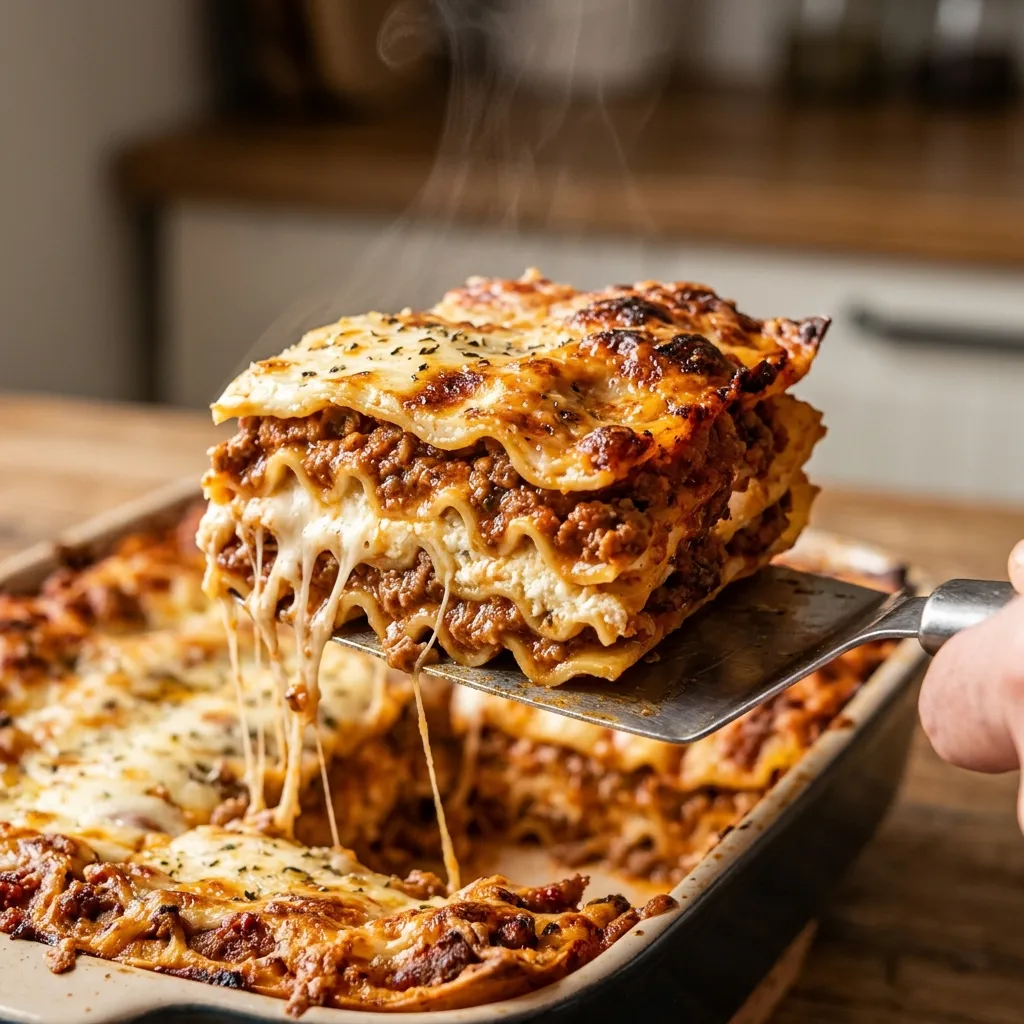
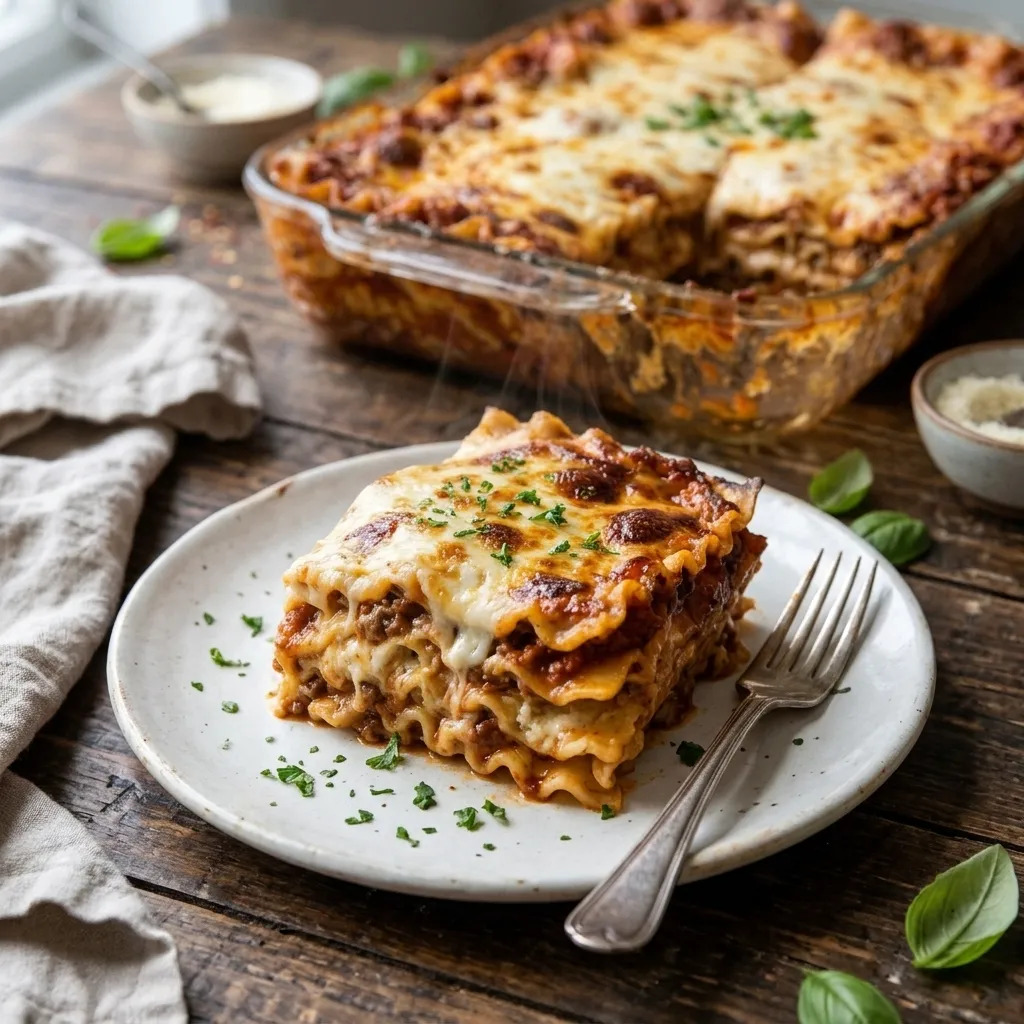
- Rest the dish on a wire rack for 20 minutes, until the bubbling stops. Cut into 12 squares, wiping the knife between cuts, until the layers show clean lines.
Expert Tips and Tricks
- My worst mistake was cutting in after only 5 minutes. The first square collapsed, and so did my confidence.
- Cook the sauce up to 3 days ahead. Cold sauce is thicker, so it spreads without sliding.
- Refrigerate leftovers within 2 hours of baking. Cut the pan into squares first, because small pieces cool faster.
- Press each noodle layer down gently with your palm. Trapped air pockets become gaps that collapse when you slice.
- Shred the mozzarella the night before and keep it in a zip bag. That saves 10 minutes at assembly.
Common Mistakes and Troubleshooting
Watery lasagna. Thin sauce is the usual cause. Simmer until it coats a spoon, and never skip the egg. If liquid pools anyway, rest the pan 15 more minutes and spoon the extra off the edge.
Dry, curled edges. Noodles above the sauce bake hard, and foil gaps let steam escape. Tuck every noodle under sauce and crimp the foil around the rim. To rescue a dry pan, drizzle 1/4 cup warm sauce on top and re-cover for 10 minutes.
Squares that slide apart. Cutting too soon leaves the cheese molten. Wait the full 20 minutes. If it already collapsed, serve it in bowls and cut the rest cold the next day.
Burnt cheese, cold center. The foil came off early or the oven runs hot. Keep it covered for the full 45 minutes. To fix it, tent loose foil on top and bake until the center hits 165°F.
Storage Instructions
- Room Temperature: Up to 2 hours after baking, loosely covered. Longer is not recommended.
- Refrigerator: Leftover lasagna keeps 3 to 4 days in the foil-wrapped dish or in airtight glass containers.
- Freezer: 2 to 3 months for the best flavor. Wrap each square in plastic wrap, then foil, then a freezer-safe zip bag.
- Reheating: Thaw overnight in the refrigerator, then bake covered at 350°F for 25 to 30 minutes, until 165°F in the center. Add 1 tablespoon of sauce if dry. A single square needs 90 seconds to 2 minutes in the microwave.
- Make-Ahead Notes: Assemble the unbaked pan up to 24 hours ahead, cover it tightly, and refrigerate. Add 10 minutes to the covered bake time.
Storage Trick: Freeze cut squares on a parchment-lined tray for 2 hours before bagging, so they stay separate.
I write the bake date and reheating time on each foil bundle. Three weeks later, nobody has to guess what is inside. It also stops me from reheating a square twice.
Variations and Substitutions
Spicy: Stir 1/2 teaspoon red pepper flakes into the sauce with the oregano. Swap half the mozzarella for pepper jack for a slow burn.
Mild and kid-friendly: Cut the black pepper to 1/4 teaspoon. Blend the finished sauce for 20 seconds with an immersion blender, so no onion pieces are left to pick out.
Vegetarian: Replace the beef with 12 ounces finely chopped cremini mushrooms and 1 cup cooked brown lentils. Cook the mushrooms 10 minutes first, until the pan is dry.
Gluten-free: Use gluten-free lasagna noodles and boil them 1 to 2 minutes less than the box says, since they soften fast. Check that your Parmesan and tomato products list no gluten additives.
Skip the layering: Short on time? This baked ziti with meat sauce and creamy ricotta has the same flavors with no stacking.
What to Serve With This
Caprese salad: Cold tomatoes and basil cut through the rich cheese, and this caprese salad takes 10 minutes.
Garlic bread: Buttery toast soaks up leftover sauce. Serve it with the salad for a full weeknight table.
Lemon roasted broccoli: Roast it at 425°F for 18 minutes, then squeeze lemon over it to cut the richness.
Baked meatballs: Feeding more than 12? Add a tray of tender baked meatballs with garlic and Parmesan.
Sparkling lemon water: Bubbles with lemon and mint refresh a heavy plate better than soda.
Frequently Asked Questions
Can you make lasagna the night before and bake it the next day?
Yes, assemble it up to 24 hours ahead. Cover the dish tightly with foil, refrigerate it, and bake it straight from the fridge with 10 extra minutes under the foil. A cold pan needs that time to heat through. The sauce also tastes deeper after a night in the fridge. I often build my lasagna after breakfast on a weekend, so dinner needs nothing but an oven.
Why is my lasagna watery?
Thin sauce and wet cheese are the usual causes. Simmer the sauce until a spoon leaves a trail, use whole milk ricotta with an egg, and shred low-moisture mozzarella from a block. Rest the pan for 20 minutes before cutting, because the sauce reabsorbs liquid as it cools. If your lasagna is already watery, rest it longer and spoon the pooled liquid off the edge.
Can I use cottage cheese instead of ricotta in lasagna?
Yes, use the same 15 ounces. Drain small-curd cottage cheese in a fine mesh strainer for 30 minutes first, because it holds noticeably more liquid than ricotta does. Stir in the egg and Parmesan as written, and use the same baking time. Expect a slightly tangier, more textured layer. My brother asked for seconds without noticing the swap, and he critiques everything.
How do you know when lasagna is done?
Look for three signs: bubbling sauce at the edges, a golden top with brown spots, and 165°F in the center on an instant-read thermometer. That usually happens after 45 minutes covered and 15 to 20 minutes uncovered at 375°F. If the center reads under 165°F, re-cover and bake 5 more minutes. Then let it rest 20 minutes, because it keeps setting on the counter.
Do you have to boil lasagna noodles first?
No, but the sauce must change. No-boil noodles soak up liquid as they bake, so thin this sauce with 1/2 cup extra water and add 10 minutes under the foil. I prefer boiled noodles here, because the texture is silkier and the baking time is easier to predict. Either way, keep the noodles fully covered with sauce so the edges stay soft.
Final Thoughts on Lasagna
Good lasagna rewards patience in two places: the 30 minutes your sauce spends reducing, and the 20 minutes the pan spends resting. Everything between those two waits is simple assembly. At my niece’s birthday dinner, a pan meant to feed 12 was empty in 25 minutes, and her friend’s mom asked for the recipe before finishing her plate. If you change only one thing, make the sauce thicker than feels natural. Everything else follows from that. Bake it once on a quiet weekend, and the second pan will feel easy.
If you loved this recipe, save it to your Italian dinner Pinterest board so you can find it easily later!
How to Make Lasagna That Slices Cleanly Every Time
Ingredients
Equipment
Method
- Preheat the oven to 375°F with a rack in the center. Place the 9×13-inch dish on a rimmed baking sheet, and spray a second sheet for the noodles.
- Warm the oil in a Dutch oven over medium heat. Cook the onion for 5 minutes, until soft. Stir in the garlic for 30 seconds, until fragrant.
- Raise the heat to medium-high and add the beef. Break it into crumbles and cook for 8 to 10 minutes, until no pink remains and the pan looks dry. Spoon off all but 1 tablespoon of fat.
- Stir in the tomato paste and cook for 2 minutes, until brick red. Add the crushed tomatoes, tomato sauce, water, oregano, basil, sugar, 1 1/2 teaspoons salt, and the pepper.
- Bring to a simmer, then reduce the heat to low. Cook uncovered for 30 minutes, stirring every 10, until a spoon dragged across the bottom leaves a trail that holds for 2 seconds.
- While the sauce simmers, boil the noodles in 6 quarts of water with 1 tablespoon salt for 8 minutes, 1 to 2 minutes under the box time. Drain and lay them flat on the sprayed sheet, until bendy but firm in the center.
- Stir the ricotta, egg, 1/2 cup Parmesan, parsley, 1/2 teaspoon salt, and 1/4 teaspoon pepper until smooth with flecks of green.
- Spread 3/4 cup sauce over the bottom of the dish. Lay 3 noodles lengthwise, spread a third of the ricotta mixture (about 1 cup) on top, then add 1 1/4 cups sauce and 1 cup mozzarella, until no noodle shows.
- Repeat that layer twice more: noodles, ricotta, 1 1/4 cups sauce, and 1 cup mozzarella. Stop when the dish sits 1/2 inch below the rim.
- Add the last 3 noodles, the remaining sauce (about 1 1/2 cups), 1 cup mozzarella, and 1/4 cup Parmesan. Spread the cheese edge to edge, until no sauce shows.
- Cover tightly with foil sprayed on the underside and bake at 375°F for 45 minutes, until the sauce bubbles at the edges.
- Remove the foil and bake for 15 to 20 minutes more, until the cheese is golden with brown spots and the center reads 165°F on an instant-read thermometer.
- Rest the dish on a wire rack for 20 minutes, until the bubbling stops. Cut into 12 squares, wiping the knife between cuts, until the layers show clean lines.