Tender Baked Meatballs with Garlic and Parmesan
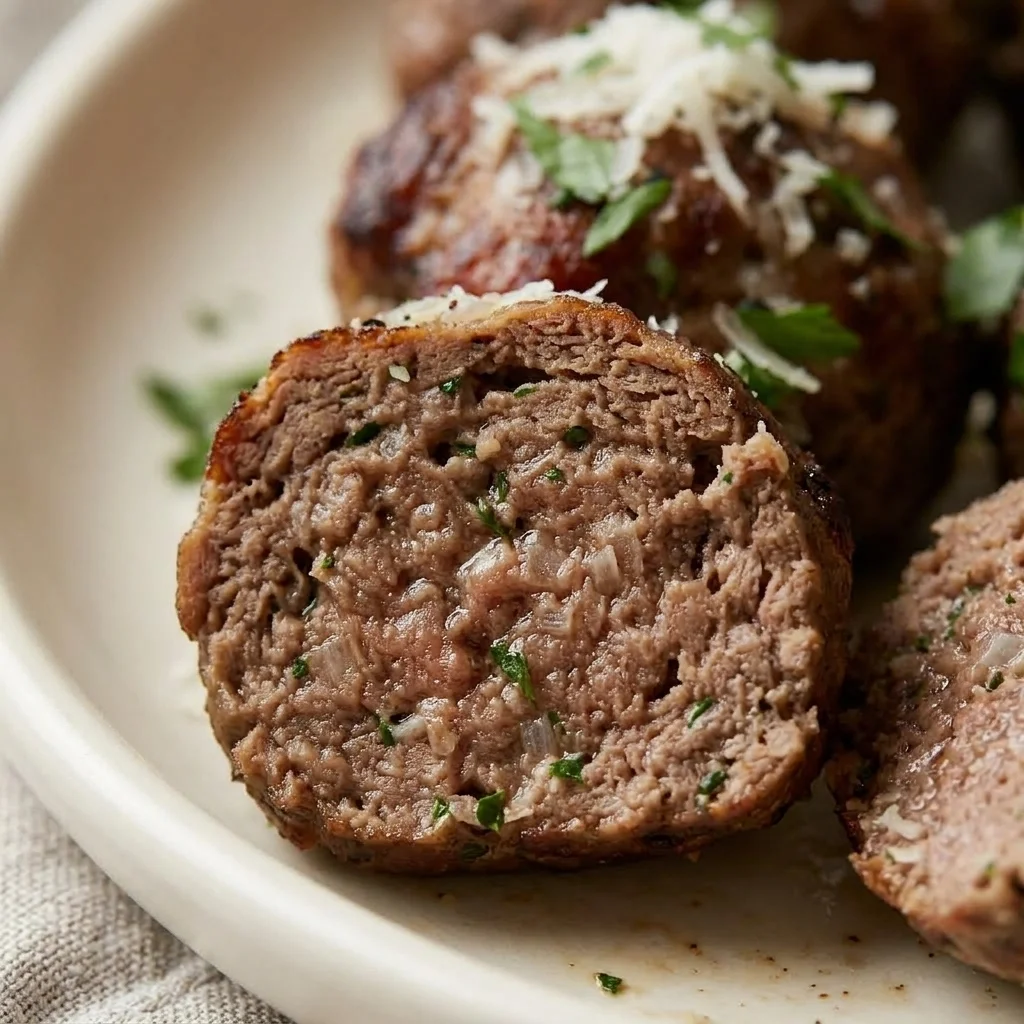
Good meatballs should be browned at the edges, juicy in the center, and tender enough to cut with a fork without turning soft or crumbly. This version uses beef, a milk-soaked panko panade, grated onion, Parmesan, garlic, and parsley, then bakes everything on one sheet pan so you get steady browning without standing over a skillet.
The panade matters more than adding extra egg. The soaked crumbs hold moisture inside the mixture, while gentle mixing keeps the beef from becoming tight and springy. The result works for spaghetti, subs, grain bowls, or a simple plate with warm tomato sauce.
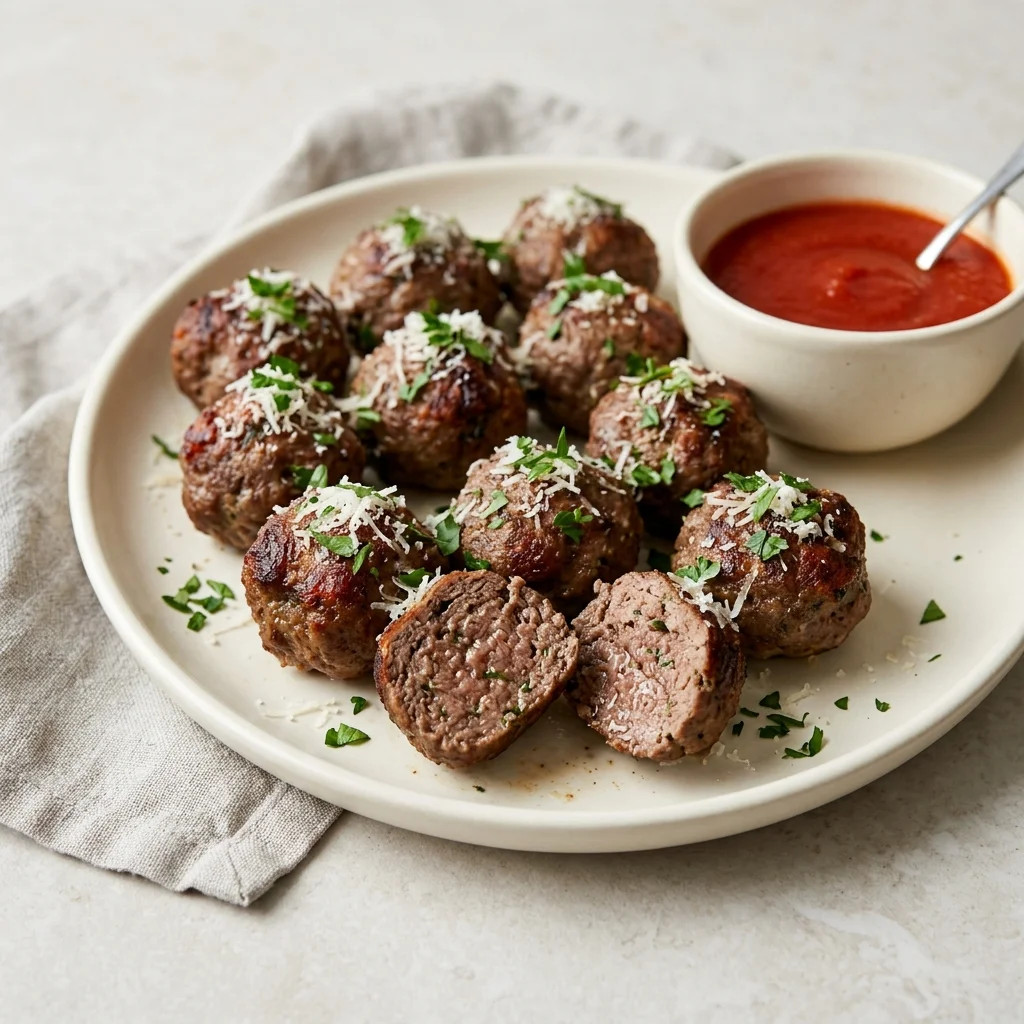
Table of Contents
Why You Will Love This Recipe
- The meatballs bake in one batch, so there is no splattering oil or repeated pan-frying.
- A panko-and-milk panade keeps the center tender while the outside develops browned spots.
- Grated onion spreads moisture and flavor through the mixture without leaving large pieces.
- The recipe takes about 35 minutes from start to finish and makes 18 even portions.
- The baked meatballs freeze well for pasta, sandwiches, and quick lunches later.
Quick Recipe Snapshot
Prep Time: 18 minutes
Cook Time: 15 to 17 minutes
Total Time: 33 to 35 minutes
Servings: 6
Difficulty: Easy
Calories: About 340 per serving, estimated
Key Ingredient: Milk-soaked panko breadcrumbs
Best For: Pasta dinners, meatball subs, meal prep, and freezer portions
Nutrition Information
Calories per Serving: About 340
Protein: About 25 g
Carbs: About 6 g
Fat: About 23 g
Fiber: About 1 g
Sugar: About 2 g
Sodium: About 500 mg
Serving Size: 3 meatballs
Servings per Recipe: 6
Most protein comes from the beef, egg, and Parmesan. Sodium varies with the cheese, breadcrumbs, and salt brand, so taste any sauce separately before adding more seasoning.
Nutrition values are approximate and calculated per serving using standard ingredient amounts. Values may vary based on brands used and portion sizes.
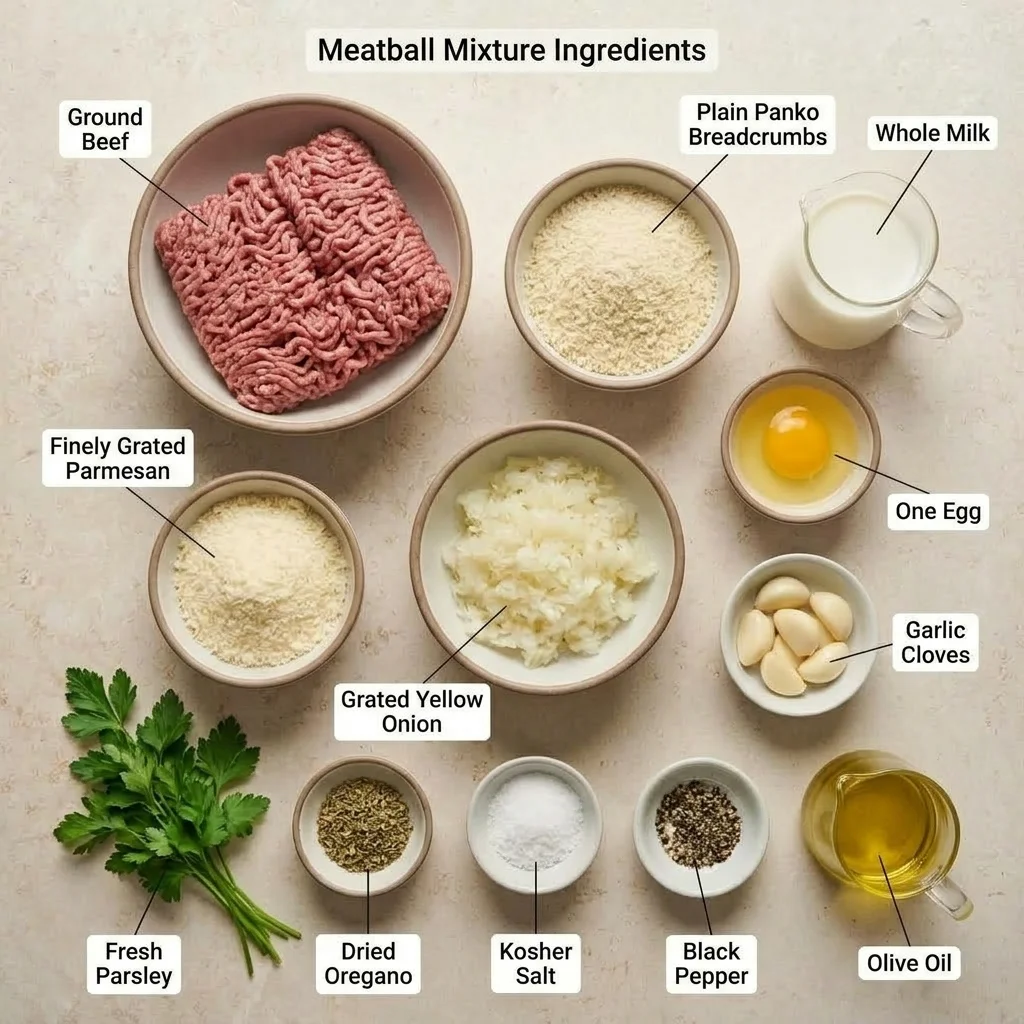
Ingredients You Will Need
- 1 1/2 pounds (680 g) 85/15 ground beef from a trusted certified butcher: The moderate fat level keeps the center juicy. You can use 90/10 beef for a leaner, slightly firmer result.
- 1/2 cup (30 g) plain panko breadcrumbs: These absorb the milk to make the panade. Fine dry breadcrumbs work too, but use about 1/3 cup.
- 1/3 cup (80 ml) whole milk: Moistens the crumbs before they enter the meat. Two-percent milk is a suitable substitute.
- 1 large egg: Helps bind the mixture together. Avoid adding a second egg unless you scale the entire recipe.
- 1/2 cup (45 g) finely grated Parmesan: Adds savory depth. Pecorino Romano works, but reduce the added salt slightly.
- 1/3 cup (50 g) finely grated yellow onion: Grating spreads moisture without chunky pieces. A small shallot can replace it.
- 3 garlic cloves, finely minced: Substitute 3/4 teaspoon garlic powder if needed.
- 1/4 cup finely chopped flat-leaf parsley: Use 1 tablespoon dried parsley if fresh is unavailable.
- 1 teaspoon dried oregano: Dried basil can replace half for a softer herb note.
- 1 1/4 teaspoons Diamond Crystal kosher salt: Its light crystals distribute easily through the mixture. If using fine table salt, use less by volume.
- 1/2 teaspoon freshly ground black pepper: Brings a gentle touch of heat.
- 1 tablespoon olive oil: Helps the bottoms brown. A neutral cooking oil also works.
Equipment Needed
- Large rimmed baking sheet: A heavy sheet browns more evenly than a thin tray.
- Parchment paper: Keeps the cheese from sticking. Oiled foil is a workable alternative.
- Fine grater: Use it for the onion and Parmesan so both blend evenly into the mixture.
- 2-tablespoon cookie scoop: Keeps the portions even so they cook at the same rate.
- Instant-read thermometer: Check the center of one of the largest pieces instead of guessing by color.
Preparation
- Line a large rimmed baking sheet with parchment, brush it lightly with 1 tablespoon olive oil, and heat the oven to 425°F.
- Combine the panko and whole milk in a small bowl. Let it stand for 5 minutes until the crumbs are fully damp.
- Grate the onion, mince the garlic, chop the parsley, and grate the Parmesan before handling the beef.
- Keep the beef refrigerated until everything else is ready. Cold meat is easier to shape and keeps its fat firmer.
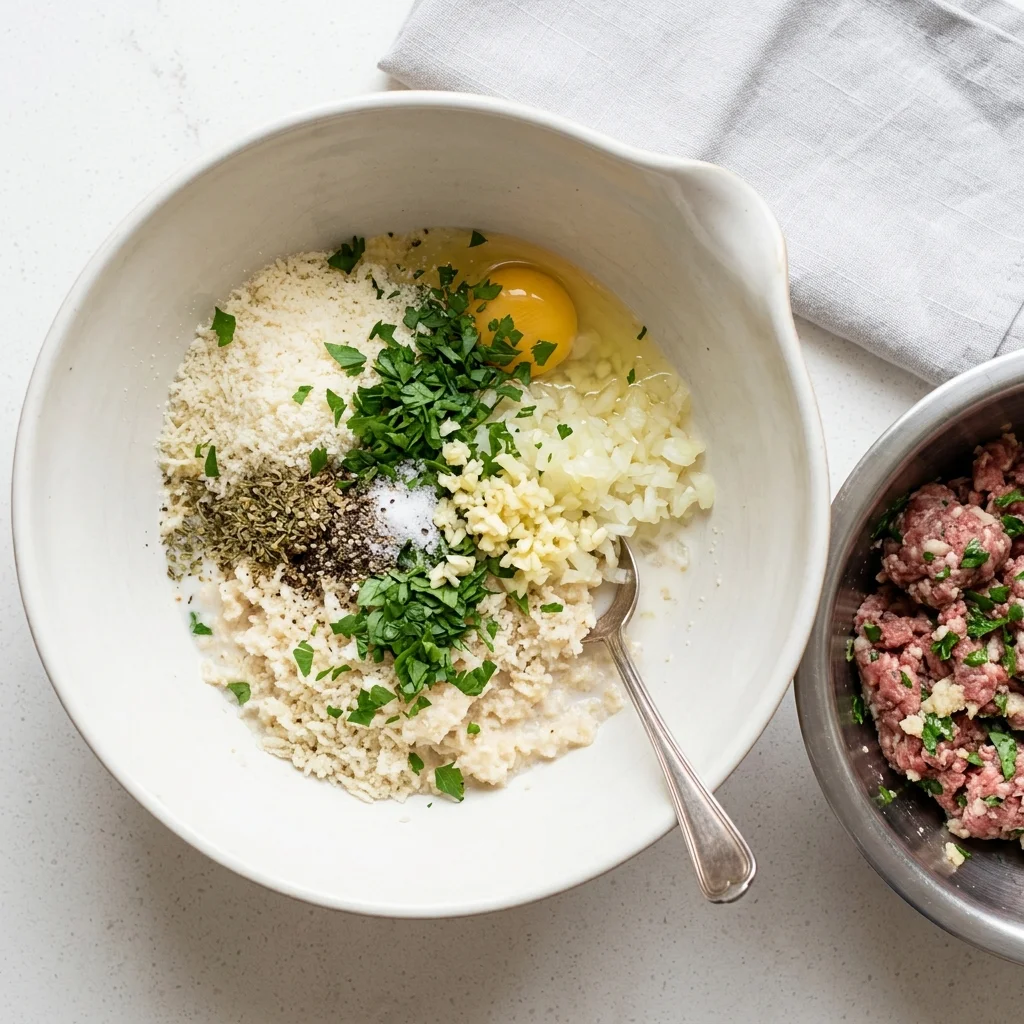
Mix the seasonings, egg, cheese, onion, and soaked crumbs before adding the beef. This reduces handling and helps prevent a dense, springy texture.
How to Make Meatballs
- Build the seasoning base. Stir together the soaked panko, egg, Parmesan, onion, garlic, parsley, oregano, salt, and pepper. Chef’s Note: Break up the panade now so wet clumps do not remain in the mixture.
- Add the beef. Scatter the cold ground beef over the seasoning base and fold with your fingers just until no obvious streaks remain. Chef’s Note: Pinching and folding is gentler than kneading.
- Portion the mixture. Scoop 18 portions, about 2 tablespoons each, onto the baking sheet. Adjust any pieces that are noticeably larger or smaller before rolling.
- Shape lightly. Roll each portion between damp palms just until round, then leave about 1 inch of space around each one. Do not compress them until firm.
- Bake until browned. Cook in a 425°F oven for 14 to 17 minutes.The outside should show browned patches and the center of the largest piece must reach 160°F. Chef’s Note: Begin checking at 14 minutes because smaller portions can dry quickly after reaching temperature.
Use a thermometer on one of the largest meatballs. Ground beef needs to reach 160°F in the center, and browning alone cannot confirm that the middle is safe.
Expert Tips for the Best Results
- Keep the beef cold. Prep the panade and aromatics first, then take the meat from the refrigerator.
- Stop mixing early. Fold only until the mixture looks even. Extra kneading gives the finished meatballs a firmer bite.
- Portion before rolling. A scoop keeps the last few pieces from becoming oversized and needing extra oven time.
- Make ahead safely. Shape the raw mixture, cover tightly, refrigerate at 40°F or below, and bake within 24 hours.
- Use finely grated cheese. Large, dry shreds do not blend into the mixture as evenly as fine Parmesan.
- Chill leftovers promptly. Store cooked portions in a shallow airtight container for 3 to 4 days.
Common Mistakes and Troubleshooting
- Tough texture: The mixture was likely overmixed or packed too firmly. Fold gently next time. If already baked, serve in warm tomato sauce for extra moisture.
- Falling apart: The mixture may be too wet or unevenly combined. Chill soft portions for 15 minutes before baking instead of adding a large amount of dry breadcrumbs.
- Pale outside: Crowding traps steam. Leave space between pieces. Fully cooked but pale meatballs can go under the broiler for 30 to 60 seconds while watched closely.
- Sticking bottoms: Use parchment with a thin film of oil and let the baked pieces stand for 2 minutes before lifting them.
- Dry centers: Very lean beef or extra baking time removes moisture quickly. Use 85/15 beef when possible and start checking temperature at 14 minutes.
Storage Instructions
Room Temperature: Do not leave cooked meatballs out for more than 2 hours, or 1 hour above 90°F.
Refrigerator: Cool promptly and refrigerate in a shallow airtight container for 3 to 4 days at 40°F or below.
Freezer: Freeze cooked portions in a single layer, then transfer to a freezer-safe bag. For best quality, use within about 4 months.
Reheating: Cover and warm in a 325°F oven with a spoonful of sauce or water until the centers reach 165°F, usually 12 to 18 minutes from chilled.
Make-Ahead Notes: Shape the raw mixture up to 24 hours ahead and keep it covered in the refrigerator. Do not partially cook it for later finishing.
Variations and Substitutions
Spicy red-pepper version: Add 1/2 teaspoon crushed red pepper to the seasoning base and serve with tomato sauce.
Mild version: Reduce the garlic to 2 cloves and use 1/2 teaspoon dried parsley in place of the oregano for a softer flavor.
Gluten-free version: Use plain gluten-free panko in the same volume. Let it soak for the full 5 minutes because some gluten-free crumbs hydrate more slowly.
Dairy-free version: Use unsweetened plain oat milk and replace Parmesan with 2 tablespoons nutritional yeast plus a small extra pinch of salt.
Turkey version: Use ground turkey that is not extremely lean and bake to 165°F. If the mixture feels soft, chill the shaped portions for 15 minutes first.
What to Serve With Meatballs
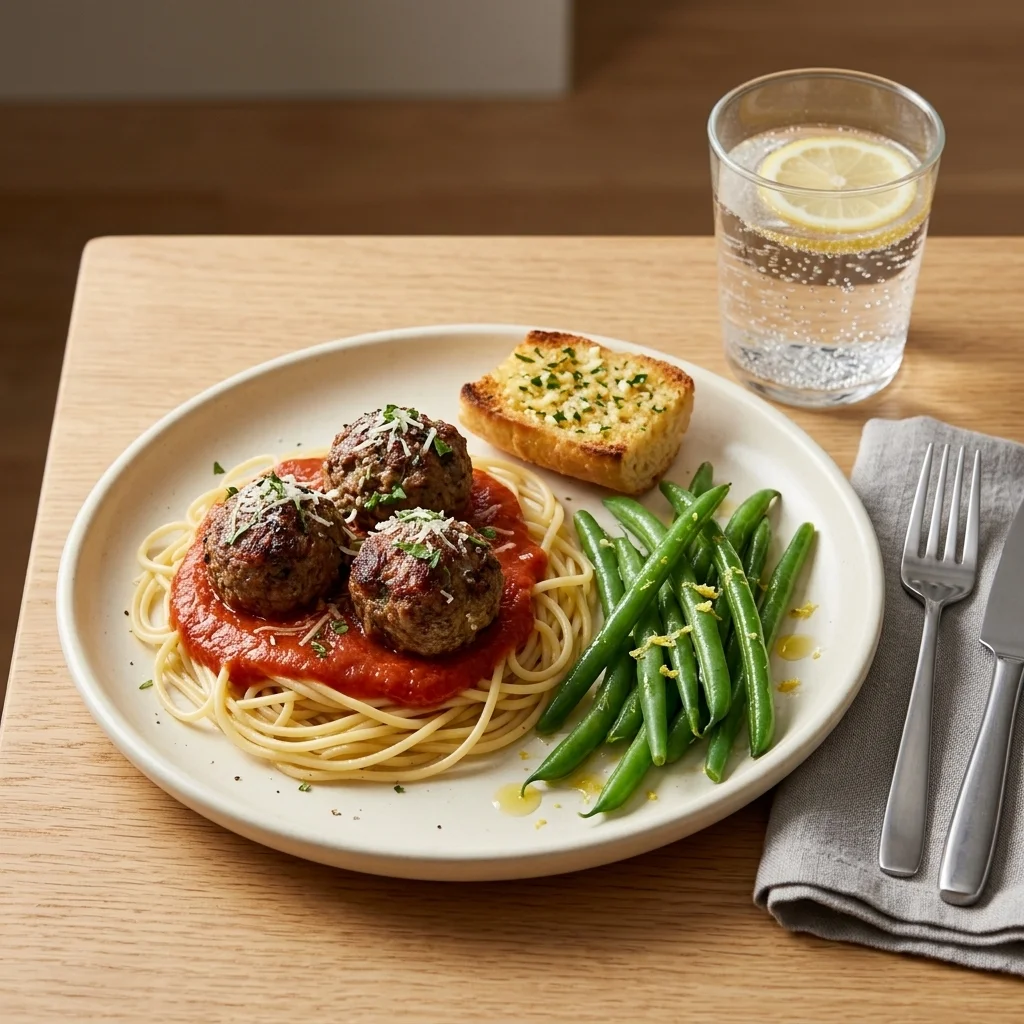
Spaghetti and tomato sauce: The sauce adds moisture and carries the garlic, Parmesan, and herbs through the pasta.
Garlic bread: Crisp edges are useful for catching extra sauce.
Lemony green beans: Their bright flavor cuts through the richness of the beef and cheese.
Soft polenta: Spoon the meatballs and sauce over creamy polenta for a comforting alternative to pasta.
Sparkling water with lemon: A cold citrusy drink keeps a rich pasta or sandwich meal feeling fresh.
Frequently Asked Questions
Can I make meatballs ahead of time?
Yes. Shape the raw mixture up to 24 hours before baking, cover the tray tightly, and refrigerate at 40°F or below. You can also bake the full batch, cool it promptly, and refrigerate it for 3 to 4 days. For longer storage, freeze the cooked pieces once they are completely cool. Avoid partially cooking ground beef for later finishing, because the safer approach is to cook it fully in one session.
Why do my meatballs fall apart when I cook them?
They usually fall apart because the mixture is too wet, unevenly mixed, or missing enough binder to hold its shape. Soak the panko with the measured milk, use one egg for this batch size, and combine everything evenly without kneading. If the mixture still feels very soft, chill the shaped portions for 15 minutes. Do not keep adding dry crumbs until the mixture feels stiff, because that can make the baked center dry.
What can I use instead of panko breadcrumbs?
Fine dry breadcrumbs work, but use about 1/3 cup instead of 1/2 cup because they pack more tightly. Soft fresh breadcrumbs are another good option and often make a tender center when soaked with milk. For a gluten-free batch, use plain gluten-free panko and let it hydrate fully before adding the beef. Whatever you choose, the goal is a moist panade, not dry crumbs mixed directly into the meat.
How do I know when baked meatballs are done?
Check the largest piece with an instant-read thermometer and look for 160°F in the center for ground beef. At 425°F, 2-tablespoon portions usually need about 14 to 17 minutes, but ovens and portion sizes vary. The outside should show browned patches and feel set when gently pressed. Do not rely on color inside the meatball as your safety test. Temperature is the reliable cue.
Why are my meatballs dense even when I use breadcrumbs?
Dense meatballs often come from overmixing or packing the portions too tightly, even when breadcrumbs are present. Hydrate the crumbs first, mix the seasonings separately, then fold in the cold beef only until the mixture looks even. Shape with light pressure instead of squeezing. A panade can hold moisture, but it cannot fully offset meat that has been kneaded until the proteins become tight and springy.
Conclusion
The most useful habit with meatballs is to treat the mixture gently from the moment the beef enters the bowl. A soft panade, even seasoning, consistent portions, and a thermometer do more for the final texture than extra binders or long cooking. Once you know that rhythm, the same batch can move easily between pasta night, sandwiches, and freezer meals.
If you loved this recipe, save it to your easy dinner Pinterest board so you can find it easily later!
Tender Baked Meatballs with Garlic and Parmesan
Ingredients
Equipment
Method
- Preheat the oven to 425°F. Line a large rimmed baking sheet with parchment paper and brush it lightly with olive oil.
- Combine the panko and milk in a small bowl and let soak for 5 minutes until the crumbs are fully damp.
- Stir together the soaked panko, egg, Parmesan, onion, garlic, parsley, oregano, salt, and pepper until evenly combined, breaking up any wet clumps.
- Scatter the cold ground beef over the seasoning base and fold with your fingers just until no obvious streaks remain — do not knead or overwork the mixture.
- Scoop 18 portions (about 2 tablespoons each) onto the baking sheet. Roll each piece lightly between damp palms until round and leave about 1 inch of space around each one.
- Bake for 14 to 17 minutes until the outsides show browned patches and the center of the largest meatball reaches 160°F on an instant-read thermometer. Start checking at 14 minutes.
Notes
- Storage: Refrigerate in a shallow airtight container for 3 to 4 days, or freeze in a single layer then transfer to a freezer bag for up to 4 months. Reheat covered at 325°F with a spoonful of sauce or water until centers reach 165°F.
- Make-ahead: Shape the raw mixture, cover tightly, and refrigerate for up to 24 hours before baking. Do not partially cook and finish later.
- Texture tip: Fold the beef in gently and roll with light pressure only — overworking or packing portions firmly makes the centers tight and rubbery.