Soft and Fluffy Donuts You Can Make at Home in 3 Hours
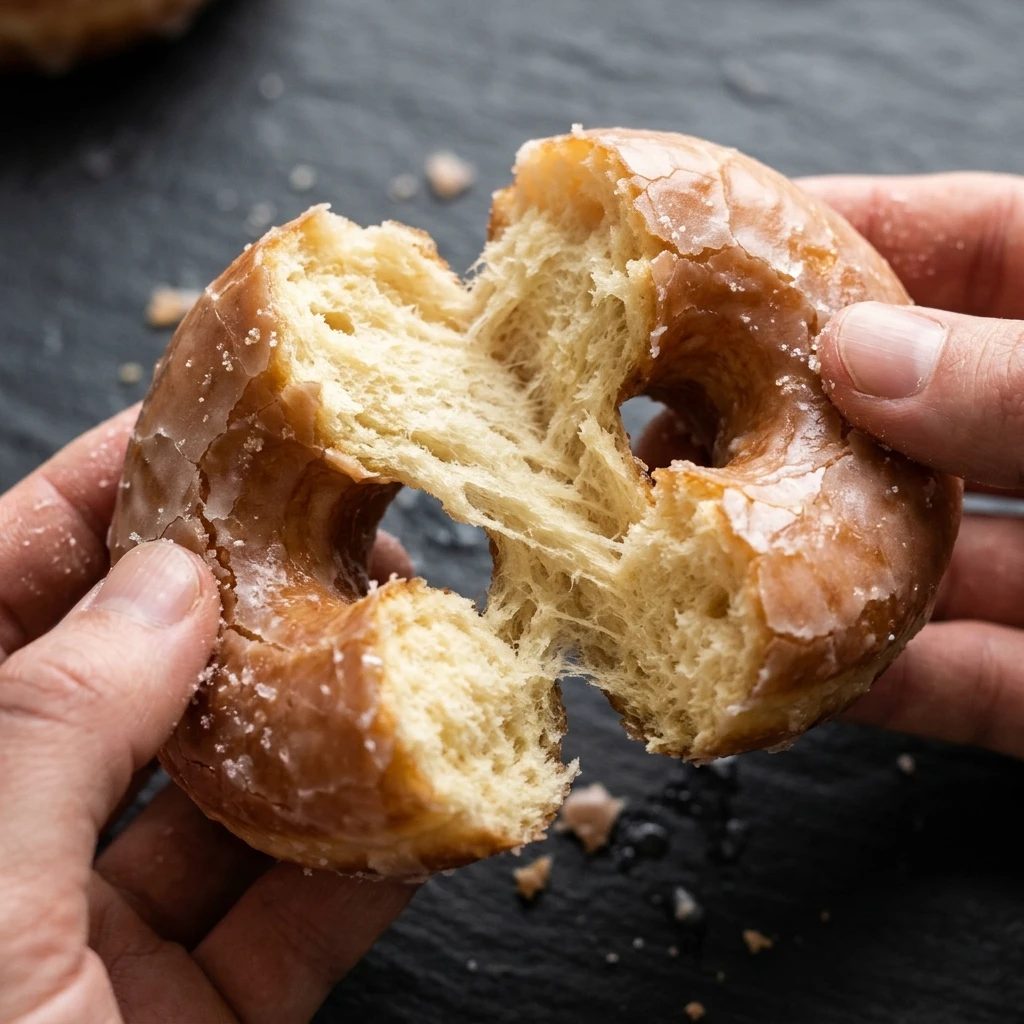
Fresh from the fryer, a glazed ring tastes nothing like the boxed kind. Homemade donuts come out soft and warm, with a thin pale band around the middle and glaze that cracks a little when you bite in. This recipe makes classic yeast donuts that pull apart in tender, feathery layers.
I tested this dough eleven times over six weeks. The early batches came out heavy, greasy, or pale. Each time, I changed one thing and wrote down the result. Three small changes fixed everything: milk warmed to 110°F instead of hot, a dough that stays slightly tacky, and oil held at a steady 350°F.
You need about three hours, but most of that is dough resting while you do something else. Your hands are busy for roughly 50 minutes. Nothing here calls for a special machine or hard to find ingredients, only a heavy pot, a thermometer, and a little patience at the stove.
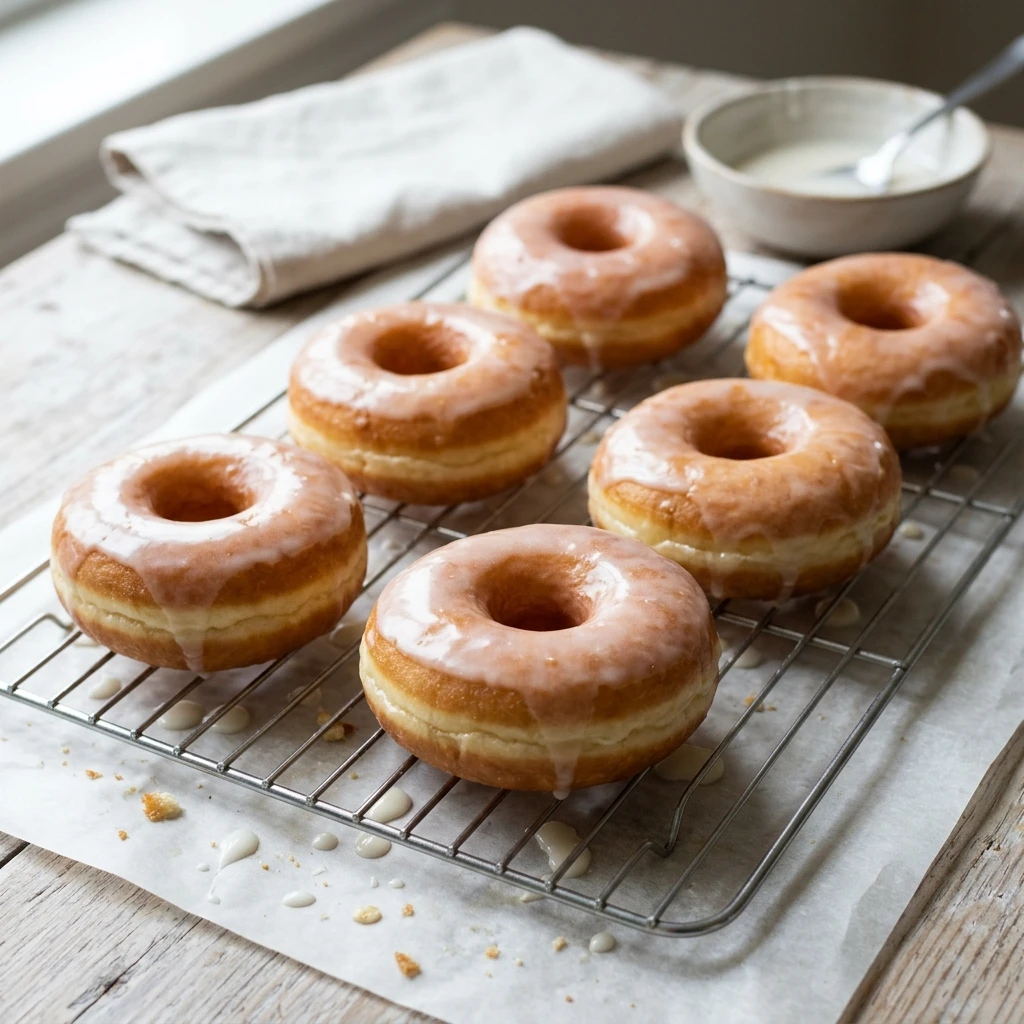
Table of Contents
Why You Will Love These Donuts
- Ready in under three hours, and only 50 minutes of that needs you at the counter.
- The crumb is soft and springy, with the thin white band you see on bakery donuts.
- Kids can cut the rings and dip them in glaze, which keeps small hands busy for 20 minutes.
- One batch makes 12 rings and 12 holes, plenty for a full breakfast table.
Recipe Snapshot
- Prep Time: 30 minutes
- Rise Time: 1 hour 55 minutes
- Cook Time: 20 minutes
- Total Time: 2 hours 55 minutes (includes 10 minutes of cooling)
- Servings: 12 rings plus 12 holes
- Difficulty: Medium
- Calories per Serving: About 352
- Key Tool: Deep fry thermometer
- Best For: Weekend breakfast, birthdays, and bake sales
Nutrition Information
Calories per Serving: About 352
Protein: 6 g
Carbs: 53 g
Fat: 13 g
Fiber: 1 g
Sugar: 25 g
Sodium: 241 mg
Serving Size: About 1 ring plus 1 hole
Servings per Recipe: 12
Most of the calories come from flour, butter, and glaze, while the eggs and milk add about 6 grams of protein. The sugar number is high because the glaze uses 240 grams of powdered sugar. Rolling warm rings in cinnamon sugar instead cuts it noticeably.
Nutrition values are approximate and calculated per serving using standard ingredient amounts. Values may vary based on brands used and portion sizes.
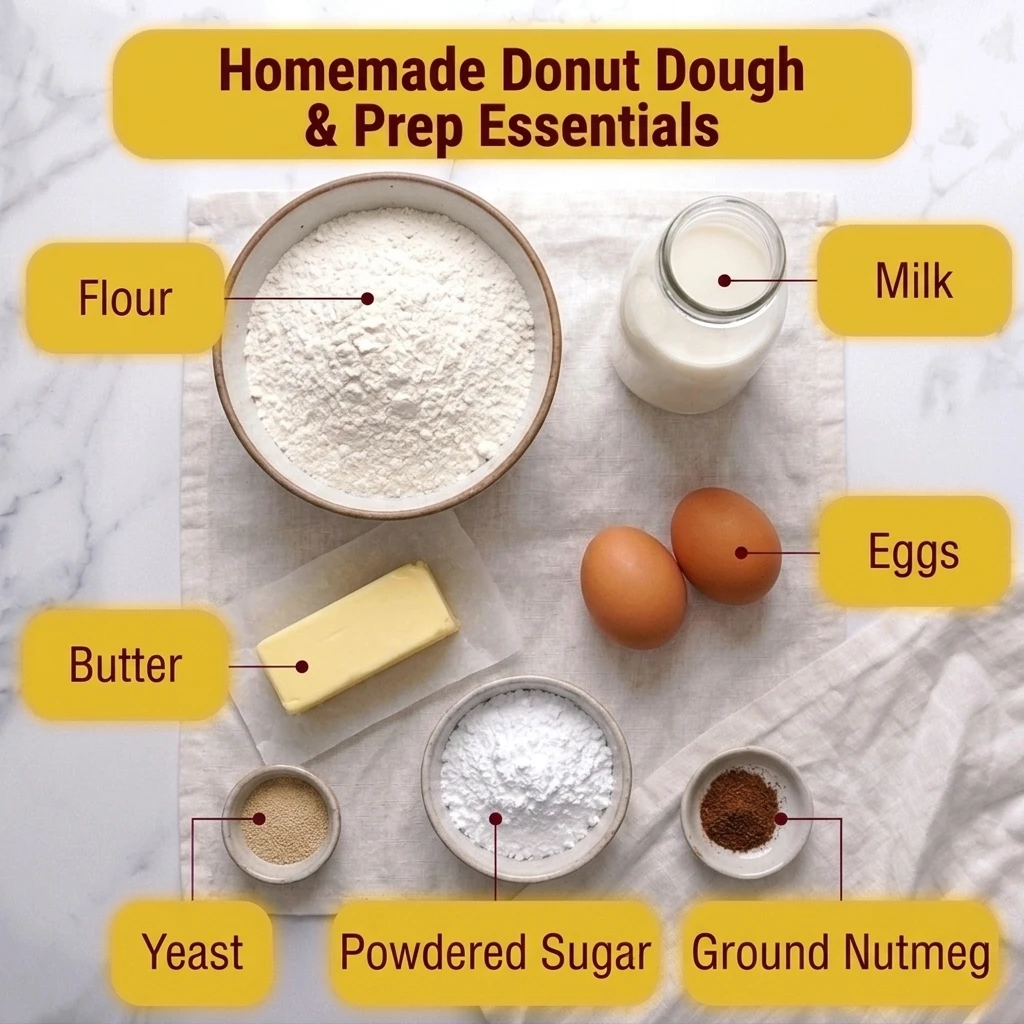
Ingredients for Homemade Donuts
For the Dough
- 3 1/2 cups (420 g) all-purpose flour, plus 2 tablespoons for dusting (bread flour works)
- 1/4 cup (50 g) granulated sugar
- 2 1/4 teaspoons (7 g) instant yeast, one standard packet (active dry works)
- 1 teaspoon fine salt
- 1/2 teaspoon ground nutmeg (cinnamon works)
- 3/4 cup (183 g) whole milk, warmed to 110°F (2% milk works)
- 2 large eggs, at room temperature
- 1/4 cup (57 g) unsalted butter, melted and cooled (vegetable oil works 1 to 1)
- 1 teaspoon alcohol-free vanilla extract
- 1 teaspoon vegetable oil, for the rising bowl
For Frying
- 8 cups (about 2 liters) vegetable or canola oil, about 1 1/2 inches deep in a heavy 5 quart pot
For the Glaze
- 2 cups (240 g) powdered sugar
- 1/4 cup (61 g) whole milk, plus up to 1 tablespoon more if needed
- 1 teaspoon alcohol-free vanilla extract
- 1/8 teaspoon fine salt
Milk at 110°F wakes the yeast gently, while milk above 130°F can kill it. King Arthur all-purpose flour has more protein than many store brands, which gives the dough structure to hold its puff in the oil. Butter and eggs make the crumb tender, and skipping either gives a dry, bready ring.
Equipment Needed
- 5 quart Dutch oven: thick walls keep the oil temperature steady.
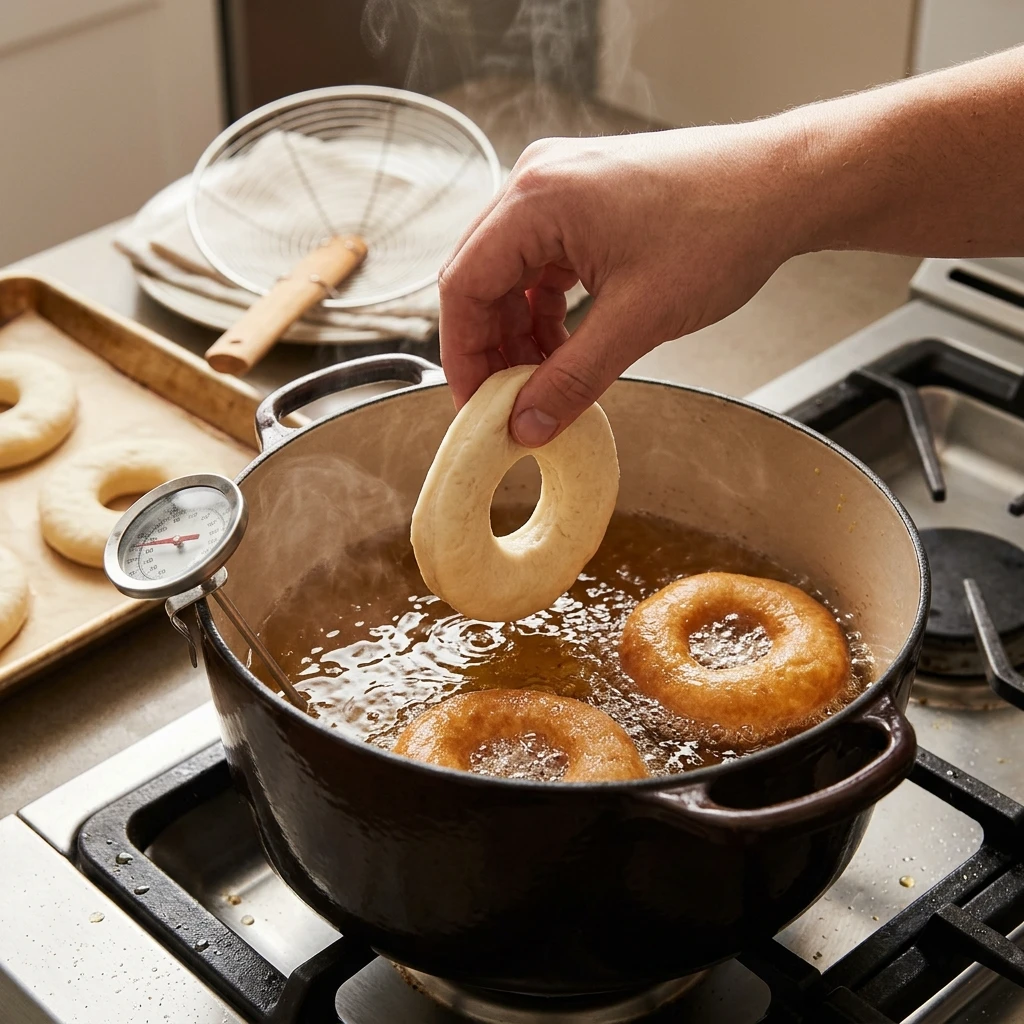
- Clip on deep fry thermometer: keep the tip off the pot bottom.
- 3 inch and 1 inch round cutters: a glass and a bottle cap work in a pinch.
- Stand mixer with dough hook: 10 minutes of hand kneading also works.
- Spider strainer or chopsticks: both flip rings without poking the crust.
- Wire rack over a rimmed baking sheet: air under the rings keeps the bottoms crisp.
Pro Tip: Test your thermometer in boiling water before you trust it. It should read 212°F at sea level, and if it is off, shift your frying target by the same amount.
Preparation
- Set the eggs out 30 minutes ahead so they reach room temperature.
- Warm the milk to 110°F, then melt the butter and cool it for 5 minutes.
- Line two baking sheets with parchment and dust them lightly with flour.
- Find a spot near 75°F for the rise, such as an oven with only the light on.
- Set a wire rack over a paper towel lined sheet, and measure the glaze ingredients. Do not heat the oil yet.
Step-by-Step Instructions
- Whisk the flour, sugar, yeast, salt, and nutmeg in a stand mixer bowl, until the mix looks evenly pale.
- Add the warm milk, eggs, melted butter, and vanilla. Mix on low with the dough hook for 1 minute, until the dough looks shaggy with no dry flour left.
- Knead on medium low for 6 to 8 minutes, until the dough looks smooth and stretches into a thin sheet without tearing. Chef’s Note: Resist extra flour, because a slightly tacky dough fries up fluffier.
- Shape the dough into a ball and set it in a bowl coated with 1 teaspoon of oil. Cover and let it rise 1 hour to 1 hour 15 minutes, until doubled and slow to spring back when poked.
- Roll the dough on a floured surface to 1/2 inch thick, then cut rings with the 3 inch cutter and punch each center with the 1 inch cutter. Chef’s Note: Press straight down without twisting so the edges rise evenly.
- Gather the scraps, roll once, and cut more rings. Set all the rings 2 inches apart on the floured sheets, cover loosely, and rest 30 to 40 minutes, until puffy and a gentle press leaves a dent that fills back in slowly.
- Heat the oil in the Dutch oven over medium to 350°F, until the thermometer holds steady for a full minute. Chef’s Note: Start heating 15 minutes before the second rest ends.
- Lower 3 rings into the oil with a floured spatula and fry for 60 to 90 seconds per side. They should turn deep golden brown with a pale band around the middle. Chef’s Note: Let the oil climb back to 350°F before each new batch.
- Fry the holes last, 6 at a time, 45 seconds per side, until puffed and golden. Cool everything on the wire rack for 10 minutes, until warm but not hot.
- Whisk the powdered sugar, milk, vanilla, and salt until the glaze falls off the whisk in a thick ribbon. Dip the top of each ring and rest it on the rack for 10 minutes, until the glaze turns matte and set.
Make-Ahead Shortcut: After the first rise, punch the dough down, cover the bowl, and refrigerate it for 8 to 12 hours. Roll and cut the cold dough, then rest the shapes 45 to 60 minutes at room temperature before frying.
Expert Tips and Tricks
- I once skipped the second rest because everyone was hungry. The rings came out flat and dense.
- Mix the glaze up to 2 days ahead and keep it in a covered jar in the refrigerator. Whisk in a teaspoon of milk before using it.
- Roll the dough a full 1/2 inch thick. Thinner rings fry fast and turn dry and cakey.
- Cut the second batch while the first one fries, so the next rings are ready the moment the oil recovers.
- Keep glazed rings in a single layer in an airtight container, where they stay good for up to 24 hours.
- Flip each ring once with chopsticks. Extra turns roughen the surface and soak up oil.
Common Mistakes and Troubleshooting
Greasy, heavy donuts: The oil dropped below 340°F, usually from crowding the pot. Fry only 3 at a time. If they are already greasy, blot them on paper towels before glazing.
Pale, dense rings with no band: The dough was under proofed and sank in the oil. Wait for the slow dent next time. Serve this batch warm.
Dark outside, raw inside: The oil ran above 375°F, or the dough was too thick. Hold 350°F and roll to 1/2 inch. If a center is doughy, bake the ring at 350°F for 5 minutes.
Tough, chewy rings: Too much flour went into the dough. Weigh 420 grams instead of scooping, and stop dusting once the dough rolls out without sticking.
Glaze that slides off: The rings were still hot. Wait 10 minutes. If the glaze already looks thin, whisk in 2 tablespoons more powdered sugar.
How to Store Donuts and Keep Them Fresh
Room Temperature: Glazed donuts keep up to 24 hours in an airtight container, in a single layer.
Refrigerator: Up to 3 days in an airtight glass container. Warm them before eating, since they firm up in the cold.
Freezer: Freeze unglazed donuts on a tray for 1 hour, then move them to a freezer-safe zip bag for up to 2 months. Thaw at room temperature for 1 hour.
Reheating: Microwave one ring for 8 to 10 seconds, or warm several at 300°F for 5 minutes. Glaze after reheating so the sugar stays crisp.
Make-Ahead Notes: Whisk the dry ingredients the night before. Fry within 45 minutes of the second rest for the best puff.
I freeze extras on a tray first, then bag them. Nothing clumps, and I can grab exactly two rings on a rushed weekday morning.
Variations and Substitutions
- Spicy: Whisk 1/4 teaspoon cayenne and 1 teaspoon cinnamon into the glaze for a slow heat that works well with coffee.
- Kid-Friendly: Skip the nutmeg and roll the warm rings in cinnamon sugar, or add rainbow sprinkles right after dipping, before the glaze sets.
- Vegetarian: This dough is already vegetarian. For dairy free rings, use unsweetened soy milk and oil in place of the butter.
- Gluten-Free: Swap in a cup for cup gluten free flour blend that contains xanthan gum. The dough feels stickier and the rings are more fragile, so handle them gently.
- Cream Cheese Topping: Skip the glaze and spread a thin layer of cream cheese frosting over cooled rings for a tangy finish.
What to Serve With Your Donuts
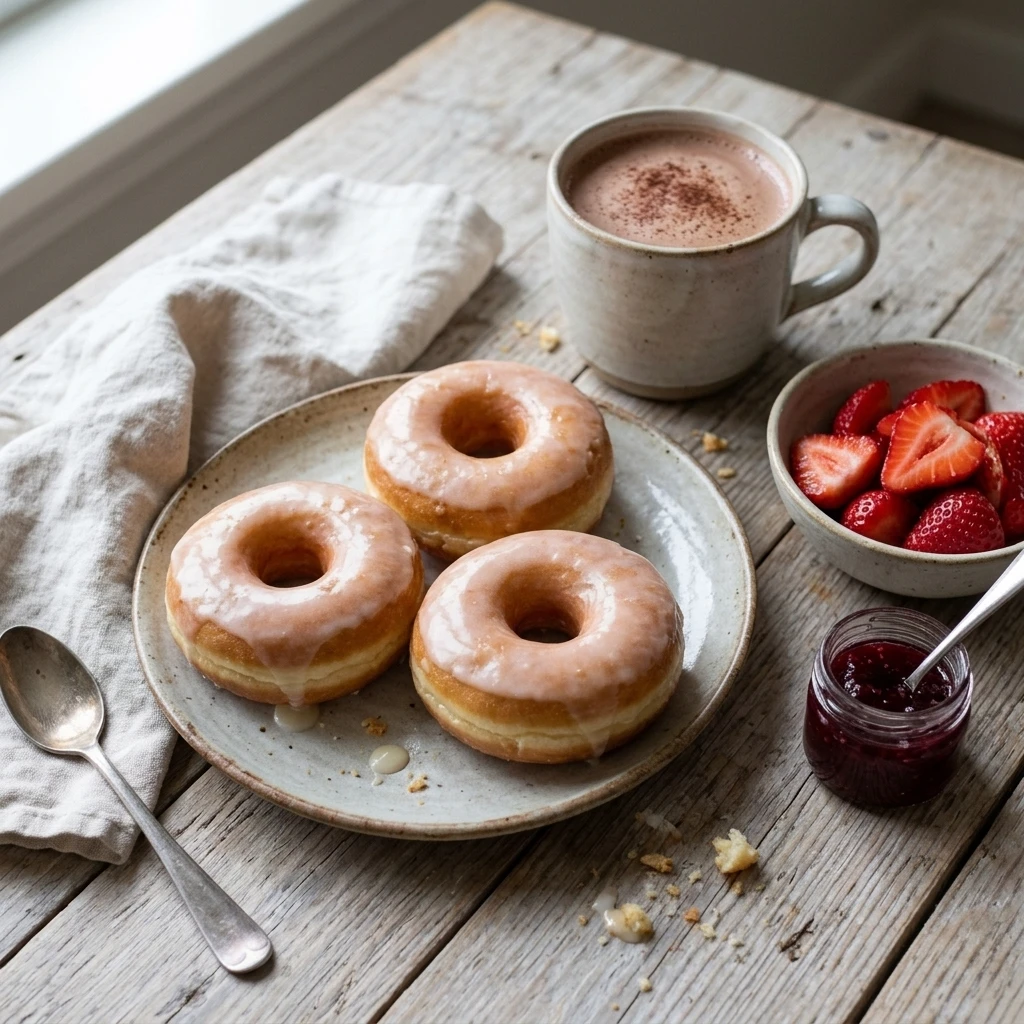
- Hot chocolate: A mug of hot chocolate made with real cocoa turns a plain morning into a treat.
- Fresh fruit: Sliced strawberries or orange wedges cut through the sweet glaze.
- Warm jam: Heat 1/4 cup raspberry jam for 20 seconds and use it for dipping unglazed holes.
- Black coffee or tea: The bitterness keeps a sugary ring from tasting heavy.
- A brunch spread: Add crispy homemade waffles and scrambled eggs, and let the rings be the sweet side.
Frequently Asked Questions
Can you glaze donuts the night before?
You can, but the glaze turns sticky and weeps by morning. A better plan is to fry the rings, cool them completely, and store them unglazed in an airtight container overnight. Warm one for 8 seconds in the microwave, then dip it in fresh glaze. I tried this on a school morning, and the donuts tasted like they had just come out of the oil.
Why did my donuts deflate after frying?
Over proofed dough is the usual cause. Past 40 minutes of rest, the yeast has stretched the dough beyond its limit, and it collapses in the hot oil. A dent that stays put when you press is the warning sign. Next time, fry as soon as the dent fills back in slowly. If a batch is over proofed, reroll it once and rest it 15 minutes.
Can I use bread flour instead of all purpose flour for donuts?
Yes. Use the same weight, 420 grams, and expect a chewier bite because bread flour has more protein. It also absorbs more liquid, so add 1 to 2 tablespoons of milk if the dough feels stiff after kneading. All purpose flour gives the softer crumb I prefer for glazed donuts, and bread flour suits anyone who likes a bakery style chew.
How do you know when donuts are done frying?
Look for a deep golden color on both sides after 60 to 90 seconds each, with a pale band around the middle. The surface should feel firm when you lift one with the spider. If you are unsure, cut the first ring open. The center should look springy and cooked, never wet or gummy. Hot oil can fool your eyes, so check the thermometer too.
Why don’t my homemade donuts have a white ring around the middle?
That pale band shows up when a ring floats high in the oil, which takes enough air in the dough. No band usually means under proofed dough that sat low, or oil that browned the sides too soon. Rest the dough until a dent fills back in slowly, and hold the oil at 350°F. In my tests, rings that rested the full 40 minutes showed the band every time.
Final Thoughts on Homemade Donuts
My favorite moment is the first ring from the rack, still warm, with glaze that has just begun to set. It is a small reward after an hour of work, and it is worth saving one plain ring to taste without anything on top.
Make the recipe once as written, then change one thing at a time. A new glaze or a cinnamon sugar coat is an easy place to begin. Your second batch will beat your first, and your third will look like it came from a bakery.
If you loved this recipe, save it to your donut recipes Pinterest board so you can find it easily later!
Soft and Fluffy Donuts You Can Make at Home in 3 Hours
Ingredients
Equipment
Method
- Set the eggs out 30 minutes ahead. Warm the milk to 110°F, melt the butter and cool it 5 minutes, line two baking sheets with parchment and dust with flour, and set a wire rack over a paper towel lined sheet. Do not heat the oil yet.
- Whisk the flour, sugar, yeast, salt, and nutmeg in a stand mixer bowl, until the mix looks evenly pale.
- Add the warm milk, eggs, melted butter, and vanilla. Mix on low with the dough hook for 1 minute, until the dough looks shaggy with no dry flour left.
- Knead on medium low for 6 to 8 minutes, until the dough looks smooth and stretches into a thin sheet without tearing. Do not add extra flour, since a slightly tacky dough fries up fluffier.
- Shape the dough into a ball and set it in a bowl coated with 1 teaspoon of oil. Cover and let it rise at about 75°F for 1 hour to 1 hour 15 minutes, until doubled and slow to spring back when poked.
- Roll the dough on a floured surface to 1/2 inch thick, then cut rings with the 3 inch cutter and punch each center with the 1 inch cutter. Press straight down without twisting so the edges rise evenly.
- Gather the scraps, roll once, and cut more rings. Set all the rings 2 inches apart on the floured sheets, cover loosely, and rest 30 to 40 minutes, until puffy and a gentle press leaves a dent that fills back in slowly.
- Heat the oil in the Dutch oven over medium to 350°F, until the thermometer holds steady for a full minute. Start heating 15 minutes before the second rest ends.
- Lower 3 rings into the oil with a floured spatula and fry 60 to 90 seconds per side, until deep golden brown with a pale band around the middle. Let the oil climb back to 350°F before each new batch.
- Fry the holes last, 6 at a time, 45 seconds per side, until puffed and golden. Cool everything on the wire rack for 10 minutes, until warm but not hot.
- Whisk the powdered sugar, milk, vanilla, and salt until the glaze falls off the whisk in a thick ribbon. Dip the top of each ring and rest it on the rack for 10 minutes, until the glaze turns matte and set.