Easy Roasted Butternut Squash Soup That Tastes Rich and Silky
A good butternut squash soup should taste like roasted squash first and cream second. Most of the versions I made early on did the opposite. They came out pale, sweet, and thin, with a heavy hand of cinnamon covering for the missing flavor.
I tested this butternut squash soup nine times over four weeks, changing one thing per batch, until it tasted deep and savory with a smooth, spoon-coating texture. The fix turned out to be simple. Roast the squash at 425°F until the edges brown, then simmer it briefly with soft onion, garlic, and thyme. A splash of lemon juice at the end wakes the whole pot up.
You need one baking sheet, one Dutch oven, and about 25 minutes of hands-on work. It suits a Tuesday dinner or a Sunday lunch, and it reheats better than most cream soups. Below is how I make it, plus the mistakes I made along the way.
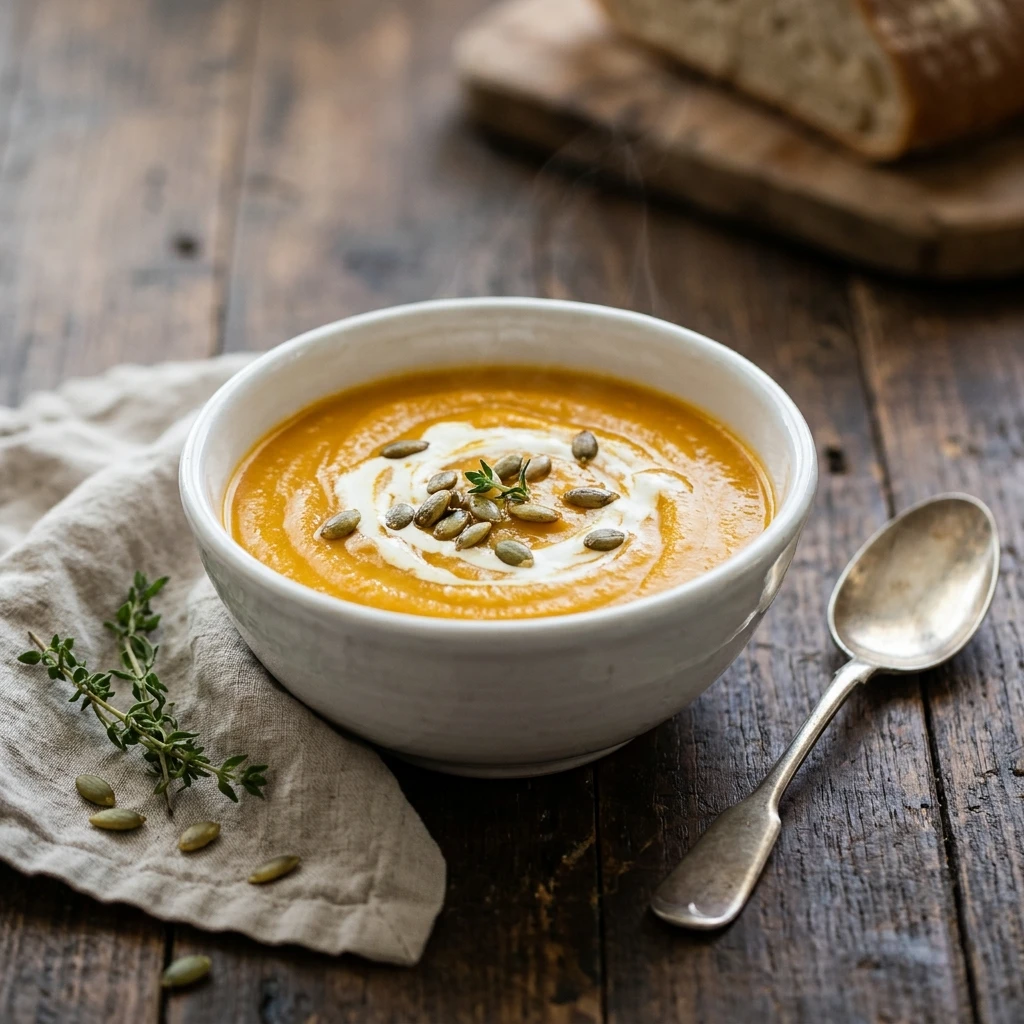
Table of Contents
Why You Will Love This Butternut Squash Soup
- The oven does the slow work, so hands-on time is about 25 minutes.
- Roasting builds deep caramel flavor with no added sugar, so the soup stays savory.
- It turns thick and silky with no flour or cornstarch, since the squash does the thickening.
- My daughter asked for a second bowl, then asked if the leftovers could go in her thermos for school lunch.
- A big batch freezes for up to 3 months, so one Sunday of cooking covers several busy weeknights.
Recipe Snapshot
- Prep Time: 20 minutes
- Cook Time: 50 minutes
- Total Time: 1 hour 10 minutes
- Servings: 6
- Difficulty: Easy
- Calories per Serving: About 230
- Key Ingredient or Tool: Ripe butternut squash and an immersion blender
- Best For: Weeknight dinners, fall lunches, and freezer meal prep
Nutrition Information for Butternut Squash Soup
Calories per Serving: About 230
Protein: 3 g
Carbs: 28 g
Fat: 14 g
Fiber: 4 g
Sugar: 7 g
Sodium: 291 mg
Serving Size: About 1 1/3 cups
Servings per Recipe: 6
Most of the fat comes from the cream, olive oil, and butter, which is why the soup feels rich at only 230 calories. The squash adds 4 g of fiber per bowl and most of the natural sweetness, so sugar stays low. Protein is modest, so add a sandwich if it needs to carry dinner.
Nutrition values are approximate and calculated per serving using standard ingredient amounts. Values may vary based on brands used and portion sizes.
Ingredients for Butternut Squash Soup
For roasting
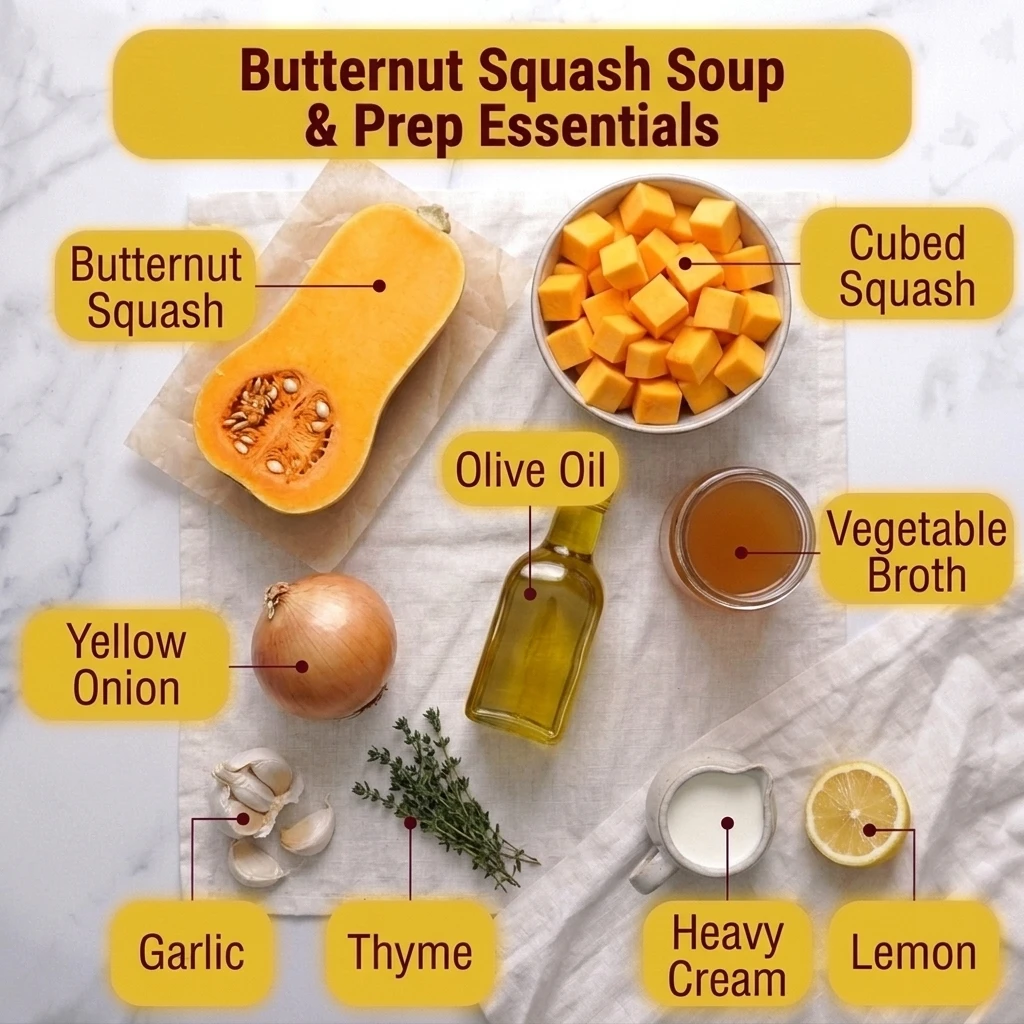
- 2 1/2 pounds peeled and seeded butternut squash, cut into 1-inch cubes (about 8 cups, from one 3 1/2 pound squash)
- 2 tablespoons extra virgin olive oil
- 1/2 teaspoon Diamond Crystal kosher salt (use about half as much table salt)
- 1/4 teaspoon ground black pepper
For the soup
- 1 tablespoon unsalted butter (use olive oil for a dairy-free soup)
- 1 large yellow onion, chopped into 1/2-inch pieces (about 1 cup)
- 4 garlic cloves, minced
- 1 teaspoon fresh thyme leaves (or 1/2 teaspoon dried thyme)
- 1/4 teaspoon ground nutmeg
- 4 cups low-sodium vegetable broth
- 1/2 teaspoon Diamond Crystal kosher salt, divided between the onions and the finished soup
To finish
- 1/2 cup heavy cream (full-fat canned coconut milk works as a swap)
- 1 tablespoon fresh lemon juice (apple cider vinegar works in a pinch)
- 2 tablespoons roasted pepitas, for topping (optional)
Three ingredients decide the result. Pick a squash that feels heavy for its size with a dull, matte skin, because a shiny skin often means it was picked early and tastes watery. Use low-sodium broth, since regular broth turns salty as it reduces. And keep the lemon juice, which separates a flat soup from a bright one.
Equipment Needed
- 18×13-inch rimmed baking sheet: Line it with parchment so browned edges lift off cleanly.
- 5 to 6 quart Dutch oven or heavy pot: A thick bottom keeps the onions from scorching.
- Immersion blender: It blends right in the pot, so there are fewer dishes.
- Countertop blender (backup): Fill it halfway and vent the lid for hot soup.
- Sharp vegetable peeler and chef’s knife: A Y-shaped peeler strips the tough skin fastest.
Preparation
- Set an oven rack in the center position and heat the oven to 425°F.
- Line an 18×13-inch rimmed baking sheet with parchment paper.
- Trim both ends, peel the squash, halve it lengthwise, scoop out the seeds, and cut it into even 1-inch cubes so they roast at the same speed.
- Chop the onion, mince the garlic, and pull the thyme leaves off the stems.
- Measure the broth, cream, and lemon juice and set them by the stove.
Pro Tip: Pierce the whole squash six or seven times with a fork and microwave it for 2 minutes before peeling. The skin softens just enough that peeling takes half the effort.
How to Make Butternut Squash Soup Step by Step
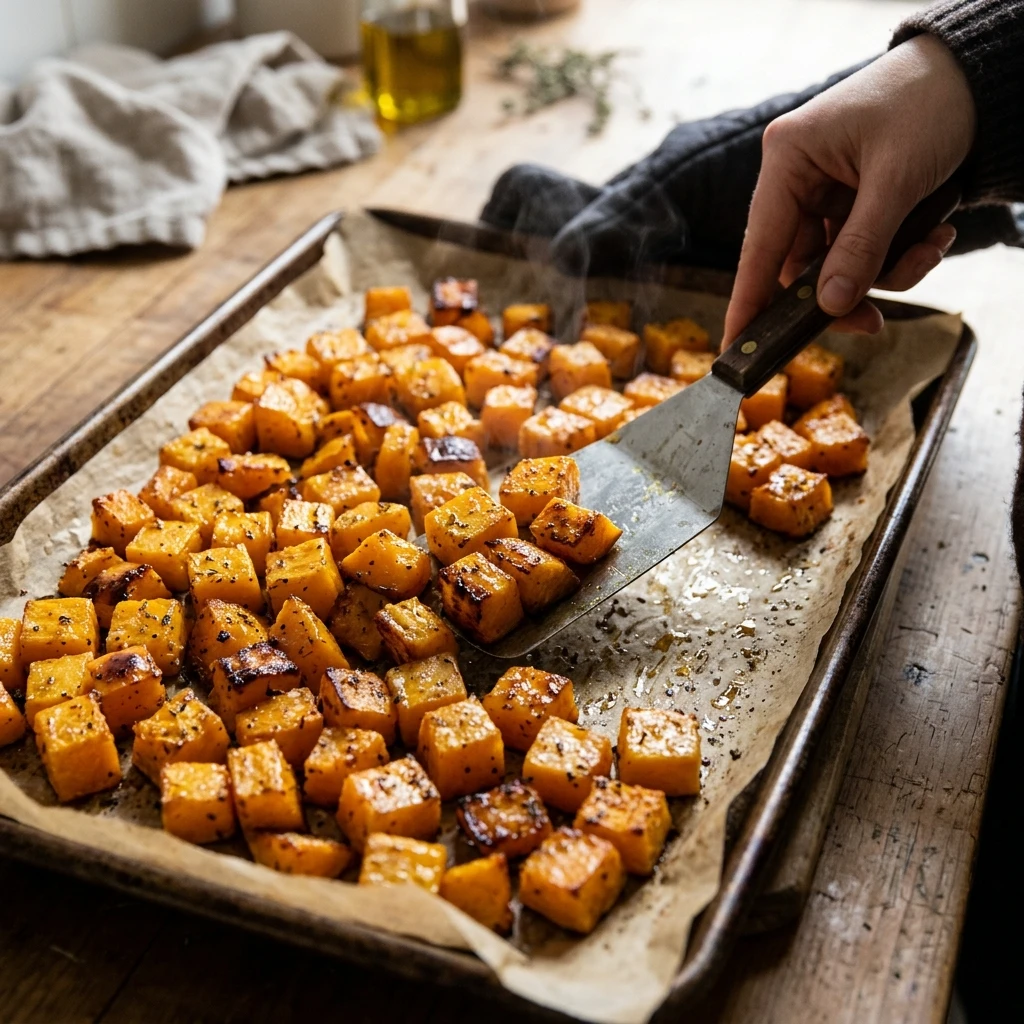
- Toss the squash with the olive oil, 1/2 teaspoon salt, and the pepper, then spread it on the baking sheet in a single layer with space between the cubes. Chef’s Note: Crowded cubes steam instead of browning, so use two sheets if they touch.
- Roast for 30 to 35 minutes, flipping the cubes once at the 15 minute mark. They are ready when the edges are deep golden brown and a fork slides in with no resistance.
- Melt the butter in the Dutch oven over medium heat while the squash finishes. Add the onion and 1/4 teaspoon salt, and cook for 6 to 8 minutes, stirring often, until the pieces turn soft and translucent with no brown color.
- Stir in the garlic, thyme, and nutmeg and cook for 30 seconds. The garlic should smell sweet and toasty, not sharp. Chef’s Note: Garlic burns fast and turns the whole pot bitter, so keep it moving.
- Add the roasted squash and the broth, then raise the heat to bring the pot to a gentle bubble. Lower the heat to medium-low and simmer, uncovered, for 15 minutes, until a cube crushes against the pot wall with the back of a spoon.
- Blend with an immersion blender for 2 to 3 minutes until the soup is completely smooth with no flecks. Chef’s Note: With a countertop blender, work in two batches and fill it only halfway, because hot liquid expands.
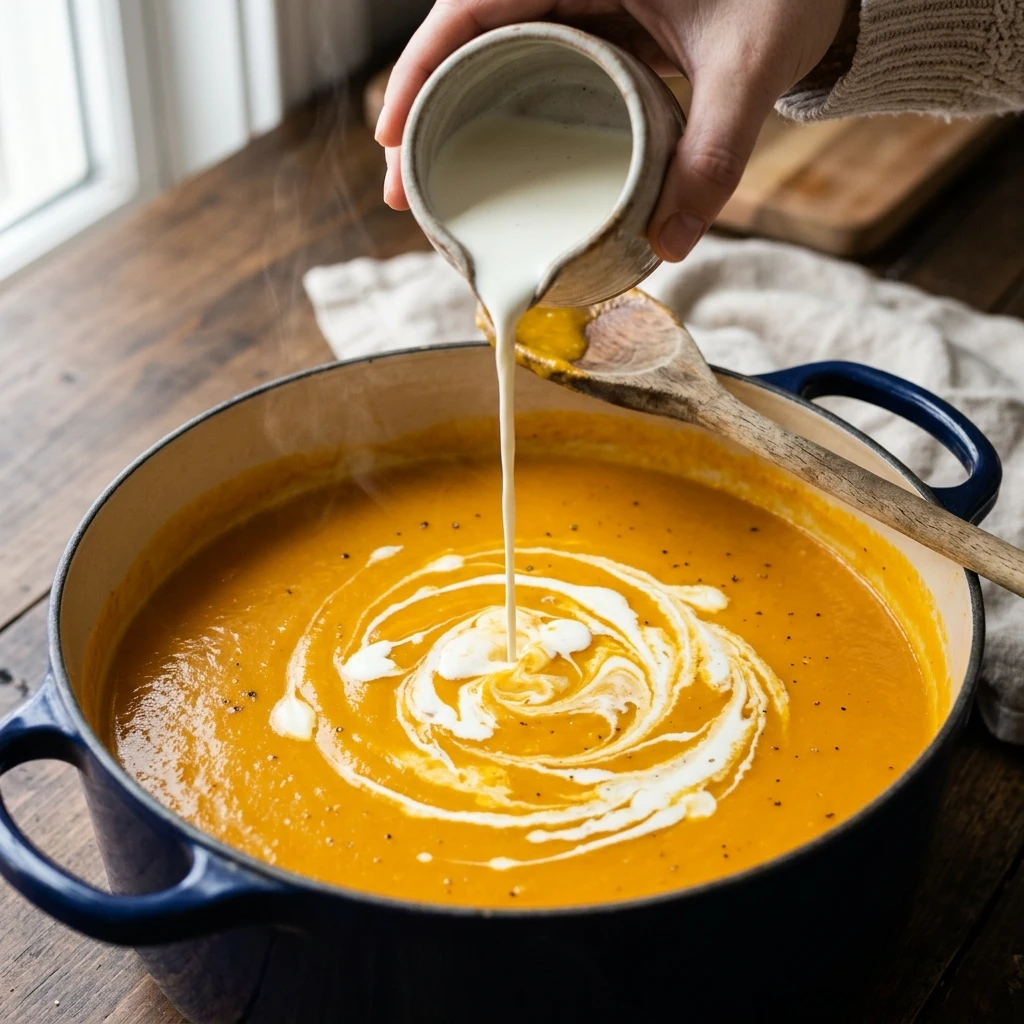
- Stir in the cream and lemon juice, then warm over low heat for 2 minutes without boiling. Taste, add the last 1/4 teaspoon salt if needed, and look for a deep orange color that coats the back of a spoon.
- Ladle into bowls, swirl in a little extra cream, and sprinkle with the pepitas. Serve while it is steaming hot, with the surface still glossy.
Expert Tips and Tricks
- Start with 4 cups of broth and stop there. Thin the finished soup with 1/4 cup of hot broth at a time, since you cannot take liquid out.
- My biggest mistake was filling the blender to the top. The lid popped and orange soup hit the ceiling, so now I fill it halfway and hold a towel over the lid.
- Roast the squash up to 2 days ahead and refrigerate the cubes in an airtight container. On the day, the soup takes about 25 minutes.
- Refrigerate the soup within 2 hours of cooking and finish it within 4 days.
- Blend longer than feels necessary. The soup looks smooth after one minute, but 2 to 3 minutes breaks down stringy fibers.
- Short on time? Buy two 20-ounce packages of pre-cut squash and skip the peeling, but check that the cubes match in size.
Common Butternut Squash Soup Mistakes and Troubleshooting
Pale, mushy squash
Crowded cubes trap steam and never brown. Give them space, or move pale cubes to a hot empty sheet and roast 10 more minutes at 425°F.
Thin, watery soup
Too much broth or under-roasted squash causes this. Simmer uncovered for 10 more minutes until it coats a spoon.
Bitter taste
Browned garlic is the usual cause. Add it last and cook it for only 30 seconds. A splash of cream softens a mild edge, but badly burnt garlic means starting over.
Grainy or stringy texture
Short blending leaves fibers behind. Blend 2 more minutes, then press the soup through a fine-mesh strainer if strings remain.
Flat flavor
Under-seasoning is the cause. Add salt 1/4 teaspoon at a time and extra lemon juice 1 teaspoon at a time, tasting after each.
Storing and Freezing Butternut Squash Soup
- Room Temperature: Up to 2 hours, or 1 hour above 90°F.
- Refrigerator: 3 to 4 days in airtight glass containers, filled in shallow layers.
- Freezer: Up to 3 months in freezer-safe zip bags or containers, leaving 1 inch of space at the top. Set aside freezer portions before stirring in the cream.
- Reheating: Warm over medium-low heat for 8 to 10 minutes, stirring often, until it bubbles gently and reads 165°F on a food thermometer. Add 1/4 cup of broth if it thickened.
- Make-Ahead Notes: Cook the soup through the blending step up to 3 days ahead, then add the cream and lemon juice when you reheat.
Storage Trick: Cool a full pot fast by dividing it into two shallow containers. Shallow layers drop below 40°F much quicker than one deep pot.
I always freeze single portions flat in zip bags on a baking sheet. Once solid, they stack like books and thaw in the fridge overnight. It means one lunch never requires defrosting the whole batch.
Butternut Squash Soup Variations and Substitutions
- Spicy: Add 1/4 teaspoon cayenne pepper and 1 teaspoon smoked paprika with the garlic. Top with chili flakes for color.
- Mild and Kid-Friendly: Leave out the nutmeg and thyme and use only 1/4 cup cream. Serve with toast strips for dunking, which my daughter prefers to a spoon.
- Vegetarian and Vegan: The base already uses vegetable broth, so it is vegetarian as written. For a fully vegan soup, swap the butter for olive oil and the cream for full-fat canned coconut milk.
- Gluten-Free: Every ingredient is naturally gluten-free as written. Check your broth label, because some brands add wheat-based flavorings.
- Apple and Sage: Add one peeled and chopped Granny Smith apple with the onion and swap the thyme for 6 chopped sage leaves. The tart apple cuts the sweetness.
What to Serve With Butternut Squash Soup
- Grilled cheese on sourdough: The crisp, salty sandwich is made for dunking into the smooth soup.
- Simple caprese salad: Fresh tomato and basil give a cool, juicy contrast to the warm, sweet bowl.
- Quick pickled red onions: A few tangy slices on top cut through the cream and add a pop of pink.
- A small cup of tomato soup: Serve both in half portions for a colorful two-soup lunch.
- Warm spiced apple juice: Simmer unsweetened apple juice with a cinnamon stick for a cozy, alcohol-free drink.

Frequently Asked Questions
can you freeze butternut squash soup with cream in it
Yes, but butternut squash soup freezes better before the cream goes in. Dairy can separate and look grainy after thawing. I freeze the blended base for up to 3 months, thaw it overnight in the fridge, and stir in fresh cream while reheating. Thin it with a splash of broth if it thickened in the freezer. If you already froze it with cream, whisk well while it reheats.
why is my butternut squash soup watery
Too much liquid is the usual reason, and squash that steamed instead of roasting adds extra water to butternut squash soup. Simmer the soup uncovered for 10 minutes to reduce it, or blend in a handful of extra roasted cubes. Next time, start with 4 cups of broth and add more only if needed. One small peeled, diced potato simmered with the squash also thickens the pot.
can i use frozen butternut squash for butternut squash soup
Yes, frozen cubes work well and save peeling time. Spread them on the baking sheet straight from the freezer, without thawing, and roast at 425°F for 35 to 40 minutes. They hold more water than fresh squash, so pat off any ice crystals and give them extra room on the pan to brown. In my tests, the flavor difference from fresh squash was small.
how long to roast butternut squash for soup
For butternut squash soup, roast 1-inch cubes at 425°F for 30 to 35 minutes, flipping once halfway. Look for deep golden edges and flesh that a fork pierces with no push. Larger chunks need 40 to 45 minutes, and halved squash takes about 45 to 50 minutes. Check at 30 minutes, since ovens run hot or cool. Browning is the goal, since those caramelized edges carry most of the flavor.
why does my butternut squash soup taste bland even with salt
Salt alone cannot fix a soup that lacks acid and browning. Pale squash tastes mild, and fat dulls flavor without something sharp to balance it. Roast until the edges darken, then add 1 tablespoon of lemon juice at the end and taste again before reaching for more salt. I also cook the nutmeg with the garlic for 30 seconds, which deepens its flavor.
Final Thoughts on Butternut Squash Soup
The best upgrade for any pot of soup is more time in the oven, not more spices. Let the squash get truly dark at the edges, taste before the last pinch of salt, and finish with the lemon.
I make a double batch every October and freeze half in single portions for the weeks when dinner has to be on the table in 10 minutes. Leftovers taste even better on day two, once the thyme and nutmeg settle in.
If you loved this recipe, save it to your fall soup recipes Pinterest board so you can find it easily later!
Easy Roasted Butternut Squash Soup That Tastes Rich and Silky
Ingredients
Equipment
Method
- Heat the oven to 425°F with a rack in the center. Line an 18×13-inch rimmed baking sheet with parchment paper.
- Toss the squash with the olive oil, 1/2 teaspoon salt, and the pepper. Spread it in a single layer with space between the cubes, using two sheets if they touch.
- Roast for 30 to 35 minutes, flipping once at the 15 minute mark, until the edges are deep golden brown and a fork slides in with no resistance.
- Melt the butter in the Dutch oven over medium heat. Add the onion and 1/4 teaspoon salt, and cook for 6 to 8 minutes, stirring often, until soft and translucent with no brown color.
- Stir in the garlic, thyme, and nutmeg and cook for 30 seconds, until the garlic smells sweet and toasty.
- Add the roasted squash and the broth. Bring to a gentle bubble, lower the heat to medium-low, and simmer uncovered for 15 minutes, until a cube crushes against the pot wall with the back of a spoon.
- Blend with an immersion blender for 2 to 3 minutes, until completely smooth with no flecks. With a countertop blender, work in two batches, fill it only halfway, and vent the lid.
- Stir in the cream and lemon juice, then warm over low heat for 2 minutes without boiling. Taste, add the last 1/4 teaspoon salt if needed, and look for a deep orange color that coats the back of a spoon.
- Ladle into bowls, swirl in a little extra cream, and sprinkle with the pepitas. Serve steaming hot.
Notes
- Storage: refrigerate 3 to 4 days in airtight containers, or freeze up to 3 months. Set aside freezer portions before adding the cream.
- Nutrition does not include the optional pepitas or the extra cream swirl.
- If you use table salt, use about half the amount of kosher salt listed.