Classic Pavlova With a Crisp Shell and Soft Center
A pavlova should shatter lightly under your fork, then give way to a soft, almost marshmallow-like middle. That contrast is the reason to make one. A dry meringue all the way through may taste sweet, but it misses the part that makes this dessert special.
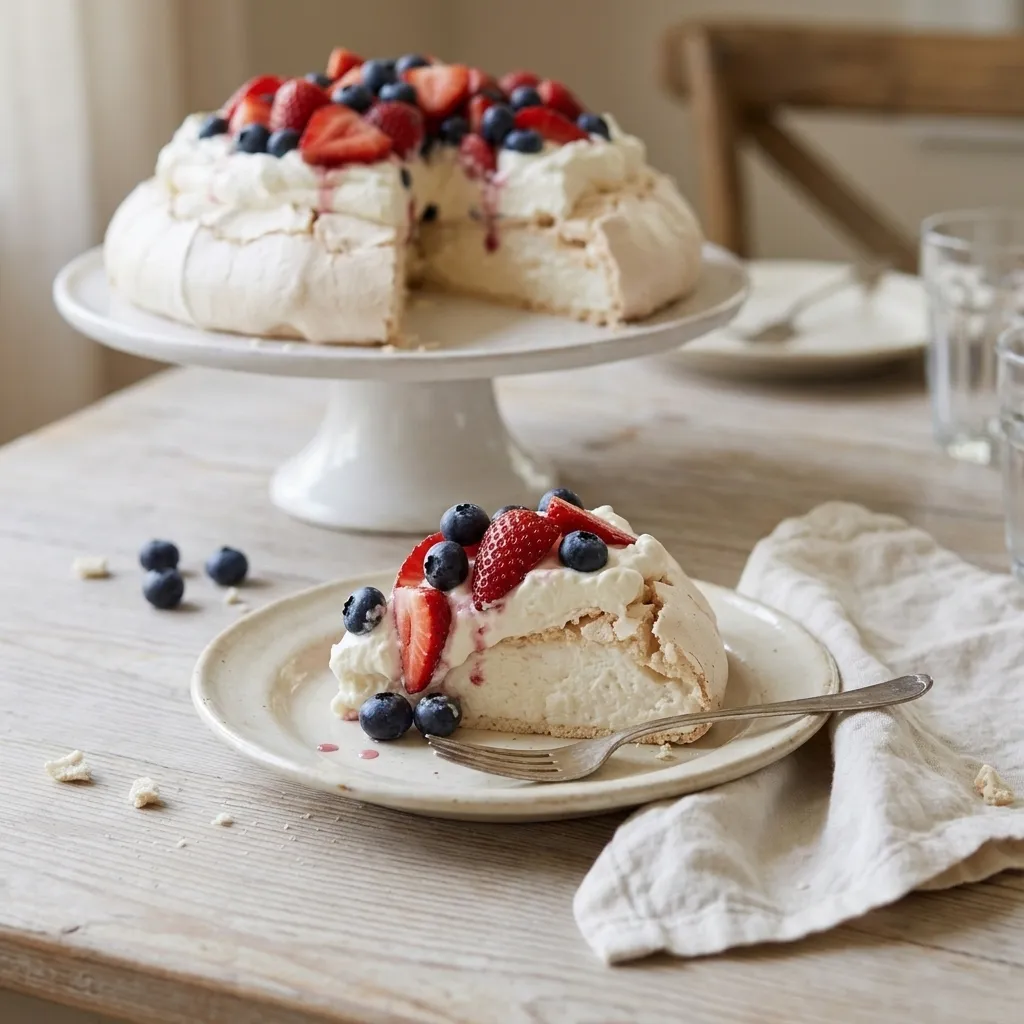
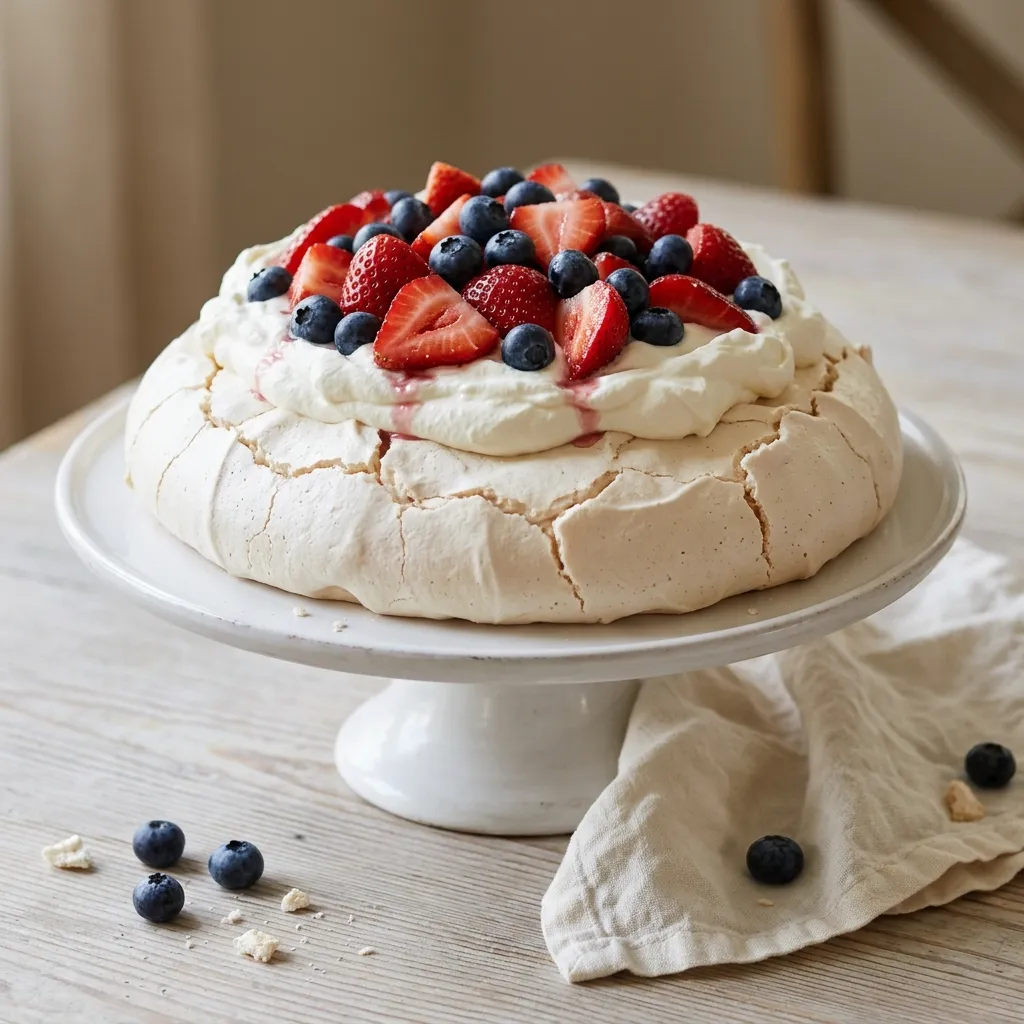
This version keeps the flavors simple: a nine-inch shell, lightly sweetened whipped cream, and fresh strawberries and blueberries. You can make the shell ahead and build the dessert shortly before everyone sits down. There’s no piping bag or fancy decoration to master. The raised edge holds the cream, while the berries bring enough tartness to balance the sugar.
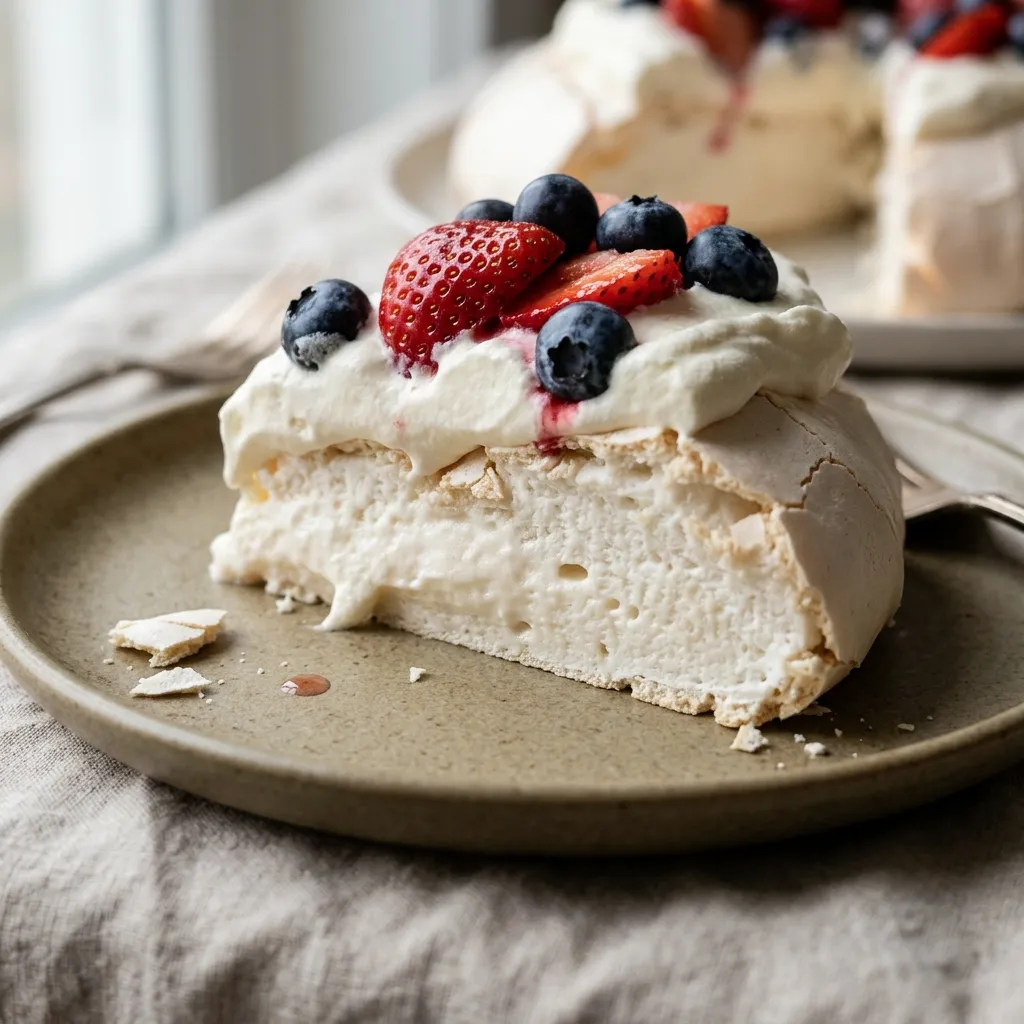
I prefer a pale shell with a few small cracks over a perfectly smooth shell baked until it is hard from edge to center. That’s a useful way to judge your result, especially if this is your first try.
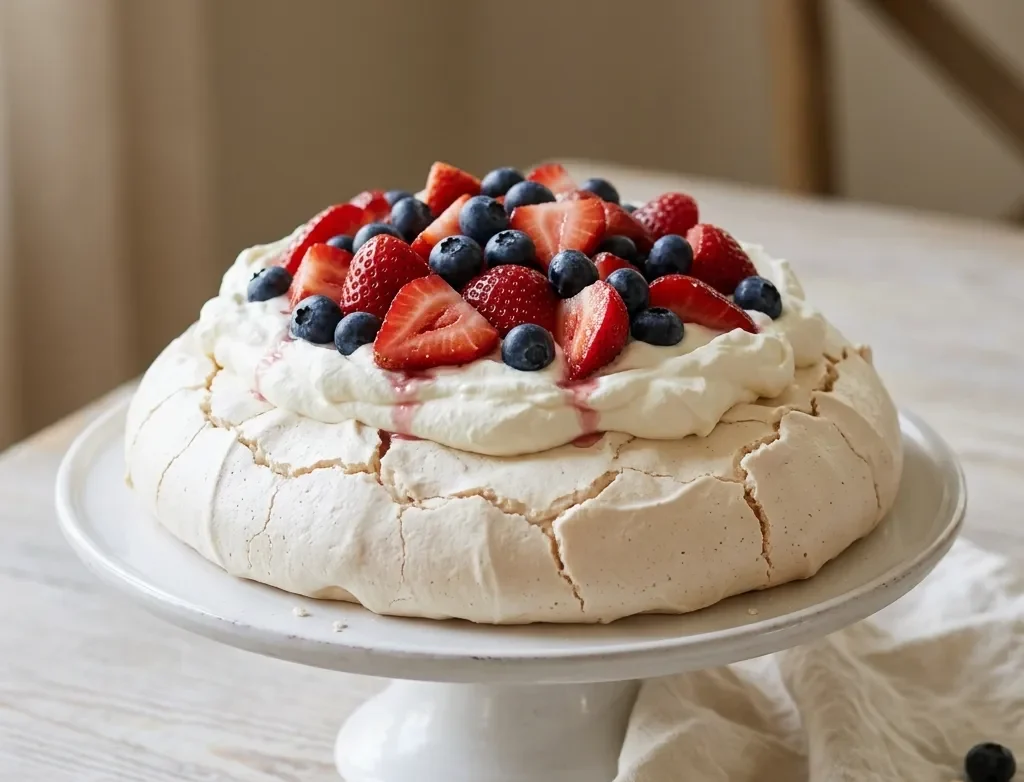
Table of Contents
Why You Will Love This Pavlova
- The outer shell is crisp, while the center stays tender and airy instead of turning into a dry cookie.
- Only eight everyday ingredients go into the shell, cream, and fruit topping, with no special decorating supplies.
- The oven does most of the work. You can prepare the shell before your guests arrive and finish it later.
- Eight slices make it useful for birthdays or a family dinner, and each person gets cream and berries.
- The topping is flexible. Keep the fruit bright and fresh, or use a different ripe fruit when berries are costly.
Pavlova Recipe Snapshot
- Prep Time: 40 minutes
- Cook Time: 60 minutes
- Cooling Time: 60 minutes
- Total Time: 2 hours 40 minutes
- Servings: 8
- Difficulty: Medium
- Calories per serving: About 276
- Key Ingredient or Tool: Superfine sugar and an electric mixer
- Best For: Birthdays, weekend desserts, and small gatherings
Nutrition Information Per Serving
- Calories per Serving: About 276
- Protein: 3 g
- Carbs: 33 g
- Fat: 15 g
- Fiber: 1 g
- Sugar: 31 g
- Sodium: 33 mg
- Serving Size: About 1/8 of the finished pavlova
- Servings per Recipe: 8
Most of the calories come from the sugar and heavy cream. The berries add color, a little fiber, and fresh flavor, but this remains a sweet dessert rather than a high-protein snack. For a smaller portion, cut thinner wedges and keep the cream and fruit in proportion.
Nutrition values are approximate and calculated per serving using standard ingredient amounts. Values may vary based on brands used and portion sizes.
Ingredients for a Crisp Shell and Soft Center
For the meringue shell:
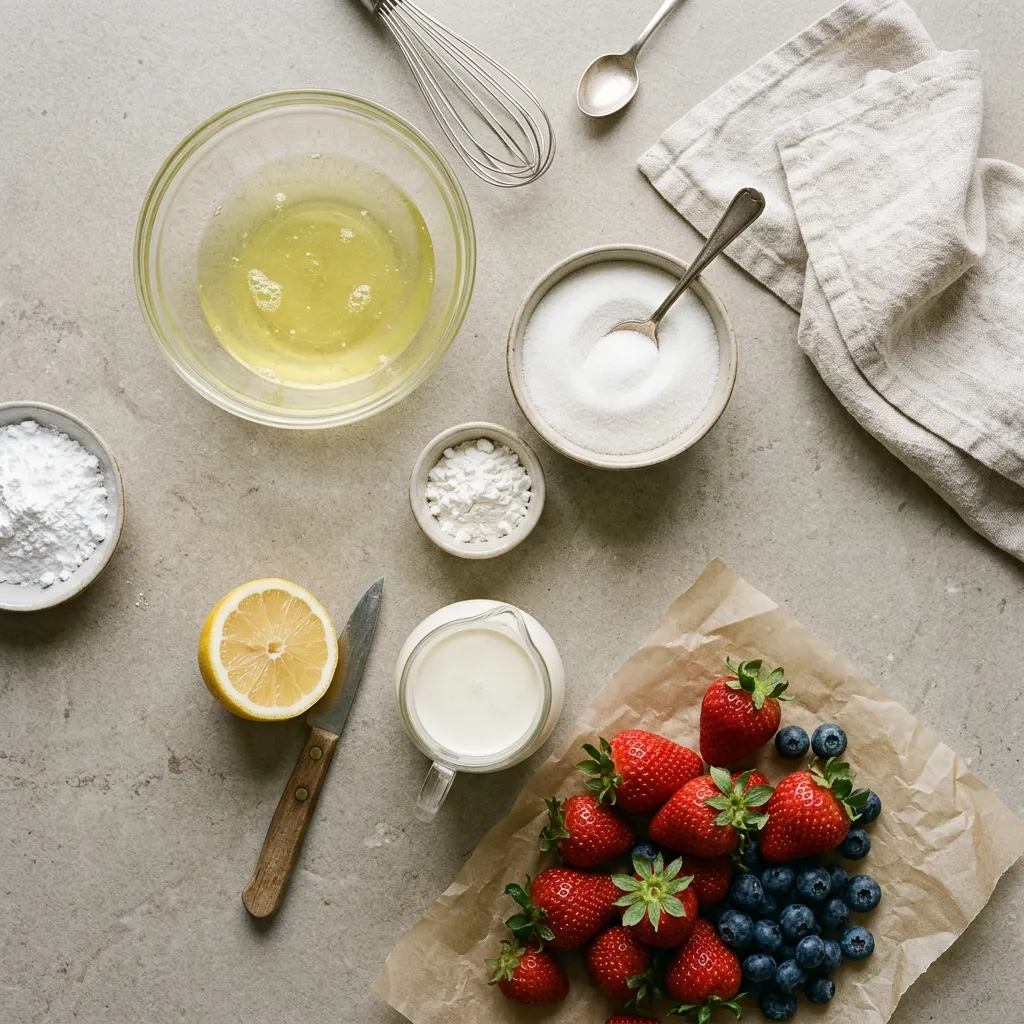
- 3 large egg whites (about 100 g), at room temperature, with no yolk.
- 1 cup (200 g) superfine sugar, which dissolves more easily than coarse sugar.
- 1 tablespoon (8 g) cornstarch, to help retain a soft center.
- 1 teaspoon (5 g) fresh lemon juice, to stabilize the whipped whites.
For the topping:
- 1 1/2 cups (340 g) cold, plain heavy whipping cream.
- 2 tablespoons (15 g) powdered sugar, for gentle sweetness.
- 1 cup (150 g) fresh strawberries, hulled and sliced.
- 1 cup (148 g) fresh blueberries, washed and dried.
Egg whites create the airy shape; sugar supports the foam; cornstarch helps keep the inside tender. If needed, pulse regular granulated sugar finer before measuring 200 g. Plain white vinegar can replace the lemon juice in the same amount. An alcohol-free plant-based whipping topping can replace heavy cream, though the results and nutrition will differ. Swap the berries by weight.
King Arthur Baker’s Special Sugar is one suitable superfine sugar. Its small crystals, not the brand itself, are the useful feature.
Equipment Needed for an Even Bake
- Electric hand mixer or stand mixer: Build the foam gradually at medium speed.
- Large glass or metal bowl: Remove any oily residue before whipping.
- Half-sheet baking pan: Use a flat, sturdy pan for even support.
- Parchment and a 9-inch template: Flip the marked paper so pencil stays underneath.
- Silicone or offset spatula: Shape the rim without pressing out air.
A kitchen scale is helpful here: three egg whites vary in weight, and measuring the sugar by grams avoids a packed or underfilled cup. If your oven has a strong fan setting, consult its manual before adjusting the stated temperature.
Preparation Before You Start Mixing
Separate the eggs while cold, then let the whites stand for about 20 minutes. Check the bowl for traces of yolk or grease, which interfere with whipping.
Preheat the oven to 200°F. Trace a 9-inch circle on parchment, turn the marked side down, and lay it on a half-sheet pan. Measure the sugar, cornstarch, and lemon juice. Wash and dry the berries, then chill them. Keep the cream cold until serving.
Pro Tip: Before shaping, rub a dab of meringue between clean fingertips. If it feels gritty, beat briefly and test again. Undissolved sugar can create sticky beads after baking.
Step-by-Step Pavlova Instructions
- Beat the egg whites on medium speed for 2 to 3 minutes until soft peaks form. Chef’s Note: If they stay flat, check the bowl for oil; the foam should look white and even.
- Add the sugar gradually over 6 to 8 minutes, beating at medium-high speed. Chef’s Note: Pause between spoonfuls; the finished foam should be glossy with upright peaks.
- Beat in the cornstarch and lemon juice for 20 to 30 seconds. Chef’s Note: Do not overmix once stiff; the mixture should remain smooth.
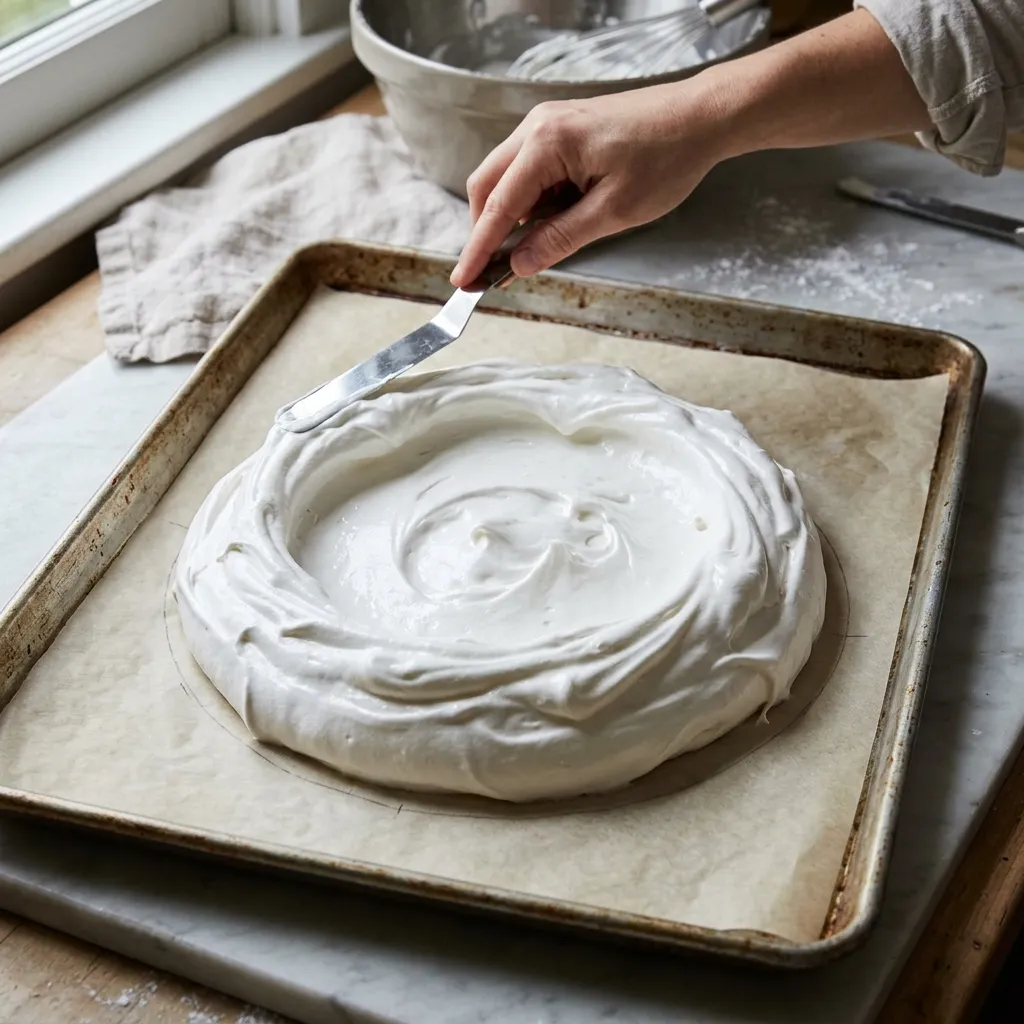
- Shape the meringue inside the 9-inch circle with a raised rim and shallow center. The sides should stand up and the middle should form a small well.
- Bake at 200°F for 60 minutes without opening the door. The shell should look dry, pale, and set, with a few fine cracks acceptable.
- Switch off the oven and cool the shell inside for 60 minutes with the door closed. Its outside should feel firm and lift gently from the parchment.
- Whip cold heavy cream with powdered sugar for 2 to 4 minutes. Stop when soft peaks make gentle folds rather than stiff clumps.
- Fill the cooled center with cream and scatter on the berries immediately before serving. The fruit should look dry and sit securely on the cream.
To move the shell, bring the serving plate level with the baking pan and slide a wide spatula beneath the parchment. If the edge breaks, keep the pieces; whipped cream will hide a neat join without changing the flavor or texture.
Expert Tips for a Better Pavlova
- Use an oven thermometer if the shell browns too quickly; oven dials can run hot.
- Keep the measured sugar. A major reduction changes meringue structure, not just sweetness.
- Adding all the sugar at once is a beginner mistake; add it slowly to preserve volume.
- Store an unfilled shell in a dry, airtight container for up to 24 hours.
- For a make-ahead dessert, keep cream and fruit separate until serving.
- Slice with a clean, sharp knife and lift wedges using a broad pie server.
Common Mistakes and How to Fix Them
Sticky syrup: Sugar may remain undissolved or humidity may be high. Add superfine sugar slowly and check for grit. Blot a few baked beads and serve promptly; a soaked base will not fully recover.
Brown crust: Excess oven heat colors the shell too quickly. Check with a thermometer and position the pan centrally. Trim scorched pieces if needed, but avoid trying to whiten a browned shell.
Flat shape: Weak foam or yolk contamination can cause spreading. Beat clean whites until stiff and glossy. A firm, flat shell is still usable under cream and fruit.
Large cracks: Sudden cooling or rough handling can break the crust. Keep the oven closed as it cools. Arrange broken pieces together and cover joins with toppings.
Watery cream: Wet fruit or loose whipping lets moisture collect. Dry berries and beat to soft peaks. Spoon away pooled liquid and serve the assembled dessert promptly.
Storage and Make-Ahead Instructions
- Room Temperature: Keep an unfilled shell airtight and dry for up to 24 hours. Limit assembled dessert to 2 hours out, or 1 hour above 90°F.
- Refrigerator: Cover assembled leftovers in a shallow airtight container at 40°F or below for up to 24 hours. Expect a softer crust.
- Freezer: Store an unfilled shell in a padded, rigid freezer-safe box for up to 1 month. Do not freeze the finished cream-and-fruit dessert.
- Reheating: Not recommended. Thaw an unfilled shell in its closed box at room temperature for about 1 hour, without added heat.
- Make-Ahead Notes: Bake the shell up to 24 hours ahead; keep dry fruit chilled and whip cream shortly before assembly.
I prefer to transport cream and berries in separate chilled containers so their weight does not crack the shell. Serve soon after filling for the best crunch.
Make-Ahead Shortcut: Keep the shell sealed and fruit chilled while dinner finishes. Assemble in about 5 minutes once the table is clear, keeping moisture off the crust until the last moment.
Flavor Variations and Simple Substitutions
Kid-Friendly: Keep the strawberries and blueberries, but slice them smaller. Offer modest wedges so children can add extra fruit.
Mild Spice: Add a tiny pinch of cinnamon to the cream for warmth. Skip hot spices that would overwhelm the berries.
Vegetarian and Dairy-Free: This base is vegetarian but contains eggs and dairy. Use an alcohol-free, plant-based whipping topping if dairy is unsuitable; texture will differ.
Gluten-Free: The recipe has no wheat flour. Check sugar and cornstarch labels for cross-contact if strict gluten avoidance is needed.
Peach Topping: Replace strawberries with the same weight of ripe peach slices. Dry their surfaces to protect the shell.
What to Serve With Pavlova
Fresh mint tea: Serve it iced or warm and unsweetened to balance the sweet meringue.
Citrus drink: A fresh mint and lime mocktail suits a summer dessert table without alcohol.
Warm fruit dessert: Small servings of homemade peach cobbler offer a baked fruit option beside the cold cream.
Apple and oat dessert: Apple crisp with a golden oat topping adds a heartier choice for guests.
Extra berries: Let people add more cold, dry fruit at the table without soaking the whole shell.
Frequently Asked Questions About Pavlova
Can I make pavlova the day before?
Yes, you can bake the unfilled shell up to 24 hours ahead if you keep it dry in a sealed container. Avoid placing the plain shell in the refrigerator, where damp air can soften the crust. Prepare the fruit separately and keep it cold. Whip the cream close to serving time. Once you add the toppings, aim to eat the dessert soon, because the moisture starts working its way into the meringue.
Why is my pavlova sticky on the bottom?
A sticky bottom can result from undissolved sugar, humid air, or a shell that has not dried enough in the oven. Check that the sugar feels smooth in the whipped mixture before shaping. Keep the oven door shut during baking and cooling, and lift the cooled shell gently from the paper. If it still sticks, peel the parchment back slowly instead of pulling upward; cover small damaged spots with cream.
Can I make pavlova without cornstarch?
You can make a meringue without cornstarch, but it may not have the same soft center as this pavlova. The starch helps retain a little moisture inside while the outer surface dries. If you leave it out, do not assume that the same result or timing is guaranteed. For the most reliable version of this recipe, keep the measured tablespoon. Cornstarch is naturally free of wheat ingredients, though cross-contact can matter for some diets.
How do you know when pavlova is done baking?
At the end of the 60-minute bake, the surface should look dry and set, not shiny or wet. It may show fine cracks and a pale cream color, while the center stays softer than a crisp cookie. Keep the shell in the switched-off oven for another 60 minutes before checking how it lifts from the parchment. If the crust is still wet or collapsing badly, an oven temperature problem may need attention next time.
Is pavlova supposed to be gooey in the middle?
A soft, marshmallow-like center is normal; a puddle of raw-looking foam is not the goal. This distinction confuses many first-time bakers because regular meringue cookies are crisp all the way through. Cut a cooled slice and look for a tender, slightly chewy center protected by a dry shell. If the inside looks liquid or the whole base slumps, recheck your measuring, mixing, and oven temperature before your next batch.
A Final Thought Before You Serve
The trickiest part of this dessert happens before it reaches the table. If you keep the mixing bowl free from grease, give the sugar time to dissolve, and let the shell cool without a rush, you have done most of the careful work. Small cracks are part of the texture, not a reason to start over. I would put the effort into good berries and cold cream instead of trying to hide every line in the crust.
Pavlova looks best when it is built just before the first slice. Set out the plate, have a wide serving spoon ready, and expect pieces to break with a little crunch. That is exactly the contrast you want to enjoy.
If you loved this recipe, save it to your dessert Pinterest board so you can find it easily later!
Classic Pavlova With a Crisp Shell and Soft Center
Ingredients
Equipment
Method
- Separate eggs cold; leave whites at room temperature about 20 minutes. Confirm the bowl is clean and free of yolk.
- Preheat oven to 200°F. Trace and flip a 9-inch parchment circle on a half-sheet pan; measure ingredients and dry the berries.
- Beat egg whites at medium speed for 2 to 3 minutes until foamy, white, and softly peaked.
- Add the sugar a spoonful at a time over 6 to 8 minutes at medium-high speed until thick, glossy, and stiff-peaked.
- Beat in the cornstarch and lemon juice for 20 to 30 seconds until smooth.
- Shape a 9-inch round with raised sides and a shallow center; the mound should hold its shape.
- Bake at 200°F for 60 minutes with the door closed until the surface appears dry, pale, and set.
- Turn the oven off; cool inside with the door closed for 60 minutes until the outside feels firm.
- Whip cold cream and powdered sugar for 2 to 4 minutes until soft peaks form.
- Fill the cooled shell with cream and top with dry sliced strawberries and blueberries; serve immediately.
Notes
Use alcohol-free replacements for any flavored toppings; this base recipe contains no alcohol-based ingredient.
Storage: Refrigerate a filled pavlova up to 24 hours; freeze the unfilled shell up to 1 month in a rigid airtight box.