Easy Lemon Cake That Stays Moist for 4 Days
A good lemon cake should taste like lemon, not like a plain yellow cake with a splash of juice on top. Most of my early attempts were pale, a little dry by day two, and only faintly sour.
I tested this version nine times over five weeks because I wanted a lemon cake that stays moist on day three and still tastes bright in the last bite. Three small steps did it. Lemon zest gets rubbed into the sugar so the oils spread through the whole batter. Buttermilk keeps the crumb soft. A warm lemon syrup soaks in right after baking, and a thin glaze finishes the top.
Everything bakes in one 9×13-inch pan, so there are no layers to level or stack. Hands-on time is about 25 minutes, and every step below comes with the visual cue I watch for in my own kitchen, so you always know what right looks like before you move on.
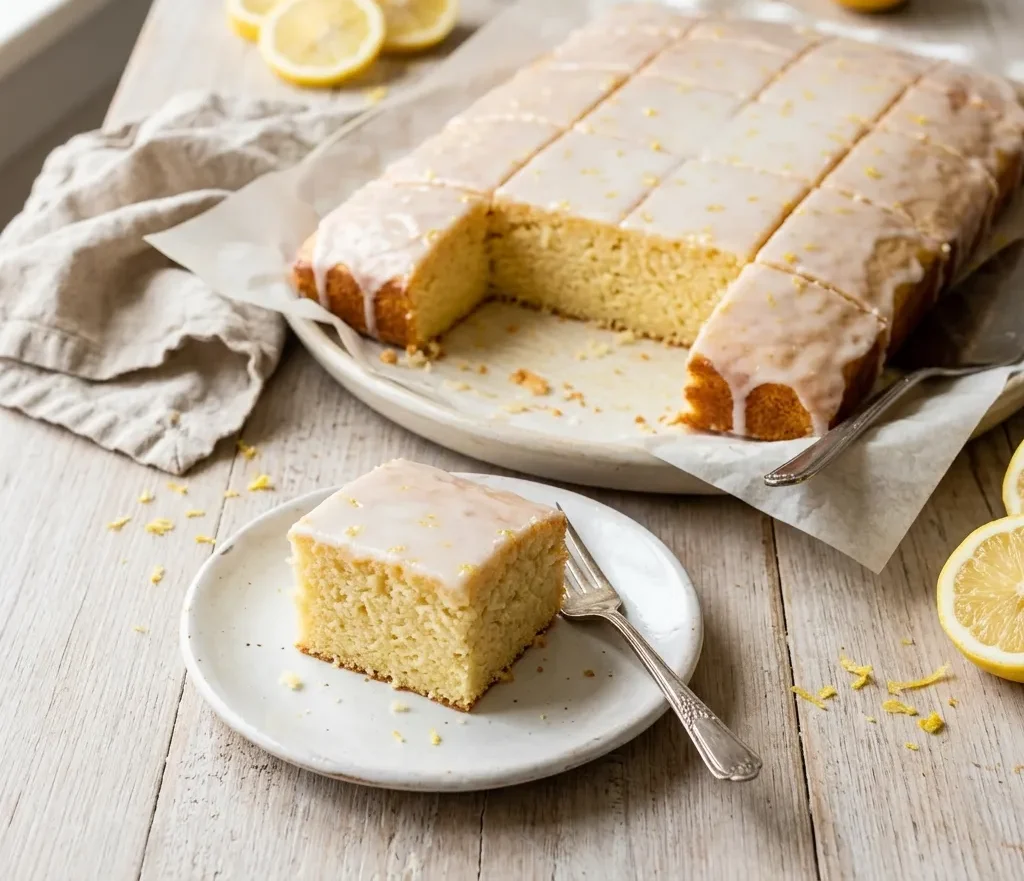
Table of Contents
Why You Will Love This Lemon Cake
- Real lemon flavor from zest, juice, syrup, and glaze, so the first bite and the last both taste bright.
- Only 25 minutes of hands-on work, then the oven takes over.
- The syrup soak keeps the crumb moist for 4 days in the fridge.
- One 9×13-inch pan cuts into 15 squares, enough for a birthday party or a week of lunches.
- My daughter asked for a square in her lunchbox three days in a row.
Recipe Snapshot
- Prep Time: 25 minutes
- Cook Time: 35 to 40 minutes
- Total Time: 2 hours, including 55 minutes of cooling and glazing
- Servings: 15 squares
- Difficulty: Easy
- Calories per Serving: About 360
- Key Ingredient: Fresh lemons, for both zest and juice
- Best For: Birthdays, potlucks, and weeknight dessert
Nutrition Information
- Calories per Serving: About 360
- Protein: 5 g
- Carbs: 56 g
- Fat: 14 g
- Fiber: 1 g
- Sugar: 36 g
- Sodium: 223 mg
- Serving Size: About 1 square
- Servings per Recipe: 15
Most of the protein comes from the eggs and buttermilk, and most of the fat comes from the butter. About 15 grams of the sugar per square comes from the syrup and glaze, so a thinner glaze is the easiest way to trim it.
Nutrition values are approximate and calculated per serving using standard ingredient amounts. Values may vary based on brands used and portion sizes.
Lemon Cake Ingredients and Swaps
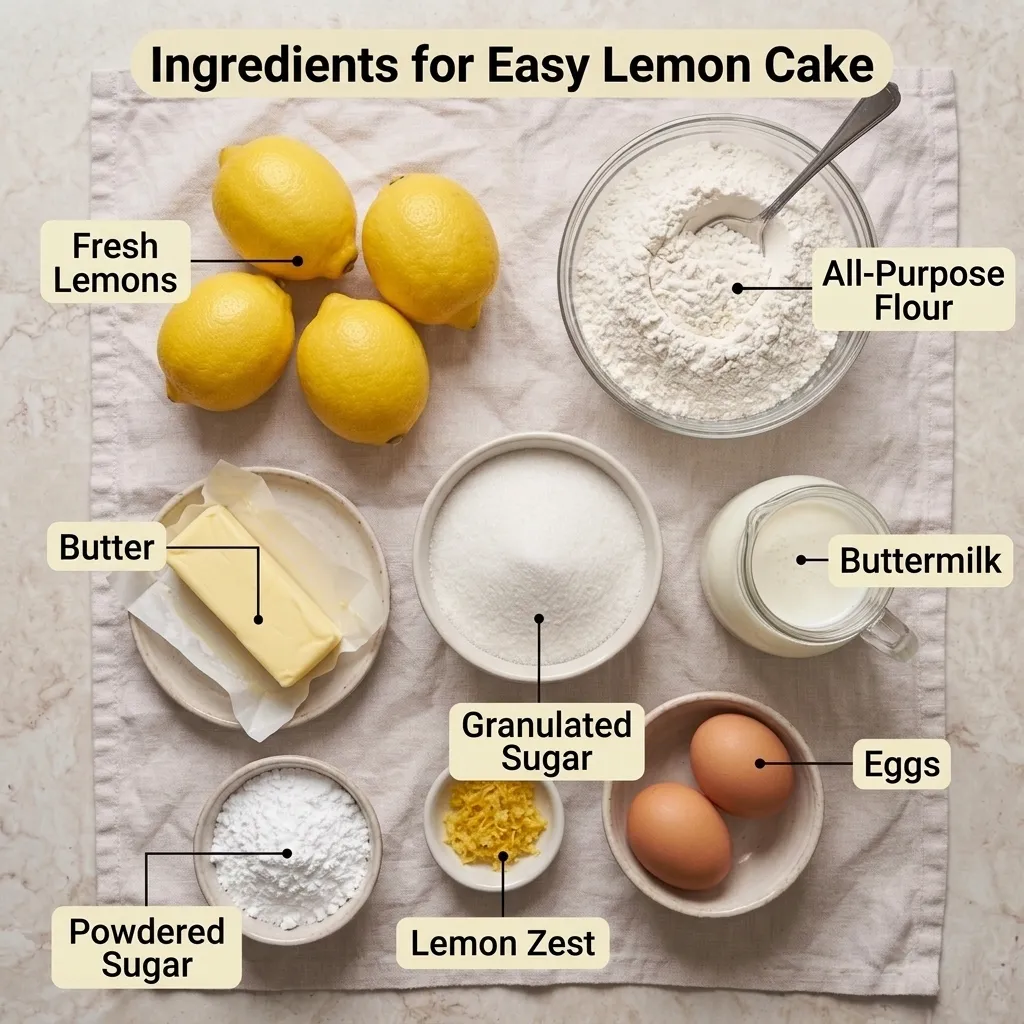
For the Cake
- 3 cups (360 g) King Arthur all-purpose flour (swap: a 1 to 1 gluten-free baking flour)
- 2 teaspoons baking powder
- 1/2 teaspoon baking soda
- 1/2 teaspoon fine salt
- 1 cup (227 g) unsalted butter, softened (swap: dairy-free baking sticks)
- 1 1/2 cups (300 g) granulated sugar
- 2 tablespoons lemon zest, from 2 large lemons
- 4 large eggs, at room temperature
- 1 cup (245 g) buttermilk, at room temperature (swap: 1 cup whole milk plus 1 tablespoon lemon juice, rested 5 minutes)
- 1/4 cup fresh lemon juice
For the Lemon Syrup
- 1/4 cup fresh lemon juice
- 1/4 cup (50 g) granulated sugar
For the Lemon Glaze
- 1 1/2 cups (180 g) powdered sugar
- 3 tablespoons fresh lemon juice, plus 1 teaspoon more if too thick
Four large lemons cover the 2 tablespoons of zest and the 11 tablespoons of juice.
Zest holds the aromatic oils, and no amount of juice replaces it. Buttermilk brings the acid that softens the crumb, so plain milk without the lemon juice swap gives a denser cake. King Arthur flour has a consistent protein level, so the crumb stays tender from bag to bag.
Pro Tip: Pick lemons with thin, smooth skin that feel heavy for their size. They hold more juice than thick, bumpy ones.
Equipment Needed
- 9×13-inch light-colored metal pan: dark pans brown faster, so check 5 minutes early.
- Electric mixer, hand or stand: a whisk cannot aerate butter the same way.
- Rasp-style zester: it takes only the yellow layer, not the bitter pith.
- Parchment paper: leave 2 inches hanging over the long sides so you can lift the cake out.
- Wooden skewer: its thin tip makes holes that hold the syrup.
Preparation Before You Start
- Ingredients: Set the butter, eggs, and buttermilk on the counter 1 hour ahead. The butter should dent under a finger without looking shiny. In a hurry, sit the whole eggs in warm tap water for 10 minutes.
- Lemons: Zest 2 lemons into a small bowl, then juice all 4 into a measuring cup until you have 3/4 cup plus 2 tablespoons.
- Oven: Heat it to 350°F with the rack in the center.
- Pan: Grease the 9×13-inch pan, line it with parchment, and grease the parchment.
- Mise en place: Measure everything before step 1, and set the syrup ingredients by the stove.
How to Make Lemon Cake Step by Step
- Whisk the flour, baking powder, baking soda, and salt in a medium bowl for 30 seconds, until evenly pale with no clumps.
- Rub the lemon zest into the 1 1/2 cups of sugar in a large bowl for 1 minute. The sugar should look damp and smell strongly of lemon. Chef’s Note: The crystals scrape out the zest oils that carry most of the flavor.
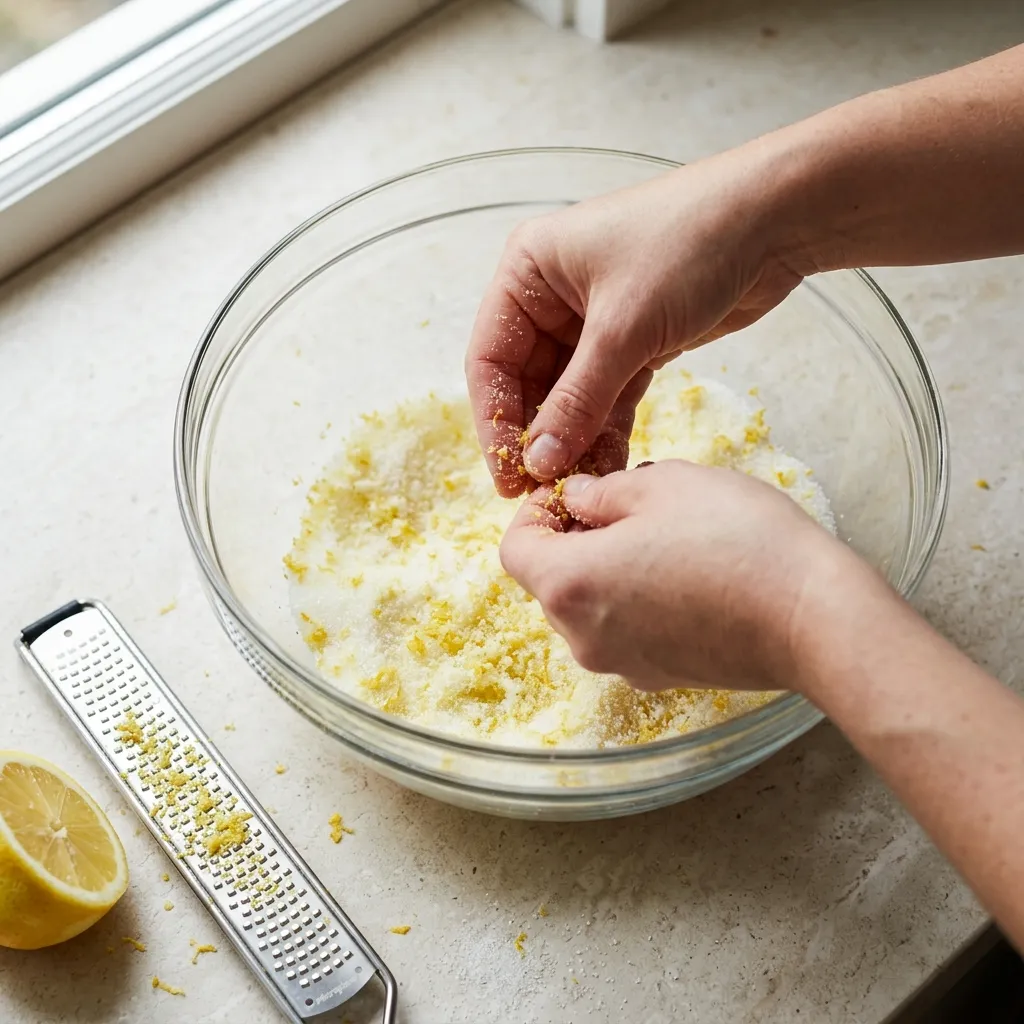
- Add the softened butter and beat on medium-high speed for 3 to 4 minutes, until pale and fluffy like whipped frosting.
- Beat in the eggs one at a time, 30 seconds each, until the batter looks smooth and glossy.
- Stir the buttermilk and 1/4 cup lemon juice together. Add the flour mixture in three parts and the buttermilk mixture in two, starting and ending with flour, mixing on low speed until no dry flour shows.
- Scrape the batter into the pan and smooth the top. Tap the pan twice on the counter until the surface looks level.
- Bake for 35 to 40 minutes, until the top looks light golden, the edges pull from the pan, and a toothpick comes out with a few moist crumbs. Chef’s Note: If your oven runs hot, check at 33 minutes, since sugary batters brown fast.
- While the cake bakes, simmer 1/4 cup lemon juice and 1/4 cup sugar over medium heat for 2 to 3 minutes, until the liquid looks clear with no sugar crystals left.
- Cool the cake in the pan for 10 minutes, then poke holes every inch with a skewer. Brush the warm syrup on slowly, until the surface looks glossy but not pooled. Chef’s Note: A warm cake drinks up warm syrup, while a cold cake leaves it sitting on top.
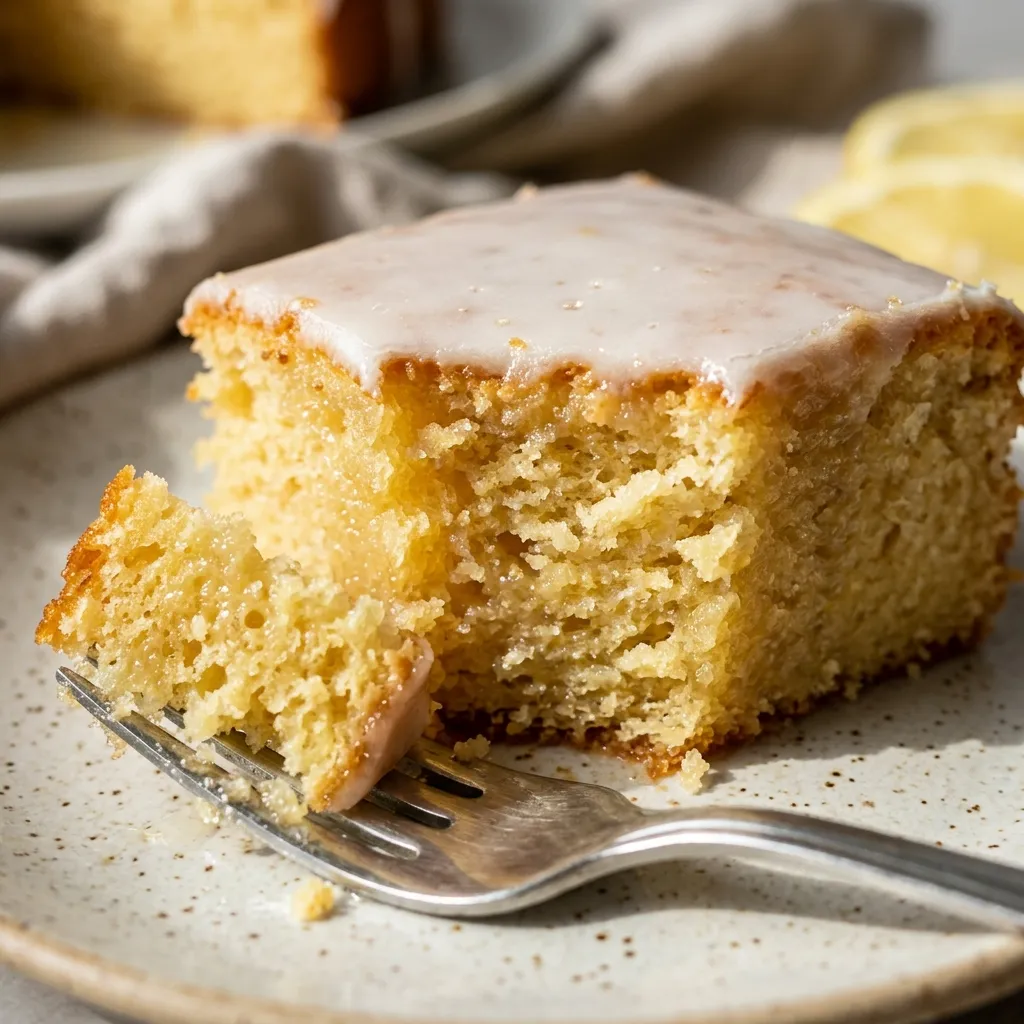
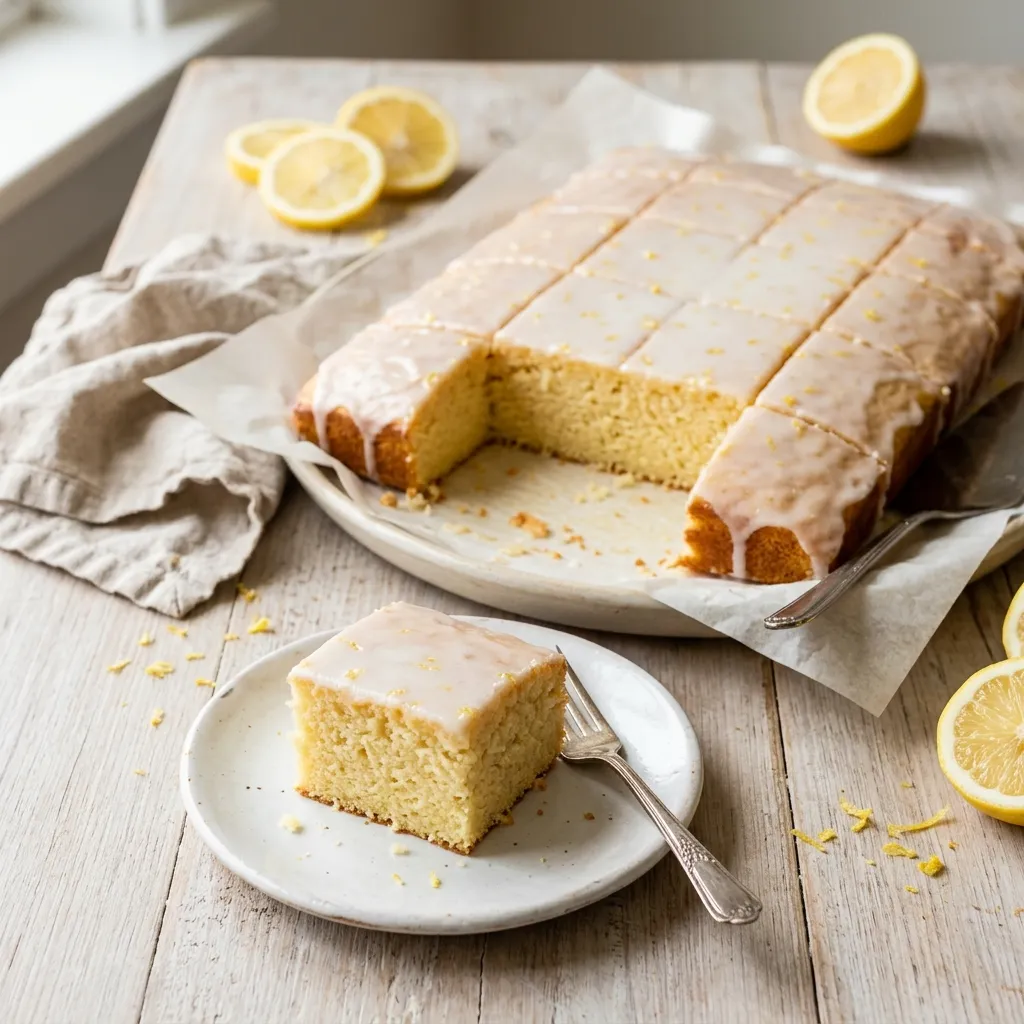
- When the pan bottom feels barely warm, about 35 minutes later, whisk the powdered sugar and 3 tablespoons lemon juice until the glaze falls from the whisk in a thick ribbon. Pour it over the cake, spread it to the edges, and wait 10 minutes until it turns matte.
Slicing Trick: Dip a sharp knife in hot water and wipe it dry before every cut for clean edges.
Expert Tips and Tricks
- I once skipped the syrup because guests were arriving in 30 minutes. By the next afternoon the edges had gone dry, so I now treat the soak as part of the bake.
- Zest and juice the lemons up to 2 days ahead. Keep the juice in a covered jar in the fridge and the zest in a small zip bag.
- Press a sheet of parchment against any cut edge before covering the cake. It stops the exposed crumb from drying out during its 4 days in the fridge.
- Pan the batter right away. The baking soda starts working when it meets the buttermilk and juice, and batter that sits loses lift.
- Juice the lemons while the butter and eggs warm up, so the hour of waiting costs you nothing.
Common Mistakes and Troubleshooting
Dry, crumbly lemon cake. Scooped flour packs a cup heavy, and extra minutes in the oven finish the job. Weigh 360 g and check at 35 minutes. To rescue a dry cake, brush it with warm syrup made from 2 tablespoons each of lemon juice and sugar.
Tough crumb with tunnels. Overmixing after the flour goes in is the cause. Stop the mixer the moment no dry streaks remain. Whipped cream and berries on the side hide a tough cake.
Glaze that melts away. Glaze poured on a warm cake thins out and soaks in. Wait until the pan bottom feels barely warm. If the glaze already vanished, let the cake cool fully and pour a second coat.
Curdled-looking batter. Cold eggs make the creamed butter break into small lumps. Set the eggs out for an hour first. If the batter splits, beat in 1 tablespoon of the flour mixture until it smooths out.
Storage Instructions
- Room Temperature: Up to 2 hours while serving, loosely covered with foil. After that, move the cake to the fridge.
- Refrigerator: Up to 4 days in an airtight glass container, with parchment between stacked squares.
- Freezer: Up to 3 months. Freeze unglazed squares on a tray for 1 hour, then wrap each in plastic wrap and bag them in a freezer-safe zip bag.
- Reheating: Thaw squares in the fridge overnight, then leave them out for 20 minutes and brush on fresh glaze. For a warm square, microwave it for 10 seconds first.
- Make-Ahead Notes: Bake and soak the lemon cake up to 1 day ahead, cool it, and refrigerate it covered in the pan. Glaze it 30 minutes before serving.
I freeze half the pan every time. The tray step keeps the squares from fusing into one block, so I can pull out a single square for a lunchbox.
Variations and Substitutions
- Spicy Ginger Lemon: Whisk 1 1/2 teaspoons ground ginger and 1/8 teaspoon cayenne pepper into the flour. The heat is faint and shows up after the lemon fades.
- Mild and Kid-Friendly: Cut the zest to 1 tablespoon and use water for half the glaze juice. The flavor stays clear but softer.
- Vegetarian and Dairy-Free: The base recipe is already vegetarian. For dairy-free, use baking sticks and swap the buttermilk for 1 cup unsweetened soy milk plus 1 tablespoon lemon juice.
- Gluten-Free: Use King Arthur Measure for Measure flour in the same 360 g amount. Rest the batter 15 minutes before baking.
- Lemon Blueberry: Toss 1 1/2 cups fresh blueberries with 1 tablespoon flour and fold them in last. Add 5 to 10 minutes to the bake.
What to Serve With This
- Cream cheese topping: Stir 1 tablespoon of lemon juice into my cream cheese frosting and spread a thin layer over the cooled cake.
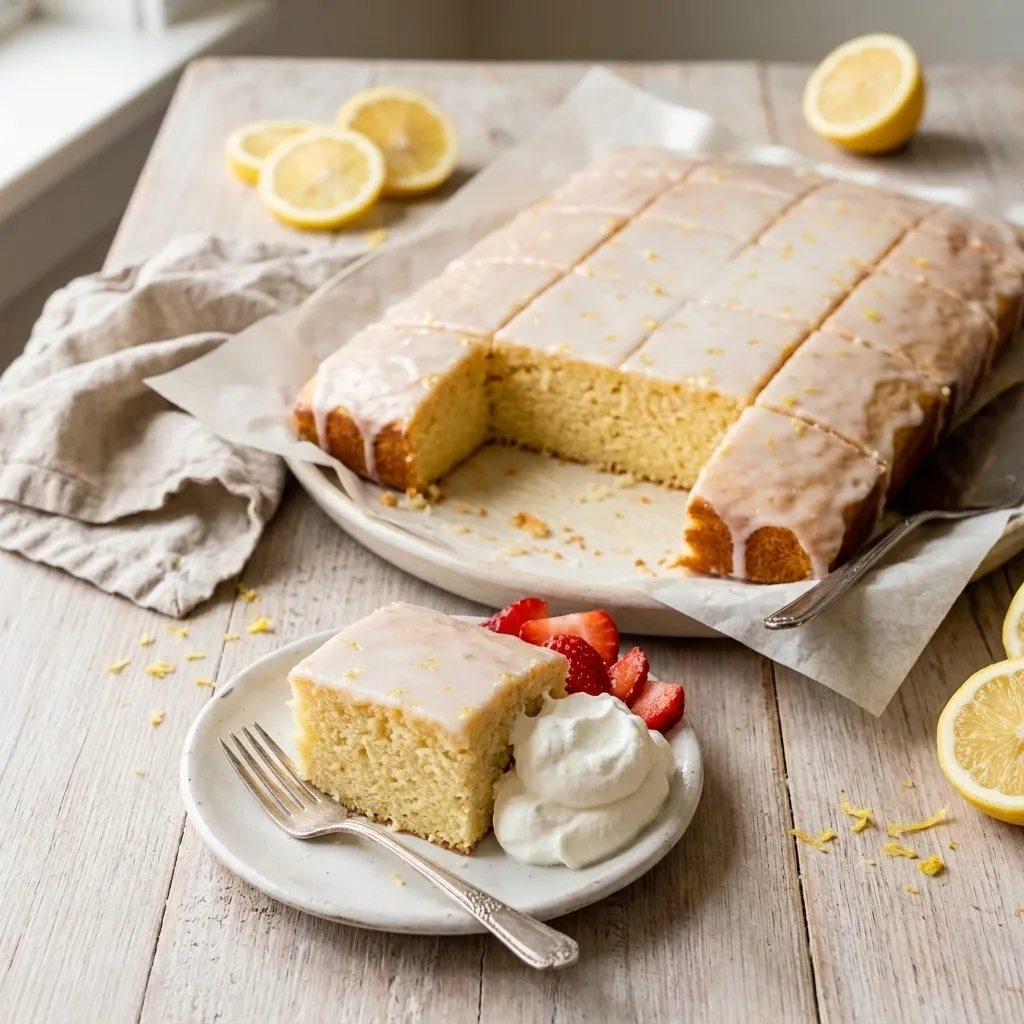
- Berries and whipped cream: Sliced strawberries and softly whipped cream take the edge off the tartness.
- A cold drink: Pour a glass of fresh mojito mocktail with mint and lime for an easy afternoon spread.
- A party tray: Set squares beside a pan of strawberry cake for birthdays, since the yellow and pink look good together.
Frequently Asked Questions
can you freeze lemon cake with the glaze on
Yes, you can freeze lemon cake with the glaze on, but the glaze may turn sticky and weep as it thaws. For the cleanest look, freeze the squares unglazed and pour fresh glaze on after they thaw. Wrap each square in plastic wrap, then keep them in a freezer-safe zip bag for up to 3 months. Thaw them overnight in the fridge.
why did my lemon cake sink in the middle
A lemon cake sinks when the center was underbaked or the oven door opened before the structure set. Keep the door shut for the first 30 minutes and test with a toothpick at 35. Ovens often miss the dial temperature, so an oven thermometer helps. Old baking powder can also be the cause, so stir 1/2 teaspoon into hot water and look for fizzing.
can i use bottled lemon juice in lemon cake
Yes, bottled juice works in a pinch, but the cake tastes flatter because bottled juice has a duller edge and no zest oils. Use it in the syrup and glaze first, where the difference shows least. Keep fresh juice for the batter if you can, and never skip the zest. I tried one bottled batch, and my husband called it fine, which was the problem.
how do you know when lemon cake is done
Lemon cake is done when a toothpick in the center comes out with a few moist crumbs, usually after 35 to 40 minutes at 350°F. The top should look light golden, and the edges should pull slightly from the pan. A perfectly clean toothpick means you went a minute or two long. Press the center lightly, and it should spring back.
why does my lemon cake taste bitter
Your lemon cake tastes bitter because the zest picked up white pith, the spongy layer under the yellow peel. Zest with a rasp-style grater and stop the moment you see white. Dark, overbaked edges can also taste bitter, so pull the cake on time. If a mild bitterness is already baked in, a slightly thicker glaze softens it, and whipped cream on the side helps even more.
Final Thoughts on Lemon Cake
Lemon cake rewards patience at exactly two moments: the 10 minutes before you brush on the syrup and the 35 minutes before you glaze. Rush the first and the syrup runs off. Rush the second and the glaze melts. Set a timer for both.
Buy five lemons instead of four, since running short on juice at the glaze stage is an annoying way to end a bake. My son carried the last square to the car in a napkin and asked when I would make it again, so I baked another pan that Thursday.
If you loved this recipe, save it to your lemon dessert Pinterest board so you can find it easily later!
Easy Lemon Cake That Stays Moist for 4 Days
Ingredients
Equipment
Method
- Heat the oven to 350°F with the rack in the center. Grease a 9×13-inch pan, line it with parchment leaving 2 inches hanging over the long sides, and grease the parchment.
- Whisk the flour, baking powder, baking soda, and salt in a medium bowl for 30 seconds, until evenly pale with no clumps.
- Rub the lemon zest into the 1 1/2 cups of sugar in a large bowl for 1 minute. The sugar should look damp and smell strongly of lemon.
- Add the softened butter and beat on medium-high speed for 3 to 4 minutes, until pale and fluffy like whipped frosting.
- Beat in the eggs one at a time, 30 seconds each, until the batter looks smooth and glossy.
- Stir the buttermilk and 1/4 cup lemon juice together. Add the flour mixture in three parts and the buttermilk mixture in two, starting and ending with flour, mixing on low speed until no dry flour shows.
- Scrape the batter into the pan and smooth the top. Tap the pan twice on the counter until the surface looks level.
- Bake for 35 to 40 minutes, until the top looks light golden, the edges pull from the pan, and a toothpick comes out with a few moist crumbs.
- While the cake bakes, simmer 1/4 cup lemon juice and 1/4 cup sugar over medium heat for 2 to 3 minutes, until the liquid looks clear with no sugar crystals left.
- Cool the cake in the pan for 10 minutes, then poke holes every inch with a skewer. Brush the warm syrup on slowly, until the surface looks glossy but not pooled.
- When the pan bottom feels barely warm, about 35 minutes later, whisk the powdered sugar and 3 tablespoons lemon juice until the glaze falls from the whisk in a thick ribbon. Pour it over the cake, spread it to the edges, and wait 10 minutes until it turns matte. Cut into 15 squares.
Notes
Zest only the yellow layer of the peel, since the white pith tastes bitter.
Storage: refrigerate up to 4 days in an airtight container, or freeze unglazed squares up to 3 months.