Cottage Cheese: Everything You Need to Know Before You Buy a Tub
Most people either love cottage cheese or swore it off after one watery, sour spoonful. Both reactions are fair, because two tubs from the same shelf can taste and feel nothing alike.
I spent three weeks opening nine tubs from five brands. I weighed the whey that pooled on top of each one, tasted every tub plain, and used each in at least two dishes, from blended dip to baked pasta. Some tubs were thick and mild. Others were loose and sharp. The front label told me far less than the first spoonful did.
My son refused to touch this stuff for years. Then I blended a tub until it looked like sour cream, spread it on toast with sliced tomatoes, and he asked for the same breakfast three mornings in a row. Texture was his only problem, and texture is fixable. Here is what I learned about picking, storing, and using it.
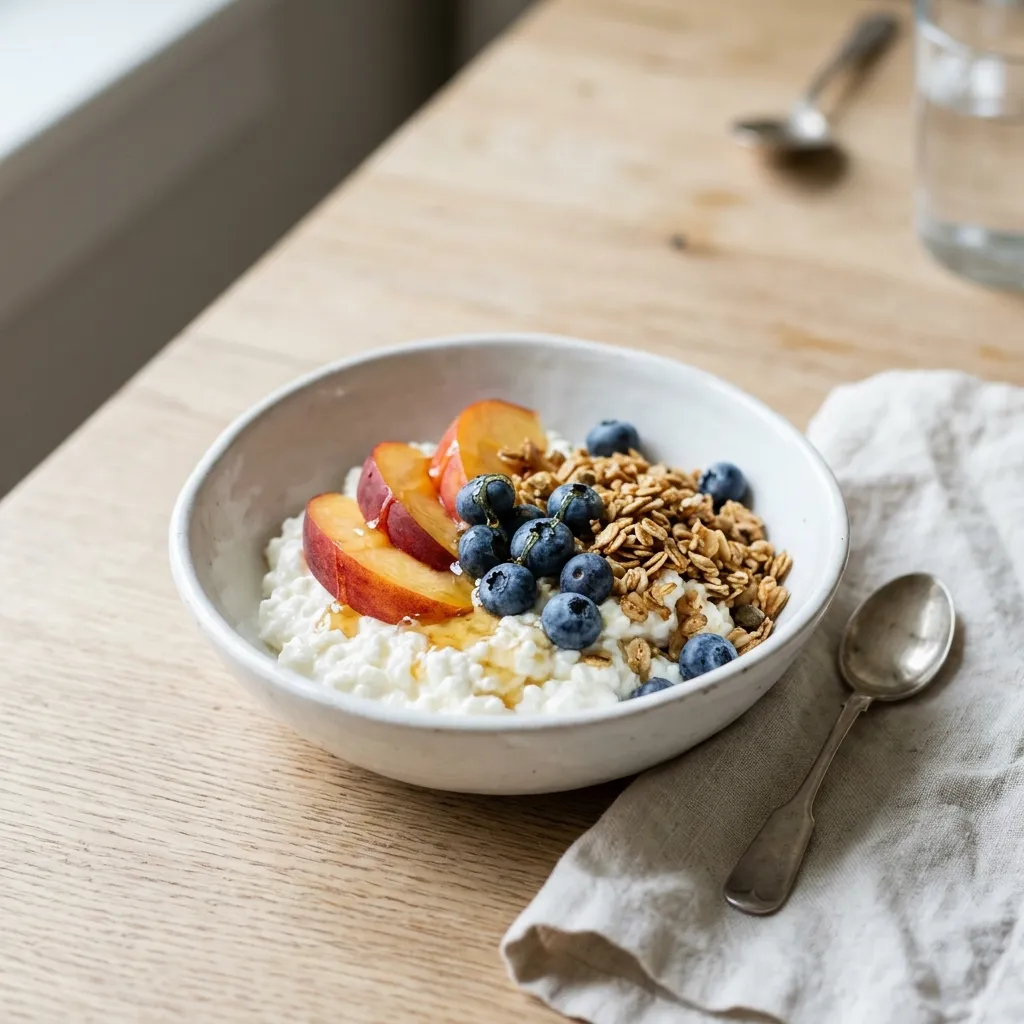
Table of Contents
Cottage Cheese at a Glance
At a Glance:
- Time Required: 0 minutes to eat it plain, 1 minute to blend it smooth
- Skill Level: Beginner
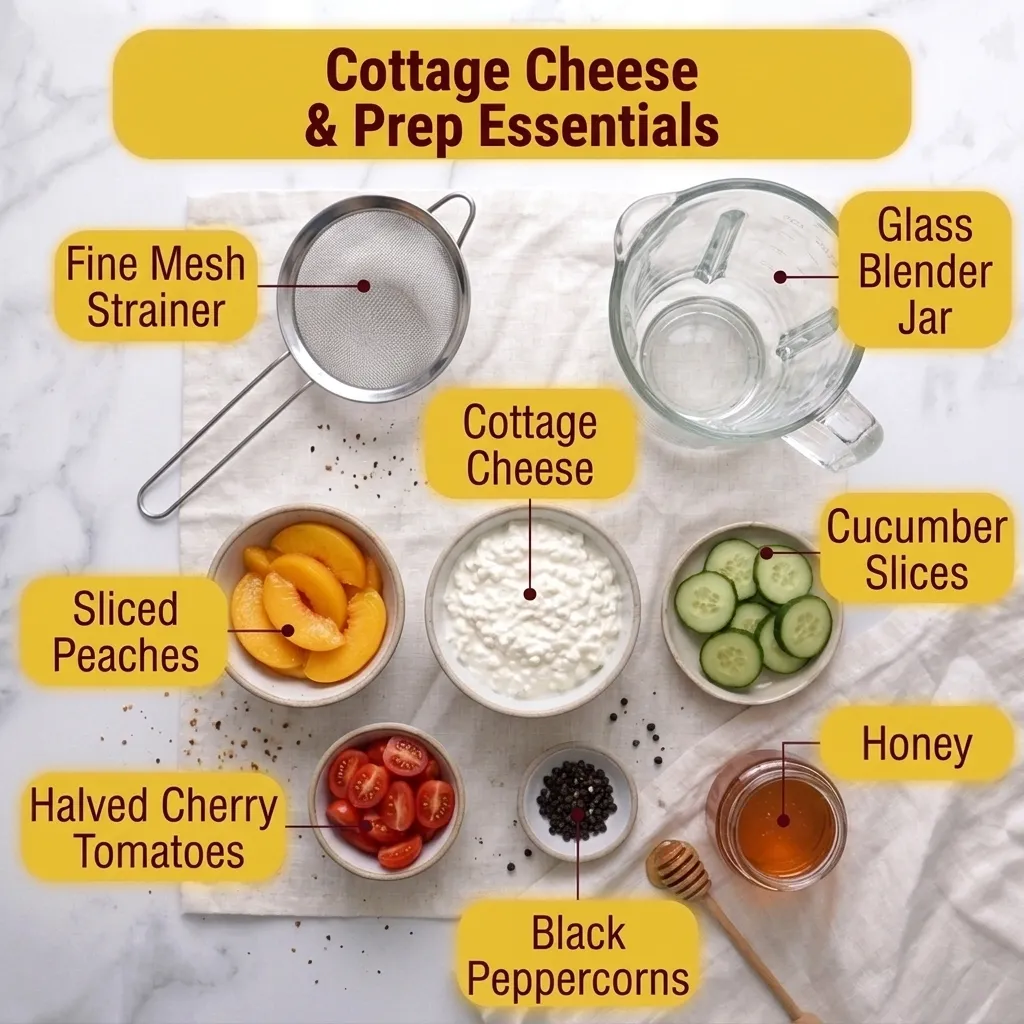
- Key Ingredient or Tool: A blender or food processor for a smooth texture
- Most Common Mistake: Baking with an undrained tub, which leaves the dish watery
- Best Used For: Breakfast bowls, toast, dips, and baked pasta
- Shelf Life or Storage: Up to 2 weeks unopened, 7 days once opened, at 40°F or below
What It Is, How It Is Made, and How to Pick a Good Tub
Cottage cheese is a soft, fresh cheese made of milk curds mixed with a creamy dressing. Nobody ages it, which is why it tastes mild and lasts days instead of months. Under U.S. rules, the creamed version must hold at least 4 percent milkfat and no more than 80 percent moisture.
How the Curds Form
Dairies warm milk and make it acidic, either with bacterial cultures or with food-grade acid. The milk proteins clump into soft curds, and sometimes an enzyme helps them set. The curds are cut, gently cooked, drained of whey, and rinsed. What is left is called dry curd, and it holds less than 0.5 percent milkfat.
A creamy dressing of milk or cream, usually with salt, goes back in. That dressing explains most of the differences between brands. It also explains why the curds stay separate and why a little liquid always pools between them.
Curd Size and Fat Level
Small curd is the pea-sized style most stores stock. Large curd has bigger, springier lumps. I use small curd for dips and bowls because it blends and spreads easily, and large curd for salads and baked potatoes because it holds its shape.
Fat level changes more than calories. USDA data lists about 1 gram of fat in a half cup of 1% and about 5 grams in a half cup of creamed. Nonfat and 1% taste leaner and a little chalky. The 4% creamed style tastes rounder and stays smoother when you blend or bake it.
What It Tastes Like and Why Tubs Differ
Expect a mild, milky taste with a slight tang and real salt behind it. A half cup of Breakstone’s 2% small curd lists 280 milligrams of sodium, which is 12 percent of the daily value, and its less sodium tub lists 200. Another 2% small curd label I checked lists 420. Brands salt their dressing differently, so compare labels, and look for a less sodium or no salt added tub if you want to control it.
The liquid on top is whey and dressing that settled out. More collects as a tub ages or sits in a warm fridge. In my test, the wettest tub gave up about 3 tablespoons, and the driest gave up almost none. Wet does not mean spoiled. Stir it in, then smell and taste before you judge.
Pro Tip: Blend 1 cup for 30 to 45 seconds, scraping the sides once, until it looks like thick Greek yogurt. Smooth curds work in dips, sauces, and pancake batter, and they win over people who dislike the lumps.

Three Ways to Fix a Texture You Do Not Like
Most complaints come down to lumps. These three fixes cover them.
- Blend it. This is the fastest fix and works for dips, toast spreads, and sauces.
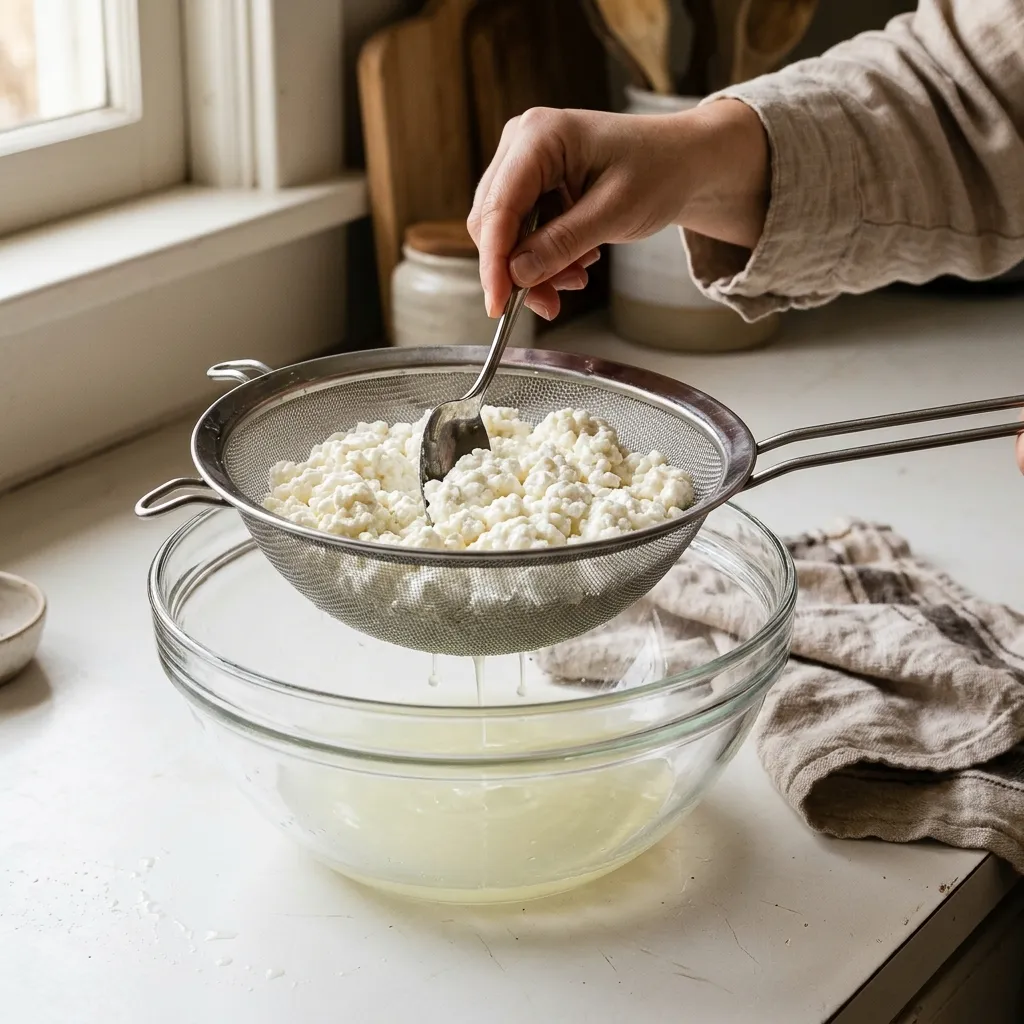
- Drain it. Spoon the curds into a fine mesh strainer for 5 to 10 minutes. Thicker, drier curds suit baking and salads.
- Cook it. Heat softens the curds and mellows the tang. Stir it into eggs, pasta sauce, or a casserole.
A Quick Shopping Check
- Read the date on the back of the tub, and pick the one with the farthest date.
- Scan the ingredients. Milk, cream, salt, and cultures are normal, and the plainest tubs tasted cleanest to me.
- Compare sodium per half cup, since it varies from brand to brand.
- Read the milkfat line on the front. A 1%, 2%, or 4% label tells you more about texture than the brand name does.
- Check the lid seal, and skip any tub that is bulging or leaking.
Everyday Ways to Use It
Breakfast is the easiest way in. Spoon 1/2 cup over sliced peaches or berries, add a handful of granola, and finish with a teaspoon of honey. Savory works just as well: top toast with sliced tomato, olive oil, and black pepper.
Lunch gets simple too. Fold 1 cup of cottage cheese into diced cucumber, tomato, and red onion, then dress it with olive oil and lemon juice. The salad stays creamy and holds for a day in the fridge.
In the kitchen, it earns its place fast. Drained and pulsed smooth, it stands in for ricotta in lasagna, stuffed shells, and baked pasta. Blended, it thickens dips and adds protein to pancake and waffle batter. It also works in cold salads and on baked potatoes.

Nutrition in Plain Terms
A half cup of 2% cottage cheese has about 90 to 100 calories, 12 to 13 grams of protein, and 5 to 7 grams of carbohydrate, based on USDA data and brand labels. About half of those calories come from protein. The same half cup holds roughly 2.5 grams of fat, while one ounce of natural Cheddar holds 9 grams. The catch is sodium, which runs from 9 to 18 percent of the daily value across the labels I mentioned above. Pair it with fruit or fresh vegetables, and pick a no salt added tub if you eat it often.
How Long It Lasts and How to Store It
Room Temperature: Not recommended. Leave it out no longer than 2 hours, or 1 hour above 90°F, then throw it away.
Refrigerator: Keep cottage cheese at 40°F or below in the original tub or an airtight glass container. Unopened tubs last up to 2 weeks from purchase. Once opened, use it within 7 days, counting from the day you open it, not the printed date.
Freezer: USDA FoodKeeper lists freezing as not recommended, because thawed curds turn grainy and watery. If you must, pack them in a freezer-safe zip bag, use them within 1 month, and cook with them only.
Reheating: Eat it cold. A baked dish made with it should reach 165°F when you reheat leftovers. Cover the dish and warm it in a 350°F oven, and stir in a splash of milk if the sauce looks tight.
Signs It Has Gone Bad: A sour, yeasty, or rancid smell, discoloration, mold, or a curdled look means it is done. Plain liquid on top is not a warning sign by itself.
Storage Trick: Scoop with a clean spoon every time and press the lid on tight. A used spoon carries bacteria and moisture back into the tub, which speeds up souring.
I tape the open date to every lid. One tub I swore I opened on Monday turned out to be nine days old, and the tape settled the argument before I ate any of it.
Common Mistakes That Ruin a Tub
- Baking it straight from the tub. Whey pools in the oven and turns ziti or lasagna soupy. Drain the curds for 10 minutes first, and spoon off any liquid that still shows up before you slice.
- Salting before you taste is easy to do, because it already carries salt. A pinch on top of a dip can push it too far. Taste first, then add lemon juice or black pepper. If you already over-salted a dip, stir in more blended curds to dilute it.
- Leaving the tub out while you cook. I once kept one on the counter through a 3 hour baking afternoon, and by dinner it smelled yeasty and sharp. Warmth speeds souring. Pull out what you need and put the tub back within 2 hours. If it already smells sharp, throw it out.
- Nonfat curds blended into a creamy sauce come out chalky and thin. Use 2% or 4% for sauces and dips, and save nonfat for fruit bowls. If a sauce already turned chalky, whisk in 1 tablespoon of milk.
- Buying the family size tub for one person. A big tub of cottage cheese is a bargain until day 8, when the 7 day limit catches up with you. Buy the size you can finish in a week.
Practical Tips for Better Results
- Save time: Blend a full tub on Sunday, portion it into 1/2 cup jars, and use every jar within 5 days.
- Move a freshly opened tub to the back of a middle shelf, where the temperature stays steady, and finish it within 7 days.
- Beginner shortcut: Stir 2 tablespoons into 2 scrambled eggs off the heat. The curds soften, and the eggs turn creamy.
- For a ricotta swap, drain 2 cups for 10 minutes, pulse 4 or 5 times in a food processor, then mix in 1 egg before layering.
- Pair 1/2 cup with 1/2 cup of berries, peaches, or pineapple. Juicy fruit balances the salt.
- For a 2 minute snack, top it with sliced cucumber, olive oil, black pepper, and chili flakes.
- Blend 1/4 cup of 2% into a fruit smoothie. It adds thickness and about 6 grams of protein with almost no taste.
Related Recipes to Try
- Baked ziti with meat sauce and creamy ricotta: Use cottage cheese that you drained and pulsed in place of the ricotta layer, then layer the dish as usual.
- Granola: Sprinkle it over a half cup of curds and sliced peaches for a fast breakfast bowl with crunch and protein.
- Easy spinach artichoke dip: Swap blended curds for part of the cream cheese to lighten the base, and keep the spinach and artichokes as they are.
Frequently Asked Questions
What is the difference between cottage cheese and ricotta?
Cottage cheese has distinct curds in a salty, creamy dressing, while ricotta is finer, softer, and sweeter. Traditional ricotta comes from whey, and cottage cheese comes from milk curds. In cooking, you can swap them cup for cup after draining the curds and pulsing them for about 10 seconds. The swap works best in baked pasta, stuffed shells, and pancakes, where heat hides the slight tang.
Why is my cottage cheese watery and is it still safe to eat?
Whey and dressing separate as a tub ages, and a warm fridge speeds it up. Stir the liquid back in, then smell it and taste a small spoonful. If it smells sour, yeasty, or rancid, or shows mold or discoloration, throw it out. If it only looks wet, it is fine. For a thicker texture, drain it in a fine mesh strainer for 5 minutes.
Does cottage cheese have lactose?
Yes. It is made from milk, so it contains lactose. Nutrient databases built on USDA data list about 4 grams of lactose per 100 grams of 2%, which works out to roughly 4 grams in a half cup. Some stores sell lactose reduced tubs. Anyone with a dairy allergy should skip it, and anyone with lactose intolerance can test a small portion first and see how they feel.
Can you eat cottage cheese after the expiration date?
The opened clock matters more than the printed date. USDA FoodKeeper guidance gives unopened tubs up to 2 weeks from purchase and opened tubs 7 days. Keep cottage cheese at 40°F or below the whole time. Smell it before you eat it, and throw it out if you notice a sour, yeasty, or rancid smell, mold, or discoloration, whatever the date says.
What can I use instead of cottage cheese?
Ricotta is the closest swap for cooking, cup for cup. Plain Greek yogurt works for dips, toast spreads, and bowls, though it tastes tangier and has no curds. Cream cheese thinned with a little milk can stand in for blended curds in a dip, but it adds more fat. I skip sour cream in baking because it runs thinner and loosens the dish.
Final Thoughts on Cottage Cheese
Pick the tub that matches the job. Small curd 2% suits dips and bowls, 4% suits baking and sauces, and nonfat belongs under fruit. If the first spoonful disappoints you, blend it before you give up on cottage cheese for good.
Most tubs I tested improved after 30 seconds in the blender and a few twists of black pepper. I keep two in my fridge at all times, one for eating plain and one for cooking. Start with one small tub of 2% and use it three ways this week: once at breakfast, once as a savory snack, and once baked.
Found this helpful? Save it to your high protein recipes Pinterest board so you can refer back to it anytime!