Easy Shrimp Scampi With Garlic Lemon Butter in 30 Minutes
Shrimp scampi should taste bright and buttery, with tender shrimp and enough sauce to coat every strand of pasta. The trouble is that garlic burns quickly, shrimp gets tough in minutes, and a thin sauce can slide right off the noodles. This version solves those problems with a short garlic cook, a separate shrimp sear, and a spoonful of starchy pasta water.
I designed this shrimp scampi around pantry ingredients rather than wine. Vegetable broth provides a savory base, while fresh lemon juice and zest give the sauce its sharp finish. Eight ounces of linguine for one pound of shrimp also keeps the seafood front and center. There is pasta in each bite, but the plate does not turn into a mountain of noodles with a few shrimp on top.
This is a developed recipe draft based on standard cooking ratios, not a claim of a personally tested batch. The steps are written so you can follow clear timing and doneness checks on your first try. Set out the ingredients before heating the skillet; once the shrimp hits the pan, dinner moves fast.
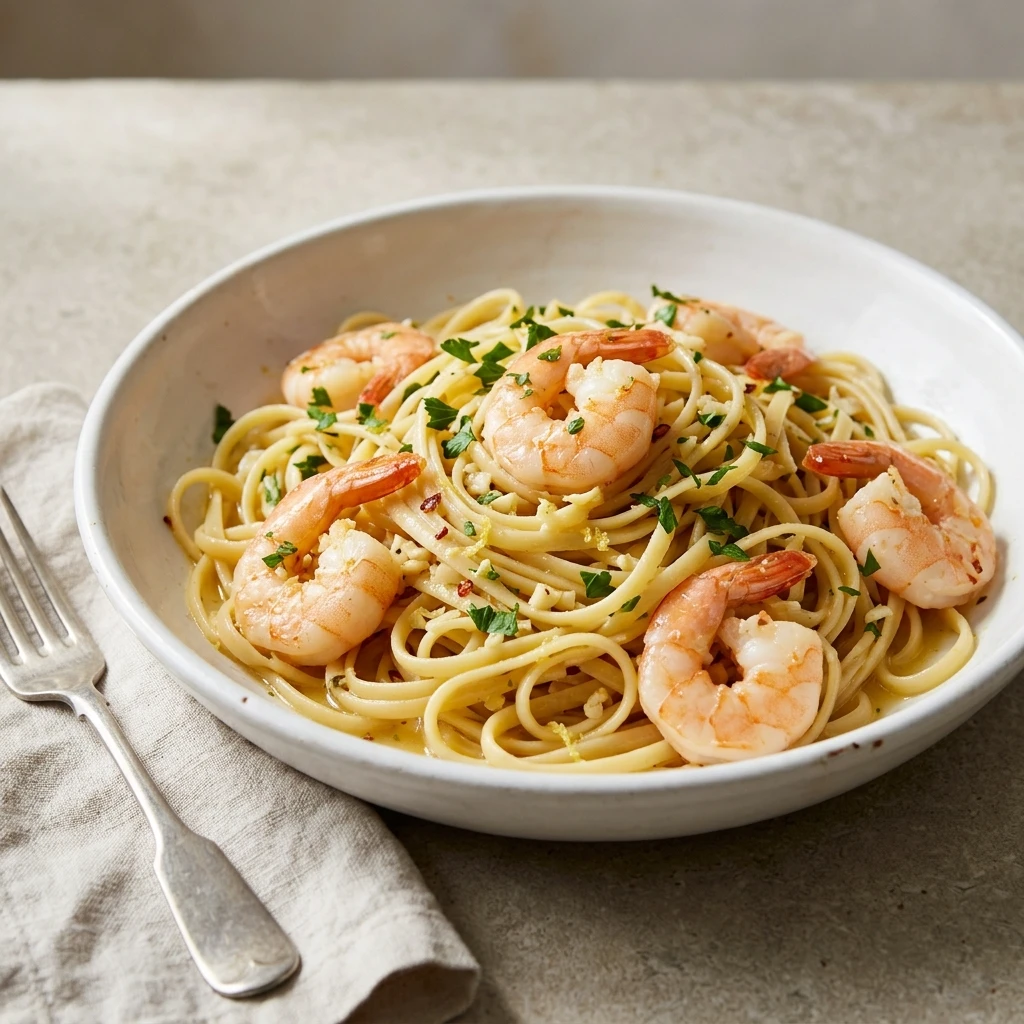
Table of Contents
Why You Will Love This Shrimp Scampi
- About 30 minutes: Prep takes 15 minutes and the cooking window takes another 15, making this useful for a busy evening.
- Juicy shrimp: Taking the seafood out of the skillet before building the sauce keeps it away from extra heat.
- Balanced sauce: Lemon cuts through the butter, while vegetable broth adds flavor without any alcohol.
- Simple grocery list: Frozen peeled shrimp, dried linguine, and a few fresh ingredients handle the whole meal.
- Flexible heat: The measured red pepper flakes add a gentle edge and can be left out for a mild family dinner.
Recipe Snapshot for a Fast Seafood Dinner
- Prep Time: 15 minutes
- Cook Time: 15 minutes
- Total Time: 30 minutes
- Servings: 4
- Difficulty: Easy
- Calories per Serving: About 480
- Key Tool: 12-inch skillet
- Best For: Weeknight dinner
Shrimp Scampi Nutrition Information
- Calories per Serving: About 480
- Protein: 31 g
- Carbs: 45 g
- Fat: 20 g
- Fiber: 2 g
- Sugar: 2 g
- Sodium: 380 mg
- Serving Size: About 1 1/2 cups
- Servings per Recipe: 4
Shrimp supplies much of the protein, while the linguine contributes most of the carbohydrates. Butter and olive oil make the sauce rich, so serving it with a crisp vegetable side can round out the plate. These figures include the pasta, not just the shrimp.
Nutrition values are approximate and calculated per serving using standard ingredient amounts. Values may vary based on brands used and portion sizes.
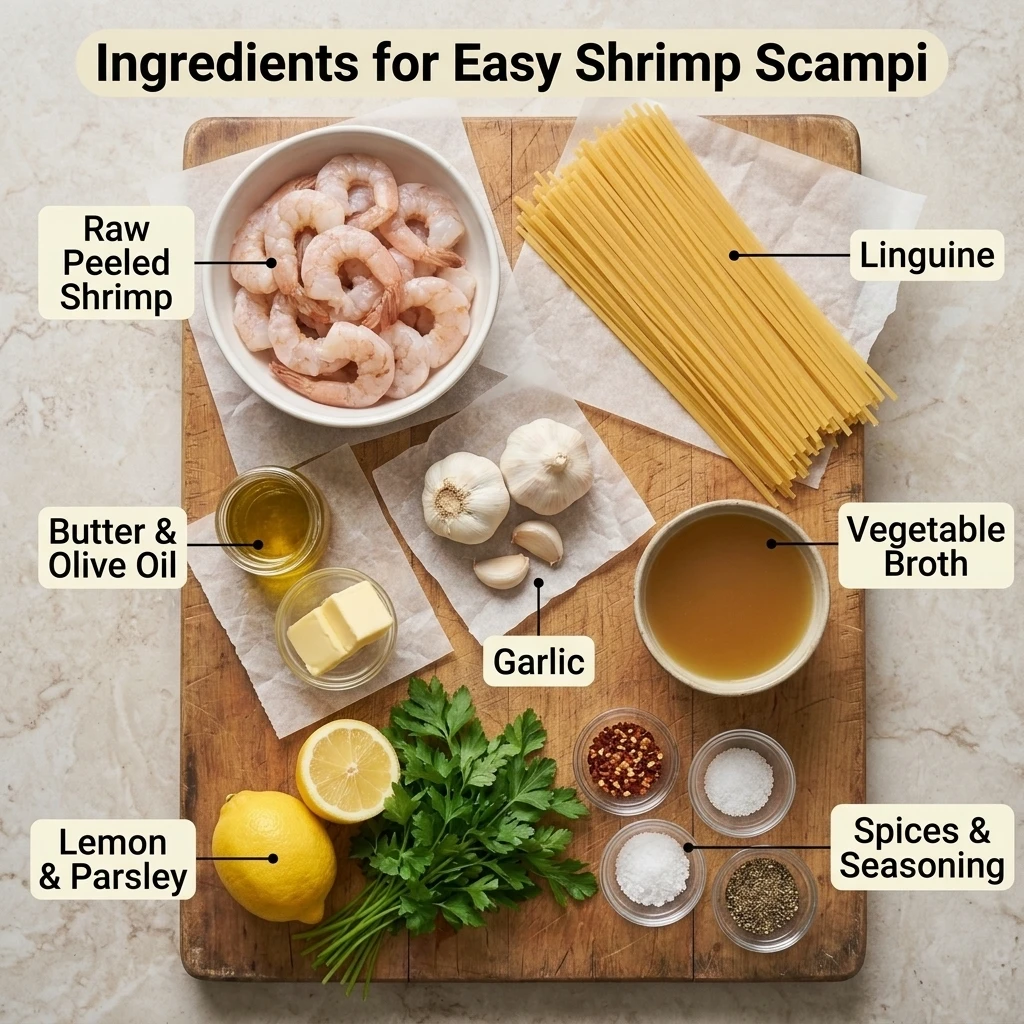
Ingredients for Lemony Garlic Butter Shrimp
Measure everything first; this sauce moves fast.
- 1 pound large raw shrimp: Peeled and deveined, preferably 21 to 25 count per pound. Thaw first if frozen. Smaller shrimp need less skillet time.
- 8 ounces dry linguine: The pasta carries the sauce; spaghetti works in its place. Check the package because cook times differ.
- 4 tablespoons unsalted butter: Use 1 tablespoon for searing and 3 for sauce.
- 2 tablespoons extra virgin olive oil: Regular olive oil also works.
- 5 garlic cloves, minced: Roughly 15 g. Fresh garlic gives the strongest aroma; 1 1/4 teaspoons garlic powder is a less vivid substitute.
- 1/2 cup vegetable broth: Water works but is less savory.
- 2 tablespoons fresh lemon juice and 1 teaspoon lemon zest: Fresh zest gives the best aroma.
- 1/4 teaspoon red pepper flakes: Leave out for a mild dish.
- 1/3 cup chopped fresh parsley: Fresh basil is another option.
- 1/4 teaspoon fine salt and 1/4 teaspoon ground black pepper: Season the shrimp; adjust after tasting.
- 1/4 cup reserved pasta cooking water: Helps the sauce cling; reserve extra.
Protect three flavors: dry shrimp for a quick sear, pale garlic to avoid bitterness, and fresh lemon added near the end. For Barilla linguine, follow the package timing.
Equipment Needed for Shrimp Scampi
- 12-inch skillet: Spread shrimp without crowding.
- 5-quart pot: Leave room for pasta to move.
- Fine-mesh strainer or colander: Save water before draining.
- Kitchen tongs: Turn shrimp without tearing noodles.
- Instant-read thermometer: Check opaque centers.
- Microplane or fine grater: Avoid the bitter white pith.
Preparation Before the Skillet Gets Hot
If using frozen shrimp, thaw them in the refrigerator overnight. For a faster method, seal them in a leakproof bag and submerge it in cold water, changing the water every 30 minutes, then cook immediately after thawing. Dry the shrimp with paper towels and keep the raw seafood away from ready-to-eat ingredients.
Mince garlic, zest and juice the lemon, chop parsley, divide butter, and measure the remaining ingredients. Bring water to a rolling boil in the pot; keep a cup ready to collect pasta water.
How to Make Shrimp Scampi Step by Step
- Cook 8 ounces linguine for 8 to 10 minutes until slightly firm. Chef’s Note: Check the package early; noodles should bend but retain a little bite.
- Save at least 1/2 cup pasta water and drain without rinsing. Noodles should retain a starchy sheen.
- Heat 2 tablespoons oil and 1 tablespoon butter in the 12-inch skillet over medium-high for 1 minute, until shimmering.
- Season the shrimp with 1/4 teaspoon fine salt and 1/4 teaspoon black pepper, then sear them in the skillet for 2 minutes on the first side. Chef’s Note: Leave space between pieces rather than crowding them; the undersides should turn pale pink.
- Turn the shrimp and cook for 1 to 2 minutes more, then transfer them to a clean plate when the flesh is pearly and opaque, reaching 145°F if checked with a thermometer. Each piece should curve loosely rather than tighten into a small ring.
- Lower the heat to medium-low and stir in the 5 minced garlic cloves and 1/4 teaspoon red pepper flakes for 30 to 45 seconds. Chef’s Note: Remove the skillet from the burner briefly if the garlic colors too fast; it should smell fragrant and remain pale.
- Add 1/2 cup broth; simmer 2 minutes while scraping the skillet. Liquid should bubble and reduce slightly.
- Turn heat to low; stir in 3 tablespoons butter, 2 tablespoons lemon juice, 1 teaspoon zest, and 1/4 cup pasta water for 30 seconds until glossy.
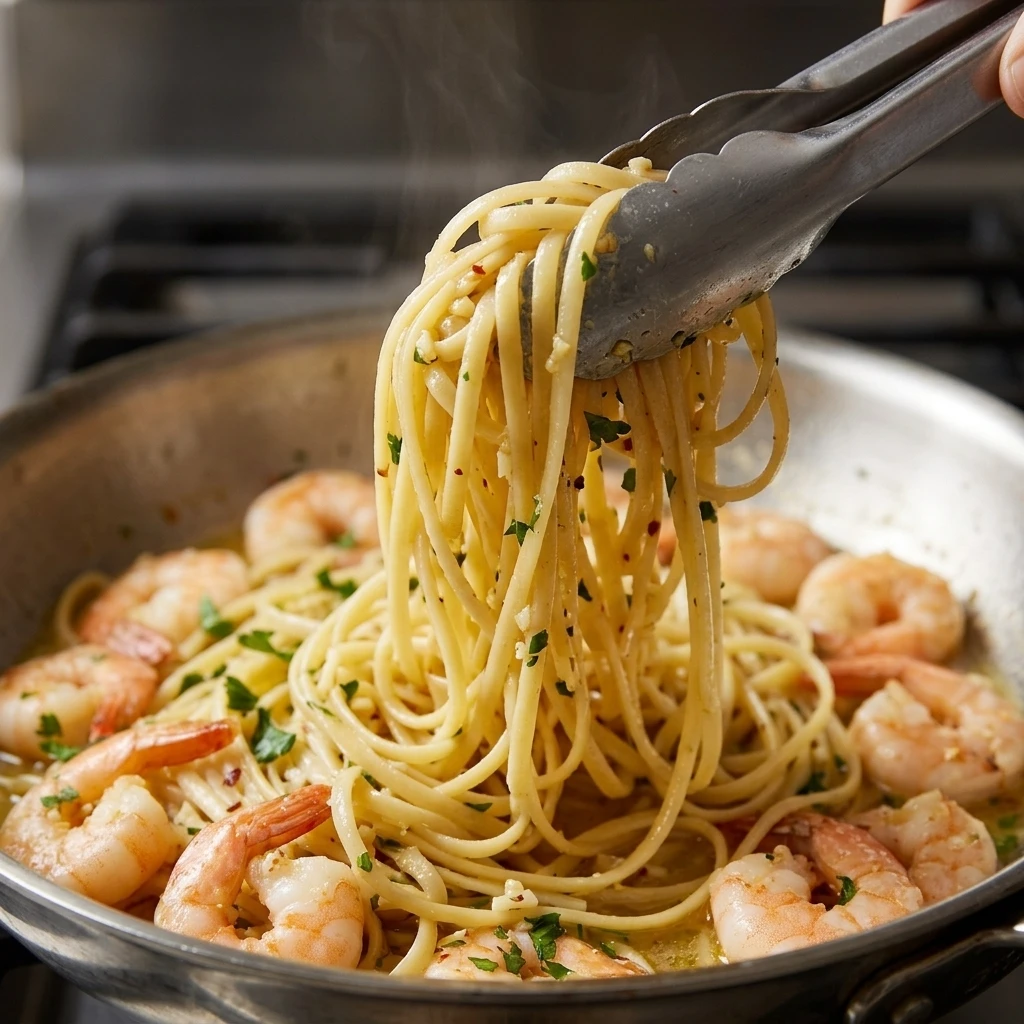
- Toss linguine for 1 minute; add water by the tablespoon if dry. Noodles should look glossy.
- Fold in shrimp and 1/3 cup parsley for 30 seconds. Serve when shrimp are hot and opaque.
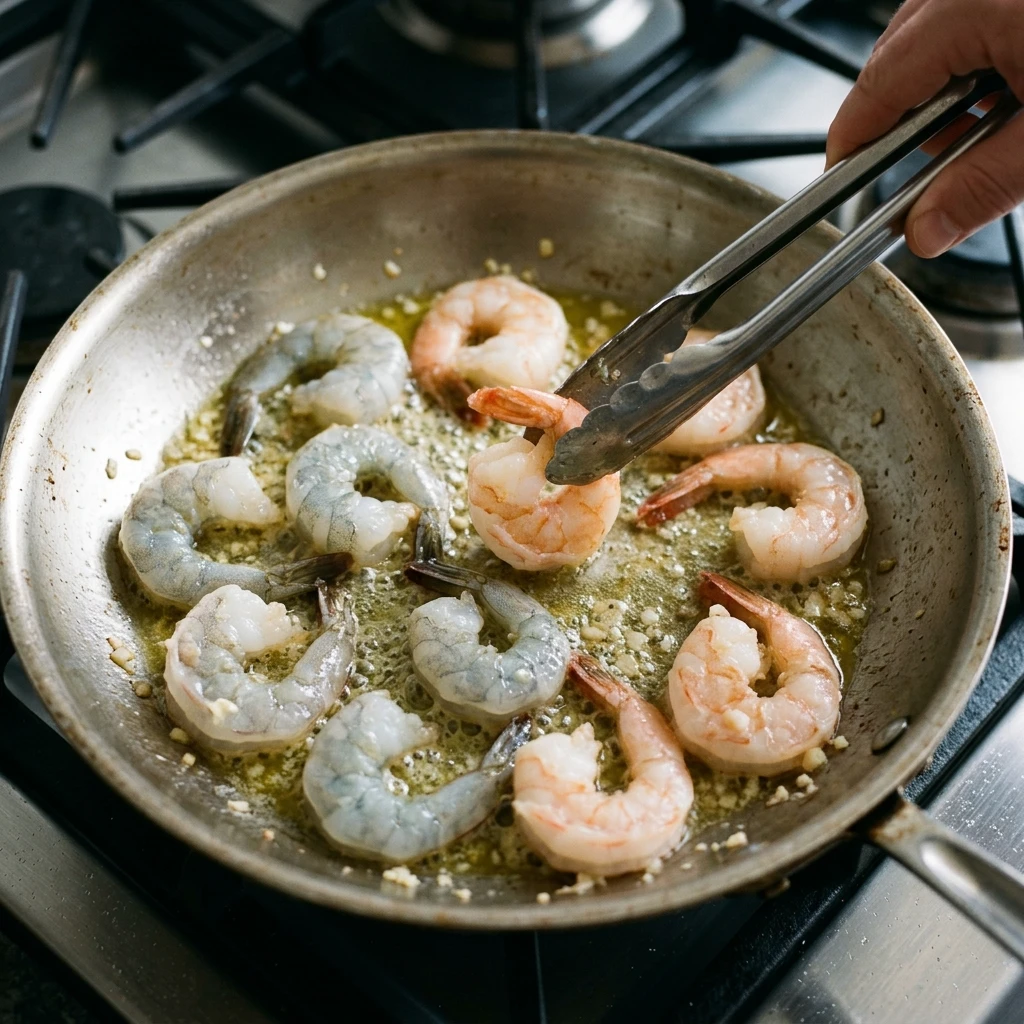
Pro Tip: If garlic darkens, remove the hot skillet from the burner before adding broth. Burned garlic can make the sauce bitter.
Expert Tips for Tender Shrimp and Glossy Pasta
- Start with dry seafood. Surface water steams shrimp instead of searing it.
- Choose shrimp by size. Small shrimp cook faster; check opacity early.
- Do not overfill the pan. Use two batches in a small skillet.
- Watch the garlic. A mistake to avoid is treating minced garlic like onions; it needs seconds, not several minutes, in hot fat.
- Prepare ingredients ahead. Prepare shrimp and garlic 1 day ahead, separately chilled.
- Keep extra cooking water. Loosen dry noodles with water, not oil.
- Plan leftovers carefully. Refrigerate within 2 hours; use within 3 days.
Common Shrimp Scampi Mistakes and How to Fix Them
The shrimp become rubbery. Tight, firm curls usually mean they stayed over the heat too long. Remove pieces as soon as they turn opaque. Overcooking cannot be reversed, but cutting them smaller before serving makes the texture less noticeable.
The sauce pools under the pasta. Broth alone will not cling. Toss pasta with starchy water; return plated noodles to the warm skillet if needed.
Garlic tastes bitter. Brown or black flecks signal excessive heat. Reduce the burner before garlic goes in and keep stirring. If it scorches badly, wipe the skillet and remake the garlic base; more lemon will not erase burned flavor.
The skillet fills with water. Crowded shrimp steam. Dry and cook in batches; reduce any liquid after removing the shrimp.
The finish tastes flat. Too much broth mutes lemon. Taste after tossing; adjust salt or juice a little at a time.
Storing and Reheating Leftover Shrimp Scampi
- Room Temperature: Do not leave this seafood dish out longer than 2 hours, or 1 hour when the air temperature is above 90°F.
- Refrigerator: Use shallow airtight glass containers at 40°F or colder for 3 days.
- Freezer: Freeze in labeled, sealed freezer-safe bags for 1 month.
- Reheating: Covered, reheat with 1 tablespoon water per serving over low heat for 4 to 6 minutes, to 165°F.
- Make-Ahead Notes: Refrigerate prepped shrimp and aromatics separately for up to 1 day.
I would portion extra noodles and shrimp into shallow containers right after the meal, rather than leave the whole skillet on the stove. Smaller portions chill faster and are easier to reheat without putting the shrimp through several rounds of heating. Freezing is safe when handled properly, but the thawed pasta will usually be softer than fresh.
Storage Trick: Add reheating water before the noodles stick, then check the center reaches 165°F.
Shrimp Scampi Variations and Substitutions
Spicy: Use 1/2 teaspoon red pepper flakes. Sprinkle a few extra flakes on adult portions after serving, if desired.
Mild and Kid-Friendly: Omit the red pepper flakes. Offer lemon wedges at the table so each person can adjust the tang.
Vegetarian: Swap shrimp for 12 ounces sliced mushrooms and cook them for 7 to 9 minutes until golden. You will have garlic lemon mushroom pasta, not seafood scampi.
Gluten-Free: Use 8 ounces certified gluten-free linguine and gluten-free vegetable broth. Follow the package carefully because rice-based noodles can soften faster.
Dairy-Free: Replace the dairy butter with 4 tablespoons unflavored plant-based butter. Taste the sauce before adding more salt because brands vary.
What to Serve With Shrimp Scampi
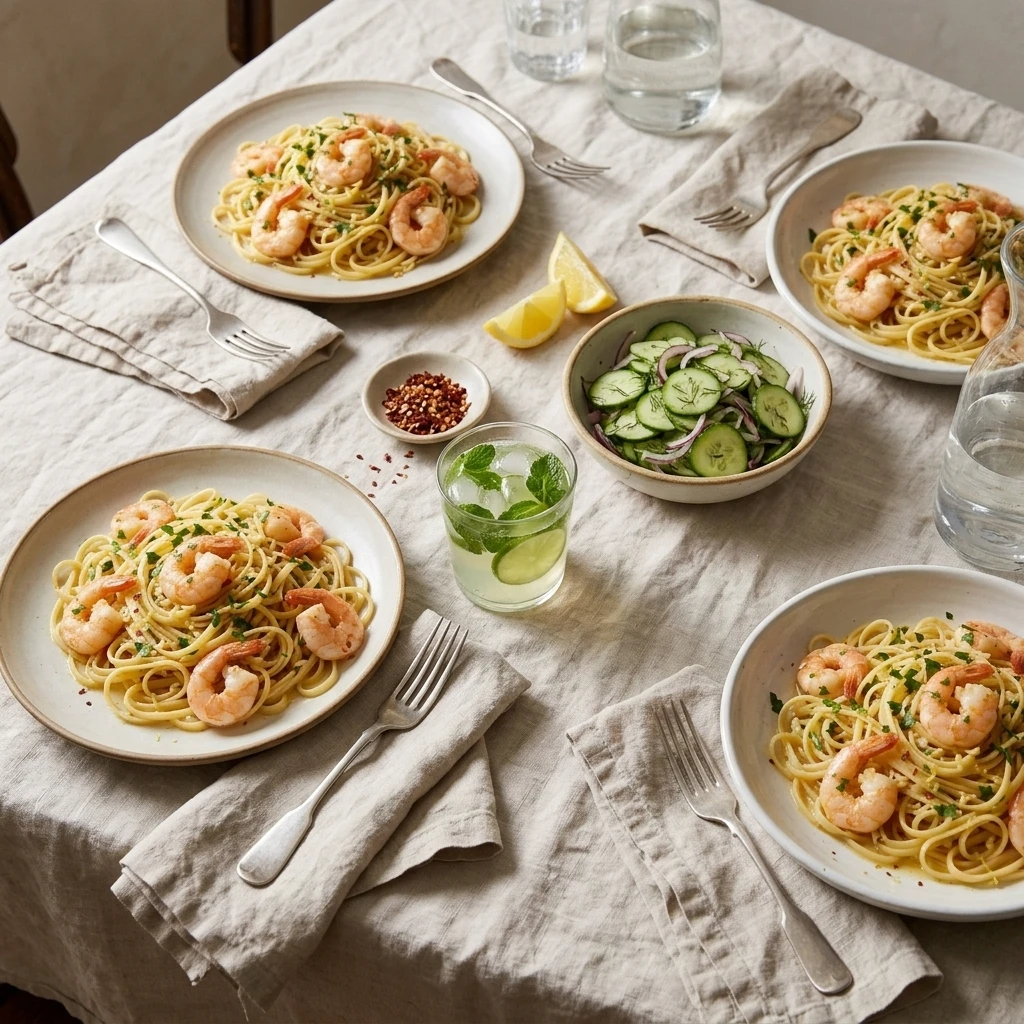
Cool cucumber salad: The crunch of cucumber salad offsets rich garlic butter, especially on a warm evening.
Roasted asparagus: Serve tender spears with lightly browned tips beside the pasta. Their firm texture provides a welcome break from the soft noodles.
A citrus mocktail: A fresh mint and lime mojito mocktail cools the palate.
Garlic toast: Offer a small slice for picking up the sauce left on the plate. Keep the bread portion modest because this meal already includes pasta.
Another shrimp dinner: Later in the week, make shrimp tacos with crisp toppings instead of pasta.
Frequently Asked Questions About Shrimp Scampi
Can I make shrimp scampi ahead of time?
You can prep the ingredients one day in advance, but the finished shrimp and pasta taste best soon after cooking. Keep peeled shrimp in a covered container in the coldest part of the refrigerator, and store minced garlic and chopped parsley separately. Cook the noodles and make the lemon butter sauce right before eating. If dinner must be delayed, refrigerate the finished dish promptly and reheat to 165°F with a small splash of water.
Why is my shrimp scampi sauce watery?
A watery scampi sauce usually needs better mixing with the pasta rather than more butter. Drain the linguine without rinsing and toss it in the skillet with a little starchy cooking water. Heat and movement help disperse the butter through the liquid so it coats the noodles. If it still pools at the bottom, remove the shrimp, simmer the liquid briefly, and toss the pasta again before returning the seafood.
What can I use instead of wine in shrimp scampi?
Vegetable broth works well in shrimp scampi when paired with fresh lemon juice. Use 1/2 cup broth for this recipe, then add the measured 2 tablespoons lemon juice near the end so its acidity stays bright. Water can stand in for broth when needed, although the sauce will taste lighter. Avoid replacing all the broth with lemon juice; that would make the sauce too tart and leave too little liquid for coating the linguine.
How do you know when shrimp scampi is cooked?
The shrimp are ready when their flesh changes from translucent gray to pearly white and opaque, often with pink edges. Large shrimp usually need about 2 minutes on the first side and 1 to 2 minutes after turning in a hot skillet. A thermometer can provide an extra check at 145°F. Do not judge by color alone if the thickest center still looks glassy; give that piece a little longer, then remove it promptly.
How do I thicken scampi?
Finish the pasta directly in the sauce with a small amount of starchy pasta water. It sounds odd to add liquid to thin sauce, but the starch helps the melted butter and broth spread evenly across the linguine. Keep tossing for about 1 minute until the noodles look glossy. If a lot of broth remains, briefly simmer it before adding pasta. Adding flour or cornstarch can turn a delicate scampi sauce heavy or pasty.
A Better Way to Finish Shrimp Scampi
The last minute in the pan matters more than any fancy garnish. Taste a noodle and look at its surface before plating: it should have a fine coating of sauce, not a puddle beneath it. If the pasta seems dry, stir in a spoonful of reserved water. If the shrimp have already reached the right doneness, do not keep reheating them while you make that adjustment.
I built this shrimp scampi recipe to protect the seafood first and finish the noodles last. A kitchen test and real tasting feedback are still needed before publication. The measurements and doneness cues are a starting point, not evidence of testing.
If you loved this recipe, save it to your seafood dinner Pinterest board so you can find it easily later!
Easy Shrimp Scampi With Garlic Lemon Butter in 30 Minutes
Ingredients
Equipment
Method
- Cook 8 ounces linguine for 8 to 10 minutes until slightly firm. Chef's Note: Check the package early; noodles should bend but retain a little bite.
- Save at least 1/2 cup pasta water and drain without rinsing. Noodles should retain a starchy sheen.
- Heat 2 tablespoons oil and 1 tablespoon butter in the 12-inch skillet over medium-high for 1 minute, until shimmering.
- Season the shrimp with 1/4 teaspoon fine salt and 1/4 teaspoon black pepper, then sear them in the skillet for 2 minutes on the first side. Chef’s Note: Leave space between pieces rather than crowding them; the undersides should turn pale pink.
- Turn the shrimp and cook for 1 to 2 minutes more, then transfer them to a clean plate when the flesh is pearly and opaque, reaching 145°F if checked with a thermometer. Each piece should curve loosely rather than tighten into a small ring.
- Lower the heat to medium-low and stir in the 5 minced garlic cloves and 1/4 teaspoon red pepper flakes for 30 to 45 seconds. Chef’s Note: Remove the skillet from the burner briefly if the garlic colors too fast; it should smell fragrant and remain pale.
- Add 1/2 cup broth; simmer 2 minutes while scraping the skillet. Liquid should bubble and reduce slightly.
- Turn heat to low; stir in 3 tablespoons butter, 2 tablespoons lemon juice, 1 teaspoon zest, and 1/4 cup pasta water for 30 seconds until glossy.
- Toss linguine for 1 minute; add water by the tablespoon if dry. Noodles should look glossy.
- Fold in shrimp and 1/3 cup parsley for 30 seconds. Serve when shrimp are hot and opaque.
Notes
The vegetable broth is a nonalcoholic sauce base. Pasta water helps the butter stay dispersed.
Storage: Refrigerate leftovers in a shallow airtight container for 3 days or freeze for up to 1 month; reheat to 165°F.