Soft Vanilla Cake with Easy Buttercream Frosting
A good vanilla cake should cut cleanly, feel soft under a fork, and taste like more than sweet frosting. This one uses butter for flavor, whole milk for a tender crumb, and a measured amount of leavening so the layers can rise without forming a huge dome. The vanilla flavor comes from an alcohol-free baking flavoring, which keeps the ingredient list suitable for households avoiding alcohol.
This vanilla cake recipe is a straightforward two-layer birthday dessert with a simple vanilla buttercream. You will need two 9-inch pans, a mixer, and enough time to cool the layers before frosting. The steps keep the dry and wet ingredients separate until the last minute, making it easier to stop mixing at the right point.
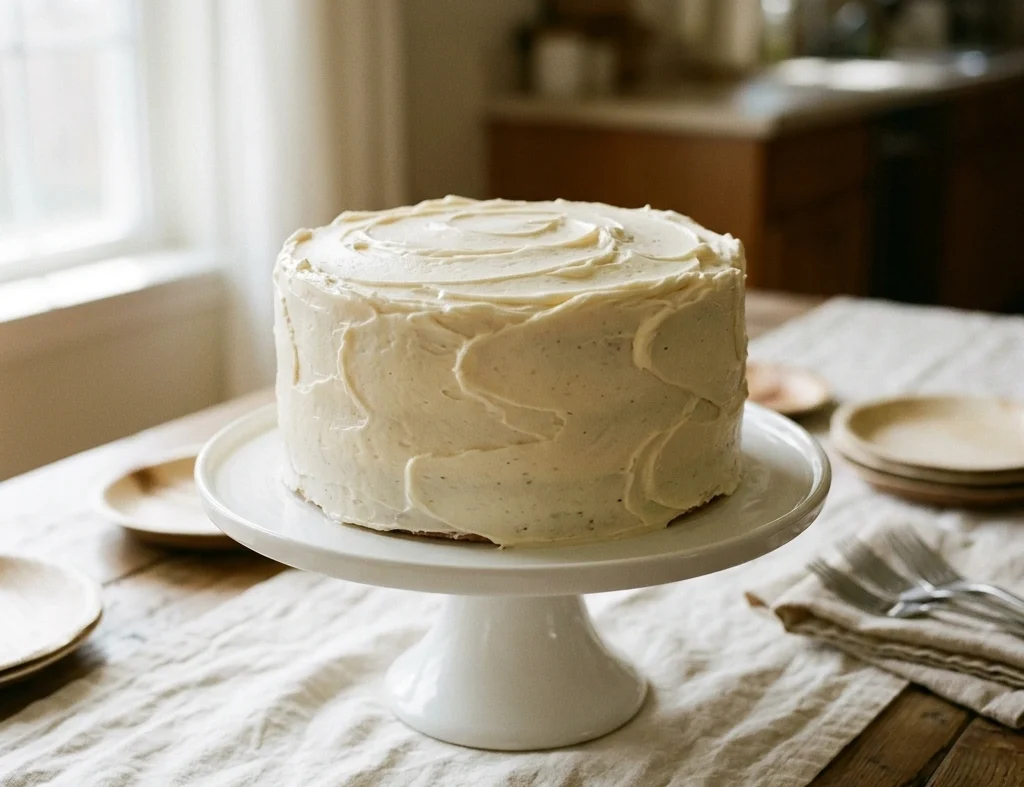
Table of Contents
Why This Vanilla Cake Works for Everyday Celebrations
- The two 9-inch layers give you an easy cake to fill, stack, and cut into 12 equal slices.
- Soft butter and whole milk create a gentle, buttery flavor without relying on a boxed mix.
- The frosting uses the same alcohol-free vanilla flavoring as the batter, so there is no second flavor bottle to buy.
- You can bake the layers one day ahead, saving the decorating work for the day you serve them.
- The finished cake suits birthdays and small gatherings without needing special decorating equipment.
For another birthday dessert with a fruity twist, our homemade strawberry cake.
Vanilla Cake Recipe Snapshot
- Prep Time: 25 minutes
- Cook Time: 35 minutes
- Cooling Time: 60 minutes
- Total Time: 2 hours
- Servings: 12 slices
- Difficulty: Medium
- Calories per Serving: About 588
- Key Tool: Two 9-inch round cake pans
- Best For: Birthdays and weekend desserts
Nutrition Information for Each Frosted Slice
- Calories per Serving: About 588
- Protein: 5 g
- Carbs: 78 g
- Fat: 29 g
- Fiber: 1 g
- Sugar: 56 g
- Sodium: 242 mg
- Serving Size: About 1 frosted slice (1/12 of cake)
- Servings per Recipe: 12
This cake is an occasional dessert with most of its calories coming from butter, flour, and sugar. The icing makes a large share of each slice, so cutting even pieces is the best way to keep the estimate useful. The numbers include the complete frosting recipe, not a plain unfrosted layer.
Nutrition values are approximate and calculated per serving using standard ingredient amounts. Values may vary based on brands used and portion sizes.
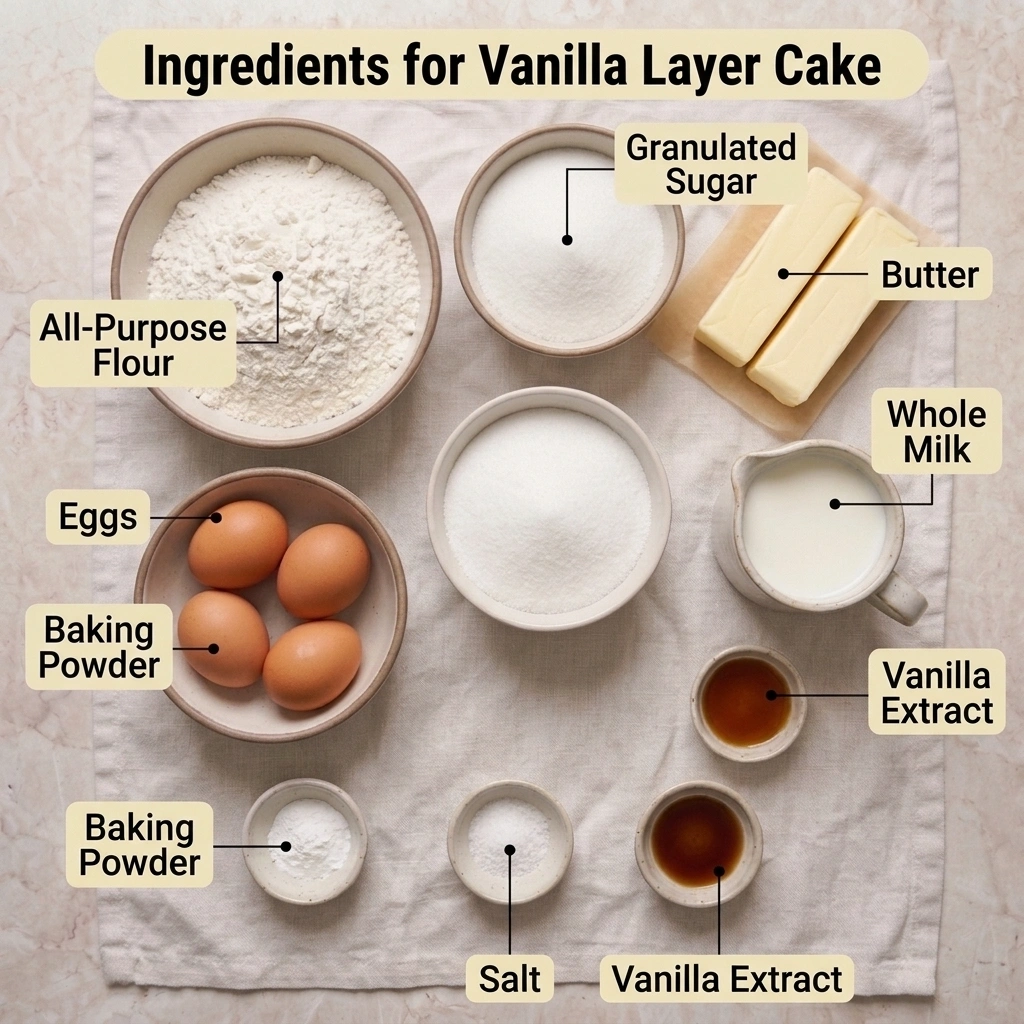
Ingredients for the Cake and Vanilla Buttercream
This vanilla cake uses everyday baking ingredients to create two soft layers and a creamy homemade buttercream.
For the two cake layers:
- 2 3/4 cups (330 g) all-purpose flour
- 1 1/2 cups (300 g) granulated sugar
- 3/4 cup (170 g) unsalted butter, softened
- 3 large eggs, at room temperature
- 1 cup (244 g) whole milk, at room temperature
- 2 1/2 teaspoons baking powder
- 1/2 teaspoon fine salt
- 1 tablespoon alcohol-free vanilla flavoring
For the buttercream:
- 1 cup (227 g) unsalted butter, softened
- 3 cups (360 g) powdered sugar, sifted if lumpy
- 2 tablespoons (30 g) whole milk
- 1 teaspoon alcohol-free vanilla flavoring
- 1/8 teaspoon fine salt
King Arthur Unbleached All-Purpose Flour uses 120 g per cup in its measuring guide. Weighing it avoids packed scoops.
Butter adds flavor and traps air during creaming. Whole milk loosens the batter.If you want to explore a different frosting for another cake, try our homemade cream cheese frosting
Equipment Needed for Even Cake Layers
- Two 9-inch round cake pans: Use sides at least 2 inches deep.
- Electric mixer: Cream at medium speed, then mix flour on low.
- Digital scale: Weigh flour rather than packing cups.
- Wire racks: Keep steam from dampening the bottoms.
- Offset spatula: Spread frosting without pulling crumbs.
- Parchment rounds: Release each layer neatly.
I chose matching pans in this draft so the two layers can be compared fairly when checking for doneness.
Preparation Before You Mix the Batter
Bring butter, eggs, and milk toward room temperature. Butter should dent when pressed but not look shiny. Cold eggs may make the mixture grainy; melted butter cannot hold air well.
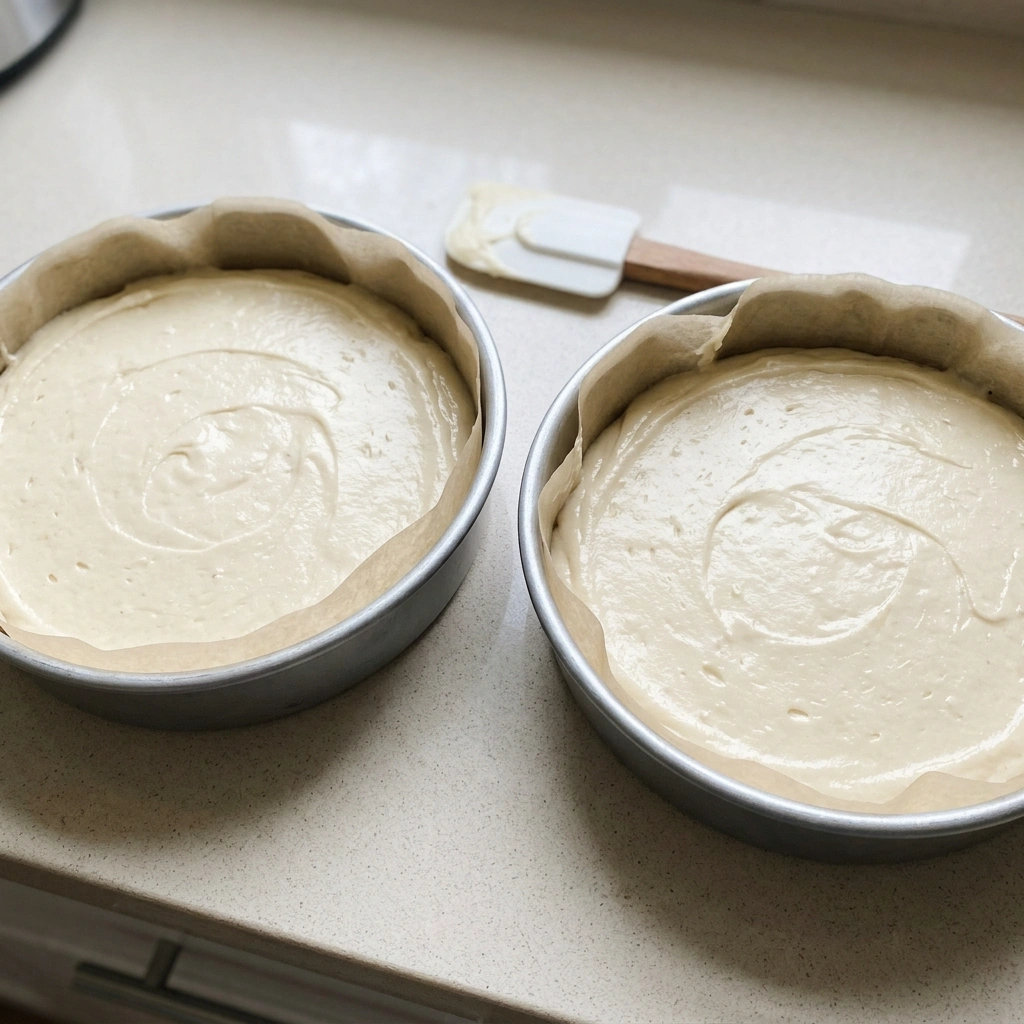
Preheat the oven to 350°F. Grease two 9-inch pans, line the bottoms with parchment, and grease again. Measure everything before mixing; prepare buttercream while the layers cool.
Step-by-Step Instructions for Soft Vanilla Cake
- Whisk the dry ingredients. Whisk flour, baking powder, and salt for 30 seconds until no baking powder clumps remain.
- Cream butter and sugar. Beat the 3/4 cup butter and sugar at medium speed for 3 to 4 minutes. Chef’s Note: Scrape once; it should look pale and fluffy.
- Add the eggs. Beat in eggs one at a time for 20 seconds each, then vanilla for 10 seconds. The mixture should look creamy, without oily streaks.
- Combine the mixtures. On low, alternate three portions of dry mix with two of milk for about 90 seconds. Chef’s Note: Stop when flour streaks disappear and batter looks smooth.
- Fill the pans. Divide batter between pans and level for about 1 minute. The two surfaces should look equally flat.
- Bake the layers. Bake at 350°F for 30 to 35 minutes. Chef’s Note: Tops spring back and a toothpick shows moist crumbs, not wet batter.
- Cool the cakes. Cool in pans for 15 minutes, then on racks for 45 minutes. Bottoms should feel cool and dry.
- Mix the buttercream. Beat 1 cup butter for 2 minutes; add powdered sugar for 2 minutes. Beat in milk, vanilla, and salt for 1 minute until frosting holds soft peaks.
- Stack and frost. Spread one third of frosting between layers, then frost top and sides for about 5 minutes. The stack should stay level, with clear swirls.
Pro Tip: If the cake tops brown before the centers pass the toothpick test, tent the pans loosely with foil for the final few minutes. Keep foil off the batter so it cannot stick to the rising surface.
Expert Tips for a Tender Crumb and Neat Frosting
For a soft vanilla cake, accurate flour measurements, properly softened butter, and careful mixing make a difference.
- Weigh flour: Packed measuring cups can cause a dry cake. Leveling the cup helps, but the scale is more repeatable.
- Check butter: A fingertip should leave a dent without grease.
- Check both pans: A hot spot can change their finish times. Pull one layer first if its middle passes the test.
- Do not swap baking soda for the listed baking powder. They react differently and can change both height and taste.
- Make ahead: Wrap cooled layers and refrigerate up to 3 days.
- Save time: Sift powdered sugar while layers bake.
- Chill the frosted cake for 20 minutes before transport.
I separated the creaming and flour stages because they have different goals: build air first, then stop once the batter is even.
Common Vanilla Cake Problems and How to Fix Them
Dry slices: Crumbly edges suggest extra flour or baking time. Weigh flour and test at 30 minutes. Serve an already dry slice with fruit or milk, then note the oven time for your next bake.
Heavy center: A tight center may mean under-creamed butter or old baking powder. Cream until pale; check the leavener. Frost thin slices to make them easier to eat, but discard batter made with questionable ingredients.
Sunken middle: A center dip can follow underbaking or early oven opening. Test late. If fully cooked, level the top and fill gaps with frosting. Do not serve a wet, raw center.
Torn layers: Sticking or early removal can tear layers. Use parchment and cool in pans for 15 minutes. Join breaks with buttercream once everything is cool enough to hold together.
Sliding frosting: Warm layers melt frosting and make it slide. Cool completely. Chill a sliding cake for 20 minutes before smoothing again, and keep the spatula clean between passes.
How to Store Vanilla Cake Safely
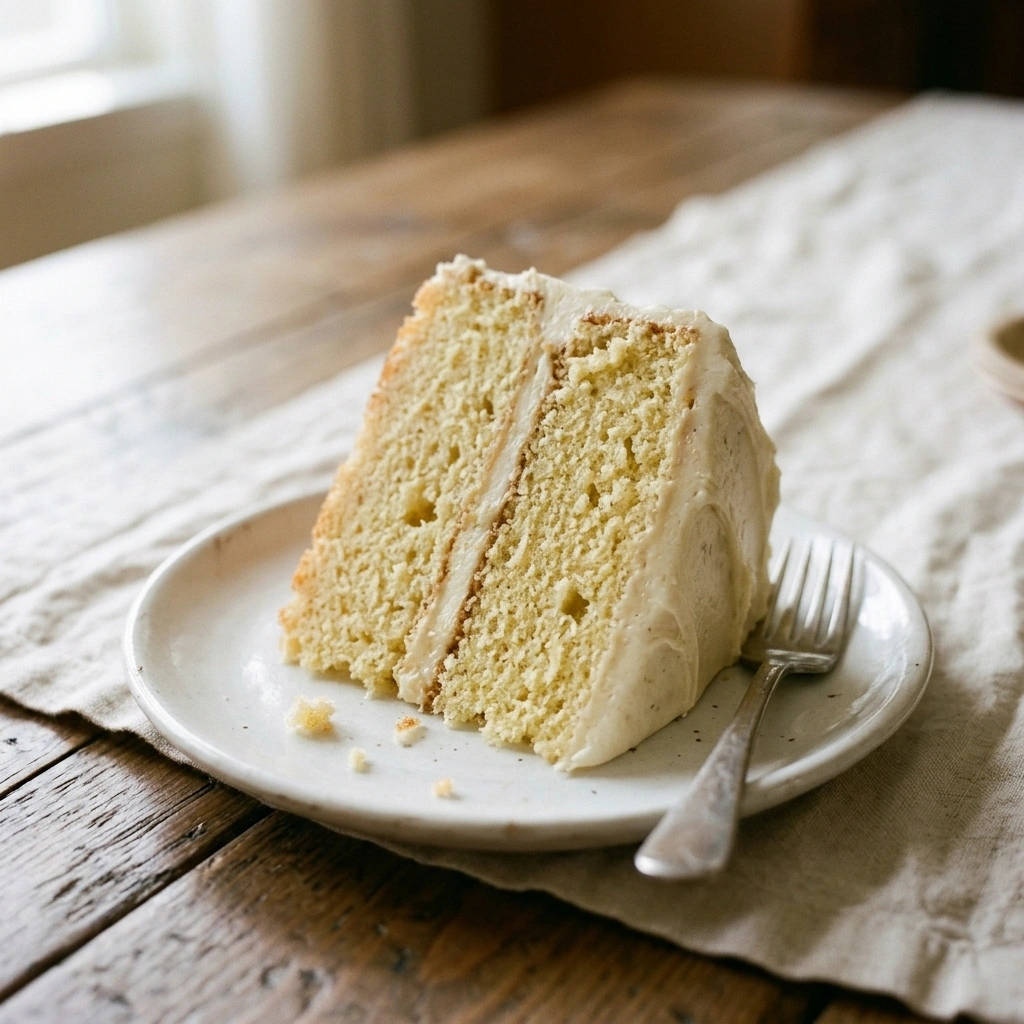
Proper storage helps vanilla cake stay soft and protects the buttercream from drying out.
- Room Temperature: Cover in a cake carrier up to 2 days in a cool room below 70°F. Refrigerate cakes with perishable fillings.
- Refrigerator: Keep in an airtight container or cake dome up to 4 days. Soften slices for 20 to 30 minutes before serving.
- Freezer: Double-wrap unfrosted layers in a freezer bag up to 2 months. Firm up frosted slices, then wrap individually up to 1 month.
- Reheating: For an unfrosted slice only, microwave at medium power 8 to 10 seconds. Frosted slices may melt.
- Make-Ahead Notes: Bake layers 1 day ahead and chill wrapped. Keep buttercream airtight for up to 3 days; rebeat before spreading.
Chill the cake for 20 minutes before cutting. Portion it before freezing so slices thaw individually. Let chilled frosting soften before eating.
Storage Trick: Slip a small square of parchment between each frosted slice before freezing. The paper prevents decorative swirls from rubbing against the wrapping as the pieces are stacked.
Flavor Variations and Ingredient Substitutions
These vanilla cake variations let you experiment with different flavors and ingredients, although some substitutions require additional testing.
Kid-Friendly Vanilla: Leave the flavors plain and pipe borders using part of the measured buttercream. Thin borders keep the design simple and leave enough frosting to cover the cake.
Gentle Warm Spice: Try 1/4 teaspoon cinnamon in the flour. It gives the plain crumb a mild warmth without hiding the vanilla.
Vegetarian and Dairy-Free Option: The base is ovo-lacto vegetarian. For dairy-free cake, test equal amounts of baking sticks and unsweetened plant milk. Choose products without added flavors that could overwhelm the cake.
Gluten-Free Option: Try a gluten-free cup-for-cup blend with binder. Baking time and texture may change. Let the batter sit for 5 minutes before filling the pans, then assess the baked crumb.
Extra Vanilla Aroma: Add 1/2 teaspoon alcohol-free vanilla flavoring to frosting for a stronger aroma. Taste before serving. Some flavorings are sweeter than others, so adjust only after tasting.
What to Serve With a Slice
Fresh berries: Berries add tartness. Keep them separate so the cake stays neat.
Cold milk: Milk balances the sweet frosting. Plant milk also works.
Chocolate chip cookies: Serve a small plate of homemade chocolate chip cookies.
Chocolate cupcakes: Chocolate cupcakes give guests a second flavor. Reserved internal link placement, URL pending.
Fruit salad: Serve seasonal fruit chilled for a fresh contrast.
Soft sugar cookies: Soft sugar cookies make an easy finger food. Reserved internal link placement, URL pending.
Strawberry shortcake: Strawberry shortcake adds a fruit-focused option. Reserved internal link placement, URL pending.
Frequently Asked Questions About Vanilla Cake
Can I make vanilla cake a day ahead?
Yes. Bake the two layers one day ahead, let them cool completely, and wrap them tightly before refrigerating. Make the buttercream separately and keep it covered in the refrigerator. When you are ready to stack the cake, give the chilled frosting a short beat until it spreads smoothly. A covered cake is easier to handle than loose layers on a crowded refrigerator shelf. Wait to add fresh fruit until serving so extra moisture does not soften the icing.
Why is my vanilla cake dry?
The usual causes are too much flour, an oven running hot, or baking past the point when the center is set. Use 330 g flour rather than scooping from the bag, and test the layers at 30 minutes. A toothpick with a few moist crumbs is better than one coated in wet batter. If a finished cake is already dry, a little milk alongside the slice helps; extra frosting can improve the eating experience but cannot restore the original crumb.
Can I use all-purpose flour instead of cake flour?
Yes, but use the formula written for all-purpose flour rather than swapping blindly into a cake flour recipe. This vanilla cake is developed around 330 g all-purpose flour. Cake flour has different protein and absorption properties, which can affect the crumb and height. If you want to try cake flour, weigh it instead of replacing by scoop volume, and treat the result as a separate test. Changes to flour can also change how quickly a layer finishes baking.
How do I know when vanilla cake is done baking?
Start checking at 30 minutes in a 350°F oven. A baked layer should have a lightly golden top, spring back when pressed near the center, and release a toothpick with a few moist crumbs but no liquid batter. If the center is still glossy or wobbly, bake a few minutes longer and check again. Keep both pans on the middle rack when possible. One layer may finish before the other if your oven heats unevenly.
How can you tell when you have mixed it enough?
Stop the final mixing stage when the flour streaks disappear and the batter looks even from top to bottom. During creaming, the butter and sugar should become pale and fluffy, which is a different goal from the final flour stage. Scrape the bowl with a spatula to check for hidden dry patches before filling the pans. Mixing much longer after adding flour can make a cake tighter than expected. Watch the appearance instead of relying only on the timer.
A Simple Finish for Your Next Vanilla Cake
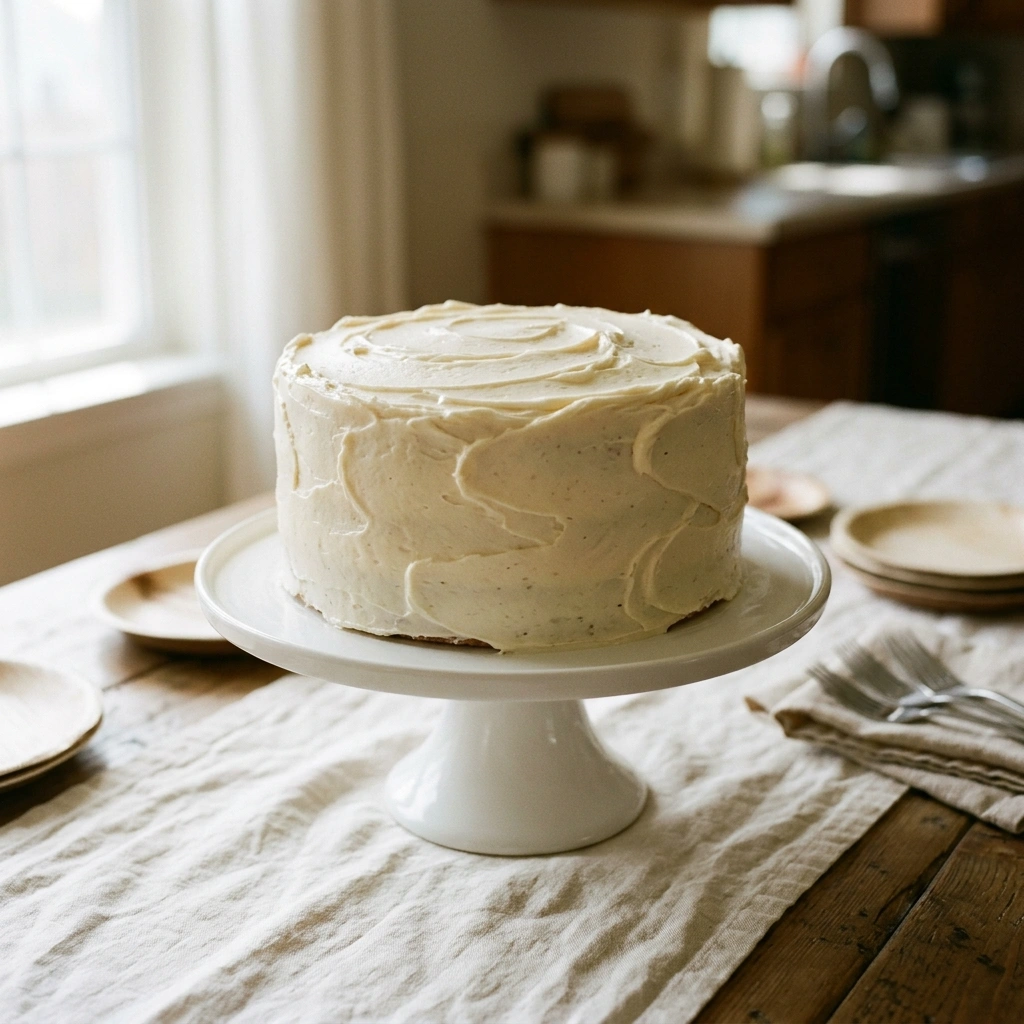
A neatly finished cake does not need sharp professional edges. Give the frosting a few relaxed swirls and leave the sides slightly textured if that is what your spatula makes naturally. A cake stand helps with presentation, but a wide flat plate works just as well. The most useful habit is to write down what your own oven did: which pan browned first, when the center stopped wobbling, and whether the next batch needs a shorter bake.If you enjoy making homemade layer cakes, you might also love our classic red velvet cake
If you loved this recipe, save it to your cake Pinterest board so you can find it easily later!
Soft Vanilla Cake with Easy Buttercream Frosting
Ingredients
Equipment
Method
- Bring butter, eggs, and milk toward room temperature. Butter should dent under a finger but not look greasy.
- Preheat oven to 350°F. Grease two 9-inch round pans, line bottoms with parchment, grease paper, and measure the ingredients.
- Whisk flour, baking powder, and salt for 30 seconds until even with no clumps.
- Cream 3/4 cup butter and granulated sugar on medium for 3 to 4 minutes, scraping once, until pale and fluffy.
- Add eggs one at a time, beating 20 seconds each, then 1 tablespoon vanilla flavoring for 10 seconds, until creamy.
- On low, alternate dry mix in three additions with 1 cup milk in two additions for about 90 seconds, stopping when flour streaks disappear.
- Divide between prepared pans, level for about 1 minute, and check that surfaces are even.
- Bake at 350°F for 30 to 35 minutes, checking at 30 minutes, until centers spring back and toothpicks have moist crumbs, not wet batter.
- Cool 15 minutes in pans and 45 minutes on racks until layers are cool and dry.
- Beat 1 cup butter for 2 minutes, gradually add powdered sugar and beat 2 minutes, then add 2 tablespoons milk, 1 teaspoon vanilla, and 1/8 teaspoon salt for 1 minute until soft peaks form.
- Spread one third of frosting between layers and coat top and sides with remaining frosting for about 5 minutes until cake stands level and swirls hold.
Notes
Storage: Refrigerate frosted cake up to 4 days; freeze unfrosted layers up to 2 months or frosted slices up to 1 month.