Creamy Scalloped Potatoes with Tender, Even Layers
Silky cream sauce, tender potato slices, and a deeply golden top make this pan of scalloped potatoes the kind of side dish that earns its space at a holiday table. The sauce starts as a light roux, so it stays creamy instead of separating or collecting at the bottom of the dish. Yukon Gold potatoes add enough starch to thicken the sauce while holding their shape when served.
This method uses familiar ingredients, one baking dish, and clear visual cues. Slice evenly, build the sauce slowly, and give the finished casserole time to rest. Those three details produce neat portions with creamy centers rather than hard potatoes or a watery sauce.
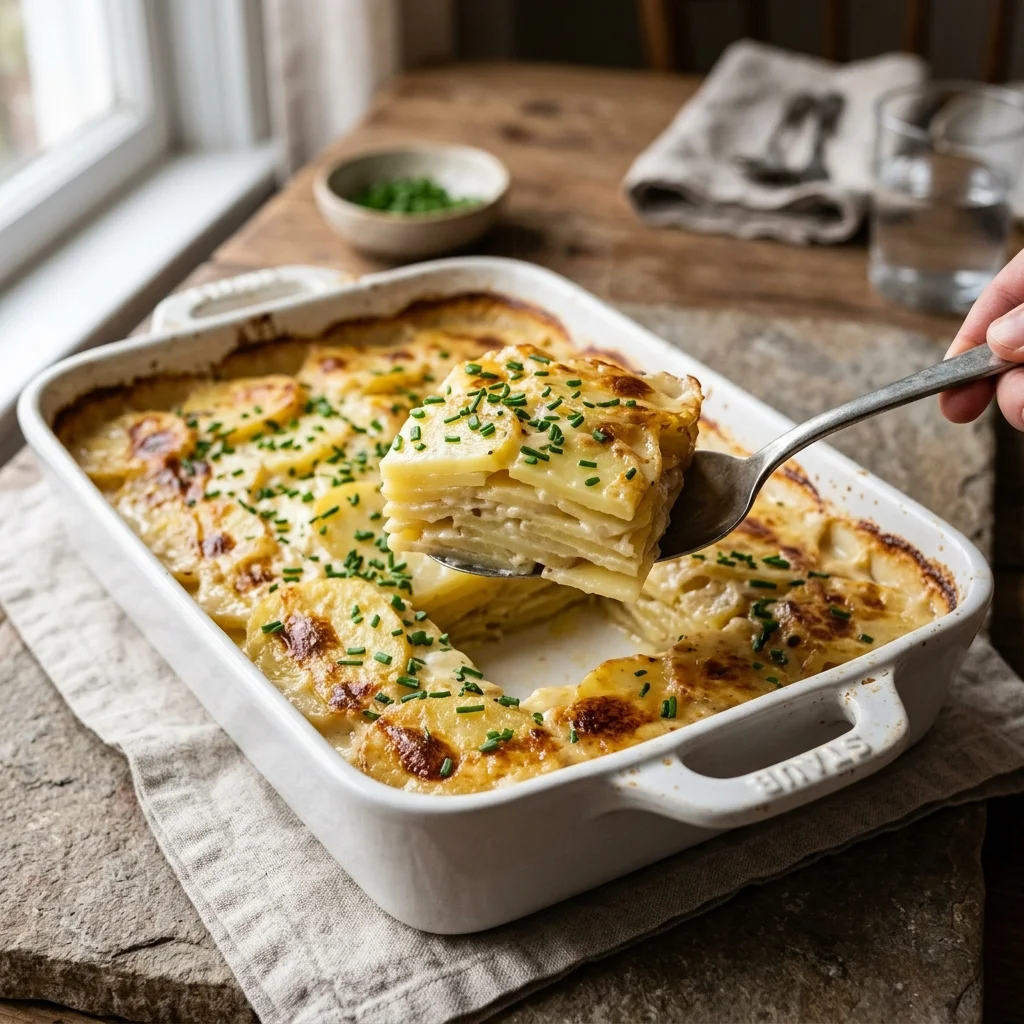
Table of Contents
Why You Will Love This Recipe
- A flour-thickened sauce gives the potatoes a creamy coating without canned soup.
- Yukon Gold slices turn tender but remain sturdy enough for clean portions.
- The covered bake traps steam, while the uncovered finish builds a golden surface.
- You can bake scalloped potatoes one day ahead and reheat them without crowding the oven at dinner time.
- The seasoning is gentle enough for a family meal, with easy options for more heat or herbs.
Quick Recipe Snapshot
Prep Time: 25 minutes
Cook Time: 80 minutes
Total Time: 2 hours, including a 15-minute rest
Servings: 8
Difficulty: Medium
Calories: 360 per serving, estimated
Key Ingredient: Yukon Gold potatoes
Best For: Holiday dinners, Sunday meals, and make-ahead entertaining
Nutrition Information
Calories per Serving: 360
Protein: 8 g
Carbs: 40 g
Fat: 20 g
Fiber: 4 g
Sugar: 8 g
Sodium: 345 mg
Serving Size: 1/8 of the baking dish
Servings per Recipe: 8
Scalloped potatoes provide most of their carbohydrate and fiber from potatoes, while the dairy supplies fat and modest protein. Sodium shifts with brands, so taste the sauce before assembly.
Nutrition values are approximate and calculated per serving using standard ingredient amounts. Values may vary based on brands used and portion sizes.
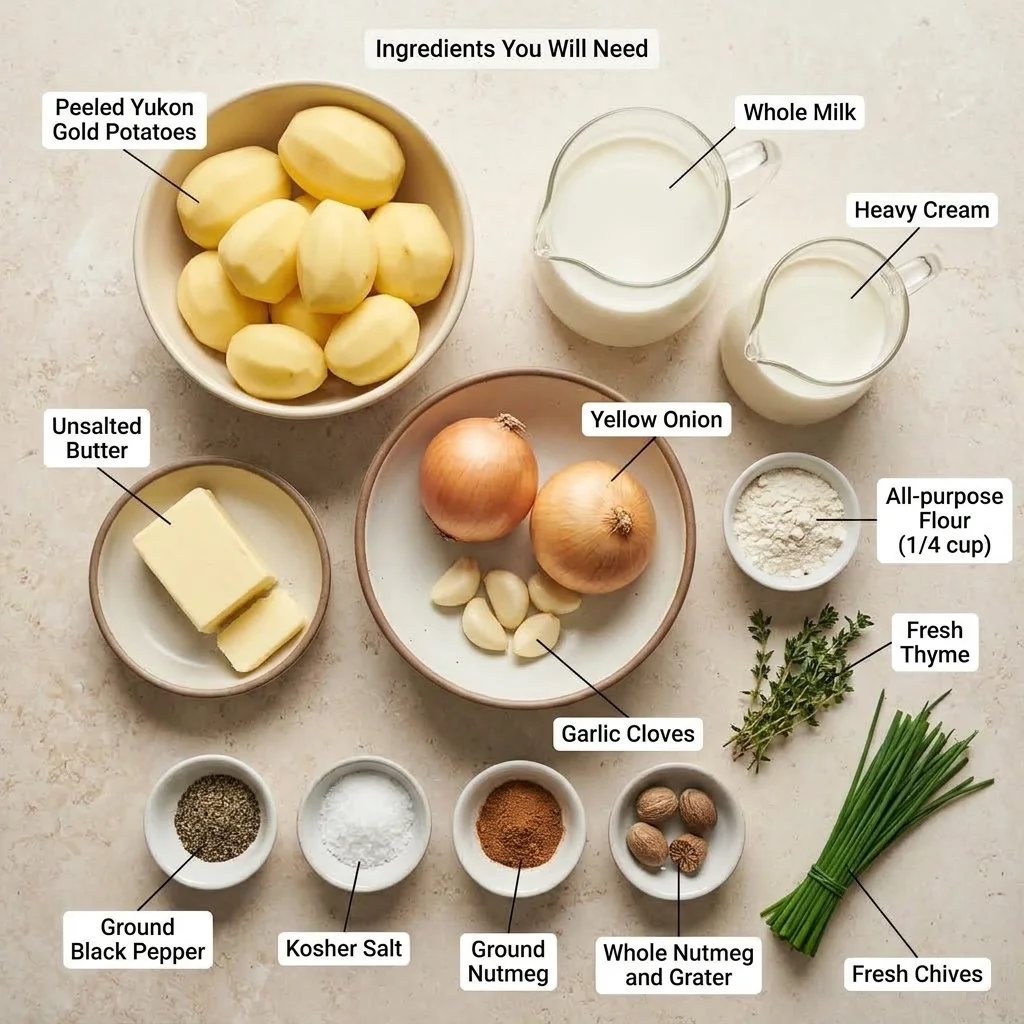
Ingredients You Will Need
- 3 pounds Yukon Gold potatoes: For scalloped potatoes, peel and slice them 1/8 inch thick. Russets work, but make softer layers.
- 4 tablespoons unsalted butter, divided: Use 3 tablespoons for the sauce and 1 tablespoon for the dish. You can use salted butter as long as you cut back on the added salt.
- 1 small yellow onion, thinly sliced: It adds sweetness. Two shallots are milder.
- 3 garlic cloves, minced: Fresh garlic gives the sauce a savory base. Substitute 3/4 teaspoon garlic powder when needed.
- 1/4 cup all-purpose flour: This stabilizes the sauce. King Arthur Baking all-purpose flour thickens consistently; another all-purpose flour works at the same 30-gram weight.
- 3 cups whole milk: Whole milk keeps the sauce balanced. Use 2 percent milk for a lighter, slightly less rich result.
- 1 cup heavy cream: It enriches the sauce and limits curdling. Half-and-half gives a lighter result.
- 2 teaspoons Diamond Crystal kosher salt: Its light flakes disperse evenly. If using fine table salt, begin with 1 teaspoon and adjust after tasting.
- 1/2 teaspoon black pepper and 1/4 teaspoon ground nutmeg: Both add warmth. Mace can replace nutmeg in the same amount.
- 1 teaspoon fresh thyme leaves: Thyme adds a mild herbal note. Use 1/2 teaspoon dried thyme or chopped rosemary instead.
- 2 tablespoons chopped chives: Add them after baking for freshness. Thinly sliced green onion tops work well as a simple substitute.
Equipment Needed
- 9-by-13-inch baking dish: A shallow dish cooks more evenly than a deep casserole. A 3-quart oval also works.
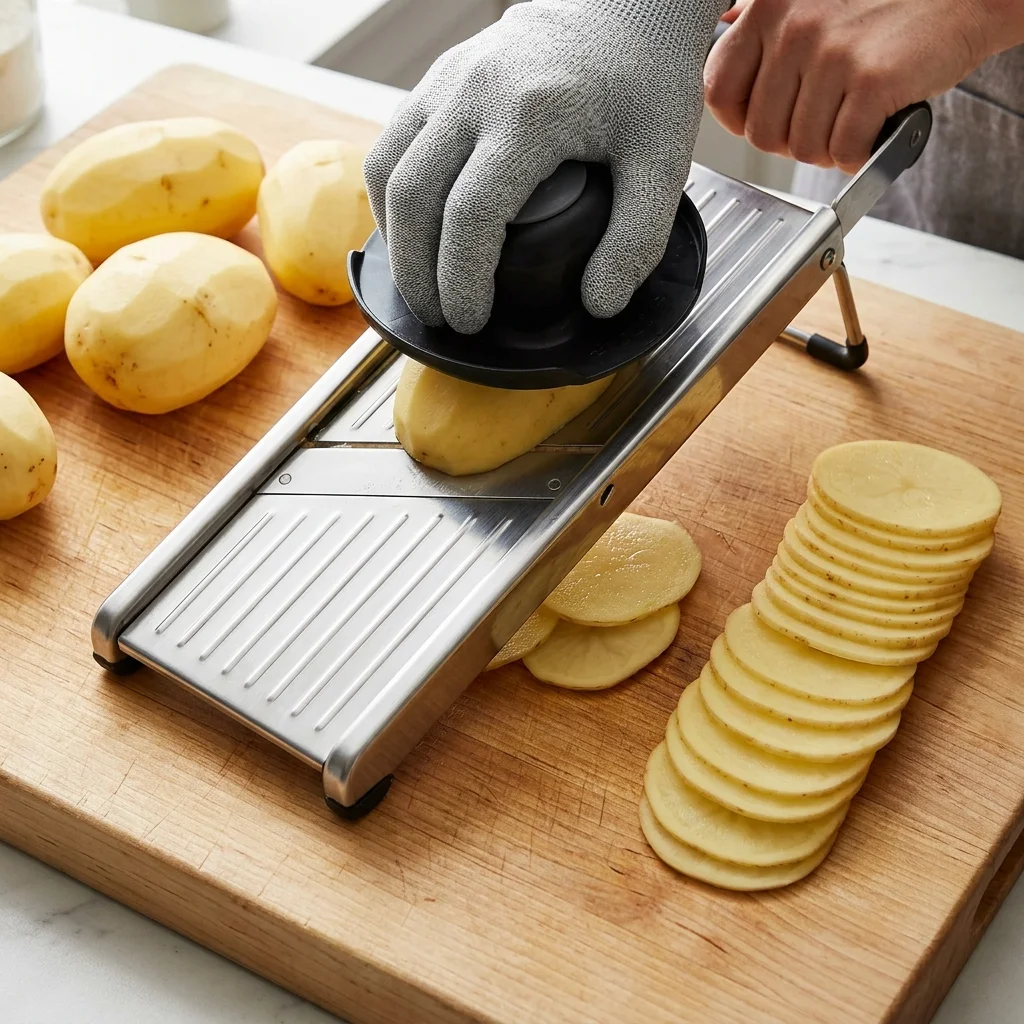
- Mandoline slicer: It makes uniform slices. Use the hand guard, or choose a sharp chef’s knife.
- Medium saucepan: A heavy, 3-quart pan reduces scorching and leaves room to whisk.
- Balloon whisk: It reaches the corners and smooths lumps. A flat whisk also works.
- Rimmed sheet pan: Set it underneath to catch bubbles and simplify moving the hot dish.
Preparation
- Heat the oven to 375°F with a rack in the center.
- Coat the bottom and sides of a 9-by-13-inch baking dish with 1 tablespoon butter, then place it on a rimmed sheet pan.
- Peel the potatoes and slice them crosswise into even 1/8-inch rounds. Do not soak or rinse the slices because their surface starch helps bind the sauce.
- Slice the onion, mince the garlic, measure the dairy, and set every seasoning beside the stove before starting the roux.
Uniform slices matter more than speed. A few thick rounds can stay firm after the rest of the casserole is tender, so check the mandoline setting with a ruler before slicing the full batch.
How to Make Scalloped Potatoes
- Melt the remaining 3 tablespoons butter in a medium saucepan over medium heat. Add the onion and cook for 5 to 6 minutes, stirring often, until soft but not browned.
- Stir in the garlic for 30 seconds, then add the flour. Whisk for 1 minute to cook away its raw taste. Chef’s Note: The mixture should look pale and foamy, not brown.
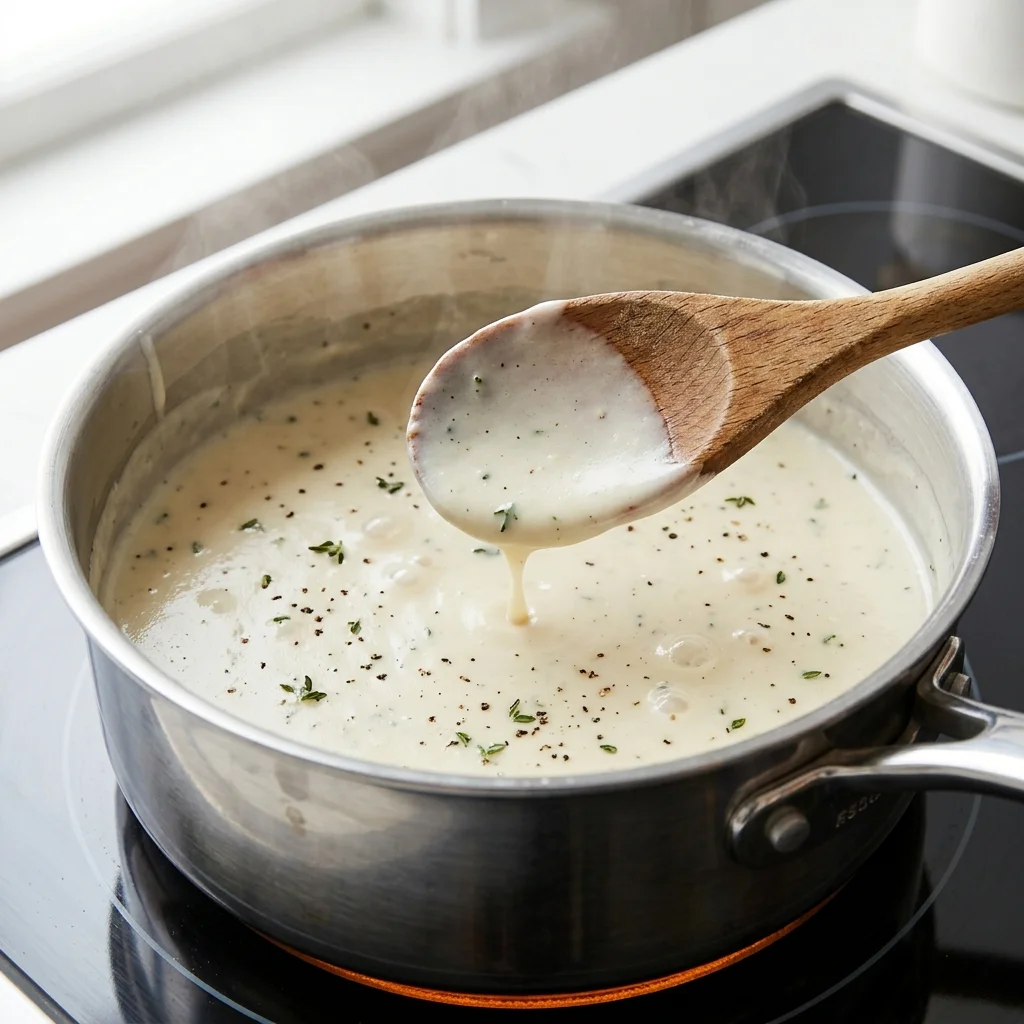
- Gradually add the milk, about 1/2 cup at a time, whisking as you pour. Add the cream, salt, pepper, nutmeg, and thyme, then simmer gently for 4 to 5 minutes until the sauce lightly coats the back of a spoon.
- Spread one-third of the potato slices in overlapping rows in the prepared dish. Spoon over one-third of the warm sauce, reaching the corners, then repeat twice. Chef’s Note: Warm sauce starts cooking the slices promptly and prevents a cool center.
- Cover the scalloped potatoes tightly with foil and bake for 50 minutes. A thin knife should meet some resistance but pass through every layer.
- Remove the foil and bake for 25 to 30 minutes more, until the center bubbles, the top has browned patches, and a knife slides through without resistance. Chef’s Note: During my second test, I uncovered the dish after 35 minutes. The top browned early while several center slices stayed firm, so I now keep the steam trapped for the full covered stage.
- Rest the scalloped potatoes for 15 minutes before cutting. Scatter chives over the top just before serving.
Do not skip the 15-minute rest. The bubbling sauce continues to settle and cling to the potato starch, changing a loose scoop into creamy, defined layers.
Expert Tips for the Best Results
- Control slice thickness: Scalloped potatoes cook evenly when each round is close to 1/8 inch.
- Watch the simmer: Boiling dairy can separate. Keep the sauce at small, lazy bubbles and whisk across the bottom.
- Season before layering: Taste the warm sauce. Potatoes absorb seasoning, so a bland sauce stays flat.
- Make it ahead: Bake one day in advance, cool promptly, cover, and refrigerate. Reheat covered to protect the surface.
- Save preparation time: Slice the onion and measure the dry seasonings one day ahead. Slice the potatoes only when you are ready to assemble, since exposed slices discolor.
- Store safely: Refrigerate leftovers in a shallow, airtight container within 2 hours and use them within 3 to 4 days.
Common Mistakes and Troubleshooting
- The sauce is watery: A thin starting sauce or an early cut leaves scalloped potatoes loose. Simmer until the sauce coats a spoon, then rest 15 minutes. If needed, bake uncovered for 10 minutes and rest again.
- The potatoes are still hard: Thick slices or loose foil let steam escape. Add 2 tablespoons warm milk, cover tightly, and bake in 10-minute intervals.
- The sauce looks grainy: Excessive heat splits dairy. Use a gentle simmer and 375°F oven. Spoon warm milk over a separated serving to soften its appearance.
- The top browns too soon: Uncovering early, as in the testing mistake above, or using a high rack exposes the surface too long. Move the dish to the center and replace the foil until the potatoes are tender.
- The bottom sticks: Missed patches of butter can catch the thick sauce. Grease the corners carefully. For a baked-on area, let the empty dish soak in hot water before cleaning.
Storage Instructions
Room Temperature: Do not leave the casserole out longer than 2 hours, or 1 hour when the room is above 90°F.
Refrigerator: Cool promptly, cover, and refrigerate in a shallow airtight container for 3 to 4 days.
Freezer: Freeze cooled portions in airtight containers for up to 2 months for best texture. Thaw overnight in the refrigerator; the sauce may be slightly less smooth.
Reheating: Cover and warm at 350°F for 20 to 25 minutes, adding 1 tablespoon milk around the edges, until the center reaches 165°F.
Make-Ahead Notes: Bake up to one day ahead, refrigerate within 2 hours, and reheat covered at 325°F for 25 to 30 minutes.
Variations and Substitutions
Spicy version: Add 1/4 teaspoon cayenne to the sauce and finish with sliced green onions. The heat stays warm rather than sharp.
Mild version: Omit the black pepper and nutmeg, then use only thyme. Keep the onion slices very thin so they soften completely.
Gluten-free version: For gluten-free scalloped potatoes, whisk 3 tablespoons cornstarch into 1/2 cup cold milk. Add it to the warm dairy and simmer until lightly thickened.
Dairy-free version: Use unsweetened oat milk and a neutral dairy-free cooking cream, plus plant-based butter. Check every label for unflavored products, since sweetness is noticeable here.
Herb and garlic version: Double the thyme and add 1 teaspoon chopped rosemary. Keep the garlic at three cloves.
What to Serve With Scalloped Potatoes
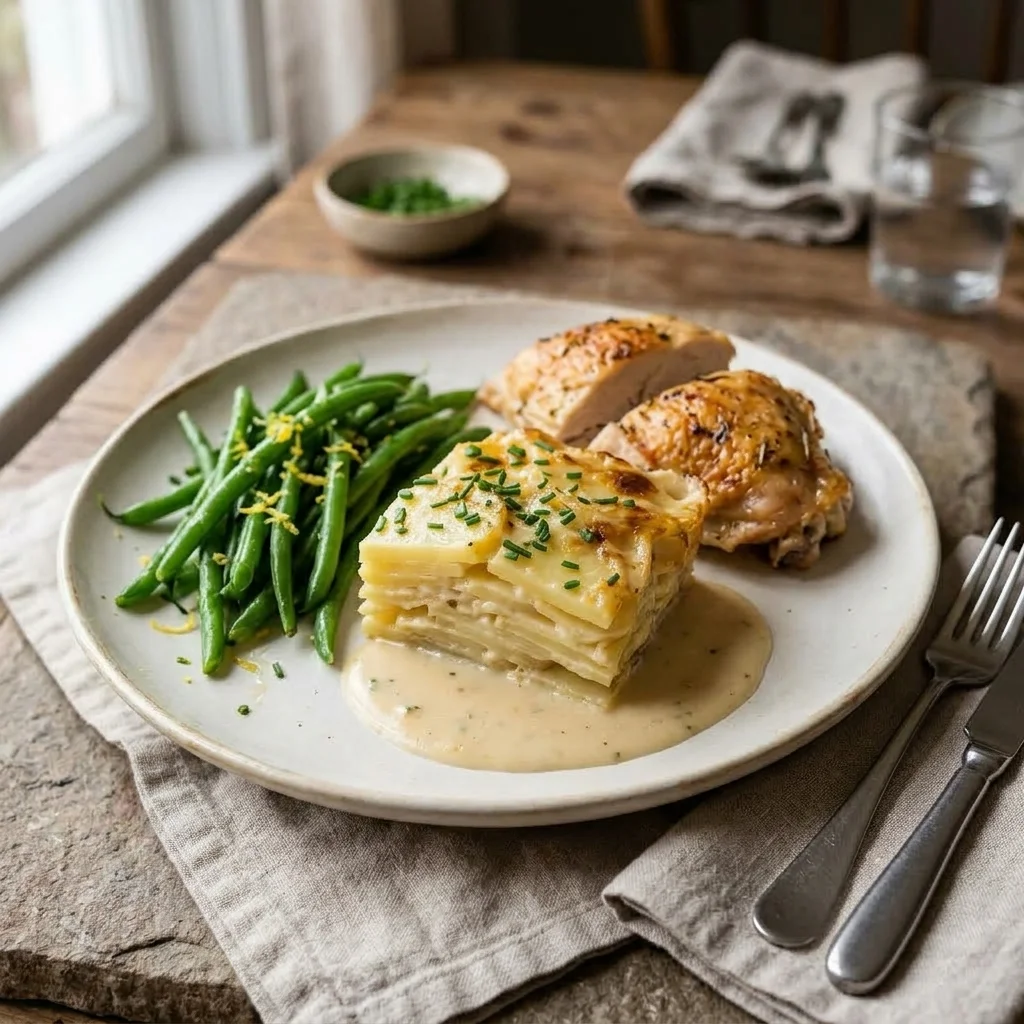
Roast chicken: Crisp skin and savory juices balance creamy scalloped potatoes for a complete Sunday meal.
Lemon green beans: Their bright acidity and snap cut through the rich sauce without competing with its gentle seasoning.
Herb lentil loaf: Its firm texture and earthy flavor contrast with the dairy sauce.
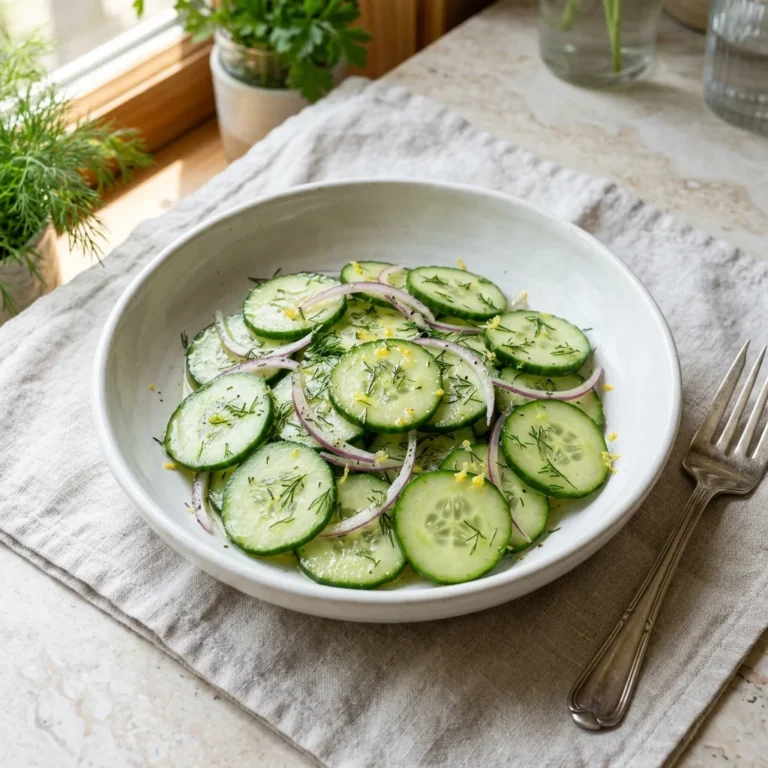
Cucumber and radish salad: Serve it cold with a sharp lemon dressing for crunch and a clean finish between bites.
Sparkling apple drink: Choose a low-sweetness alcohol-free option. Its bubbles refresh the palate beside scalloped potatoes.
Frequently Asked Questions
Can I make scalloped potatoes ahead of time?
Yes, bake them fully up to one day before serving, cool promptly, cover, and refrigerate. Reheat the covered dish at 325°F for 25 to 30 minutes, or until the center reaches 165°F. Add a tablespoon or two of milk around the edges before reheating if the sauce looks tight. Fully baking first is more reliable than refrigerating raw sliced potatoes, which can darken and may cook unevenly from cold.
Why are my scalloped potatoes watery?
A thin starting sauce, rinsed potato slices, or cutting the dish too soon can leave liquid at the bottom. Cook the roux for a minute, simmer the dairy until it coats a spoon, and keep the natural starch on the sliced potatoes. After baking, wait the full 15 minutes before serving. If the center still looks loose, bake uncovered for another 10 minutes and let it settle again.
Can I replace heavy cream with milk?
You can replace the cream with whole milk, but the sauce will be lighter and slightly more prone to separating. Add 1 extra tablespoon flour to the roux and keep both the stovetop simmer and oven temperature gentle. Avoid skim milk because it lacks enough fat for the same smooth finish. Half-and-half is the closest one-for-one substitute when you want a result similar to the original sauce.
How do I know when the potatoes are tender?
Insert a thin knife into the center and near two corners; it should slide through every layer without a firm catch. The sauce should bubble in the center, not only around the edge, and the top should show scattered golden patches. Begin checking after 75 minutes total. A full baking dish can need 5 to 10 extra minutes if the slices are thicker or the sauce cooled during assembly.
What is the difference between scalloped potatoes and potatoes au gratin?
Scalloped potatoes are traditionally sliced potatoes baked in milk or cream, often with onion and a flour-thickened sauce. Potatoes au gratin usually include cheese and a browned topping. Modern recipes often blur those names, so the ingredient list matters more than the title. This version stays close to the classic style without cheese, allowing the buttery sauce, thyme, and Yukon Gold flavor to lead.
A Side Dish Worth Slowing Down For
The most useful habit with scalloped potatoes is patience at both ends: keep the slices even before they bake, then leave the bubbling dish alone for 15 minutes afterward. That short rest does more for the final texture than another handful of rich ingredients.
If you loved this recipe, save it to your comfort food Pinterest board so you can find it easily later!
Creamy Scalloped Potatoes with Tender, Even Layers
Ingredients
Equipment
Method
- Preheat the oven to 375°F with a rack in the center. Grease a 9×13-inch baking dish with 1 tablespoon butter and place it on a rimmed sheet pan.
- Melt the remaining 3 tablespoons butter in a medium saucepan over medium heat. Cook the onion for 5 to 6 minutes until soft, then stir in the garlic for 30 seconds. Add the flour and whisk for 1 minute.
- Pour in the milk gradually while whisking, then add the cream, salt, pepper, nutmeg, and thyme. Simmer gently for 4 to 5 minutes until the sauce lightly coats the back of a spoon.
- Layer one-third of the potato slices in the baking dish in overlapping rows. Spoon over one-third of the warm sauce, reaching the corners. Repeat twice with the remaining potatoes and sauce.
- Cover tightly with foil and bake for 50 minutes, until a knife meets some resistance but passes through every layer.
- Remove the foil and bake for 25 to 30 minutes more, until the center bubbles and the top is golden. Rest for 15 minutes, then scatter chives over the top before serving.
Notes
- Storage: Refrigerate in a shallow airtight container within 2 hours and use within 3 to 4 days. Freeze for up to 2 months.
- Make-ahead: Bake up to one day ahead. Reheat covered at 325°F for 25 to 30 minutes, adding 1 tablespoon milk around the edges if the sauce looks tight.
- Gluten-free: Whisk 3 tablespoons cornstarch into ½ cup cold milk and stir into the warm dairy instead of using the flour roux.