Easy French Toast Recipe Ready in 25 Minutes
Soggy in the middle, dry at the edges, or so eggy it tastes like scrambled eggs on bread. Most french toast fails trace back to the same three problems: thin bread, a heavy custard, and a pan that runs too hot. This french toast recipe fixes all three.
I tested this french toast recipe nine times over four weeks, changing one thing per round. Bread type, soak time, milk to egg ratio, and pan temperature all got their turn. Round six gave me crisp, buttery edges around a soft, custardy center that held its shape on the plate. The winner uses thick brioche, four eggs, one cup of whole milk, and a 20 second soak on each side.
You need 10 minutes of prep, one skillet, and ingredients most kitchens already have. Breakfast for four lands on the table in about 25 minutes. Below are the exact steps, fixes for the usual problems, and a plan for making it ahead on busy mornings.
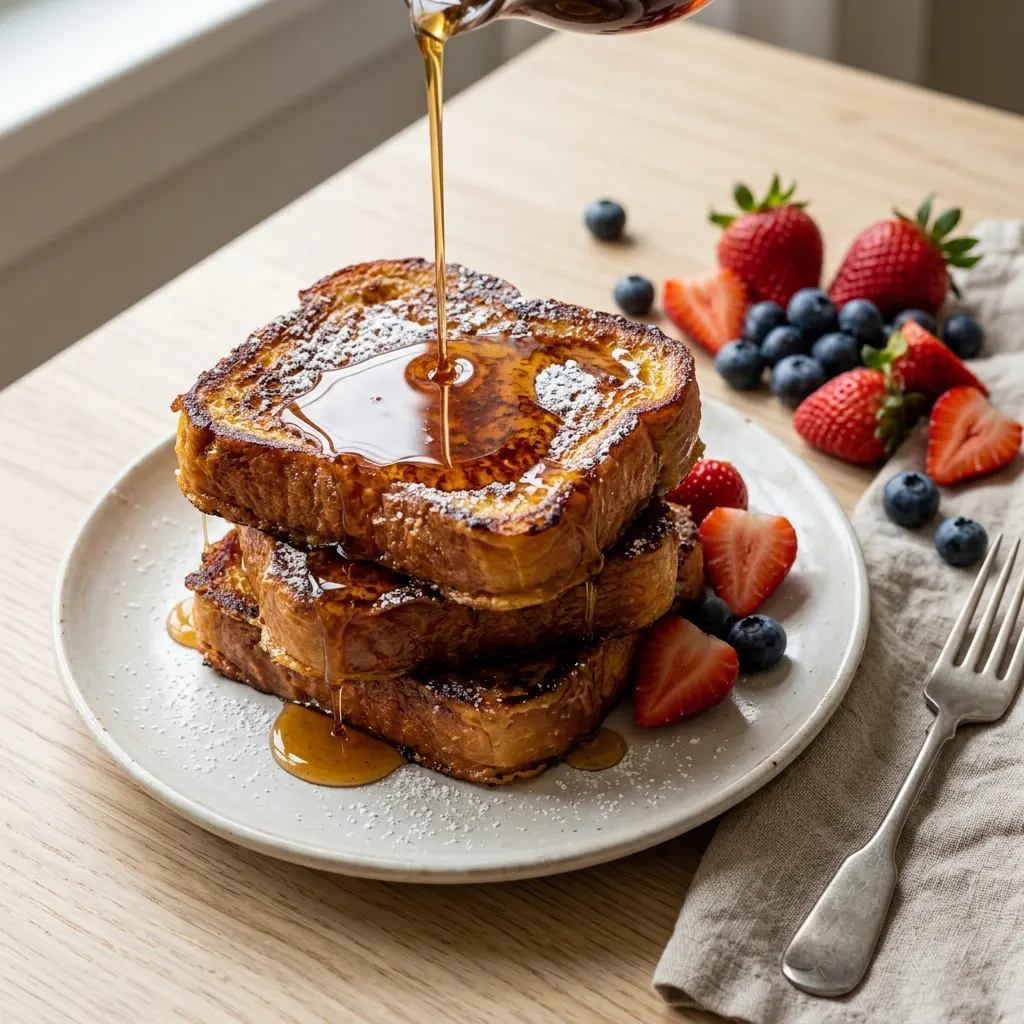
Table of Contents
Why You Will Love This French Toast Recipe
- This french toast recipe is ready in 25 minutes, which makes it realistic on a school morning.
- Crisp golden edges, a soft custard center, and no raw egg taste.
- Built on pantry staples: eggs, milk, sugar, cinnamon, and bread.
- Leftover slices go straight into the toaster, so one session covers several breakfasts.
- Kids eat it plain, with syrup, or with berries, and nobody asks for a second option.
Recipe Snapshot
- Prep Time: 10 minutes
- Cook Time: 15 minutes
- Total Time: 25 minutes
- Servings: 4 (2 slices each)
- Difficulty: Easy
- Calories per Serving: About 655
- Key Ingredient or Tool: Thick-cut brioche and a 12 inch skillet
- Best For: School day breakfasts and weekend brunch
Nutrition Information
- Calories per Serving: About 655
- Protein: 18 g
- Carbs: 66 g
- Fat: 35 g
- Fiber: 3 g
- Sugar: 21 g
- Sodium: 757 mg
- Serving Size: About 2 slices
- Servings per Recipe: 4
Each serving of this french toast recipe has 18 grams of protein, mostly from the eggs and milk. Calories run high because brioche contains butter and eggs, and all the cooking butter is counted. Plain sandwich bread lowers the total.
Nutrition values are approximate and calculated per serving using standard ingredient amounts. Values may vary based on brands used and portion sizes.
Ingredients
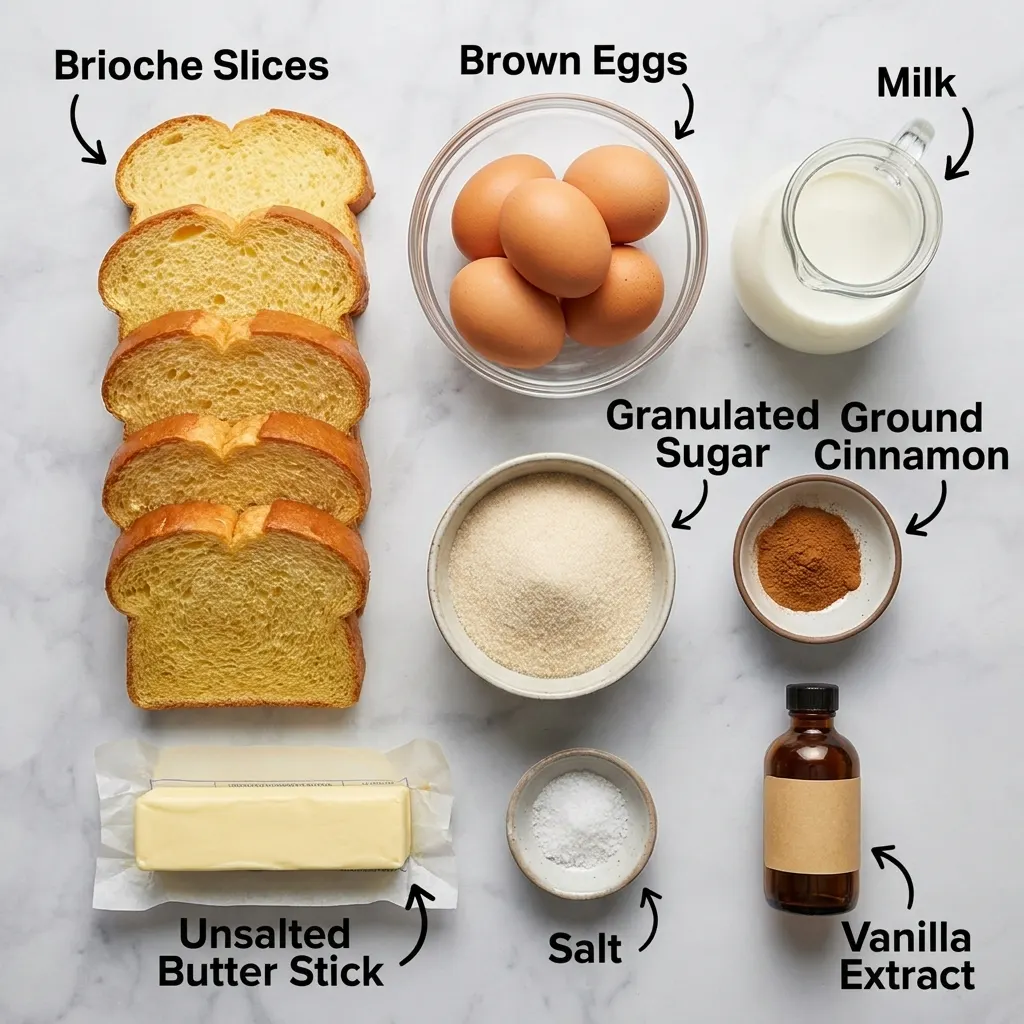
Every ingredient in this french toast recipe is easy to find. Check the bread label for animal fat or alcohol-based flavoring.
- 8 slices thick-cut brioche, 3/4 to 1 inch thick, about 2 ounces each, a day or two old
- 4 large eggs
- 1 cup whole milk
- 2 tablespoons granulated sugar
- 1 teaspoon ground cinnamon
- 1 teaspoon alcohol-free vanilla extract
- 1/4 teaspoon fine salt
- 3 tablespoons unsalted butter, divided, for cooking
- Pure maple syrup, fresh berries, and powdered sugar, to serve
Substitutions
- Bread: Thick white sandwich bread or Texas toast works. Soak it for 15 seconds per side.
- Milk: Half and half makes a richer custard, and unsweetened oat milk makes it dairy-free.
- Butter: Use 1 tablespoon of coconut oil per batch for a dairy-free pan.
- Vanilla: Skip it and add an extra 1/4 teaspoon of cinnamon.
The Ingredients That Matter Most
Bread matters most. Thick, slightly dry slices soak up custard without collapsing, while fresh thin bread turns to paste. When brioche is out of stock, I buy Pepperidge Farm Farmhouse white bread for its thick slices.
The egg to milk ratio comes next. Four eggs to one cup of milk makes a custard that sets in the pan. More milk gives a soggy center, and more egg gives an omelet on toast. Unsalted butter browns into a nutty flavor at medium heat.
Equipment Needed
- 12 inch nonstick or cast iron skillet: Nonstick is easiest, while cast iron browns deeper and needs a lower flame.
- 9 by 13 inch baking dish: A whole slice lies flat in the custard.
- Baking sheet with a wire rack: It keeps finished slices crisp in a 200°F oven.
- Thin metal spatula: It slides under soft slices without tearing the edges.
- Instant-read thermometer: It confirms the 160°F center without cutting a slice open.
Preparation
- Dry fresh bread. Spread the slices on a baking sheet and bake at 300°F for 8 minutes, flipping once at the 4 minute mark. The surface should feel dry while the center stays soft. Cool for 5 minutes.
- Heat the oven to 200°F and set a wire rack on a second baking sheet.
- Set the eggs on the counter 15 minutes ahead so they whisk smoothly into the milk.
- Measure the custard ingredients into small bowls and put the butter next to the stove.
Step-by-Step Instructions
This easy french toast recipe moves fast once the pan is hot, so read the steps first.
- Whisk the eggs, milk, sugar, cinnamon, vanilla, and salt in the baking dish for 30 seconds. Chef’s Note: Keep going until no white streaks remain, or cooked egg bits will cling to the toast. The custard should look pale yellow and smooth.
- Set the skillet over medium heat for 2 minutes, then add 1 tablespoon of butter. The butter should foam gently and smell nutty without turning brown.
- Soak 3 slices of bread in the custard for 20 seconds per side. Chef’s Note: Brioche drinks custard fast, so use a timer. Each slice should feel heavy and slightly springy with no dry spots.
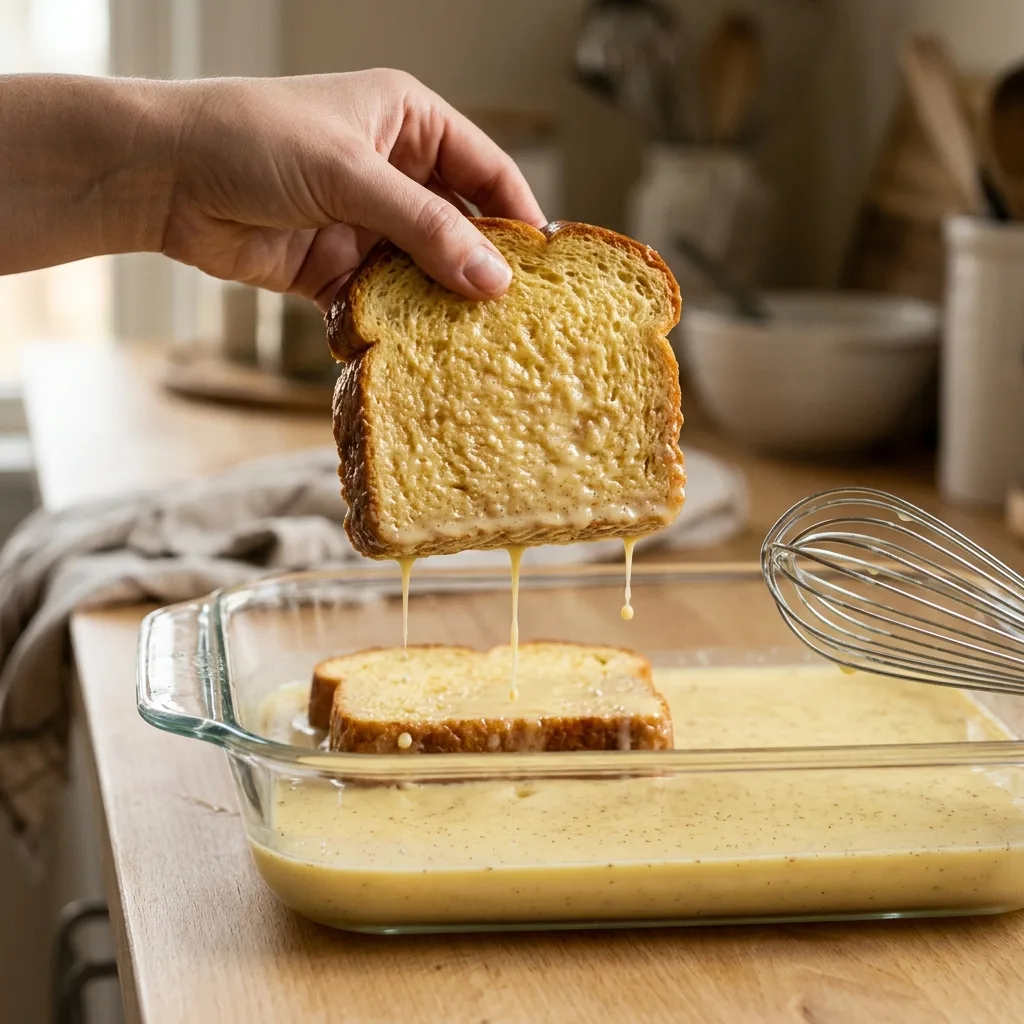
- Lift the slices out, let them drip for 5 seconds, and lay them in the skillet. Cook for 2 to 3 minutes until a lifted corner shows deep golden brown.
- Flip the slices and cook the second side for 2 to 3 minutes. Chef’s Note: Press the center lightly with the spatula, and it should spring back. Both sides should look golden with set, dry edges.
- Move the finished slices to the rack in the 200°F oven. Wipe the skillet, add 1 tablespoon of butter, and repeat with the next 3 slices, then the last 2. The slices should look crisp at the edges with no steam pooling.
- Slide the thermometer into the center of one slice from the side. It should read 160°F, the USDA minimum for egg dishes, with no wet custard on the tip.
- Plate 2 slices per person and top with maple syrup, berries, and powdered sugar. Serve while steam still rises and the syrup runs glossy.
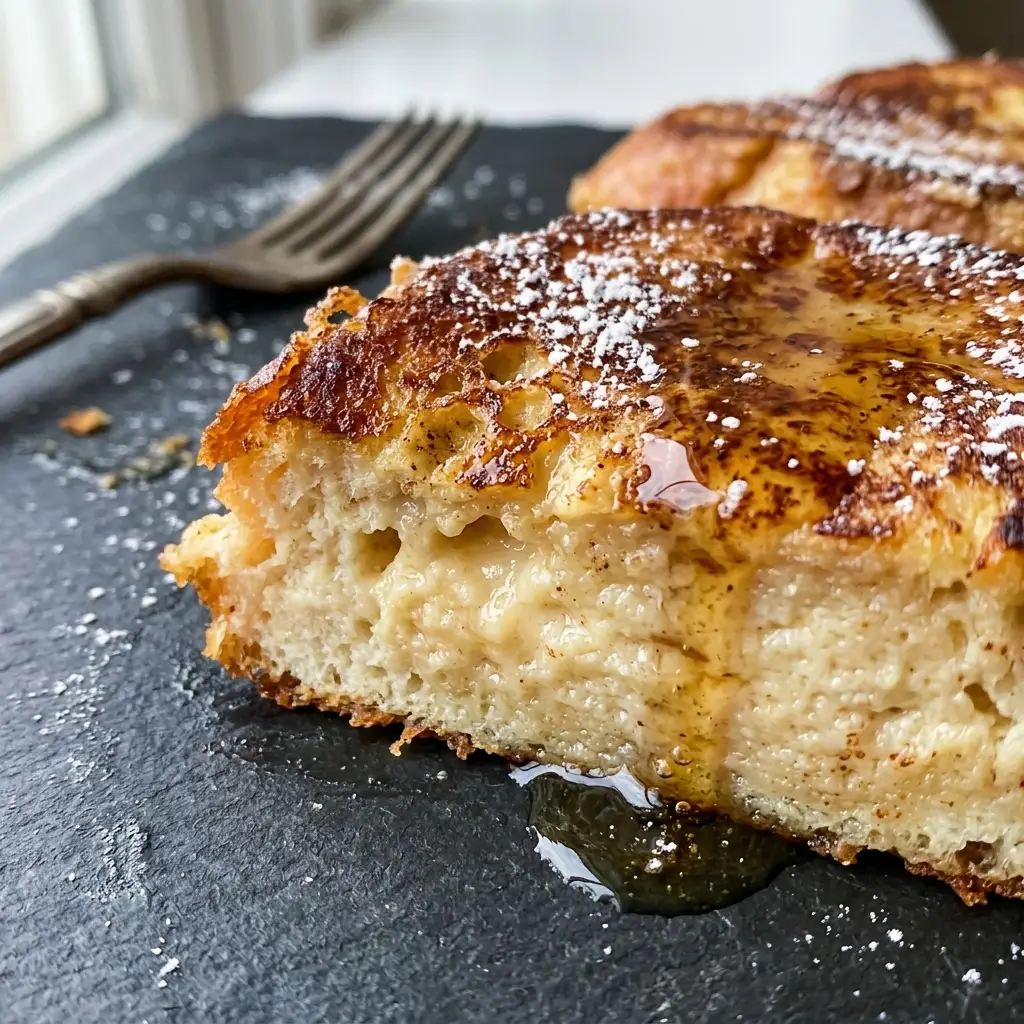
Cook one test slice of this french toast recipe before you soak the rest. Brioche varies by brand and age, so if the center of the test slice looks wet, cut the soak to 15 seconds per side for the remaining slices.
Expert Tips and Tricks
- In round two of testing this french toast recipe, I used 1/2 inch sandwich bread and soaked it for 45 seconds. The slices tore apart in my hands and the skillet filled with custard scramble.
- Whisk the custard up to 24 hours ahead and keep it covered in the fridge, then stir it again because the cinnamon settles. For mornings with no time to cook at all, a jar of overnight oats waits in the fridge.
- Wipe the skillet between batches. Browned milk solids turn bitter and leave dark specks on the next slices.
- An electric griddle set to 350°F cooks all 8 slices at once and cuts the cooking to about 6 minutes.
- Cool cooked slices on a rack for 10 minutes before they go into a container, or trapped steam leaves them soggy by morning.
Common Mistakes and Troubleshooting
Soggy, wet center. Fresh bread or a long soak takes in more custard than the pan can set. Dry the bread and keep the soak to 20 seconds per side. To rescue a batch, bake the slices on a rack at 350°F for 6 minutes.
Dark outside, raw inside. The pan is too hot, so the surface browns first. Keep the burner at medium. If it already happened, finish the slices on a baking sheet at 350°F for 5 minutes.
Bits of cooked egg on the crust. Unwhisked strands of white cooked onto the bread. Whisk for a full 30 seconds. Pick the bits off with a fork before serving.
Slices that tear. Thin bread falls apart when soaked. Choose slices at least 3/4 inch thick for this french toast recipe and lift them with a wide spatula. A torn slice still cooks fine once pressed back together.
Pale, limp toast. A cool or crowded pan steams the bread and never browns it. Preheat the skillet for 2 minutes and leave an inch between slices. If slices are already pale, raise the heat and cook 1 more minute.
Storage Instructions
Room Temperature: Not recommended past 2 hours, or 1 hour above 90°F.
Refrigerator: Up to 4 days in an airtight glass container with parchment paper between the layers.
Freezer: Up to 2 months. Freeze slices on a parchment lined baking sheet for 1 hour, then move them to a freezer-safe zip bag.
Reheating: Toast chilled slices on medium for 2 to 3 minutes, or frozen ones for 4 to 5 minutes. In a 350°F oven on a wire rack, allow 8 minutes from the fridge or 12 from frozen, until the center reaches 165°F.
Make-Ahead Notes: This french toast recipe takes well to prep. Dry the bread the night before and leave it uncovered on the counter. Cook the slices fresh for the best texture.
Reheat frozen slices without thawing them first. Thawing adds moisture, and slices that go from the freezer to the toaster crisp up better.
I bag the slices in pairs, since 2 slices make one serving. On school mornings my kids grab a bag while I reheat it.
Variations and Substitutions
- Spicy Chai: Add 1/2 teaspoon ground ginger, 1/4 teaspoon ground cardamom, and a pinch of cayenne to the custard. The cayenne adds slow warmth.
- Mild and Kid-Friendly: Cut the cinnamon to 1/2 teaspoon, slice each piece of bread into 3 strips before soaking, and cook the sticks for 1 to 2 minutes per side. Serve syrup for dipping.
- Vegetarian and Dairy-Free: This french toast recipe is already vegetarian. For dairy-free, use unsweetened oat milk and coconut oil.
- Gluten-Free: Use thick-cut gluten-free bread and soak it for 10 to 15 seconds per side, because many gluten-free loaves absorb fast and crumble.
What to Serve With This
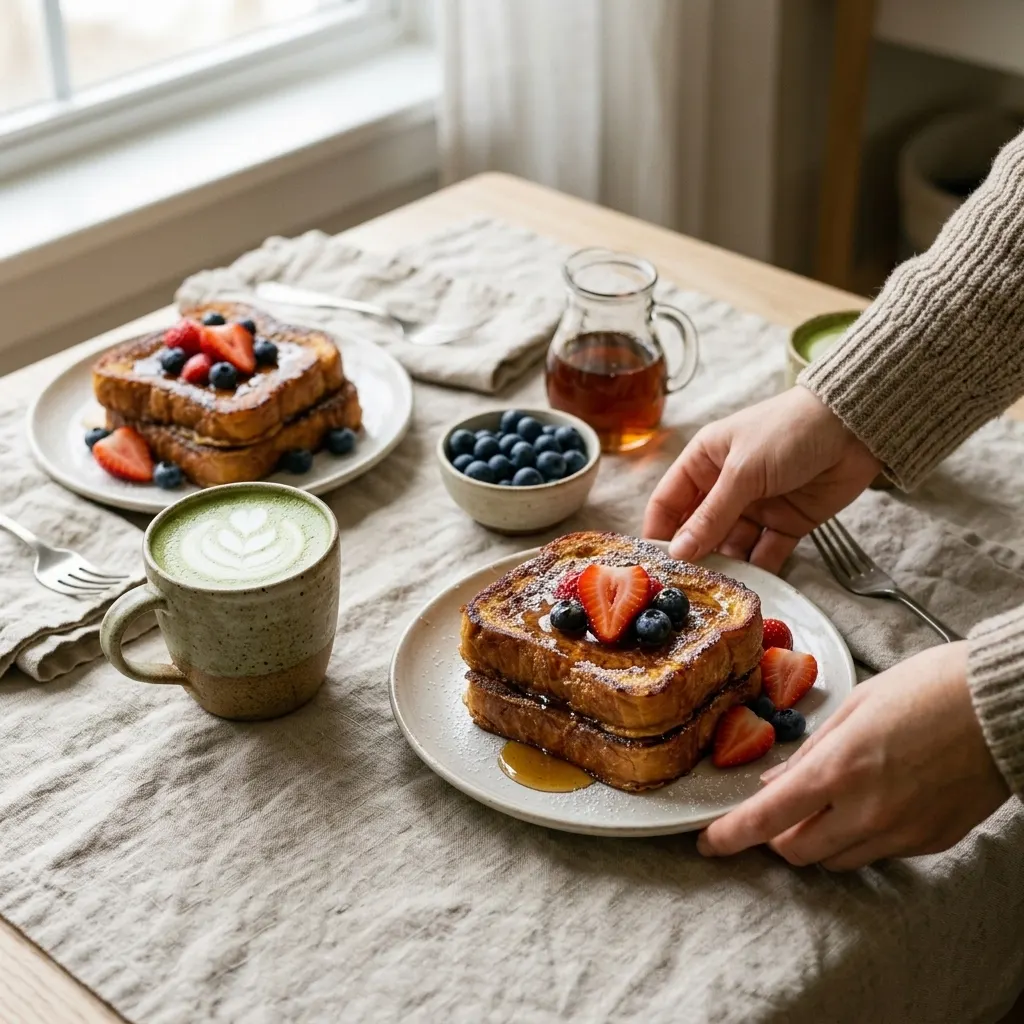
- Fresh berries: Strawberries or blueberries add tartness that cuts through the butter in this french toast recipe.
- Warm maple syrup: Thirty seconds in the microwave helps it flow into the crevices.
- Crunch: A spoonful of homemade granola adds texture against the soft center.
- A drink: A matcha latte brings a gentle earthy bitterness that balances the sugar and cinnamon.
- Greek yogurt and sliced banana: Add protein for a full brunch plate.
Frequently Asked Questions
Why is my french toast soggy in the middle?
Soggy centers come from bread that is too fresh, too thin, or soaked too long. Use slices at least 3/4 inch thick, dry fresh ones in a 300°F oven for 8 minutes, and soak for 20 seconds per side. Cook over medium heat for 2 to 3 minutes per side so the custard sets before the crust darkens. This french toast recipe uses those exact numbers.
Can you make french toast ahead of time and freeze it?
Yes, and it reheats well. Cook the slices fully, cool them on a wire rack for 10 minutes, then freeze them in a single layer for 1 hour before bagging. They keep up to 2 months in a freezer-safe bag. Reheat from frozen in a toaster for 4 to 5 minutes. I double this french toast recipe every few weeks for school mornings.
Can I use regular sandwich bread for french toast?
Yes, but pick the thickest slices you can find, ideally 3/4 inch. Thin sandwich bread soaks through fast, so cut the soak to 10 to 15 seconds per side and dry it for 8 minutes in a 300°F oven first. Texas toast works best. The result is lighter and less rich than brioche, though this french toast recipe still works well.
How do you know when french toast is done?
Look for a deep golden brown surface on both sides, then press the center gently, and it should spring back. For certainty, an instant-read thermometer in the middle should read 160°F, the USDA minimum for egg dishes. Thick brioche takes 2 to 3 minutes per side over medium heat. If the center feels squishy, give each side another 30 seconds.
Why does my french toast taste like scrambled eggs?
Too much egg for the milk is the usual cause, along with poorly whisked custard. Stick to 4 eggs for 1 cup of milk, and keep the sugar, cinnamon, and pinch of salt, which soften the eggy flavor. Whisk for a full 30 seconds until no white streaks remain. A soak past 20 seconds per side also pushes more egg into the bread.
Final Thoughts on Making French Toast
The best french toast recipe is the one you can repeat on a groggy Tuesday without checking the clock. Mine comes down to day-old bread, a 20 second soak, and medium heat, and it turns automatic after two tries.
Cook one slice for yourself and taste it before you serve the rest. Cinnamon and salt hit differently from brand to brand, and one bite tells you whether to add a pinch more next time.
My daughter asked for this three mornings in a row, so a bag of brioche now lives in my freezer for exactly that reason.
If you loved this recipe, save it to your breakfast Pinterest board so you can find it easily later!
Easy French Toast Recipe Ready in 25 Minutes
Ingredients
Equipment
Method
- If the bread is fresh, bake the slices on a baking sheet at 300°F for 8 minutes, flipping at 4 minutes, until the surface is dry and the center is soft. Cool for 5 minutes.
- Heat the oven to 200°F with a wire rack set on a baking sheet. Set the eggs on the counter 15 minutes ahead.
- Whisk the eggs, milk, sugar, cinnamon, vanilla, and salt in the baking dish for 30 seconds, until pale yellow with no white streaks.
- Heat the skillet over medium heat for 2 minutes. Add 1 tablespoon of butter and wait until it foams and smells nutty without browning.
- Soak 3 slices in the custard for 20 seconds per side, until each slice feels heavy and slightly springy with no dry spots.
- Let each slice drip for 5 seconds and lay it in the skillet. Cook for 2 to 3 minutes, until a lifted corner is deep golden brown.
- Flip and cook the second side for 2 to 3 minutes, until both sides are golden and the center springs back when pressed.
- Move the slices to the rack in the oven. Wipe the skillet, add 1 tablespoon of butter, and repeat with the next 3 slices, then the last 2, until all 8 are crisp at the edges.
- Insert the thermometer into the center of one slice from the side. It should read 160°F with no wet custard on the tip.
- Plate 2 slices per person and top with maple syrup, berries, and powdered sugar while steam still rises.
Notes
For sandwich bread or gluten-free bread : soak 10 to 15 seconds per side.
Cook one test slice first : If the center looks wet, cut the soak to 15 seconds per side.