Easy Cabbage Soup with White Beans and Lemon
Most cabbage soup tastes like boiled cabbage with a few carrots floating in it. This one does not. Two minutes of toasted tomato paste, a can of white beans, and a squeeze of lemon at the end give the broth a depth that a plain simmer never reaches.
I tested this cabbage soup nine times over five weeks before I stopped changing things. Batches one through four were flat and a little too sweet. Batch five added the toasted paste, batch seven added the beans, and batch nine finally got the lemon right.
The base is plain pantry stuff: onion, carrots, celery, canned tomatoes, and beans. Nothing is hard to find, and nothing needs a special trip. It makes about 12 cups, takes 55 minutes from first chop to first bowl, and uses one pot, so even a busy Tuesday can handle it. Each bowl is light enough for lunch and filling enough for dinner.
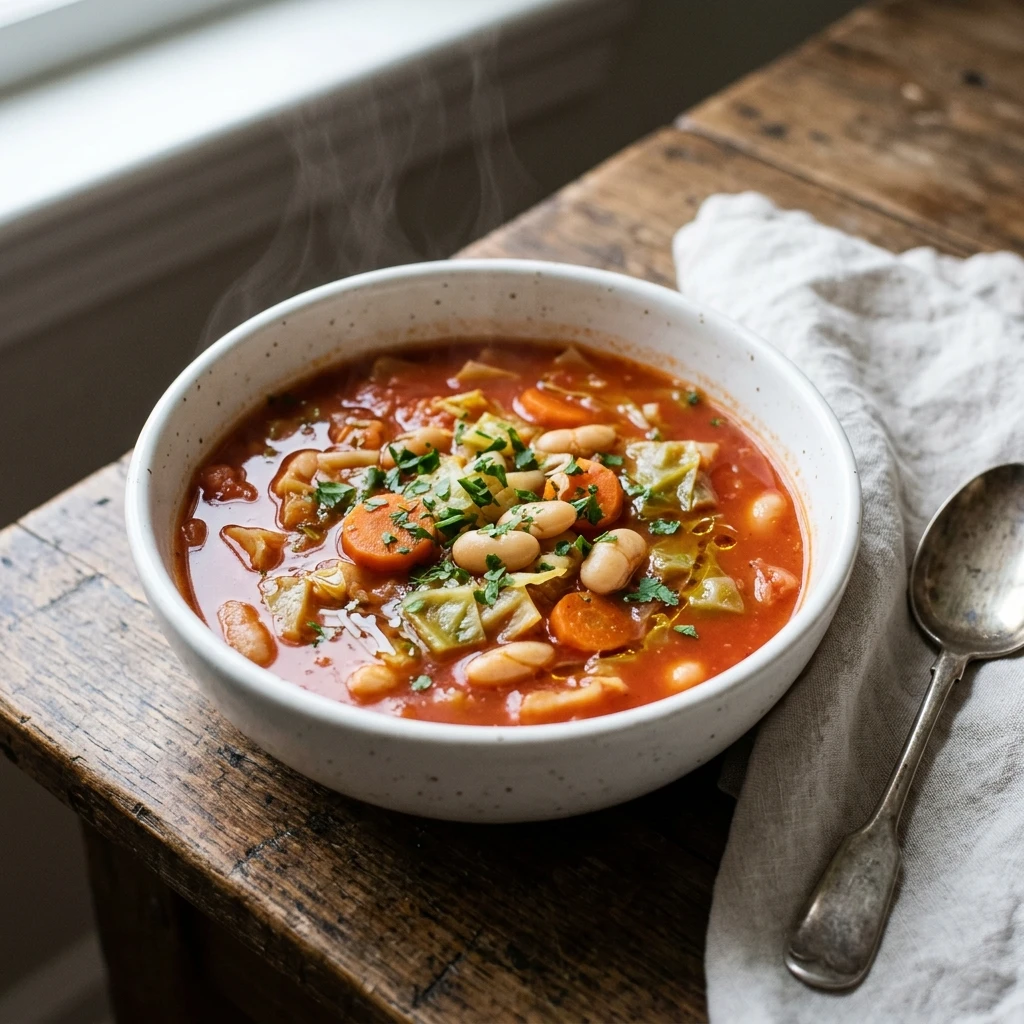
Table of Contents
Why You Will Love This Cabbage Soup
- Ready in 55 minutes with one pot, so weeknight cleanup takes about two minutes.
- Toasted tomato paste and fresh lemon give the broth real flavor instead of salty cabbage water.
- Each bowl has 6 grams of fiber and 5 grams of protein for only 134 calories.
- The flavor deepens overnight, which makes it a dependable lunch for the whole week.
- Easy for kids to eat, since the 1-inch cabbage squares turn soft and the broth stays mild.
Recipe Snapshot
- Prep Time: 15 minutes
- Cook Time: 40 minutes
- Total Time: 55 minutes
- Servings: 8 (about 1 1/2 cups each)
- Difficulty: Easy
- Calories per Serving: About 134
- Key Ingredient or Tool: Green cabbage and a 6-quart Dutch oven
- Best For: Weeknight dinners and meal prep lunches
Nutrition Information
Calories per Serving: About 134
Protein: 5 g
Carbs: 22 g
Fat: 4 g
Fiber: 6 g
Sugar: 8 g
Sodium: 694 mg
Serving Size: About 1 1/2 cups
Servings per Recipe: 8
Beans are the biggest protein source, and cabbage and beans together supply most of the fiber. The only added fat is 2 tablespoons of olive oil shared by 8 bowls. Most of the sodium in this cabbage soup comes from the broth and canned beans, so low-sodium broth lowers it.
Nutrition values are approximate and calculated per serving using standard ingredient amounts. Values may vary based on brands used and portion sizes.
Ingredients
For the Base
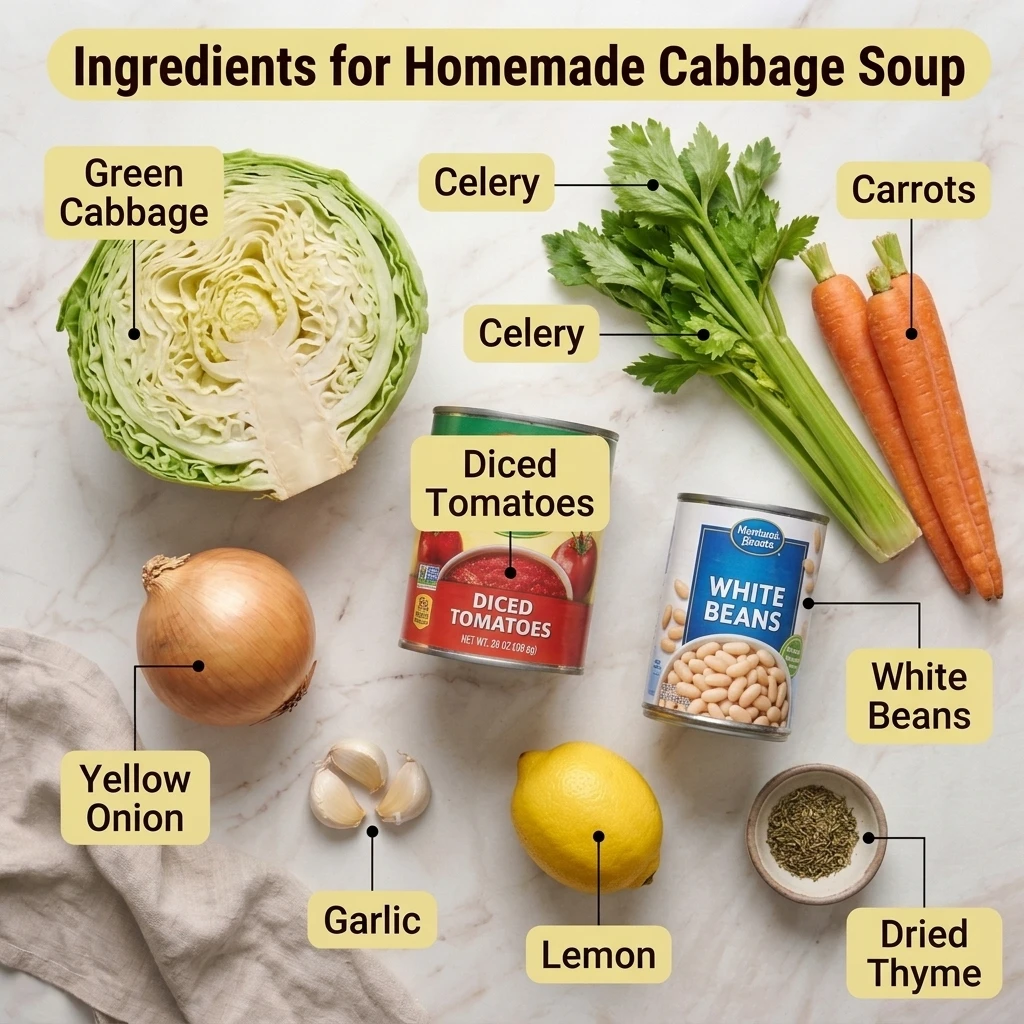
- 2 tablespoons extra virgin olive oil
- 1 large yellow onion (about 8 ounces), diced into 1/2-inch pieces
- 3 medium carrots (about 7 ounces), sliced into 1/4-inch coins
- 3 celery stalks (about 4 ounces), sliced 1/4 inch thick
- 4 garlic cloves, minced
- 2 tablespoons tomato paste
- 1 teaspoon dried thyme
For the Pot
- 1 medium head green cabbage (about 2 pounds), cored and cut into 1-inch squares, about 8 cups or 1 1/2 pounds
- 1 can (14.5 ounces) no-salt-added diced tomatoes, with juices
- 6 cups vegetable broth
- 2 cups water
- 1 bay leaf
- 1 can (15 ounces) cannellini beans, drained and rinsed
To Finish
- 1 tablespoon fresh lemon juice
- Diamond Crystal kosher salt and freshly ground black pepper, to taste
- 2 tablespoons chopped fresh parsley, for serving
Tomato paste does the heavy lifting here. Toasting it turns raw tomato taste into a savory, slightly sweet base, and leaving it out gives you a flat pot. Lemon juice does the opposite job and lifts the finished broth. Green cabbage keeps its shape best.
Swaps: savoy cabbage works but cooks about 3 minutes faster. Use chickpeas cup for cup in place of cannellini beans, avocado oil for olive oil, and 1 teaspoon apple cider vinegar for the lemon juice.
Equipment Needed
- 6-quart Dutch oven or heavy-bottomed pot: the wide base wilts cabbage evenly and resists scorching.
- 8-inch chef’s knife: a sharp blade slices through the core in one pass.
- Large cutting board: set a damp towel underneath so it will not slide.
- Colander: rinse the beans for 30 seconds to wash away the canned liquid.
- Flat-edged wooden spoon: it scrapes the browned bits off the bottom of the pot.
Preparation
Cabbage soup moves fast once the oil is hot, so get everything ready first.
- Cut the cabbage: quarter the head, slice out the core, and cut the leaves into 1-inch squares.
- Chop the aromatics: dice the onion, slice the carrots and celery, and mince the garlic.
- Rinse the beans: drain them into a colander and rinse under cold water for 30 seconds.
- Set up the stove: no oven is needed. Put the Dutch oven on a burner and line up the tomato paste, thyme, broth, water, tomatoes, and bay leaf within reach.
Step-by-Step Instructions
- Warm the olive oil in the Dutch oven over medium heat for 1 minute, until it shimmers. Add the onion, carrots, and celery and cook for 8 minutes, stirring every minute or two, until the onion turns translucent and the carrots look glossy. Chef’s Note: Keep the heat at medium so the vegetables soften without browning.
- Stir in the garlic, tomato paste, and thyme. Cook for 2 minutes, stirring constantly, until the paste darkens from bright red to brick red and the pot smells sweet and toasty. Chef’s Note: Scrape the bottom as you stir, because those browned bits dissolve into the broth later.
- Add the cabbage in two big handfuls, stirring after each one. Cook for 5 minutes, until the pile wilts to about half its height and the edges of the leaves turn glossy.
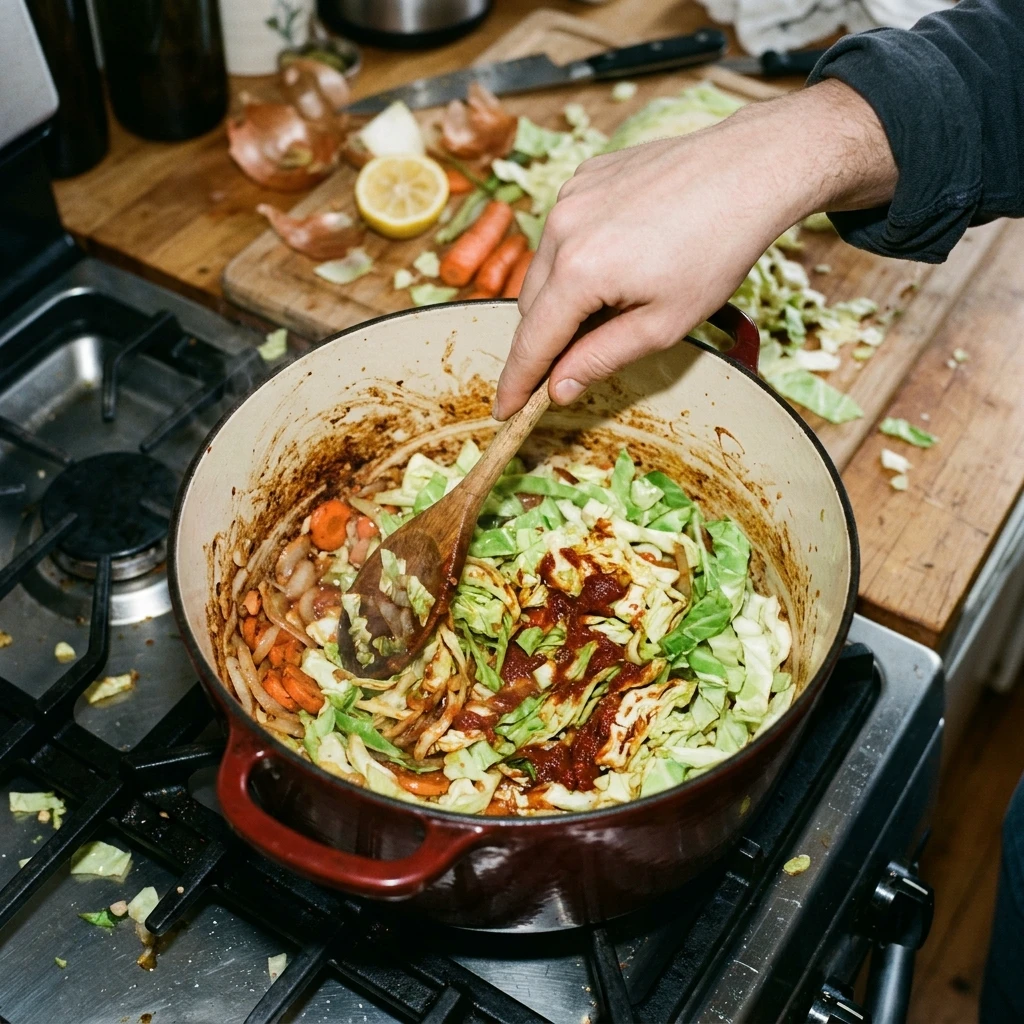
- Pour in the broth, water, and diced tomatoes with their juices, then drop in the bay leaf. Turn the heat to high and bring to a boil, about 6 minutes, until large bubbles break across the whole surface.
- Lower the heat to medium-low and stir in the beans. Simmer, partly covered, for 15 to 18 minutes, until a piece of cabbage tears easily against the side of the pot but still holds its shape. Chef’s Note: Aim for a gentle simmer around 200°F, with small bubbles at the edges instead of a hard boil.
- Turn off the heat, fish out the bay leaf, and stir in the lemon juice. Season with kosher salt and pepper a pinch at a time, tasting after each, until the broth looks deep red-orange and tastes bright and savory.
- Ladle into bowls and top with parsley. If you can wait, let the pot stand 5 minutes first, until the steam thins and the broth thickens slightly.
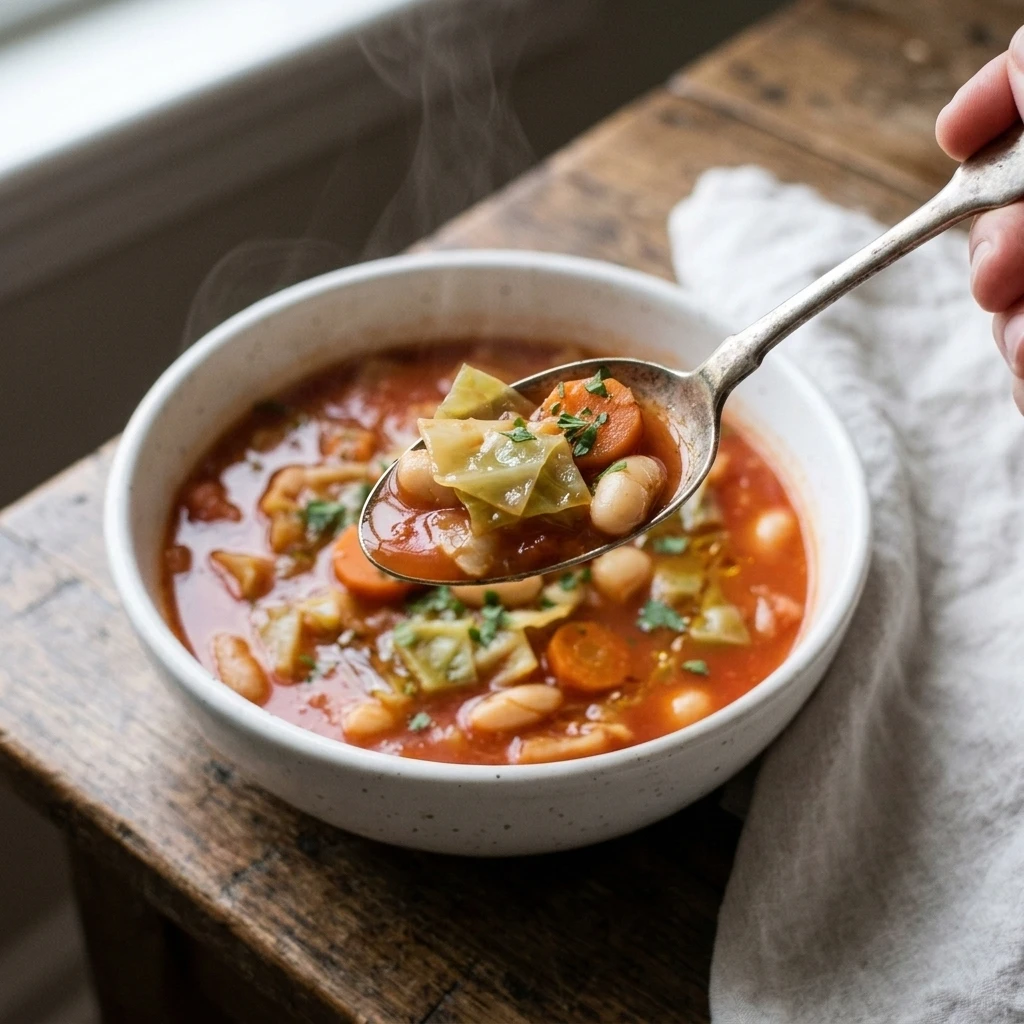
Pro Tip: Add the lemon juice only after the heat is off. Fresh acid fades quickly in a boiling pot, and a late squeeze keeps the flavor sharp in the bowl.
Expert Tips and Tricks
- My mistake: in batch six I grabbed a 4-pound head because the store had no small ones and changed nothing else. The pot ended up mostly cabbage with barely any broth, so measure the cabbage by weight.
- Make ahead: chop the onion, carrots, celery, and cabbage up to 2 days early and keep each in its own airtight container in the fridge.
- Texture: mash 1/2 cup of the beans against the side of the pot with a spoon, then stir them back in for a thicker cabbage soup without cream or flour.
- Storage: freeze half the batch the same night, since it keeps its best texture for 3 months.
- Time saver: scrub the carrots instead of peeling them and save about 3 minutes of prep.
- Seasoning: salt at the end. Diamond Crystal kosher salt is lighter by volume than table salt, so start with 1/4 teaspoon. Regular broth is already salty and cabbage shrinks, so early salt overshoots fast.
Common Mistakes and Troubleshooting
Gray, mushy cabbage. The pot simmered past 20 minutes, so the leaves collapsed and smelled of sulfur. Set a 15-minute timer. If it already happened, blend 2 cups smooth and stir it back in.
A flat, dull taste. The broth has salt but no acid. Stir in lemon juice off the heat before seasoning. If the pot is already flat, add 1 teaspoon of lemon juice at a time.
A raw, grassy flavor. Skipping the 8-minute sauté leaves the onion and carrots sharp. Give them the full time first. To repair a finished pot, toast 1 tablespoon of tomato paste in a skillet for 2 minutes and stir it in.
Watery broth. Cabbage releases liquid as it cooks, so extra broth thins everything out. Stick to 8 cups of liquid. To fix it, simmer uncovered for 8 to 10 minutes or mash some beans into the broth.
Bitter tomato paste. Paste over high heat scorches in under a minute. Keep the burner at medium and stir without stopping. If it scorched, add 2 tablespoons of water and scrape up the dark bits.
Storage Instructions
Room Temperature: Not recommended beyond 2 hours (1 hour above 90°F).
Refrigerator: 3 to 4 days in airtight glass containers. Shallow containers chill hot soup faster.
Freezer: Up to 3 months in freezer-safe containers or flat zip bags. Thaw overnight in the fridge.
Reheating: Warm over medium heat for 8 to 10 minutes, until the soup boils and reaches 165°F. Loosen it with 1/4 cup of water or broth if needed, then add a squeeze of lemon.
Make-Ahead Notes: The full pot of cabbage soup keeps 3 days. Chop the vegetables 2 days ahead, and add parsley and lemon at serving.
Storage Trick: Leave 1 inch of space at the top of every freezer container. Soup expands as it freezes, and a full jar can crack.
I freeze the cooled soup in 2-cup deli containers, dated on masking tape. One container equals one lunch, so I never thaw more than I need.
Variations and Substitutions
Spicy: Stir 1/2 teaspoon of red pepper flakes in with the garlic. At the table, add a few drops of hot sauce to each bowl.
Kid-Friendly: Skip the black pepper and cut the cabbage into 1/2-inch pieces. Blend 2 cups of soup smooth and stir it back in for a milder, thicker bowl.
Vegetarian and Vegan: This cabbage soup is already both when you use vegetable broth. For a chunkier pot with more variety, try my vegetable soup with tender veggies and beans as a close cousin.
Gluten-Free: The recipe is naturally gluten-free. Check the broth label, because some brands add wheat-based flavorings.
Meatball: For a full dinner, drop 12 to 16 cooked tender baked meatballs with garlic and parmesan into the pot for the last 5 minutes of simmering.
What to Serve With This Cabbage Soup
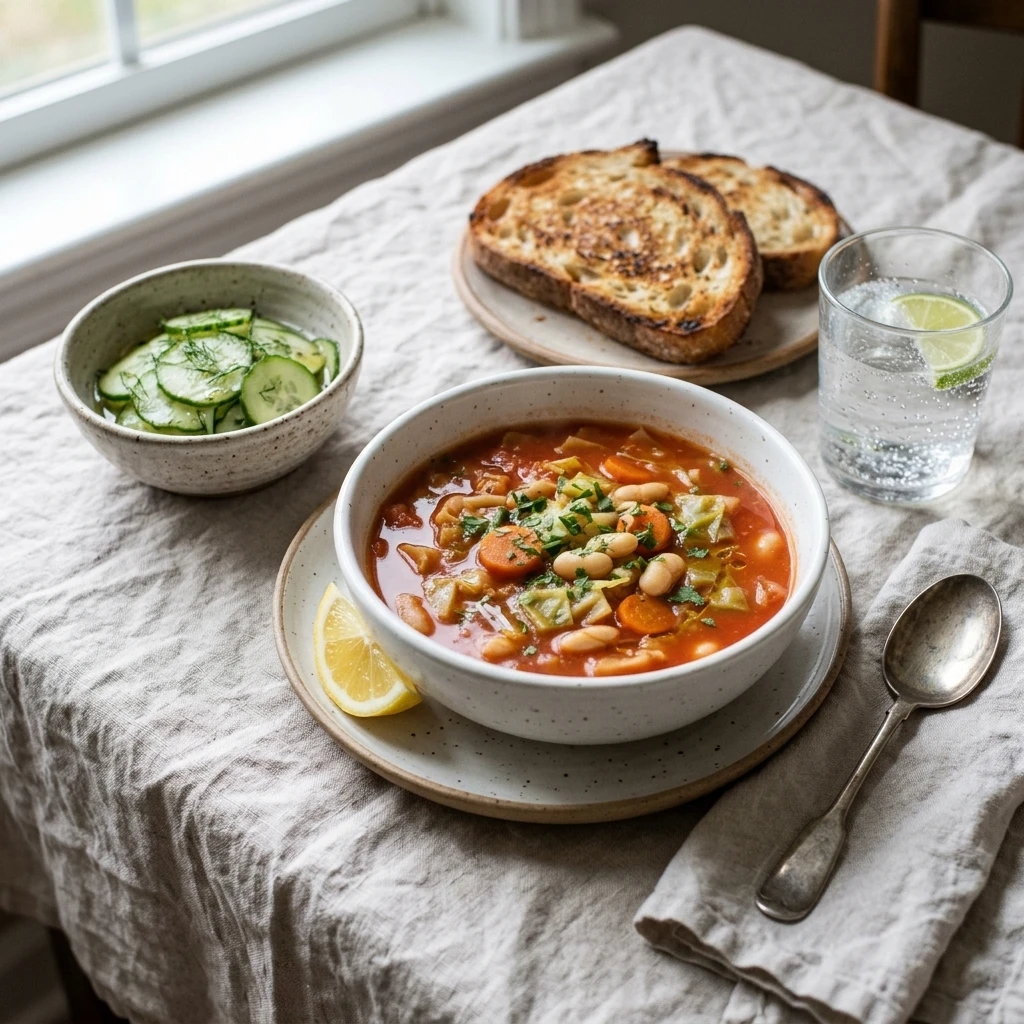
- Crusty bread: Toasted sourdough soaks up the tomato broth.
- Cucumber salad: A crisp cucumber salad adds cool, tangy crunch against the warm soup.
- Grilled cheese: Sharp cheddar on toasted bread turns a light bowl into dinner.
- Plain Greek yogurt: One spoonful on top adds creaminess and a little tang.
- Sparkling water with lime: A clean, fizzy drink that keeps the meal light.
Frequently Asked Questions
Does cabbage soup taste better the next day?
Yes. Overnight in the fridge, the thyme, tomato, and garlic spread through the broth, and the cabbage soup tastes rounder and sweeter by day two. Cool it in shallow containers, refrigerate within 2 hours, and reheat to a rolling boil. The cabbage keeps softening, so pull the pot off the heat 1 minute early on day one if you like firmer bites.
Why is my cabbage soup too sweet and how do I fix it?
Cabbage, carrots, and onion all turn sweeter the longer they cook. Fix it with acid and salt: stir in 1 tablespoon of lemon juice or apple cider vinegar, then season a pinch at a time. A few cracks of black pepper round it out too. Next time, keep the simmer gentle, under 18 minutes, and stick to 3 carrots as written.
Can I use red cabbage or savoy cabbage instead of green cabbage in cabbage soup?
Yes, with small changes. Savoy is more tender, so start checking at 12 minutes instead of 15. Red cabbage works too, but it bleeds color into the broth and tastes slightly peppery. If you mix the two, use mostly green. Green cabbage still gives the most reliable texture and the mildest flavor, which is why I tested every batch with it.
How long does it take to cook cabbage soup until the cabbage is tender?
After the broth comes to a boil, simmer the cabbage soup for 15 to 18 minutes. Taste a piece at 15 minutes. Look for cabbage that tears easily against the side of the pot but still keeps its shape. It keeps softening while the soup rests and again when you reheat it, so stop at tender, not mushy. The whole recipe takes about 55 minutes.
Is it ok to eat cabbage soup every day?
A bowl beside your normal meals is a smart way to eat more vegetables. Living on cabbage soup alone for days is different, because each bowl has only 5 grams of protein. Cabbage is also high in fiber, so build up slowly if you are not used to it. Talk with your doctor before any restrictive diet or if it upsets your stomach.
Final Thoughts on Cabbage Soup
The best thing about this cabbage soup is how forgiving it is. Swap the beans, change the broth, skip the celery, and it still works. Keep the sauté and the lemon, because those two steps do the heavy lifting.
My daughter asked for a second bowl three nights in a row during testing, and I stopped counting after batch nine because the freezer was full. Make a pot on Sunday, and by Thursday you will be glad you did.
If you loved this recipe, save it to your soup recipes Pinterest board so you can find it easily later!
Easy Cabbage Soup with White Beans and Lemon
Ingredients
Equipment
Method
- Warm the olive oil in the Dutch oven over medium heat for 1 minute, until it shimmers. Add the onion, carrots, and celery. Cook for 8 minutes, stirring every minute or two, until the onion turns translucent and the carrots look glossy. Keep the heat at medium so the vegetables soften without browning.
- Stir in the garlic, tomato paste, and thyme. Cook for 2 minutes, stirring constantly, until the paste darkens from bright red to brick red and the pot smells sweet and toasty. Scrape the bottom as you stir.
- Add the cabbage in two big handfuls, stirring after each one. Cook for 5 minutes, until the pile wilts to about half its height and the edges of the leaves turn glossy.
- Pour in the broth, water, and diced tomatoes with their juices, then drop in the bay leaf. Turn the heat to high and bring to a boil, about 6 minutes, until large bubbles break across the whole surface.
- Lower the heat to medium-low and stir in the beans. Simmer, partly covered, for 15 to 18 minutes at a gentle simmer around 200°F, with small bubbles at the edges, until a piece of cabbage tears easily against the side of the pot but still holds its shape.
- Turn off the heat, remove the bay leaf, and stir in the lemon juice. Season with kosher salt and pepper a pinch at a time, tasting after each, until the broth looks deep red-orange and tastes bright and savory.
- Ladle into bowls and top with parsley. If you can wait, let the pot stand 5 minutes first, until the steam thins and the broth thickens slightly.