How to Make Chimichurri Sauce Perfectly Every Time
Chimichurri sauce is parsley, garlic, vinegar, and olive oil stirred into a loose green relish. The short ingredient list is exactly why so many homemade batches go wrong: there is nowhere to hide sloppy technique. My first attempt, made in a blender, tasted like lawn clippings and looked like pond water.
This Argentine and Uruguayan classic is traditionally spooned over grilled meat, and the best versions are chopped by hand. I tested this recipe nine times over three weeks, changing one thing each round: the knife, the garlic amount, the resting time, the vinegar. The version below is batch nine. The parsley stays in distinct green flecks, the garlic hits hard without turning harsh, and the oil carries everything across a plate of steak or roasted potatoes.
It takes 15 minutes of hands-on work, needs no stove, and keeps four days in the fridge. Here is how to get it right the first time, including the two mistakes that ruin most batches.
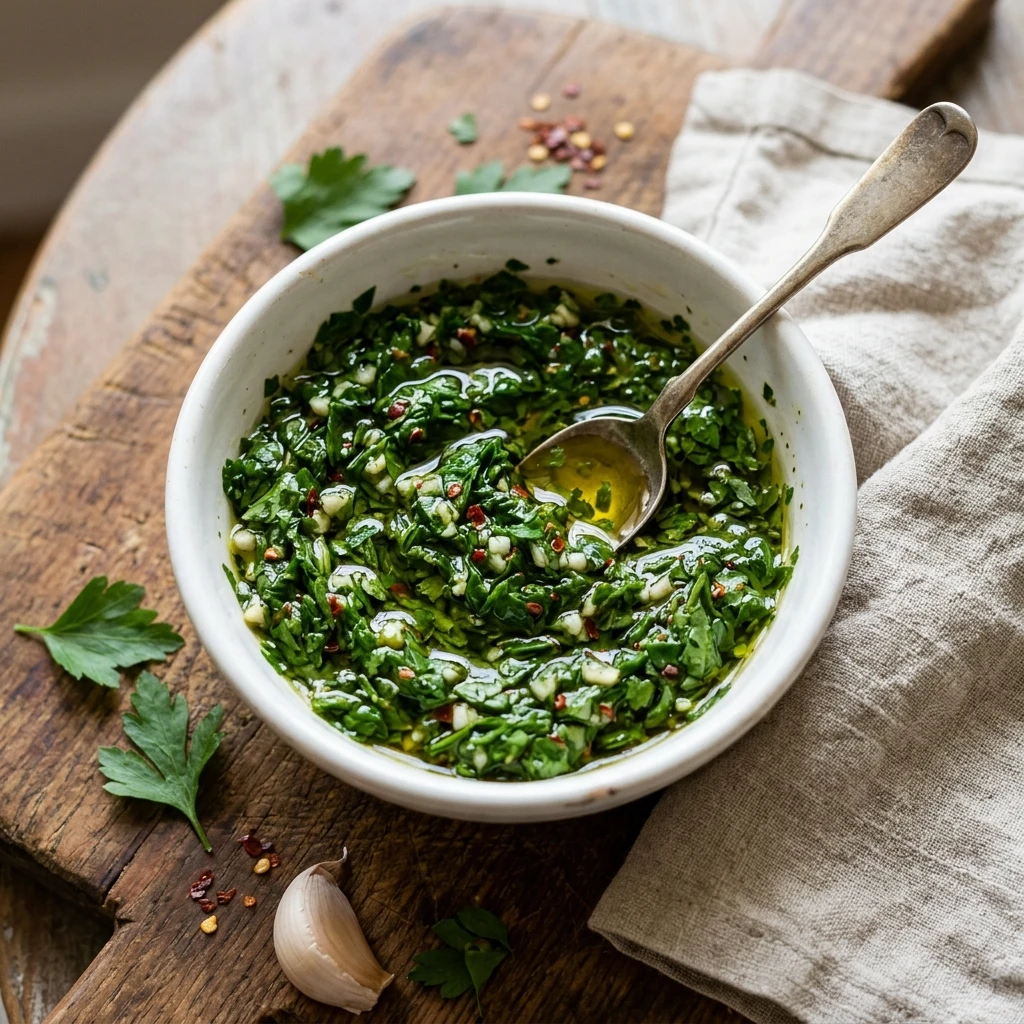
Table of Contents
Why You Will Love This Chimichurri Sauce
- Needs only 15 minutes of hands-on work and no stove, oven, or blender.
- Makes a chimichurri sauce that tastes sharp, garlicky, and fresh, with a loose texture that soaks into steak, shrimp, and roasted potatoes.
- Uses seven ingredients, and only the parsley and garlic are fresh.
- Gets better on day two, so a Sunday batch covers dinners through Wednesday.
- Comes out vegan, gluten-free, dairy-free, and nut-free, so everyone can have some.
- Turns kid-friendly with two small changes, which my nephew proved by eating it on plain pasta.
Recipe Snapshot
- Prep Time: 15 minutes
- Cook Time: 0 minutes
- Resting Time: 30 minutes
- Total Time: 45 minutes
- Servings: 8 (2 tablespoons each)
- Difficulty: Easy
- Calories per serving: About 128
- Key Ingredient or Tool: Flat-leaf parsley and a sharp knife
- Best For: Grilled meat, seafood, and roasted vegetables
Nutrition Information
- Calories per Serving: About 128
- Protein: 0.5 g
- Carbs: 1.5 g
- Fat: 13.6 g
- Fiber: 0.5 g
- Sugar: 0.2 g
- Sodium: 112 mg
- Serving Size: About 2 tablespoons
- Servings per Recipe: 8
Nearly all the calories come from olive oil, which is mostly monounsaturated fat. Carbs stay under 2 g per serving, so the sauce fits low-carb plans. Sodium is the number to watch, so season meat lightly before spooning this on.
Nutrition values are approximate and calculated per serving using standard ingredient amounts. Values may vary based on brands used and portion sizes.
Ingredients
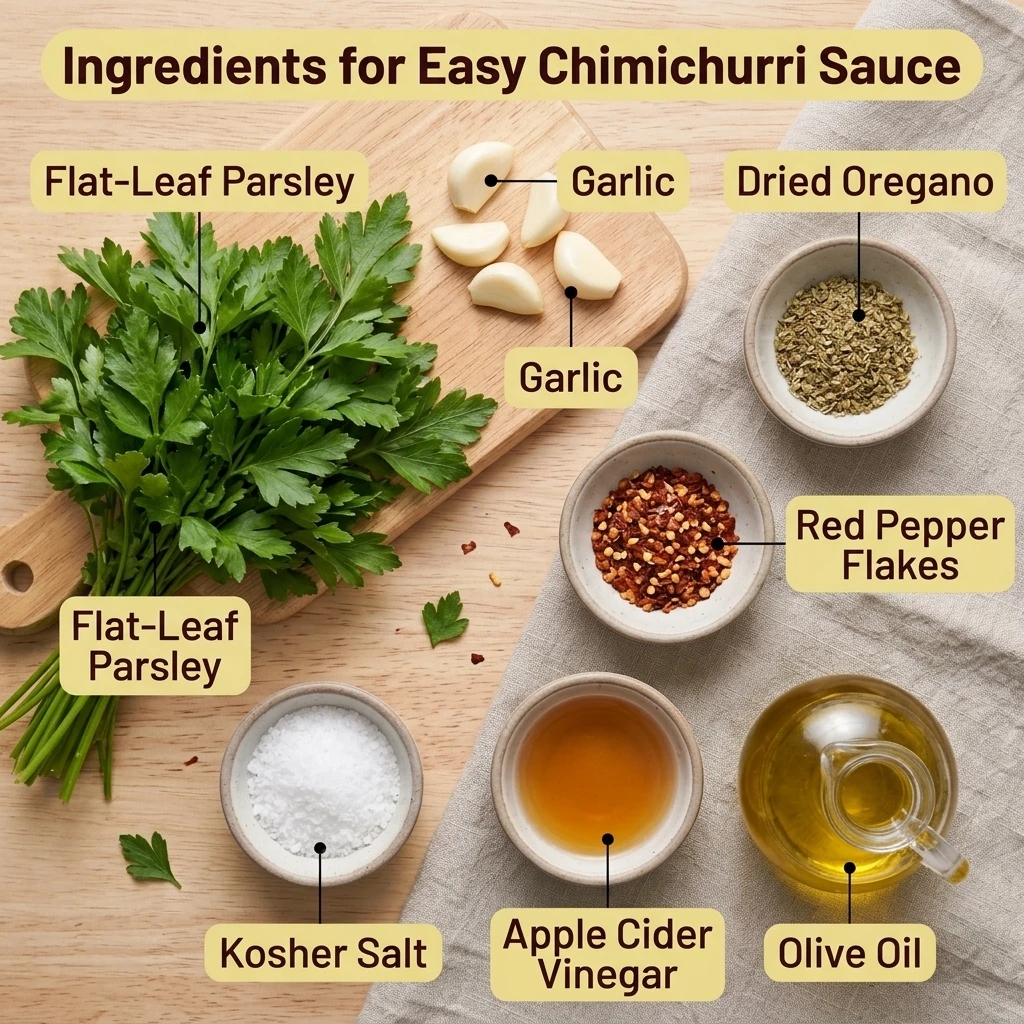
- 1 1/2 cups finely chopped fresh flat-leaf parsley (about 1 large bunch)
- 4 garlic cloves, minced
- 2 teaspoons dried oregano
- 1/2 teaspoon crushed red pepper flakes
- 3/4 teaspoon Diamond Crystal kosher salt
- 3 tablespoons apple cider vinegar
- 1/2 cup extra virgin olive oil, mild and fruity
Flat-leaf parsley is the base of chimichurri sauce. Curly parsley tastes grassier and its fluffy leaves never settle into the oil. Olive oil makes up half the sauce, so a harsh bottle turns the whole batch bitter. I use California Olive Ranch because it stays mild. Vinegar tames the raw garlic, and cutting it back leaves the sauce oily and sharp at once.
Easy substitutions:
- Oregano: use 2 tablespoons chopped fresh oregano leaves.
- Vinegar: use 3 tablespoons fresh lemon juice.
- Red pepper flakes: use half a small red chile, seeded and minced.
- Garlic: use 1 small minced shallot for a sweeter, milder edge.
- Salt: use 1/3 teaspoon fine table salt, since it is denser than Diamond Crystal.
- Parsley: curly parsley works, though the flavor is duller.
Equipment Needed
- Sharp 8-inch chef’s knife: a dull blade crushes parsley and releases bitter juice.
- Large cutting board, 12 by 18 inches: a big surface keeps chopped herbs off the counter.
- Salad spinner: dry parsley keeps the sauce loose instead of watery.
- Medium glass bowl, 1 1/2 quarts: glass will not hold garlic smell.
- 1 pint glass jar with a tight lid: a wide mouth makes spooning easy.
Preparation
- Wash the parsley, spin it dry, then spread it on a clean towel for 10 minutes until no moisture shows.
- Peel the 4 garlic cloves and trim off the root ends.
- Measure the oregano, pepper flakes, and salt into one small bowl, and the vinegar and oil into separate cups.
- Wash and dry the 1 pint jar for storage.
- Set the cutting board on a damp paper towel so it does not slide while you chop.
- Nothing needs preheating, and there is no pan to grease or line.
Step-by-Step Instructions
- Pull the parsley leaves and thin stems from the thick base. Chop them with a rocking motion for about 3 minutes, until the pieces look like green sesame seeds. Chef’s Note: Stop before it turns to wet paste.
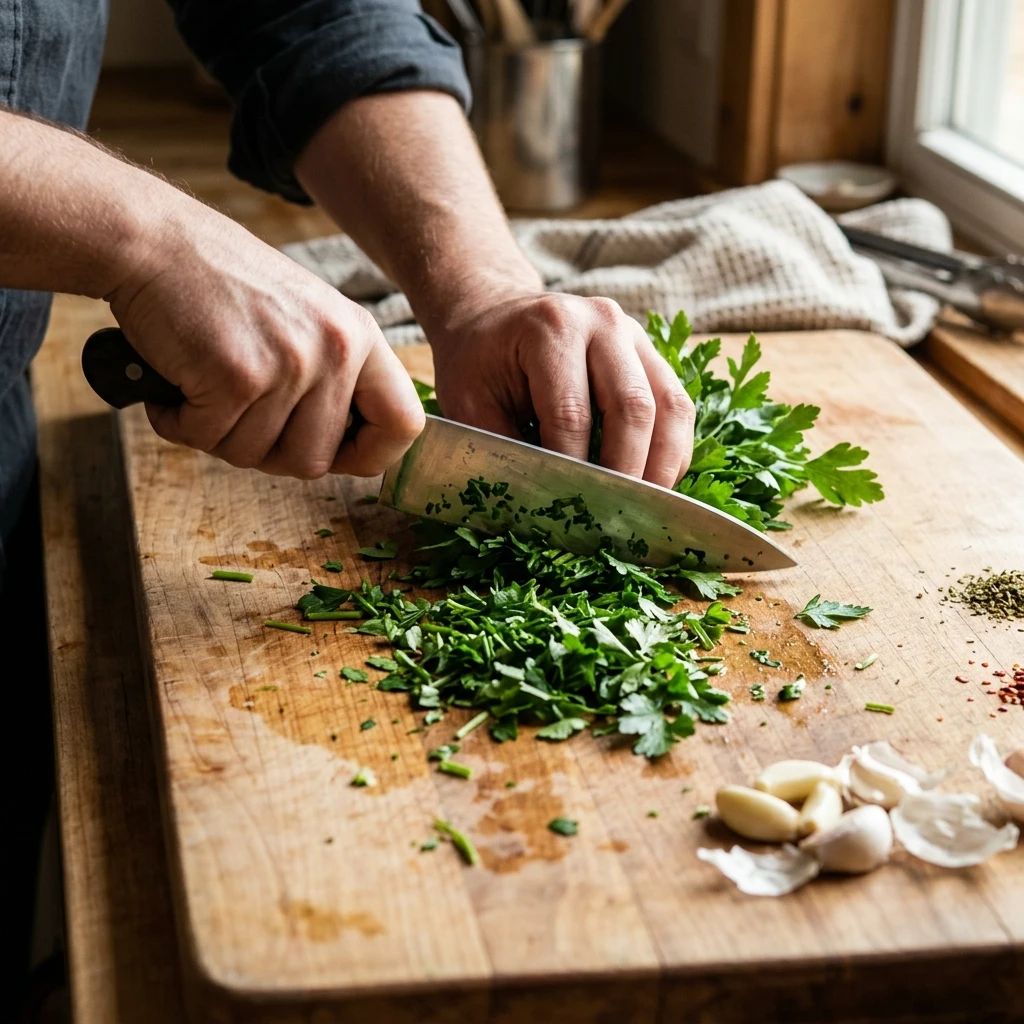
- Mince the garlic on the same board, then sprinkle on a pinch of the measured salt. Press and drag the flat side of the knife over it for about 1 minute, until it looks like a moist paste. Chef’s Note: Salt works like grit and breaks the garlic down, so nobody bites a raw chunk.
- Scrape the parsley and garlic into the bowl, then add the oregano, red pepper flakes, and remaining salt. Stir with a fork for 20 seconds, until the red flakes spread evenly through the green.
- Pour in the vinegar and stir for 15 seconds. Let the bowl sit for 5 minutes, until the parsley turns a deeper green and looks slightly glossy. Chef’s Note: Vinegar goes in first so it reaches the garlic directly.
- Pour in the olive oil in a slow stream while stirring with the fork. Stop at about 30 seconds, when the sauce looks loose and glossy with oil pooling around the herbs.
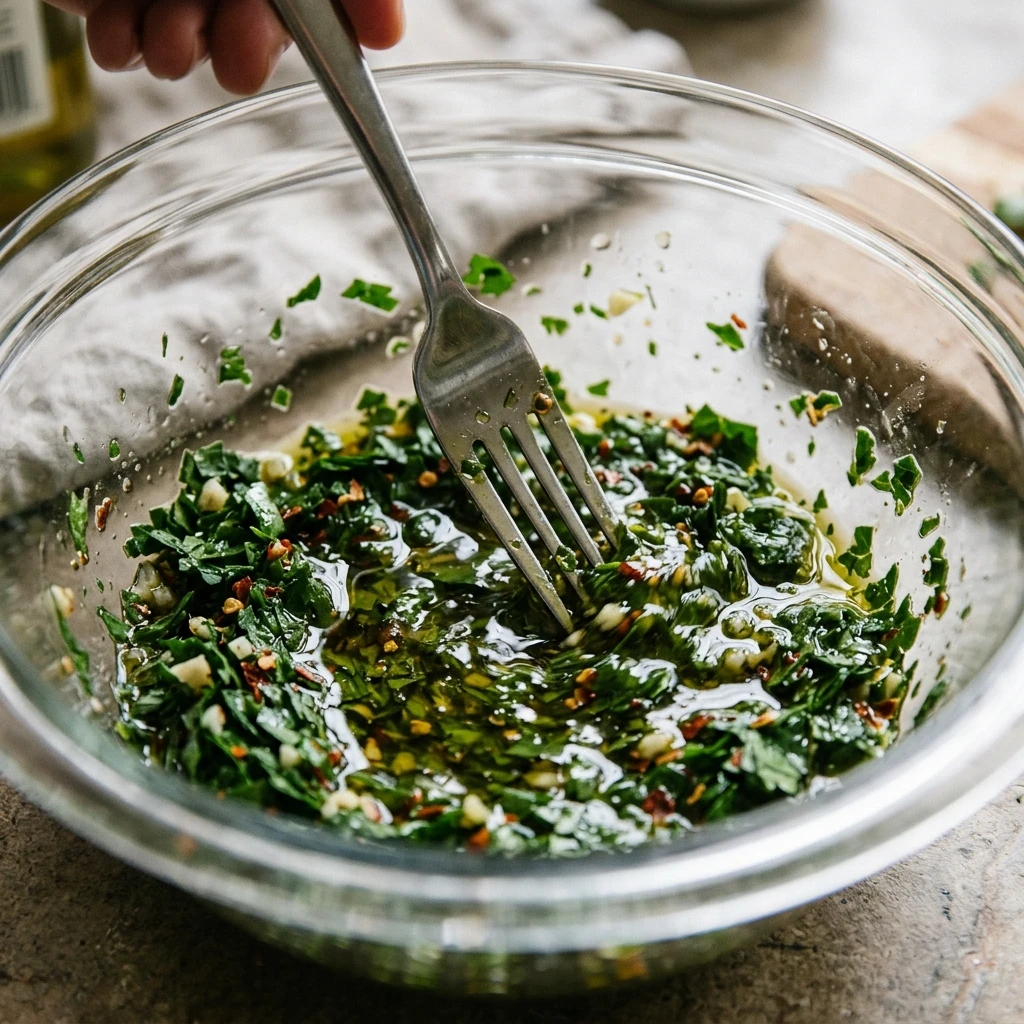
- Cover the bowl and leave it on the counter for 30 minutes. The herbs settle into the oil and the sharp garlic smell turns rounder and sweeter. Chef’s Note: Set a timer, because early tastes mislead.
- Taste a spoonful on a piece of plain bread. Add 1/4 teaspoon salt if it tastes flat, or 1 more teaspoon of vinegar if it tastes heavy, then stir for 10 seconds until it looks evenly glossy.
Pro Tip: If the garlic still tastes harsh after the rest, stir in 1 tablespoon of chopped parsley and 1 tablespoon of oil instead of more vinegar. That dilutes the garlic without making the sauce sour.
Expert Tips and Tricks
- My worst batch came from the food processor. I pulsed it just a few times and still got a gray-green paste that tasted like cooked spinach, so now I chop every batch by hand.
- Make chimichurri sauce the day before a dinner party, since day two tastes best.
- Write the making date on masking tape and stick it to the jar lid. Counting four days from that date removes any guesswork.
- Taste the olive oil on a spoon first. If it tastes bitter or sharply peppery on its own, pick a milder bottle.
- Take the jar out 20 minutes before serving, since cold olive oil turns cloudy and thick.
- Wash, dry, and wrap the parsley in paper towel the night before. That removes the slowest step from a weeknight.
Common Mistakes and Troubleshooting
Using a blender. Chimichurri sauce turns dark, thick, and bitter because blades bruise parsley. Chop by hand. To rescue it, stir in 2 tablespoons of hand-chopped parsley and 1 teaspoon of vinegar.
Chopping wet parsley. The sauce turns watery because water repels oil. Dry the leaves fully first. To fix it, spoon off the pooled liquid and add 1 tablespoon of oil.
Skipping the rest. Right after mixing, the sauce tastes like raw garlic and oil. Wait the full 30 minutes. If you are already serving, add 1 teaspoon of vinegar to soften the edge.
Using the wrong salt. Fine table salt is denser than Diamond Crystal, so the same spoonful tastes far saltier. Measure the kind you own. If it is too salty already, stir in 2 tablespoons of parsley and 1 tablespoon of oil.
Leaving it open in the fridge. Air turns the surface brown and dulls the garlic. Close the jar tightly. If the top has browned, stir in a handful of fresh chopped parsley to refresh the color.
Storage Instructions
- Room Temperature: Up to 2 hours while serving, or 1 hour above 90°F. After that, refrigerate it.
- Refrigerator: Up to 4 days in a clean 1 pint glass jar with a tight lid, at 40°F or below.
- Freezer: Up to 2 months. Spoon 2 tablespoons into each ice cube tray well, freeze solid overnight, then move the cubes to a freezer-safe zip bag with the date on it.
- Reheating: Do not heat it, because warmth wilts the herbs. Thaw cubes in a covered bowl in the fridge overnight, rest the bowl on the counter 20 minutes, then stir in 1 teaspoon of vinegar and 1 tablespoon of chopped parsley. Use thawed sauce within 4 days and do not refreeze it.
- Make-Ahead Notes: Make the full sauce up to 4 days ahead, and set out only a small bowl at the table.
I freeze half of every batch of chimichurri sauce in an ice cube tray. Each cube holds about 2 tablespoons, exactly one serving, so a weeknight dinner never means opening a whole jar.
Variations and Substitutions
- Spicy Chimichurri: Add 1 seeded, minced red Fresno chile, or raise the pepper flakes to 1 1/2 teaspoons. Taste after the rest, since the heat builds as it sits.
- Mild and Kid-Friendly: Use 2 garlic cloves, skip the pepper flakes, and add 1 extra tablespoon of oil. Serve it on the side so kids add their own spoonful.
- Vegetarian, Vegan, and Gluten-Free: The base recipe already is all three, with no dairy, nuts, or gluten ingredients.
- Cilantro Chimichurri: Replace 1/2 cup of the parsley with finely chopped cilantro. The sauce tastes brighter and a little citrusy, which suits shrimp and grilled fish.
What to Serve With This
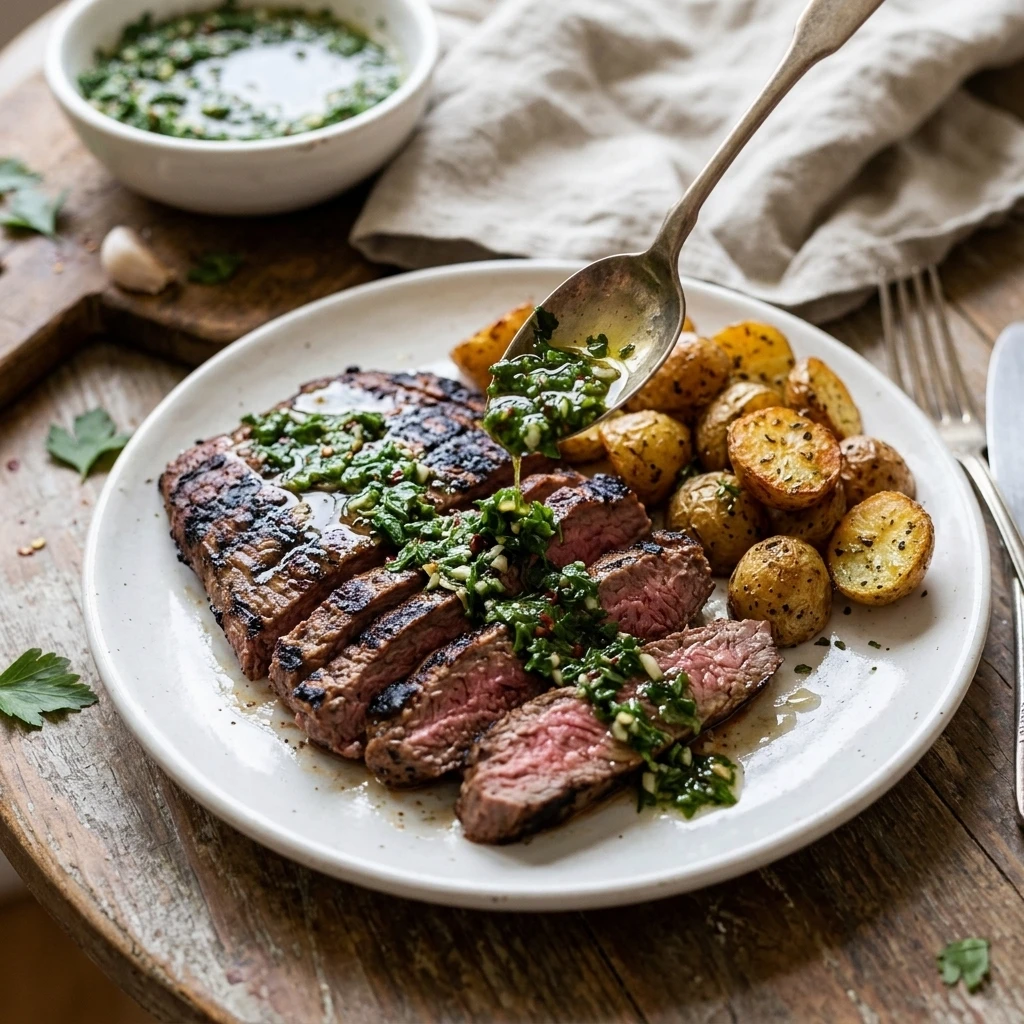
- Grilled steak or chicken: The classic match for chimichurri sauce. Slice flank steak against the grain and add roasted potatoes and grilled corn for a full dinner.
- Shrimp tacos: Spoon it over shrimp tacos in place of a creamy sauce, and the vinegar cuts through the spice.
- Twice baked potatoes: A spoonful on twice baked potatoes cuts through the rich filling.
- Baked meatballs: Use it as a dip for baked meatballs with garlic and Parmesan.
- Sparkling water with lime: A cold, non-alcoholic drink resets your palate between bites.
Serving Trick: Let grilled meat rest 5 minutes before you spoon the sauce on. Straight off the grill, the heat darkens the parsley and cooks the garlic.
Frequently Asked Questions
How long does chimichurri sauce last in the fridge?
Homemade chimichurri sauce lasts 4 days in the fridge when it sits in a tightly closed jar at 40°F or below. Extension food safety programs, including Oregon State University, tell home cooks to refrigerate fresh herbs and garlic in oil and use them within 4 days, or freeze them. Always use a clean spoon, never one that has touched other food. If the sauce smells sour or shows any mold, throw it out.
Why is my chimichurri sauce bitter?
Bitter chimichurri sauce usually comes from over-processing the parsley in a blender, a harsh olive oil, or too many thick stems. Chop by hand, taste the oil on a spoon first, and use mostly leaves with only the thin tender stems. To rescue a bitter batch, stir in 2 tablespoons of hand-chopped parsley and 1 teaspoon of vinegar, then rest it 10 more minutes.
Can I use lemon juice instead of vinegar for chimichurri sauce?
Yes. Swap the 3 tablespoons of apple cider vinegar for 3 tablespoons of fresh lemon juice, and the sauce stays bright with a slightly fruitier edge. Skip bottled lemon juice if you can, because it tastes flat, and squeeze fresh juice through a strainer to catch the seeds. The 4 day fridge limit stays the same either way. I tried lemon in test number six and liked it best on grilled fish.
How long should chimichurri sauce sit before serving?
Let it sit 30 minutes at room temperature, covered. That gives the garlic time to mellow and the herbs time to soften into the oil. You can wait up to 2 hours on the counter, but after that it belongs in the fridge. Overnight in the fridge gives the deepest flavor, and I think day two beats day one every time. Stir it again right before serving.
Is chimichurri the same as pesto?
No. Pesto is blended into a smooth paste with basil, pine nuts, and Parmesan. Chimichurri sauce is chopped by hand from parsley, garlic, vinegar, and oil, with no nuts or cheese, so it stays loose and tangy instead of creamy. Use pesto on pasta and chimichurri on grilled meat. The vinegar is the biggest giveaway, because that acid makes chimichurri taste sharp where pesto tastes rich.
Final Thoughts on Chimichurri Sauce
The best advice I can give about chimichurri sauce is to make it on a quiet afternoon first, before you need it for a dinner. Taste it at the 30-minute mark, then again the next day, and decide which version you like.
I keep a jar in my fridge from Sunday to Thursday, and it ends up on eggs, rice, and leftover roast chicken more often than on steak. My daughter asked for it on her scrambled eggs three mornings in a row, which told me the recipe was finished.
If you loved this recipe, save it to your sauces and dips Pinterest board so you can find it easily later!
How to Make Chimichurri Sauce Perfectly Every Time
Ingredients
Equipment
Method
- Wash the parsley, spin it dry, and let it sit on a clean towel for 10 minutes until no moisture shows. Pull the leaves and thin stems from the thick base.
- Chop the parsley with a rocking motion for about 3 minutes, until the pieces look like green sesame seeds. Chef’s Note: Stop before it turns to wet paste.
- Mince the garlic, sprinkle on a pinch of the measured salt, and press and drag the flat side of the knife over it for about 1 minute, until it looks like a moist paste.
- Scrape the parsley and garlic into the bowl. Add the oregano, red pepper flakes, and remaining salt, and stir with a fork for 20 seconds until the flakes spread evenly.
- Pour in the vinegar and stir for 15 seconds. Let the bowl sit for 5 minutes, until the parsley turns a deeper green and looks slightly glossy.
- Pour in the olive oil in a slow stream while stirring with the fork. Stop at about 30 seconds, when the sauce looks loose and glossy with oil pooling around the herbs.
- Cover the bowl and rest it on the counter for 30 minutes, until the sharp garlic smell turns rounder and sweeter.
- Taste a spoonful on plain bread. Add 1/4 teaspoon salt if it tastes flat, or 1 more teaspoon of vinegar if it tastes heavy, then stir for 10 seconds until evenly glossy.
Notes
Fine table salt is denser than Diamond Crystal, so use 1/3 teaspoon instead.
Storage: refrigerate up to 4 days in a tightly closed 1 pint jar, or freeze up to 2 months in ice cube trays.