Taco Seasoning with Ancho Chile and Coriander
A good spice blend should make the filling taste complete, not merely hot or salty. This taco seasoning starts with pure ancho chile powder, which brings a mild dried-fruit depth without hiding the cumin, oregano, garlic, and coriander. Smoked paprika adds a measured roasted note, while cayenne controls the actual heat.
The formula makes exactly 6 tablespoons. That is enough for three batches when you use 2 tablespoons with 450 grams or 1 pound of ground meat, beans, tofu, or chopped vegetables. Because the blend contains no starch, it seasons cleanly rather than forming a thick, packet-style sauce. You can add a separate cornstarch slurry when that texture suits the dish.
The most useful technique happens in the pan. Briefly warm the spices in the cooked filling before adding water or certified stock. Thirty seconds wakes up their aroma; several dry minutes can make the garlic and chile bitter.
I started making my own because commercial packets often contain starch and hidden salt that made it harder to control how the finished filling tasted, and having a jar with a measured ratio means I can season the same way every time.
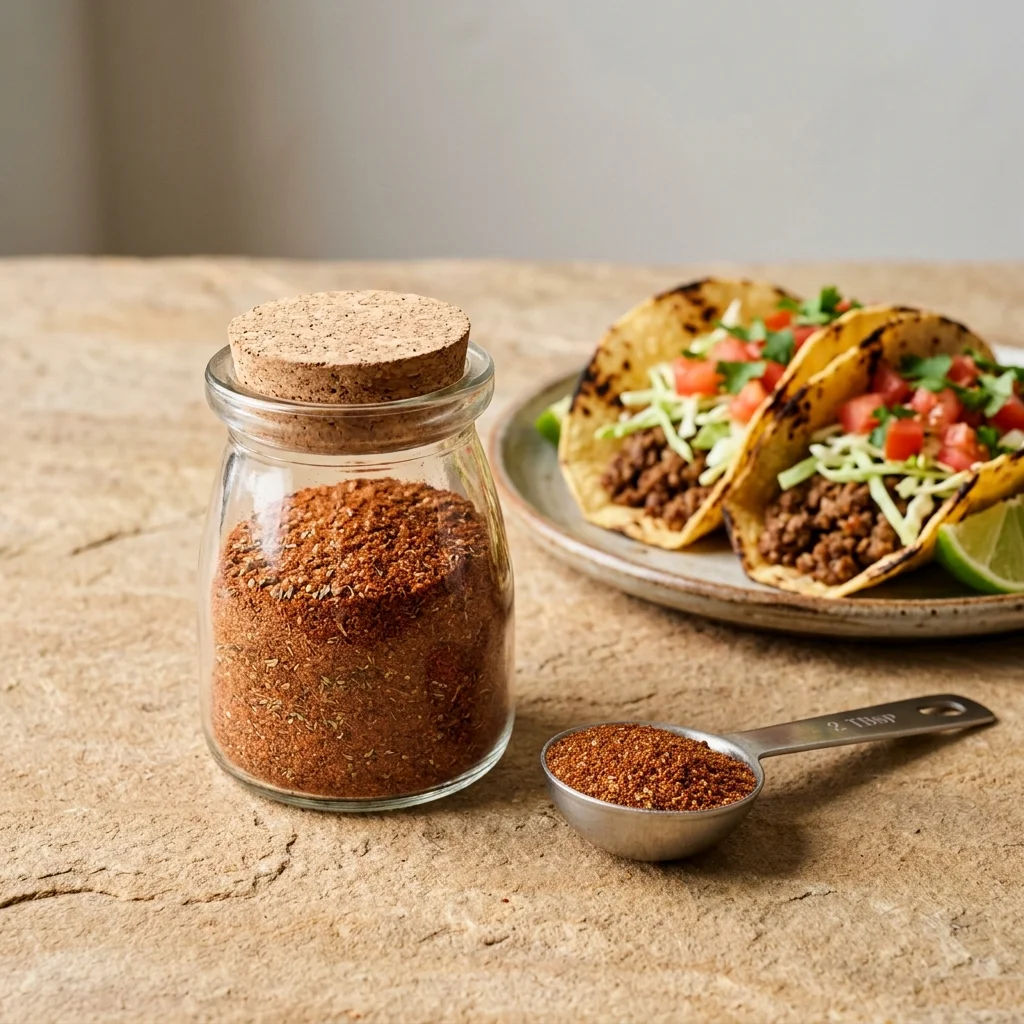
Table of Contents
Why This Taco Seasoning Is Easy to Control
- Pure ancho chile powder gives you a known base instead of an already-seasoned chili powder blend.
- One teaspoon of salt across 6 tablespoons leaves room to season the finished filling.
- Cayenne controls heat separately from the mild ancho flavor.
- The measured yield covers three 450-gram or 1-pound batches.
- No starch is built in, so the same jar can season meat, beans, tofu, rice, or vegetables.
Taco Seasoning Snapshot
- Prep time: 8 minutes
- Cook time: 0 minutes
- Total time: 8 minutes
- Servings: 12
- Difficulty: Easy
- Calories: Approximately 11 per serving
- Key ingredient: Pure ancho chile powder
- Best for: Tacos, taco bowls, beans, roasted vegetables, and seasoned rice
Taco Seasoning Nutrition
- Calories per serving: Approximately 11
- Protein: Less than 1 gram
- Carbohydrates: 2 grams
- Fat: Less than 1 gram
- Fiber: 1 gram
- Sugar: Less than 1 gram
- Sodium: Approximately 195 milligrams
- Serving size: One-half tablespoon
- Servings per recipe: 12
Spices contribute small amounts of fiber and carbohydrate, while nearly all the sodium comes from the measured teaspoon of salt. The nutrition of the finished meal depends on the filling, cooking liquid, tortillas, and toppings.
Nutritional values represent an estimate for each serving based on typical ingredient proportions. Precise figures will fluctuate according to specific product brands and portion sizes.
Ingredients for a Balanced Taco Spice Blend
- Pure ancho chile powder, 2 tablespoons: Ancho is mild and earthy. Pure guajillo powder tastes brighter but works.
- Ground cumin, 1 tablespoon: Omit it if required and increase coriander by 1 teaspoon. Caraway is not a direct substitute.
- Smoked paprika, 2 teaspoons: Sweet paprika creates a softer blend.
- Garlic powder, 1 and one-half teaspoons: Do not put fresh garlic in the storage jar.
- Onion powder, 1 and one-half teaspoons: Granulated onion works if you sift out hard pieces.
- Dried oregano, 1 teaspoon: Crush large leaves. Mexican oregano tastes more citrus-like, but common oregano works.
- Ground coriander, 1 teaspoon: If omitted, add one-half teaspoon each of cumin and oregano.
- Fine sea salt, 1 teaspoon: Reduce it by half when the filling or stock is salted.
- Ground black pepper, one-half teaspoon: White pepper is an equal substitute.
- Ground cayenne pepper, one-half teaspoon: For mild seasoning, replace half with paprika.
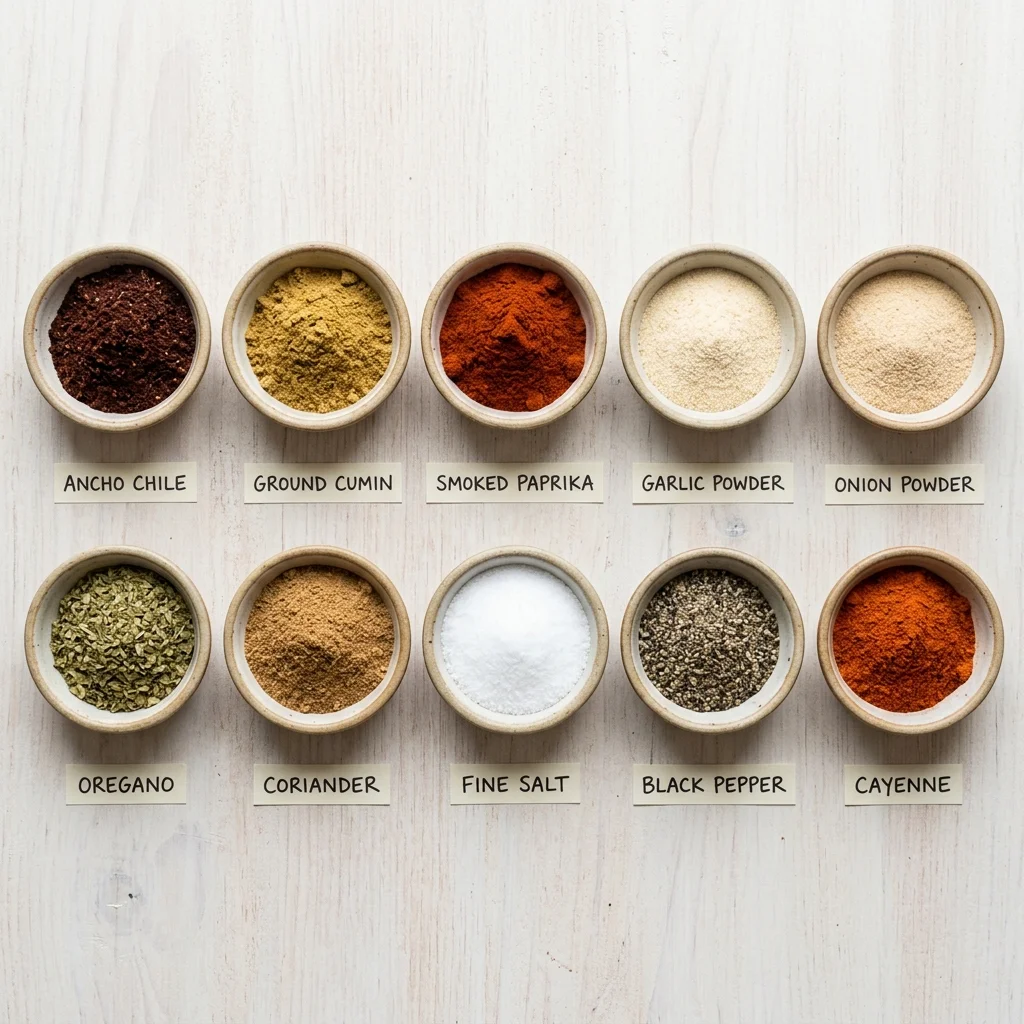
Read the chile label. Pure ancho contains one ground pepper. Chili powder may already contain cumin, garlic, oregano, and salt, which makes this formula unpredictable.
Equipment Needed
- Measuring spoons: Level them so the three-batch ratio stays consistent.
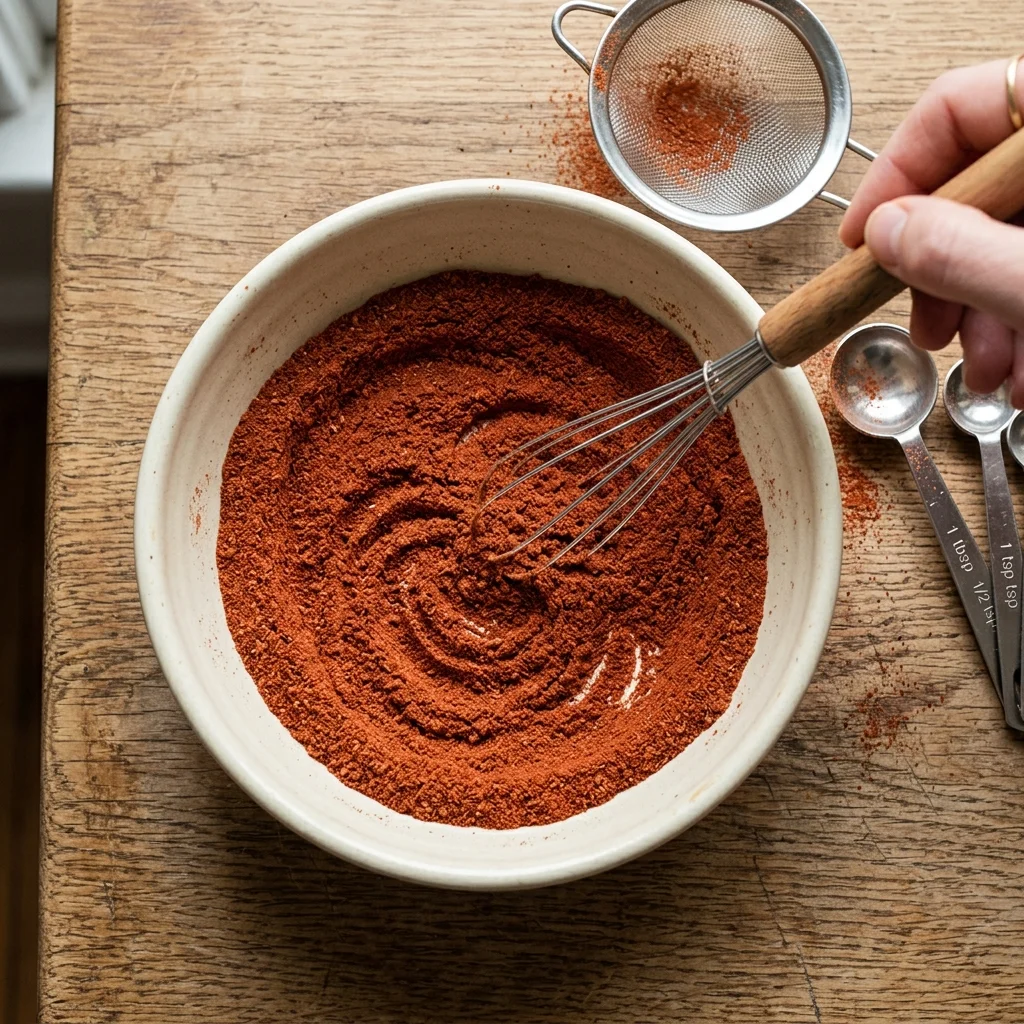
- Fine-mesh sieve: Use it to break spice lumps.
- Small whisk: It distributes salt and cayenne evenly.
- Wide bowl: A pale interior reveals unmixed streaks.
- Clean glass jar with a tight lid: A 4-ounce jar leaves shaking room.
- Small funnel: It keeps powder off the rim.
Preparation Before Mixing
- Wash and completely dry the bowl, whisk, sieve, measuring spoons, funnel, and storage jar.
- Check every spice for a strong, clean aroma and its normal color. Replace anything musty, damp, faded, or insect-damaged.
- Read the ancho package to confirm it contains pure ground chile rather than a salted seasoning blend.
- Rub the oregano between dry fingertips to make the leaf pieces closer in size to the other ingredients.
- Write the blend date and the 2-tablespoon usage ratio on a label before filling the jar.
Keep the original spice containers nearby until the jar is labeled.Checking individual spices beforehand prevents confusion, as ground cayenne can closely resemble pure ancho chile powder. Measure over the bowl instead of the storage jar so an accidental extra spoonful can be removed without discarding the finished mixture.
How to Make Taco Seasoning
- Sift the fine powders.Sift the ancho, cumin, paprika, garlic, onion, coriander, black pepper, and cayenne. Discard hard, discolored pieces.Chef’s Note: Breaking garlic and onion lumps prevents concentrated pockets later.
- Add the oregano and salt.Scatter crushed oregano and salt across the sifted powders.
- Whisk the blend.Whisk for 45 seconds, scraping the edge twice, until no pale or dark streaks remain.Chef’s Note: Dense salt can settle. Shake the jar before measuring.
- Fill and label the jar.Transfer the blend into the dry jar. Close it and label the date, ingredients, and ratio.
- Measure a cooking batch.Use 2 tablespoons for 450 grams ground filling, 3 cups beans, or 6 cups chopped vegetables. For milder flavor, start with 1 and one-half tablespoons.
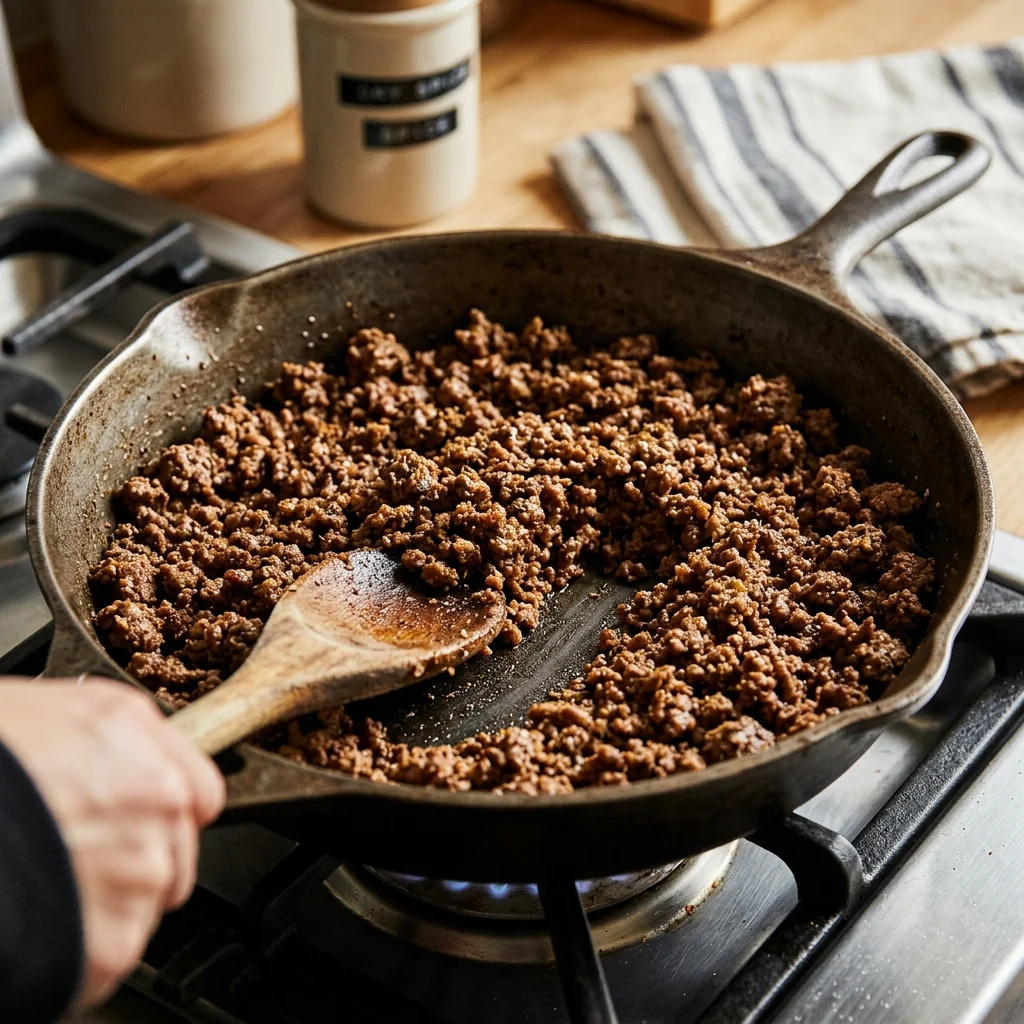
For 450 grams of filling, add 2 tablespoons blend. Stir over medium heat for 30 seconds, add one-third cup water or certified stock, then simmer for 3 to 5 minutes.
- Bloom without scorching.Warm the spices directly in the pan for 30 seconds to wake up their aroma before adding liquid.Add liquid sooner if the pan dries or the garlic smells sharp.Chef’s Note: Add 1 teaspoon oil first when beans or tofu leave the pan dry.
- Simmer and taste.Add one-third cup water or certified stock.Simmer the mixture for 3 to 5 minutes, then adjust salt, cayenne, or lime.
For vegetables that will be roasted rather than simmered, combine 2 tablespoons blend with 2 tablespoons oil before coating about 6 cups chopped vegetables. For rice, beans, or soup, begin with half the usual amount because the seasoning disperses through a larger volume of liquid; taste after several minutes before adding more.
Expert Tips for Fresh, Even Taco Seasoning
- Buy pure chile powder. A premixed product changes several parts of the formula.
- Measure cayenne separately and wash the spoon so it does not heat another jar.
- Test one recipe before multiplying every measurement by the same number.
- Make it up to 6 months ahead and store it away from heat, steam, and light.
- Use a dry spoon. Moisture creates lumps and shortens quality.
- Add seasoning after browning so surface moisture does not mute the spices.
- Taste before salting because tortillas, cheese, salsa, beans, or stock may contribute enough.
The first time I bloomed the spices I added them to the pan and walked away for closer to a full minute rather than the 30 seconds the recipe calls for, and the garlic powder took on a bitter edge that came through in the finished filling even after adding the liquid and simmering.
Taco Seasoning Problems and Practical Fixes
The blend tastes bitter
Cause: The spices scorched or the chile powder was stale.
Prevention: Bloom for 30 seconds and use fresh-smelling spices.
Fix: Add liquid immediately, then balance with tomato, lime, or unseasoned filling.
The filling tastes bland
Cause: Too little blend, stale spices, or low salt weakened the dish.
Prevention: Start with 2 tablespoons per 450 grams and date the jar.
Fix: Add 1 teaspoon blend with 1 tablespoon water, simmer 2 minutes, and retaste.
The mixture is too hot
Cause: Cayenne was overmeasured or a hot chile replaced ancho.
Prevention: Check the label and level the measuring spoon.
Fix: Add unseasoned filling, beans, or tomato. Dairy toppings only soften the heat.
The seasoning tastes too salty
Cause: Chili powder, stock, or canned beans added hidden salt.
Prevention: Use pure ancho and unsalted liquid.
Fix: Dilute with unsalted filling or beans, not plain water.
The jar develops hard clumps
Cause: Humidity entered through a wet spoon, steam, or loose lid.
Prevention: Keep the jar dry and measure away from the pan.
Fix: Discard damp or moldy seasoning. Sieve dry, fragrant lumps.
The hard clumps entry is the one I encountered when I measured the blend directly over a simmering pan and steam entered the jar, and once I noticed the clumping I sifted the dry fragrant portions into a fresh dry jar and discarded the damp powder near the opening.
How to Store Taco Seasoning
Room temperature: Store the airtight jar in a cool, dry, dark cabinet for best quality. Keep it away from the stove and sink.
Refrigerator: Not recommended. Condensation can enter when a cold jar is repeatedly opened in a warm kitchen.
Freezer: Not necessary. Temperature changes can introduce moisture, and a small pantry batch is easier to monitor.
Reheating: Not applicable to the dry blend. Reheat a cooked taco filling according to its own ingredient and food-safety requirements.
Make-ahead notes: Prepare it up to 6 months ahead for strongest aroma. Ground spices can last longer, but this rotation keeps the mixed jar easy to inspect.
Discard it for mold, insects, moisture, or an unusual odor. Replace a dry but faint-smelling blend rather than doubling the amount.
Keep the jar label readable and never top an older batch with a new one. Empty and wash the container, dry it completely, and then refill it so the newer spices do not inherit stale powder or moisture around the rim.
When I opened the jar after three weeks the oregano had settled visibly to the bottom beneath the heavier chile and cumin powders, and giving the jar a firm shake before measuring redistributed everything evenly so the ratio came out consistent with the original batch.
Taco Seasoning Variations
Mild Blend: Replace cayenne with sweet paprika. Keep the mild ancho for chile character.
Hot and Smoky: Replace one-half teaspoon ancho with chipotle powder, then test one cooked batch.
Salt-Free: Omit salt, label the jar clearly, and season the finished filling.
Thick Packet-Style Sauce: Mix 1 teaspoon cornstarch into the cold cooking liquid and add it after blooming.
Bean and Lentil Blend: Add one-half teaspoon coriander and reduce cumin equally. Use it with black bean taco filling.
What to Serve with Taco Seasoning
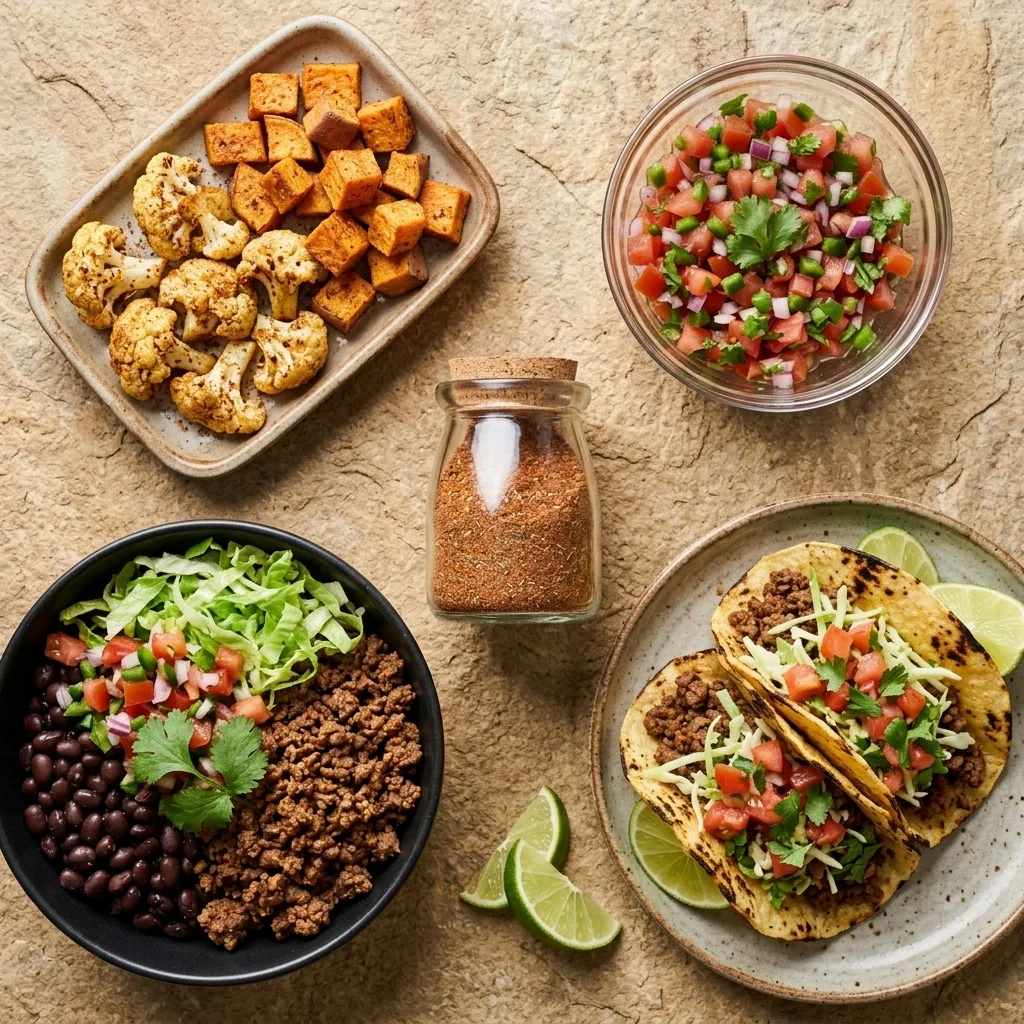
Ground beef tacos: Season each 450 grams certified beef with 2 tablespoons blend and one-third cup water.
Bean taco bowls: Season 3 cups cooked beans, then serve over rice with tomato, cabbage, and lime.
Roasted vegetables: Toss 6 cups chopped vegetables with 2 tablespoons blend and 2 tablespoons oil.
Eggs and breakfast potatoes: Add a pinch to eggs or 2 teaspoons per 450 grams potatoes.
Homemade salsa: Fresh tomato acidity cools a warmly spiced filling.
Taco Seasoning FAQs
How much taco seasoning should I use per pound of filling?
Use 2 tablespoons taco seasoning for 450 grams or 1 pound of ground meat, or for 3 cups cooked beans. Brown or warm the filling first, stir in the blend for 30 seconds, then add one-third cup water or certified stock. Simmer for 3 to 5 minutes. For a lightly seasoned filling, start with 1 and one-half tablespoons and adjust only after the liquid reduces.
Is ancho chile powder the same as chili powder?
No. Pure ancho chile powder contains dried, ground ancho peppers, while products labeled chili powder often combine ground chile with cumin, garlic, oregano, salt, or other seasonings. Ingredient labels vary by country and brand. This recipe uses pure ancho so every supporting spice can be measured independently. If you substitute a chili powder blend, reduce overlapping ingredients and expect the result to change.
Can I leave out cumin or replace it?
Yes, you can omit cumin, but the blend will lose much of its warm, earthy center. Increase ground coriander by 1 teaspoon for citrus-like warmth and add another one-half teaspoon oregano. Caraway is sharper and is not a direct substitute. Also inspect any product labeled chili powder because it may already contain cumin, which matters when avoiding cumin for an allergy or strong preference.
Why does homemade taco seasoning taste bitter?
Bitterness usually comes from scorching the dry spices, using stale ground chile, or adding too much smoky or hot pepper. Bloom the measured blend for only 30 seconds in a pan with a light coating of cooking juices or oil, then add liquid. If the filling already tastes bitter, mix in unseasoned beans, meat, tofu, or tomato. Fresh lime can improve balance, but it cannot reverse badly burned spices.
How long does homemade taco seasoning stay fresh?
For the strongest aroma, use this taco seasoning within 6 months and store it in a tightly closed jar in a cool, dark, dry cabinet. Ground spices may remain usable longer, but their flavor gradually fades. Shake the jar before measuring because dense salt can settle. Discard the contents if moisture, mold, insects, or an unusual odor appears; never shake seasoning over a steaming pan.
Build Flavor in Thirty Seconds
The jar saves measuring time, but the short pan step decides how the seasoning tastes. Give taco seasoning 30 moving seconds in the browned filling, then add the measured liquid before the garlic and chile can scorch. That brief bloom releases aroma while the following simmer spreads salt and spices through every bite.
Label the jar with both its date and its 2-tablespoon ratio. You will not have to remember whether this blend was meant for one meal or several, and you can repeat the same starting point with meat, beans, tofu, or vegetables.
The detail I would pay the most attention to next time is the 30 second bloom rather than treating it as optional, because the batches where I rushed that step and went straight to adding liquid had a noticeably less developed aroma than the ones where the spices had a brief moment of contact with the hot pan.
If you loved this recipe, save it to your taco recipes Pinterest board so you can find it easily later!
Taco Seasoning with Ancho Chile and Coriander
Ingredients
Equipment
Method
- Sift the ancho, cumin, paprika, garlic powder, onion powder, coriander, black pepper, and cayenne through a fine-mesh sieve into a wide bowl. Discard any hard or discolored pieces.
- Scatter the crushed oregano and salt over the sifted powders. Whisk for 45 seconds, scraping the edges twice, until no pale or dark streaks remain.
- Transfer the blend into a clean, completely dry glass jar. Seal it and label with the date, ingredients, and usage ratio (2 tablespoons per 450 g filling).
- To use: Brown or warm the filling first, then stir in 2 tablespoons of the blend over medium heat for 30 seconds. Add liquid sooner if the pan dries or the garlic smells sharp.
- Add ⅓ cup water or stock and simmer for 3–5 minutes. Taste and adjust salt, cayenne, or lime before serving.
Notes
- Store in an airtight jar in a cool, dry, dark cabinet for up to 6 months. Always use a dry spoon and never measure over a steaming pan — moisture causes clumping.
- Use 2 tablespoons per 450 g (1 lb) ground meat or 3 cups cooked beans. For roasted vegetables, mix 2 tablespoons blend with 2 tablespoons oil and toss with about 6 cups chopped vegetables before roasting.
- For a milder blend, replace the cayenne with sweet paprika. For a salt-free version, omit the salt and season the finished filling instead.