How to Make Hard Boiled Eggs That Peel Easily Every Time
Most hard boiled eggs go wrong in one of two ways. The yolk turns gray and chalky, or the shell rips off half the white. I wanted neither, so I spent three weeks boiling 84 eggs across seven test batches, changing one detail each time: the starting water, the timer, the pot size, the length of the ice bath.
This is the version that worked. The eggs go into boiling water straight from the refrigerator, simmer for exactly 11 minutes, then chill in ice water for 10. The yolks come out bright yellow and fully set, and the shells slide off in big pieces when you peel them under running water. I tested this because my family eats about two dozen eggs a week, and I was tired of serving mangled ones.
Below you will find the exact steps, the doneness cues to watch for, fixes for common problems, and a storage plan for the whole dozen.
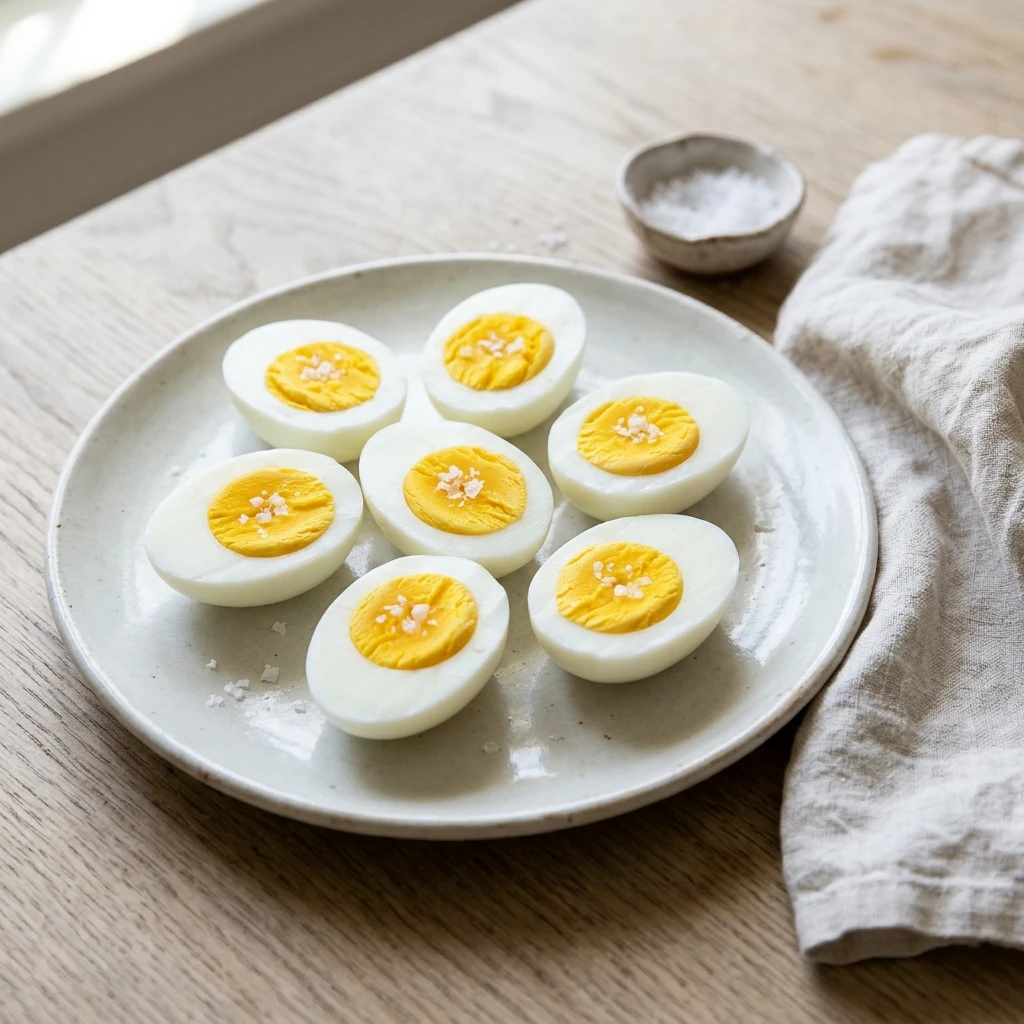
Table of Contents
Why You Will Love These Hard Boiled Eggs
- You need a pot, a spoon, and a bowl of ice. No gadgets, no vinegar, no baking soda.
- The yolks come out bright yellow and tender, with no gray ring and no chalky edge.
- Shells release cleanly, so peeling takes under a minute per egg.
- One dozen hard boiled eggs covers a week of snacks, packed lunches, and egg salad.
Recipe Snapshot
- Prep Time: 5 minutes
- Cook Time: 20 minutes (about 9 to boil the water, 11 to cook)
- Total Time: 35 minutes, including the ice bath
- Servings: 6 (2 eggs each)
- Difficulty: Easy
- Calories per Serving: About 155
- Key Ingredient or Tool: The ice bath
- Best For: Meal prep, snacks, and egg salad
Nutrition Information
Calories per Serving: About 155
Protein: 12.6 g
Carbs: 1.1 g
Fat: 10.6 g
Fiber: 0 g
Sugar: 1.1 g
Sodium: 124 mg
Serving Size: About 2 large eggs (100 g)
Servings per Recipe: 6
Two hard boiled eggs deliver 12.6 grams of protein and barely a gram of carbs. The sodium comes from the eggs, since no salt goes into the water. Most of the fat sits in the yolk.
Nutrition values are approximate and calculated per serving using standard ingredient amounts. Values may vary based on brands used and portion sizes.
Ingredients
For the eggs
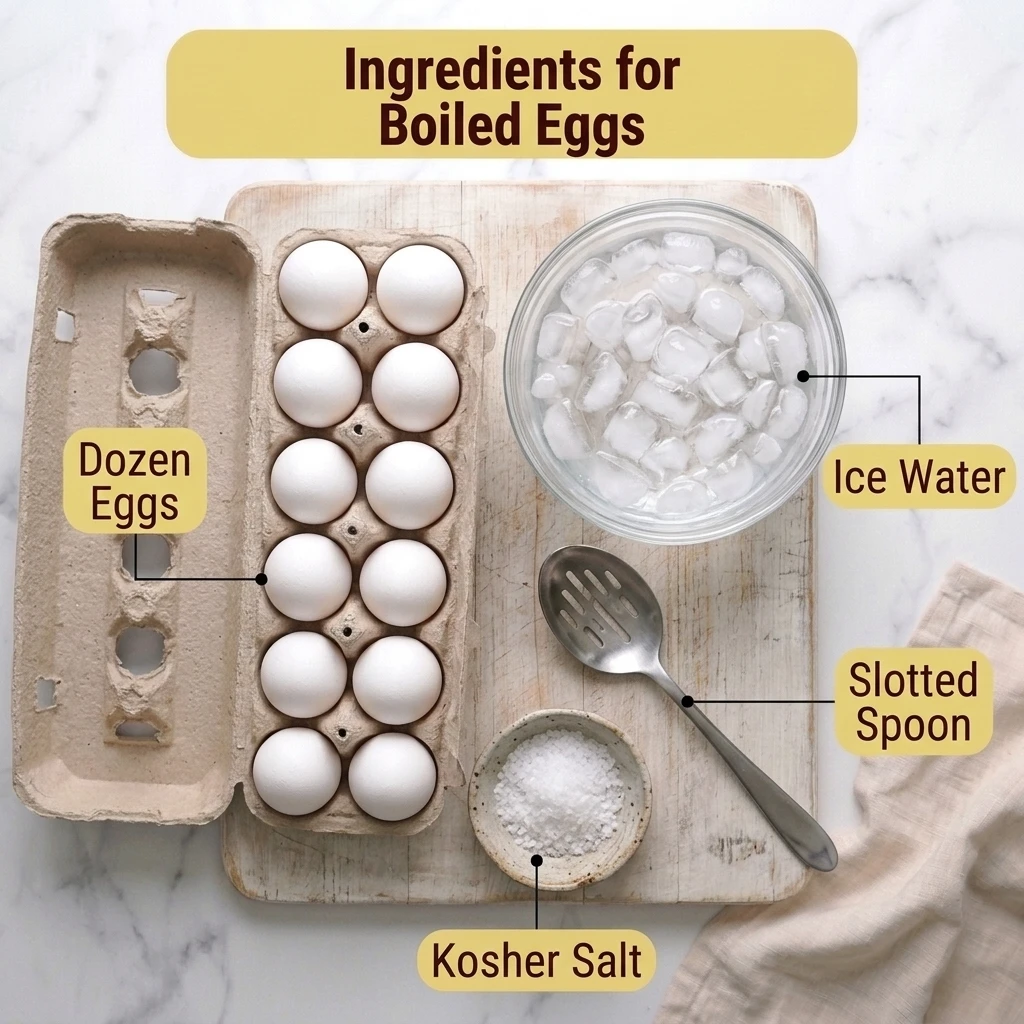
- 12 large eggs, straight from the refrigerator
- Cold water, enough to fill your pot about 3 inches deep
- 1/2 teaspoon Diamond Crystal kosher salt, for serving (optional)
For the ice bath
- 6 cups ice
- 4 cups cold water
Substitutions: Medium eggs need 10 minutes and extra large eggs need 12. With no ice, use the coldest tap water and swap it every 2 minutes for 10 minutes. Fine sea salt works too, but use half as much.
Three ingredients decide the result. The eggs, because my timing fits large eggs at refrigerator temperature, about 38°F. The ice, because it stops the cooking at once, which protects the yolk color. The salt, because Diamond Crystal’s light flakes cling to a smooth egg and season it evenly.
Pro Tip: Eggs that sat in your refrigerator for 7 to 10 days peel more cleanly than ones bought or collected the same day, because very fresh whites grip the shell membrane. If you keep hens, set eggs aside for a week.
Equipment Needed
- 4-quart pot or larger: Choose one wide enough for 12 eggs in a single layer, so they do not bump and crack.
- Slotted spoon or spider strainer: It lifts eggs out without splashing boiling water.
- Large mixing bowl: A 4-quart bowl holds the ice, water, and a dozen eggs.
- Timer: Use your phone. Guessing 11 minutes is how yolks turn gray.
- Airtight container: A flat one keeps cooked eggs from rolling.
Preparation
- Check the eggs and set aside any with cracks, since they can leak white into the water.
- Fill the pot with cold water about 3 inches deep and set it over high heat. No oven is needed.
- Fill the bowl with 6 cups of ice and 4 cups of cold water, and set it beside the stove.
- Put the slotted spoon beside the pot and open the timer on your phone.
- Measure the salt if you plan to season the peeled eggs.
Step-by-Step Instructions
- Bring the water to a boil over high heat, which takes 8 to 10 minutes. Large bubbles should break across the whole surface and keep going when you stir.
- Lower the eggs in one at a time with the slotted spoon. Chef’s Note: Let each egg touch the bottom of the pot before you let go, because a drop from above cracks most shells. The eggs should sit in one layer under about 1 inch of water.
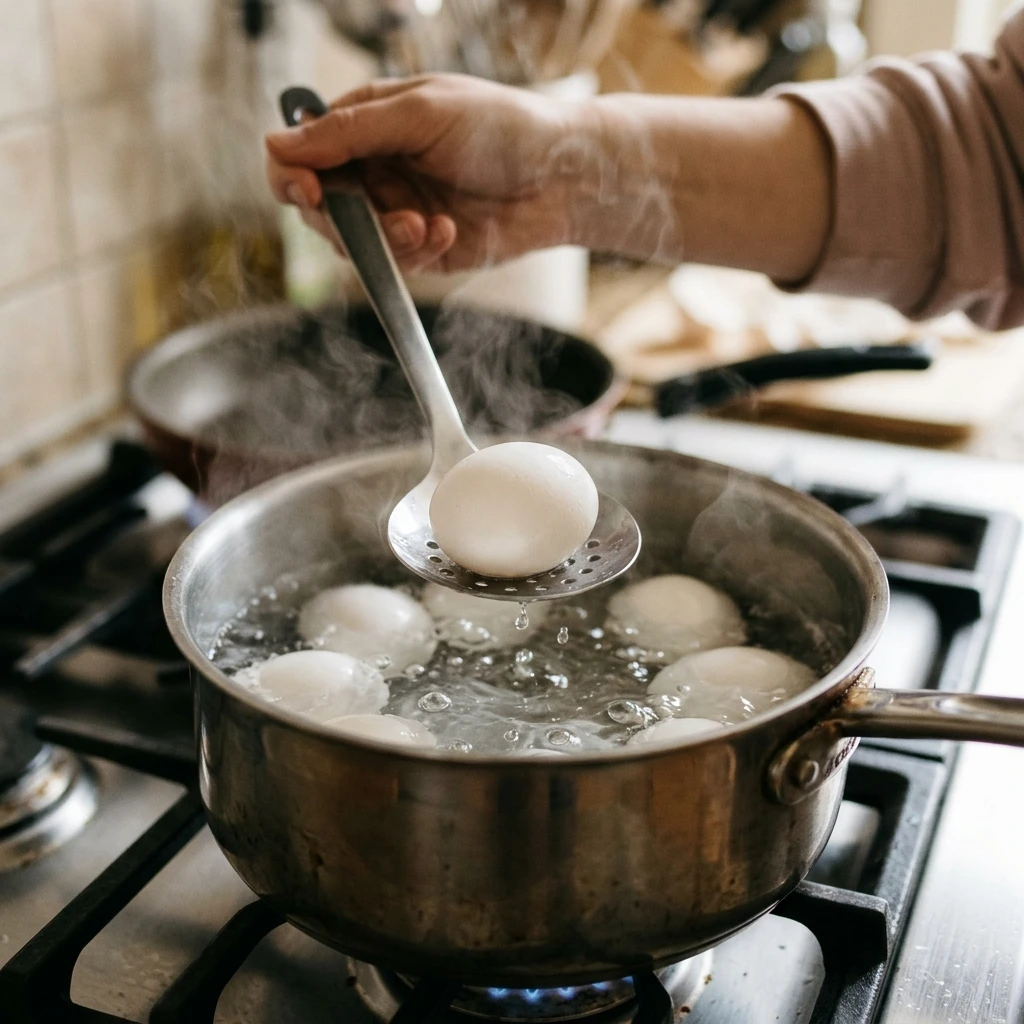
- Turn the heat to medium-high and start a timer for 11 minutes. Chef’s Note: Aim for a lively simmer, since a hard boil bangs the eggs together and splits the shells. Small, steady bubbles should rise from the bottom of the pot.
- When the timer rings, lift the eggs out and slide them straight into the ice bath. Chef’s Note: Move at exactly 11 minutes, because each extra minute pushes the yolk toward chalky. The ice should start to melt around the eggs.
- Leave the eggs in the ice bath for 10 minutes, adding a handful of ice if it melts completely. The shell should feel cool, not warm, in your palm.
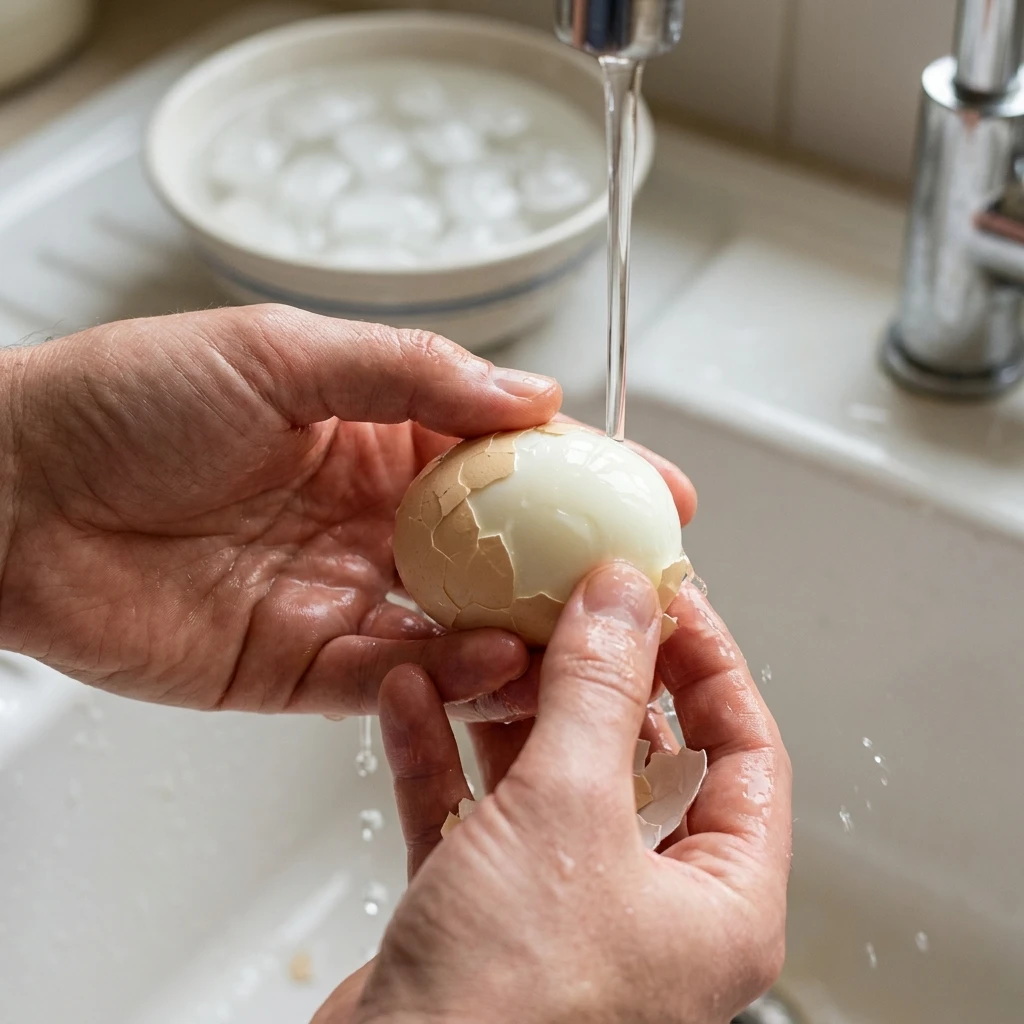
- Tap each egg firmly on the counter, then roll it under your palm. The shell should look covered in fine, crazed cracks.
- Peel from the wide end, where the air pocket sits, under a thin stream of cool running water. Chef’s Note: Water slips between the membrane and the white, so the shell lifts off in large pieces. The white should look smooth and glossy with no pits.
- Cut your first egg in half to test the batch. Chef’s Note: If the center looks wet, add 1 minute next time, and if you see a green ring, take off 1 minute. A perfect yolk is bright yellow and fully set from edge to center.
Expert Tips and Tricks
- I once took a phone call mid-boil and cooked a batch for 19 minutes. The yolks turned chalky with a gray green rim, and the kitchen smelled like sulfur for an hour. Now I start the timer the second the eggs go in.
- Cook a full dozen of hard boiled eggs on Sunday evening. They keep in the shell all week, so breakfast and lunch are ready without the stove.
- Leave the shells on until you are ready to eat. Unpeeled eggs stayed firm for the full 7 days in my tests, while peeled ones turned slightly slick by day 4.
- Cook the eggs in a single layer. When I stacked them two deep in a smaller pot, 3 of 12 cracked.
- Light the burner before you do anything else, then build the ice bath while the water heats. That overlap saves about 5 minutes.
Common Mistakes and Troubleshooting
Green gray ring around the yolk: Overcooked hard boiled eggs get this ring, because iron in the yolk reacts with sulfur in the white. Stick to 11 minutes and use the ice bath. Mash affected eggs into egg salad.
Cracked shells: Eggs crack when they bang together or drop onto hot metal. Lower them gently and keep the simmer calm. If one splits anyway, finish the batch and use the ragged ones for deviled eggs.
Shell that takes chunks of white with it: Very fresh eggs or a skipped ice bath cause this. Chill for the full 10 minutes and peel under running water. Torn eggs still taste great in egg salad.
Soft or wet yolk center: The eggs were too large, the heat too low, or the pot too crowded. Put the unpeeled eggs back in simmering water for 2 minutes, then chill them for 5 minutes.
Rubbery whites: A hard rolling boil toughens the white. Keep a steady simmer and watch the timer. Chop tough eggs into a salad.
Storage Instructions
Room Temperature: Not recommended. Cooked eggs should sit out no longer than 2 hours, or 1 hour above 90°F.
Refrigerator: Keep unpeeled hard boiled eggs in an airtight container, on a shelf rather than the door, at 40°F or below for up to 7 days. Peeled eggs go in a container with a damp paper towel and are best within 3 days.
Freezer: Do not freeze them. The USDA lists hard-cooked eggs as a do not freeze food, because the whites turn tough and watery.
Reheating: Most people eat them cold. To take the chill off peeled eggs, set them in hot tap water, about 120°F, for 3 minutes. Never microwave a whole egg, because trapped steam can make it burst.
Make-Ahead Notes: Boil up to 7 days ahead with the shells on, and peel on the day you need them.
I keep mine in a flat glass container with a folded paper towel underneath. The towel catches condensation and stops the shells from sliding. Even on day 7 they tasted fresh.
Storage Trick: Draw a small pencil X on each cooked egg so they never get mixed up with raw ones.
Variations and Substitutions
Spicy: Sprinkle the halves with red pepper flakes and a squeeze of lime, or toss them with a spoonful of hot sauce.
Mild or Kid-Friendly: Cut the eggs into wedges with an egg slicer and add only a pinch of salt. Small hands hold wedges easily, and the plain flavor suits picky eaters.
Vegetarian and Gluten-Free: Hard boiled eggs are vegetarian and gluten-free as written. For a dairy-free serving, drizzle them with olive oil and lemon zest instead of butter or cheese.
Jammy Yolk: Cook for 7 minutes instead of 11, then chill for 10. The yolk turns thick and golden with a soft center, so peel with extra care.
Steamed: Steam the eggs over 1 inch of boiling water in a covered pot for 12 minutes, then chill for 10. Less water means the pot heats faster.
What to Serve With This
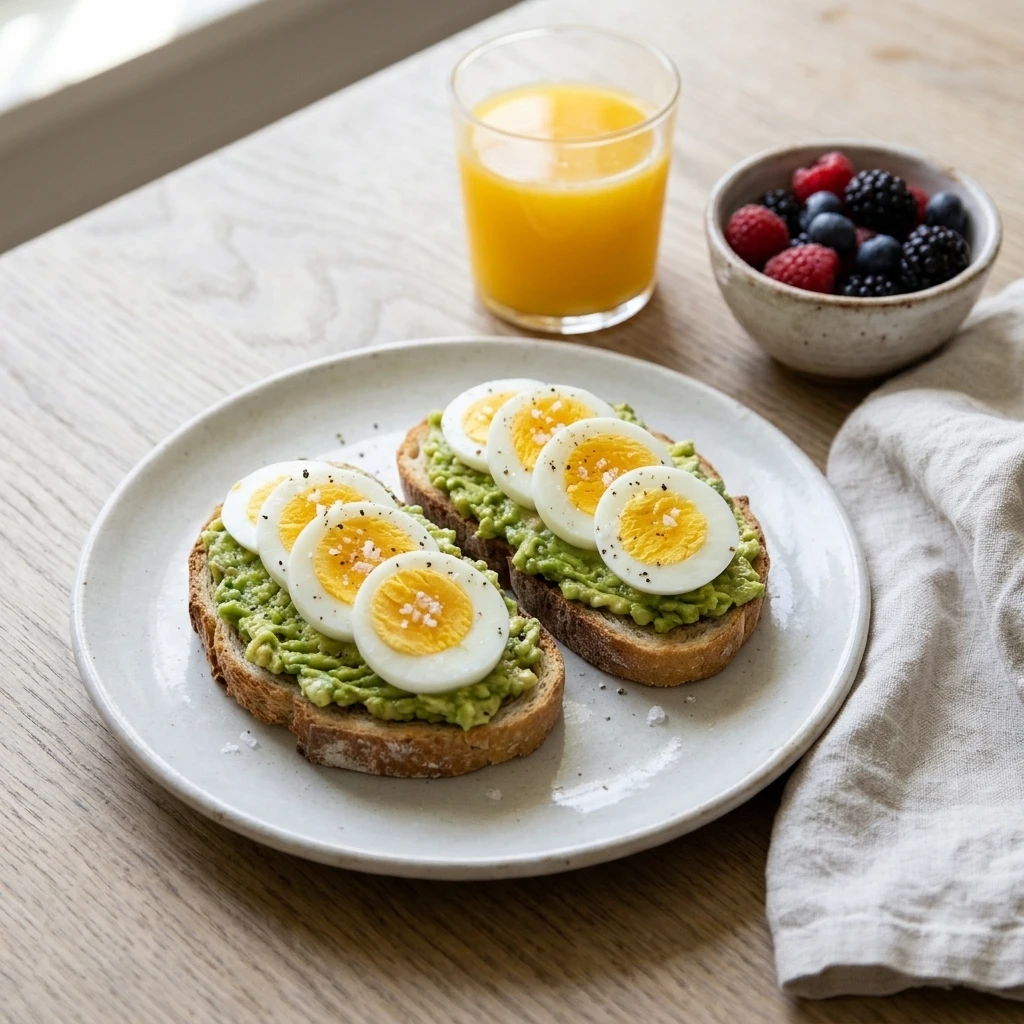
Avocado toast: Slice hard boiled eggs over mashed avocado on toasted sourdough with a pinch of kosher salt. The creamy avocado balances the firm yolk.
Creamy macaroni salad: Chop 2 or 3 eggs into creamy macaroni salad, and a side dish turns into a meal.
Raw vegetables: Cherry tomatoes, cucumber rounds, and hummus turn two eggs into a light lunch plate.
Fruit and oats: Pair two eggs with berries and oats, or browse our healthy breakfast recipes for more ideas.
Drinks: Iced green tea or fresh orange juice keeps the plate light.
Frequently Asked Questions
can you peel hard boiled eggs ahead of time and store them
Yes, but peel them no more than 3 days before you plan to eat them. Peeled hard boiled eggs lose the shell’s protection, so they dry out and pick up refrigerator smells faster. Store them in an airtight container lined with a damp paper towel at 40°F or below. For school lunches, I peel the night before and pack them cold.
why do my hard boiled eggs smell like sulfur
Overcooking is the usual cause. When eggs cook too long, the white releases hydrogen sulfide, which gives off that sulfur smell and can leave a gray green ring on the yolk. Stay at 11 minutes and chill the eggs right away in ice water. A faint smell right after cooking is normal. A strong, sour smell from a cold egg is different, and that egg belongs in the trash.
do brown eggs or farm fresh eggs take longer to hard boil than white store eggs
No. Shell color comes from the hen breed and does not change the cooking time. Size and starting temperature do. My hard boiled eggs recipe assumes large eggs straight from a refrigerator at 38°F. Farm fresh eggs cook in the same 11 minutes, though they peel less cleanly than eggs that have aged in the refrigerator. If your eggs start at room temperature, check one at 10 minutes.
how do you know when hard boiled eggs are done without cutting them open
Spin one on the counter. A fully cooked egg spins fast and steady because the inside is solid, while a raw or soft egg wobbles and slows down as the liquid sloshes around. Touch it lightly to stop it, then let go. A cooked egg stays still, while a soft one creeps forward again. Run this test after the ice bath, when the eggs are cool enough to handle.
can you eat hard boiled eggs that were left out overnight
No, throw them out. Cooked eggs should not sit at room temperature longer than 2 hours, or 1 hour above 90°F, because boiling washes away the shell’s protective coating and bacteria can get in. Eggs left out overnight are far past that limit even if they look and smell fine. That includes eggs left on a party buffet. Refrigerate hard boiled eggs within 2 hours of cooking or serving.
Final Thoughts on Hard Boiled Eggs
A timer, an ice bath, and a calm simmer do almost all the work here. After a couple of rounds, a dozen eggs in the refrigerator becomes the easiest prep of your week.
One last thing: write down the time that works in your own kitchen. Stoves and pots vary, so my 11 minutes may land at 10 or 12 for you. My nephew, who used to push away any egg with a green ring, ate four at a birthday brunch last month.
If you loved this recipe, save it to your meal prep Pinterest board so you can find it easily later!
How to Make Hard Boiled Eggs That Peel Easily Every Time
Ingredients
Equipment
Method
- Bring the water to a boil over high heat, 8 to 10 minutes, until large bubbles break across the whole surface and keep going when you stir.
- Lower the eggs in one at a time with the slotted spoon, letting each touch the bottom before you let go. The eggs should sit in one layer under about 1 inch of water.
- Turn the heat to medium-high and start a timer for 11 minutes. Keep a lively simmer with small, steady bubbles rising from the bottom, not a hard boil.
- When the timer rings, lift the eggs out and slide them straight into the ice bath. The ice should start to melt around the eggs.
- Leave the eggs in the ice bath for 10 minutes, adding a handful of ice if it melts completely, until the shells feel cool in your palm.
- Tap each egg firmly on the counter, then roll it under your palm until the shell is covered in fine cracks.
- Peel from the wide end under a thin stream of cool running water until the white looks smooth and glossy with no pits.
- Cut one egg in half to test the batch. The yolk should be bright yellow and fully set from edge to center. Add 1 minute next time if the center looks wet, and take off 1 minute if you see a green ring.
Notes
Eggs that sat in the refrigerator for 7 to 10 days peel more cleanly than very fresh eggs.
Storage: Refrigerator, unpeeled, up to 7 days at 40°F or below. Freezer, not recommended because the whites turn tough and watery.