Easy Roasted Vegetables With Crisp Edges and Tender Centers
Most pans of roasted vegetables fail in the first five minutes, before the oven door even closes. The pieces are damp, crowded, and cut in every size from pea to golf ball. They steam instead of browning, and they come out pale and limp.
I tested this version seven times over three weeks because my weeknight pans kept coming out soggy. I changed one thing per round: pan size, oven rack, cut size, oil amount, and the moment the lemon goes on. Round seven delivered dark, sweet carrot edges, broccoli tips as crisp as little chips, and zucchini that held its shape.
The trick here is splitting the vegetables across two sheet pans by cooking time, so nothing turns to mush while something else catches up. It needs only 3 tablespoons of olive oil for about 3 pounds of produce, plus plain pantry seasoning. Twenty minutes of prep gets both pans into the oven.
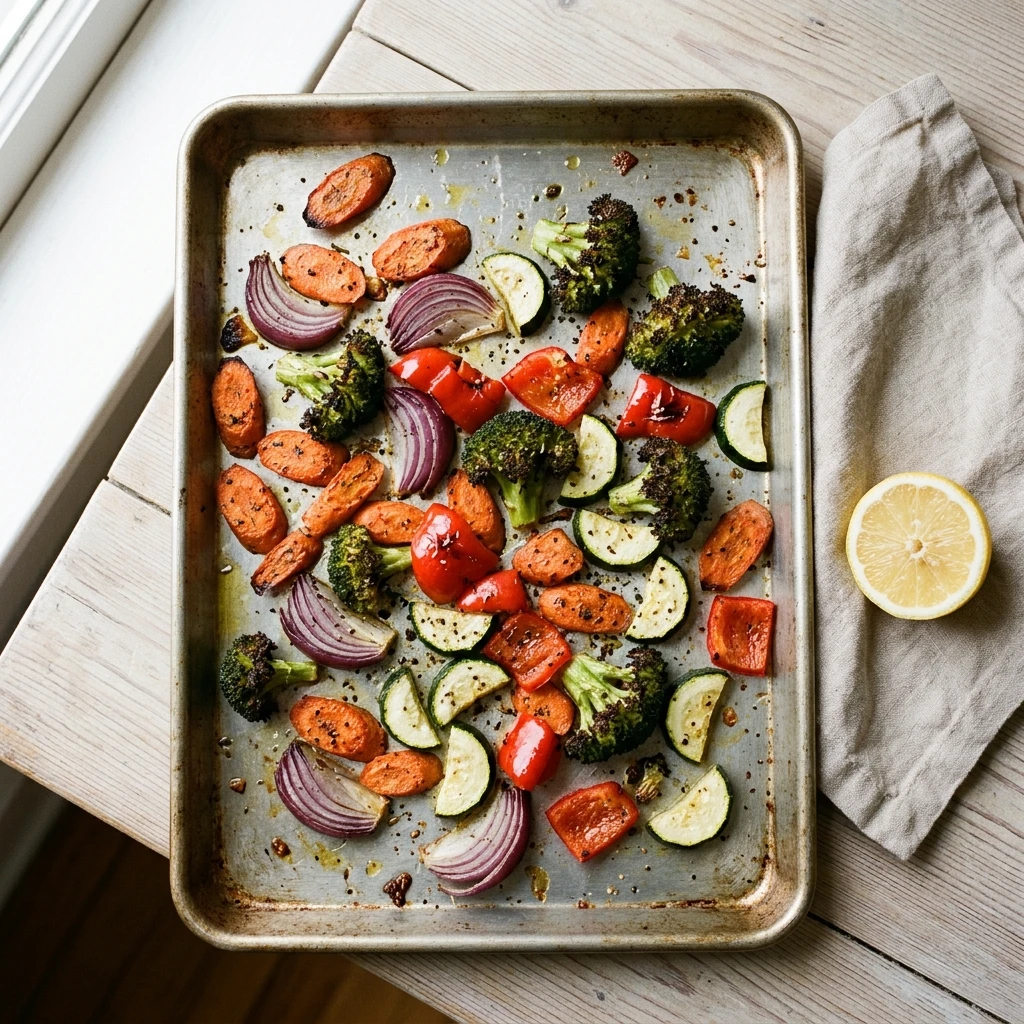
Table of Contents
Why You Will Love These Roasted Vegetables
- Two pans and one oven get you from first cut to the table in 55 minutes, mostly hands off.
- The edges caramelize while the centers stay tender, which is the texture most home attempts miss.
- Grocery store basics do the job, so swap in whatever is already in your crisper drawer.
- Leftover roasted vegetables turn into grain bowls, omelets, and pasta toppings for the next few nights.
- My nephew picks broccoli out of everything. He cleared the broccoli off the first pan before I could plate it.
Recipe Snapshot
- Prep Time: 20 minutes
- Cook Time: 35 minutes
- Total Time: 55 minutes
- Servings: 6
- Difficulty: Easy
- Calories per serving: About 141
- Key Ingredient or Tool: Two 18×13-inch rimmed sheet pans
- Best For: Weeknight dinners, meal prep, and potluck tables
Nutrition Information
- Calories per Serving: About 141
- Protein: 4 g
- Carbs: 17 g
- Fat: 7 g
- Fiber: 5 g
- Sugar: 8 g
- Sodium: 299 mg
- Serving Size: About 1 1/4 cups
- Servings per Recipe: 6
A serving delivers 5 grams of fiber for 141 calories, and nearly all the fat is olive oil. Protein is modest, so pair this with fish, chicken, eggs, or beans.
Nutrition values are approximate and calculated per serving using standard ingredient amounts. Values may vary based on brands used and portion sizes.
Ingredients
Vegetables
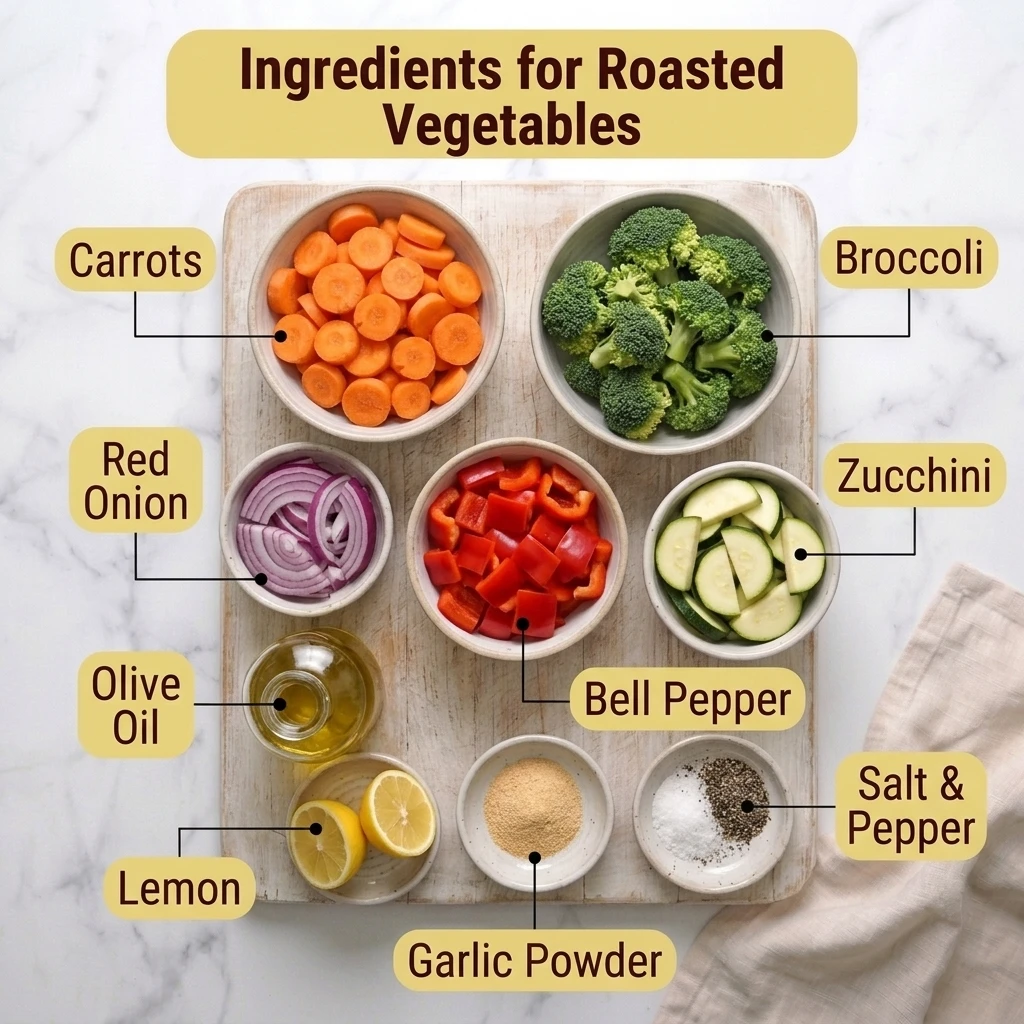
- 12 ounces carrots, peeled and sliced on the diagonal 1/2 inch thick
- 8 ounces red onion (1 large), cut into 8 wedges through the root end
- 12 ounces broccoli crowns, cut into 1 1/2-inch florets
- 8 ounces red bell pepper (1 large), cut into 1 1/2-inch pieces
- 12 ounces zucchini (about 2 medium), sliced into 1/2-inch half-moons
Seasoning and Finish
- 3 tablespoons olive oil
- 1 1/4 teaspoons Diamond Crystal kosher salt
- 1/2 teaspoon ground black pepper
- 1 teaspoon garlic powder
- 1 tablespoon fresh lemon juice (from about 1/2 lemon)
All vegetable weights are after peeling, trimming, and seeding.
Easy Swaps
- Carrots: parsnips or peeled sweet potato, cut the same size.
- Broccoli: cauliflower florets.
- Red bell pepper: orange or yellow bell pepper.
- Zucchini: yellow squash, cut the same way.
- Red onion: yellow onion.
- Olive oil: avocado oil in the same amount.
- Lemon juice: lime juice.
Salt type matters most. Diamond Crystal is light and flaky, so 1 1/4 teaspoons is right here. Morton kosher salt is denser, so use about 3/4 teaspoon, and just over 1/2 teaspoon of table salt.
Oil comes next. Three tablespoons coats everything without pooling, and more makes the vegetables greasy and soft.
Equipment Needed
- Two 18×13-inch rimmed sheet pans: Heavy aluminum pans resist warping at 425°F, so vegetables stay put.
- Oven thermometer: Mine runs 20 degrees cool, which explained my pale vegetables.
- Salad spinner or clean kitchen towel: Either removes the surface water that causes steaming.
- Two large mixing bowls: Tossing in a bowl coats every piece evenly, unlike drizzling on the pan.
- Thin metal spatula: The thin edge slides under crusty pieces without tearing off the browning.
Preparation
- Set the oven racks in the upper third and lower third, then heat the oven to 425°F.
- Slide both empty sheet pans into the oven while it heats, so the vegetables sizzle on contact.
- Wash the vegetables, then dry them completely.
- Cut the vegetables to the sizes listed. Keep the carrots and onion in one pile and the broccoli, pepper, and zucchini in another.
- Stir the salt, pepper, and garlic powder together in a small bowl.
- Measure the oil, squeeze the lemon, and set out two large bowls.
Pro Tip: Let the dried vegetables sit on the counter for 10 minutes before oiling. Any water left on the surface turns to steam in the oven, and steam keeps the edges from browning.
Step-by-Step Instructions
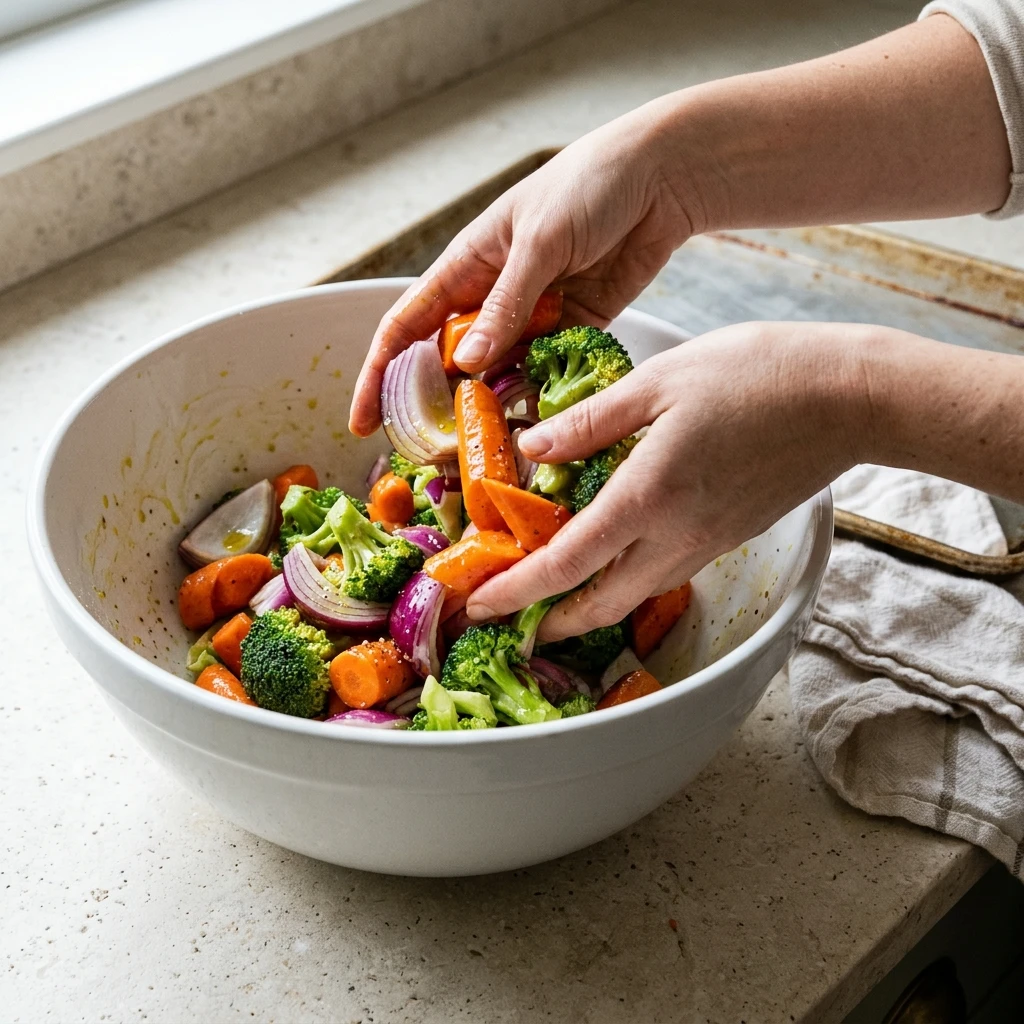
- Toss the carrots and onion in a large bowl with 1 1/2 tablespoons of the oil and half of the seasoning. Chef’s Note: Use your hands, because they coat the cut sides better than a spoon. Every piece should look glossy, with no oil pooled in the bowl.
- Toss the broccoli, bell pepper, and zucchini in the second bowl with the remaining 1 1/2 tablespoons oil and the remaining seasoning. The broccoli tips should look lightly slicked, not wet.
- Using oven mitts, pull out the hot pans and spread the carrots and onion on one in a single layer, cut sides down. Chef’s Note: No sizzle means the pan was too cool, so slide it back in for 3 minutes. The pieces should sit a finger’s width apart.
- Spread the broccoli, pepper, and zucchini on the second pan, flat sides down, then set the carrot pan on the lower rack and this pan on the upper rack. Nothing should touch.
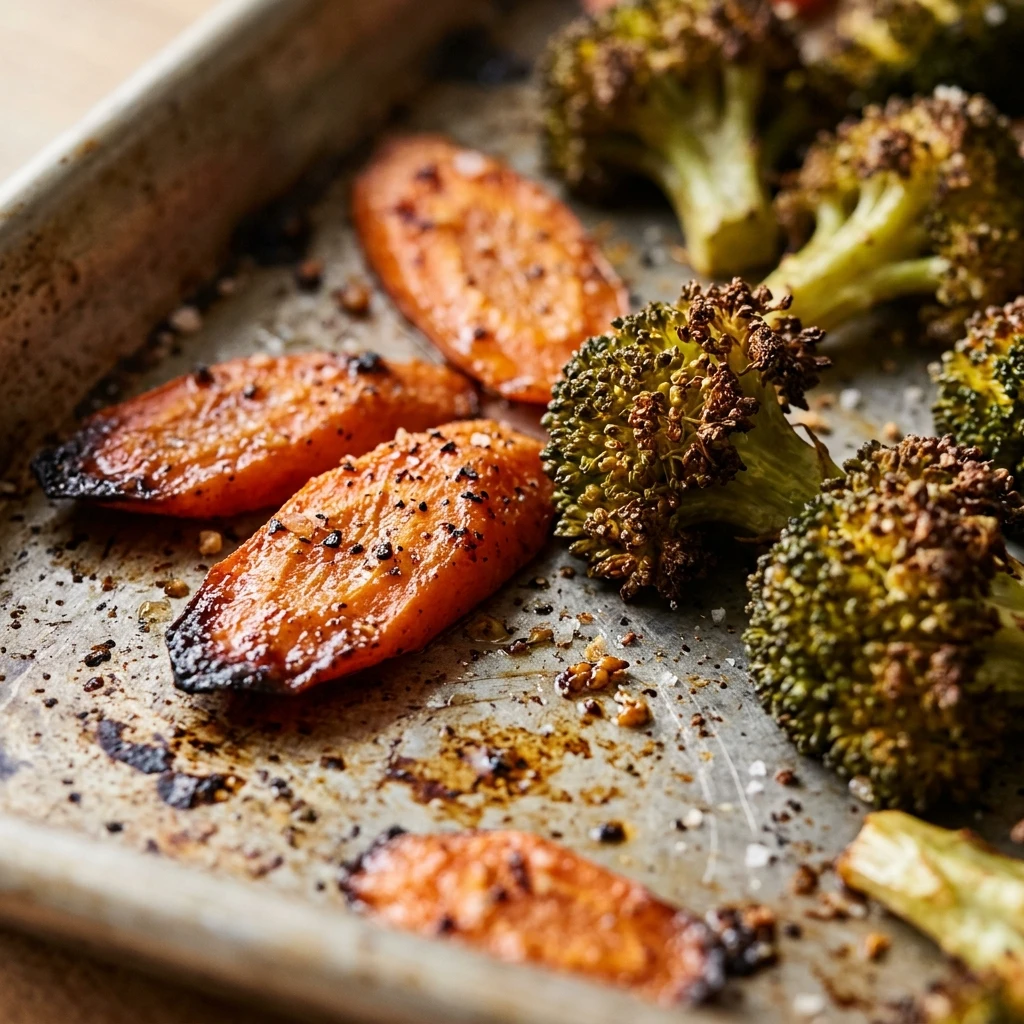
- Roast for 15 minutes, then pull both pans, flip the pieces with a thin metal spatula, and swap the pans between racks. Chef’s Note: Flip once only, because stirring breaks the contact that creates browning. The undersides should be browned in spots, and the broccoli tips should be turning dark.
- Return both pans and roast the broccoli pan for 7 to 10 more minutes. Take it out when the broccoli tips are deep brown and crisp, the zucchini edges are golden, and a fork slides into the pepper with light resistance.
- Keep the carrot pan in for 15 to 20 more minutes, for 30 to 35 minutes in all. Chef’s Note: Check every 3 minutes near the end, since sugar goes from caramelized to burnt fast. The carrots are done when their edges are dark and sticky and a fork slides through the thickest slice.
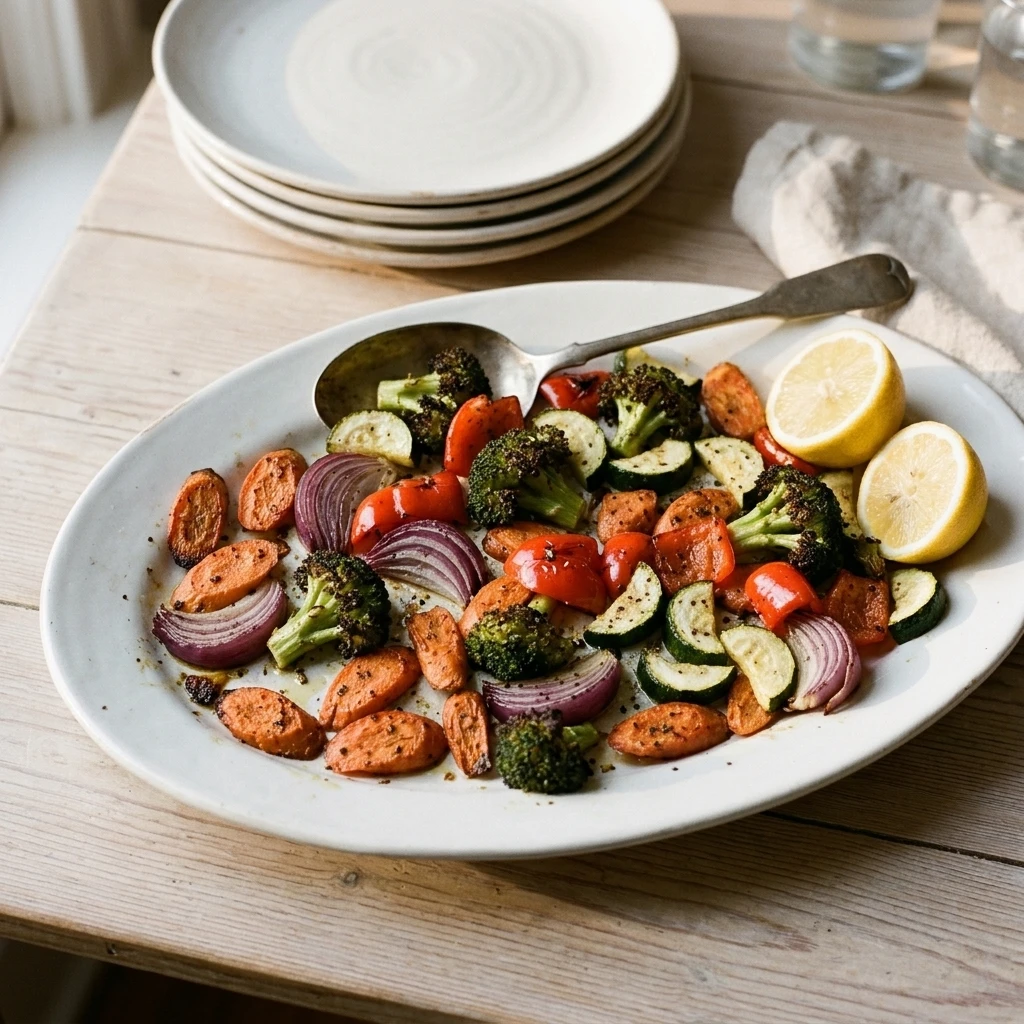
- Combine both pans on a large platter, drizzle with the lemon juice, and toss gently once. The pieces should keep their edges, and no liquid should pool on the platter.
Expert Tips and Tricks
- My worst mistake was salting the vegetables and then leaving them for 30 minutes during a phone call. Salt pulled water out of the zucchini, and the whole pan steamed. Season and roast right away.
- Cut the onion, pepper, carrots, and broccoli up to 2 days ahead and keep them in airtight containers in the refrigerator. Slice the zucchini the day you cook.
- Roasted vegetables keep 3 to 4 days in the refrigerator. Squeeze lemon only on the portion you are eating, because acid softens the edges within an hour.
- Cut broccoli florets so each one has a flat side. Flat sides touch the pan and brown, while round sides only warm up.
- For the crispiest edges, move the broccoli pan to the lowest rack for the last 5 minutes. Heat from the oven floor browns the undersides hardest.
Common Mistakes and Troubleshooting
Pale, soggy roasted vegetables. They steamed because the pan was crowded or the oven was cool. Use two pans and an oven thermometer. To rescue a pan, spread the pieces out and roast 8 more minutes at 450°F.
Burnt outside, hard inside. Carrot slices cut too thick or too uneven finish at different times. Cut to 1/2 inch, and if it happens, cover the pan loosely with foil and roast 5 minutes more.
Mushy zucchini. Thin slices and a long roast turn zucchini to paste. Cut it 1/2 inch thick, give it the shorter pan, and pull it the moment the edges turn golden.
Bland vegetables. Under-salting is the usual cause. Measure the salt, and if the finished pan tastes flat, add a squeeze of lemon and a small pinch of salt on the platter.
Bitter garlic flavor. Garlic powder scorches when it sits dry on top. Toss it in the oil first so it clings, and if you add fresh garlic, stir it in for the last 5 minutes.
Storage Instructions
Room Temperature: Up to 2 hours, or 1 hour if your kitchen is above 90°F.
Refrigerator: 3 to 4 days in an airtight glass container. Let the roasted vegetables cool on the pan for 20 minutes first so steam does not fog the lid.
Freezer: Up to 3 months in a freezer-safe zip bag with the air pressed out.
Reheating: Spread the roasted vegetables on a sheet pan and heat at 425°F for 8 to 10 minutes, until the edges sizzle and the center reaches 165°F. From frozen, allow 12 to 15 minutes.
Make-Ahead Notes: Roast up to 3 days ahead and reheat just before serving. Add the lemon juice at the table.
Storage Trick: Lay a folded paper towel on top of the vegetables before you close the lid. It soaks up condensation, so the edges stay firmer on day three.
I freeze single portions on a tray first, then bag them. They never clump, so I can pull out one serving for an omelet.
Variations and Substitutions
- Spicy: Add 1/2 teaspoon red pepper flakes and 1 teaspoon smoked paprika to the seasoning.
- Mild or Kid-Friendly: Cut every piece smaller, skip the black pepper, and toss the carrots with 1 teaspoon maple syrup for the last 10 minutes.
- Vegetarian: This recipe is already vegetarian and vegan. For more protein, roast a drained, rinsed, and dried 15 ounce can of chickpeas on a small third pan for 20 minutes.
- Gluten-Free: It is naturally gluten free. Serve it over rice or quinoa to keep the whole plate that way.
- Root Vegetable Pan: Replace the zucchini and pepper with 1 pound of sweet potato in 3/4-inch cubes. Roast on the carrot pan for 35 to 40 minutes.
What to Serve With Roasted Vegetables
- Sauce: A spoonful of chimichurri sauce turns a plain pan into a vegetable bowl.
- Fish: Roasted vegetables and salmon share a sheet pan schedule, since the fish needs about the same oven temperature.
- Chicken: teriyaki chicken gives you a sweet, salty main that the lemony vegetables balance.
- Grains: Warm rice or quinoa soaks up the juices and makes the pan a full meal.
- Drinks: Sparkling water with lemon and mint keeps the plate light.
Frequently Asked Questions
can you make roasted vegetables ahead of time
Yes. Roast them up to 3 days ahead and refrigerate them in an airtight container. Reheat on a sheet pan at 425°F for 8 to 10 minutes so the edges crisp again, and skip the microwave, which makes them limp. You can also cut the vegetables 2 days ahead, but slice the zucchini the day you roast, because it weeps water in the refrigerator and turns soft.
why are my roasted vegetables soggy
Soggy roasted vegetables are almost always steamed vegetables. The pan was crowded, the oven ran below 400°F, or the pieces were wet going in. Use two pans so nothing touches, check your oven with a thermometer, and dry every piece before oiling. I fixed my own pans the week I stopped piling everything onto one sheet, and the difference showed in the very first batch.
what can i use instead of olive oil for roasting vegetables
Avocado oil, canola oil, or grapeseed oil all work in the same 3 tablespoon amount, and they handle 425°F without turning bitter. I skip butter at this temperature because the milk solids darken before the vegetables brown. Extra virgin olive oil also works fine here, and its flavor is a bonus. Whatever you pick, toss everything in a bowl so every piece gets coated evenly.
how long to roast vegetables at 425
Roasted vegetables like zucchini, bell pepper, and broccoli take 22 to 25 minutes, while carrots and onion take 30 to 35 minutes. Go by looks, not the clock. Broccoli tips should be deep brown, zucchini edges golden, and a fork should slide into carrots with no resistance. Ovens vary, so start checking at 20 minutes, and stay near the kitchen for the last 5.
do you cover vegetables when roasting in the oven
No. A cover traps steam, and trapped steam makes pale, soft roasted vegetables. Roast them uncovered on a preheated pan. I use foil only when the tops are dark but the centers are still firm. Then I cover loosely for 5 minutes, let the centers catch up, and take it off before serving. That one trick has saved a lot of burnt carrots.
Final Thoughts on Roasted Vegetables
Once you trust the oven and give the vegetables room, roasted vegetables stop being a chore and become the thing people pick at straight from the pan. Start with this mix, then swap in whatever is cheap and fresh that week. Roast a double batch each week, because the first pan rarely survives dinner.
On a recent school night, my daughter finished a plate of these and asked for the leftovers in her lunch. That is the best review a vegetable has ever earned in my house.
If you loved this recipe, save it to your healthy side dishes Pinterest board so you can find it easily later!
Easy Roasted Vegetables With Crisp Edges and Tender Centers
Ingredients
Equipment
Method
- Heat the oven to 425°F with racks in the upper third and lower third. Slide two 18×13-inch rimmed sheet pans inside to heat.
- Wash the vegetables and dry them completely. Cut the carrots, onion, broccoli, bell pepper, and zucchini to the sizes listed, keeping the carrots and onion in one pile and the rest in another.
- Stir the salt, pepper, and garlic powder together in a small bowl. Let the dried vegetables sit for 10 minutes before oiling.
- Toss the carrots and onion in a large bowl with 1 1/2 tablespoons of the oil and half of the seasoning. Every piece should look glossy, with no oil pooled in the bowl.
- Toss the broccoli, bell pepper, and zucchini in a second bowl with the remaining 1 1/2 tablespoons oil and the remaining seasoning. The broccoli tips should look lightly slicked, not wet.
- Using oven mitts, pull out the hot pans. Spread the carrots and onion on one pan in a single layer, cut sides down, a finger’s width apart. They should sizzle on contact. If not, slide the pan back in for 3 minutes.
- Spread the broccoli, pepper, and zucchini on the second pan, flat sides down, so nothing touches. Set the carrot pan on the lower rack and the broccoli pan on the upper rack.
- Roast for 15 minutes. Flip the pieces with a thin metal spatula and swap the pans between racks. The undersides should be browned in spots, and the broccoli tips should be turning dark.
- Roast the broccoli pan for 7 to 10 more minutes, until the broccoli tips are deep brown and crisp, the zucchini edges are golden, and a fork slides into the pepper with light resistance. Remove the pan.
- Roast the carrot pan for 15 to 20 more minutes, for 30 to 35 minutes in all, checking every 3 minutes near the end. The carrots are done when their edges are dark and sticky and a fork slides through the thickest slice.
- Combine both pans on a large platter, drizzle with the lemon juice, and toss gently once. The pieces should keep their edges, and no liquid should pool on the platter.
Notes
Season and roast right away. Salted vegetables left to sit release water and steam in the oven.
Storage: refrigerate in an airtight container for 3 to 4 days, or freeze for up to 3 months.