Fried Rice with Golden Egg and Crisp Vegetables
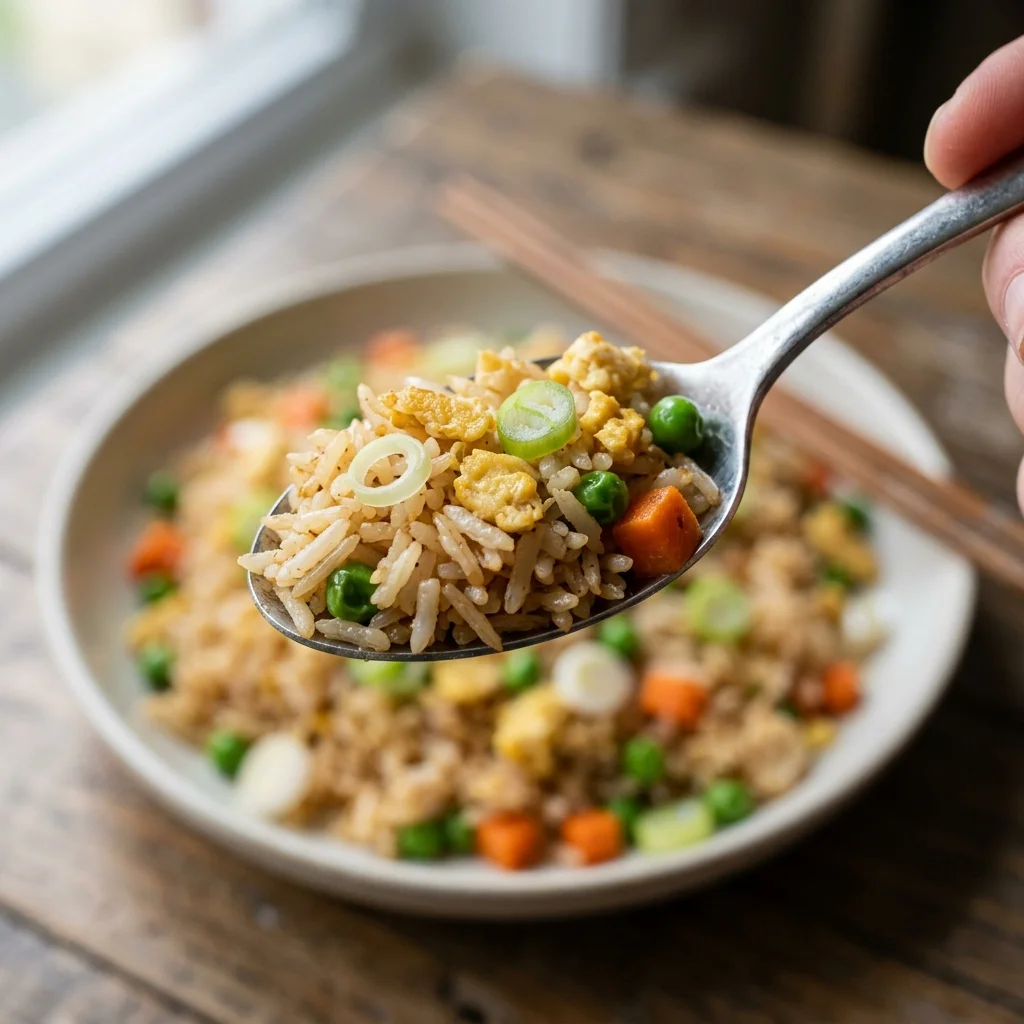
Good fried rice has room between the grains. A spoonful should lift easily, with small folds of egg, sweet carrot, and scallion scattered through it instead of a sticky mound that moves as one piece. Getting that texture at home depends more on managing moisture and pan space than on adding another sauce.
This fried rice uses a wide skillet and two batches. You cook the eggs and vegetables first, then give the rice direct contact with the hot surface before returning those ingredients. The extra transfer takes little effort, but it stops four cups of cold rice from crowding the pan all at once.
The seasoning stays light: measured soy sauce, ginger, garlic, and a small finish of toasted sesame oil. You can taste the rice itself, and the vegetables keep their color. Start with safely chilled cooked rice, have everything beside the stove, and serve the first batch while the second finishes if everyone is ready to eat.
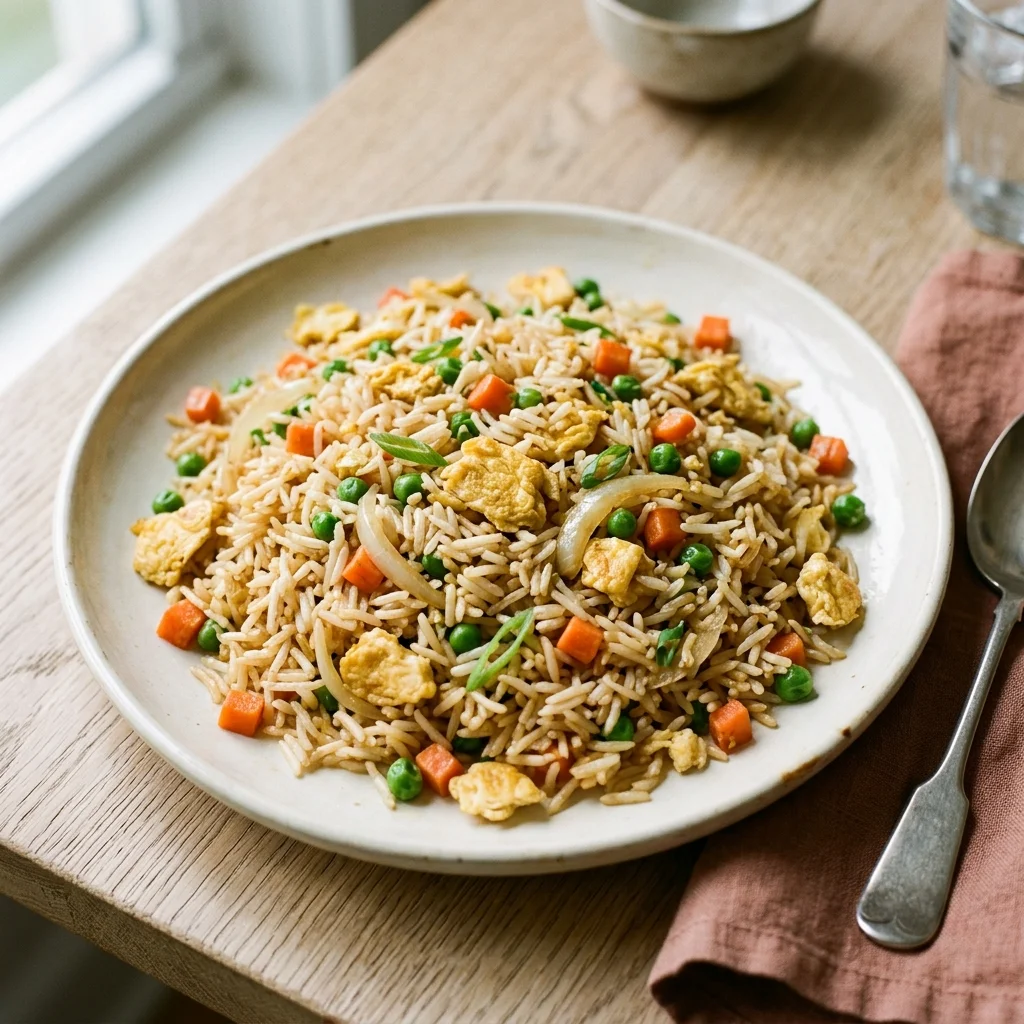
Table of Contents
Why This Fried Rice Method Works
- Two batches expose more grains to the skillet instead of trapping steam in a deep pile.
- Eggs cook separately, giving you distinct pieces rather than a wet coating around the rice.
- Small carrot dice soften quickly while retaining a little bite.
- Measured sauce seasons the grains without flooding the bottom of the pan.
- Scallion greens and toasted sesame oil go in at the finish, keeping their aromas noticeable.
Quick Fried Rice Snapshot
- Prep time: 10 minutes
- Cook time: About 20 minutes
- Total time: About 30 minutes, using cooked, chilled rice
- Servings: 4
- Difficulty: Easy
- Calories: Approximately 400 per serving
- Key ingredient: Chilled long-grain white rice
- Best for: A vegetable-and-egg dinner or substantial side
Cooking and chilling plain rice takes additional time and is not included in the 30-minute estimate.
Fried Rice Nutrition Information
- Calories per serving: Approximately 400
- Protein: 11 grams
- Carbs: 56 grams
- Fat: 15 grams
- Fiber: 3 grams
- Sugar: 4 grams
- Sodium: Approximately 370 milligrams
- Serving size: One-quarter of the finished batch
- Servings per recipe: 4
Rice provides most of the carbohydrates, while eggs and peas contribute protein. The measured cooking oil is included in these estimates; extra sauces and side dishes are not.
Nutrition values are approximate and calculated per serving using standard ingredient amounts. Values may vary based on brands used and portion sizes.
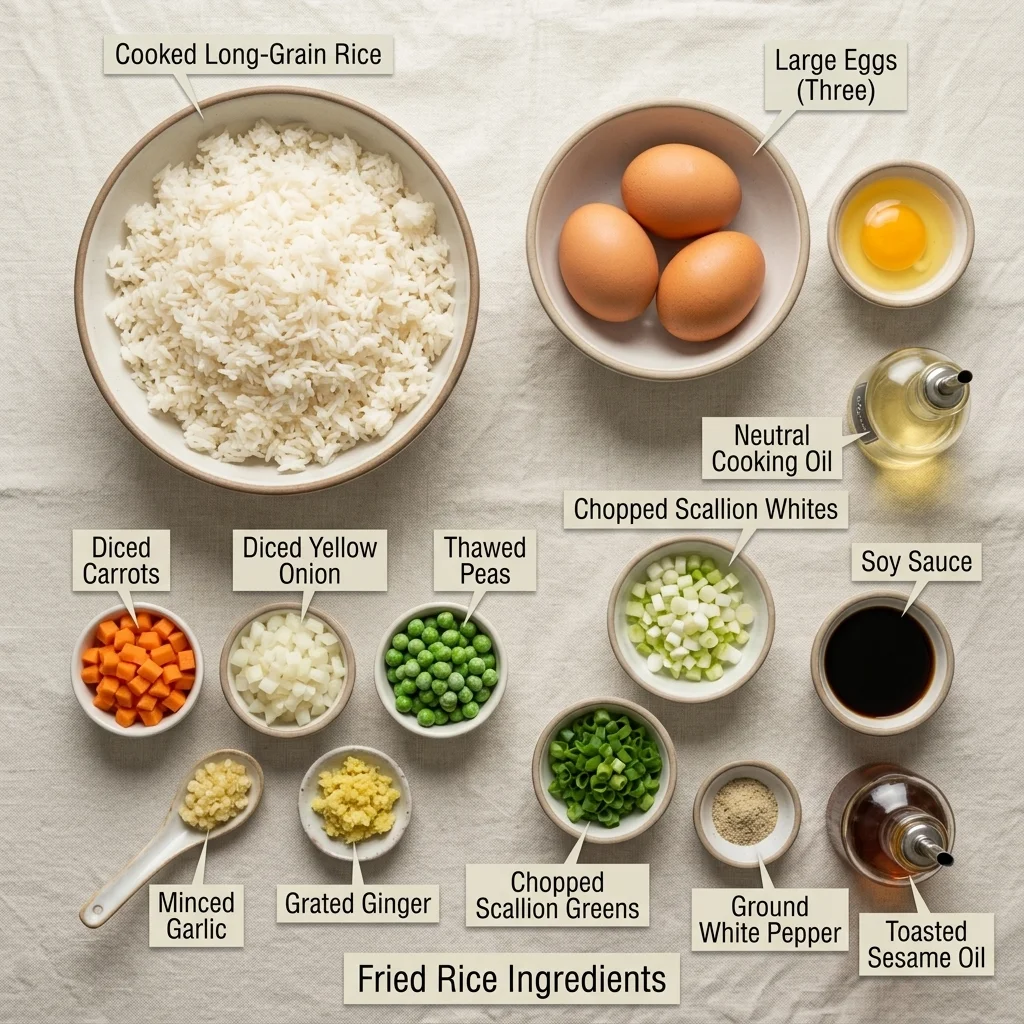
Ingredients for Fried Rice
Rice, eggs, and vegetables
- 4 cups cooked, chilled long-grain white rice, about 600 grams: The grains should feel firm and separate under gentle pressure. Cooked jasmine rice also works.
- 3 large eggs: Beat them before heating the pan. For an egg-free version, use the tofu variation below.
- 1 medium carrot, finely diced, about 100 grams: Small pieces cook evenly. Finely diced green beans can replace it.
- One-half medium yellow onion, diced, about 100 grams: Adds sweetness without extra sauce. White onion is interchangeable.
- One-half cup frozen peas, about 80 grams: Thaw and dry them first. Corn is a direct substitute.
- 4 scallions, sliced: Separate white and green parts; the whites cook with the aromatics.
Oil and seasoning
- 3 tablespoons avocado or canola oil, divided: Reserve 1 teaspoon for eggs, 2 teaspoons for vegetables, and 1 tablespoon for each rice batch.
- 2 garlic cloves, minced: Brief cooking keeps them fragrant. Substitute one-half teaspoon garlic powder with the sauce.
- 2 teaspoons finely grated fresh ginger: Adds a warm edge. One-half teaspoon ground ginger works, with a less fresh aroma.
- 2 tablespoons alcohol-free reduced-sodium soy sauce: Use 1 tablespoon per batch. Choose a suitable gluten-free tamari for the gluten-free variation.
- One-quarter teaspoon ground white pepper: Gives gentle heat; black pepper works too.
- 1 teaspoon toasted sesame oil: Divide between the finished batches. Omit it for a sesame-free version.
For fried rice, start with a dependable method from [INTERNAL LINK: rice cooking basics], then cool the cooked grains promptly rather than leaving them on the counter to dry.
Equipment Needed
- A 12-inch skillet: Its broad floor gives rice more contact with the heat; a smaller pan needs smaller batches.
- A thin, wide spatula: Slide beneath the rice instead of pressing down and crushing it.
- A rimmed tray: Spread newly cooked rice shallowly for prompt chilling, not prolonged counter drying.
- A large heatproof bowl: Holds cooked eggs and vegetables between steps, keeping the skillet available.
- An instant-read thermometer: Check a gathered portion of rice for the reheating temperature without touching the skillet.
Prepare the Fried Rice Ingredients
- Break cold rice into loose grains with clean fingers or a fork, without mashing it.
- Dice carrot and onion into pieces about one-quarter inch across.
- Thaw peas in the refrigerator and pat them dry to limit surface water.
- Beat the eggs until the whites and yolks are blended.
- Measure sauce, oils, and aromatics into separate small containers for quick additions.
Cool rice safely: Divide freshly cooked rice into shallow containers and refrigerate promptly. Never leave it out overnight to produce a drier texture; frying cannot reliably remove toxins formed during unsafe storage.
How to Make Fried Rice
- Scramble the eggs. Heat 1 teaspoon neutral oil over medium heat, then stir the beaten eggs for 1 to 2 minutes until just fully set. Transfer to the holding bowl.
- Cook the vegetables. Add 2 teaspoons neutral oil, onion, and carrot; cook over medium-high for 3 to 4 minutes, stirring, until the carrot loses its raw crunch. Add peas, scallion whites, garlic, and ginger for 30 to 60 seconds, then transfer everything to the eggs.
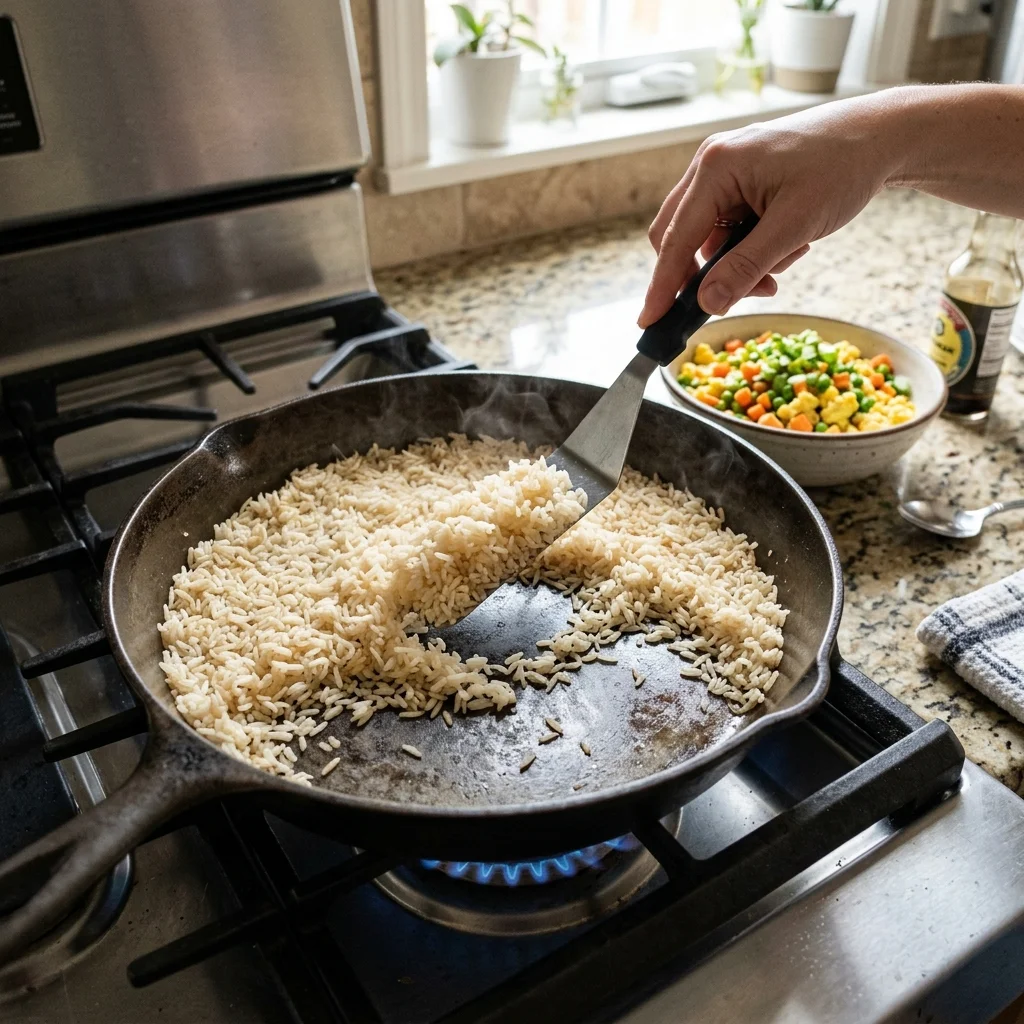
- Start the first rice batch. Add 1 tablespoon neutral oil and 2 cups rice to the skillet over medium-high heat. Chef’s Note: Oil should shimmer without smoking; reduce the heat if it smokes.
- Fry the grains. Spread rice across the pan and cook for 3 to 4 minutes, lifting and turning every 30 to 45 seconds until separate and hot. Chef’s Note: A spatula underneath the grains preserves their shape better than pushing down.
- Season the first batch. Toss in 1 tablespoon soy sauce, half the white pepper, and half the egg-vegetable mixture for 1 to 2 minutes, until the rice reaches 165°F throughout. Chef’s Note: Check several gathered spoonfuls because cold clumps may heat unevenly.
- Finish and transfer. Turn off the heat, fold in one-half teaspoon sesame oil and half the scallion greens, then transfer to a serving platter.
- Repeat the batch. Return to medium-high heat and repeat steps 3 through 6 with the remaining rice, neutral oil, sauce, pepper, egg-vegetable mixture, sesame oil, and greens. Serve promptly.
Keep the second batch separate: Resist returning all the finished rice to the skillet. Combining it on the serving platter preserves the pan space that helped each batch fry.
Expert Tips for Fried Rice
- Break clumps before cooking. Forcing them apart in the skillet smashes warm grains and delays even reheating.
- Dry thawed vegetables well. Water clinging to peas must evaporate before their surfaces can heat beyond steaming.
- Pause between turns. Constant stirring lifts rice away from the hot pan and slows the light browning.
- Prepare plain rice the day before for easier scheduling. Refrigerate promptly and label it so its original cooking date stays clear.
- Keep refrigerated leftovers within 3 to 4 days of the rice’s original cooking date. Stir-frying does not restart that clock.
- Taste before adding salt. Soy sauce varies by brand, and another spoonful also introduces more moisture.
Fried Rice Problems and Practical Fixes
- The rice becomes mushy. Wet grains, extra sauce, or crowding can cause this. Dry the vegetables and cook smaller batches; stop adding liquid if it happens, knowing broken grains cannot become intact again.
- Large clumps stay cold. Packed rice heats unevenly. Separate it before cooking; split stubborn clumps gently with the spatula and keep turning until the centers reach 165°F.
- The garlic tastes bitter. Tiny pieces scorch before rice heats through. Cook aromatics briefly with the vegetables; remove burnt bits and wipe the pan before starting again.
- The result tastes too salty. Extra sauce concentrates on the grains. Measure each batch’s tablespoon; dilute an oversalted batch with separately heated plain rice or unseasoned vegetables.
- Egg coats the rice like paste. Raw egg mixed into crowded rice can cook unevenly. Scramble it separately next time; for this batch, continue cooking until fully set and hot throughout.
Storing and Reheating Fried Rice
- Room temperature: Refrigerate promptly and within 2 hours, or within 1 hour above 90°F. Discard rice held out longer.
- Refrigerator: Store in covered shallow containers at 40°F or below. Use within 3 to 4 days of initially cooking the plain rice, including time before frying.
- Freezer: Freeze promptly in flat portions for up to 1 month for quality, leaving expansion space. Thaw overnight in the refrigerator.
- Reheating: Add 1 tablespoon water per serving, cover loosely in a microwave-safe bowl, heat for 1 minute, then stir and continue in 30-second intervals to 165°F throughout.
- Make-ahead: Chop vegetables a day ahead and refrigerate separately. Fry shortly before serving for the clearest separation between grains.
Plan small portions with these [INTERNAL LINK: make ahead lunch ideas] so you only reheat what you intend to eat.
Fried Rice Variations
- Spicy: Cook one finely chopped fresh chile with the carrot and onion. Keep extra sliced chile at the table for separate heat preferences.
- Mild: Omit white pepper and reduce ginger to 1 teaspoon. Keep garlic and scallions for flavor without the peppery finish.
- Egg-free tofu: Replace eggs with 8 ounces extra-firm tofu, pressed dry and crumbled. Cook it in the egg step for 4 to 6 minutes, adding time as needed for its surface to dry.
- Gluten-free: Replace soy sauce with an alcohol-free tamari labeled gluten-free. Check packaged ingredients and begin with the same measured amount.
- Brown rice: Substitute 4 cups cooked, chilled long-grain brown rice. Expect a chewier grain and use the temperature cue rather than timing alone.
The base fried rice recipe is vegetarian and dairy-free as written. Check your chosen sauces and substitutions if those qualities matter to your meal.
What to Serve with Fried Rice
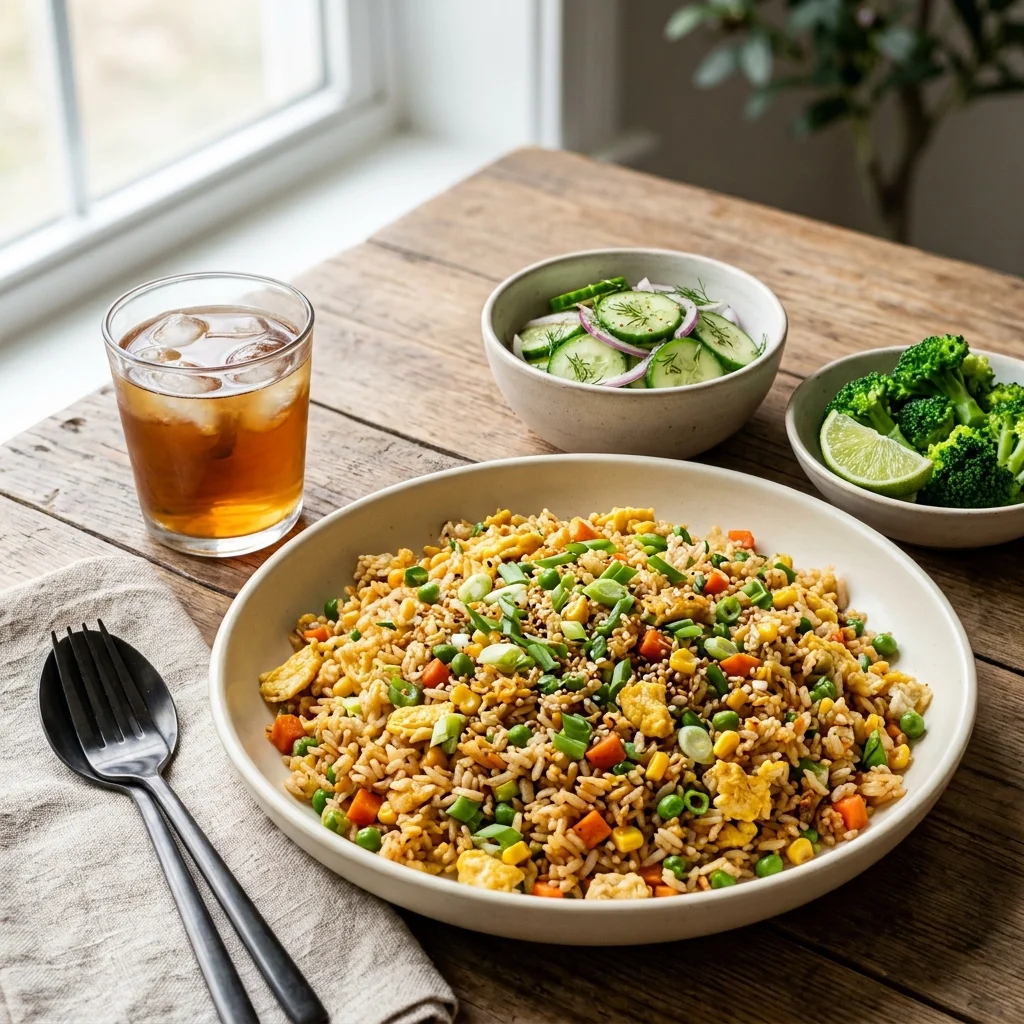
- Cucumber salad: Cold cucumber and a light vinegar dressing contrast with the warm rice. Find ideas in [INTERNAL LINK: crunchy vegetable salads].
- Steamed broccoli: A plain green vegetable gives you more variety without another salty sauce.
- Tofu cubes: Separately browned tofu adds protein while keeping the rice pan uncrowded.
- Lime wedges: A small squeeze brings brightness to individual servings without soaking the batch.
- Unsweetened tea: Serve warm or cold alongside the ginger and scallion flavors.
Fried Rice FAQs
Can I make fried rice with rice cooked today?
Yes, provided it is cooked without excess water, cooled promptly, and no longer wet on the surface. Spread it shallowly and refrigerate rather than leaving it on the counter to dry. Chilling time varies with the amount and container, so look for firm grains that separate easily. If the rice is still soft and steamy, save it for another dish and plan this recipe after it has chilled.
Why does chilled rice still turn sticky in the pan?
Chilling firms the rice, but it cannot remove all the effects of overcooking or excess water. Grains that were very soft before refrigeration may still break when stirred. Sauce, wet vegetables, and crowding can add another layer of moisture. Start by changing just one thing, such as halving your batch size, so you can see whether the pan has room to evaporate water before changing your rice brand.
Can brown rice replace white rice?
Yes, use the same four cups of cooked, chilled long-grain brown rice and keep the two-batch method. Its outer bran gives a firmer chew, so do not mistake that texture for a cold center and keep cooking indefinitely. Check the temperature instead. Brown rice cooked with excess water can still clump, so loosen it before frying and avoid adding extra sauce merely because the grains look darker.
How can I tell when the rice is ready?
The grains should separate when lifted, the eggs should be fully set, and the mixture should reach 165°F in several places. A little browning is welcome, but every grain does not need a toasted crust. Color alone cannot confirm that cold clumps have reheated. Gather a spoonful deep enough for the thermometer probe, avoid contact with the hot skillet, and keep tossing if any portion is below the target.
Can I use rice that sat out overnight?
No. Discard it even if it smells normal, and do not try to rescue it by frying harder. Cooked rice can support bacteria that produce heat-resistant toxins during unsafe storage. A clean smell does not tell you whether those toxins are present. For the next batch, refrigerate the plain rice promptly in shallow containers and keep track of when it was cooked before using it for this dish.
Let the Last Spoonful Guide Your Seasoning
Before reaching for more sauce, try a spoonful that includes rice, egg, carrot, and scallion together. A grain tasted alone can seem plain even when the complete bite has enough seasoning. If it still needs something, add a small amount to your own portion and compare it with the rest.
That check keeps fried rice from getting wetter each time you adjust the flavor. Bring the platter to the table promptly, with any extra chile or lime served separately. The short gap between skillet and plate matters more to the texture than an elaborate garnish or a dark coating of sauce.
If you loved this recipe, save it to your rice recipes Pinterest board so you can find it easily later!
Fried Rice with Golden Egg and Crisp Vegetables
Ingredients
Equipment
Method
- Break cold rice into loose grains with clean fingers or a fork. Beat eggs until fully blended. Dice carrot and onion into quarter-inch pieces, thaw and pat peas dry, and measure all oils, sauce, and aromatics before heating the pan.
- Heat 1 teaspoon oil in a 12-inch skillet over medium heat. Cook beaten eggs for 1 to 2 minutes, stirring, until just fully set. Transfer to a heatproof bowl.
- Add 2 teaspoons oil to the skillet over medium-high heat. Cook onion and carrot for 3 to 4 minutes until the carrot loses its raw crunch. Add peas, scallion whites, garlic, and ginger and cook for 30 to 60 seconds. Transfer everything to the bowl with the eggs.
- Add 1 tablespoon oil and 2 cups rice to the skillet over medium-high heat. Spread across the pan and cook for 3 to 4 minutes, lifting and turning every 30 to 45 seconds until the grains are separate and hot.
- Add 1 tablespoon soy sauce, half the white pepper, and half the egg-vegetable mixture. Toss for 1 to 2 minutes until the rice reaches 165°F throughout. Turn off the heat, fold in 1/2 teaspoon sesame oil and half the scallion greens, and transfer to a serving platter.
- Return the skillet to medium-high heat and repeat steps 4 and 5 with the remaining rice, oil, soy sauce, pepper, egg-vegetable mixture, sesame oil, and scallion greens. Serve promptly.
Notes
- Store leftovers in covered shallow containers in the refrigerator. Use within 3 to 4 days of the original rice cooking date. To reheat, add 1 tablespoon water per serving and microwave in 30-second intervals until it reaches 165°F throughout.
- For best texture, cook the plain rice a day ahead, refrigerate it promptly in shallow containers, and fry it cold. Do not use rice that was left out overnight.
- For a gluten-free version, replace soy sauce with an alcohol-free tamari labeled gluten-free, using the same measured amount.