Lentil Soup with Caramelized Tomato and Lemon-Parsley Finish
Lentil soup earns its place in a regular dinner rotation when the broth tastes developed and the lentils remain tender without turning to paste. This version builds depth by cooking onion, carrot, and celery until their edges begin to color, then darkening tomato paste and warming the spices directly in the pot.
Brown or green lentils hold their shape through the simmer. Blending only two cups of the finished soup thickens the broth while leaving plenty of whole lentils and vegetables in each bowl. Lemon juice goes in after cooking, where its acidity can brighten the earthy base instead of interfering with the lentils as they soften.
A small parsley, lemon-zest, and olive-oil finish gives every serving fresh aroma. You can leave it off for a simpler bowl, but it changes the first spoonful without adding another pan. The recipe makes eight servings and reheats well when extra broth is added after the chilled soup is fully warm.
Keep this recipe beside your other [INTERNAL LINK: one-pot dinners] for evenings when most of the work can happen at the cutting board.
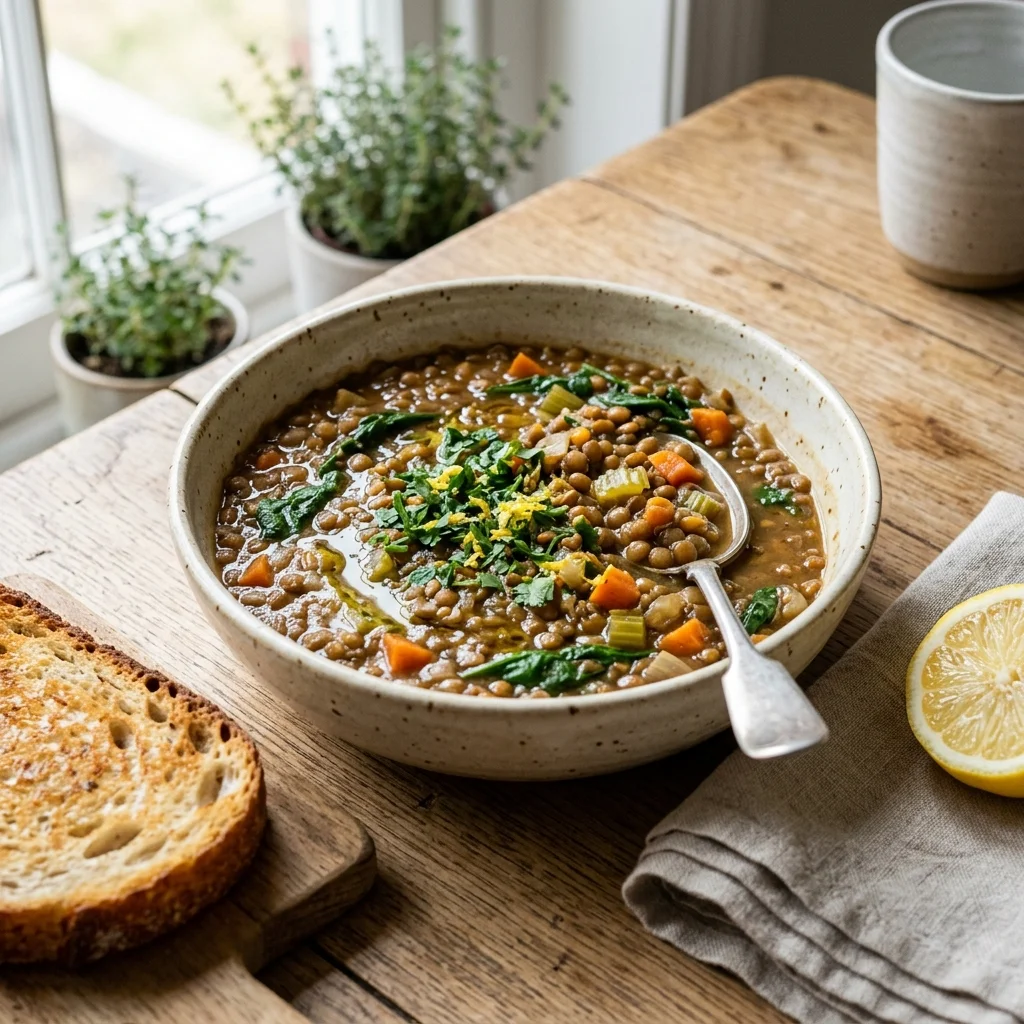
Table of Contents
Why This Lentil Soup Has Body Without Cream
- Slowly softened vegetables create a sweet, savory foundation before liquid enters the pot.
- Tomato paste cooks until brick red, concentrating its flavor and removing the raw metallic edge.
- Brown or green lentils keep distinct centers during a steady, gentle simmer.
- Blending a measured portion releases starch while preserving the soup’s chunky character.
- Lemon and parsley are added at the end so their aroma remains clear against the warm spices.
Lentil Soup Snapshot
- Prep time: 20 minutes
- Cook time: 50 minutes
- Total time: 1 hour 10 minutes
- Servings: 8
- Difficulty: Easy
- Calories: Approximately 265 per serving
- Key technique: Blending two cups and returning them to the pot
- Best for: Dinner, lunch, meal prep, and freezer portions
Lentil Soup Nutrition
- Calories per serving: Approximately 265
- Protein: 15 grams
- Carbohydrates: 41 grams
- Fat: 6 grams
- Fiber: 12 grams
- Sugar: 7 grams
- Sodium: Approximately 620 milligrams
- Serving size: About 1½ cups
- Servings per recipe: 8
Lentils provide most of the protein, fiber, and complex carbohydrates. Vegetables, olive oil, and greens contribute the remaining nutrients. Bread and other toppings are not included.
Nutrition values are approximate and vary by broth, lentil variety, substitutions, and serving size.
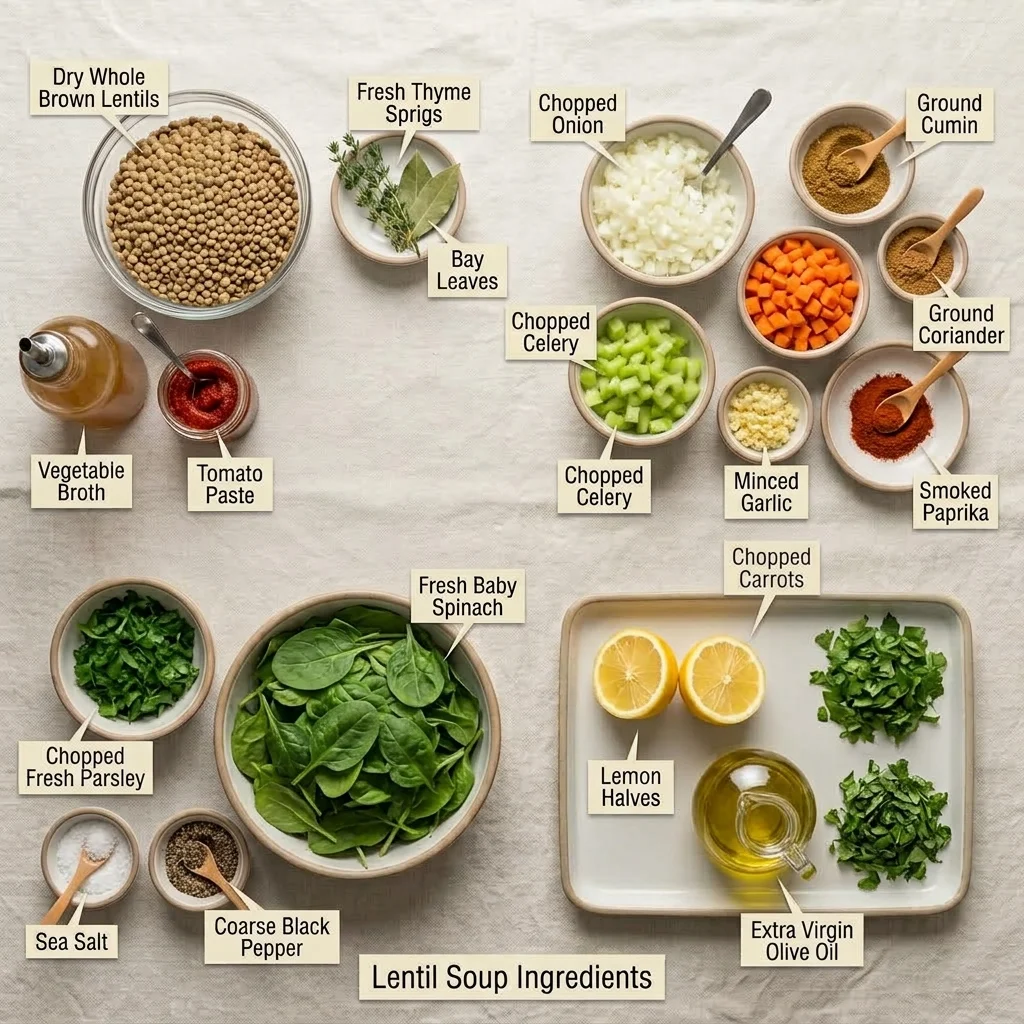
Ingredients for Tomato-Spiced Lentil Soup
Soup base
- Extra-virgin olive oil, 2 tablespoons: It carries the spices and browns the vegetables. Avocado oil also works.
- Yellow onion, 1 large or 220 grams, diced: It sweetens during the sauté. White onion also works.
- Carrots, 2 medium or 160 grams, diced: Small pieces soften evenly.
- Celery, 2 ribs or 110 grams, diced: Use an extra carrot if unavailable.
- Garlic, 4 cloves, finely chopped: Add after browning to prevent scorching.
- Tomato paste, 3 tablespoons: Cook it until brick red for concentrated tomato flavor.
Spices, lentils, and liquid
- Ground cumin, 2 teaspoons: It supports the earthy lentils.
- Ground coriander, 1 teaspoon: It adds citrus aroma. Cumin can replace it.
- Smoked paprika, 1 teaspoon: Sweet paprika gives a milder result.
- Dried thyme, one-half teaspoon: Thyme connects the vegetables and tomato.
- Fine salt, 1½ teaspoons, divided: Adjust for the broth.
- Ground black pepper, one-half teaspoon: Add more at the table if desired.
- Brown or green lentils, 300 grams or 1½ cups: Sort and rinse them. Red lentils become softer.
- Vegetable broth, 1.4 liters or 6 cups: Choose one without wine or animal-derived flavoring. Low-sodium is easiest to adjust.
- Water, 240 milliliters or 1 cup: Reserve more for adjustment.
- Bay leaves, 2: Remove them before blending.
Greens and lemon-parsley finish
- Baby spinach, 90 grams or 3 packed cups: Kale can replace it but needs 5 minutes.
- Fresh lemon juice, 2 tablespoons: Stir it in after the lentils soften.
- Fresh parsley, one-half cup, chopped: Divide it between soup and topping.
- Fresh lemon zest, 1 teaspoon: Zest adds fragrance without extra liquid.
- Extra-virgin olive oil, 1 tablespoon: Mix it with parsley and zest for the topping.
Equipment Needed
- Heavy pot or Dutch oven: Use a 5-to-6-quart size.
- Fine-mesh sieve: Rinse and inspect the lentils.
- Sharp knife: Cut even vegetable pieces.
- Wooden spoon: Scrape the caramelized paste.
- Blender or immersion blender: Control the blended amount.
- Ladle: Transfer and portion the hot soup.
Preparation Before Cooking
- Sort the lentils, discard debris, and rinse until the water runs mostly clear.
- Dice onion, carrots, and celery one-quarter inch wide.
- Measure the spices into one small bowl, keeping 1 teaspoon salt separate for the vegetables.
- Dry the parsley, then zest and juice the lemon.
- Place a heatproof blender jar nearby if you are not using an immersion blender.
How to Make Lentil Soup
- Soften the vegetables
Heat olive oil over medium. Add onion, carrots, celery, and 1 teaspoon salt. Cook for 9 to 11 minutes, stirring occasionally, until the onion is translucent and several edges are golden.
- Caramelize the tomato paste
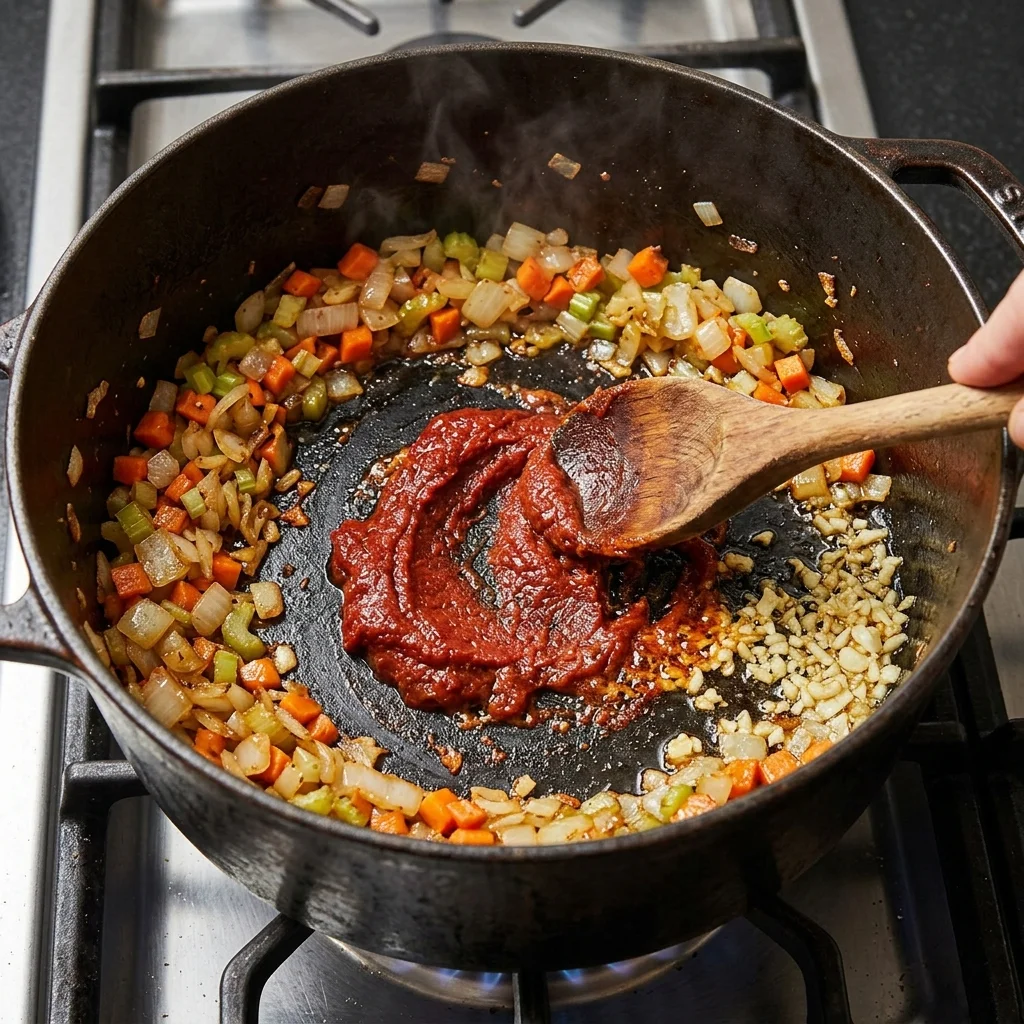
Add garlic for 30 seconds. Push vegetables outward, add tomato paste to the center, and cook for 2 minutes, until brick red and lightly sticking.Chef’s Note: Prioritize browning the paste. Stop if the garlic darkens.
- Warm the spices
Add cumin, coriander, smoked paprika, thyme, and black pepper. Stir for 30 seconds, stopping once the mixture becomes fragrant.
- Begin the simmer
Add lentils, broth, water, bay leaves, and remaining salt. Scrape the bottom, boil, then reduce to a gentle simmer.
- Cook until tender
Partially cover and simmer for 28 to 35 minutes, stirring every 10 minutes. A finished lentil mashes easily but retains an edge.Chef’s Note: Age and hard water affect timing. For chalky centers, add one-half cup hot water and simmer in 5-minute intervals.
- Blend a measured portion
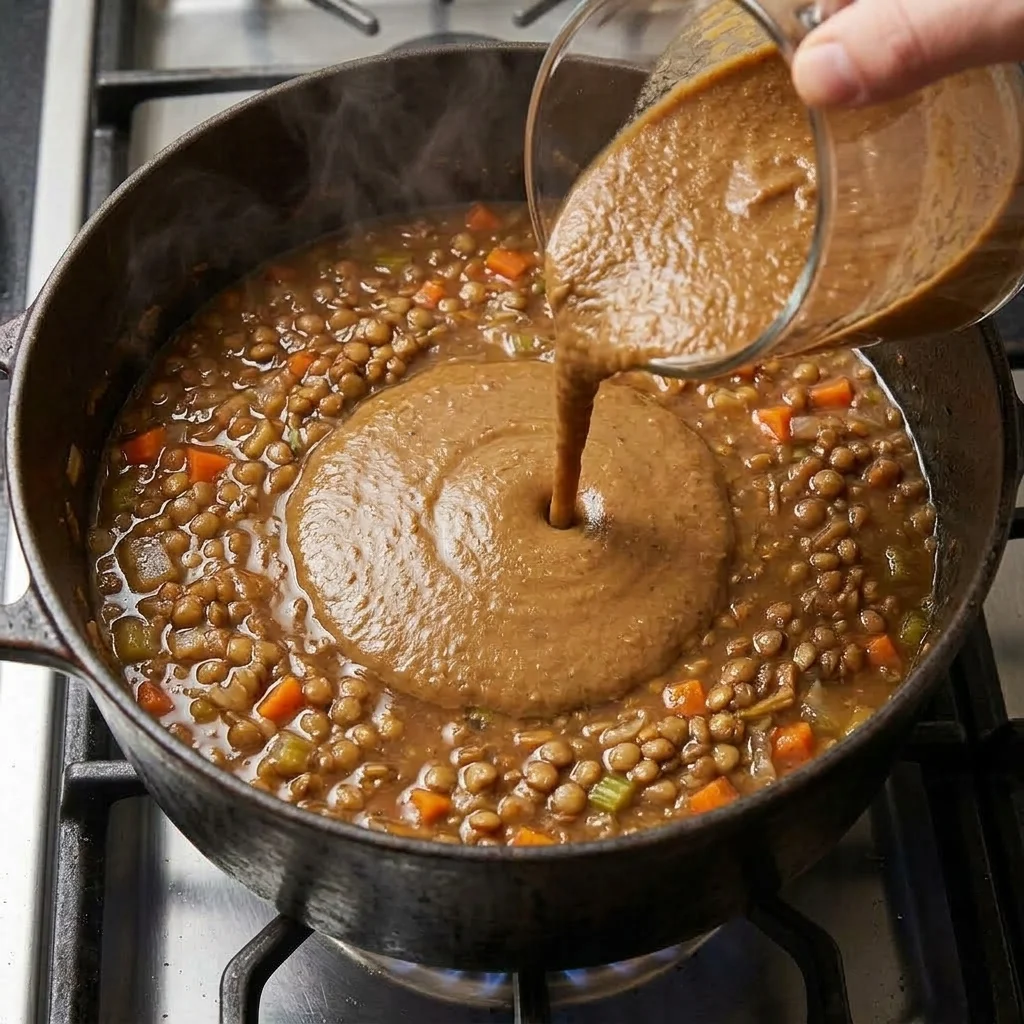
Remove bay leaves. Blend exactly 2 cups in a vented blender, then return it. Alternatively, pulse one area with an immersion blender for 10 to 15 seconds.
Blender safety: Vent hot soup and cover the lid with a towel so steam can escape. - Add the greens
Stir in spinach and simmer for 2 minutes, until wilted. Add one-half cup water if the soup is thicker than you want.
- Finish after the heat
Turn off heat. Add lemon juice and one-quarter cup parsley, then adjust seasoning. Mix remaining parsley with zest and 1 tablespoon oil for topping.Chef’s Note: Add lemon only after the lentils are tender. The fresh acidity is easier to judge once the broth has reached its final thickness.
Expert Tips for Balanced Lentil Soup
- Use recently purchased lentils. Older ones may remain firm after the vegetables soften.
- Keep vegetables small and even so carrots finish with the lentils.
- Let tomato paste touch the pot; wet vegetables prevent caramelization.
- Maintain a quiet simmer. Hard boiling breaks skins and evaporates liquid.
- Blend two measured cups to preserve whole pieces.
- Judge salt after lemon makes existing seasoning easier to perceive.
- For advance preparation, chop vegetables and measure spices 1 day ahead, but rinse lentils just before cooking.
Lentil Soup Problems and Practical Fixes
The lentils remain firm
Cause: Old lentils, hard water, low heat, or too little liquid slowed hydration.
Prevention: Use recently purchased lentils, maintain a gentle simmer, and keep hot water nearby.
Fix: Add one-half cup hot water, cover partially, and simmer in 5-minute intervals. Do not add lemon until the centers soften.
The soup tastes flat
Cause: The vegetables or tomato paste were undercooked, the broth was weak, or the final acid and salt were too low.
Prevention: Follow the color cues and season in stages.
Fix: Add salt by the pinch, then lemon by the teaspoon. Finish with parsley oil rather than adding more dry spices late.
The soup is watery
Cause: Excess liquid, a short simmer, or skipping the blended portion left the broth thin.
Prevention: Begin with the measured liquid and partially cover the pot.
Fix: Blend another cup of solids with a little broth and return it, then simmer uncovered for 5 minutes.
The soup becomes too thick
Cause: Lentils continued absorbing broth during standing or refrigeration.
Prevention: Stop cooking when the hot soup is slightly looser than the desired bowl.
Fix: Heat it completely before adding broth or water one-quarter cup at a time.
The lentils turn mushy
Cause: Red lentils were substituted, the pot boiled hard, or cooking continued after the centers softened.
Prevention: Use brown or green lentils and check at 28 minutes.
Fix: Treat the batch as a smooth soup by blending it fully, then adjust with broth and lemon.
How to Store Lentil Soup
- Refrigerator: Divide the soup among shallow airtight containers within 2 hours. Refrigerate for 3 to 4 days.
- Freezer: Freeze cooled portions with a little empty space for expansion for up to 3 months. Thaw overnight in the refrigerator.
- Reheating: Heat to a rolling boil on the stove or to 165°F in the microwave. Stir before checking the center.
- Consistency: Reheat completely, then add broth or water one-quarter cup at a time. Cold lentil soup looks thicker than it will become when hot.
- Make-ahead: Cook the soup up to 3 days before serving, but prepare the parsley finish on the serving day.
Lentil Soup Variations
- Red Lentil Version: Use split red lentils and begin checking at 18 minutes. Skip the blending step because they soften into the broth.
- More Vegetables: Add 1 cup diced zucchini during the final 10 minutes or chopped kale during the final 5 minutes.
- Spicier Bowl: Add one-quarter teaspoon crushed red pepper with the other spices and serve extra at the table.
- Without Tomato: Omit tomato paste and add another carrot. The color will be lighter and the broth less tangy.
- Grain and Lentil Bowl: Spoon a thicker portion over brown rice or quinoa and add the parsley finish. See more [INTERNAL LINK: grain bowl recipes].
What to Serve with Lentil Soup
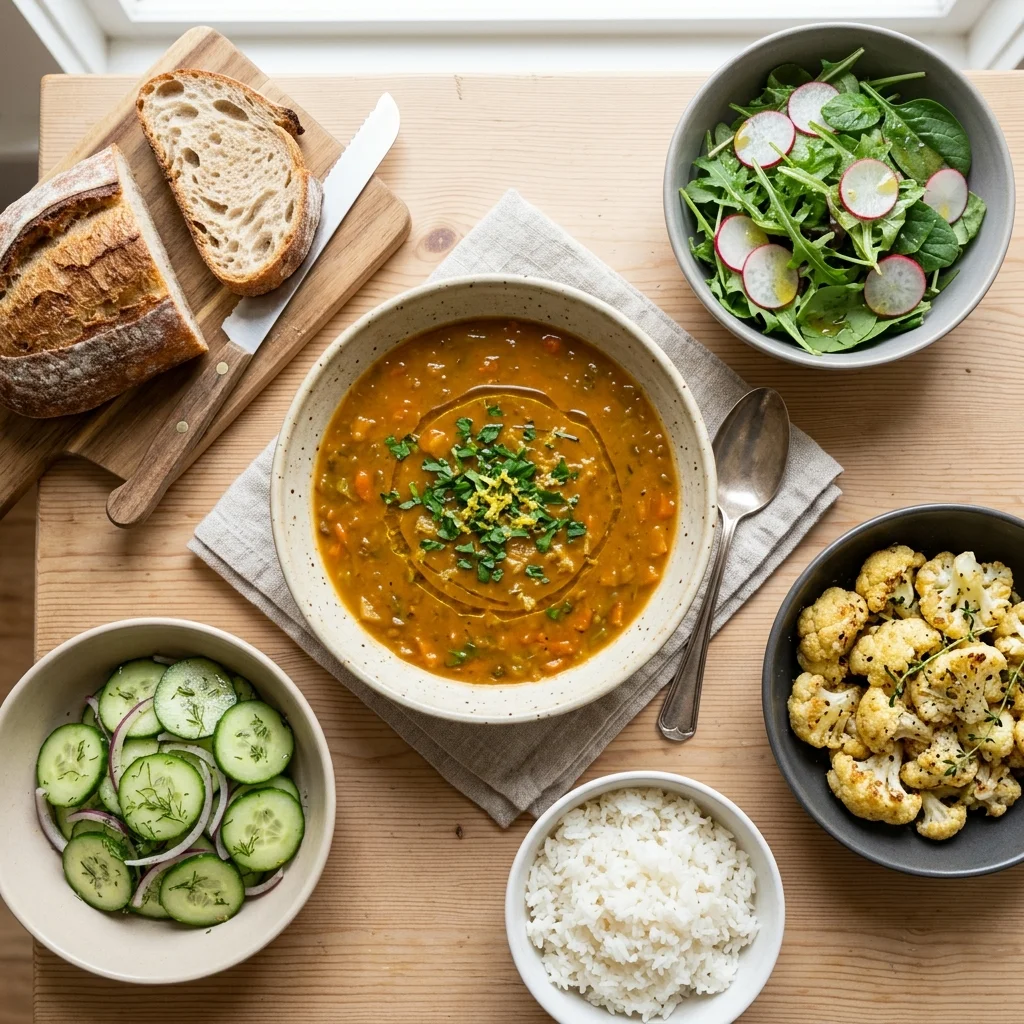
- Crusty bread: A toasted slice catches the thick broth without disappearing into it.
- Cucumber salad: Cool cucumber and a light dressing contrast with the cumin and tomato.
- Roasted cauliflower: Browned florets extend the meal while repeating the warm spices.
- Simple rice: A small scoop turns a bowl into a larger dinner without changing its flavor.
- Green salad: Use crisp leaves and lemon dressing for a fresh side. Find more [INTERNAL LINK: easy green salads].
Lentil Soup FAQs
Do lentils need to be soaked before making lentil soup?
Brown and green lentils do not require soaking for this recipe. Sort, rinse, then add directly to the pot. Soaking can shorten cooking slightly, but it also makes the stated timing less predictable. Lentil age and water hardness influence softening more than a skipped soak. Begin checking at 28 minutes and continue in 5-minute intervals if the centers still feel chalky.
Why are my lentils still hard after simmering?
The most common reasons are older lentils, a simmer that is too weak, hard water, or insufficient liquid. Confirm a gentle simmer, add one-half cup hot water, and partially cover. Continue checking every 5 minutes. Hold lemon juice until the lentils soften. If a new package repeatedly stays firm in your water, filtered water can produce a more consistent result.
How can I thicken lentil soup without flour?
Blend part of the cooked soup instead of adding flour or cream. Remove the bay leaves, transfer two cups to a vented blender, process until smooth, and return it to the pot. The broken lentils release enough starch to thicken the broth while whole lentils remain visible. If the bowl is still thin, blend one additional cup or simmer uncovered for 5 minutes before making another adjustment.
Can I freeze lentil soup?
Yes. Cool the soup promptly, divide it into freezer-safe containers, and leave room for expansion. Freeze for up to 3 months, then thaw overnight in the refrigerator. Lentils continue absorbing liquid during storage, so reheat the soup fully before deciding how much broth to add. Stir in extra liquid one-quarter cup at a time. Make the parsley and lemon-zest finish fresh after reheating for a brighter aroma.
Why does lentil soup get so thick in the refrigerator?
Cooked lentils keep absorbing surrounding liquid as they cool, while chilled starches make the broth appear more solid. This change does not automatically mean the soup was overcooked. Warm the portion completely before thinning it because heat loosens the texture. Then add broth or water in small amounts until it moves easily from the spoon. Season again only after the final consistency has been reached.
Finish the Bowl After the Lentils Soften
The simmer develops the base, but the final minutes determine the balance. Blend only the measured portion, wilt the spinach, and turn off the heat before adding lemon. This order keeps whole lentils visible and makes the acidity easier to judge against the finished broth.
Top each serving with parsley, lemon zest, and olive oil just before it reaches the table. When leftovers thicken, warm them first and adjust the liquid second. That small sequence protects both texture and seasoning, whether the bowl is served on cooking day or reheated later.
If you loved this recipe, save it to your soup recipes Pinterest board so you can find it easily later!
Lentil Soup with Caramelized Tomato and Lemon-Parsley Finish
Ingredients
Equipment
Method
- Heat 2 tablespoons olive oil in a heavy pot over medium heat. Add the onion, carrots, celery, and 1 teaspoon salt. Cook for 9 to 11 minutes, stirring occasionally, until the onion is translucent and several edges are golden.
- Add the garlic and cook for 30 seconds. Push the vegetables outward, add the tomato paste to the center, and cook for 2 minutes until brick red and lightly sticking. Add the cumin, coriander, smoked paprika, thyme, and black pepper, and stir for 30 seconds until fragrant.
- Add the lentils, broth, water, bay leaves, and remaining ½ teaspoon salt. Scrape the bottom of the pot, bring to a boil, then reduce to a gentle simmer. Partially cover and simmer for 28 to 35 minutes, stirring every 10 minutes, until the lentils mash easily but still hold an edge.
- Remove the bay leaves. Transfer exactly 2 cups of soup to a blender, vent the lid, and blend until smooth, then return it to the pot. Alternatively, pulse one area with an immersion blender for 10 to 15 seconds.
- Stir in the spinach and simmer for 2 minutes until wilted. Add up to ½ cup water if the soup is thicker than desired.
- Turn off the heat. Stir in the lemon juice and ¼ cup parsley, then taste and adjust seasoning. Mix the remaining parsley with the lemon zest and 1 tablespoon olive oil and spoon over each serving.
Notes
- Store in shallow airtight containers in the refrigerator for 3 to 4 days, or freeze for up to 3 months. Reheat fully on the stove or to 165°F in the microwave, then add broth or water ¼ cup at a time to restore consistency.
- Make ahead: Cook the full soup up to 3 days ahead. Prepare the parsley and lemon-zest finish on the day of serving for the freshest aroma.
- Use brown or green lentils for this timing. Split red lentils soften much faster, will change the texture, and do not need blending.