Soft Gingerbread Cookies That Hold Their Shape
These gingerbread cookies bake with crisp edges, soft centers, and enough structure for stars, trees, people, or any cutter you pull from the holiday tin. The dough is warmly spiced without tasting harsh, while dark brown sugar and unsulphured molasses give the cookies their deep color and familiar caramel-like depth. A short chill before rolling, followed by a second chill after cutting, keeps the shapes neat instead of letting the arms and corners spread into the tray.
TThe process is straightforward, but the little details make a difference. Weigh the flour if you can, start with softened rather than melted butter, and stop baking while the centers still look slightly soft. Once the cookies cool, decorate them or leave them plain for an easy holiday cookie that stacks well and travels neatly.
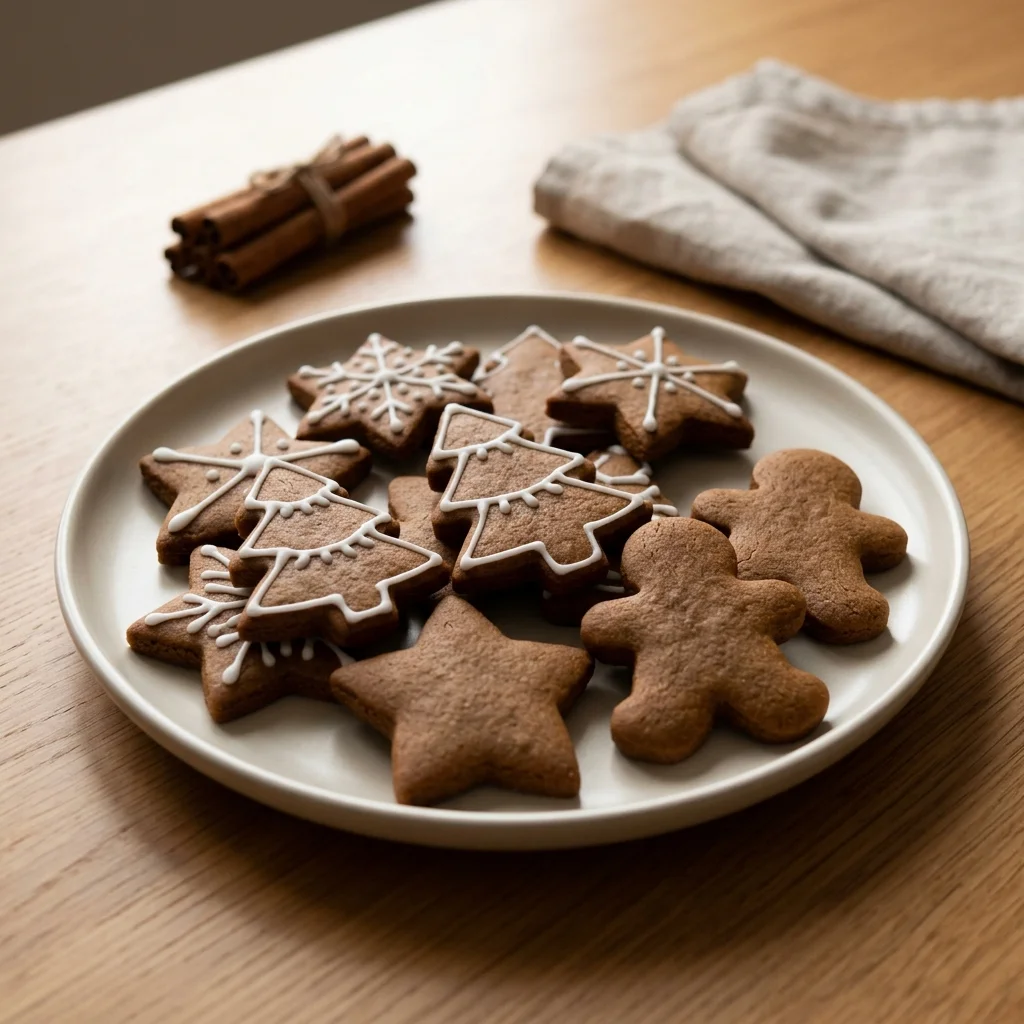
Table of Contents
Why You Will Love This Recipe
- Clean cut-out shapes: Chilling the dough twice helps detailed cutters keep their points, buttons, and narrow edges.
- Soft center with firm edges: Rolling the dough to 1/4 inch gives the middle enough thickness to stay tender after cooling.
- Balanced spice: Ginger leads, cinnamon rounds it out, and small amounts of cloves and nutmeg keep the flavor warm rather than bitter.
- Make-ahead friendly: The dough can rest in the refrigerator overnight, so the rolling and baking can happen the next day.
- Easy to decorate: The flat surface of gingerbread cookies works well with a simple powdered sugar icing, sanding sugar, or small sprinkles.
Quick Recipe Snapshot
Prep Time: 30 minutes, plus a 2-hour chilling period
Cook Time: 8 to 10 minutes for each tray
Total Time: About 3 hours, including chilling and cooling
Servings: 24 medium cookies
Difficulty: Medium
Calories: About 175 per cookie with icing
Key Ingredient: Unsulphured molasses
Best For: Holiday baking, cookie decorating, and edible gifts
Because gingerbread cookies rely on a fairly firm dough, the chill is doing two jobs at once: it firms the butter and lets the flour absorb moisture from the molasses and egg. That is why the dough can feel sticky right after mixing but much easier to roll later. Keep the first disc cold while you work with the second, and return scraps to the refrigerator if they start stretching. Cool dough cuts more cleanly and transfers to the baking sheet without distorting narrow points or small details.
Nutrition Information
Calories per Serving: about 175
Protein: 2.4 g
Carbs: 31 g
Fat: 5.7 g
Fiber: 0.8 g
Sugar: 17 g
Sodium: 115 mg
Serving Size: 1 medium iced cookie
Servings per Recipe: 24
Most of the energy in these cookies comes from flour, butter, brown sugar, molasses, and the optional icing. Molasses also contributes small amounts of minerals, but this is still a sweet baked treat, so the serving size is one medium cookie.
Nutrition values are approximate and calculated per serving using standard ingredient amounts. Values may vary based on brands used and portion sizes.
Ingredients You Will Need
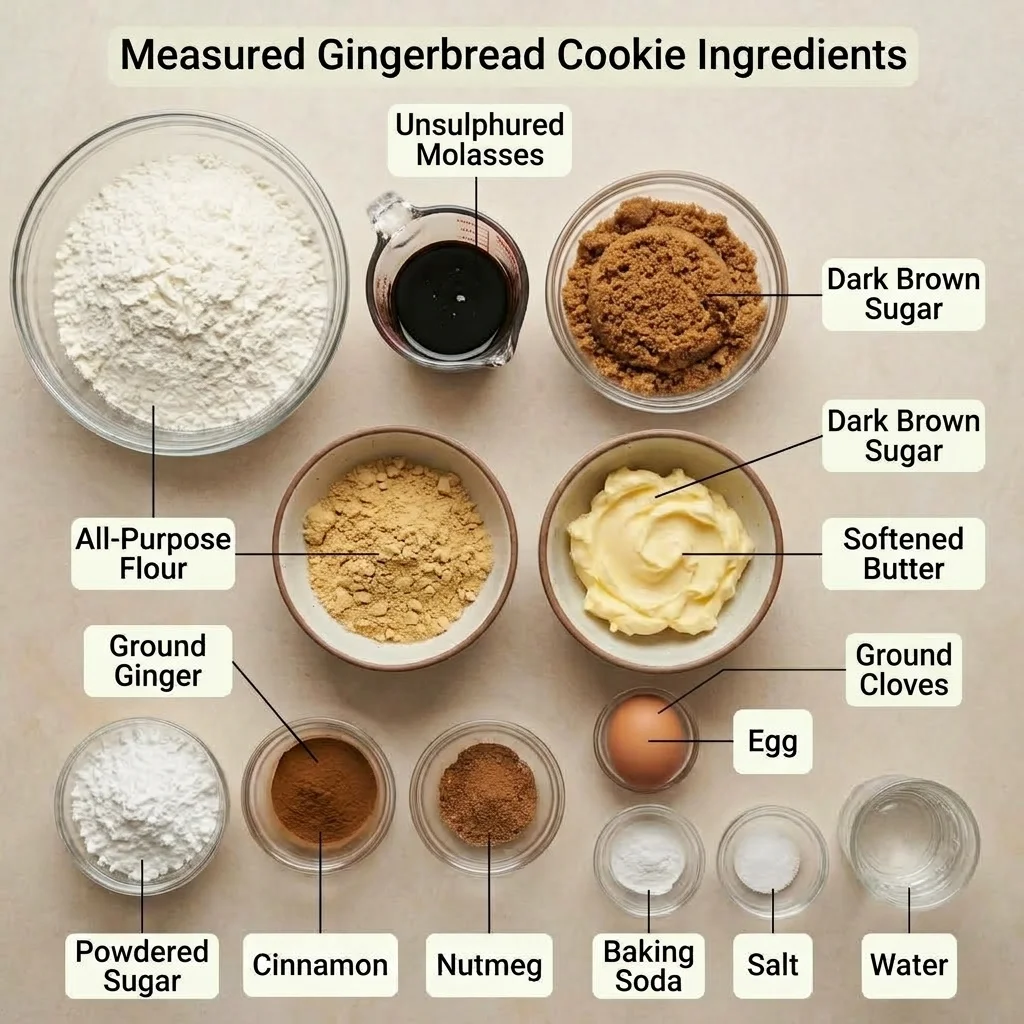
All-purpose flour, 3 1/4 cups (390 g): Gives the dough enough structure for clean cutouts. King Arthur Baking all-purpose flour is a useful choice because its consistent protein level makes the dough predictable. Other all-purpose flour works well when weighed.
Baking soda, 1 teaspoon: Adds lift and browning. Extra baking soda can increase spreading.
Fine salt, 1/2 teaspoon: Balances the sweetness. Use 1/4 teaspoon if your butter is salted.
Ground ginger, 1 tablespoon: The main spice. Reduce to 2 teaspoons for a milder batch.
Ground cinnamon, 2 teaspoons: Rounds out the ginger. Ceylon or cassia both work.
Ground cloves and ground nutmeg, 1/4 teaspoon each: Add depth. Allspice can replace the cloves.
Unsalted butter, 3/4 cup (170 g), softened: Keeps the cookies tender and the dough rollable.
Dark brown sugar, 3/4 cup packed (150 g): Adds moisture and deeper molasses flavor. Using light brown sugar produces a milder flavor.
Unsulphured molasses, 2/3 cup (160 g): Use regular or dark molasses, not blackstrap. Dark treacle is the closest practical substitute.
Large egg, 1: Binds the dough. A commercial baking egg replacer can work, though edges may be more fragile.
Optional icing: 1 cup (120 g) powdered sugar plus 2 to 3 tablespoons water. Add water slowly until the icing holds a piped line.
Equipment Needed
- Digital scale: Weighing flour helps prevent a dry dough.
- Rolling pin: Rolling guides or two 1/4-inch dowels help keep thickness even.
- Parchment paper: Roll between sheets to reduce extra flour and sticking.
- Metal cutters: Thin edges give cleaner details than thick cutters.
- Light-colored baking sheets: They brown cookie bottoms more gently than very dark pans.
Preparation
- Whisk the flour, baking soda, salt, ginger, cinnamon, cloves, and nutmeg together.
- Prepare parchment for rolling, then arrange the cutters, trays, and a small spatula nearby.
- Line two baking sheets with parchment. Do not grease them.
- Clear refrigerator space for one filled tray before you begin cutting.
Roll between parchment instead of adding extra flour. That keeps the dough from sticking without changing the flour-to-fat ratio, which helps gingerbread cookies stay softer.
How to Make Gingerbread Cookies
- Cream the butter and sugar. Beat softened butter and dark brown sugar on medium speed for 2 minutes, until creamy but not very fluffy.
Chef’s Note: Butter should dent under a fingertip but still feel cool. If it looks shiny, chill it briefly.
- Add molasses and egg. Mix in the molasses, then add the egg and beat just until the mixture is smooth. Scrape the bowl once.
- Add the dry ingredients. Mix them in on low speed until thick, slightly tacky dough forms and no dry flour remains.
Chef’s Note: The dough is softer than sugar-cookie dough before chilling. Do not correct it with extra flour yet.
- Chill. Divide into two flat discs, cover tightly, and refrigerate for at least 2 hours or up to 24 hours.
- Roll. Heat the oven to 350°F (175°C). Roll one disc between parchment sheets to 1/4 inch thick.
- Cut. Press cutters straight down and place shapes about 1 inch apart on a cool lined tray. Reroll scraps once.
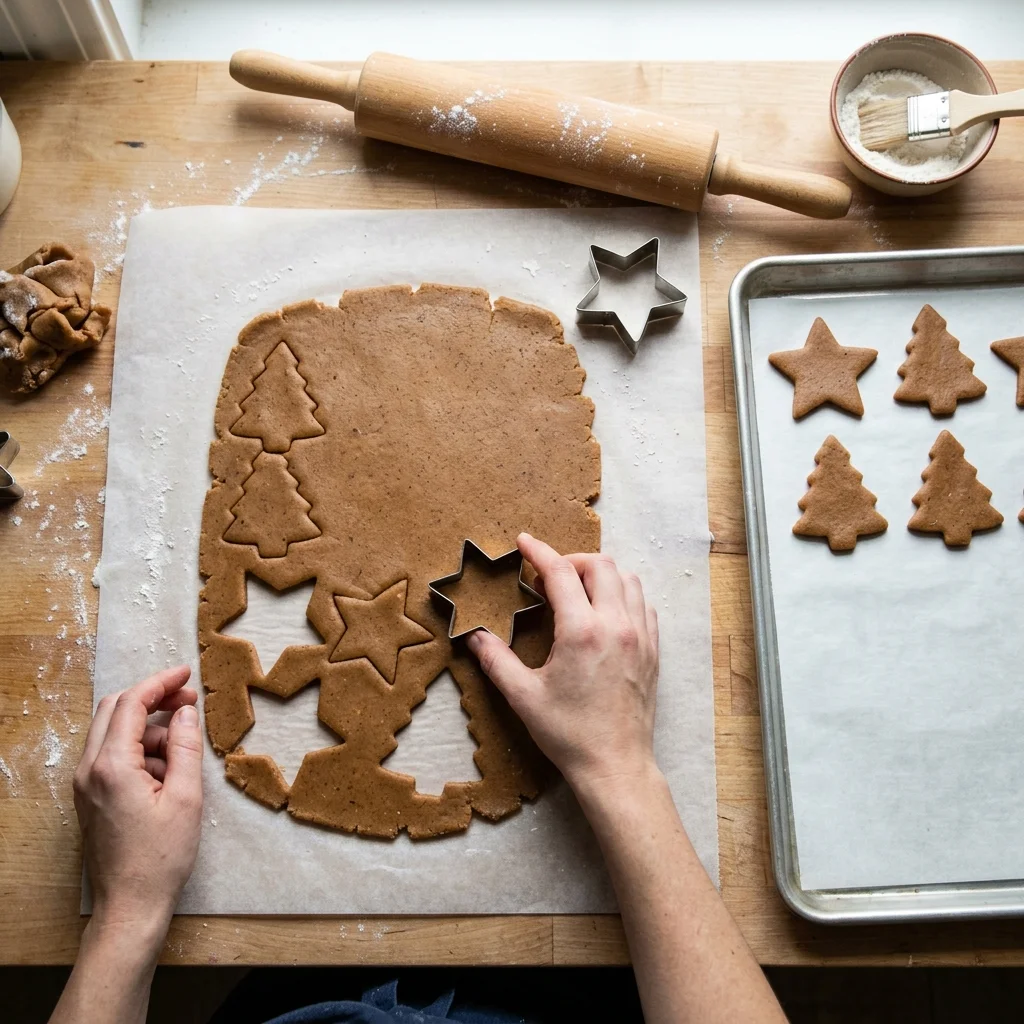
- Bake. Bake one tray at a time for 8 to 10 minutes, until the edges look set and matte while the centers remain slightly soft.
Chef’s Note: Small shapes may finish near 8 minutes. Group similar sizes on one tray so they bake evenly.
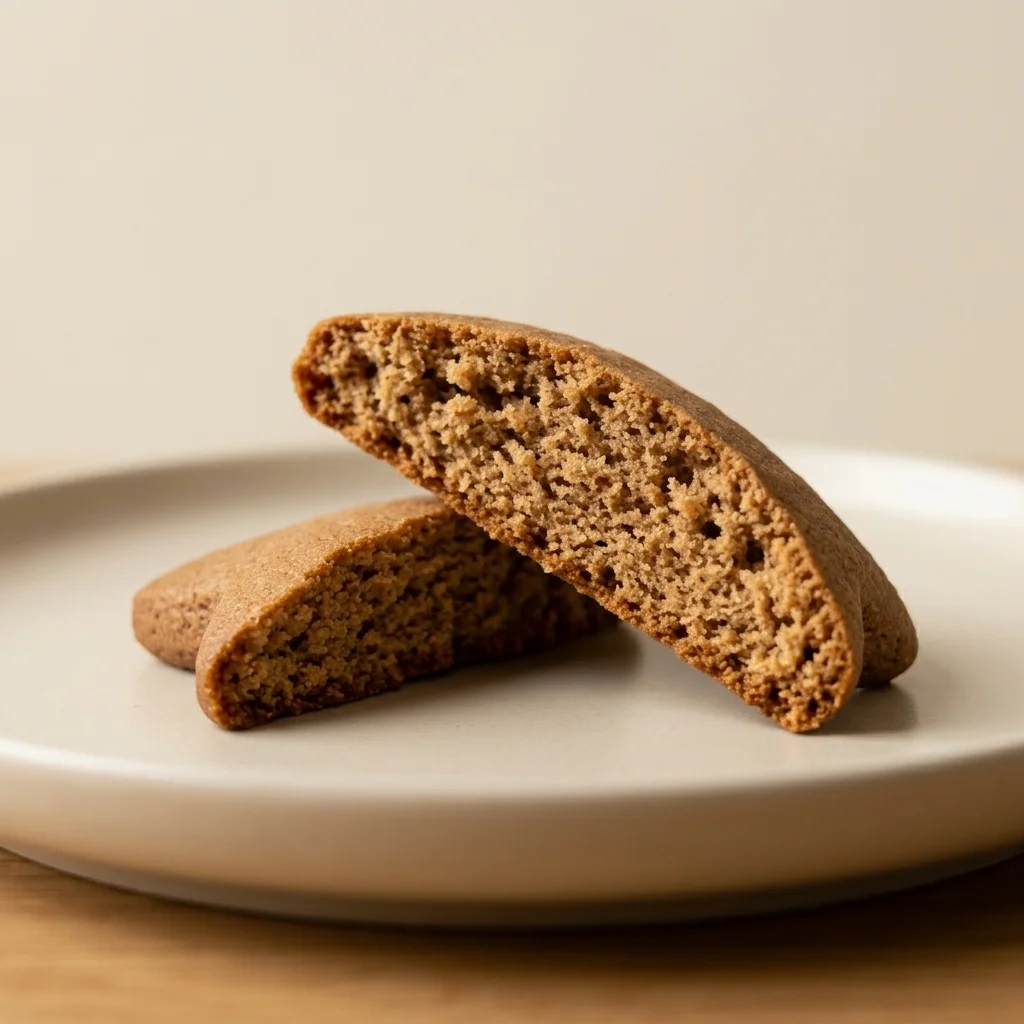
- Cool. Rest on the tray for 5 minutes, then move to a wire rack and cool completely.
- Decorate. Stir powdered sugar with 2 tablespoons water, adding more by the teaspoon until pipeable. Let the icing dry before stacking.
Bake one test cookie first. If it spreads, chill the remaining gingerbread cookies 10 minutes longer; if it turns dry, shorten the bake by about 1 minute.
Expert Tips for Better Results
- Keep the dough cool: If it cracks, rest it 5 to 10 minutes. If it turns shiny, chill it again.
- Use thickness to control texture: A 1/4-inch cookie stays softer; a thin cookie bakes crisper.
- Make ahead: Refrigerate wrapped dough for up to 24 hours.
- Save time: Roll between parchment before chilling so the dough can go straight to cutting.
- Cool before storing: Trapped steam can soften decorations and make stacked cookies stick.
Common Mistakes and Troubleshooting
- Cookies spread: Warm dough, a warm tray, or excess baking soda lets the fat melt before the structure sets. Chill the shapes and use a cool tray. If the dough is very soft, refrigerate it again.
- Dough is crumbly: Too much flour is often the cause. Press a handful together first; if it still falls apart, mix in 1 teaspoon water and reassess.
- Dough is sticky: It may be warm rather than too wet. Chill it 15 to 20 minutes and roll between parchment instead of adding handfuls of flour.
- Cookies are hard: Thin dough or extra baking time removes too much moisture. Roll to 1/4 inch and remove gingerbread cookies when the centers still look slightly soft.
- Bottoms brown too fast: Use the center rack and a light-colored sheet. Double-pan if your trays run hot.
- Later batches blur: This is the warm-tray mistake from the baking step. Rotate between cool pans so each batch starts on a room-temperature sheet.
Storage Instructions
Room Temperature: Keep fully cooled gingerbread cookies airtight for up to 1 week for the best texture. Separate decorated layers with parchment.
Refrigerator: Refrigeration is not required, but tightly sealed cookies can be kept up to 2 weeks in a very warm kitchen.
Freezer: Freeze undecorated cookies for up to 3 months in a rigid airtight container with parchment between layers. Thaw in the closed container.
Reheating: Usually unnecessary. For a softer plain cookie, warm at 275°F (135°C) for 2 to 3 minutes.
Make-Ahead Notes: Refrigerate dough up to 24 hours or freeze it tightly wrapped for up to 2 months. Thaw overnight in the refrigerator.
Variations and Substitutions
Extra-spiced: Add 1/2 teaspoon more ginger and a pinch of black pepper. Keep the cloves unchanged.
Milder: Reduce ginger to 2 teaspoons and omit cloves. Molasses and cinnamon still give the dough a clear gingerbread profile.
Egg-free: Use a commercial baking egg replacer for one egg. Chill the cut shapes well because the edges may be more delicate.
Gluten-free: Use a 1:1 gluten-free baking flour with xanthan gum. Rest the mixed dough 10 minutes before chilling.
Dairy-free: Replace butter with a firm plant-based baking stick, not a tub spread. Chill each tray before baking.
What to Serve With Gingerbread Cookies
Hot chocolate: Cocoa softens the sharper spice notes, especially with iced gingerbread cookies. A less-sweet drink keeps the pairing balanced.
Black tea: A brisk breakfast tea cuts through gingerbread cookies’ molasses and brown sugar without adding sweetness.
Fresh orange slices: Citrus gives a clean contrast to the deep spice profile and brightens a cookie platter.
Lightly sweetened whipped cream: Serve a small spoonful beside plain cookies for a simple plated dessert.
Holiday cookie platter: Pair gingerbread cookies with pale shortbread, jam cookies, or nut cookies for contrast.

Frequently Asked Questions
Can I make gingerbread cookie dough ahead and freeze it?
Yes. Wrap the dough discs tightly and freeze them for up to 2 months, then thaw overnight in the refrigerator before rolling. Fresh dough can also be refrigerated for up to 24 hours. If it cracks after chilling, leave it at room temperature for 5 to 10 minutes. Keep it cool enough that the butter does not become shiny or greasy.
Why are my gingerbread cookies spreading in the oven?
Spreading usually comes from warm dough, a warm baking sheet, inaccurate flour measurement, or too much leavening. Chill the cut shapes for at least 10 minutes, use a cool tray, and weigh flour when possible. If a test batch of gingerbread cookies spreads, refrigerate the remaining tray longer instead of adding extra flour immediately, because extra flour can leave the finished cookies dry.
Can I substitute something else for molasses?
Dark treacle is the closest practical substitute when unsulphured molasses is unavailable, though the flavor will shift. Honey, maple syrup, and brown sugar syrup differ in sweetness, acidity, water content, and depth, so they are not direct swaps. For classic gingerbread cookies, regular or dark unsulphured molasses gives the most familiar flavor. Blackstrap is much stronger and can taste bitter in this formula.
How do I know when gingerbread cookies are done?
Look for set, matte edges and centers that no longer look wet, usually after 8 to 10 minutes at 350°F (175°C) for 1/4-inch medium cookies. The centers can remain slightly soft because gingerbread cookies continue setting on the hot tray. If the entire surface feels firm while still in the oven, the baked gingerbread cookies are more likely to cool hard.
My gingerbread dough is crumbly instead of slightly sticky. Can I save it?
Yes, if the dough is only a little dry. Press a handful together first, because loose-looking crumbs can still form a smooth mass when compressed. If it falls apart completely, mix in 1 teaspoon water and test again. Do not add several tablespoons at once. Too much liquid can make gingerbread cookies spread and blur the clean edges you want from cut-out shapes.
Final Thoughts on Gingerbread Cookies
Gingerbread cookies are easier to control when temperature and thickness are treated as part of the recipe. Keep the dough cool, roll it evenly, use a cold tray, and pull the cookies before the centers feel firm. Those choices protect gingerbread cookies by preserving both the cut-out shape and the softer center.
If you loved this recipe, save it to your holiday baking Pinterest board so you can find it easily later!
Soft Gingerbread Cookies That Hold Their Shape
Ingredients
Equipment
Method
- Whisk together flour, baking soda, salt, ginger, cinnamon, cloves, and nutmeg in a bowl and set aside.
- Beat butter and brown sugar until fluffy. Mix in molasses and egg until combined. Add the dry ingredients on low speed and mix until a thick, slightly tacky dough forms.
- Divide the dough into two flat discs, wrap tightly, and refrigerate for at least 2 hours or up to 24 hours.
- Preheat the oven to 350°F. Roll one disc between parchment sheets to 1/4-inch thick. Press cutters straight down and place shapes 1 inch apart on a parchment-lined baking sheet. Refrigerate the filled tray for 10 minutes before baking.
- Bake one tray at a time for 8 to 10 minutes, until the edges look set and matte while the centers remain slightly soft. Cool on the tray for 5 minutes, then transfer to a wire rack to cool completely.
- For icing, stir powdered sugar with 2 tablespoons water, adding more by the teaspoon until pipeable. Decorate cooled cookies and let icing dry completely before stacking.
Notes
- Store fully cooled cookies airtight at room temperature for up to 1 week. Freeze undecorated cookies for up to 3 months with parchment between layers.
- Dough can be made up to 24 hours ahead and refrigerated, or frozen for up to 2 months thaw overnight in the refrigerator.
- Always use a cool baking sheet for each batch. A warm tray causes shapes to spread and blur before the dough sets.